The Best Mattress Toppers
A topper can fix a bed that's too firm. It cannot fix a bed that's worn out — you'll just sag more comfortably. Here's how to tell which one you have, and the six toppers worth buying if the answer is the first one.
We earn a commission if you buy through our links. It doesn't affect our picks — and we never take free products. How this site is funded.
Quick picks
| # | Product | Best for | Price |
|---|---|---|---|
| 1 | 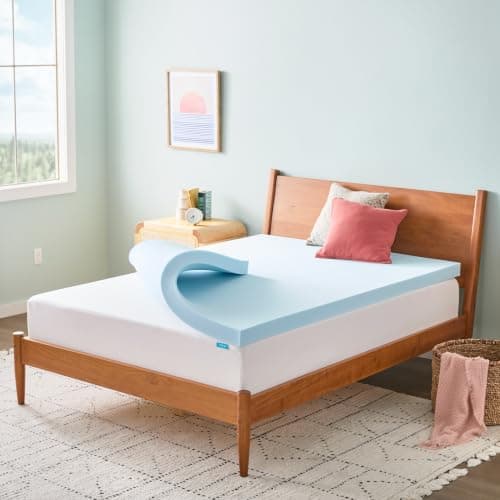 Linenspa 3" Gel Infused Memory Foam Topper, Queen The default answer, and the one I'd buy first. Three inches of plush foam is exactly the right amount of intervention for the most common problem. Best for: Softening a too-firm bed | Softening a too-firm bed | $89.99 · View on Amazon Price as of October 18, 2026. #ad — we earn a commission. |
| 2 | 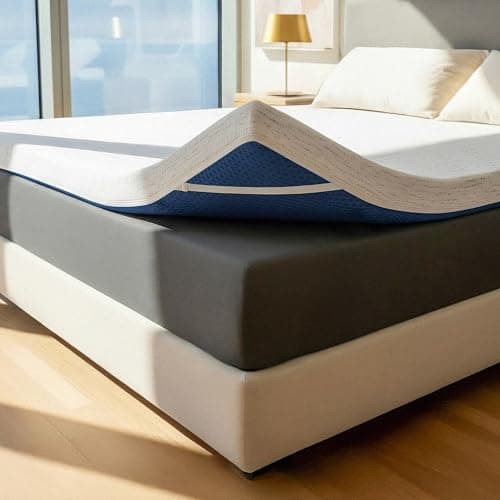 ViscoSoft 3" Select High Density Topper, Queen The one with a removable washable cover and a density claim. If a topper is going to be a permanent part of your bed, buy this one. Best for: Lasting more than a year | Lasting more than a year | $179.95 · View on Amazon Price as of October 18, 2026. #ad — we earn a commission. |
| 3 | 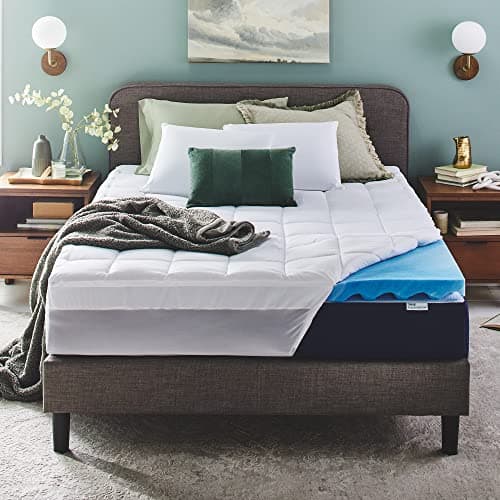 Sleep Innovations Dual Layer 4" Topper, Queen Four inches, in two layers, with a pillow top on it. If your bed feels like a plank and you want it to stop, this is the strongest medicine here. Best for: The biggest possible change | The biggest possible change | |
| 4 | 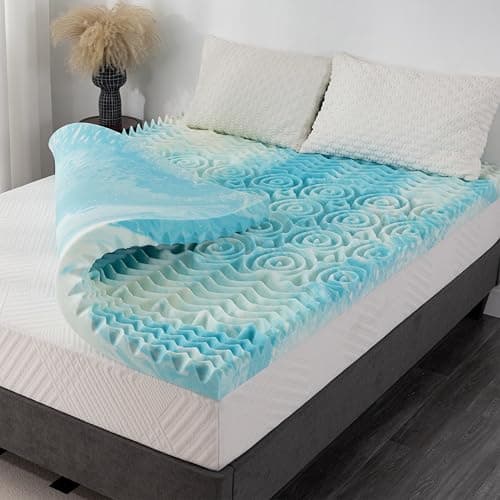 MLILY 3" Gel Memory Foam Egg Crate Topper, 5 Zones, Queen Zoned foam is a real construction difference rather than a sticker, and the zones are cut where a side sleeper needs them. Best for: Side sleepers | Side sleepers | $64.99 · View on Amazon Price as of October 18, 2026. #ad — we earn a commission. |
| 5 | 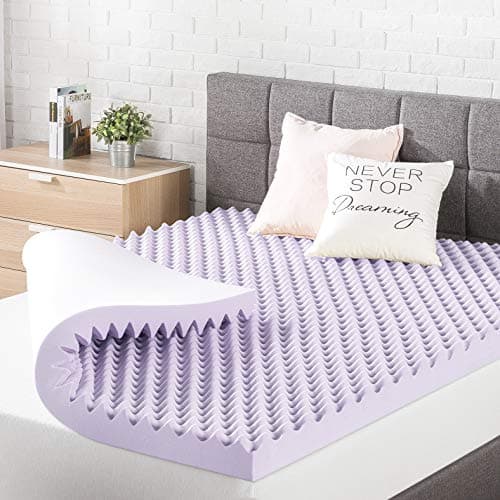 Best Price Mattress 3" Egg Crate Topper, Queen The convoluted surface is the only honest cooling feature on this page, because it's the only one that's a shape rather than a chemical. Best for: Hot sleepers | Hot sleepers | |
| 6 | 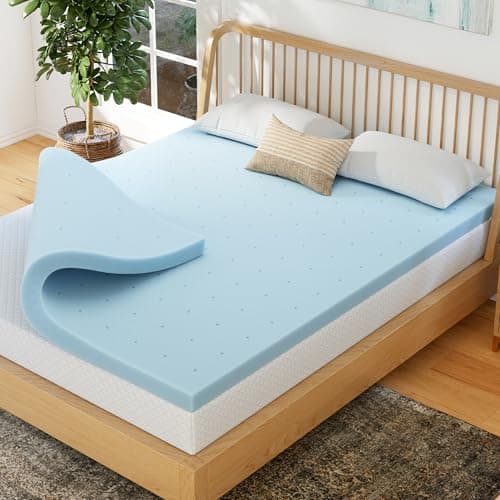 EGOHOME 3" Gel Memory Foam Topper, Queen The cheapest thing on the page. Buy it to find out whether a topper is your answer before you spend properly. Best for: Testing the idea cheaply | Testing the idea cheaply | $59.99 · View on Amazon Price as of October 18, 2026. #ad — we earn a commission. |
A topper changes feel. It does not change support.
This is the whole page, and almost nobody selling toppers will say it, so I'll put it first and in the plainest words I have. A mattress topper is a soft layer you lay on top of your bed. It sits on whatever shape your mattress already is. It cannot hold you up, because it isn't attached to anything and it has no structure — it is foam lying on foam.
So the consequences run in one direction only. A topper can fix too firm. That's a surface problem: your bed supports you fine but presses on your shoulder and hip, and three inches of foam between you and it genuinely solves that. A topper cannot fix worn out. That's a structural problem: the support core has collapsed and there's a dip where you sleep. Lay a topper over a dip and the topper drapes into the dip. You will sink into the same trench you were sinking into before, only now it's softer. You'll sag more comfortably.
People spend money on toppers every day trying to solve the second problem and end up disappointed, and then decide toppers are a con. They aren't a con. They were just aimed at the wrong target.
The test: sag or firmness?
Before you buy anything on this page, spend two minutes finding out which problem you actually have.
- The straightedge test. Strip the bed. Lay something rigid and straight across the mattress — a broom handle, a spirit level, a length of timber. Look along the underside of it across the middle third, where you actually sleep. If you can see daylight under it, you have a dip. A dip is structural. Stop reading this page.
- The where-does-it-hurt test.If you wake with your lower back sore, in the same place, every morning, and it eases after you've been up half an hour — that's the signature of your middle sinking lower than your shoulders and heels. That is support failing, and support comes from underneath.
- The pressure test.If instead the complaint is your shoulder or your hip — a specific joint that's sore from being pressed against a hard surface — and the mattress is visibly flat, that is firmness. That is what a topper is for, and a topper will very likely fix it.
- The age test.If the bed is old enough that you can't remember buying it, and it has started to feel worse rather than merely feeling wrong, the foam has fatigued. Fatigue doesn't reverse and a new layer on top doesn't reach it.
Dip, or pain that moves to the middle? Buy a mattress — start with the mattresses on Amazon worth buying. Flat bed that's simply too hard? Buy a topper. It really is that clean a fork in the road, and getting it right is worth far more than picking the perfect product on the wrong side of it.
The uncomfortable arithmetic, said out loud
Here is the thing this page is supposed to bury and won't. For a large number of people reading this, a topper is a small purchase that removes the need for a large one. A mattress that's structurally sound but too firm is not a broken mattress — it's a mattress with the wrong surface, and the surface is the cheap part. Replacing the whole bed to fix the top three inches of it is like replacing a car because you don't like the seat.
We earn considerably more when you buy a mattress than when you buy a topper. The commission difference is not subtle. And the honest advice for the too-firm reader is still: buy the topper, keep the mattress, spend the difference on something else. If a site can't tell you that, nothing else it tells you is worth much either. That's the entire reason this site exists, and how we pickspells out what we will and won't claim.
The reverse is equally true and equally worth saying: if your bed sags, no topper on this page will help you, and buying one is throwing good money after bad. Don't buy the topper. Go and read about memory foam versus hybrid and buy a bed.
Thickness: three inches is the answer
Toppers come in two, three and four inches, and three is right for almost everyone.
Two inches is a nudge. There isn't enough material to meaningfully get between you and a hard mattress, and you'll compress through it to the surface underneath — which is the surface you were trying to escape. Four inches is the biggest change available, and the trap in it is that more is not automatically better: every inch of soft foam is another inch of distance between your body and the support core that is supposed to be holding your spine in line. Float high enough above the springs and they have no say in what your hips do. The heavier you are, and the more you sleep on your back, the more that matters.
Three inches changes the feel decisively while leaving the support core within reach. If you're genuinely torn, take three. Our firmness guide gets into how weight and sleeping position change what you should be aiming at, and the same logic applies to the layer you put on top.
Density is the spec that decides everything, and nobody prints it
Thickness is what gets advertised. Density is what determines whether the thing is still doing its job in two years. Density is how much foam is packed into a given volume: dense foam has more material in the same space, resists permanent compression, and springs back. Cheap foam is cheap because it's aerated — less material, same size — and less material is what turns into a permanent body-shaped dent.
The problem is that almost no listing gives you a number. What you get instead is a signal: brands that care about density say so in the title, because they know it's the expensive part. That's why ViscoSoft leads with "high density" while the budget picks lead with thickness and cooling. It's a claim rather than a measurement, and it's the best you're going to get. The corollary is worth being blunt about: if you buy the cheapest topper here, you are buying the least dense one, and it will be the first to develop a trench. That can still be the right call — as a test purchase it's excellent — but buy it knowing what it is.
The one certification worth reading is CertiPUR-US, which most picks here carry. It doesn't tell you the foam is good, comfortable or durable. It tells you what it's made of and what it emits. It is a floor, not a ceiling, and it costs real money to carry — which is why it's meaningful that the cheap picks still have it.
You are adding a foam blanket to your bed
Every topper on this page advertises cooling. Gel infusion, cooling covers, breathable this and that. The physics they're working against is simple: foam insulates. That's what it does, and it's why it's in your walls. It fills air gaps, it wraps around you, and it holds your body heat against your body. Now you've added three inches of it directly beneath your skin, above whatever your mattress was already doing.
Gel infusions pull some heat away at the surface for the first stretch of the night, and then they reach the same temperature as everything else and stop. This isn't a scandal; it's just a smaller effect than the word "cooling" in a title implies. The only feature that fights heat on physical rather than chemical grounds is shape — a ventilated or convoluted egg-crate surface has actual channels in it, and air moving through a channel doesn't saturate. That's why the egg crate is the hot sleeper's pick above, and it comes at the cost of cushioning depth.
If heat is your main complaint and your bed is otherwise fine, the topper may be the wrong purchase altogether. Start further up the stack with cooling sheets, which are cheaper, sit between you and the foam, and don't add insulation to the bed.
One material note, since every pick on this page is polyurethane foam: latex is the other option, and it behaves differently — denser, springier, far more durable, and available with a genuine organic certification rather than a marketing adjective. It also costs several times as much and is heavy enough to need two people. We cover the certified ones on the organic mattress page, where a latex topper is the cheapest honest way into that category.
The cover matters more than you think
A topper is a slab of foam absorbing everything a body does over eight hours a night. Foam cannot be washed — soak it and you own a wet sponge that takes a week to dry and never fully recovers. So the question "does the cover come off" is the question of whether you can clean this thing at all, ever.
Most cheap toppers are bare foam, and the working answer is a fitted sheet stretched over both mattress and topper, which is fine and is what most people do. But it also means the fitted sheet is the only barrier, and deep-pocket sheets become non-optional once you've added three or four inches to the height of your bed — a detail that catches people out on delivery day. A removable, machine-washable cover is the ViscoSoft pick's real argument for costing what it costs, and in year two it is the difference between a topper you still want and one you're quietly hoping to replace. If a removable cover is out of budget entirely, toppers under $100 works this list with a hard ceiling and is honest about what the bracket cannot buy — and if you are not sure a topper is even the right product, topper vs pad sorts that first.
The picks, in full
1. Best for Softening a too-firm bed
Linenspa 3" Gel Infused Memory Foam Topper, Queen
The default answer, and the one I'd buy first. Three inches of plush foam is exactly the right amount of intervention for the most common problem.
Price as of October 18, 2026. #ad — we earn a commission.
Key specs
- 3" gel-infused memory foam
- Plush feel (as listed)
- CertiPUR-US certified foam
- Queen
What's good
- Three inches is the sweet spot: enough foam to genuinely change the feel of a hard mattress, not so much that you lose contact with the support core underneath
- Linenspa have sold this line for years, so the listing is stable and the thing turns up looking like the photograph
- CertiPUR-US certification is one of the few checkable facts on any foam listing — it covers what the foam is made of and what it emits, and it costs the brand real money to carry
What's not
- Plush is the only feel this one comes in. If your bed is already soft and you wanted support, this is the wrong direction entirely
- The gel infusion is a marginal help against a fundamental problem — you are adding three inches of insulating foam on top of your mattress, and that has one thermal direction
- No removable cover on this listing, so cleaning means spot-cleaning foam, which is exactly as annoying as it sounds
Skip this one if
Your mattress sags. Read the sag test on this page first. A plush topper laid over a dip makes the dip softer, not shallower, and you will spend the money and still wake up sore.
2. Best for Lasting more than a year
ViscoSoft 3" Select High Density Topper, Queen
The one with a removable washable cover and a density claim. If a topper is going to be a permanent part of your bed, buy this one.
Price as of October 18, 2026. #ad — we earn a commission.
Key specs
- 3" high-density memory foam
- Ventilated
- Premium removable rayon cover
- Queen
What's good
- The cover comes off and goes in the machine. This is the feature that decides whether you still like your topper in year two, and almost nothing at the cheap end has it
- ViscoSoft lead their listing with high density rather than thickness, which is the correct thing to care about — density is what predicts whether foam holds its shape or turns into a permanent body-shaped trench
- Ventilated construction means the foam is perforated rather than a solid slab, and holes are the only thing that lets air move through foam at all
What's not
- The most expensive topper here by a distance — you are into a meaningful fraction of a cheap mattress, which raises an uncomfortable question this page answers below
- "High density" is the seller's phrase. They lead with it, which is a signal, but the listing gives you a claim rather than a number to check
- A rayon cover is a nice hand-feel and not a cooling technology, whatever your instinct about how it sounds
Skip this one if
You're not sure a topper is the answer yet. Buy the EGOHOME, find out for a fraction of the money, and come back here when you know you're keeping it.
3. Best for The biggest possible change
Sleep Innovations Dual Layer 4" Topper, Queen
Four inches, in two layers, with a pillow top on it. If your bed feels like a plank and you want it to stop, this is the strongest medicine here.
Key specs
- 4" total, dual layer
- 3" cooling gel memory foam base
- 1" fluffy pillow-top cover
- Ultra soft support (as listed)
What's good
- Four inches in two layers is a genuinely different construction, not just more of the same — the foam does the contouring and the pillow top does the initial softness, which is how an actual mattress is built
- It is the most dramatic feel change available on this page, and if your problem is a rock-hard bed you are unlikely to under-shoot with it
- The pillow-top layer sits between you and the memory foam, which takes the edge off the sinking sensation people either love or can't stand about foam
What's not
- Four inches of foam is four inches of distance between you and your mattress's actual support core. The further you float above the springs, the less say they have in what your spine does
- It is the heaviest thing here to maneuver, and getting a fitted sheet over a mattress plus four inches is a genuine wrestling match
- Two layers of foam is two layers of insulation. This is the warmest pick on the page and nothing in the listing changes that
Skip this one if
You weigh more than average or you sleep on your back. Four inches of soft foam lets your hips settle further than the rest of you, and that's the mechanism behind waking up with a sore lower back — take the 3" Linenspa instead.
4. Best for Side sleepers
MLILY 3" Gel Memory Foam Egg Crate Topper, 5 Zones, Queen
Zoned foam is a real construction difference rather than a sticker, and the zones are cut where a side sleeper needs them.
Price as of October 18, 2026. #ad — we earn a commission.
Key specs
- 3" gel memory foam, 60 x 80 in queen (as listed)
- 5 zones (as listed)
- Cooling gel infusion (as listed)
- Egg-crate convoluted surface (as listed)
- CertiPUR-US certified foam (as listed)
What's good
- Zoning means the foam is physically cut to different profiles along its length, so the shoulder region yields more than the region under your hips. That is a real thing the material does, not a claim about it
- Shoulders are the classic side-sleeper problem: a flat surface has to let one joint in deep while holding your waist up, and one uniform slab can't do both
- CertiPUR-US certified (as listed), and the egg-crate surface adds air channels through the foam, which is the one structural thing a foam topper can do about heat
What's not
- Zoning is a modest effect. It is a real difference between this and a flat slab, and it is not a different category of product — don't expect to feel five distinct zones
- Zones are cut for an assumed body length and an assumed layout. If you sleep diagonally or you're notably tall or short, the zones aren't where you are
- Same gel-infusion caveat as everything else here: it helps at the surface, early, and then it's just foam
Skip this one if
You sleep on your back or your front. The zones are cut for a side sleeper's shoulder-hip problem, and if you don't have that problem you're paying for geometry you'll never use — buy the Linenspa.
5. Best for Hot sleepers
Best Price Mattress 3" Egg Crate Topper, Queen
The convoluted surface is the only honest cooling feature on this page, because it's the only one that's a shape rather than a chemical.
Key specs
- 3" egg crate (convoluted) foam
- Lavender infusion
- CertiPUR-US certified foam
- Queen
What's good
- Egg crate isn't a texture, it's channels. The peaks and valleys leave physical air gaps between you and the slab, and air moving through a gap is the only cooling mechanism that doesn't saturate after an hour
- It also means less foam touching you overall, which is less material holding your heat against your body — the same reason a slatted bench is cooler than a solid one
- The cheapest way to add foam to your bed without going to a no-name brand
What's not
- The lavender infusion is a scent claim. It is not a sleep feature, it fades, and if you dislike lavender you cannot remove it
- Convoluted foam has less material in it than a solid slab of the same nominal height, so it compresses further and gives you less genuine cushioning than the 3" figure implies
- Egg crate under a fitted sheet flattens over time, and flattened egg crate is just a thin slab with a bad surface
Skip this one if
Heat isn't your problem. The channels cost you cushioning depth, so if you just want a hard bed to feel softer, the solid 3" Linenspa gives you more foam for the same idea.
6. Best for Testing the idea cheaply
EGOHOME 3" Gel Memory Foam Topper, Queen
The cheapest thing on the page. Buy it to find out whether a topper is your answer before you spend properly.
Price as of October 18, 2026. #ad — we earn a commission.
Key specs
- 3" gel-infused memory foam
- Pressure relieving (as listed)
- CertiPUR-US certified foam
- Queen
What's good
- It is the least you can spend to answer the only question that matters: does adding foam actually fix what's wrong with your bed, or is your bed just finished?
- CertiPUR-US certified, which is genuinely reassuring at this price — it's the same certification the expensive picks carry, and it's about what the foam is and emits
- Three inches at this outlay is more mattress-per-dollar than anything else here
What's not
- EGOHOME is an Amazon-native brand with no showroom and no long trading history to lean on
- No removable cover, and at the cheap end of foam it's the density that's been saved on — which is precisely what determines whether it's still three inches thick next year
- The cooling language on the listing is doing the same work it does on every foam listing, which is to say not much
Skip this one if
You already know you want a topper and you're keeping it. Cheap foam is cheap because it's less dense, and less dense foam is the stuff that develops a permanent dent — pay up for the ViscoSoft.
Common questions
Will a mattress topper fix a sagging mattress?
No. This is the single most important thing to know before you spend anything. A topper is a layer of soft material laid on top of your mattress — it follows the shape of whatever is underneath it. If your mattress has a dip, the topper drapes into the dip and you sink into the same trench, just on a softer surface. Sag is a failure of the support core, and support has to come from underneath. A topper can change how a bed feels. It cannot change how a bed holds you up. If your mattress sags, you need a mattress.
How do I know if my mattress is worn out or just too firm?
Strip the bed and lay something rigid and straight across it — a broom handle, a spirit level, a length of timber. Look at the gap underneath along the middle third where you sleep. If you can see daylight under the straightedge, that's a dip, and a dip is structural failure that a topper will not solve. Second test: does the discomfort move around, or is it always your lower back and always in the same spot? Localized, repeatable lower-back soreness plus a visible dip is a worn-out mattress. If the surface is flat and the complaint is pressure on your shoulders or hips, that's firmness, and firmness is exactly what a topper is for.
What thickness of mattress topper should I get?
Three inches suits most people and most problems. Two inches is a nudge rather than a change and rarely justifies the trip. Four inches is the strongest available change of feel, but every inch of soft foam is another inch of distance between your body and the support core, so a thick topper on a soft bed is how people end up in a hammock. The heavier you are and the more you sleep on your back, the more you should lean toward three inches over four.
Do mattress toppers sleep hot?
Yes, and the marketing cannot get around it. You are adding a layer of foam between you and your mattress, and foam is an insulator — that is what the material is. It fills the air gaps, wraps your body, and holds your heat against you. Gel infusions and cooling covers pull some heat away at the surface for the first part of the night and then saturate. The only feature that fights this on physical rather than chemical grounds is shape: a ventilated or convoluted egg-crate topper leaves actual air channels, and air moving through a gap doesn't saturate. If you sleep hot and you're adding a topper, expect to sleep hotter than you did.
Do you get paid for these recommendations?
We earn an Amazon commission if you buy through our links, and that funds the site. It's worth being blunt about the conflict on this specific page: we make considerably more when someone buys a mattress than when they buy a topper, and this page still spends most of its length telling some of you to buy a topper instead of a mattress — and the rest telling the others that no topper will save them. We take no free products, sell no placement, and no brand sees this page before it publishes.
Sources
Where the facts on this page come from. We cite other people's testing because we don't do our own — here's what that means.
Read next
- Black Friday & Cyber Monday Mattress & Sleep Gear Deals 2026What sleep gear historically discounts in November and what rarely does, buy-now vs wait guidance by product class, and our current top picks with live prices as a baseline. Deals will be posted here when they go live.
- The Best Sleep Gifts Under $150Seven sleep gifts that sat under $150 when we checked — the Coop adjustable pillow, DAPU linen, Supima percale, Soundcore sleep earbuds, the Philips wake-up light, a plush topper and a heated blanket — with what to check before buying each.
- The Best Heated Mattress PadsFive heated mattress pads that warm the bed from underneath - including dual-zone models for couples - spanning a budget pick to a premium Sunbeam, with honest safety notes.
- How to Tell If You Need a New MattressThe honest signs a mattress is actually done - visible sag, morning aches, better sleep away from home - and the cheaper fixes worth trying before you spend on a new one.
- How to Clean a Mattress TopperA material-by-material way to clean a mattress topper — memory foam and latex (spot-clean only, never machine wash), feather and down (usually a cool gentle cycle), and wool, cotton or fiberfill (check the tag) — plus the protector trick that means you rarely deep-clean it at all.
- How to Keep a Mattress Topper From SlidingWhy mattress toppers slide — smooth foam on slick sheets, or a topper that is the wrong size — and the fixes that keep them put, led by a deep-pocket fitted sheet pulled over both layers, plus corner straps, grip pads, and a permanent hold.
- The Best Mattress Toppers for Heavy PeopleSix mattress toppers thick and dense enough to still cushion a heavier body instead of bottoming out onto the bed beneath — re-ranked depth- and density-first — plus the honest limit that no topper fixes a sagging core, with cons and a skip note on every pick.
- The Best Cooling Mattress ToppersFive gel and ventilated mattress toppers that take the edge off a warm bed, chosen honestly - plus the crucial caveat that a topper is a surface tweak, not a cure, and when a cooling mattress or cooling sheets is the better buy.
- How to Choose a Mattress TopperChoose a topper by spec: name the problem first, then match material, thickness, and density to it — with the honest caveat that a topper changes feel, not support.
- The Best Mattress Toppers for Side SleepersFive mattress toppers that give a side sleeper's shoulder and hip room to sink so the spine stays level — plush, contouring foam re-ranked pressure-relief-first — plus the honest limit that no topper fixes a sagging bed, with cons and a skip note on every pick.
- Do You Need a Mattress Topper?The honest decision guide: the four times a mattress topper is exactly the right fix, the two times it's a waste of money, and a 60-second test to tell them apart.
- How to Make a Mattress Firmer or SofterHow to soften or firm up a mattress that feels off — toppers, bases, temperature, and the honest limits of each fix before you're better off using the sleep trial.
- The Best Mattress PadsSix mattress pads worth buying — a thin quilted layer of softness you can machine wash — plus the plain difference between a pad, a topper, and a protector.
- The Best Bed Frames (No Box Spring Required)Six platform bed frames that replace the box spring, chosen on slat spacing, noise, storage and whether a headboard's included — with honest cons on every pick.
- The Best Mattresses on AmazonSix Amazon mattresses worth your money, with live prices and an honest note on who each one is wrong for.
- Mattress Firmness: The 1-10 Scale, HonestlyWhat the 1-10 firmness scale actually means, why one brand's 6 is another's 7, and how your bodyweight changes the answer.
- The Best Memory Foam MattressesWhat memory foam actually is, what it can and can't do, and the six I'd buy — with an honest note on who should skip each one.
- The Best Cooling Sheets for Hot SleepersSix sheet sets that actually breathe, chosen on fiber and weave rather than marketing — plus who should skip each one.
- The Best Weighted BlanketsSix weighted blankets worth buying, judged on weight, fill, breathability and whether you can actually wash them - with no health claims attached.
- The Best Mattress ProtectorsSix mattress protectors that block liquid without sleeping hot or crinkling — fitted pads and zippered encasements — with an honest note on who each is wrong for.
- How Often Should You Replace a Mattress?Most mattresses last 6-8 years, but sag and morning stiffness are better signals than age. How to tell a worn-out bed from one that just needs a topper.
- How to Clean a MattressA step-by-step method for cleaning a mattress — routine refresh, stains, sweat and smells — built around the one rule that saves it: never soak it.