The Best Mattresses for Side Sleepers
A body on its side is not a flat plane — the shoulder and hip stick out and the waist doesn't. Six mattresses with enough give in the right places, and an honest note on who should skip each.
We earn a commission if you buy through our links. It doesn't affect our picks — and we never take free products. How this site is funded.
Quick picks
| # | Product | Best for | Price |
|---|---|---|---|
| 1 | 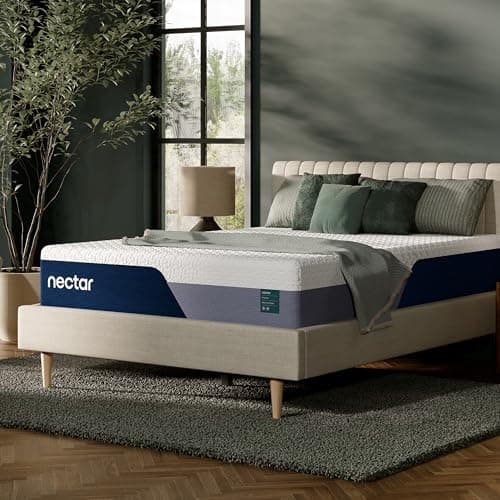 Nectar Premier 13" Queen Thirteen inches of build is the point. Depth is what gives a shoulder somewhere to go, and almost nothing sold in a box has more of it. Best for: Most side sleepers | Most side sleepers | $999.00 · View on Amazon Price as of October 18, 2026. #ad — we earn a commission. |
| 2 | 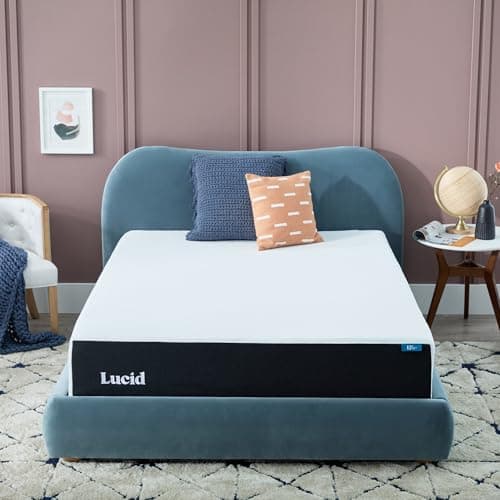 Lucid 12" Plush Gel Memory Foam The one to buy if medium firm has never actually felt soft to you. Under about 130 lb, most beds don't compress enough to work. Best for: Lighter side sleepers | Lighter side sleepers | |
| 3 | 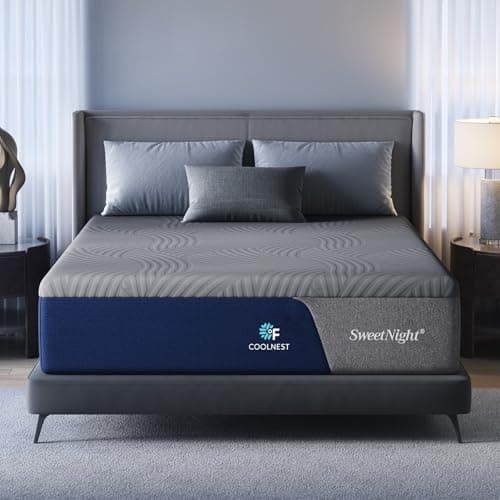 Sweetnight CoolNest 14" Queen Fourteen inches and five zones, at a price the premium brands don't compete at. If the zones land where your shoulder does, this is clever. Best for: Zoned support | Zoned support | $469.99 · View on Amazon Price as of October 18, 2026. #ad — we earn a commission. |
| 4 | 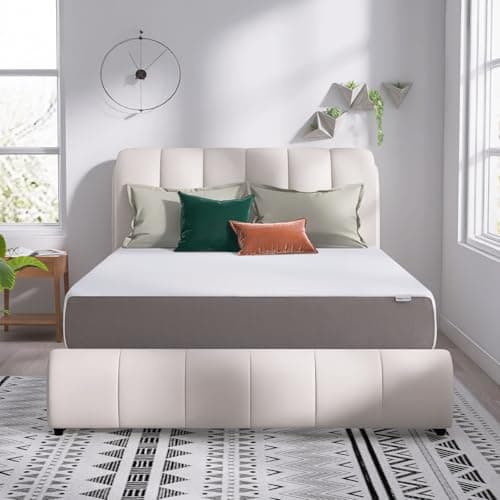 Amazon Basics 12" Memory Foam, Soft Plush A soft plush 12-inch foam bed at the bottom of the market. The feel is right for the position; everything else is basic, as advertised. Best for: The lowest sensible price | The lowest sensible price | $329.99 · View on Amazon Price as of October 18, 2026. #ad — we earn a commission. |
| 5 | Nectar Ultra 15" Hybrid Queen The compromise that doesn't feel like one: a deeper contouring build than the foam Premier above, with air moving through the middle of it. Best for: Hot side sleepers | Hot side sleepers | Check price on Amazon → #ad — we earn a commission. |
| 6 | 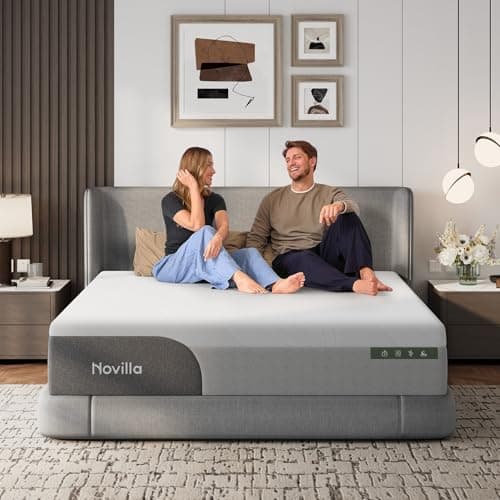 Novilla Bliss 14" Gel-Infused Memory Foam Fourteen inches for mid-budget money. You're buying the depth and nothing else, and the depth is the part that matters. Best for: Depth on a budget | Depth on a budget | $379.99 · View on Amazon Price as of October 18, 2026. #ad — we earn a commission. |
The problem is geometry, not comfort
Stand up and look at yourself from the front: you are roughly a flat plane. Lie down on your back and the mattress meets you almost everywhere at once. Now turn onto your side. You are no longer flat in any useful sense. Your shoulder juts out several inches. Your hip juts out several inches. And between them, your waist retreats — on most bodies by two to four inches, more if you have a defined waist.
This is the entire side sleeper problem, and once you see it, every mattress spec sorts itself. A perfectly flat, perfectly firm surface has exactly two contact points with a body on its side: shoulder and hip. All of your weight lands on those two points, which is why they ache. And because they can't sink, your spine is forced into an arch that bows upward through the middle, with your waist suspended over a gap. You are effectively sleeping on a bridge made of your own lumbar spine.
A mattress that works for side sleeping does one thing: it lets the shoulder and hip descend far enough that the waist comes down to meet the surface, at which point your spine runs level and the load spreads across your whole flank instead of two knobs of bone. That's it. That's the requirement. Every pick on this page is here because its published specs suggest it can do that for someone.
Why "firm and supportive" is the wrong instinct
There's a widely held belief that a firm mattress is the responsible choice — that softness is indulgent and firmness is somehow healthier. For side sleepers it's close to backwards. Sleep Foundation puts most side sleepers in the medium to medium-firm range, not the firm end, and the reasoning is the geometry above: firmness is precisely what prevents your shoulder from sinking, and a shoulder that can't sink is a spine that can't straighten.
The confusion comes from mixing up two different words. Support is what the core of the mattress does — resisting your hips so they don't drop into a hammock. Firmness is what the top of the mattress does — how readily the comfort layer yields. You want strong support and a yielding surface, at the same time, and they are not opposites. A deep foam comfort layer over a solid core gives you both. A uniformly firm slab gives you neither, because a spine bowed upward is no better aligned than one sagging downward. Our firmness guide takes the distinction apart properly.
Depth is the spec nobody talks about, and it decides this
Here's the arithmetic that mattress marketing skips. Your shoulder needs to travel some distance into the bed before your waist reaches the surface — call it two to four inches for most people. The comfort layer is the only part of the mattress that can provide that travel, because the support core is deliberately built not to yield.
On a 10-inch mattress, the comfort layer is typically two to three inches deep. That is at the bottom of what a shoulder needs, and the moment you compress through it you hit a core that stops dead. On a 13- or 14-inch bed there is real room to work with. This is why the deepest options on this page — the Nectar Premier at 13 inches, the Sweetnight and Novilla at 14 — are the ones I'd point a side sleeper at first, and why I wouldn't buy a 10-inch bed for this position at any price. Depth isn't luxury here. It's clearance.
Your weight changes what "medium firm" means
Firmness is not a property of a mattress. It's a property of a mattress and a body together, which is why two people can lie on the same bed and honestly disagree about it. Foam yields in proportion to the pressure applied to it, so a heavier body compresses further into the identical layer.
The practical consequences for side sleepers are large and they run in both directions:
- Under about 130 lb:a medium-firm bed may never compress enough to admit your shoulder at all. It behaves like a firm bed, and you get all the problems above while wondering why the well-reviewed mattress you bought hurts. Plush is often the right call — that's the Lucid on this page.
- Roughly 130-230 lb: medium to medium-firm generally lands where the labels intend, which is the range most of these beds are designed around.
- Over about 230 lb: you compress through a plush layer quickly and your hips — the heaviest part of you — keep going. Now your spine sags rather than bows, which is the same misalignment mirrored. A firmer surface and a coil core do more for you than softness does.
None of this is knowable from the label, and none of it is verifiable before delivery. That's why the beds here with year-long trials get ranked above cheaper beds with better paper specs. On this page more than any other, the trial is the product.
The pillow is half the job, and it's the half people skip
Your mattress decides how far your shoulder sinks. Your pillow has to fill every inch of what's left between the mattress surface and your ear — and on your side, that gap is roughly the width of your shoulder, which is far taller than the gap when you're on your back.
This is why so many people buy the correct mattress and still wake up with a stiff neck. They've kept a pillow sized for back sleeping, their head drops toward the mattress, and their cervical spine bends sideways all night — undoing the alignment the new bed just bought them. The two products are a system: a softer mattress sinks your shoulder further and therefore needs a lower pillow, and a firmer one needs a taller one. If you change one, re-check the other. Our pillows for side sleepers page covers loft heights, which is the spec that matters there.
Before you replace the whole bed
If your current mattress is too firm for side sleeping but structurally sound — no dip under your hips, no sagging edge — a toppercan add the compliant layer you're missing for a fraction of the cost of a new bed. It's the right first move often enough that I'd rather say it than sell you a mattress.
The reverse doesn't work. If your hips already sink and the bed has a visible dip, the support core has given up, and adding softness on top makes the sag worse. Nothing you put on the surface fixes a failed core. That's when you buy a new mattress — and it's worth reading the general rounduptoo, because if you don't exclusively sleep on your side, your mattress has more than one job to do.
What I won't tell you
I haven't slept on any of these. Nobody here has, there's no test lab behind this site, and if you see a review claiming a pressure map for a bed it bought on Amazon last Tuesday, be suspicious. What I can do is read the published specs honestly, apply the geometry above, and tell you which bed is wrong for which body — which is why every pick has a "skip this one if" that sends you somewhere else. That's the whole method, and it's written out in full on how we review.
The picks, in full
1. Best for Most side sleepers
Nectar Premier 13" Queen
Thirteen inches of build is the point. Depth is what gives a shoulder somewhere to go, and almost nothing sold in a box has more of it.
Price as of October 18, 2026. #ad — we earn a commission.
Key specs
- 13" all-foam
- Medium firm (as listed)
- Contouring memory foam
- Phase-change cooling layer (manufacturer)
- 365-night trial
- Forever warranty (as listed)
What's good
- 13 inches is a deeper build than most beds in this category, and depth is exactly the spec a side sleeper should care about — a comfort layer needs physical room to let a shoulder sink before the support core stops it
- Memory foam holds its impression rather than pushing back, which is the behavior you want under a hip. Springing back is a virtue in a bed you sit on and a problem in a bed you lie on your side on
- 365 nights covers the one thing you cannot know in advance: side sleeping is the position most sensitive to firmness, so a year to change your mind is worth more here than on any other page of this site
What's not
- All-foam. Foam insulates, so this is the warmest construction on this page no matter what the cooling upgrade is called
- "Medium firm" is Nectar's label, not a measurement, and on a side sleeper the difference between medium and medium firm is the difference between a level spine and a bowed one
- 13 inches of foam is heavy and awkward. Getting it onto a bed frame alone is a genuine job
Skip this one if
You sleep hot. This is the deepest foam slab here and therefore the warmest thing on the page. Buy the Nectar Ultra Hybrid below — same brand, more depth, same terms, with coils moving air through the middle of it.
2. Best for Lighter side sleepers
Lucid 12" Plush Gel Memory Foam
The one to buy if medium firm has never actually felt soft to you. Under about 130 lb, most beds don't compress enough to work.
Key specs
- 12" all-foam
- Plush (as listed)
- Gel memory foam
- Bamboo charcoal infused
- Fiberglass-free (as listed)
- CertiPUR-US certified
What's good
- Lucid sells this same bed in plush, medium and firm. Most budget brands build one firmness and make you take it — being able to choose the softest version is the whole reason this is here
- A lighter body cannot compress a medium-firm comfort layer far enough to sink a shoulder into it, so the bed behaves like a plank. A plush layer starts yielding under less load, which is the fix
- Fiberglass-free and CertiPUR-US certified, both stated in the listing — worth having at this price, where neither is a given
What's not
- Plush foam gives way sooner under heavier loads too, so the same property that helps a light sleeper causes a heavier one's hips to sink past the point of alignment
- The bamboo charcoal infusion is an odor claim, not a performance one. It does nothing for your sleep
- No trial length or warranty term in the listing title, which is a real gap on a bed you're buying for a firmness you're guessing at
Skip this one if
You weigh much over 130 lb. Plush is a relationship between the foam and your body, not a fixed setting — at a heavier weight this same bed lets your hips drop and bows your spine the other way. Take the Nectar Premier instead.
3. Best for Zoned support
Sweetnight CoolNest 14" Queen
Fourteen inches and five zones, at a price the premium brands don't compete at. If the zones land where your shoulder does, this is clever.
Price as of October 18, 2026. #ad — we earn a commission.
Key specs
- 14" all-foam
- Medium (as listed)
- Cooling memory foam
- 5-zone ergonomic support (as listed)
- CertiPUR-US certified
What's good
- Zoning is the design that most directly addresses side sleeping: the foam is built softer where a shoulder lands and firmer under the hips, instead of asking one uniform layer to do two opposite jobs
- 14 inches is the deepest build on this page. More material above the support core means more travel for a shoulder before it runs out of room
- Medium rather than medium firm, which is generally the better side of the line for side sleeping — the position needs give, not resistance
What's not
- Zones are placed for an assumed body length and the listing doesn't say what it assumed. If you're notably short or tall, your shoulder lands in the wrong zone and the design works against you
- All-foam, so "CoolNest" is a product name rather than a property. A 14-inch foam slab is a lot of insulation
- No stated trial or warranty term in the title, and zoning is precisely the feature you'd want a trial to verify
Skip this one if
You're much shorter or taller than average. Zoned foam is a guess about where your shoulder and hips will be, and a wrong guess is worse than no guess — an unzoned bed like the Nectar Premier can't be misaligned with a body it never modeled.
4. Best for The lowest sensible price
Amazon Basics 12" Memory Foam, Soft Plush
A soft plush 12-inch foam bed at the bottom of the market. The feel is right for the position; everything else is basic, as advertised.
Price as of October 18, 2026. #ad — we earn a commission.
Key specs
- 12" all-foam
- Soft plush feel (as listed)
- Breathable (as listed)
What's good
- Soft plush is the correct end of the firmness range for side sleeping, and this is about the cheapest place to get it without buying an unknown brand
- Amazon Basics is Amazon's own line, which means the returns process is Amazon's — a lower-friction path than chasing a third-party seller with a PO box
- 12 inches is enough depth for the comfort layer to do something, unlike the 8- and 10-inch beds it sits next to at this price
What's not
- "Soft plush" is Amazon's own description with no scale behind it, and soft-versus-medium is the entire decision on this page
- All-foam with no stated cooling layer at all. "Breathable" is doing a lot of unsupported work in that title
- No trial or warranty terms in the listing, and Amazon Basics is not a mattress company — there's no sleep engineering story here, just a competent commodity
Skip this one if
This is your bed for the next decade. It's a well-priced commodity, not a durable one, and a soft foam layer is the part that fatigues first. If you sleep on your side every night for years, buy the Nectar Premier and be done.
5. Best for Hot side sleepers
Nectar Ultra 15" Hybrid Queen
The compromise that doesn't feel like one: a deeper contouring build than the foam Premier above, with air moving through the middle of it.
#ad — we earn a commission.
Key specs
- 15" hybrid
- Medium firm (as listed)
- Memory foam over individually-wrapped coils
- Cooling upgrade (as listed)
- 365-night trial
- Forever warranty (Nectar's published term)
What's good
- A coil core is mostly empty space, so air moves through it. That is the only cooling feature in any mattress that doesn't saturate partway through the night, and it's unavailable in an all-foam bed at any price
- Still 15 inches, so the comfort layer keeps the depth a side sleeper needs — you're not trading contouring for temperature here, which is the usual trap
- A 365-night trial on the listing, and the same forever warranty Nectar publishes across the range, including the all-foam Premier above
What's not
- The most expensive bed on this page, and the coils are what you're paying for
- Coils transmit movement. If your partner is restless, this build is the wrong direction and the all-foam Premier is the right one
- "Cooling upgrade" is still a surface treatment. The coils are doing the real work; the marketing credits the foam
Skip this one if
You share the bed with someone who moves a lot. Coils carry motion across the mattress in a way solid foam doesn't — take the all-foam Nectar Premier at the top and accept running a little warmer.
6. Best for Depth on a budget
Novilla Bliss 14" Gel-Infused Memory Foam
Fourteen inches for mid-budget money. You're buying the depth and nothing else, and the depth is the part that matters.
Price as of October 18, 2026. #ad — we earn a commission.
Key specs
- 14" all-foam
- Gel-infused memory foam
- Cool-touch nylon cover (as listed)
- CertiPUR-US certified
What's good
- 14 inches at this price is unusual, and depth is the one spec that reliably helps a side sleeper — there's simply more room for a shoulder to travel before the core stops it
- A cool-touch nylon cover is a real surface effect: nylon conducts heat away from skin faster than cotton or polyester at first contact. It's a genuine, if limited, thing
- Gel infusion and a CertiPUR-US certification, both stated on the listing rather than implied
What's not
- The listing states no firmness at all — on the one page where firmness is the whole decision, that's a serious omission and you should treat it as an unknown
- Novilla is an Amazon-native brand with no showroom and no long trading history behind the warranty
- Cool-touch covers work at first contact and then equalize with your body. Under 14 inches of foam, that effect is a rounding error
Skip this one if
You need to know what you're buying. This listing won't tell you how firm it is, and firmness is the single variable that decides whether a side sleeper's spine stays level. If you can't guess, buy a bed with a year-long trial instead.
Common questions
Should side sleepers get a soft or firm mattress?
Softer, as a rule — Sleep Foundation puts most side sleepers in the medium to medium-firm range, and firm is usually the wrong end of the scale. The reason is geometry: on your side, your shoulder and hip are the widest points of your body and your waist is a gap. A firm surface refuses to let those points in, so your spine bows upward and your waist is left unsupported. A softer comfort layer lets the shoulder and hip sink until your waist meets the mattress and the spine runs level. Your body weight shifts this: under about 130 lb, medium-firm often behaves like firm, so you may need plush.
How thick should a side sleeper's mattress be?
Aim for 12 inches or more. Thickness matters here in a way it doesn't for back sleepers, because the comfort layer needs physical room for a shoulder to sink into before it bottoms out against the support core. On a 10-inch bed the comfort layer is only a couple of inches deep, which is often less than the distance your shoulder needs to travel. Below 10 inches you're buying a topper with ambitions.
Is memory foam or a hybrid better for side sleepers?
Memory foam contours better, hybrids sleep cooler, and that's the whole trade. Memory foam holds an impression instead of pushing back, which is exactly the behavior you want under a shoulder. A coil core pushes back, but modern hybrids put a thick foam comfort layer on top precisely to solve that. If you sleep hot, take the hybrid — foam insulates and no cooling gel changes it. If you sleep cool or share the bed with someone restless, take the foam.
Does a side sleeper need a special pillow too?
Yes, and it's half the job. The mattress decides how far your shoulder sinks; the pillow has to fill everything left between your mattress and your ear. That gap is much taller on your side than on your back, roughly the width of your shoulder, so a pillow that works on your back will let your head drop and kink your neck. If you change your mattress firmness, your pillow height needs to change with it — a softer bed sinks your shoulder further and needs a lower pillow.
Can a mattress topper fix a mattress that's too firm for side sleeping?
Partly, and it's worth trying before you replace a bed. A topper adds a compliant layer for your shoulder and hip to sink into, which is the exact thing a too-firm mattress denies you. What a topper cannot do is fix a sagging or worn-out support core — adding softness on top of a bed that already lets your hips drop makes the alignment problem worse, not better. Toppers fix too firm. They never fix too soft.
Sources
Where the facts on this page come from. We cite other people's testing because we don't do our own — here's what that means.
Read next
- The Best Mattresses for PregnancyFive mattresses matched to the specific demands of pregnancy - side-sleeping pressure relief, hip and back support, cooling and easy in-and-out - with honest skip-it notes.
- The Best Soft MattressesSix soft mattresses led by the deep-cushion cradle that suits lighter people and side sleepers — with honest cons and who each is wrong for. A genuinely plush boxed bed is rarer than the label admits.
- How Your Sleep Position Changes the Bed You NeedEach sleep position presses a different shape into the bed. Side wants softer plus a tall pillow, back medium-firm plus medium loft, stomach firm plus flat or none.
- Pillow Top vs Euro TopTwo ways to add a plush comfort layer to a mattress: a pillow top sewn on top with a visible gusset, or a Euro top stitched flush inside the border. What each one does to feel, edge support and lifespan.
- The Best Mattress Toppers for Side SleepersFive mattress toppers that give a side sleeper's shoulder and hip room to sink so the spine stays level — plush, contouring foam re-ranked pressure-relief-first — plus the honest limit that no topper fixes a sagging bed, with cons and a skip note on every pick.
- The Best Mattresses for Lightweight PeopleSix softer, plusher mattresses matched to a lighter frame — because a light body reads every bed firmer than the label says — with published specs and an honest note on who each one is wrong for.
- The Best Mattresses for Shoulder PainSix mattresses judged on pressure relief and alignment for side sleepers with a sore shoulder — led by deep memory foam, because the shoulder needs to sink in, not be held out.
- The Best Mattresses for Hip PainSix mattresses judged on pressure relief and alignment for side sleepers — led by memory foam and plush hybrids, because the hip needs to sink in, not be held out.
- The Best Mattresses for Combination SleepersSix responsive mattresses that let a combination sleeper turn over easily, led by hybrids because a coil core springs back faster than a deep foam hug — with honest cons and a skip-this-one note on every pick.
- The Best Mattresses for CouplesSix mattresses for two people, organized around the one trade-off that decides couples' sleep — motion isolation versus edge support — with honest cons and a skip-it note on every pick.
- The Best Pillows for Side SleepersSix pillows tall and firm enough to fill a side sleeper's shoulder gap without collapsing into it by midnight.
- Mattress Firmness: The 1-10 Scale, HonestlyWhat the 1-10 firmness scale actually means, why one brand's 6 is another's 7, and how your bodyweight changes the answer.
- The Best MattressesSix mattresses worth buying, from a budget hybrid to a deep-foam premium bed — with a plain note on who each one is wrong for.
- Memory Foam vs Hybrid MattressesFoam or coils? The six differences that matter, and the one axis that settles it for most buyers.
- The Best Mattress ToppersSix mattress toppers worth buying, and the simple test that tells you whether a topper will fix your bed or waste your money.
- The Best Mattresses for Stomach SleepersSix firm mattresses that keep a stomach sleeper's hips from sinking — the one thing that decides whether the position wrecks your lower back.
- The Best Body PillowsSix body pillows sorted by the thing that actually matters — shape — for side sleepers and pregnancy, with an honest note on who each is wrong for.