DreamCloud vs Nectar
These two get compared as if they were rivals. They are not — the same company owns both, which is exactly why their trial and warranty terms are identical. Strip that out and one honest question remains: do you want coils under you or not?
We earn a commission if you buy through our links. It doesn't affect our picks — and we never take free products. How this site is funded.
Quick picks
| # | Product | Best for | Price |
|---|---|---|---|
| 1 | 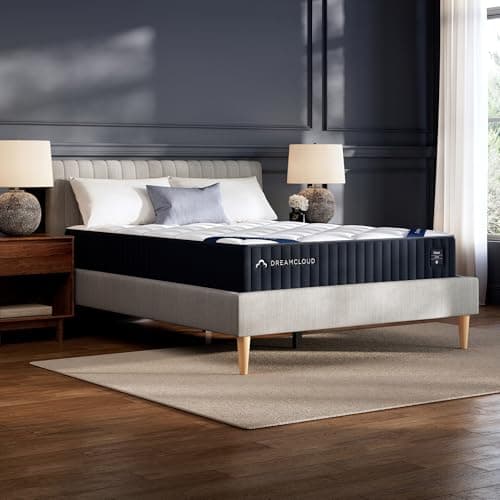 DreamCloud Classic 12" Hybrid Queen The more forgiving default of the two. A coil core covers the failure mode foam can't fix, and gives up only one thing. Best for: Hot sleepers | Hot sleepers | $699.00 · View on Amazon Price as of October 18, 2026. #ad — we earn a commission. |
| 2 | 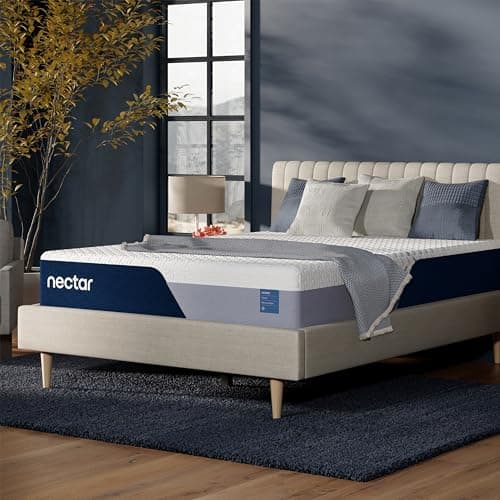 Nectar Classic 12" Queen Buy this one if someone else's 3am trip to the kitchen is the thing most likely to wake you. Best for: Couples and light sleepers | Couples and light sleepers | $699.00 · View on Amazon Price as of October 18, 2026. #ad — we earn a commission. |
The fact that reframes this whole comparison
DreamCloud and Nectar are both owned by Resident. Same parent company, same customer service operation, same returns process, same people writing the policy documents. This is not a technicality — it is the most useful thing you can know before you compare them, and it quietly deletes about half of what gets written about these two beds.
Look at what the listings themselves say. The DreamCloud Classic advertises a 365-night trial and a forever warranty. The Nectar Classic advertises a 365-night trial and a forever warranty. Those are not two brands landing on the same terms through competitive pressure. They are one company applying one policy to two product lines. So every head-to-head that awards points for "generous trial period" and "lifetime warranty coverage" is scoring a tie and presenting it as analysis.
Strip the identical terms out and something clean is left behind. These two mattresses are both 12 inches. Both are queen-size beds in a box from the same company with the same year to change your mind and the same warranty if it sags. The DreamCloud is a hybrid. The Nectar is all-foam. That is the comparison. Everything else is a rounding error.
Coils or no coils — the only axis that matters here
The DreamCloud Classic is listed as a hybrid with a gel memory foam layer. Hybrid means a coil support core with foam above it. The Nectar Classic is listed as contouring memory foam with a cooling top layer, and no coils — which you can verify without taking my word for it, because Resident sells a Nectar Classic Hybridas a separate listing with "innerspring coils" in its title. If the Classic had coils, they wouldn't need the other product.
That single structural difference drives every real consequence, and it cuts in two directions at once.
Heat: the hybrid wins, and it isn't close in principle
Foam is an insulator. That is not a criticism of Nectar, it is what the material is — foam works by surrounding you and filling the air gaps, and anything that fills the air gaps around a warm body holds heat against it. A coil core is the opposite: it is mostly empty space, and air moves through empty space.
Both listings advertise cooling. Nectar has a cooling top layer, DreamCloud has gel memory foam. Take those claims seriously but literally: a cooling surface material pulls heat away from your skin early in the night, and then it reaches the same temperature as you and stops helping. It is a real effect with a time limit. Airflow through a coil core has no such limit, because it isn't a material property being used up — it is a hole for air to move through. If you sleep hot, this is the whole ballgame, and it is why the foam vs hybrid decision outranks every other spec on both pages.
Motion: the foam bed wins, for exactly the same reason
Here is the part hybrid marketing skips. The property that makes coils breathe is the property that makes them transmit movement. A coil is a spring — compress it on one side of the bed and it hands energy along to its neighbours. That is what a spring does. Individually wrapping the coils reduces the effect and does not remove it.
Foam does the reverse: it absorbs a movement and turns it into heat instead of passing it on. So the material that traps your body heat is also the material that swallows your partner's 3am exit from the bed. You cannot have both. Anyone selling you a bed that sleeps like a coil and isolates like foam is selling you the marketing, not the physics.
What the listings actually say, side by side
Everything below is quoted from the sellers' own Amazon listing titles. Where a listing doesn't state something, I've said so rather than filling in the blank — a missing spec is information too.
| Attribute | DreamCloud Classic 12" | Nectar Classic 12" |
|---|---|---|
| Parent company | Resident | Resident |
| Construction | Hybrid — coil core, gel memory foam | All-foam — contouring memory foam |
| Height | 12" | 12" |
| Firmness (as listed) | Not stated in the listing title | Medium firm |
| Cooling approach | Airflow through the coil core, plus gel foam | Cooling top layer only |
| Motion isolation | Limited by the coils | Inherent to the foam |
| Trial | 365 nights | 365 nights |
| Warranty | Forever warranty | Forever warranty |
| Certifications (as listed) | Fiberglass free, CertiPUR-US | Not stated in the listing title |
Two rows there are worth pausing on. The DreamCloud listing never states a firmness, which is a genuine gap — you are buying a feel the seller won't name. And the Nectar listing never mentions fiberglass, where the DreamCloud explicitly rules it out. Neither absence proves anything bad. Both are the kind of thing a comparison that invents data would paper over, and I'd rather leave the hole visible. For what the firmness words are worth in the first place, see the firmness guide.
The verdict, by who you actually are
Buy the DreamCloud if you sleep hot
This is the clearest call on the page. If you wake up warm, if you fight the duvet, if summer is a problem in your bedroom — buy the hybrid. No cooling top layer on an all-foam bed fixes an insulation problem, and picking the Nectar and hoping the cooling marketing carries you is the single most common way people waste the trial period. The coil core is the fix. It is the only fix on this page.
Buy the Nectar if you share a bed, or if budget decides it
If the thing most likely to wake you is another person moving, foam wins and the hybrid is actively the wrong tool. Motion isolation is not a feature Nectar bolted on; it is what the material does, and coils cannot be engineered into matching it.
Budget points the same way. The Nectar is the less expensive of the two as this page is written, and — this is the part that matters — the trial and the warranty are identical, so choosing the cheaper bed costs you nothing in protection. That is unusual. Normally the budget option means weaker terms. Here it means the same terms from the same company. Check the live prices in the picks above before you commit, because both brands discount and the gap moves.
Buy neither if you're hot and sharing a bed
Worth saying on a page that earns a commission either way: if you sleep hot and your partner is restless, these two beds ask you to pick which problem to keep. Neither solves both. In that case the honest move is to look wider — Resident's own Nectar Classic Hybrid sits between these two positions, and the rest of the market is on the best mattresses on Amazon and our overall mattress picks. Don't let a two-product page define your options.
Skip both, too, if you have a strong firmness preference and no way to test it. The DreamCloud title doesn't state a firmness at all, and "medium firm" on the Nectar is a word rather than a measurement. If you already know you need something specific, buying a feel nobody will name is a bad trade even with a year to return it.
Why the shared trial makes this a low-stakes decision
The reassuring conclusion: because both beds come from Resident with the same 365-night trial, getting this wrong is recoverable in a way it normally isn't. A year is long enough to sleep through a full summer, which is precisely the season that tells you whether you should have bought the hybrid.
Give either mattress three to four weeks before you judge it. Foam softens with use, your body adapts to a new surface, and the first few nights on any new bed tell you almost nothing. The reason we weight trial length so heavily across this site is that it is the only spec that protects you from the specs being wrong — and here, unusually, it can't be used to separate two products, because the same company set both. That leaves coils versus foam. Pick the one that matches your actual complaint, and here's exactly how we pick.
The picks, in full
1. Best for Hot sleepers
DreamCloud Classic 12" Hybrid Queen
The more forgiving default of the two. A coil core covers the failure mode foam can't fix, and gives up only one thing.
Price as of October 18, 2026. #ad — we earn a commission.
Key specs
- 12" hybrid
- Gel memory foam comfort layer
- 365-night trial
- Forever warranty
- Fiberglass free, CertiPUR-US certified (as listed)
What's good
- Hybrid construction means a coil support core — mostly open space, so air moves through the mattress instead of sitting in it. This is the only cooling feature in any bed that isn't a marketing claim
- The listing carries a 365-night trial and a forever warranty, identical to the Nectar, because Resident owns both brands and writes both policies
- Coils push back rather than cradle, which makes changing position less like climbing out of a hole — it matters if you move a lot in the night
- The listing explicitly states fiberglass free, which is worth something on a market where the flame barrier is usually undisclosed
What's not
- Coils transmit movement through the mattress. That is the physical price of the air channels, and no coil design removes it entirely
- The listing title states the construction and the trial but never states a firmness. You are buying a feel the seller hasn't put a word to
- "Luxury" in the listing title is a marketing word doing no work. It's a competent hybrid, not a luxury product
Skip this one if
You share the bed with someone restless. Coils carry motion to the other side of the mattress and foam absorbs it — that is the trade you are making, and the Nectar below is the same company's answer to exactly this problem.
2. Best for Couples and light sleepers
Nectar Classic 12" Queen
Buy this one if someone else's 3am trip to the kitchen is the thing most likely to wake you.
Price as of October 18, 2026. #ad — we earn a commission.
Key specs
- 12" all-foam
- Medium firm (as listed)
- Contouring memory foam with a cooling top layer
- 365-night trial
- Forever warranty
What's good
- Foam absorbs movement instead of passing it along. Motion isolation isn't a feature Nectar added — it's what the material does, and it's the one thing a hybrid structurally cannot match
- Same 365-night trial and forever warranty as the DreamCloud, so choosing the cheaper bed costs you nothing in protection
- The listing actually commits to a firmness — medium firm — which is more than the DreamCloud title does. Medium firm is the least-wrong guess when you don't know your preference
- Contouring memory foam does the pressure-relief job well at the hip and shoulder, which is the case for foam over coils for side sleepers
What's not
- All-foam. Foam insulates — that's the material's defining property — so it runs warmer than a coil bed no matter what the cooling top layer does
- The cooling top layer is real but finite: surface materials move heat away early in the night and then reach equilibrium with you
- "Medium firm" is the manufacturer's word, not a measurement. No standard sits behind it, and the same bed reads firmer to a lighter body
Skip this one if
You sleep hot, or you already wake up throwing the duvet off. That is the one problem this mattress is built in the wrong direction to solve, and the DreamCloud above fixes it for a modest step up.
Common questions
Are DreamCloud and Nectar the same company?
Yes. Both are owned by Resident, which also runs the customer service and returns operation behind each one. This is the single most useful fact in the comparison, and almost nobody leads with it. It explains why the two listings carry the same 365-night trial and the same forever warranty: those are Resident's terms, not a coincidence and not a competitive response to each other. It also means brand loyalty is not a real input to this decision.
Is the DreamCloud actually cooler than the Nectar?
We have not measured either mattress and will not pretend otherwise. What we can tell you is what the constructions are and what those materials do. The DreamCloud Classic is listed as a hybrid, so it has a coil support core, which is mostly open space that air can move through. The Nectar Classic is listed as contouring memory foam with a cooling top layer, and foam is an insulator that fills the space around you. If heat is your problem, the construction is the part of the listing that predicts it, not the cooling language.
Which one is better for side sleepers?
Both are plausible, and the specs point slightly at the Nectar. Side sleeping concentrates your weight on the hip and shoulder, and contouring memory foam is built to let those points sink while supporting the waist. A hybrid pushes back sooner. That said, the DreamCloud Classic has a gel memory foam comfort layer over its coils, so it is not a hard innerspring. If you sleep on your side and sleep hot, that comfort layer is why the DreamCloud is still a reasonable answer.
Does the 365-night trial really let me change my mind?
That is the point of it, and it is the reason this decision is lower stakes than it looks. Both mattresses carry the same year-long trial from the same parent company, so if you pick the hybrid and find it carries too much of your partner's movement, the return path is the same one you'd have had on the Nectar. Give any new mattress three to four weeks before you judge it — foam softens with use and your body adapts to a new surface, and the first week is not representative of either.
Is the DreamCloud worth the extra money over the Nectar?
Only if you sleep hot. That is the entire value of the step up, because the trial and the warranty are identical and the brand behind them is the same. If temperature is not one of your complaints, the extra buys you a coil core you did not need and costs you motion isolation you might have wanted. Check the live prices in the picks above before you decide — both brands discount and the gap between them moves.
Sources
Where the facts on this page come from. We cite other people's testing because we don't do our own — here's what that means.
Read next
- Brooklyn Bedding vs NectarA genuine hybrid-versus-foam decision: Brooklyn Bedding's Signature gives you a coil core and a choice of firmness; Nectar gives you a plush foam hug and a year to change your mind. The pick turns on airflow, motion and how sure you are of your feel.
- Brooklyn Bedding vs DreamCloudTwo premium coil-core hybrids head to head: Brooklyn Bedding lets you choose soft, medium or firm and leans supportive; DreamCloud is the plusher, one-feel luxe bed with a 365-night trial. Which wins depends on whether you know your firmness.
- Nectar vs ZinusBudget vs premium, same category: Nectar and Zinus are both 12-inch medium-firm all-foam beds. Nectar wins on trial and warranty for a nightly main bed; Zinus wins on price for a guest room or stopgap.
- DreamCloud vs CasperTwo established bed-in-a-box hybrids head to head: DreamCloud pairs a plush medium-firm luxe feel with a full 365-night trial, while Casper zones its support and runs a 100-night trial. Trial length, feel and price are the levers.
- Nectar vs CasperCasper's listing sells motion isolation. Nectar's sells a 365-night trial and a forever warranty. Here's which promise is worth more.
- Tuft & Needle vs NectarAdaptive foam versus memory foam: same height, opposite design goals. Neither is better — here's which one is built for you.
- The Best Mattresses on AmazonSix Amazon mattresses worth your money, with live prices and an honest note on who each one is wrong for.
- The Best MattressesSix mattresses worth buying, from a budget hybrid to a deep-foam premium bed — with a plain note on who each one is wrong for.
- Memory Foam vs Hybrid MattressesFoam or coils? The six differences that matter, and the one axis that settles it for most buyers.
- Zinus vs LucidThe two default budget Amazon foam beds head to head: Zinus wins on price and a track record, Lucid on picking your own firmness. Which one you buy depends on how sure you are.