The Best Memory Foam Mattresses
Memory foam is one material doing one trick, and almost everything sold on top of that trick is marketing. Here's what viscoelastic foam really is, the two things it's genuinely excellent at, the one thing it physically cannot do, and the six I'd consider.
We earn a commission if you buy through our links. It doesn't affect our picks — and we never take free products. How this site is funded.
Quick picks
| # | Product | Best for | Price |
|---|---|---|---|
| 1 | 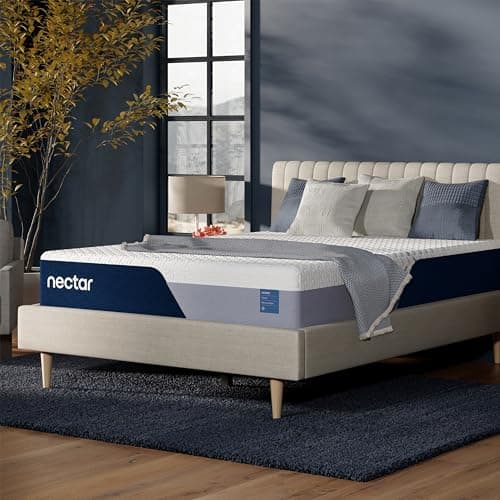 Nectar Classic 12" Queen The default memory foam bed. The trial length is doing more work here than any material claim on the listing. Best for: Most people | Most people | $699.00 · View on Amazon Price as of October 18, 2026. #ad — we earn a commission. |
| 2 | 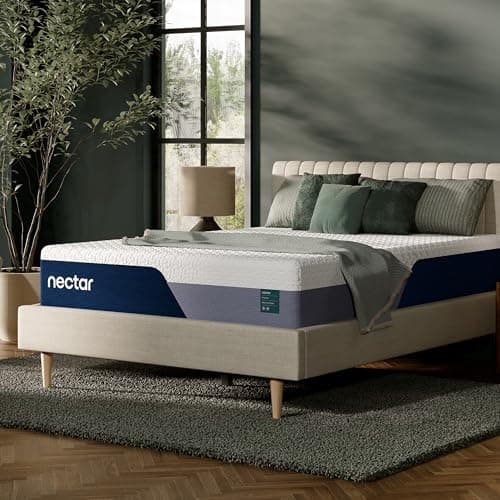 Nectar Premier 13" Queen The extra inch is comfort layer, and comfort layer is what pressure relief is physically made of. Best for: Side sleepers | Side sleepers | $999.00 · View on Amazon Price as of October 18, 2026. #ad — we earn a commission. |
| 3 | 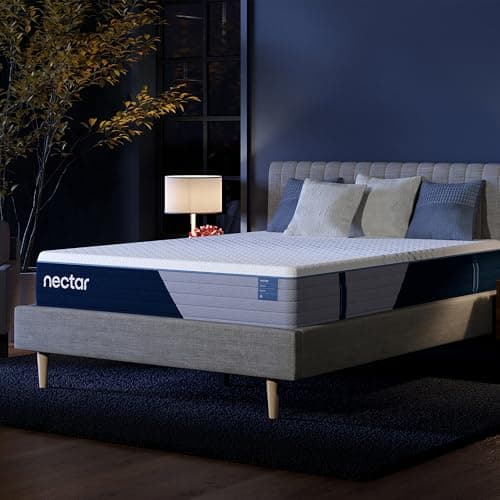 Nectar Classic Hybrid 12" Queen Memory foam on top, springs underneath. If heat is your problem, this is the only pick on this page that addresses it. Best for: Hot sleepers | Hot sleepers | $849.00 · View on Amazon Price as of October 18, 2026. #ad — we earn a commission. |
| 4 | 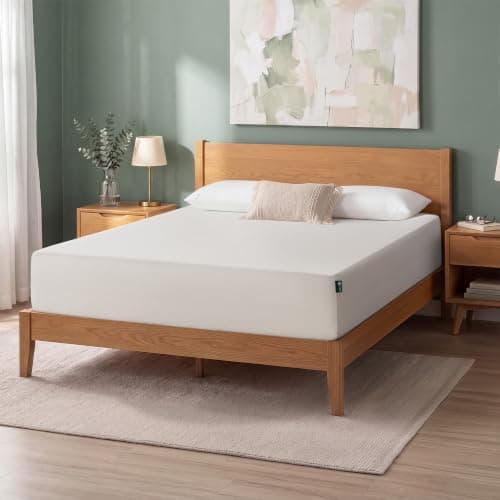 Zinus Green Tea 12" Memory Foam The cheapest memory foam bed here I wouldn't talk someone out of. You are buying foam, and only foam. Best for: A tight budget | A tight budget | $299.99 · View on Amazon Price as of October 18, 2026. #ad — we earn a commission. |
| 5 | 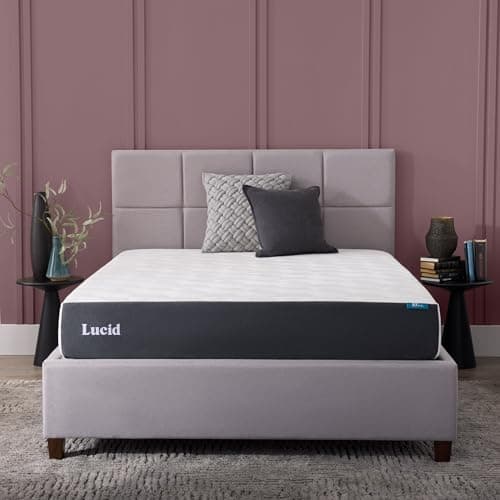 Lucid 10" Firm Gel Memory Foam Most budget brands make you take the firmness they built. Lucid lets you choose, and that's the whole reason it's here. Best for: A firm foam feel | A firm foam feel | $349.99 · View on Amazon Price as of October 18, 2026. #ad — we earn a commission. |
| 6 | 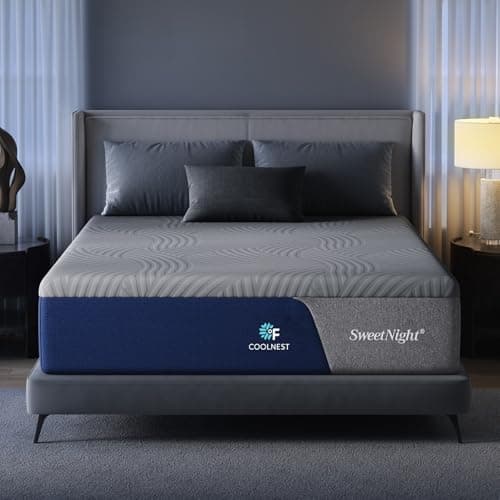 Sweetnight CoolNest 12" Queen About as far as cooling technology can take an all-foam bed — which is further than nothing and less far than the listing implies. Best for: Surface cooling done properly | Surface cooling done properly | $399.99 · View on Amazon Price as of October 18, 2026. #ad — we earn a commission. |
What memory foam actually is
Memory foam is viscoelastic polyurethane. That word is not marketing — it's the whole explanation, and once you have it, most of the category stops being confusing.
Ordinary foam is elastic: push it, it pushes back immediately and at the same rate, like a sponge. Viscoelastic foam is elastic and viscous — it behaves partly like a solid that springs back and partly like a thick liquid that flows. That gives it two properties nothing else in a mattress has. It is rate-sensitive: press it fast and it resists, press it slowly and it yields, which is why a hand slapped onto it bounces and a hand rested on it sinks. And it is heat-sensitive: it softens as it warms, so it gets more yielding under the parts of you that are warmest and heaviest.
The origin story is real and, unusually for this industry, worth knowing. The material was developed under a NASA contract in the 1960s to cushion pilots and passengers against crash forces — a foam that could absorb a sudden load and dissipate the energy rather than bounce it back. It was released into the public domain, and by the 1990s a Swedish foam company had turned it into the first Tempur mattress. Every bed on this page is a descendant of that.
Understanding this gets you most of the way: the slow sink, the body print, the deadness, the heat, the way it feels firmer in a cold bedroom in January. Those are not features and defects — they are the same property viewed from different sides.
The two things memory foam is genuinely excellent at
Pressure distribution
Pressure is force divided by area. Lie on a firm surface and your weight lands on a few small contact patches — shoulder, hip, the side of your knee — so the pressure at each one is high. Memory foam flows away from the load until far more of your body is in contact with the mattress. The force hasn't changed; the area it's spread over has, so the peak pressure at the shoulder drops.
This is why memory foam and side sleeping go together. A side sleeper loads two bony areas with most of their body weight, and the material that best fixes that is one that lets those areas descend while still holding up the waist. If that's you, the depth of the comfort layer is the spec that matters — see the best mattresses for side sleepers.
Motion isolation
The same viscosity that makes the foam slow makes it a damper. When your partner rolls over, the energy of that movement gets absorbed inside the foam — converted to a tiny amount of heat within the material — instead of traveling across the bed to you. A spring does the opposite: storing and returning energy is precisely what a spring is for, so it passes the movement along.
This is a genuine physical property of the material, not a claim a brand makes. It's also the one real reason to choose all-foam over a hybrid, and it is worth nothing at all if you sleep alone.
The one thing it cannot do, and never will
Memory foam cannot ventilate. It insulates. That's not a defect to be engineered away — it's the same property that makes foam the material inside your walls and your cooler box.
Foam is a solid polymer matrix holding pockets of trapped gas. Trapped gas is a superb insulator, and memory foam's cells are smaller and more tightly packed than ordinary foam's, so it resists airflow more than most. Your body puts out heat all night. In a coil bed, that heat moves into open space and away. In a foam bed, there is no open space for it to go into, so it stays between you and the mattress.
Then it compounds, and this is the part nobody selling foam explains. The material softens as it warms. So as the night goes on and your body heat builds up in the surface, you sink further into it, which increases the area of you wrapped in foam and decreases the area of you exposed to air, which traps more heat, which softens the foam further. The property that's doing the good work — heat-responsiveness — is the same property that runs the loop.
If you sleep hot, this is the entire decision, and it outranks every other spec on every listing. The honest answer is a coil core. We lay the choice out properly in memory foam vs hybrid, and if you'd rather fix the bed you already own than replace it, cooling sheets are a far cheaper first move than a new mattress.
Gel, open-cell, copper, plant-based: what the infusions really do
Every listing on this page advertises some version of cooling. Here is what each one is actually doing, and what it is up against.
- Gel infusions. Beads or swirls of gel through the foam. Gel conducts heat better than polyurethane does, so it pulls warmth off your skin faster on contact — which is why the bed feels cool the moment you lie down. But it is a heat sink, not a heat exit. It absorbs your warmth until it reaches your temperature, and then it is just gel. Real effect, finite capacity.
- Copper and graphite. Conductive particles. Same mechanism as gel, same ceiling. Copper carries an antimicrobial story alongside it, which has nothing to do with how you sleep.
- Open-cell foam.The most legitimate of the lot. This is a manufacturing change — the cells are made more interconnected, so air can actually move between them. It genuinely raises the foam's airflow. It is also fighting a body lying on top of it, blocking the route, and airflow through several inches of soft polymer is never going to be airflow through a coil layer. Better foam, still foam.
- Plant-based foam.Some fraction of the petroleum polyol swapped for one derived from soy or castor oil. Usually a modest fraction. It can change response speed a little, and it's a reasonable sustainability story. It changes the thermodynamics not at all.
- Phase-change covers. A material in the cover that absorbs heat by melting rather than by warming. It feels properly cold, and it is the most impressive of these at first touch. It also has a fixed amount of material to melt, after which nothing happens until it can re-solidify.
Notice the shape they all share. Every one of them changes how fastheat builds up at the surface. Not one of them gives the heat anywhere to go. That's a real benefit for the first part of the night, and it is worth something — just not the premium it's usually sold at, and never enough to override a coil core if heat is your actual problem.
Density and firmness are not the same number
This is the most useful thing on this page, and the most consistently muddled.
Density is how much polymer is packed into a given volume — pounds per cubic foot. Conventionally, under about three is low, three to five is medium, and five and up is high. Density predicts durability. Denser foam has more material to resist permanent deformation, so it takes longer to develop the body impression that eventually ends a foam mattress's life. It also costs more, weighs more, and — inevitably — holds more heat, because there's more solid and less air.
Firmness is indentation force deflection: how many pounds of force it takes to compress a foam sample by a quarter of its thickness. It predicts feel. That's all it predicts.
These vary independently. A high-density foam can be built soft; a low-density foam can be built firm. "High density" on a listing is not a synonym for "firm", and a brand using it that way is either confused or counting on you being.
Which sets up the real problem with shopping this category. Density is the number that tells you whether the bed will still be a bed in year six — and almost nobody publishes it. Firmness is published on every listing, has no cross-brand standard behind it, and reads differently depending on your body: the same mattress is firmer under a 130 lb side sleeper than under a 230 lb back sleeper, because the heavier body sinks further into the identical foam. You are handed the meaningless number and denied the useful one. Our firmness guide covers how weight and position change what you should be aiming for.
In the absence of a density figure, the warranty is your best available proxy. Warranties define a sag depth that counts as a defect — commonly an inch or an inch and a half. That number is the manufacturer stating, in a document they can be held to, what they expect their foam to do over time. It is the only durability claim on the page with any teeth.
Who shouldn't buy memory foam at all
Worth saying plainly on a page that earns a commission when you buy one.
- Hot sleepers. Covered above. Buy a hybrid. Nothing else on this page matters if this is you.
- Combination sleepers.If you change position five times a night, memory foam's slow recovery works against you every time — you have to climb out of the impression you just made. The material's defining property is the thing annoying you.
- Anyone over roughly 230 lb on a thin or budget foam bed. Without a coil core and without published density, the heavier you are the faster you reach the bottom of the comfort layer and the faster the impression sets.
- Anyone who sits on the edge of the bed. Foam has no structural edge. It compresses under you and keeps compressing. Coils are simply better at this and always have been.
If none of those are you, memory foam is a genuinely good answer to a specific problem, and a queen from a serious brand is one of the better deals in furniture. Just buy it for the pressure relief and the motion isolation — the things the material really does — and treat every cooling claim on the box as what it is. Here's exactly how we pick, and what we refuse to claim, and the wider Amazon mattress roundup if you want hybrids in the mix.
The picks, in full
1. Best for Most people
Nectar Classic 12" Queen
The default memory foam bed. The trial length is doing more work here than any material claim on the listing.
Price as of October 18, 2026. #ad — we earn a commission.
Key specs
- 12" all-foam
- Medium firm (as listed)
- Contouring memory foam comfort layer
- 365-night trial
- Forever warranty
What's good
- A year-long trial is the only honest answer to a material whose whole problem is that you cannot judge it in a shop — memory foam softens over weeks, and 30 days is not long enough to see where you land
- Nectar publishes a lifetime ("forever") warranty on this model. Warranties are the closest thing to a public durability statement a foam brand makes, because a sag claim costs them a mattress
- Twelve inches gives the build room for a comfort layer and a support core to do separate jobs. Below ten there isn't room for two jobs
What's not
- All-foam. Foam insulates — that is what the material does — so this runs warmer than any coil bed, and no comfort-layer wording changes it
- "Medium firm" is Nectar's word, not a measurement. There is no cross-brand standard behind any firmness label
- You are paying a real premium over the budget foam beds below, and most of what you're buying is the trial and the warranty, not the foam
Skip this one if
You sleep hot. This is an all-foam bed and it will hold your heat against you. Buy the Nectar Classic Hybrid below — same brand, same feel philosophy, with a coil core that air can actually move through.
2. Best for Side sleepers
Nectar Premier 13" Queen
The extra inch is comfort layer, and comfort layer is what pressure relief is physically made of.
Price as of October 18, 2026. #ad — we earn a commission.
Key specs
- 13" all-foam
- Medium firm (as listed)
- Contouring memory foam comfort layer
What's good
- Thirteen inches over the Classic's twelve is an extra inch of foam above the support core. That is the only thing that lets a shoulder sink far enough to stop being a pressure point
- Side sleeping loads two small, bony areas — shoulder and hip — with most of your body weight. Foam that lets them descend and then supports the waist is exactly the problem viscoelastic foam was made for
- Same firmness label as the Classic, so this is a depth upgrade rather than a different bed to re-learn
What's not
- More foam means more insulation. The heat trade-off gets slightly worse, not better, as you add inches
- The listing does not publish foam density, so you cannot tell how long that extra inch will hold its shape
- The most expensive all-foam bed on this page, and the gap over the Classic buys you one inch
Skip this one if
You sleep on your back or your front. A deeper comfort layer lets your hips settle lower than your shoulders, which is the exact opposite of what a back or stomach sleeper wants. Buy the Classic above, or the Lucid Firm below.
3. Best for Hot sleepers
Nectar Classic Hybrid 12" Queen
Memory foam on top, springs underneath. If heat is your problem, this is the only pick on this page that addresses it.
Price as of October 18, 2026. #ad — we earn a commission.
Key specs
- 12" hybrid
- Medium firm (as listed)
- Memory foam comfort layer over a coil support core
What's good
- A coil core is mostly empty space, and air moves through empty space. This is the only cooling feature in any mattress that isn't a delaying tactic
- You still get a memory foam surface, so the contouring feel that brought you to this page survives the swap
- Coils resist compression without needing thickness the way foam does, which tends to help edge support — the place all-foam beds are weakest
What's not
- Coils transmit motion. Whatever your partner does at 3am, you will have a better idea of it than on the all-foam Classic
- More expensive than the Classic for what is, in feel terms, the same bed
- A hybrid is heavier and more awkward to move than an all-foam bed of the same height
Skip this one if
You share a bed with someone restless and heat isn't your issue. Motion isolation is the thing all-foam does better than any hybrid ever will — buy the all-foam Classic and keep the difference.
4. Best for A tight budget
Zinus Green Tea 12" Memory Foam
The cheapest memory foam bed here I wouldn't talk someone out of. You are buying foam, and only foam.
Price as of October 18, 2026. #ad — we earn a commission.
Key specs
- 12" all-foam
- Green-tea infused foam
- Pressure-relieving comfort foam
What's good
- A twelve-inch all-foam queen for roughly a third of what the Nectar costs. The materials gap is real but it is much smaller than the price gap
- Zinus has sold this line for years. The listing is stable, the stock is reliable, and the company is not going to vanish mid-warranty
- Genuinely sensible as a spare room bed, a student's first mattress, or a stopgap in a short lease
What's not
- The green tea is an odor-control claim. It is not a sleep feature, it is not a cooling feature, and it should change nothing about your decision
- Zinus publishes a 10-year warranty on this line — the industry floor — and there is no trial period worth the name
- No published foam density, which on a budget bed is the number you'd most want to see
Skip this one if
This is your main bed for the next decade. Foam durability is a density question and nobody at this price publishes density — the long warranty on the Nectar above is the only durability statement on this page you can hold anyone to.
5. Best for A firm foam feel
Lucid 10" Firm Gel Memory Foam
Most budget brands make you take the firmness they built. Lucid lets you choose, and that's the whole reason it's here.
Price as of October 18, 2026. #ad — we earn a commission.
Key specs
- 10" all-foam
- Firm (as listed)
- Gel memory foam
- Bamboo charcoal infused
- Also sold in Medium and Plush
What's good
- Lucid sells the same bed in plush, medium and firm. If you already know what you like, that choice is worth more than any infusion on any listing here
- Firm foam suits back and stomach sleepers, whose hips otherwise drop below their shoulders as the foam warms and softens through the night
- Ten inches is light enough for one person to wrestle up a staircase, which is not nothing
What's not
- Ten inches is thin. Less foam between you and the slats means less room for the material to do the thing you're buying it for
- Bamboo charcoal, like green tea, is an odor claim dressed as a performance one
- "Firm" is Lucid's word, and firm means something different at 130 lb than it does at 230 lb, on the identical mattress
Skip this one if
You sleep on your side. Firm foam and a side sleeper's shoulder is the single worst pairing in this category — the shoulder can't descend, so it takes the load instead of sharing it. Buy the Nectar Premier above.
6. Best for Surface cooling done properly
Sweetnight CoolNest 12" Queen
About as far as cooling technology can take an all-foam bed — which is further than nothing and less far than the listing implies.
Price as of October 18, 2026. #ad — we earn a commission.
Key specs
- 12" all-foam
- Memory foam
- Cooling construction (as listed)
What's good
- Sweetnight builds the whole CoolNest line around surface heat, rather than adding a gel claim to an existing bed and hoping
- Surface cooling is real for the first stretch of the night — a cooler surface at the moment you're falling asleep is the part of the night it can actually affect
- Twelve inches and mid-priced: this is not asking a premium for the cooling story the way the brand-name beds do
What's not
- Every cooling layer in an all-foam bed is a heat sink with a finite capacity. It absorbs, it saturates, and then you're sleeping on foam
- Sweetnight is an Amazon-native brand with no showroom and a short trading history
- The listing leans hard on cooling language that the underlying material caps hard
Skip this one if
You actually run hot, rather than merely disliking a warm surface. If heat is genuinely your problem then this is the best version of the wrong answer — buy the Classic Hybrid above and let the coils do it.
Common questions
Does memory foam really sleep hot?
Yes, and it is the material rather than a manufacturing flaw. Memory foam is a solid polymer with small, tightly packed cells, so it resists airflow and works as an insulator — which is what foam is used for everywhere else in the world. It also softens as it warms, so the hotter you get, the further you sink, and the more of your body is wrapped in foam rather than exposed to air. Gel, copper, graphite and phase-change covers all slow that build-up at the surface; none of them create a path for heat to leave. If you sleep hot, the fix is a coil core, not a better foam.
What is the difference between foam density and firmness?
They are unrelated numbers that get used interchangeably, which is how most bad memory foam purchases happen. Density is how much polymer is packed into a given volume, measured in pounds per cubic foot, and it predicts durability — how long the foam holds its shape before a permanent body impression forms. Firmness is measured as indentation force deflection: how much force it takes to compress a foam sample by a quarter of its thickness. That predicts feel. Two foams can share a density and feel completely different, and two foams of identical firmness can differ wildly in how long they last. The trap is that listings publish the firmness label, which means nothing between brands, and almost never publish the density, which means everything.
How long should a memory foam mattress last?
Six to eight years is the usual expectation for a mid-density foam bed, but density drives it more than price does. Low-density foam softens and develops body impressions faster. Since almost no listing publishes density, use the warranty as your proxy: warranties define a sag depth — often an inch or an inch and a half — that counts as a defect, which is the brand stating on the record what it expects the foam to do over time. A lifetime warranty is an expensive promise, so brands only make it when their returns data supports it.
Is gel memory foam worth paying more for?
Only slightly, and not for the reason the listing gives. Gel, copper and graphite infusions raise the foam's thermal conductivity, so the surface pulls heat away from your skin faster at first contact. That is a real effect and it is why the bed feels cool when you lie down. But an infusion is a heat sink with a fixed capacity: it absorbs your body heat until it reaches your temperature, and then it stops doing anything. It changes when you get warm, not whether. Do not pay a large premium for it, and do not let it talk you out of a hybrid if heat is your actual problem.
Why does a new memory foam mattress smell, and how long does it last?
Fresh polyurethane foam releases volatile organic compounds, and compressing a mattress into a box for shipping traps them until you open it. The smell usually fades within a few days of unwrapping the bed in a ventilated room. We are not qualified to give you a health opinion on it and we are not going to pretend otherwise. What you can check independently is certification: CertiPUR-US tests foam for specified emissions and restricted substances, and the certificate is published rather than self-declared. If a listing claims it, verify it on the certifier's own site rather than the seller's.
Sources
Where the facts on this page come from. We cite other people's testing because we don't do our own — here's what that means.
Read next
- What Is Memory Foam?What memory foam actually is: viscoelastic polyurethane that responds to heat and pressure. How it contours, the gel and plant-based variants, and the heat and off-gassing trade-offs.
- Sealy vs NectarA legacy Sealy hybrid with a coil core against the boxed all-foam Nectar. Sealy brings springs, airflow, firmer edges and a name you can test in a store; Nectar brings a plush hug, better motion isolation and a stated 1-year trial. Which wins depends on you.
- What Is CertiPUR-US?What CertiPUR-US actually certifies about mattress foam, the chemicals it screens out, and the two big things it says nothing about - fiberglass and whether a bed is organic.
- DreamCloud vs LucidA plush luxury hybrid against a budget all-foam bed you pick the firmness on. Different tiers, different builds — here's how to choose between spending up for a trial-backed hybrid and saving big on foam you order in your own feel.
- The Best Mattresses for Adjustable BedsSix mattresses that flex on an adjustable base without cracking or gapping — all-foam beds and one flexible thin-coil hybrid — plus the height and construction rules that decide compatibility, and who each is wrong for.
- Gel Memory Foam vs Memory FoamGel foam feels cooler on contact and delays heat build-up, then reaches equilibrium with your body. A real but modest edge — not a cure for sleeping hot.
- Innerspring vs Memory FoamBounce and breathability versus a deep contouring hug — and why most modern buyers are better served by the hybrid in between than by either extreme.
- The Best RV and Camper MattressesWhy size comes before everything with an RV bed, why a boxed mattress beats a traditional one through a camper door, and six short-queen picks with an honest note on who each is wrong for.
- Latex vs Memory FoamTwo comfort materials, not two constructions: memory foam's slow hug versus latex's springy push-back, and which one actually fits how you sleep.
- The Best Adjustable Bed Bases (For Mattresses That Can Bend)Six adjustable bed bases chosen on the one rule that matters - your mattress has to bend on it - plus motor noise, weight capacity and which features are worth paying for. Honest cons on every pick.
- Mattress Off-GassingWhat that new-mattress smell actually is, whether it's something to worry about, and the honest way to clear it out faster.
- The Best Mattresses on AmazonSix Amazon mattresses worth your money, with live prices and an honest note on who each one is wrong for.
- Memory Foam vs Hybrid MattressesFoam or coils? The six differences that matter, and the one axis that settles it for most buyers.
- The Best Mattresses for Side SleepersSix mattresses with comfort layers deep enough to let a shoulder and hip sink — the actual problem side sleepers are trying to solve.
- Mattress Firmness: The 1-10 Scale, HonestlyWhat the 1-10 firmness scale actually means, why one brand's 6 is another's 7, and how your bodyweight changes the answer.
- The Best Mattresses in a BoxHow the boxed-mattress format really works — compression, off-gassing, expansion — plus six picks and who each one is wrong for.
- The Best Cooling Mattresses for Hot SleepersSix mattresses that actually sleep cooler, led by hybrids because a coil core is the only cooling feature that doesn't saturate by midnight — with honest cons on every pick.
- Zinus vs LucidThe two default budget Amazon foam beds head to head: Zinus wins on price and a track record, Lucid on picking your own firmness. Which one you buy depends on how sure you are.