The Best Mattresses for Kids
Children are light, which flips most mattress advice on its head: they need less foam than you do, not more. These are six twin beds worth considering, judged on durability, cleanability and what the listings actually certify.
We earn a commission if you buy through our links. It doesn't affect our picks — and we never take free products. How this site is funded.
Quick picks
| # | Product | Best for | Price |
|---|---|---|---|
| 1 | 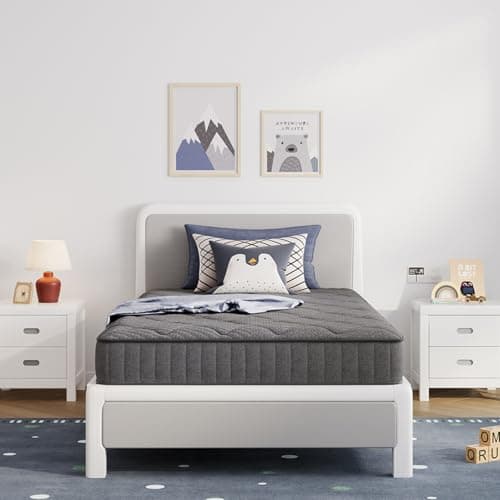 Avenco 6" Twin Innerspring Hybrid Coils under a light body barely compress, so this is the pick most likely to still be a mattress in five years. Best for: Most kids | Most kids | $87.99 · View on Amazon Price as of October 18, 2026. #ad — we earn a commission. |
| 2 | 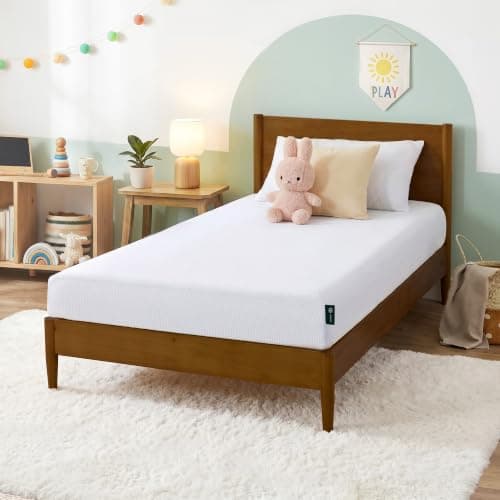 Zinus 6" Green Tea Cooling Memory Foam The listing says fiberglass free in plain words, from the budget brand with the longest record in this category. Best for: Parents who want the fiberglass question settled | Parents who want the fiberglass question settled | $120.26 · View on Amazon Price as of October 18, 2026. #ad — we earn a commission. |
| 3 | 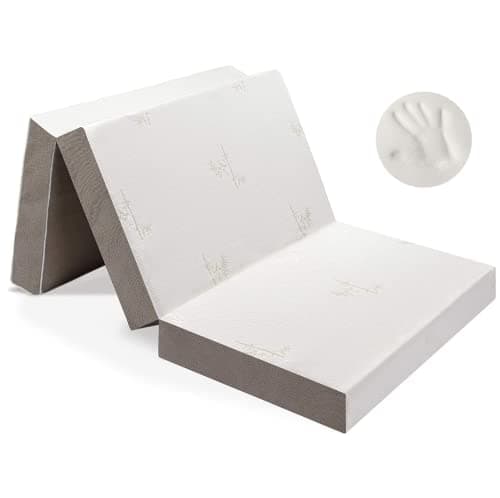 Milliard Trifold Twin XL, 6" A washable cover and a bed that folds into a cupboard — the two things that make a kid's mattress survivable. Best for: Sleepovers, floors and accidents | Sleepovers, floors and accidents | Check price on Amazon → #ad — we earn a commission. |
| 4 | 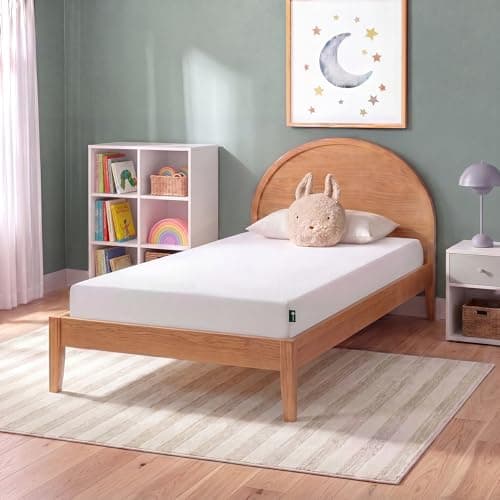 Zinus Green Tea 5" Twin The one to buy when the frame, not the child, sets the rules — and the certifications are the best-stated here. Best for: Bunk beds and trundles | Bunk beds and trundles | $74.99 · View on Amazon Price as of October 18, 2026. #ad — we earn a commission. |
| 5 | 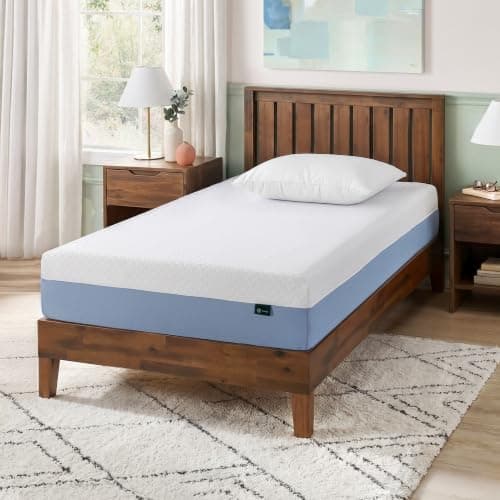 Zinus 8" Twin Cooling Essential Memory Foam The step up for a child who's stopped being light. Buy this when they outgrow the 6-inch, not before. Best for: Older kids and teenagers | Older kids and teenagers | $99.99 · View on Amazon Price as of October 18, 2026. #ad — we earn a commission. |
| 6 | 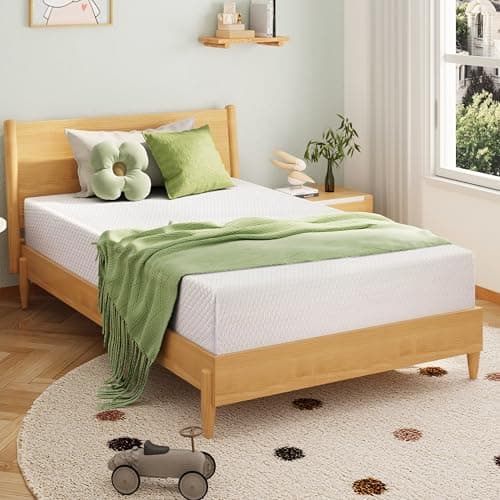 EGOHOME 6" Twin Memory Foam Sold as a kids' mattress. That's a marketing decision, not a specification — but the underlying bed is a reasonable one. Best for: The lowest price with a stated certification | The lowest price with a stated certification | $94.99 · View on Amazon Price as of October 18, 2026. #ad — we earn a commission. |
Everything you know about mattresses is calibrated for you
Mattress advice is written for adults, by adults, about adult bodies — and almost all of it inverts when the sleeper weighs 45 lb. The instinct is to buy a child a smaller version of a good adult bed: deep, plush, lots of memory foam, the works. That instinct produces a worse bed for the child and a bigger bill for you, and it's worth understanding exactly why before you spend anything.
A mattress holds you up by compressing. The foam gives way until its resistance matches the load pressing into it, and the whole design — every layer, every stated firmness — assumes a body heavy enough to reach the parts that are meant to do the work. Now put a light child on it. They don't sink in. They rest on the surface. The contouring you paid for never happens, because contouring requires enough weight to summon it, and the expensive support core underneath might as well not be in the box.
So the rule for kids runs backwards from the adult one: less foam, not more. A thin mattress puts a light body close enough to the supportive part to actually use it. This is also, conveniently, the cheap answer — one of the very few times in this category where the right call and the frugal call are the same call.
Five, six or eight inches
Nearly every good option for a child sits in that band, and picking between them is mostly arithmetic rather than taste.
- Six inches is the sensible default for a primary-school child. Enough material to be a real bed, not so much that a light sleeper floats on top of it.
- Five inchesis a frame decision, not a comfort one. Bunk beds are designed around a maximum mattress height so the guard rail still stands proud of the sleeping surface — put a thick mattress up there and you have quietly lowered the rail. Trundles and drawer beds have hard clearances too. Measure before you buy, because the frame doesn't negotiate.
- Eight inchesis for a child who has stopped being light — a teenager approaching adult weight, who now compresses a surface the way the designer assumed. Buying eight inches early doesn't future-proof anything; it just gives them a worse bed for the years in between.
If you're also sorting out the frame, the mattress sizes guidehas the dimensions — and note that a twin XL like the Milliard tri-fold above is a few inches longer than a standard twin, which is the difference between a bed that survives a growth spurt and one that doesn't.
Durability is the real spec, and nobody publishes it
Here's the thing about a child's mattress: it doesn't get slept on so much as lived on. It's a trampoline, a fort, a landing pad and occasionally a bed. And it has to survive that for years while the load on it doubles.
The spec that would predict this is foam density — how much material is actually in the foam, which determines whether the comfort layer is still there in year five. Not one listing on this page publishes it. Not one publishes a weight limit either. This is the same information vacuum that makes shopping for a heavier body so frustrating, arriving from the opposite direction.
What you can reason about is construction. Foam fails by taking a permanent set under sustained load — it stops springing back and the dip becomes the shape of the sleeper. A coil doesn't work that way, and under a child the coils are barely being asked to do anything at all. A support system running far below its capacity is a support system that doesn't sag. That, and not comfort, is why the coil bed is my first pick above: for a light sleeper it isn't obviously nicer on night one, and it's much more likely to still be a mattress on night one thousand.
Cleanability is a spec, whatever the listing thinks
No mattress listing has a cleanability field, and for a child's bed it belongs near the top of the page. Kids are damp. There will be a spilled drink, an illness at 2am, an accident during a phase everyone promised would pass.
A removable, washable cover turns each of those into a laundry cycle. A non-removable one turns them into a stain you scrub at, a smell you negotiate with, and eventually a mattress you replace early. Only the Milliard tri-fold above states a washable cover, which is most of why it earns its place. If your chosen bed doesn't have one, a waterproof protector is the cheapest insurance in this entire category — and while a toppercan sit on top and take the punishment too, understand that adding one to a thin kids' mattress partly undoes the thinness you deliberately bought. The layer above the protector is a laundry decision on the same logic, which is why we keep sheets for kids on a separate page: two cheap sets in rotation beats one nice one.
One warning that cuts the other way. If a cover is notsold as removable, don't remove it. On some inexpensive foam mattresses that cover is holding the fire barrier in place, and on a minority of them that barrier is fiberglass — perfectly contained while the cover stays zipped, considerably less so once it doesn't.
What the certifications do and don't tell you
Certification badges are the most-quoted and least-understood thing in this category, so, precisely:
- CertiPUR-USis about the foam. It certifies the polyurethane is made without ozone depleters, certain flame retardants, mercury, lead and formaldehyde, and that it's tested for low VOC emissions. It says nothing about how long the bed lasts or how well it supports anyone.
- Oeko-Tex is about textiles — the cover, not the core. Different part of the bed, different question.
- Federal flammability standardsaren't a badge at all. Every mattress sold in the US must meet them and they're enforced by the Consumer Product Safety Commission, so a listing "meeting" them is telling you it is legal to sell, which is not a distinction.
None of these is an organic certification, and the difference is worth knowing if that's what you came looking for: CertiPUR-US is a polyurethane foam program, which is close to the opposite claim. The two standards that do mean organic are covered on our organic mattress page, along with a certified 8-inch twin that fits a bunk frame.
The rule I hold to on this page: a certification counts only where that listingclaims it. Brands certify some products and not others, and a badge on a company's homepage is not a badge on the bed in your basket. Where a title above doesn't state a certification, I haven't assumed one — I've said so in the cons, because being told less is itself information.
What this page is not
This is beds for children — twins and twin XLs, for kids in regular frames. It is not about cribs, bassinets, or infant sleep. That is a real safety subject with its own standards and its own genuine hazards, and we have no medical or child-safety advisor here, so we don't write about it. I'd rather send you to someone qualified than have a guess in front of a search result. Nothing on this page should be read as advice about a baby.
What I'd buy
For a primary-school child on a normal frame: the 6-inch coil hybrid, and a waterproof protector over it. It's the cheapest pick that's also the most durable one, which almost never happens in this category — take the win. The pillow is a separate and much smaller decision, and it is a size one rather than a comfort one — pillows for kids covers the three size classes and the age at which a pillow should not be in the bed at all.
For a bunk or a trundle, measure the frame first and let the clearance pick the mattress. For a teenager, step up to eight inches, and know that their next bed after that is an adult one — at which point the full Amazon roundup is the more useful page. And for the sleepover pile in the cupboard, buy the thing with the cover that comes off.
For the sleepover itself — the extra bodies on the floor twice a year — don't buy a second child's mattress. An air mattress is the right tool for a bed that lives in a cupboard, and that page covers which heights are worth paying for. It also carries the CPSC warning that air mattresses are never a sleep surface for an infant, which matters in exactly the houses that own one.
The picks, in full
1. Best for Most kids
Avenco 6" Twin Innerspring Hybrid
Coils under a light body barely compress, so this is the pick most likely to still be a mattress in five years.
Price as of October 18, 2026. #ad — we earn a commission.
Key specs
- 6" hybrid
- Bonnell coil support core (as listed)
- Medium firm (as listed)
- Breathable cover (as listed)
- CertiPUR-US certified materials (as listed)
- Twin
What's good
- A coil core under a 40-60 lb child is barely working. That's the point — a support system operating far below its limit is a support system that doesn't sag, and sag is how kids' mattresses actually die
- Bonnell coils are the oldest, cheapest, best-understood spring design there is. Nothing here is trying to be innovative, which at this price is a feature
- The listing states CertiPUR-US certification, which covers what the foam is made without and tests it for low VOC emissions
What's not
- Bonnell coils are connected, so they transmit movement across the bed. Irrelevant for one child alone; not irrelevant for two kids sharing on a sleepover
- 6 inches is thin by adult standards. It is correct for a child and will feel wrong to you when you sit on it
- Avenco is an Amazon-native brand — no showroom, no long trading history behind the warranty
Skip this one if
Your child is a teenager, or nearly. A 6-inch bed sized for a 50 lb sleeper is under-built for someone approaching adult weight — move up to the Zinus 8-inch below.
2. Best for Parents who want the fiberglass question settled
Zinus 6" Green Tea Cooling Memory Foam
The listing says fiberglass free in plain words, from the budget brand with the longest record in this category.
Price as of October 18, 2026. #ad — we earn a commission.
Key specs
- 6" all-foam
- Fiberglass free (as listed)
- Medium firmness (as listed)
- Cooling gel foam
- Certified safe foams and fabric (as listed)
- Twin
What's good
- States fiberglass free explicitly. Every mattress sold in the US needs a fire barrier, and some cheap foam beds use fiberglass for it — a listing that names the issue is a listing you can hold to it
- Zinus has sold this line for years. The ASIN is stable, the stock doesn't disappear, and there's a real company behind the warranty
- Light enough that one parent can carry it upstairs and flip it onto a frame without help
What's not
- All-foam, so it insulates rather than ventilating. The cooling gel helps at the surface for part of the night and then it doesn't
- "Green tea" is an odor-control claim. It is not a sleep feature and it is not doing anything for your child
- Foam takes a set under sustained load over years — less so under a light child than an adult, but it's the failure mode to expect
Skip this one if
You want the longest-lasting option and don't care about the cooling layer. The Avenco's coil core will outlast this under years of jumping — buy that instead.
3. Best for Sleepovers, floors and accidents
Milliard Trifold Twin XL, 6"
A washable cover and a bed that folds into a cupboard — the two things that make a kid's mattress survivable.
#ad — we earn a commission.
Key specs
- 6" memory foam
- Tri-folding
- Removable, washable cover (as listed)
- Twin XL (as listed)
What's good
- The cover comes off and goes in the machine. With children this is not a nice-to-have — it is the difference between an accident and a new mattress
- Folds into thirds and stores in a wardrobe, which makes it a sleepover bed, a floor bed and a travel bed rather than a piece of furniture you're stuck with
- Twin XL is five inches longer than a standard twin, which is the version that still works when the child it was bought for turns into a teenager
What's not
- The listing states no CertiPUR-US certification and no fiberglass-free claim. That's not evidence of a problem, but it is less information than the Zinus and Avenco give you
- It has fold lines. A tri-fold has two seams down its length and you can feel them — it's the price of the format
- It is a Twin XL, not a twin, so a standard twin fitted sheet will not fit it properly — check what sheets you own before you order
Skip this one if
This is your child's everyday bed. The fold lines are fine for a guest week and tiresome for a year — buy the Avenco for nightly use and keep this in the cupboard.
4. Best for Bunk beds and trundles
Zinus Green Tea 5" Twin
The one to buy when the frame, not the child, sets the rules — and the certifications are the best-stated here.
Price as of October 18, 2026. #ad — we earn a commission.
Key specs
- 5" all-foam
- Medium firm (as listed)
- CertiPUR-US certified
- Oeko-Tex certified (as listed)
- Twin
What's good
- 5 inches is deliberately thin, and on a bunk that's the whole point — most bunk frames need the sleeping surface well below the guard rail, and a thick mattress quietly defeats it
- The listing states both CertiPUR-US (the foam) and Oeko-Tex (the textiles). Two named certifications covering two different parts of the bed is more than almost anything else here claims
- Slides into a trundle or a drawer bed that a 6- or 8-inch mattress simply won't fit
What's not
- 5 inches is genuinely thin. On a slatted bunk frame you may feel the slats through it
- All-foam and the shallowest bed on this page, so there's very little material to work with
- Green tea infusion is odor control, not performance — same caveat as every Zinus listing
Skip this one if
You have a standard frame with no height restriction. You'd be accepting a thinner bed for no reason — the 6-inch options above cost about the same.
5. Best for Older kids and teenagers
Zinus 8" Twin Cooling Essential Memory Foam
The step up for a child who's stopped being light. Buy this when they outgrow the 6-inch, not before.
Price as of October 18, 2026. #ad — we earn a commission.
Key specs
- 8" all-foam
- Medium feel (as listed)
- Fiberglass free (as listed)
- Certified safe materials (as listed)
- Twin
What's good
- 8 inches gives the comfort layer and the base foam room to do separate jobs, which starts to matter as a child approaches adult weight
- States fiberglass free — the same claim as the 6-inch Zinus, on a bed that will still be in use in five years
- Medium feel rather than medium firm: a slightly softer surface makes sense for a heavier teenager who now actually compresses it
What's not
- For a small child this is simply too much bed. They won't compress 8 inches of foam enough to reach the supportive part, so they'll sleep on top of it
- All-foam again, with the usual heat trade-off and no coils to move air
- A teenager's next mattress is a full-size adult one anyway — this is a stepping stone, not a destination
Skip this one if
Your child is under about 70 lb. Nothing about this bed will do anything for them — they'll float on the top layer. The 6-inch Avenco or Zinus is the right call.
6. Best for The lowest price with a stated certification
EGOHOME 6" Twin Memory Foam
Sold as a kids' mattress. That's a marketing decision, not a specification — but the underlying bed is a reasonable one.
Price as of October 18, 2026. #ad — we earn a commission.
Key specs
- 6" all-foam
- Medium firm support (as listed)
- Green tea gel-infused memory foam
- CertiPUR-US certified
- 75" L x 38" W (as listed)
What's good
- CertiPUR-US stated on the listing, at the cheap end of this page — the certification is the thing worth paying for and it isn't priced as a premium here
- Medium firm is the right direction for a light sleeper who won't compress the surface much anyway
- The listing publishes actual dimensions rather than just a size name, which is more than several competitors manage
What's not
- "For Kids" in the title is a marketing category, not a design change. There is no children's mattress standard it's meeting that the other 6-inch beds aren't
- No fiberglass-free claim on this listing, unlike the two Zinus picks. Absence isn't proof of anything, but you're being told less
- EGOHOME is a small marketplace brand with no trading record to fall back on
Skip this one if
You care about the fiberglass question. Two picks above state fiberglass free in the listing and this one doesn't — for a negligible difference in price, take the one that says it.
Common questions
How thick should a mattress for a child actually be?
Five to eight inches covers almost every case, and thinner is usually righter than parents expect. A mattress supports you by compressing under your weight, so the material has to be reachable — a 40 lb child cannot press far enough into a deep adult bed to engage the layer that's meant to hold them up, and simply rests on the surface. Six inches is a sensible default for primary-school age. Move to eight when they're approaching adult weight, and consider five if a bunk frame or trundle sets a height limit.
Is a plush mattress better for a child?
No, and it's the most common mistake in this category. Plushness is calibrated for an adult body pressing into it. A light child doesn't sink in, so a plush bed gives them a soft floating surface rather than the contouring the softness was designed to deliver — and the deep, expensive comfort layer does nothing for them at all. Medium or medium firm is a better default for a light sleeper, and it costs less.
What do CertiPUR-US and Oeko-Tex actually certify?
They cover different parts of the mattress and neither is a safety rating for the bed as a whole. CertiPUR-US is a foam program: it certifies that the polyurethane foam is made without ozone depleters, certain flame retardants, mercury, lead and formaldehyde, and that it's tested for low VOC emissions. Oeko-Tex certifies textiles against a list of harmful substances, so it speaks to the cover rather than the core. On this page we only name a certification where that specific listing claims it — a brand certifying one product does not certify its whole range.
Should I worry about fiberglass in a cheap kids' mattress?
It's worth understanding rather than panicking about. Every mattress sold in the US has to meet federal flammability standards enforced by the Consumer Product Safety Commission, and manufacturers need a fire barrier to do it. Some inexpensive foam mattresses use a fiberglass barrier, which is contained and inert while the cover stays on — the reported problems come from people unzipping and removing a cover that was never meant to come off. Two of the picks above state fiberglass free on the listing. If a listing doesn't say, you don't know, and the practical rule either way is simple: don't remove a cover unless it's explicitly sold as removable and washable.
Does this page cover cribs or babies?
No, deliberately. Everything here is a twin or twin XL mattress for a child in a regular bed. Infant sleep is a genuine safety topic with its own standards and its own hazards, and we have no medical or child-safety advisor on this site — so we don't write about it rather than guess at it. For crib mattresses and infant sleep guidance, go to a source with the credentials to give it.
Sources
Where the facts on this page come from. We cite other people's testing because we don't do our own — here's what that means.
Read next
- The Best Pillows for KidsA pillow for a child is a size decision, not a comfort decision - adult loft bends a small neck. Five toddler and youth pillows on stated size, loft, shell and washability, with the safe-sleep age guidance first.
- Twin vs FullTwin and Full share a 75-inch length — the entire difference is 16 inches of width. Here's who actually fits each size, and why a Full still isn't a real couples bed.
- The Best Mattresses on AmazonSix Amazon mattresses worth your money, with live prices and an honest note on who each one is wrong for.
- The Best Mattresses in a BoxHow the boxed-mattress format really works — compression, off-gassing, expansion — plus six picks and who each one is wrong for.
- The Best Organic MattressesSix organic mattresses whose listings name an actual standard - GOTS or GOLS - plus how to spot the ones using the word as decoration.
- The Best Air MattressesSix air mattresses for guests, spare rooms and floors - with the physics of why they soften overnight, and the one use case where an air bed is the wrong buy.
- Mattress Sizes: Every US Dimension, in InchesEvery standard US mattress size in inches, and how to choose between them without measuring twice.
- Mattress Firmness: The 1-10 Scale, HonestlyWhat the 1-10 firmness scale actually means, why one brand's 6 is another's 7, and how your bodyweight changes the answer.
- The Best Mattress ToppersSix mattress toppers worth buying, and the simple test that tells you whether a topper will fix your bed or waste your money.