The Best Mattresses for Lower Back Pain
We're not doctors and this isn't medical advice. It's an honest read of which mattresses hold your spine where it should be — and why the firm bed everyone recommends is probably the wrong answer.
We earn a commission if you buy through our links. It doesn't affect our picks — and we never take free products. How this site is funded.
Quick picks
| # | Product | Best for | Price |
|---|---|---|---|
| 1 | 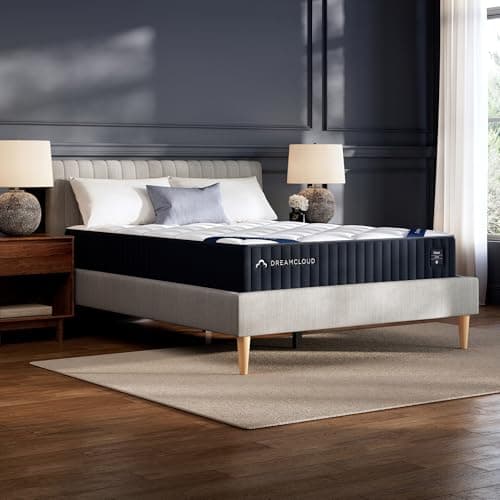 DreamCloud Classic 12" Hybrid A coil core plus a year to change your mind. On a page where the honest answer is "it depends on your body", the trial is the feature. Best for: Most people | Most people | $699.00 · View on Amazon Price as of October 18, 2026. #ad — we earn a commission. |
| 2 | 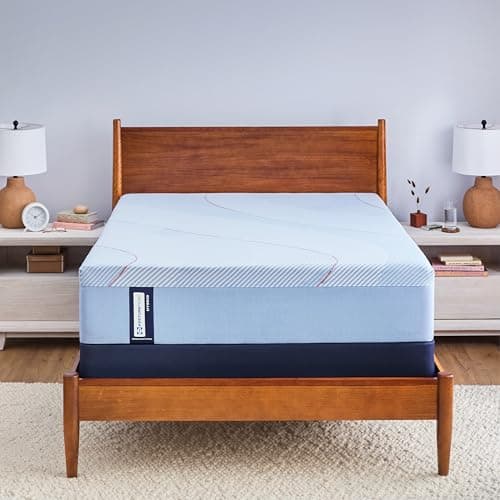 Sealy Posturepedic Fayette 12" Medium Hybrid Medium, encased coils, and a company that has been making beds since long before the internet sold them. That counts for something. Best for: A traditional mattress company | A traditional mattress company | $999.00 · View on Amazon Price as of October 18, 2026. #ad — we earn a commission. |
| 3 | 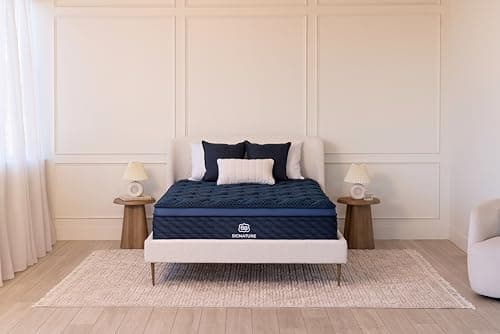 Brooklyn Bedding Signature Hybrid 13" Medium The same bed in soft, medium and firm. When the honest advice is "the right firmness depends on your body", being able to pick is worth paying for. Best for: Choosing your own firmness | Choosing your own firmness | $1,098.75 · View on Amazon Price as of October 18, 2026. #ad — we earn a commission. |
| 4 | 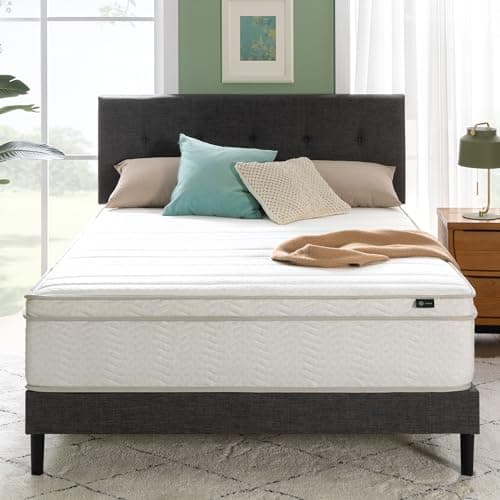 Zinus 12" Foam and Spring Hybrid The cheapest coil core I'd point anyone at. You're not getting the trial, but you are getting the construction. Best for: A tight budget | A tight budget | $292.56 · View on Amazon Price as of October 18, 2026. #ad — we earn a commission. |
| 5 | 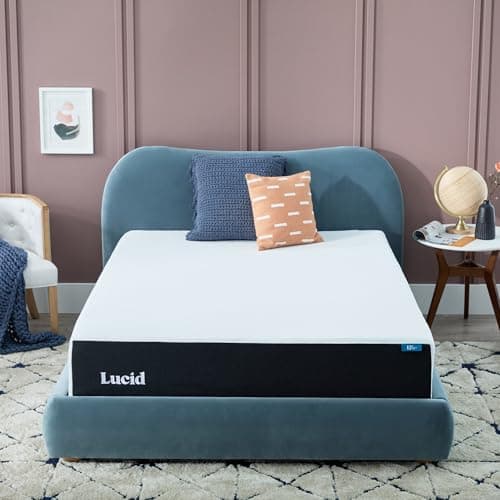 Lucid 12" Medium Firm Gel Memory Foam The all-foam option, and it's here for one reason: springs carry movement and foam doesn't. Best for: Couples who need motion isolation | Couples who need motion isolation | $449.99 · View on Amazon Price as of October 18, 2026. #ad — we earn a commission. |
| 6 | UniPon 12" Firm Hybrid Here because some people really do prefer a firm bed. Just don't buy it because you heard firm is better for your back. Best for: People who genuinely want firm | People who genuinely want firm | Check price on Amazon → #ad — we earn a commission. |
What this page is, and what it refuses to be
Let's deal with this before the products. This is not medical content. We are not doctors, we have no medical advisor, and we are not going to tell you that a mattress treats, relieves or cures anything — including the thing you typed into the search box to get here.
What a mattress does is hold your body in a shape for eight hours. A good one keeps your spine in roughly the alignment it has when you stand up straight. A bad one bends it, either by sagging under your hips or by refusing to let your shoulders in. That's a question about construction and geometry, and it's a question we can answer honestly from published specifications. Whether that has anything to do with why your back hurts is not something a website can know. If your pain is persistent, worsening, or interfering with your daily life, see a doctor — Sleep Foundation says the same thing, and unlike us they have medical reviewers on staff.
So: every judgment below is about support and alignment. Nothing else.
The firm mattress myth
Ask around and someone will tell you that a firm mattress is better for your back. It's one of those pieces of advice that has been repeated so long it stopped needing a source. It has a history too — the old practice of putting a board under a sagging mattress genuinely helped, but what helped was fixing the sag, not the hardness.
The evidence points the other way. Sleep Foundation's summary of the research is direct: medium-firm mattresses tend to reduce lower back pain more effectively than firm mattresses do. That's their reading of the literature, not ours — we don't run studies and we're not going to pretend we've read them all.
The mechanism makes intuitive sense once you picture it. Lie on something genuinely hard and only your shoulders and hips touch it. Your lumbar curve is suspended over a gap, holding itself up all night with the muscles that are supposed to be resting. A medium-firm surface lets those contact points settle a little, and the small of your back comes down to meet the mattress — supported along its length instead of bridging between two points. Too soft fails the opposite way: your hips are the heaviest part of you, they sink furthest, and your spine curves into a hammock. The target is between the two, which is exactly why our firmness guide spends so much time on where your body lands on the scale.
Support and firmness are two different things
Most of the confusion on this topic comes from using one word for two properties. They are not the same and a good mattress needs opposite things from each:
- Support is what the core does. Its job is to resist your hips and keep your midsection level with the rest of you. When support fails you get a dip, and a dip is the classic old-mattress-and-a-sore-back story.
- Firmness is what the top few inches do — how readily the surface yields to your shoulder. When firmness is too high you get the two-contact-point problem above.
You want strong support and a compliant surface at the same time. That combination is not a contradiction — it's a description of a hybrid: a coil core that pushes back hard, under a foam layer that gives. A uniformly hard slab gets you the wrong half; a uniformly soft one gets you the other wrong half. This is also why "I need something more supportive" and "I need something firmer" are different requests that a shop assistant will treat as the same one.
Why the coil core keeps winning here
Five of the six picks above are hybrids, and it isn't a coincidence or a preference. It falls out of the distinction above.
Foam can only resist your weight by being stiff. If you want a foam bed to stop your hips sinking, the foam has to be hard, and that hardness is under your shoulders too, because it's the same material. A spring resists mechanically: it can push back hard against a heavy hip while a separate soft layer above it yields to a shoulder. The two jobs get done by two different components, which is the entire engineering argument for a hybrid.
There's a durability argument as well. Foam softens with use — every foam mattress does, it's the material fatiguing — and a softening support core is the definition of a sagging bed. Springs fatigue too, but on a slower curve. If the failure you're trying to avoid is your hips ending up lower than your shoulders in year four, the coil core is the better bet. The full comparison is in memory foam vs hybrid.
The exception is on this page too. If you share a bed with someone restless, springs carry their movement to you and foam doesn't. Broken sleep is a real cost, and that's why the Lucid is here.
"Back pain relief" is printed on almost everything
Look at the listing titles for the beds above and you'll see the phrase over and over. It is unregulated. No agency assesses it, no standard defines it, and it costs a seller nothing to type into a title field. It appears on premium hybrids and on anonymous foam slabs with equal confidence, which tells you exactly how much information it carries.
We quote those specs because the listing is the only published source we have — but quoting a seller's spec is not endorsing their claim. When a title says a bed is 12 inches and hybrid, that's a fact we can pass on. When it says "back pain relief", that's an advertisement, and we mark it as one every time.
Your position and your weight move the answer
Medium-firm is where to start, not where everyone lands. Two things push it around:
- Weight.Firmness is relative — a heavier body compresses the same layer further, so the same bed reads softer. Sleep Foundation's guidance runs roughly from softer options under 130 lb up to firmer surfaces over 230 lb. If you're on the heavier end, the coil count in a budget hybrid is the first thing to give, and mattresses built for heavier sleepers is the more relevant page.
- Position. A back sleeper needs the midsection held up and can take a firmer surface. A side sleeper needs the surface to yield at the shoulder and hip or the spine bows — a different problem with a different answer, laid out in mattresses for side sleepers. A stomach sleeper needs the most resistance of all, because the hips are unopposed.
Since none of this is verifiable from a listing, the trial period is doing more work here than any spec. That is why the DreamCloud leads this page despite not being the most sophisticated bed on it: 365 nights is the only mechanism that lets you be wrong without paying for it.
When it isn't the mattress
Two honest notes to close, on a page that earns a commission when you buy something.
First: if your current mattress is structurally fine — no dip, no sag, the right firmness — a new one may change nothing at all. Mattresses are a plausible-sounding answer to a lot of problems they have nothing to do with, and "buy a new bed" is an expensive way to test a hypothesis. Look at your bed frame and slats first; an unsupported mattress sags no matter what it cost. If the mattress is sound but too firm, a topper is a much cheaper intervention than a replacement.
Second, and more important: we are a mattress site. That is genuinely all we are. If your back hurts persistently, the useful next step is a doctor, not a shopping page — including this one. We'd rather say so than sell you a bed on a promise we have no standing to make. Our full method, and the claims we refuse to make, are on how we review.
The picks, in full
1. Best for Most people
DreamCloud Classic 12" Hybrid
A coil core plus a year to change your mind. On a page where the honest answer is "it depends on your body", the trial is the feature.
Price as of October 18, 2026. #ad — we earn a commission.
Key specs
- 12" hybrid
- Gel memory foam over coils
- 365-night trial
- Forever warranty (as listed)
- Fiberglass-free (as listed)
- CertiPUR-US certified
What's good
- A coil support core resists compression mechanically rather than by material stiffness, so it holds the midsection up without the top of the bed having to be hard. That combination — supportive core, yielding surface — is the whole target
- 365 nights matters more here than on any other page. If your search started because a mattress isn't holding you where you want to be, the last thing you need is a 30-day window to evaluate the replacement
- Springs don't soften on the same curve foam does. Sag under the hips is a failure of the support core, and a coil core is the more durable answer to it
What's not
- The listing title says "Back Pain Relief". That is DreamCloud's marketing copy on an Amazon title, not a clinical claim, and nobody has evaluated it as one. Read it as a phrase, not a finding
- Coils transmit movement, so if your partner is restless this is the wrong construction
- "Luxury" is in the product name and means nothing. It's a competent hybrid
Skip this one if
You already know you want a firmer or softer feel than medium. DreamCloud sells this bed one way — the Brooklyn Bedding below comes in soft, medium and firm, and matching the feel you actually need beats a long trial you'd rather not use.
2. Best for A traditional mattress company
Sealy Posturepedic Fayette 12" Medium Hybrid
Medium, encased coils, and a company that has been making beds since long before the internet sold them. That counts for something.
Price as of October 18, 2026. #ad — we earn a commission.
Key specs
- 12" hybrid
- Medium (as listed)
- Tight top
- Encased coils
What's good
- Medium, stated plainly, which is the range Sleep Foundation's guidance points at for lower back pain — not the firm end the folklore recommends
- Sealy is a mainstream manufacturer with a long trading history and a warranty operation that predates bed-in-a-box brands by decades. If you want to be able to find the company in year seven, that's a real consideration
- A tight top — no pillow-top layer — puts less soft material between you and the support system, so the coils do more of the work of holding you level
What's not
- "Posturepedic" is a Sealy trademark, not a specification. It has been a brand name since the 1950s and tells you nothing measurable about this bed
- No trial length or warranty term stated in the listing title — a striking gap next to DreamCloud's 365 nights, on a purchase you cannot evaluate in a shop
- You are paying something for the name, as you do with any legacy manufacturer
Skip this one if
You want to be able to send it back easily. This listing doesn't publish a trial period, and on this page the ability to reverse a wrong guess is worth more than brand heritage. Take the DreamCloud's year instead.
3. Best for Choosing your own firmness
Brooklyn Bedding Signature Hybrid 13" Medium
The same bed in soft, medium and firm. When the honest advice is "the right firmness depends on your body", being able to pick is worth paying for.
Price as of October 18, 2026. #ad — we earn a commission.
Key specs
- 13" hybrid
- Medium feel (as listed)
- CertiPUR-US certified foam
- Also listed in soft and firm feels
What's good
- Brooklyn Bedding lists this build in soft, medium and firm. Firmness is relative to your body weight, so the ability to choose the feel rather than accept the manufacturer's average is the single most useful thing on this page
- 13 inches gives room for a proper comfort layer above the coils — enough give at the shoulder without giving up the core that holds your hips
- Brooklyn Bedding manufactures its own mattresses rather than white-labeling, which is unusual at any price and means the firmness options are real builds rather than cover swaps
What's not
- The most expensive bed here by some way
- No trial or warranty length in the listing title, which is exactly what you'd want backing a firmness choice you're making blind
- Choosing between three firmness options without lying on any of them is still a guess — a better-informed one, but a guess
Skip this one if
You don't already know what firmness suits you. Three options are only an advantage if you can choose between them; if you can't, you're paying a premium for a decision you're not equipped to make. Buy the DreamCloud, take the year, and learn.
4. Best for A tight budget
Zinus 12" Foam and Spring Hybrid
The cheapest coil core I'd point anyone at. You're not getting the trial, but you are getting the construction.
Price as of October 18, 2026. #ad — we earn a commission.
Key specs
- 12" hybrid
- Medium firmness (as listed)
- Foam over springs
- Fiberglass-free (as listed)
- Certified safe foams and fabric (as listed)
What's good
- Springs at the bottom of the market, where the competition is almost all solid foam. The support core is the part that decides whether your hips stay up, so this is the right corner to not cut
- Zinus has sold mattresses on Amazon for years, so the listings are stable and the company is findable — more than can be said for most brands at this price
- Medium firmness as listed, which is the right neighbourhood rather than the firm end folklore points at
What's not
- No trial period worth the name, and Zinus's warranty terms on this line are a fraction of what DreamCloud publishes
- A budget hybrid uses fewer, cheaper coils. The construction is right; the execution is built to a price and will fatigue sooner
- "Durable support" in the title is a claim with no number attached to it
Skip this one if
You weigh over roughly 230 lb. A budget coil count is the first thing to give way under a heavier load, and a support core that sags is the specific failure this page is about. Spend up on the DreamCloud or Sealy.
5. Best for Couples who need motion isolation
Lucid 12" Medium Firm Gel Memory Foam
The all-foam option, and it's here for one reason: springs carry movement and foam doesn't.
Price as of October 18, 2026. #ad — we earn a commission.
Key specs
- 12" all-foam
- Medium firm (as listed)
- Gel memory foam
- Bamboo charcoal infused
- Fiberglass-free (as listed)
- CertiPUR-US certified
What's good
- Solid foam absorbs movement instead of transmitting it. If a partner shifting at 3am wakes you, no hybrid on this page competes — and broken sleep is its own problem regardless of what your back thinks
- Medium firm as listed, and Lucid sells the same build in plush and firm if the label turns out to be wrong for your body
- Fiberglass-free and CertiPUR-US certified, both stated on the listing
What's not
- No coil core. Foam resists compression by being stiff, which means the surface has to be harder to achieve the same support — the exact trade a hybrid avoids
- Foam softens over years of use, and a softening support core is what a sagging bed is. This is the durability argument against all-foam and it's a fair one
- All-foam insulates, so it runs warmer than every hybrid above it
Skip this one if
You sleep alone. Motion isolation is the entire reason to choose foam over coils here, and it does nothing for a solo sleeper — you'd be giving up the more durable support core for a benefit you'll never use. Buy the DreamCloud.
6. Best for People who genuinely want firm
UniPon 12" Firm Hybrid
Here because some people really do prefer a firm bed. Just don't buy it because you heard firm is better for your back.
#ad — we earn a commission.
Key specs
- 12" hybrid
- Firm (as listed)
- Back and hip support, zoned support (as listed)
- Fiberglass-free (as listed)
- CertiPUR-US certified
- 365-night trial
- 10-year warranty
What's good
- A 365-night trial and a 10-year warranty at a budget price, both stated in the listing — terms that usually cost several times this much
- Firm genuinely is the right answer for some people: heavier sleepers, and back or stomach sleepers whose midsection needs more resistance than a medium bed gives
- It's a hybrid, so the firmness comes from the coil core doing its job rather than from a hard foam surface
What's not
- Firm is the folklore answer to back pain and the folklore is wrong for most people. Sleep Foundation's read of the research is that medium-firm mattresses tend to reduce lower back pain more effectively than firm ones do
- "Back & Hip Support" and "Zoned Support" in the listing title are seller copy. They describe an intention, not a verified property
- UniPon is an Amazon-native brand, so the 365-night trial is only as good as a company with no trading history behind it
Skip this one if
You picked firm because someone told you it's better for your back. That's the most common wrong turn in mattress shopping and this bed is the shape of it. Unless you have slept on a firm bed and preferred it, start at medium-firm with the DreamCloud.
Common questions
Is a firm mattress better for lower back pain?
Probably not, and this is the most persistent myth in mattress shopping. Sleep Foundation's summary of the research is that medium-firm mattresses tend to reduce lower back pain more effectively than firm mattresses do. The logic is that a very firm surface only contacts your shoulders and hips and leaves your lumbar curve unsupported over a gap, while a medium-firm bed lets those points settle slightly so the whole of your back is in contact and held. Firm still suits some people — heavier sleepers, and back or stomach sleepers — but it is not a default and it should not be your starting assumption.
What does 'support' actually mean in a mattress?
Support is the job of the core of the mattress: resisting your heaviest parts, mainly your hips, so they don't sink lower than the rest of you. Firmness is a separate property of the top layers — how readily the surface yields. You want strong support with a surface that still gives, and those are not opposites. A mattress that fails at support sags under your midsection; a mattress that is merely too firm holds you rigid on two contact points. They feel different and they need different fixes.
Should I get a hybrid or a foam mattress for back support?
A coil core has two real advantages for support. It resists compression mechanically rather than by being stiff, so the bed can hold your hips up while the surface still gives at your shoulder. And springs don't soften on the same curve foam does, so the core is less likely to develop the dip that turns a mattress into a hammock. The case for all-foam is motion isolation — foam absorbs a partner's movement, springs carry it. If nobody else is in the bed, the hybrid is the more durable choice for support.
Every mattress listing says 'back pain relief'. Does that mean anything?
No. It is unregulated marketing copy that costs a seller nothing to type, and it appears on almost every mattress sold online, including several on this page. No agency evaluates it and no standard defines it. Judge these beds on published construction — coil core or not, stated firmness, height, trial length, warranty — and treat the phrase in the title as though it weren't there. We quote sellers' specs on this site; we do not adopt their claims.
Can a new mattress fix my back pain?
We can't answer that, and you should be wary of any review site that does. We are not doctors, we have no medical advisor, and a website cannot know why your back hurts. What a mattress can do is hold your spine in roughly the alignment it has when you stand — and if your current bed sags under your hips or forces you onto two contact points, it isn't doing that. If your pain is persistent, worsening, or interfering with your daily life, that is a question for a doctor rather than a mattress review site.
Sources
Where the facts on this page come from. We cite other people's testing because we don't do our own — here's what that means.
Read next
- The Best Mattresses for PregnancyFive mattresses matched to the specific demands of pregnancy - side-sleeping pressure relief, hip and back support, cooling and easy in-and-out - with honest skip-it notes.
- Firm or Soft Mattress for Back Pain?The honest answer is neither extreme: medium-firm suits most back-pain sleepers, and the reason - keeping your spine neutral - tells you how to shop.
- Brooklyn Bedding vs NectarA genuine hybrid-versus-foam decision: Brooklyn Bedding's Signature gives you a coil core and a choice of firmness; Nectar gives you a plush foam hug and a year to change your mind. The pick turns on airflow, motion and how sure you are of your feel.
- The Best Mattress Toppers for Back PainSix mattress toppers that can ease back pain by matching the surface to your problem — softening a too-firm bed or firming a slightly-too-soft one — plus the honest limit that no topper fixes a sagging mattress, with cons and a skip note on every pick.
- Sealy vs ZinusA legacy Sealy hybrid with a coil core against the default budget Zinus foam bed. Sealy brings springs, airflow and a name you know; Zinus brings the lowest safe price. Which wins depends on you.
- The Best Budget Mattresses for Back PainSix genuinely affordable mattresses that support a bad back — budget hybrids and medium-firm foam with a real support core — plus the cheap builds to avoid, and honest cons and a skip note on every pick.
- The Best Mattresses for Hip PainSix mattresses judged on pressure relief and alignment for side sleepers — led by memory foam and plush hybrids, because the hip needs to sink in, not be held out.
- The Best Mattresses for SeniorsSix mattresses judged on the two things that actually matter with age — a firm edge and a sensible height to rise from, and a medium-firm feel you can reposition on — with honest cons and a skip-this-one on every pick.
- How to Fix a Sagging MattressThe honest triage for a sagging mattress: check the base first, the fixes that actually help, the myths that don't, and when a warranty — and a topper — stop being able to save it.
- Mattress Firmness: The 1-10 Scale, HonestlyWhat the 1-10 firmness scale actually means, why one brand's 6 is another's 7, and how your bodyweight changes the answer.
- The Best MattressesSix mattresses worth buying, from a budget hybrid to a deep-foam premium bed — with a plain note on who each one is wrong for.
- The Best Mattresses for Side SleepersSix mattresses with comfort layers deep enough to let a shoulder and hip sink — the actual problem side sleepers are trying to solve.
- Memory Foam vs Hybrid MattressesFoam or coils? The six differences that matter, and the one axis that settles it for most buyers.
- The Best Mattresses for Heavy PeopleSix coil-based mattresses built to hold a heavier body up, with published specs and an honest note on who each one is wrong for.
- The Best Mattresses for Stomach SleepersSix firm mattresses that keep a stomach sleeper's hips from sinking — the one thing that decides whether the position wrecks your lower back.