The Best Cooling Sheets for Hot Sleepers
The word "cooling" on a packet of sheets means nothing at all. The fiber and the weave mean everything. Here are six sets that get both right, and the ones whose cooling is a font choice.
We earn a commission if you buy through our links. It doesn't affect our picks — and we never take free products. How this site is funded.
Quick picks
| # | Product | Best for | Price |
|---|---|---|---|
| 1 | 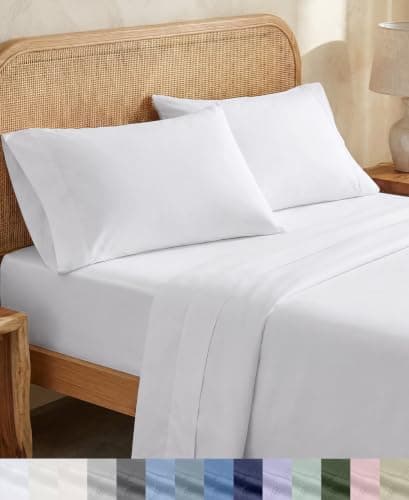 California Design Den Organic Cotton Percale Sheet Set Percale-weave cotton is the answer to this question, and this is the version I'd buy without thinking about it much. Best for: Most hot sleepers | Most hot sleepers | $59.99 · View on Amazon Price as of October 18, 2026. #ad — we earn a commission. |
| 2 | 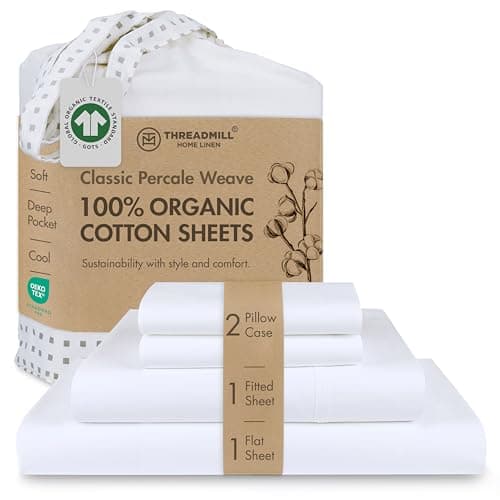 Threadmill Organic Cotton Percale Sheet Set The same physics as the pick above, in a lighter cloth, with a certification behind the cotton. Best for: The lightest weight | The lightest weight | $59.99 · View on Amazon Price as of October 18, 2026. #ad — we earn a commission. |
| 3 | 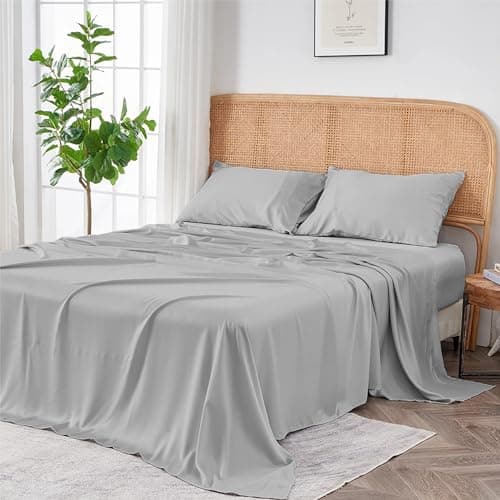 Sijo AiryWeight Tencel Sheet Set Lyocell moves moisture better than cotton does. If you wake up damp rather than merely warm, this is the different problem, and the different fiber. Best for: Night sweats | Night sweats | |
| 4 | 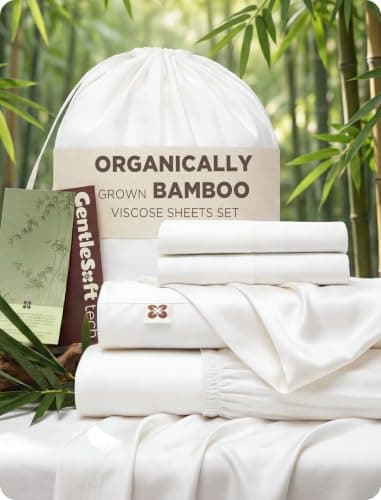 Bedsure Bamboo Viscose Sheet Set If you want the cool-to-the-touch, slippery sheet, this is the honest version of it — viscose, sold as viscose. Best for: A silky feel | A silky feel | |
| 5 | 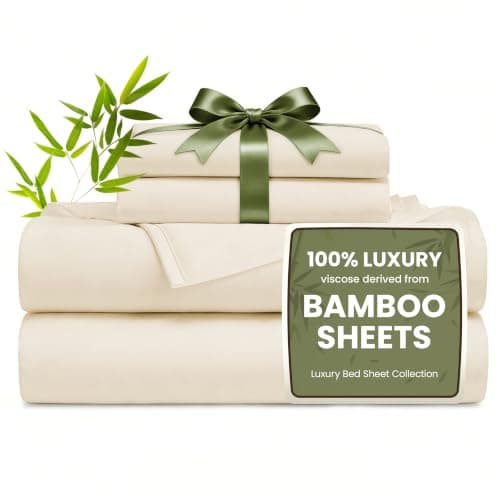 Love's Cabin Rayon from Bamboo Sheet Set The cheapest set here that isn't polyester. That's the whole pitch, and it's a decent one. Best for: The lowest price that still breathes | The lowest price that still breathes | |
| 6 | Degrees of Comfort Coolmax Cooling Sheet Set The only sheet on this page that is not a natural or regenerated fiber, and the only one whose cooling comes from a named, engineered fabric rather than a weave. Worth knowing about, but not our default. Best for: The one synthetic worth considering | The one synthetic worth considering | Check price on Amazon → #ad — we earn a commission. |
Buy the sheets before you buy the mattress
Let's deal with the conflict of interest first, because it points the wrong way. This site earns an Amazon commission on everything on this page, and a mattress pays us many times what a set of sheets does. So understand exactly what it means when I say: if you are overheating in bed, change your sheets before you spend a penny on a mattress.
The reasoning is boring and physical. Your sheets are the layer touching your skin. Every watt of heat and every gram of sweat your body sheds has to cross that layer before the mattress underneath it is even relevant. If your sheets are a dense polyester weave, they will hold that heat and that moisture against you regardless of what the mattress does. You can put the best-ventilated hybrid bed in the world under a microfiber sheet set and still wake up at 3am peeling yourself off it.
A sheet set costs a rounding error next to a mattress, arrives in two days, and takes one evening to swap. If it fixes the problem, you saved yourself several hundred dollars. If it doesn't, you have eliminated the cheapest variable and can go read our mattress roundup knowing the problem is genuinely the bed. There is no version of this where starting with the sheets is the wrong move.
Fiber decides almost everything
There is no such thing as a cooling fabric in the sense the packaging implies. Nothing in your bed generates cold. A sheet has exactly two jobs: let your body heat escape, and get your sweat off your skin so it can evaporate. Every honest cooling claim is a claim about one of those two mechanisms, and both are properties of the fiber.
- Linen. The most breathable bedding fiber there is — thick, stiff flax fibers hold the cloth off your skin and leave huge air channels, and it absorbs a lot of moisture before it feels wet. We cover the category properly in our best linen sheets roundup — but if you sleep desperately hot and don't mind a rumpled bed and a real price tag, linen is the answer to the question. Buy it stone-washed unless you enjoy sleeping in a canvas tent.
- Cotton. The right default. It absorbs roughly a quarter of its weight in moisture, it gets softer with age, and in a plain weave it breathes very well indeed. Everything depends on the weave — see below, because a cotton sateen and a cotton percale behave like completely different products.
- Lyocell (Tencel). A wood-pulp cellulose fiber, and the best moisture-mover on this list. It transports liquid water along the fiber and releases it rather than holding it in the cloth. If your problem is waking up damp rather than merely warm, this is the fiber that addresses your actual problem.
- Bamboo viscose / rayon. Cellulose again, but regenerated through a heavier chemical process. Smooth, cool on first touch, breathes decently — genuinely fine sheets, wrapped in the most dishonest marketing in bedding. Nothing of the bamboo plant survives into the thread.
- Microfiber and polyester.Plastic. It does not absorb moisture — it repels it, which sounds good and is a disaster in a bed, because the sweat stays on you rather than moving into the cloth. It also insulates, which is why it's used in fleece. If a listing says microfiber and cooling on the same page, the fiber is telling you the truth and the adjective is lying.
Weave decides the rest
Give two mills the identical cotton and they can hand you back a sheet that breathes and a sheet that smothers, purely by changing how the threads cross. This is the part almost no shopper checks and it is the second-biggest lever on this page.
Percaleis a plain weave: one thread over, one thread under, like a basket. That structure leaves a grid of tiny gaps through the cloth, and air moves through those gaps. It produces a matte, crisp, dry-feeling sheet — the one you recognize from a good hotel. It also wrinkles, because that's what an unstructured natural fiber in a plain weave does.
Sateen floats three or four threads over one before going under. The point is to expose as much fiber surface as possible, which is what makes it shine and feel slippery. The cost is that those floats close the gaps and lay a denser layer of fiber against your skin. Sateen is a genuinely lovely sheet in a cold bedroom in February. In a warm room it is working against you, and the softness you paid for is the exact property making you sweat. The full breakdown is in percale vs sateen.
So the rule is short enough to remember in the aisle: percale or linen if you sleep hot, sateen if you sleep cold. The word "cooling" on the packet does not enter into it.
What the word "cooling" is actually worth
"Cooling" is not a regulated term. No body defines it, nobody audits it, and any seller can print it on any sheet made of anything. It is a search keyword. That is its entire function — it exists to match what you typed into Amazon.
Some cooling claims do point at a real thing. Contact cooling is genuine physics: a fabric engineered to conduct heat away from your skin quickly on contact. It feels great for the first few minutes. Then the fabric reaches your temperature, the effect is spent, and the rest of the night is decided by the fiber and the weave, which is precisely what those listings tend not to mention. Moisture wicking — what the Coolmax set above does — is a second real mechanism, and a different one: engineered polyester grooves pull sweat off your skin and evaporate it. That helps if you wake up damp. It does not make an insulating fiber breathe.
Here's the test I'd apply to any sheet listing claiming to be cool: does it name the fiber and the weave?If the answer is yes and it says percale cotton or lyocell, the claim is probably real. If the listing shouts about cooling for four lines and never says what the sheet is made of, you have learned everything you need to know about that product. Lyocell has its own version of that trap — "eucalyptus" in the title on a sheet that turns out to be microfiber — and if the Sijo above has you sold on the fiber, our TENCEL sheets roundup ranks six lyocell sets on exactly what each listing commits to.
The spec that causes most of the returns
Not fiber. Not weave. Pocket depth. A fitted sheet is cut for a specific mattress height, and mattresses have quietly grown — a 12-inch bed with a 3-inch topper on it is a 15-inch bed, and a sheet cut for 14 inches will pop off the corner in the night, forever. Measure your mattress from the seam to the seam, with the topper on, and add an inch. Then buy a sheet whose listing states a pocket depth at or above that number. The picks above state 16 and 18 inches where the seller published it; where a listing doesn't state a depth at all, that silence is the answer.
Where sheets stop being the answer
Sheets are the cheapest lever, not the only one, and I'd rather say that here than let you buy four sets chasing a problem they can't solve. If you've moved to percale or lyocell, dropped the duvet weight, and you're still waking up hot, the heat is coming from underneath — an all-foam mattress insulates you by design, and no sheet fixes a bed that has nowhere for air to go. That's a hybrid mattress conversation. And if it's your head that's hot rather than your body, the fix is a cooling pillow, because a pillow full of solid memory foam is the single worst heat trap most people own.
One more honest note: the duvet on top of you matters nearly as much as the sheet under you, and most people are sleeping under a comforter rated for a room they don't live in. If you're fighting your bedding in July, read the comforter roundup before you buy anything else.
The picks, in full
1. Best for Most hot sleepers
California Design Den Organic Cotton Percale Sheet Set
Percale-weave cotton is the answer to this question, and this is the version I'd buy without thinking about it much.
Price as of October 18, 2026. #ad — we earn a commission.
Key specs
- 100% organic cotton (as listed)
- Percale weave
- Deep pockets (as listed)
- 4-piece queen set
What's good
- Percale is a plain, one-over-one-under weave — it leaves microscopic gaps between the threads that air moves through, which is the entire mechanism behind a cool sheet
- Cotton absorbs moisture rather than repelling it, so sweat leaves your skin instead of pooling on the surface of the fabric
- Percale gets softer with washing rather than pilling, which is why hotels have used it for a century
What's not
- Percale feels crisp, not silky. If you want the slippery hand-feel of a hotel sateen, you will not like this and no amount of washing will change it
- It wrinkles. That is what a plain weave in a natural fiber does, and the listing does not claim otherwise
- "Organic" is a farming claim about the cotton, not a performance claim about the sheet — it does not make it cooler
Skip this one if
You hate a crisp sheet. Some people want the bed to feel slippery and cool-to-the-touch rather than dry and airy — if that's you, buy the Sijo lyocell or the Bedsure bamboo viscose below instead. Percale will feel like a shirt to you and you'll return it.
2. Best for The lightest weight
Threadmill Organic Cotton Percale Sheet Set
The same physics as the pick above, in a lighter cloth, with a certification behind the cotton.
Price as of October 18, 2026. #ad — we earn a commission.
Key specs
- 100% organic cotton (as listed)
- GOTS certified (as listed)
- Percale weave
- 16" deep pocket (as listed)
- "Ultra Light" (as listed)
What's good
- GOTS is a real third-party textile certification with an audit behind it, which is more than most "organic" bedding claims can say
- The listing sells this as an ultra-light cloth. Less fabric mass means less material holding heat against you — for a hot bed, thin is a feature
- A stated 16-inch pocket depth, which is the spec most sheet listings hide and most returns are caused by
What's not
- Light cotton is thin cotton, and thin cotton wears through sooner than a heavier percale
- Same crisp hand as any percale — it is not a silky sheet and does not pretend to be
- GOTS certifies how the cotton was grown and processed. It says nothing about how the sheet sleeps
Skip this one if
You want a sheet that lasts a decade. A deliberately light cloth is a trade — you get airflow now and less life later. If you'd rather buy once, take the California Design Den percale above.
3. Best for Night sweats
Sijo AiryWeight Tencel Sheet Set
Lyocell moves moisture better than cotton does. If you wake up damp rather than merely warm, this is the different problem, and the different fiber.
Key specs
- 100% lyocell derived from eucalyptus (as listed)
- 3-piece set: 1 fitted sheet, 2 pillowcases (no flat sheet)
- Queen
What's good
- Lyocell fibers wick liquid moisture along the fiber and release it — a different and faster mechanism than cotton's absorb-and-hold, which is why it suits people who sweat rather than just run warm
- It feels cool and smooth to the touch without the plastic hand of polyester "cooling" fabrics
- Drapes rather than crumples, so it looks better than percale between washes
What's not
- The listing badges an Architectural Digest award. That is the brand quoting someone else's award in its own marketing copy — treat it as advertising, not as evidence
- This 3-piece configuration has no flat sheet. Read the listing twice; the 4-piece version is a separate, pricier item
- Lyocell is a wet-processed fiber and wants a cool, gentle wash. Hot wash it and it will not be the same sheet
Skip this one if
You use a top sheet — this 3-piece set does not include one, and finding out on delivery day is a bad evening. Buy the 4-piece version, or take a percale set above.
4. Best for A silky feel
Bedsure Bamboo Viscose Sheet Set
If you want the cool-to-the-touch, slippery sheet, this is the honest version of it — viscose, sold as viscose.
Key specs
- 100% bamboo viscose (as listed)
- Oeko-Tex certified (as listed)
- 18" deep pocket with corner straps (as listed)
- Queen, 4-piece
What's good
- Viscose is a regenerated cellulose fiber — it is smooth, it breathes far better than polyester, and it delivers the cool-to-the-touch feel people are actually shopping for when they type "cooling sheets"
- An 18-inch pocket with corner straps: this is the deepest stated pocket among these picks and the straps stop the fitted sheet migrating at 3am
- Oeko-Tex certification means the finished fabric was tested for harmful substances — a real certificate, checkable at oeko-tex.com
What's not
- "Bamboo" is a raw material, not a fabric. What you are buying is viscose, and the FTC has repeatedly taken action against bedding sellers implying bamboo's properties survive the chemical process that turns it into thread. Bedsure at least says viscose on the tin
- Viscose is weak when wet and it is the fiber most likely to pill or tear at the elastic over years of hot washes
- It is the second-priciest set here, and it is not more breathable than a percale — it is smoother
Skip this one if
Your priority is airflow rather than surface feel. Viscose feels cool the moment you touch it; percale keeps moving air all night. Different jobs — take the percale above if you're genuinely overheating rather than just wanting a nice bed.
5. Best for The lowest price that still breathes
Love's Cabin Rayon from Bamboo Sheet Set
The cheapest set here that isn't polyester. That's the whole pitch, and it's a decent one.
Key specs
- 100% rayon derived from bamboo (as listed)
- 16" deep pocket (as listed)
- Queen, 4-piece
What's good
- Rayon derived from bamboo is the same fiber family as the Bedsure viscose above, for a great deal less money — this is the cheapest natural-fiber set on the page
- Correctly labeled: "rayon derived from bamboo" is the wording the FTC actually wants to see, and a seller who gets the label right is telling you something about the seller
- A 16-inch stated pocket, which covers most mattresses that aren't stacked with a topper
What's not
- No fabric certification is stated in the listing, unlike the Bedsure and Threadmill picks
- Rayon at this price is thin rayon. Expect it to be a two-or-three-year sheet, not a ten-year one
- "Hotel luxury" appears in the title. It is a set of cheap rayon sheets. It is fine. It is not hotel luxury
Skip this one if
You wash sheets weekly on hot. Cheap rayon is the fiber least likely to survive that regime — spend up to the Bedsure viscose or move to cotton percale entirely.
6. Best for The one synthetic worth considering
Degrees of Comfort Coolmax Cooling Sheet Set
The only sheet on this page that is not a natural or regenerated fiber, and the only one whose cooling comes from a named, engineered fabric rather than a weave. Worth knowing about, but not our default.
#ad — we earn a commission.
Key specs
- Coolmax engineered polyester (as listed)
- Deep pocket (as listed)
- Queen, 4-piece set (as listed)
What's good
- Coolmax is a real, named fiber technology from The Lycra Company, not a marketing word: the fiber is spun with a grooved, non-round cross-section that raises its surface area by roughly a fifth, so sweat is pulled along the grooves by capillary action and evaporated off the outside of the cloth
- Because polyester barely absorbs water, it sheds moisture and dries much faster than cotton does — which is exactly the property you want if your problem is waking up damp rather than waking up warm
- It is the cheapest set on this page by a clear margin, and a stated deep pocket means it still fits a thick mattress
What's not
- It is polyester, and polyester insulates. Wicking moisture away is not the same as letting heat out, and every natural-fiber set above it on this page breathes better than this one does
- Our microfiber sheets page argues that buying a synthetic for temperature is the most common bedding mistake there is, and that still stands — this pick is the narrow exception for a specific problem, not a rebuttal
- The listing names the technology but not the fiber percentage or the pocket depth in inches, so you are trusting the Coolmax name to do the work the spec sheet should be doing
Skip this one if
Your problem is heat rather than sweat. If you wake up hot but dry, a breathable natural fiber is the answer and the percale at the top of this page is the one to buy — Coolmax manages moisture, which is a different job.
Common questions
Do cooling sheets actually work?
Some do, and the ones that do work because of what they are made of, not because of the label. A sheet cannot refrigerate you. All it can do is let heat and moisture leave your body instead of trapping them, and that ability is a property of the fiber and the weave. A percale-weave cotton or a lyocell sheet genuinely moves more heat and moisture than a microfiber sheet does. A polyester sheet with cooling in the product title does not, no matter how blue the packaging is.
Should I buy cooling sheets or a cooling mattress if I sleep hot?
Sheets first, every time. They are a fraction of the cost of a mattress, they arrive in two days, and they sit directly against your skin — which is where the heat exchange actually happens. A mattress can only affect the heat that gets past your sheets. Change the sheets, give it two weeks, and if you are still overheating then the mattress is the problem and you have lost very little finding out. We earn considerably more when you buy a mattress than when you buy sheets, and the advice is still to buy the sheets first.
Is percale or sateen better for hot sleepers?
Percale, and it isn't close. Percale is a one-over-one-under plain weave with air gaps between the threads. Sateen floats several threads over one in order to expose more fiber surface, which is what creates the sheen and the slippery feel — and which also closes up those gaps and lays a denser blanket of fiber against your skin. Sateen is a lovely sheet in a cold room. It is the wrong sheet in a warm one.
Are bamboo sheets really made of bamboo?
Not in any meaningful sense. Bamboo is dissolved in a chemical process and regenerated into a viscose or rayon fiber, and none of the plant's original structure survives. That is why the honest listings say rayon derived from bamboo or bamboo viscose, and why the FTC has pursued sellers who imply the bamboo plant's properties carry over into the sheet. This does not make the sheets bad — viscose is smooth and breathes reasonably well. It makes the marketing dishonest and the fiber ordinary.
What thread count should cooling sheets be?
Lower than you think — roughly 200 to 400 in a percale. Thread count is a density measure, and past a point, packing more threads into the same square inch is exactly the opposite of what you want in a hot bed: it closes the gaps that air moves through. High thread counts also almost always come in a sateen weave, because that is the only way to fit the threads in. If a listing advertises a high thread count and cooling in the same breath, one of those two claims is losing.
Sources
Where the facts on this page come from. We cite other people's testing because we don't do our own — here's what that means.
Read next
- The Best Gifts for Hot SleepersSix gifts for the person who kicks the covers off — a pillow that opens, percale sheets, a cooling comforter, lyocell for night sweats, a zoned topper and a summer blanket — with what to check before buying each one.
- Black Friday & Cyber Monday Mattress & Sleep Gear Deals 2026What sleep gear historically discounts in November and what rarely does, buy-now vs wait guidance by product class, and our current top picks with live prices as a baseline. Deals will be posted here when they go live.
- The Best Percale SheetsFive percale sheet sets - the crisp, cool, matte cotton weave hot sleepers want - spanning budget organic to a cooling finish, with honest notes on wrinkling and fit.
- The Best Sateen SheetsFive sateen sheet sets - the silky, lustrous, wrinkle-resistant cotton weave - from a budget 300-count to a plush high-count set, with honest notes on heat, pilling and the thread-count game.
- What Is TENCEL?TENCEL is a brand name for lyocell - a silky, moisture-wicking fiber made from wood pulp in a closed-loop process. What that means for your sheets, and its honest limits.
- The Best TENCEL (Eucalyptus Lyocell) SheetsSix TENCEL and eucalyptus lyocell sheet sets ranked on what each listing commits to — 100% lyocell, the TENCEL name, a stated weight, pocket depth and elastic — with the cool-wash care caveat and honest cons on every pick.
- The Best Budget SheetsSix genuinely cheap sheet sets worth owning, split by fiber - microfiber, cotton and bamboo/rayon - with the honest trade-off of each stated plainly and a note on who should spend a little more.
- Cotton vs Bamboo SheetsCotton's durability and get-softer-with-age value versus bamboo-rayon's silky, cool, drapey feel — plus the labeling truth almost no bamboo listing says out loud.
- How to Choose Bed SheetsFiber is the biggest decision — cotton, linen, bamboo, microfiber or Tencel — then weave (percale vs sateen), then fit and care. Thread count matters least.
- How to Wash Bed Sheets (by Fabric)A wash-and-dry method for every kind of sheet — cotton and percale, sateen, linen, bamboo viscose, flannel and microfiber — plus how often to wash, how to handle new sheets, and why sheets pill and how to slow it down.
- Thread Count: What It Really MeansThread count is real up to roughly 400-600. Above that, it is mostly a counting trick — and fiber and weave matter more than the number ever did.
- The Best Silk PillowcasesSix silk pillowcases chosen on momme rather than marketing grade, with honest cons on every pick and a clear-eyed take on what silk really does for hair and skin.
- The Best Duvet CoversSix duvet covers worth buying, plus the one word on the label that separates cotton from polyester, why corner ties matter more than thread count, and how to size a cover to your insert.
- The Best Bamboo Sheets, Chosen HonestlySix bamboo-viscose sheet sets that sleep silky and cool for hot sleepers — chosen on fiber and label honesty rather than the word bamboo, with real cons on every pick.
- The Best Sheets on AmazonSix Amazon sheet sets worth buying, plus how to read a listing: why thread count lies, what Egyptian cotton isn't, and the sizing spec that causes most returns.
- Percale vs Sateen SheetsTwo weaves, one decision: crisp and breathable, or silky and warm. Plus why thread count is mostly a marketing number.
- The Best ComfortersSix comforters worth buying, the comforter-versus-duvet decision most buyers get backwards, and why all-season weight is usually the wrong compromise.
- The Best Cooling PillowsSix cooling pillows that actually move air, an honest read on gel infusions, and a note on who each one is wrong for.
- The Best Mattresses on AmazonSix Amazon mattresses worth your money, with live prices and an honest note on who each one is wrong for.
- The Best Linen SheetsSix linen sheet sets — pure French flax and softer cotton-linen blends — chosen on fiber honesty and value, with the price-and-wrinkle trade stated plainly on each.
- The Best Flannel Sheets for WinterSix genuinely warm cotton flannel sets, chosen on fiber and GSM rather than marketing — with an honest note on who should skip each and the fleece-flannel trap to dodge.
- The Best Cooling Mattresses for Hot SleepersSix mattresses that actually sleep cooler, led by hybrids because a coil core is the only cooling feature that doesn't saturate by midnight — with honest cons on every pick.