The Best Comforters
Half the people shopping for a comforter want a duvet insert, and Amazon is very happy not to explain the difference. Here's the distinction, six comforters worth buying, and why all-season is usually the wrong answer.
We earn a commission if you buy through our links. It doesn't affect our picks — and we never take free products. How this site is funded.
Quick picks
| # | Product | Best for | Price |
|---|---|---|---|
| 1 | 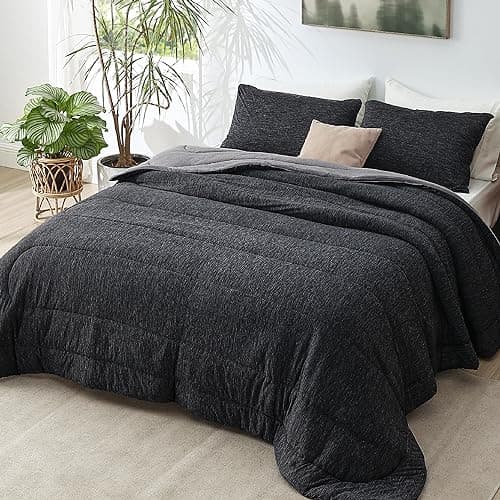 Bedsure Queen Comforter Set with Shams A comforter that behaves like a comforter: finished, matching shams, on the bed in ten minutes and in the machine when it's dirty. Best for: Most people | Most people | |
| 2 | 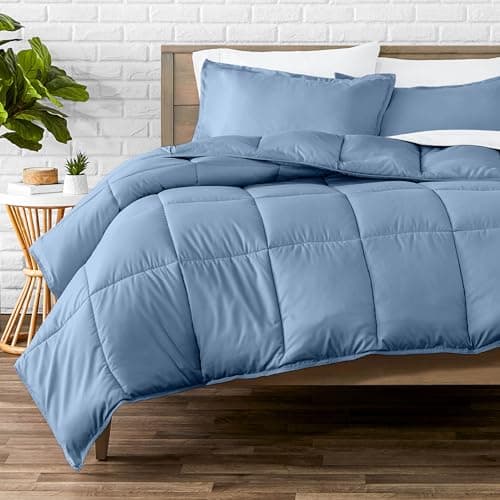 Bare Home Goose Down Alternative Comforter Set The nicer-feeling version of the same idea, and the one I'd pick if the bed is on show. Best for: A softer finish | A softer finish | $58.70 · View on Amazon Price as of October 18, 2026. #ad — we earn a commission. |
| 3 | 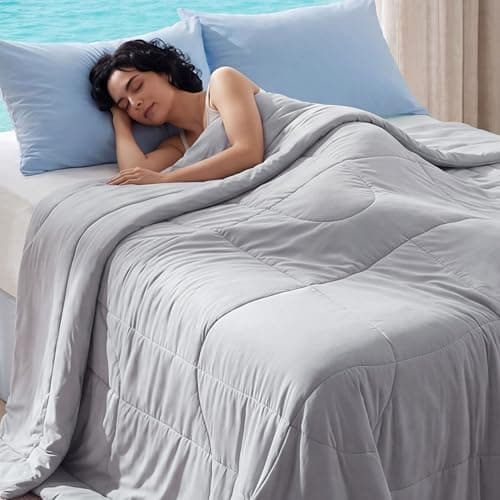 Bedsure Cooling Comforter, Dual-Sided Cool Tech Built around a contact-cooling surface rather than a fill claim. That's a narrow effect, honestly deployed — and this is the right category for it. Best for: Hot sleepers | Hot sleepers | |
| 4 | 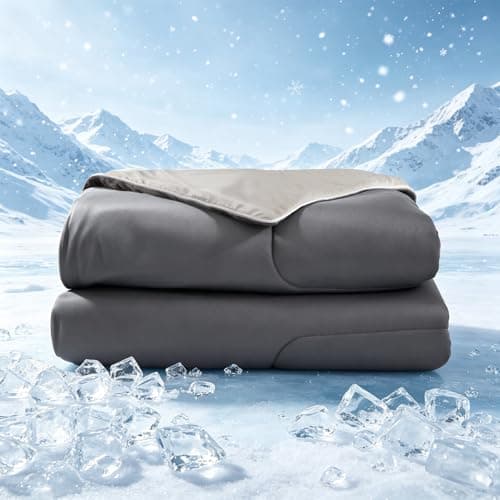 Cosybay Cooling Comforter, Double-Sided Cold Tech The same contact-cooling idea, far cheaper, in a more generous size. If the concept appeals, start here rather than at the top. Best for: Night sweats on a budget | Night sweats on a budget | |
| 5 | 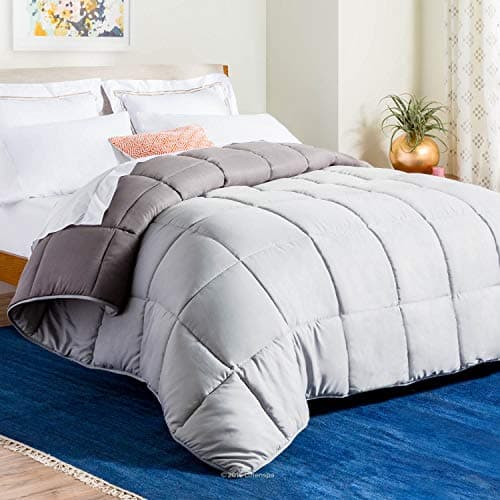 Linenspa Reversible Down Alternative Comforter Reversible, and it has duvet loops — the one pick here that works either bare or inside a cover, which is a genuinely useful hedge. Best for: Not deciding yet | Not deciding yet | $44.99 · View on Amazon Price as of October 18, 2026. #ad — we earn a commission. |
| 6 | 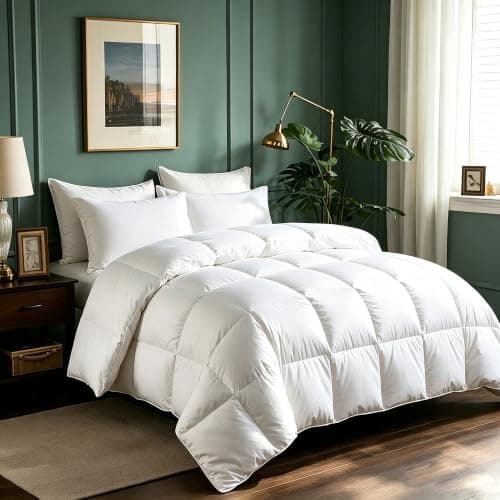 Serta Goose Feather Down Fiber Comforter The only pick here with a natural fill and a cotton shell. If you want feather-and-down without running the cover system, this is it. Best for: A natural fill, used bare | A natural fill, used bare | $72.99 · View on Amazon Price as of October 18, 2026. #ad — we earn a commission. |
You are probably shopping for the wrong one of these
A comforter and a duvet are not the same product, they are not the same system, and the difference decides how you live with your bed for the next five years. Most people buying bedding online have never had it explained, because the retailers use both words on the same listing and have no incentive to slow you down.
A comforteris one object. The fill and the decorative outer are sewn together permanently. It goes on the bed as it comes, it usually arrives with matching shams, and when it's dirty the entire thing goes into the washing machine. One purchase, one decision, finished bed.
A duvet is two objects. A plain white insert full of down or polyester, which nobody ever sees, and a removable cover that buttons or zips around it. The cover is what you look at and what you wash — you strip it off like a giant pillowcase and put it through with the sheets. The insert stays in service for years.
Here is the test that settles it, and it takes ten seconds: where does your laundry go? If you want to strip the bed weekly and wash a lightweight cover, you want the duvet system, and this is the wrong page — go to the duvet insert roundup, which is a completely different set of products chosen on fill quality and construction. If you want to buy one thing, put it on the bed, and put the whole thing in the machine when the dog gets on it, you want a comforter, and you're in the right place.
Second test, if the first doesn't settle it: how often do you want the bed to look different? Duvet covers are cheap and swapping one changes the entire room. Getting bored of a comforter means buying a new comforter. People who redecorate should not be buying comforters, and people who want to buy bedding once and never think about it again absolutely should.
Washability is the whole argument
Everything that makes a comforter appealing traces back to one thing: it is meant to be laundered as a unit. That is its reason to exist, and it is why this category is dominated by polyester fill in a way the insert category isn't. Polyester fiberfill takes a normal wash and a normal tumble dry without drama. Down does not.
Which sets up the trap. The Serta above is the nicest-specified item on this page — natural feather-and-down fill, a cotton shell, the only pick here where moisture can genuinely leave the bed instead of being reflected back at you. It is also the one you cannot casually wash, which means buying it slightly defeats the point of buying a comforter at all. If you want that fill, the honest recommendation is to run it as an insert inside a cover so the cover takes the laundry. That is not a criticism of the product. It is a mismatch between the product and the format, and it's worth seeing before you buy rather than after.
Before you commit, check two things about your machine:
- Drum size.A queen comforter needs room to tumble. Jam it into a small domestic machine and it comes out with detergent still in it, having strained the bearings. If your machine is small, a duvet cover system isn't a preference — it's the only setup that works.
- Dryer capacity.Comforters take a long, low, patient dry, and fill that goes away damp gets musty from the inside where you can't see it. This is why the polyester ones dominate: they dry fast and forgive you.
All-season is a compromise sold as a feature
Nearly every comforter above says all-season somewhere on it. It is the most successful phrase in bedding and it should be read as what it actually is: a middle amount of insulation. There is no fill that senses the weather. There is no technology in a sewn bag of polyester that gives you less warmth in July and more in January. What "all-season" means is that the manufacturer picked a value in the middle and hoped it would be tolerable at both ends.
And it works, commercially, because the alternative is telling you to buy two. Which is exactly what I'm about to tell you.
If you have read that and still want one comforter for the whole year - which is a reasonable choice for a bedroom that sits at a steady temperature - our all-season comforter picks are the page for it. They are ranked on what each listing will actually commit to, including the labeling reason that the word down on a cheap all-season comforter usually is not down.
Think about what an all-season comforter has to do. In August you want almost nothing on you — a light cloth for the psychological weight and that's it. In January in a cold bedroom you want serious insulation. Those two requirements are not near each other, and no single object covers both. So the all-season comforter is slightly too warm for four months, slightly too cold for four months, and correct for four. You have purchased a compromise and then adjusted around it every single night by sticking a leg out.
The better approach, which costs about the same:
- Buy for your warm months, then add. A lightweight summer comforter — the Bedsure Cooling or the Cosybay above — plus a blanket over it when it gets cold. Adding warmth is trivial. Removing it from a too-warm comforter is impossible.
- Judge your room, not the calendar.A modern well-insulated flat with the heating on is a warm room in February. An old house with the window open is cold in June. The number that matters is your bedroom's overnight temperature.
- Two people who disagree get the lighter one. The cold sleeper can add a blanket to their side. The hot sleeper under a heavy comforter has nothing they can do except leave.
The one case where all-season is genuinely right: a bedroom that sits at a steady moderate temperature all year round, which is most centrally heated and air-conditioned homes. If that's you, the Bedsure set or the Bare Home are correct choices and you can ignore the last three paragraphs.
What these listings won't tell you
Read the picks above again and notice the pattern: most of these listings state neither the fill material nor the shell fiber, and none state a weight. "Cool tech", "cold tech", "1800 series" — these are brand names for finishes, not specifications you can look up or compare. The 1800 series one is worth flagging specifically because it's engineered to look like a thread count. There is no 1800 of anything in that product.
The cooling claims are worth understanding rather than dismissing. Contact cooling is real: a fabric can be engineered to conduct heat away from your skin quickly on touch, and it feels genuinely good getting into bed. But the effect has a fixed capacity — once the cloth reaches your body temperature, which takes a few minutes, it's spent, and the rest of the night is governed by the fiber and the fill. Contact cooling makes more sense on a comforter than on almost anything else, because a comforter is bare against you with no cover in between. It is still an at-bedtime effect, not a 3am one. If cool sleep is the whole reason you're shopping, our dedicated cooling comforters roundup sorts the contact-cool picks from the light, breathable fills that actually keep a hot sleeper cool all night.
If your problem is at 3am, the comforter is the wrong layer to be fighting with. Start with cooling sheets— they are cheaper and they touch more of you — and if you've done that and you're still hot, the heat is coming from the mattress underneath you, which is the expensive conversation and the one worth having last.
Size it for the overhang
Queen comforters run from roughly 88 by 88 inches to 90 by 90 and up, and the difference is not cosmetic. A comforter's edges are what seal the sides of the bed. When it barely reaches the mattress edge, every time somebody rolls over the bedding pumps air in and out at the sides — that's the cold draft at 4am that people blame on the room. Beds have got taller: a 14-inch mattress with a topperon it eats several inches of comforter that a 10-inch bed didn't. If your bed is thick, size up, and if you're between two sizes, take the larger one. Nobody has ever complained that their comforter was slightly too generous. If the budget is the constraint rather than the size, comforters under $50 works the same list with a hard price ceiling, and how often to replace a comforter is the honest test for whether the one you own is actually finished.
The picks, in full
1. Best for Most people
Bedsure Queen Comforter Set with Shams
A comforter that behaves like a comforter: finished, matching shams, on the bed in ten minutes and in the machine when it's dirty.
Key specs
- 3 pieces: 1 comforter, 2 pillow shams (as listed)
- All-season weight (as listed)
- Queen
What's good
- Comes with shams, which is the point of a comforter — it's a finished bed in one box, with no cover to buy, no insert to wrestle and nothing to match
- It's designed to be seen and to be washed, which is the entire practical case for a comforter over a duvet-and-cover
- Roughly the price of a duvet cover alone, and a cover is only half the purchase
What's not
- "All season" means a middle amount of insulation — see below, but this is the compromise weight, and it's chosen because it's tolerable in most rooms rather than right in yours
- The listing states no fill material and no weight. On a bedding item that is a meaningful gap, and it puts you entirely on the seller's word
- When you get bored of the color, you're buying a whole new comforter. A duvet cover costs a lot less to change your mind about
Skip this one if
You change your bedding's look more than once every few years, or your washing machine is small. Both point at a duvet cover and an insert instead — that's our duvet insert roundup, and it's a genuinely different product.
2. Best for A softer finish
Bare Home Goose Down Alternative Comforter Set
The nicer-feeling version of the same idea, and the one I'd pick if the bed is on show.
Price as of October 18, 2026. #ad — we earn a commission.
Key specs
- Goose down alternative fill (as listed)
- "Premium 1800 series" microfiber shell (as listed)
- All-season warmth (as listed)
- Queen set
What's good
- Ultra-soft brushed shell — comforters are the layer you actually touch all night, so surface feel matters more here than it does on an insert that lives inside a cover
- Down alternative fill washes without ceremony and doesn't care about a feather allergy, which is why it dominates this category rather than the insert category
- The fill material is stated. Half this category doesn't manage that
What's not
- "1800 series" is a made-up marketing scale. It looks like a thread count and it isn't one — there is no 1800 of anything in this product
- A brushed microfiber shell over polyester fill means there's no natural fiber anywhere in the thing. Nothing in it absorbs moisture, so it repels your sweat back at you
- All-season weight again, with the same objection
Skip this one if
You sleep hot. Polyester fill under a microfiber shell is the warmest, least breathable combination on this page — it's cozy in a cold room and miserable in a warm one. Buy the Bedsure Cooling or the Cosybay below.
3. Best for Hot sleepers
Bedsure Cooling Comforter, Dual-Sided Cool Tech
Built around a contact-cooling surface rather than a fill claim. That's a narrow effect, honestly deployed — and this is the right category for it.
Key specs
- Dual-sided cool tech fabric (as listed)
- Lightweight, for summer (as listed)
- Queen, 88 x 88 in
What's good
- Contact cooling makes far more sense on a comforter than on anything else in the bed: this fabric is the surface touching your skin, with no cover over it dampening the effect
- Dual-sided means both faces are the cooling cloth, so it still works when you flip it in the night — genuinely useful rather than a spec-sheet line
- It's sold as a lightweight summer comforter rather than as an all-season one, which is the more honest product
What's not
- Contact cooling has a fixed capacity. It moves heat out of your skin quickly on first touch, then reaches your temperature and stops — it's an at-bedtime effect, not a 3am one
- The listing names a fabric technology but not a fiber. Fiber is what decides the all-night behavior, and it isn't stated
- It's the most expensive pick on this page, for a lightweight summer comforter
Skip this one if
You want one comforter for the whole year. This is deliberately a summer weight and it will not cover a cold January — the Bedsure set or the Bare Home above are the year-round options.
4. Best for Night sweats on a budget
Cosybay Cooling Comforter, Double-Sided Cold Tech
The same contact-cooling idea, far cheaper, in a more generous size. If the concept appeals, start here rather than at the top.
Key specs
- Double-sided cold tech fabric (as listed)
- For hot sleepers / night sweats (as listed)
- Breathable summer comforter (as listed)
- Queen, 90 x 90 in
What's good
- 90 x 90 inches — bigger than most queen comforters here, and the overhang is what stops air being pumped up the sides of the bed every time somebody moves
- Delivers the same cool-to-the-touch effect as the Bedsure above at a fraction of the money, which makes it a cheap way to find out whether contact cooling does anything for you
- Silky rather than brushed, so it doesn't cling to damp skin the way a fleecy microfiber shell does
What's not
- No fiber stated, no fill stated, no weight stated. You are buying a fabric adjective
- Cosybay is an Amazon-native brand with no trading history to lean on and no returns operation beyond Amazon's
- "Cold tech" is a brand name for a finish, not a technology anyone can look up
Skip this one if
You want to know what your bedding is made of before you sleep under it. This listing won't tell you — and if that matters, the Bare Home above at least names its fill.
5. Best for Not deciding yet
Linenspa Reversible Down Alternative Comforter
Reversible, and it has duvet loops — the one pick here that works either bare or inside a cover, which is a genuinely useful hedge.
Price as of October 18, 2026. #ad — we earn a commission.
Key specs
- Down alternative fill (as listed)
- Box stitch construction (as listed)
- 8 duvet loops (as listed)
- Reversible, two colors (as listed)
- All-season (as listed)
- Queen
What's good
- Eight duvet loops means it works as a comforter now and as an insert inside a cover later, if you change your mind about how you want to run your bed. Nothing else here does both
- Reversible gives you two looks from one item, which is the cheapest way to make a bed feel different
- It's the cheapest pick on this page and it's from a brand with a long, stable Amazon history rather than an anonymous one
What's not
- Box stitch means it's sewn straight through, so there's no fill in the seams — a grid of thin lines across the bed. On a light comforter in a warm room you won't notice; in a cold room you will
- Down alternative is polyester, so it doesn't move moisture away from you
- Marketed for kids, teens and adults in the same breath, which tells you where the price and the durability sit
Skip this one if
You're certain you want the duvet-and-cover system. Then buy a proper insert designed for it rather than a hedge — the baffle-box options in our duvet insert roundup are better built for that job.
6. Best for A natural fill, used bare
Serta Goose Feather Down Fiber Comforter
The only pick here with a natural fill and a cotton shell. If you want feather-and-down without running the cover system, this is it.
Price as of October 18, 2026. #ad — we earn a commission.
Key specs
- Goose feathers and down fiber fill (as listed)
- 100% cotton cover (as listed)
- All season, medium warmth (as listed)
- Hypoallergenic (as listed)
- Queen, 90 x 90 in
What's good
- A cotton shell over a natural fill is the only combination on this page where moisture can leave the bed properly — everything else here is polyester on both counts
- "Medium warmth" is stated, so the seller has at least committed to a direction rather than hiding behind "all-season"
- Feather and down drapes and follows your shape rather than tenting over you, which polyester fiberfill never does
What's not
- Feather-and-down cannot casually be machine washed — which cuts against the entire reason to own a comforter rather than a cover you can strip and launder weekly
- "Goose feathers down fiber" is feather-forward, not a pure down product. Read that phrase slowly; it is written to be skimmed
- "Hypoallergenic" on a feather product describes the washing and processing of the feathers, not the absence of what people react to
Skip this one if
This is going on a bed with kids, pets, or anyone who eats in it. A comforter's whole job is being washable, and this is the one on the page that isn't — take the Bedsure set at the top instead.
Common questions
What is the difference between a comforter and a duvet?
A comforter is one finished object: the fill and the decorative outer fabric are sewn together permanently, it goes on the bed bare, and you wash the whole thing. A duvet is a two-part system: a plain insert full of down or polyester, which lives inside a removable duvet cover that you strip off and launder like a pillowcase. In everyday American usage the words get swapped constantly, and Amazon listings often carry both — you will see the same product sold as a comforter and as a duvet insert on the same page. The practical test: if it has loops or corner tabs sewn inside the corners, it is built to go into a cover. If it has a pattern on it and came with matching shams, it is built to be seen.
Should I buy a comforter or a duvet insert and cover?
Buy a comforter if you want one purchase, one decision, and a finished bed — and if your washing machine can take it. Buy an insert and a cover if you want to change your bedding's look without replacing the fill, wash the outer layer as often as your sheets, or spend real money on fill quality and keep it for a decade. The deciding question is usually laundry: an insert-and-cover setup means you only ever wash a cover, which is roughly a sheet. A comforter means the whole bulky thing goes in every time, which either needs a big drum or a trip to the laundrette.
Can you wash a comforter in a normal washing machine?
A polyester-filled one, usually yes, if the drum is large enough for it to move around — a queen comforter crammed into a small machine does not get clean and can damage the machine. Feather and down comforters are a different matter: they need a very large drum, a gentle cycle and a long, low-heat tumble dry with dryer balls to break up the clumps, and getting that wrong ruins the fill by leaving damp lumps inside. If you want a bed you can strip and wash weekly, that argues for a duvet cover, or for choosing a polyester-filled comforter and accepting the trade-off in breathability.
Is an all-season comforter a good idea?
Usually not, and it is the most successful phrase in bedding. There is no fill that adapts to the weather. All-season means a middle amount of insulation chosen to be tolerable across a range of rooms — which in practice means it is too much in summer and not enough in a genuinely cold winter, so you spend both seasons adjusting. It sells because it lets you buy one thing instead of two. If your bedroom sits at a steady moderate temperature all year, an all-season weight is honestly right for you. If your room swings, a light comforter plus a blanket for cold months costs about the same and works better in both.
What size comforter should I get for a queen bed?
Bigger than you think. Queen comforters commonly run from about 88 by 88 inches up to 90 by 90 and beyond. The number that matters is overhang: mattresses have got thicker, and once you add a topper, an 88-inch comforter can end up barely reaching past the edge of the mattress. When it does not overhang, air gets pumped in and out at the sides every time someone moves, which is the draft that wakes you at 4am. If your mattress is 14 inches or more, or has a topper on it, size up.
Sources
Where the facts on this page come from. We cite other people's testing because we don't do our own — here's what that means.
Read next
- The Best All-Season ComfortersFive all-season comforters ranked on the three things a listing can actually prove - what the fill really is, how the shell and stitching are built, and whether the stated size fits your bed. Plus why "down" on a cheap all-season comforter usually is not down.
- The Best Comforters for WinterSix genuinely warm comforters for a cold bedroom, sorted by how each fill holds heat - premium down, temperature-regulating wool, and dense down alternative - with an honest note on who should skip each.
- The Best Cooling ComfortersSix comforters for hot sleepers and night sweats, sorted by how they actually keep you cool - cold-touch fabric at bedtime versus a light, breathable fill all night - with an honest note on who should skip each.
- Wool vs Down ComforterDown is the loftiest, lightest, warmest-for-its-weight fill with a cloud-like feel, but it can sleep hot and needs careful washing. Wool regulates temperature across seasons, wicks moisture, resists dust mites, and is low-maintenance but heavier and flatter. Here's how to choose between the two natural fills.
- How to Choose a ComforterFive levers decide a comforter: fill (down, down alternative, wool, or cotton), warmth level for your climate, finished comforter versus insert-plus-cover, size and drape, and construction and care.
- Comforter Sizes: What Size Fits Your BedTypical comforter and duvet-insert dimensions by bed size, why comforters run small on thick modern mattresses so many people size up, and how to measure for the drape you want.
- TOG Ratings: What the Warmth Number Really MeansA TOG rating measures a duvet's warmth — higher means warmer — and nothing about its quality or fill amount. Here's how to pick a TOG by season and by whether you sleep hot or cold, plus why US comforters often skip the number entirely.
- How to Wash a Comforter or Duvet InsertA wash-and-dry method for comforters and duvet inserts by fill — down and feather, down-alternative and polyester — plus the machine-size problem that quietly ruins big comforters, the duvet-cover shortcut, and the honest test for when to replace instead.
- The Best Quilts and CoverletsSix lightweight quilts worth buying, the quilt-versus-comforter difference most buyers get backwards, and why 100% cotton beats a cheaper microfiber coverlet.
- The Best Down ComfortersSix down comforters worth buying, the difference between real down and the feather blends most listings hide, and how fill power, fill weight and the shell decide what you get.
- Down vs Down AlternativeDown is warmer for its weight, lofty and long-lasting but pricier and higher-maintenance. Down alternative is cheaper, hypoallergenic and easy-care but heavier and shorter-lived. Here's how fill power and fill weight decide which is right for you.
- The Best Electric Blankets, Throws and Heated Mattress PadsSix honest electric-blanket, throw and heated-mattress-pad picks - chosen by shape and safety features, not lab scores - with a plain-English safety checklist for heated bedding.
- The Best Duvet InsertsSix duvet inserts worth buying, plus the two numbers sellers conflate, why baffle-box construction beats box stitching, and how to pick warmth for your room.
- The Best Cooling Sheets for Hot SleepersSix sheet sets that actually breathe, chosen on fiber and weave rather than marketing — plus who should skip each one.
- The Best Sheets on AmazonSix Amazon sheet sets worth buying, plus how to read a listing: why thread count lies, what Egyptian cotton isn't, and the sizing spec that causes most returns.
- The Best Weighted BlanketsSix weighted blankets worth buying, judged on weight, fill, breathability and whether you can actually wash them - with no health claims attached.
- Duvet vs Quilt: What's the Difference?A duvet is a lofty down or synthetic insert that lives in a washable cover; a quilt is three thin layers stitched through. How they compare on warmth, care, look, cost, and layering.