The Best Mattresses
Six mattresses I'd genuinely consider, arranged around the only three questions that decide this: foam or coils, how firm, and how much of your money the upgrade is actually worth.
We earn a commission if you buy through our links. It doesn't affect our picks — and we never take free products. How this site is funded.
Quick picks
| # | Product | Best for | Price |
|---|---|---|---|
| 1 | 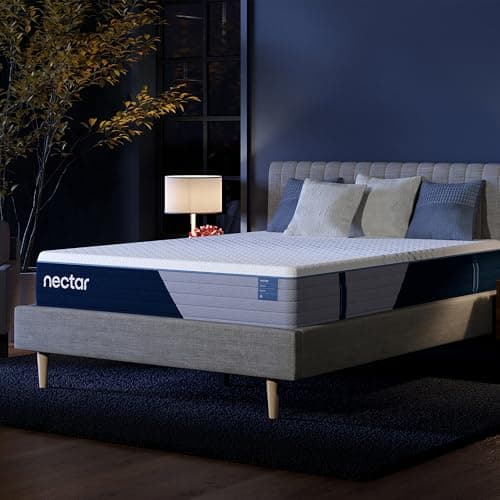 Nectar Classic Hybrid 12" Queen If you make me pick one bed for someone I've never met, it's this one — a coil core takes the biggest risk off the table. Best for: Most people | Most people | $849.00 · View on Amazon Price as of October 18, 2026. #ad — we earn a commission. |
| 2 | 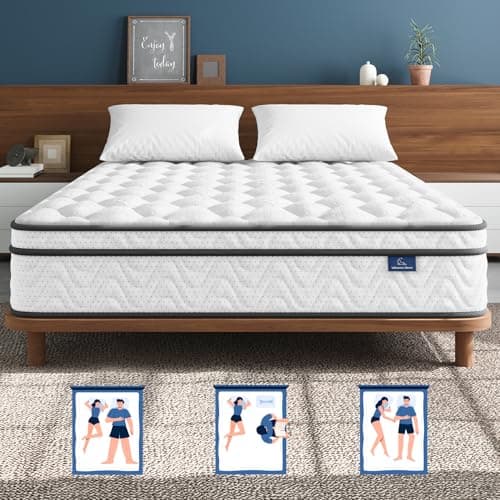 Vesgantti 12" Hybrid Queen The cheapest way to get an actual coil core under you. That's the entire argument, and it's a better one than it sounds. Best for: A tight budget | A tight budget | Check price on Amazon → #ad — we earn a commission. |
| 3 | 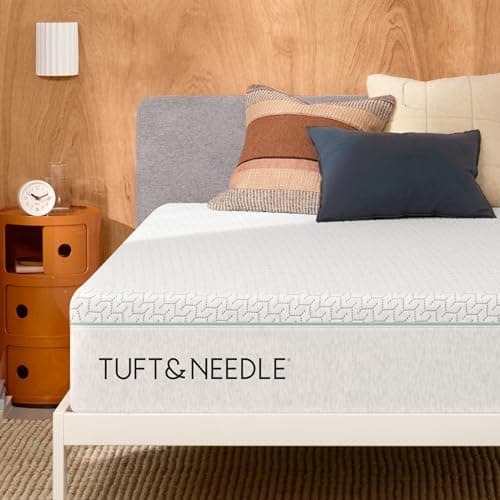 Tuft & Needle Original Hybrid Medium Queen The pick for anyone who has slept on memory foam and hated feeling stuck in it. Adaptive foam is a genuinely different material. Best for: People who hate the memory-foam sink | People who hate the memory-foam sink | $1,545.00 · View on Amazon Price as of October 18, 2026. #ad — we earn a commission. |
| 4 | 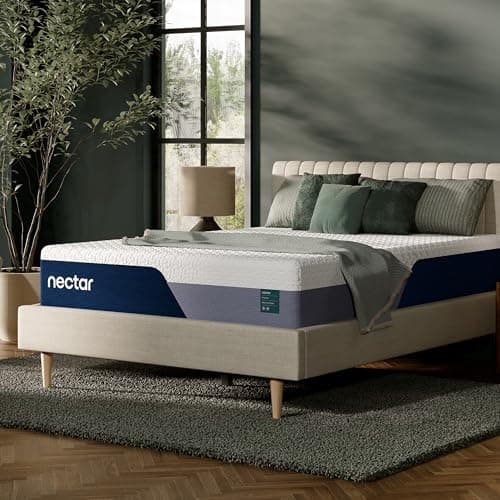 Nectar Premier 13" Queen An extra inch of foam over the Classic, and that inch does something specific: it gives your shoulder and hip somewhere to go. Best for: Deep contouring and pressure relief | Deep contouring and pressure relief | $999.00 · View on Amazon Price as of October 18, 2026. #ad — we earn a commission. |
| 5 | 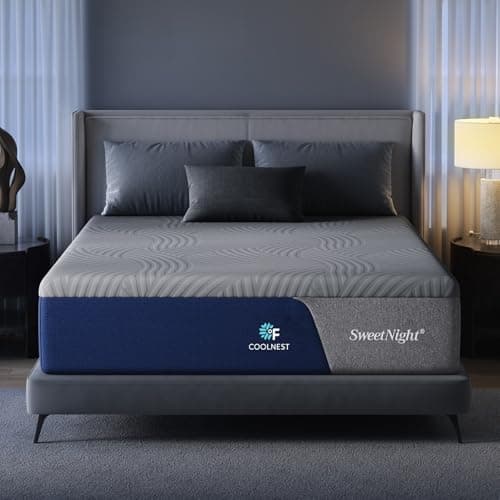 Sweetnight CoolNest 12" Queen Five-zone foam at a mid-budget price. The zoning is a real design decision, not a sticker. Best for: Zoned support without the premium | Zoned support without the premium | $399.99 · View on Amazon Price as of October 18, 2026. #ad — we earn a commission. |
| 6 | 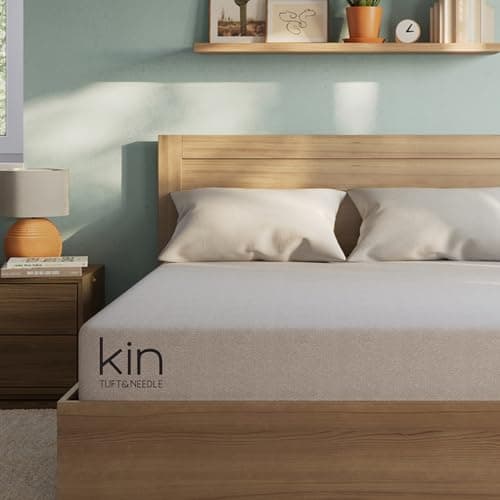 Kin by Tuft & Needle Medium Firm 10" A real brand's budget line rather than an anonymous slab — which is exactly what a guest bed should be. Best for: A spare room | A spare room | $749.00 · View on Amazon Price as of October 18, 2026. #ad — we earn a commission. |
There is no best mattress. There's a best one for you.
That sounds like a dodge, so let me be specific about why it isn't. A mattress is not a phone. A phone is better or worse in ways that hold for everyone who buys it — a faster chip is faster in your hand and in mine. A mattress only exists in relation to a body. The same slab of foam is firm under a 130 lb sleeper and soft under a 250 lb one, because firmness isn't a property of the mattress at all. It's a property of the mattress and you, together, and the second half of that equation is not in the listing.
So a page called "the best mattresses" can honestly do three things. It can tell you which decisions actually change your sleep and which are noise. It can name beds that are competently built for a specific job. And it can tell you, per bed, who should walk away. That last part is the one nobody does, so it's the part I care about most — every pick above has a "skip this one if" block that points somewhere else, sometimes at a cheaper bed.
The one decision that matters more than everything else
Foam or coils. Everything else on the spec sheet is a rounding error next to this, and it's the one thing you cannot change your mind about after delivery.
A hybrid has a support core of springs. A spring core is mostly empty space, so air moves through it, and it pushes back mechanically rather than by resisting compression. An all-foam bed has a dense support core instead: it fills the space, it surrounds you, and it absorbs movement. Those aren't rival marketing claims. They are what the two materials do, and they fall out cleanly into two questions:
- Do you sleep hot?Then buy a hybrid. Foam is an insulator — holding heat in is the material's defining property, and it is the same reason foam is used in coolers and wall cavities. Gel infusions, phase-change covers and "cooling" product names pull some heat off the surface early in the night and then saturate. A coil core doesn't saturate, because it isn't absorbing anything. If you only take one thing from this page, take this one.
- Do you share the bed with someone restless?Then buy foam. Foam damps movement; springs carry it, because a spring's job is to transmit force. Individually-wrapped coils reduce this a lot compared with a connected grid, but they don't beat a solid foam core at it.
If you're a hot sleeper with a restless partner, you have a real conflict and no product solves it. Buy the hybrid and fix the movement with a bigger bed, because you can add distance between two bodies and you cannot add airflow to a foam slab. The full trade-off is in memory foam vs hybrid, and if you're considering going up a size to solve it, mattress sizes has the dimensions.
What moving up a price tier actually buys
The mattress market wants you to believe value scales smoothly with price. It doesn't. It steps, and the steps get much smaller as you go up.
The jump from the bottom of the market to the middle is the one worth making. Down at the bottom you get a foam slab from a company that may not exist in three years, usually with no stated trial and a warranty you'd struggle to claim on. In the middle you get a coil support core, a real trial period, and a brand with a returns department. That is a large jump in what you actually own, and it's why the Vesgantti is on this page as the budget pick rather than a cheaper foam bed — it's the least money that still gets you the construction that matters. If you've decided the bottom of the market is the right call anyway — for a guest room, a child, or a stopgap while you save — our cheap mattresses guide picks the ones worth buying and flags the fiberglass trap to avoid.
Above the middle, the curve flattens hard. Premium money buys depth (13 inches instead of 12), zoning, nicer covers, and a more sophisticated comfort layer. Those are real. They are not four-times-better real. The Nectar Premier earns its place here because deep foam does a specific job for side sleepers and heavier hips — not because more expensive means better. If you can't articulate which of those upgrades you need, you don't need them.
The trial period is a spec, and it's the most valuable one
Here is the whole problem with buying a mattress online, stated plainly: the only test that matters takes about three weeks, and you cannot run it in a shop. Foam softens under use. Your body adapts. The first few nights on a new bed tell you almost nothing — plenty of people love a mattress for a fortnight and resent it by week six.
A trial period is the only mechanism that lets you run the real test without eating the cost of being wrong. So treat it as a headline spec, not fine print. A year-long trial covers a summer and a winter, which matters because heat is seasonal and your bed isn't. Thirty days doesn't even clear the settling-in window. Two of the beds above offer 365 nights and two offer 100; the budget picks state neither, and that silence is the honest reason they're cheap.
Firmness labels are a hint, not a number
Every bed above wears a firmness label and there is no standard behind any of them. One brand's medium firm is another's medium. Worse, the label describes the manufacturer's intention for an average body, and you are not an average body. Heavier sleepers compress the comfort layer further and hit the support core sooner, so every bed reads softer to them; lighter sleepers may never compress the comfort layer enough to feel what it was designed to do at all.
Position stacks on top of weight. A side sleeper needs the surface to yield at the shoulder and hip or the spine bows; a back sleeper needs the midsection held up or it sags. That's why the same label suits one and fails the other. If you know your position, start with the best mattresses for side sleepers or, if support and alignment are what's driving your search, the mattresses built around support. Our firmness guide maps weight and position onto the scale properly.
What I'd ignore entirely
Some of the loudest words on these listings mean nothing you should pay for. Green tea and bamboo charcoal infusions are odor-control claims, not sleep features. "Luxury" and "premium" in a product title are typed by a marketer, not earned. "Orthopedic" has no regulated definition in a mattress listing. Star ratings pool every size and firmness variant sold under one listing, so a high average can be hiding the exact option you're about to choose.
Two badges are worth something. CertiPUR-US is a real certification program covering foam content and emissions. A stated fiberglass-free build is worth having, because fiberglass under the cover is a genuine problem if the cover ever comes off. "Organic" is the badge that isn't a badge — there is no seal a finished mattress can earn, so the word is doing nothing unless a standard is named next to it, and our organic mattress page covers which two are worth looking for. Beyond that, read the height, the construction, the trial and the warranty, and let the rest wash over you. Amazon's listings are built to reward the search box rather than the buyer — if that's where you're shopping, how to read an Amazon mattress listing goes through what the page is hiding from you.
Who shouldn't buy any of these
Worth saying on a page that earns a commission when you do buy: a bed-in-a-box is the wrong answer for some people. If you weigh over about 250 lb, most of these builds are designed around a lighter body and you'll compress past the comfort layer into the core. If you need a specific medical or orthopedic specification, this is not the aisle. And if you have a strong, known firmness preference, an in-person shop is genuinely better than any trial period, because you can settle it in ninety seconds instead of three weeks.
Everyone else: pick your construction from the two questions above, take the longest trial you can get, and stop reading review sites — including this one. If you want to know exactly how these picks get made and what we refuse to claim, here's our method.
The picks, in full
1. Best for Most people
Nectar Classic Hybrid 12" Queen
If you make me pick one bed for someone I've never met, it's this one — a coil core takes the biggest risk off the table.
Price as of October 18, 2026. #ad — we earn a commission.
Key specs
- 12" hybrid
- Medium firm (as listed)
- Memory foam over innerspring coils
- Cooling top layer
- 365-night trial
- Forever warranty (as listed)
What's good
- A coil support core is the one construction choice you can't retrofit later. It moves air, it pushes back under the hips, and it doesn't depend on a foam layer staying resilient for a decade
- 365 nights is long enough to sleep through a full summer and a full winter before you commit — which is the only honest way to judge a mattress you couldn't lie on first
- Nectar lists a forever warranty here. Lifetime cover is expensive to offer, so brands tend not to offer it unless their returns data says they can
What's not
- Coils transmit movement in a way solid foam doesn't. If your partner is restless, this build works against you
- "Medium firm" is Nectar's word, not a measurement — there's no industry standard behind the label and no way to verify it from a listing
- It costs meaningfully more than the near-identical all-foam Classic, and the coils are essentially the whole difference
Skip this one if
You sleep alone on a tight budget and don't run hot. The coils are what you're paying the premium for, and their two big advantages — airflow and durable push-back — are worth less to a light, cool solo sleeper. The Vesgantti below is the same idea for far less.
2. Best for A tight budget
Vesgantti 12" Hybrid Queen
The cheapest way to get an actual coil core under you. That's the entire argument, and it's a better one than it sounds.
#ad — we earn a commission.
Key specs
- 12" hybrid
- Medium firm feel (as listed)
- Memory foam over pocket springs
- Fiberglass-free (as listed)
- 60" x 80" x 12"
What's good
- Pocket springs at the bottom of the market, where nearly everything else at this price is a solid foam slab. Structurally this is the same category of bed as the Nectar above
- The listing states fiberglass-free. Cheap foam mattresses have historically used fiberglass as a fire barrier under the cover, and it's a genuine mess if the cover ever comes off, so a brand ruling it out in the title is worth something
- Ships compressed in a box, so one person can get it up a staircase without a second person and a bad afternoon
What's not
- Vesgantti is an Amazon-native brand. There is no showroom, no long trading record, and no meaningful company to chase in year four
- The listing doesn't publish a trial length or warranty term in its title — on a mattress, those are the two terms that matter most and their absence is itself information
- "Ergonomic design" is a phrase, not a spec. Ignore it
Skip this one if
You want any real recourse if this sags in three years. You're buying the construction, not the company — and the Nectar's year-long trial and lifetime warranty are precisely what the price gap between them buys.
3. Best for People who hate the memory-foam sink
Tuft & Needle Original Hybrid Medium Queen
The pick for anyone who has slept on memory foam and hated feeling stuck in it. Adaptive foam is a genuinely different material.
Price as of October 18, 2026. #ad — we earn a commission.
Key specs
- Hybrid
- Medium (as listed)
- Adaptive foam over individually-wrapped coils
- 100-night trial
- Fiberglass-free (as listed)
- CertiPUR-US certified
- 10-year limited warranty
What's good
- Adaptive foam is built to spring back rather than hold an impression. If the slow-sinking memory-foam feel is what put you off buying online, this is the mainstream alternative and it's a real material difference, not a marketing one
- Faster-recovering foam makes changing position easier, which matters if you're a combination sleeper who doesn't stay put
- Individually-wrapped coils, so the springs flex independently instead of as one connected grid
What's not
- The most expensive bed on this page by a distance, and the price on this listing is worth checking against Tuft & Needle's own site before you buy
- 100 nights is a standard trial and a third of what Nectar gives you — fine if you know your firmness, thin if you're guessing
- 10-year limited warranty. Standard, but standard is what the cheap beds offer too
- This is the previous generation. Tuft & Needle now sells the Original Hybrid Mattress II in its place — half an inch deeper, with updated edge support — and lists the bed sold here under its Legacy range, so sizes and stock only thin out from here
Skip this one if
You actually like the memory-foam hug. This bed is specifically designed to not do that, and paying the most money on this page for a feel you'll dislike is the worst outcome available. Buy the Nectar Premier instead.
4. Best for Deep contouring and pressure relief
Nectar Premier 13" Queen
An extra inch of foam over the Classic, and that inch does something specific: it gives your shoulder and hip somewhere to go.
Price as of October 18, 2026. #ad — we earn a commission.
Key specs
- 13" all-foam
- Medium firm (as listed)
- Contouring memory foam
- Cooling upgrade (as listed)
- 365-night trial
- Forever warranty (as listed)
What's good
- 13 inches is a deeper build than almost anything sold in a box, and depth is not a vanity spec — a thicker comfort layer has more room to let a shoulder sink before the support core stops it
- Solid foam absorbs movement instead of passing it along, so it's the better half of the foam-versus-coils trade if you share the bed with someone restless
- Same 365-night trial and forever warranty as the Classic Hybrid — Nectar doesn't punish you for buying the cheaper model or reward you for the dearer one
What's not
- All-foam. Foam insulates — that is what the material does — so it will run warmer than any hybrid here regardless of what the cooling upgrade is called
- The "cooling upgrade" over the Classic is a surface treatment. It works at the start of the night and then saturates
- You're paying the premium for depth, and depth mostly matters if you're a side sleeper or carry your weight in your hips and shoulders
Skip this one if
You sleep hot. This is the deepest slab of foam on the page, which makes it the warmest thing here — the exact opposite of what you need. The Classic Hybrid at the top does the same contouring job with air moving through it.
5. Best for Zoned support without the premium
Sweetnight CoolNest 12" Queen
Five-zone foam at a mid-budget price. The zoning is a real design decision, not a sticker.
Price as of October 18, 2026. #ad — we earn a commission.
Key specs
- 12" all-foam
- Medium firm (as listed)
- Cooling memory foam
- 5-zone ergonomic support (as listed)
- CertiPUR-US certified
What's good
- Zoning means the foam is engineered to different firmnesses along its length — softer where your shoulder lands, firmer under the hips. It's a design most brands reserve for their expensive lines
- CertiPUR-US certification covers what's in the foam: no ozone depleters, no specified flame retardants, low VOC emissions. It's a real program, not a self-issued badge
- Medium firm is the least-wrong default when you genuinely don't know what you like
What's not
- Zoning only helps if your body lands where the zones assume. A shorter or taller sleeper meets those boundaries in the wrong places, and no listing tells you where they are
- All-foam again, so the heat trade-off applies here as much as it does to the Nectar Premier — "CoolNest" is a product name, not a property
- No trial length or warranty term stated in the listing title, which puts it a long way behind the Nectar beds on recourse
Skip this one if
You're much shorter or taller than average. Zoned foam is built around an assumed body length and the listing won't tell you what it assumed. Unzoned foam can't be misaligned with you because it doesn't try to be aligned in the first place.
6. Best for A spare room
Kin by Tuft & Needle Medium Firm 10"
A real brand's budget line rather than an anonymous slab — which is exactly what a guest bed should be.
Price as of October 18, 2026. #ad — we earn a commission.
Key specs
- 10" all-foam
- Medium firm (as listed)
- Adaptive foam
- 100-night trial
- Fiberglass-free (as listed)
- CertiPUR-US certified
- 10-year limited warranty
What's good
- Kin is Tuft & Needle's cheap line, so it comes with a company attached: a stated trial, a stated warranty, and somewhere to complain. Most beds at this price come with none of the three
- 10 inches and all-foam makes it light enough for one person to wrestle into a loft room, which is where a spare mattress usually has to go
- Medium firm is the safest guess for a bed that has to serve whoever turns up
What's not
- 10 inches is thin. Less material between you and the slats means less room for a comfort layer and a support core to do separate jobs
- Adaptive foam without coils gives up the airflow benefit and keeps the bouncier feel — a reasonable trade for occasional use, less so for nightly sleep
- It costs more than the anonymous foam beds it competes with, and most of that is the brand and the paperwork
Skip this one if
This is your main bed. At 10 inches it's built for occasional nights, and you'll notice the missing depth within a month. Spend the step up on the Nectar Classic Hybrid and stop thinking about it.
The cheap stuff worth having
None of this makes a mattress better — that job belongs to the bed you just picked. These are the small things that stop a good one getting worse, and all three together cost a fraction of any mattress on this page.
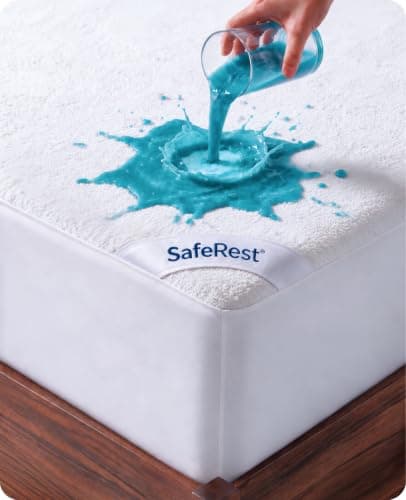
SafeRest Waterproof Mattress Protector
The cheapest insurance a bed can carry: it keeps sweat and spills out of foam you can never wash, and keeps off the single stain that voids a lot of mattress warranties.
Skip it if You already sleep on a protector you get on with. This is the top pick from our protector roundup, not a second layer to stack on the first.
$39.99 · View on AmazonPrice as of October 18, 2026. #ad — we earn a commission.
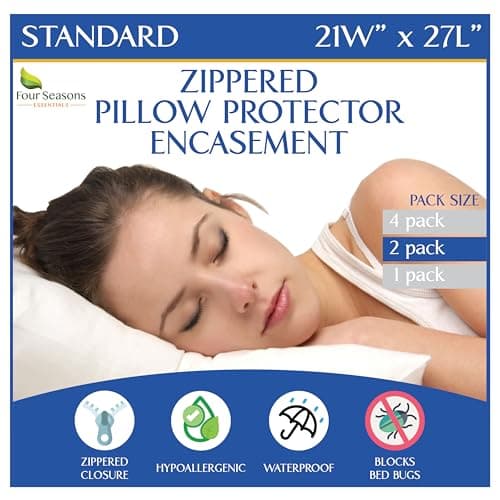
Four Seasons Essentials Zippered Pillow Protectors (Set of 2)
Zip one under each pillowcase and it catches the sweat and hair oil before any of it reaches the fill — so the weekly wash is a thin cover, not the whole pillow.
Skip it if You already wash your pillows on schedule and don't mind the job. A protector buys convenience and a longer-lived pillow, not a better night's sleep.
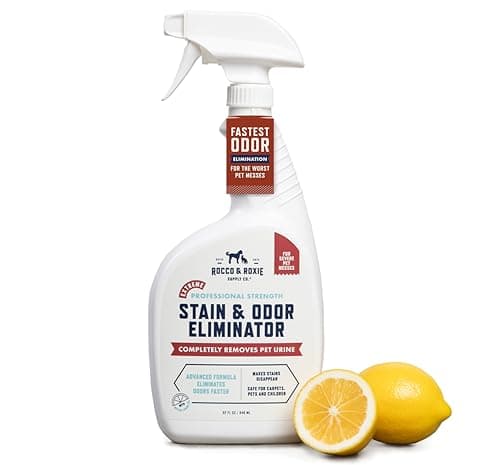
Rocco & Roxie Extreme Enzyme Stain & Odor Eliminator
The one product that breaks a protein stain — sweat, urine, blood — apart instead of diluting it and pushing it deeper into padding you can't wash.
Skip it if The mark is old, dry and purely cosmetic on a bed you're replacing anyway. Enzymes work on what they can still reach, not on years of it.
$27.97 · View on AmazonPrice as of October 18, 2026. #ad — we earn a commission.
Common questions
What is the best mattress?
There isn't one, and any site that answers this question with a single product name is selling you something. Firmness is relative to your body weight, the ideal construction depends on whether you sleep hot and whether you share the bed, and the right depth depends on your sleeping position. What does generalize: a medium-firm feel suits the widest range of people, a coil core handles heat and long-term support better than foam, and a long trial period matters more than any spec on the listing because it's the only thing that lets you correct a wrong guess.
Should I buy a foam mattress or a hybrid?
Hybrid if you sleep hot, foam if you share the bed with someone restless. A coil core is mostly empty space, so air moves through it — that is the single most effective cooling feature any mattress can have, and no gel infusion in a solid foam slab can replicate it. Solid foam, meanwhile, absorbs movement rather than transmitting it, so a partner getting up at 3am is less likely to wake you. If neither of those describes you, the decision matters less than the trial period does.
How much should I spend on a mattress?
The steep part of the curve is early. Moving from the cheapest beds to the mid tier typically buys you a coil core, a stated trial period and a warranty from a company that still exists — that's a big jump in what you get. Above the mid tier you're mostly buying depth, zoning, and better cover materials, which are real but incremental. Very few people need the top tier, and nobody should buy it for the marketing language.
How firm should my mattress be?
Medium-firm is the least-wrong default, but firmness is relative to your body. The same mattress reads firmer to a 130 lb sleeper than to a 250 lb sleeper, because the heavier body compresses the same foam further. Sleeping position pushes it too: side sleepers generally need more give at the shoulder and hip, while back and stomach sleepers generally need more resistance under the midsection. There's no standard behind the words on the label, which is why the trial period matters.
How long does it take to know if a mattress is right?
Give it three to four weeks. Foam softens with use, and your body adapts to a new sleeping surface — the first few nights on any new mattress are unrepresentative, in both directions. This is why a 365-night trial is worth real money and a 30-day return window is close to worthless: 30 days barely gets you past the settling-in period.
Sources
Where the facts on this page come from. We cite other people's testing because we don't do our own — here's what that means.
Read next
- Black Friday & Cyber Monday Mattress & Sleep Gear Deals 2026What sleep gear historically discounts in November and what rarely does, buy-now vs wait guidance by product class, and our current top picks with live prices as a baseline. Deals will be posted here when they go live.
- The Best Luxury Sleep GiftsSeven top-end sleep gifts — a year-trial hybrid mattress, 800-fill-power goose down, GOTS organic linen, the TEMPUR-Cloud pillow, Ozlo Sleepbuds, the Hatch Restore and a washable-cover topper — with an honest note on which premiums the recipient will actually feel.
- When Is the Best Time to Buy a Mattress?Mattress sales are nearly constant, so timing is about spotting the deals that are real - the holiday weekends, the model-changeover clearances, and the countdown timers that mean nothing.
- The Best Luxury MattressesSix premium-tier mattresses judged on what luxury money actually buys - better coils and foams, longer trials, real warranties, brand backing - with honest cons and a skip note on every one. Plus the honest catch: the right feel at a mid price beats the wrong luxury bed.
- The Best Medium-Firm MattressesSix medium-firm mattresses - the most widely-recommended feel - led by hybrids and foam that genuinely land in the middle, each with honest cons and a note on who it's wrong for. Why medium-firm is the safe default, and the two groups who should ignore it.
- Queen vs KingA King is 16 inches wider than a Queen at the same length — worth two Twin XLs' worth of space. Here's who needs it, and who's better off with Queen.
- The Best Hybrid MattressesSix hybrid mattresses judged on what makes a coil core worth it over all-foam — airflow, edge support, responsiveness — with honest cons and a skip-this-one note on every pick.
- The Best Mattresses for CouplesSix mattresses for two people, organized around the one trade-off that decides couples' sleep — motion isolation versus edge support — with honest cons and a skip-it note on every pick.
- The Best Mattresses on AmazonSix Amazon mattresses worth your money, with live prices and an honest note on who each one is wrong for.
- What Reddit Gets Right About Mattresses, and What It Gets WrongWhy people search Reddit for mattress advice, what that source is genuinely good for, where it quietly misleads, and how to audit any review site — this one included.
- The Best Mattresses for Side SleepersSix mattresses with comfort layers deep enough to let a shoulder and hip sink — the actual problem side sleepers are trying to solve.
- The Best Mattresses for Lower Back PainSix mattresses judged purely on support and spinal alignment — and why medium-firm, not firm, is where the evidence points.
- The Best Organic MattressesSix organic mattresses whose listings name an actual standard - GOTS or GOLS - plus how to spot the ones using the word as decoration.
- Memory Foam vs Hybrid MattressesFoam or coils? The six differences that matter, and the one axis that settles it for most buyers.
- Mattress Firmness: The 1-10 Scale, HonestlyWhat the 1-10 firmness scale actually means, why one brand's 6 is another's 7, and how your bodyweight changes the answer.
- The Best Mattresses for Stomach SleepersSix firm mattresses that keep a stomach sleeper's hips from sinking — the one thing that decides whether the position wrecks your lower back.
- How to Choose a MattressThe five questions that decide a mattress — construction, position, weight, firmness, trial — in the order that collapses the field fastest.
- How Often Should You Replace a Mattress?Most mattresses last 6-8 years, but sag and morning stiffness are better signals than age. How to tell a worn-out bed from one that just needs a topper.