The Best Duvet Inserts
Fill power and fill weight get used interchangeably by people selling duvets, and they are not the same number — one is quality, the other is warmth. Here's how to tell what you're buying, and six inserts worth the money.
We earn a commission if you buy through our links. It doesn't affect our picks — and we never take free products. How this site is funded.
Quick picks
| # | Product | Best for | Price |
|---|---|---|---|
| 1 | 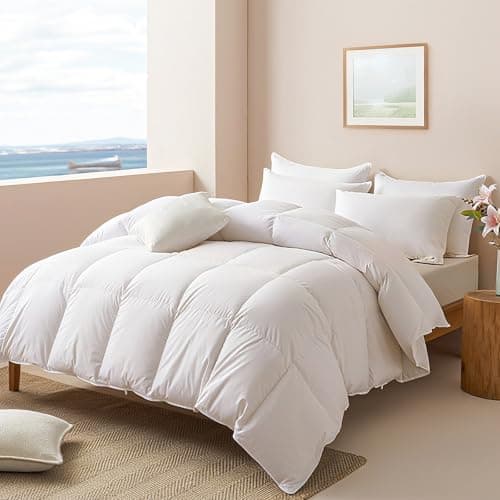 APSMILE Goose Feather Down Fibers Comforter, Baffle Box The only insert here whose listing states baffle-box construction, which is the one build detail that decides whether you get cold spots. Best for: Most people | Most people | $79.99 · View on Amazon Price as of October 18, 2026. #ad — we earn a commission. |
| 2 | 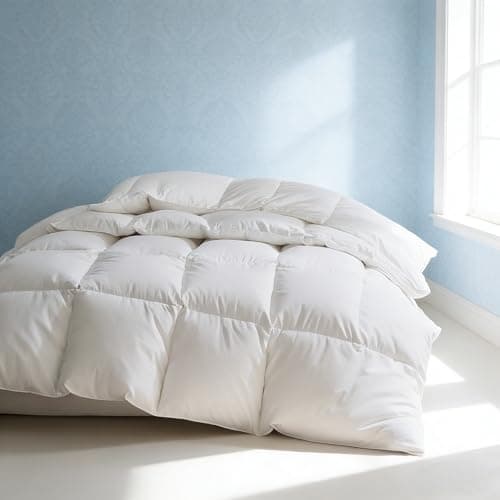 Martha Stewart Hotel Collection Goose Feather Down Duvet Insert The one I'd buy for the look — a cotton-shelled feather-down insert with medium warmth stated, which is the useful half of a spec. Best for: A hotel-style bed | A hotel-style bed | |
| 3 | 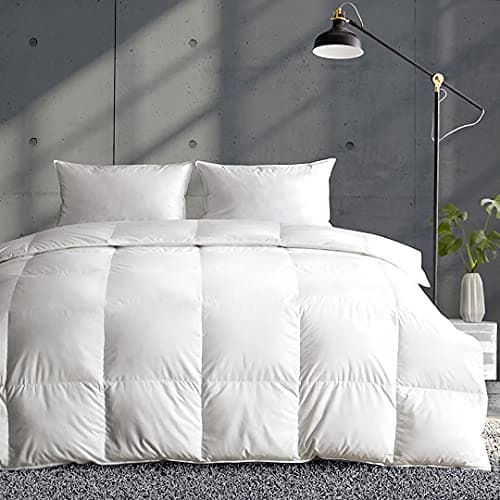 APSMILE Lightweight Down Feather Fibers Comforter A summer-weight down duvet is the most under-bought item in bedding. Most people are sleeping under too much duvet for the room they're in. Best for: Warm bedrooms | Warm bedrooms | $109.00 · View on Amazon Price as of October 18, 2026. #ad — we earn a commission. |
| 4 | 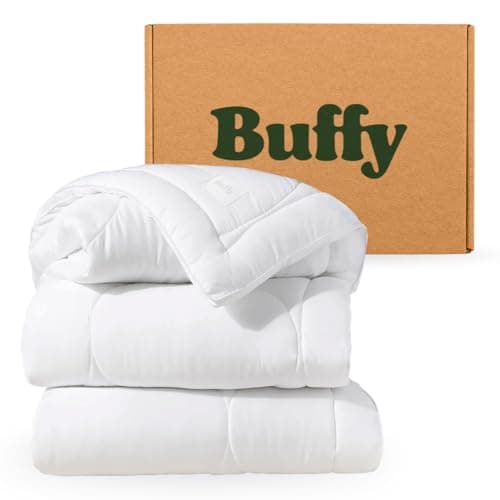 Buffy Cloud Eucalyptus Lyocell Duvet Insert Lyocell fill instead of down or polyester. It's the priciest thing here and the only one on this page I'd cheerfully put through a machine. Best for: Washing it yourself | Washing it yourself | $199.00 · View on Amazon Price as of October 18, 2026. #ad — we earn a commission. |
| 5 | 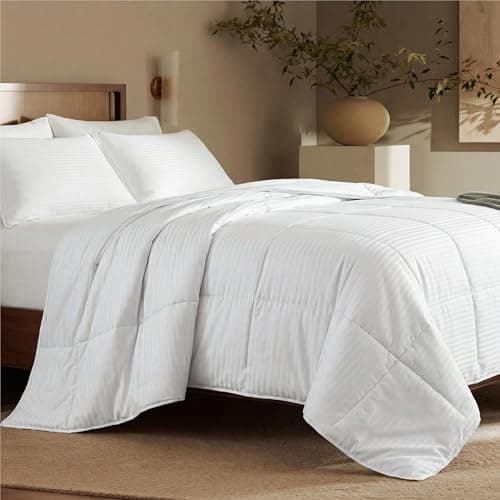 Bedsure Lightweight Quilted Cooling Duvet Insert Down-alternative done sensibly: light, quilted, washable, cheap. Buy it as a summer duvet and it makes complete sense. Best for: A cheap summer duvet | A cheap summer duvet | |
| 6 | 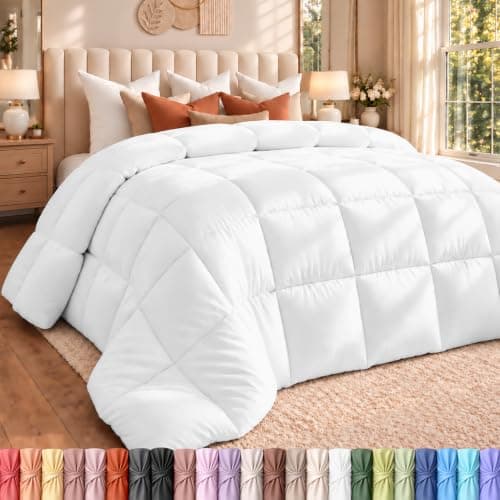 Utopia Bedding Quilted Box-Stitched Duvet Insert The cheapest insert here by a mile, and it's box stitched — which I'm about to spend three paragraphs criticizing. Buy it anyway, for the right bed. Best for: The lowest price | The lowest price | $29.98 · View on Amazon Price as of October 18, 2026. #ad — we earn a commission. |
First: do you want an insert at all?
A duvet insert is the fill. It is a plain white sack of down or polyester that is not meant to be seen — it goes insidea duvet cover, which is the thing you wash, and the cover is what makes your bed look like anything. A comforter is the other model: the fill and the decorative outer are one sewn unit, it goes on the bed bare, and when it's dirty the whole thing goes in the machine.
This page is the first thing. If you want to buy one object, put it on the bed and be finished, you want a comforter, and that roundup is a different set of products for a different job. If you want to change how your bed looks without buying new bedding, wash your bedding as easily as you wash your sheets, and buy fill quality once and keep it for a decade — you want an insert and a cover. Most people who end up frustrated with their bedding bought the wrong one of these two.
Fill power and fill weight are not the same number
This is the confusion the entire category runs on, and once it's clear the marketing loses most of its power over you.
Fill poweris a quality measure. It's the number of cubic inches that one ounce of down lofts up to occupy under a standard test. 550 is decent, 700 is very good, 800-plus is exceptional. What it tells you is how efficient the down is — how much air each ounce traps. What it does not tell you is how warm the duvet is.
Fill weight is how many ounces of that down are actually in the thing. This is the number nobody advertises.
Warmth comes from total loft, which is fill power times fill weight. Both numbers, together. Which produces the fact that catches everybody out: a high fill power duvet can be a summer duvet.Stuff a shell with a small amount of magnificent 800-fill down and you get something feather-light that drapes beautifully and barely warms you. Stuff it with a great deal of mediocre 550-fill down and you get a heavy, hot winter duvet that costs less. Fill power alone is like knowing a car's fuel efficiency and not its tank size.
Now the punchline. Look at the inserts above: not one of these listings publishes a fill power number, and not one publishes a fill weight.APSMILE's summer duvet says "High FP" in the title and never gives the figure. That is a claim engineered to survive contact with a fact-checker. Fill power is a measured number from a defined test — if a seller has a good one, they print it. "High fill power" with no number is the duvet equivalent of a restaurant advertising "food".
So on Amazon you are usually buying against the seller's warmth word— lightweight, all-season, medium warmth — rather than against a spec. That's worth knowing before you spend, and it's the honest reason no pick on this page is ranked on a number: I haven't got the numbers, because the sellers didn't give them to me, and I'm not going to invent them.
Down, down alternative, and the blend nobody explains
Three categories, and Amazon's product names blur all three deliberately.
- Downis the fluffy under-plumage from the bird's chest — three-dimensional clusters with no quill, which is why they trap so much air per ounce. It's the warmest fill per gram available, it breathes, it drapes over your body rather than tenting, and it lasts decades if you look after it. It is also expensive, allergenic for some people, and awkward to clean.
- Feather and down blends— sold as "feathers down fiber", "down feather fibers" and every permutation thereof — are what most of the inserts above actually are, including both APSMILEs, the Martha Stewart, and nearly everything on Amazon under a hundred dollars claiming to be down. Feathers have quills. They're flatter, heavier and less lofty than down, and a blend is therefore heavier for the same warmth. This isn't a scandal — it's why these cost a fraction of a real down duvet, and they're still nicer than polyester. But read those product names slowly. "Goose feathers down fiber" is not "700-fill white goose down", and it is written to be skimmed.
- Down alternativeis polyester fiberfill. Cheap, washable, allergy-safe, and it has one flaw that no branding fixes: polyester doesn't absorb moisture. Down passes the water vapor you shed overnight straight through; polyester holds it against you. That is the mechanism behind clammy bedding, and it's why "cooling" on a polyester-filled duvet is an uphill claim. Lyocell fill — the Buffy above — is the interesting middle: a cellulose fiber that moves moisture like a natural fiber and washes like a synthetic. If polyester fill is what you want anyway — for the washability or the price — our down alternative comforters page ranks them on the three specs that matter once there is no down involved.
Baffle box vs sewn-through: where the cold spots live
The single most useful thing on a duvet listing, and it hides in one word.
A sewn-through or box-stitchedduvet — the Utopia and the Bedsure above — is made by laying the top and bottom fabric together and stitching a grid straight through both. It's cheap, it's fast, and it does stop the fill sliding into one corner. But look at what happens at each seam: the two shells are pressed together with no fill between them at all. Your duvet is a quilt of warm squares divided by a grid of cold lines. In a cool room you can run your hand across the bed and feel it.
A baffle boxduvet — the APSMILE at the top — sews vertical fabric walls between the top and bottom shells. The fill lives in three-dimensional boxes, it lofts to full thickness across the whole duvet including at the seams, and there is no thin line anywhere. It costs more to make. It's the difference between a duvet that's evenly warm and one that's warm in patches.
The rule I'd apply: on a cheap summer duvet in a warm room, sewn through is fine and you won't notice. On the duvet you sleep under in January, pay for baffle box.
Match the duvet to your room, not to the label
"All-season" is the most successful phrase in bedding and it describes a duvet that is slightly wrong for most of the year. There is no fill that adapts. There's just a middle amount of insulation, chosen to be tolerable in a moderate room, which is too much in August and not enough in January. It's a compromise sold as a feature — and the reason it sells is that it means you buy one duvet instead of two.
The variable that matters is your bedroom's overnight temperature, not the month on the calendar. A well-insulated flat with the heating on is a warm room in February. An old house with the window cracked is a cold room in June. Pick for the room you actually sleep in:
- Warm room, or you run hot. A lightweight duvet, all year. The APSMILE lightweight is built for exactly this and most people in this bracket are sleeping under twice the duvet they need.
- Moderate room.A medium-warmth insert — the Martha Stewart or the APSMILE baffle-box — is genuinely right most of the year, and this is the one case where "all-season" isn't a fudge.
- Cold room, or you like the window open. You want real fill weight and baffle-box construction. This is the purchase to spend on.
- Two people who disagree. Buy the lighter duvet and let the cold one add a blanket on their side. Adding warmth is easy; the hot sleeper under a heavy duvet has no move available.
And the thing nobody in this category will tell you, because it earns them nothing: owning two duvets is the actual answer.A light one and a warm one, swapped twice a year, will cost less across a decade than the all-season duvet you keep replacing because it never quite works. If you're still overheating under a lightweight duvet on good cooling sheets, the problem has moved somewhere else — usually the mattress under you, which is a different and more expensive conversationthat I'd rather you had last.
Size it for the overhang, not the mattress
Two rules. First, the insert has to fit your cover — covers vary by brand, so check that dimension before anything else, because an insert swimming inside a big cover ends up as a lump at the foot of the bed. Second, on the bed itself, you want overhang. A 90 x 90 insert drapes over the sides of a queen; an 88 x 88 sits closer to the edges, and on a thick mattress or one with a topperunder it, that missing couple of inches is the draft that wakes you when your partner turns over. Corner tabs matter here too — eight beats four, every time, and it's the cheapest quality signal on the page. If yours is already migrating, how to keep a comforter in a duvet cover goes through the four fixes, and baffle box vs sewn through explains why an insert living inside a cover can skip the expensive stitching.
The picks, in full
1. Best for Most people
APSMILE Goose Feather Down Fibers Comforter, Baffle Box
The only insert here whose listing states baffle-box construction, which is the one build detail that decides whether you get cold spots.
Price as of October 18, 2026. #ad — we earn a commission.
Key specs
- Goose feather and down fibers (as listed)
- Baffle box construction (as listed)
- Organic cotton cover (as listed)
- "All season warmth" (as listed)
- "Quill-free" (as listed)
- Queen, 90 x 90 in
What's good
- Baffle box means fabric walls stand between the top and bottom layers, so the fill has room to loft to full thickness — a sewn-through duvet pinches to zero at every seam and those seams are where your heat leaves
- A cotton shell breathes. Down and feather need to release the moisture you shed overnight, and a polyester shell traps it in the fill where it flattens the loft
- Feather-and-down fill drapes around you and follows your shape, which polyester fiberfill never manages — it tents
What's not
- "Goose feather down fibers" is a feather-forward blend, not a pure down duvet. Feather has quills and structure; it's heavier and less lofty than down for the same warmth, which is why it's a fraction of the price
- No fill power figure and no fill weight is published in this listing, so you cannot compare its warmth to anything numerically — you're buying the seller's word "all season"
- Feather-fill duvets want professional cleaning or a very large machine. This is not a weekly wash item
Skip this one if
You're allergic to feathers, or you want to throw your duvet in the washing machine on a Sunday. Both are real constraints and neither is solvable — take the Buffy lyocell or the Bedsure down-alternative below, which are built to be washed.
2. Best for A hotel-style bed
Martha Stewart Hotel Collection Goose Feather Down Duvet Insert
The one I'd buy for the look — a cotton-shelled feather-down insert with medium warmth stated, which is the useful half of a spec.
Key specs
- White goose feathers and down fiber (as listed)
- 100% cotton cover (as listed)
- All season, medium warmth (as listed)
- Hypoallergenic (as listed)
- Queen, 90 x 90 in
What's good
- "Medium warmth" is stated outright, which is more than most inserts here manage — it's a manufacturer's word rather than a measurement, but at least it commits to a direction
- Cotton shell again, so the fill can breathe and dry out during the day
- 90 x 90 inches is a properly generous queen: it overhangs the mattress rather than sitting on it like a tea towel, which is what stops the draft down the side at 4am
What's not
- "Hypoallergenic" on a feather product usually refers to how the feathers were washed and processed, not to the absence of the thing people react to. If you have a feather allergy, this word should not reassure you
- Feathers-and-down again, not pure down. The name on the packaging doesn't change what the fill is
- No fill power and no fill weight stated. Every insert on this page shares this problem, and it's why so much duvet buying is guesswork
Skip this one if
Your bedroom runs warm. "Medium warmth" is aimed at a room around the high 60s Fahrenheit — if yours sits above that, you'll throw this off by midnight. Buy the APSMILE lightweight below, which is built for exactly that room.
3. Best for Warm bedrooms
APSMILE Lightweight Down Feather Fibers Comforter
A summer-weight down duvet is the most under-bought item in bedding. Most people are sleeping under too much duvet for the room they're in.
Price as of October 18, 2026. #ad — we earn a commission.
Key specs
- Down and feather fibers (as listed)
- 100% organic cotton cover (as listed)
- "High FP summer duvet" (as listed — no figure given)
- For warm weather / hot sleepers (as listed)
- Full/Queen, 90 x 90 in
What's good
- The right way to build a hot-room duvet: less fill, not worse fill. Cut the fill weight and keep the down quality and you get something that still lofts and drapes but carries far less insulation
- Cotton shell, so moisture you shed overnight can leave rather than condensing in the fill — the thing that actually makes a warm bed feel clammy
- A genuine second duvet. Keeping a light one for summer and a warmer one for winter costs less over a decade than fighting a single all-season duvet does
What's not
- "High FP" appears in the title with no number attached. Fill power is a measured figure on a defined test; a listing that says "high" and stops has told you nothing you can check
- A summer duvet is genuinely too cold for a cold room — this isn't a flaw, it's the design, but people buy it as their only duvet and then complain
- Feather blends still can't be casually machine washed
Skip this one if
This will be your only duvet and you have actual winters. It won't stretch to cover both ends of the year — buy the medium-warmth Martha Stewart or the APSMILE baffle-box above as your main duvet, and add this one later.
4. Best for Washing it yourself
Buffy Cloud Eucalyptus Lyocell Duvet Insert
Lyocell fill instead of down or polyester. It's the priciest thing here and the only one on this page I'd cheerfully put through a machine.
Price as of October 18, 2026. #ad — we earn a commission.
Key specs
- Eucalyptus lyocell fill (as listed)
- Machine washable (as listed)
- Lightweight, all-season (as listed)
- Temperature-regulating (seller's claim)
- Queen/Full
What's good
- Lyocell is a cellulose fiber — it moves moisture along the fiber and releases it rather than holding it against you, which is a different and better mechanism than polyester's repel-and-trap
- Machine washable at home, which no feather duvet on this page genuinely is. If you have pets, kids or hay fever, this single property outranks everything else here
- No feathers, so no feather allergy and no quills working their way through the shell over the years
What's not
- It is by a distance the most expensive insert on this page, and the fill is not down
- Lyocell fill doesn't loft like down does. You get a flatter, denser, more blanket-like duvet — plenty of people prefer that, but if you're chasing the cloud look you'll be disappointed
- "Temperature-regulating" is the brand's phrase. Lyocell genuinely handles moisture well; no fill regulates temperature in the sense that word implies
Skip this one if
You want the deep, fluffy, hotel-duvet loft. That is what down does and lyocell fill doesn't — the two APSMILE picks above are the ones to look at, and both cost considerably less.
5. Best for A cheap summer duvet
Bedsure Lightweight Quilted Cooling Duvet Insert
Down-alternative done sensibly: light, quilted, washable, cheap. Buy it as a summer duvet and it makes complete sense.
Key specs
- Down alternative fill (as listed)
- Quilted (as listed)
- Lightweight / summer comforter (as listed)
- 8 corner tabs (as listed)
- Machine washable (as listed)
- Queen, 88 x 88 in
What's good
- Eight tabs, not four. Corner tabs are what stop the insert migrating into a lump at the bottom of the cover, and eight anchor points hold a duvet flat in a way four never do
- Machine washable without ceremony — polyester fill's genuine advantage over down, and the reason it belongs in a kid's room or a guest room
- Sold as a lightweight summer duvet rather than as an all-season compromise, which is a more honest product than most of this category
What's not
- Down alternative is polyester. It doesn't absorb moisture, so it repels the sweat back at you rather than moving it away, and "cooling" in the title is fighting that
- Polyester fiberfill clumps and flattens over repeated washes — the washability that makes it appealing is also what wears it out
- 88 x 88 inches is a snug queen. On a thick mattress there's not much overhang to tuck
Skip this one if
You sleep hot AND want to wash it. That sounds like this duvet, but polyester fill is exactly the wrong material for a hot sleeper — the Buffy lyocell above is washable and actually breathes.
6. Best for The lowest price
Utopia Bedding Quilted Box-Stitched Duvet Insert
The cheapest insert here by a mile, and it's box stitched — which I'm about to spend three paragraphs criticizing. Buy it anyway, for the right bed.
Price as of October 18, 2026. #ad — we earn a commission.
Key specs
- Down alternative fill (as listed)
- Box stitched (as listed)
- Corner tabs (as listed)
- Machine washable (as listed)
- Queen, 88 x 88 in
What's good
- It costs less than a takeaway and it's a perfectly serviceable duvet for a spare room, a kid's bed or a first flat
- Box stitching does stop the fill migrating into one corner — it's the cheap solution to a real problem, and it works at what it's for
- Washable, replaceable, and cheap enough that you replace it rather than clean it
What's not
- Box stitched means the shell is sewn straight through, top to bottom. At every seam the duvet is two layers of fabric and no fill — a grid of cold lines across your bed. This is the difference between it and the baffle-box pick above
- Polyester fill, so the same moisture problem as any down alternative
- This isn't a duvet that survives years. It's a duvet that costs so little you don't mind
Skip this one if
This is your own bed, for the next five years. Sewn-through construction has cold spots by design, and you will feel them in a cold room — the APSMILE baffle-box pick is the one to buy for the bed you actually sleep in.
Common questions
What's the difference between fill power and fill weight?
Fill power measures the quality of the down: it's the number of cubic inches that one ounce of the down lofts up to fill. Higher fill power means each ounce traps more air, so it's a measure of efficiency, not of warmth. Fill weight is simply how many ounces of down are in the duvet. Warmth comes from total loft, which is roughly fill power multiplied by fill weight. This is why a 800 fill power duvet can be a summer duvet — a tiny amount of superb down, light and airy — while a 550 fill power duvet stuffed with far more of it is a winter duvet. High fill power on its own tells you the down is good, not that the duvet is warm.
Is down or down alternative better?
They're different trade-offs. Down is lighter for the same warmth, it lofts higher, it drapes around your body instead of tenting over it, and it breathes — meaning the moisture you shed overnight passes through instead of collecting. It's also expensive, it can't casually be machine washed, and it's a non-starter if you're allergic to feathers. Down alternative is polyester fiberfill: cheap, washable, allergy-safe, and it does not absorb moisture at all, so it holds sweat against you rather than moving it away. It also clumps and flattens over its life. If you can afford down and aren't allergic, down is the better duvet. If you need to wash it every fortnight, that argument doesn't matter.
What is baffle box construction and does it matter?
Yes, more than almost anything else on the spec sheet. A sewn-through or box-stitched duvet has its top and bottom fabric sewn directly together in a grid — which means at every seam there is no fill, just two layers of cloth, and heat leaves through that grid. A baffle box duvet has vertical fabric walls between the layers, so the fill sits in three-dimensional boxes and can loft to its full thickness everywhere, including at the seams. On a cheap duvet in a warm room you won't much notice. On a winter duvet, the sewn-through grid is a pattern of cold lines you can feel with your hand.
How do I choose a duvet warmth for my bedroom?
Ignore the season on the label and use your room's actual overnight temperature, because that's the variable the duvet is working against. If you sleep with the heating off and the window open in a cold climate, you want a genuinely heavy duvet. If your bedroom sits in the low 70s Fahrenheit year-round, a lightweight duvet is your all-year duvet and the winter one will be on the floor by 2am. The single best upgrade most people can make is owning two — one light, one warm — and swapping them. That costs less than replacing a duvet you fight with every night.
What size duvet insert should I buy for a queen bed?
Buy for the cover you own, then for the overhang. Duvet covers vary between brands, and an insert that's too small swims inside the cover while one that's too large won't fit at all — so check the cover's stated dimensions first. Beyond that, sizes on queen inserts run from about 88 by 88 inches up to 90 by 90 and oversized options beyond that. The larger sizes overhang a thick mattress properly, which is what stops cold air being drawn up the sides of the bed when you move. If your mattress is 14 inches or more, or you have a topper on it, size up.
Sources
Where the facts on this page come from. We cite other people's testing because we don't do our own — here's what that means.
Read next
- Duvet vs ComforterA comforter is a single finished bedspread you use as-is; a duvet is an insert that goes inside a washable cover. How they differ on laundering, styling, warmth, and cost — and a clear verdict for which to buy.
- The Best Comforters for WinterSix genuinely warm comforters for a cold bedroom, sorted by how each fill holds heat - premium down, temperature-regulating wool, and dense down alternative - with an honest note on who should skip each.
- The Best Quilts and CoverletsSix lightweight quilts worth buying, the quilt-versus-comforter difference most buyers get backwards, and why 100% cotton beats a cheaper microfiber coverlet.
- The Best Down ComfortersSix down comforters worth buying, the difference between real down and the feather blends most listings hide, and how fill power, fill weight and the shell decide what you get.
- The Best Duvet CoversSix duvet covers worth buying, plus the one word on the label that separates cotton from polyester, why corner ties matter more than thread count, and how to size a cover to your insert.
- Down vs Down AlternativeDown is warmer for its weight, lofty and long-lasting but pricier and higher-maintenance. Down alternative is cheaper, hypoallergenic and easy-care but heavier and shorter-lived. Here's how fill power and fill weight decide which is right for you.
- The Best ComfortersSix comforters worth buying, the comforter-versus-duvet decision most buyers get backwards, and why all-season weight is usually the wrong compromise.
- The Best Cooling Sheets for Hot SleepersSix sheet sets that actually breathe, chosen on fiber and weave rather than marketing — plus who should skip each one.
- The Best Sheets on AmazonSix Amazon sheet sets worth buying, plus how to read a listing: why thread count lies, what Egyptian cotton isn't, and the sizing spec that causes most returns.
- How to Choose a Duvet CoverChoosing a duvet cover comes down to sizing it to your insert, picking a closure and corner ties that stop the fill from shifting, and choosing a fabric and weave — percale, sateen, linen or microfiber — that gets the feel and temperature you want.
- The Best Cooling ComfortersSix comforters for hot sleepers and night sweats, sorted by how they actually keep you cool - cold-touch fabric at bedtime versus a light, breathable fill all night - with an honest note on who should skip each.