Guides
The reference pages. Sizes, firmness, materials — the facts, without a product attached.
Start here
Linen vs Bamboo Sheets
Linen's airflow, longevity and lived-in look versus bamboo-rayon's silky, drapey, cool-to-the-touch feel — plus the labeling truth almost no bamboo listing says out loud.
Hybrid vs Innerspring Mattresses
Two coil beds, one real difference: the comfort layer on top. How cushion depth and pocketed-versus-connected coils decide which one fits you.
Wool vs Down Comforter
Down is the loftiest, lightest, warmest-for-its-weight fill with a cloud-like feel, but it can sleep hot and needs careful washing. Wool regulates temperature across seasons, wicks moisture, resists dust mites, and is low-maintenance but heavier and flatter. Here's how to choose between the two natural fills.
Foundation vs. Box Spring: What's the Difference?
Box spring vs. foundation, compared honestly: one flexes and was built for innerspring beds, the other stays rigid for foam and hybrids. How to match the base to your mattress, plus the height, noise, and warranty differences.
Coverlet vs Quilt
A quilt is three layers stitched through with a little batting; a coverlet is a flatter, lightly padded or single-layer bedspread. How they differ on warmth, layering, drape, and care — plus a clear verdict for which to choose.
How to Clean a Mattress Topper
A material-by-material way to clean a mattress topper — memory foam and latex (spot-clean only, never machine wash), feather and down (usually a cool gentle cycle), and wool, cotton or fiberfill (check the tag) — plus the protector trick that means you rarely deep-clean it at all.
How to Wash a Mattress Pad (by Fill Type)
How to wash a mattress pad by what's inside it — cotton and poly-fiberfill in the machine, down cool and slow, wool cold and air-dried, foam spot-cleaned only. Plus the low-heat rule for any waterproof-backed pad and how often it needs doing.
How to Wash a Blanket or Throw
A material-by-material wash method for everyday blankets and throws — fleece and microfiber, cotton and knits, wool and cashmere, acrylic, and faux fur or chunky knit — plus the softener mistake that kills fleece, the drum-size problem with big throws, and how often to actually wash one.
How to Fold a Fitted Sheet
How to fold a fitted sheet neatly: the corner-nesting method step by step, an easier roll (or 'burrito') alternative, the cardboard trick for a store-display finish, and how to fold the whole set together so your linen closet stays tidy.
How to Keep a Mattress Topper From Sliding
Why mattress toppers slide — smooth foam on slick sheets, or a topper that is the wrong size — and the fixes that keep them put, led by a deep-pocket fitted sheet pulled over both layers, plus corner straps, grip pads, and a permanent hold.
What Is TENCEL?
TENCEL is a brand name for lyocell - a silky, moisture-wicking fiber made from wood pulp in a closed-loop process. What that means for your sheets, and its honest limits.
What Is Egyptian Cotton?
What Egyptian cotton really is - an extra-long-staple fiber - why staple length, not the country name, drives quality, and how to shop past one of bedding's most abused labels.
What Is Fill Power?
Fill power measures the loft and quality of down — how many cubic inches one ounce fluffs up to fill — so higher fill power means fluffier, warmer-for-its-weight down. It is not the same as warmth: that depends on fill power and fill weight together. Here's how to read the number and the typical quality bands.
What Are Pillow Shams?
A pillow sham is a decorative pillow cover with a finished border and a rear closure, made for display; a pillowcase is the plain cover you sleep on. How shams differ, what sizes to buy, and how they layer on a made bed.
The Best Temperature for Sleep (and How Your Bedding Gets You There)
The bedroom temperature commonly recommended for sleep is around 65-68 F (about 18-20 C), because your body lowers its core temperature to fall and stay asleep and a warm room fights that. This guide covers why, plus the bedding levers that get you there — breathable sheets, a mattress that ventilates, a cooler pillow, seasonal comforter weight, and simple airflow.
Mattress Sizes: Every US Dimension, in Inches
Every standard US mattress size in inches, and how to choose between them without measuring twice.
Mattress Firmness: The 1-10 Scale, Honestly
What the 1-10 firmness scale actually means, why one brand's 6 is another's 7, and how your bodyweight changes the answer.
Memory Foam vs Hybrid Mattresses
Foam or coils? The six differences that matter, and the one axis that settles it for most buyers.
Percale vs Sateen Sheets
Two weaves, one decision: crisp and breathable, or silky and warm. Plus why thread count is mostly a marketing number.
How to Choose a Mattress
The five questions that decide a mattress — construction, position, weight, firmness, trial — in the order that collapses the field fastest.
How Often Should You Replace a Mattress?
Most mattresses last 6-8 years, but sag and morning stiffness are better signals than age. How to tell a worn-out bed from one that just needs a topper.
How to Clean a Mattress
A step-by-step method for cleaning a mattress — routine refresh, stains, sweat and smells — built around the one rule that saves it: never soak it.
How to Fix a Sagging Mattress
The honest triage for a sagging mattress: check the base first, the fixes that actually help, the myths that don't, and when a warranty — and a topper — stop being able to save it.
How to Store a Mattress the Right Way
How to store a mattress without ruining it — clean and dry first, lay it flat instead of on its side, and keep it off a damp floor. The mistakes that quietly wreck a stored bed.
How to Keep a Mattress From Sliding
Why mattresses slide (a slick surface underneath, not a defect) and the fixes that actually stop it, from a rug pad to a proper frame with a retainer bar.
Do You Need a Box Spring?
A plain-English answer on box springs: what they were built for, why most modern mattresses don't want one, and the slat-spacing rule that decides whether your base voids the warranty.
Mattress Off-Gassing
What that new-mattress smell actually is, whether it's something to worry about, and the honest way to clear it out faster.
How to Break In a New Mattress
Why a new mattress feels too firm at first, how to actually break one in, and how to tell a normal adjustment period from a genuinely wrong mattress.
How to Get Rid of an Old Mattress
Six real ways to dispose of an old mattress — retailer haul-away, municipal bulky pickup, mattress recycling, donation, junk removal, and resale — with the honest catch on each.
Mattress Thickness: How Many Inches Do You Need?
The typical mattress thickness ranges from 6 to 14+ inches, what each is really built for, and why total thickness matters less than comfort-layer depth and build quality.
Down vs Down Alternative
Down is warmer for its weight, lofty and long-lasting but pricier and higher-maintenance. Down alternative is cheaper, hypoallergenic and easy-care but heavier and shorter-lived. Here's how fill power and fill weight decide which is right for you.
Latex vs Memory Foam
Two comfort materials, not two constructions: memory foam's slow hug versus latex's springy push-back, and which one actually fits how you sleep.
Mattress Warranty Guide
What a mattress warranty covers, what voids it, and why the trial and the warranty are two completely different promises that people constantly confuse.
How to Make a Mattress Firmer or Softer
How to soften or firm up a mattress that feels off — toppers, bases, temperature, and the honest limits of each fix before you're better off using the sleep trial.
King vs California King
The name suggests Cal King is the bigger bed. The math says otherwise: a King is wider, a Cal King is longer, and a King has slightly more total space.
Innerspring vs Memory Foam
Bounce and breathability versus a deep contouring hug — and why most modern buyers are better served by the hybrid in between than by either extreme.
Thread Count: What It Really Means
Thread count is real up to roughly 400-600. Above that, it is mostly a counting trick — and fiber and weave matter more than the number ever did.
How to Wash Pillows (by Fill Type)
A wash-and-dry method for every pillow fill type — down, down-alternative, memory foam, latex and buckwheat — plus the protector trick that cuts the job in half and the fold test for when it's time to replace one.
What Is a Bunkie Board?
What a bunkie board actually is, how it compares to a box spring and a sheet of plywood, and the slat-spacing test that tells you whether you need one.
Twin vs Full
Twin and Full share a 75-inch length — the entire difference is 16 inches of width. Here's who actually fits each size, and why a Full still isn't a real couples bed.
Full vs Queen
Queen is 6 inches wider and 5 inches longer than Full — and it's the most popular mattress size in the country for a reason. Here's when Full still makes sense.
Queen vs King
A King is 16 inches wider than a Queen at the same length — worth two Twin XLs' worth of space. Here's who needs it, and who's better off with Queen.
Mattress Sleep Trials: How Returns Really Work
How mattress sleep trials and returns really work — the mandatory break-in period, who pays return shipping, restocking and pickup fees, the one-return-per-order limit, why a trial isn't a warranty, and how buying on Amazon changes the deal entirely.
How to Wash Bed Sheets (by Fabric)
A wash-and-dry method for every kind of sheet — cotton and percale, sateen, linen, bamboo viscose, flannel and microfiber — plus how often to wash, how to handle new sheets, and why sheets pill and how to slow it down.
How to Wash a Comforter or Duvet Insert
A wash-and-dry method for comforters and duvet inserts by fill — down and feather, down-alternative and polyester — plus the machine-size problem that quietly ruins big comforters, the duvet-cover shortcut, and the honest test for when to replace instead.
How to Wash a Weighted Blanket Without Wrecking It
A fill-by-fill wash method for weighted blankets — glass microbeads versus plastic poly pellets, when the weight means a laundromat trip instead of your home machine, and the removable-cover trick that lets you barely wash the heavy part at all.
How to Stop Night Sweats (the Bedding-and-Temperature Side)
The sleep-environment fixes for night sweats, from the sheets against your skin down to the mattress under you — breathable weaves, a bed that ventilates, a cooler pillow, a lighter comforter and a cooler room. Plus when soaked nights are a reason to see a doctor, not rearrange the bed.
Duvet vs Comforter
A comforter is a single finished bedspread you use as-is; a duvet is an insert that goes inside a washable cover. How they differ on laundering, styling, warmth, and cost — and a clear verdict for which to buy.
Gel Memory Foam vs Memory Foam
Gel foam feels cooler on contact and delays heat build-up, then reaches equilibrium with your body. A real but modest edge — not a cure for sleeping hot.
Twin vs Twin XL
Twin and Twin XL share a 38-inch width — the entire difference is five inches of length. Here's who fits each, why Twin XL rules dorm rooms, and the sheet mistake to avoid.
Mattress Pad vs Mattress Protector
Pad, protector, and topper are three different products people confuse. A protector is a waterproof barrier, a pad adds a little softness, a topper changes the feel — here is which one your bed needs.
How to Choose a Pillow
Sleeping position sets pillow loft — side high and firm, back medium, stomach low or none — then fill, firmness, your mattress and cooling fine-tune it.
Do You Need a Mattress Topper?
The honest decision guide: the four times a mattress topper is exactly the right fix, the two times it's a waste of money, and a 60-second test to tell them apart.
How to Set Up a Bed in a Box
A step-by-step guide to unboxing a compressed mattress: carry the box in first, cut the vacuum wrap safely, let it expand, and know when it's ready to sleep on.
What Are Deep-Pocket Sheets?
Deep-pocket sheets have deeper side walls for thick mattresses. Standard fits up to ~13-14 in, deep pocket ~15-17 in, extra deep beyond that — the pocket must clear your mattress plus any topper.
How to Choose Bed Sheets
Fiber is the biggest decision — cotton, linen, bamboo, microfiber or Tencel — then weave (percale vs sateen), then fit and care. Thread count matters least.
How to Choose a Comforter
Five levers decide a comforter: fill (down, down alternative, wool, or cotton), warmth level for your climate, finished comforter versus insert-plus-cover, size and drape, and construction and care.
What Is CertiPUR-US?
What CertiPUR-US actually certifies about mattress foam, the chemicals it screens out, and the two big things it says nothing about - fiberglass and whether a bed is organic.
Fiberglass in Mattresses: What to Know
Why so many budget foam mattresses hide a fiberglass fire barrier, why it is safe until you unzip the cover, and how to spot a fiberglass-free bed before you buy.
What Is an Adjustable Bed?
What an adjustable bed base actually is, how the head and foot articulation works, the features worth knowing, which mattresses survive the fold, and the honest downsides — cost, weight, and motor noise.
How to Stop a Partner From Disturbing Your Sleep
The environment-and-gear fixes for a partner who wakes you: a mattress that absorbs their motion instead of passing it to your side, earplugs and white noise for snoring, separate blankets for the temperature fight, and an eye mask for a schedule mismatch. Plus when snoring is a reason to see a doctor, not rearrange the bed.
How to Get Stains Out of a Mattress
A stain-by-stain method for a mattress — sweat and yellowing, urine, blood, and everyday spills — built on the rules that matter most: blot never rub, use barely any moisture, and dry it fully so you never trade a stain for mold.
How to Keep Fitted Sheets From Slipping
Why fitted sheets slip off — usually a pocket-depth mismatch or tired elastic — and the fixes that hold, from measuring for the right depth to all-around elastic, grippy pads, straps, and better tucking.
Pillow Sizes: Every Standard Dimension, in Inches
Every US bed-pillow size in inches — Standard, Super Standard, Queen, King, body and Euro — plus how many belong on each bed and which case each one needs.
Bed Sheet Sizes: How to Match Sheets to Your Mattress
Sheet sizes are named to match mattress footprints, so a Queen set fits a Queen bed. Fit really comes down to footprint plus pocket depth — here is every size, the Twin and King gotchas, and how to measure.
TOG Ratings: What the Warmth Number Really Means
A TOG rating measures a duvet's warmth — higher means warmer — and nothing about its quality or fill amount. Here's how to pick a TOG by season and by whether you sleep hot or cold, plus why US comforters often skip the number entirely.
How to Wash a Mattress Protector
Wash a mattress protector wrong and you crack its waterproof layer. The fix is simple — low heat only, mild detergent, no bleach or fabric softener, dried fully. Here is the method for every type, and how often to do it.
Comforter Sizes: What Size Fits Your Bed
Typical comforter and duvet-insert dimensions by bed size, why comforters run small on thick modern mattresses so many people size up, and how to measure for the drape you want.
How to Store Off-Season Bedding
How to store off-season bedding so it comes out fresh, not musty or crushed: wash and fully dry it first, let it breathe instead of sealing it airtight, keep it cool, dry and dark, and don't crush the loft out of it. Item-by-item notes for down, synthetic and cotton.
What Is a Platform Bed?
What a platform bed actually is, how it compares to a frame-and-box-spring, a foundation, and a bunkie board, the slat-spacing rule that protects your warranty, and the honest downsides.
How to Choose a Mattress Topper
Choose a topper by spec: name the problem first, then match material, thickness, and density to it — with the honest caveat that a topper changes feel, not support.
How to Choose a Weighted Blanket
Choosing a weighted blanket starts with one rule — aim for about 10% of your body weight — then comes the fill (glass beads vs plastic pellets), sizing it to your body rather than the bed, a washable cover, and the hard safety line on kids.
How to Choose a Mattress Protector
Choosing a mattress protector is five decisions: waterproof or not, fitted or full encasement, how it feels, whether it fits the depth of your bed, and how you wash it. Here is how to pick.
How to Choose a Bed Frame
A step-by-step framework for choosing a bed frame — type, mattress support, height, size, and durability — with clear 'choose this if' guidance and no product hype.
How Your Sleep Position Changes the Bed You Need
Each sleep position presses a different shape into the bed. Side wants softer plus a tall pillow, back medium-firm plus medium loft, stomach firm plus flat or none.
Cotton vs Bamboo Sheets
Cotton's durability and get-softer-with-age value versus bamboo-rayon's silky, cool, drapey feel — plus the labeling truth almost no bamboo listing says out loud.
Cotton vs Linen Sheets
Two fibers, one decision: cotton's soft, affordable, low-maintenance comfort now, versus linen's breathability, longevity and lived-in look for buyers who will pay and embrace the wrinkles.
How to Move a Mattress Without Damaging It
How to move a mattress without damaging it or yourself — bag it to stay clean and dry, carry it flat with a second person, and never fold an innerspring or hybrid, which bends the coils for good.
How to Flip or Rotate a Mattress
Flip vs rotate, settled: almost every modern mattress is one-sided and should be rotated head-to-foot, not flipped. How to tell which yours is, how often to do it, and why it keeps the warranty valid.
How to Safely Wash an Electric Blanket
The safe, care-tag-first way to wash a heated blanket: unplug and detach the controller first, machine or hand wash gentle and cold, never wring or dry-clean it, dry it completely before reconnecting, and inspect the wiring before every use.
How to Wash a Duvet Cover
A wash-and-dry method for duvet covers by fabric — cotton and percale, sateen, linen, bamboo viscose and microfiber — plus why you close the buttons and turn it inside out, how often to actually wash it, and the California-roll trick for re-stuffing the insert.
Pillow Top vs Euro Top
Two ways to add a plush comfort layer to a mattress: a pillow top sewn on top with a visible gusset, or a Euro top stitched flush inside the border. What each one does to feel, edge support and lifespan.
Twin vs Queen
A Queen is 22 inches wider and 5 inches longer than a Twin - the biggest single-decision size jump there is. Here's who each fits, and when to make the leap.
Bed Frame Sizes: Match the Frame to Your Mattress
Bed frames are sized to your mattress, so buy the frame to match the bed. Here is every size, how much larger the frame sits than the mattress, and the walking clearance to leave around it.
Silk vs Satin Pillowcase
Silk is a fiber, satin is a weave (usually polyester) — so this is a natural-fiber splurge versus a smooth budget buy. How they compare on hair, skin, heat, care and price, and which one earns the money.
Down vs Feather Pillows
Down is the soft cluster that lofts and cradles; feather is the flat, springy fill with quills that add support but can poke. Blends split the difference. How each sleeps and which fill fits you.
Microfiber vs Cotton Sheets
Microfiber is cheap, brushed-soft polyester that traps heat; cotton is the pricier natural fiber that breathes. How they compare on price, feel, temperature, pilling and care, and which wins for budget and for hot sleepers.
Mattress in a Box vs Traditional
Bed-in-a-box means buying online and trying it at home on a long sleep trial; traditional means lying on the showroom floor model and buying in-store. How they compare on price, trial, off-gassing, feel and delivery.
What Is a Hybrid Mattress?
A hybrid is a coil support core under a real foam or latex comfort layer. What the coil count and gauge do, how it differs from all-foam and old innersprings, and who it suits.
What Is Memory Foam?
What memory foam actually is: viscoelastic polyurethane that responds to heat and pressure. How it contours, the gel and plant-based variants, and the heat and off-gassing trade-offs.
What Is a Split King?
A split king is two Twin XL mattresses forming a King footprint in two independent halves. Why couples choose it for adjustable beds and split firmness, the sheet challenge, and who should skip it.
How to Fluff a Pillow (by Fill Type)
How to bring loft back to a flat pillow by fill type — hand-fluffing and a low-heat dryer for down and poly, kneading and air for foam, redistributing hulls for buckwheat — plus the fold test for when it's a replacement, not a laundry job.
When to Replace Your Pillow
The honest signs a pillow is finished — lost loft, permanent lumps, waking stiff, yellowing and odor — plus rough lifespans by fill type and the fold and flat-hand tests that tell you for sure.
How to Whiten Yellowed Pillows
Why pillows yellow and how to strip it out — a hot-wash-and-soak whitening method with a booster and a sun-dry — plus the fills that can't be washed and the point where yellowing means it's time to replace.
How to Cool Down a Memory Foam Mattress
Foam sleeps hot because a solid core insulates and cannot breathe. Fix it from the outside in — a breathable pad or topper, cooling sheets, a cooler room — and know when the bed itself is the real problem.
Do You Need a Mattress Protector?
A mattress protector guards against spills, sweat, oils, dust mites and warranty-voiding stains. It is close to essential for kids, pets, allergies and a new expensive bed, and genuinely optional for a careful adult on a cheap mattress.
How to Choose a Duvet Cover
Choosing a duvet cover comes down to sizing it to your insert, picking a closure and corner ties that stop the fill from shifting, and choosing a fabric and weave — percale, sateen, linen or microfiber — that gets the feel and temperature you want.
How to Make Your Bed
The correct bedding layer order from protector to pillows, the hotel-bed method for a crisp finish, how to keep a fitted sheet from slipping and a duvet from bunching, plus a fast daily reset versus a full remake.
When Is the Best Time to Buy a Mattress?
Mattress sales are nearly constant, so timing is about spotting the deals that are real - the holiday weekends, the model-changeover clearances, and the countdown timers that mean nothing.
How Much Does a Mattress Cost?
What drives a mattress price - type, size, materials, trial, warranty and marketing - and where paying more stops buying anything real for most sleepers.
Can You Put a Mattress on the Floor?
You can put a mattress on the floor, but moisture, cold, and dust are the real trade-offs. When it works, when it does not, and the cheap fixes that solve most of it.
How to Tell If You Need a New Mattress
The honest signs a mattress is actually done - visible sag, morning aches, better sleep away from home - and the cheaper fixes worth trying before you spend on a new one.
What Is Edge Support?
Edge support is how well a mattress holds firm at the perimeter instead of collapsing when you sit or lie near the edge. What builds it, the honest trade-offs, and who actually needs it.
What Is Motion Isolation?
Motion isolation is a mattress's ability to absorb movement locally instead of transmitting it across the bed. How the physics works, who needs it, and the honest trade-offs.
What Are Pocketed Coils?
Pocketed coils are individually wrapped springs that move independently for better contouring, motion isolation and zoned support - the heart of the modern hybrid, with the coil-count and gauge marketing debunked honestly.
What Is a Latex Mattress?
Latex is a durable, buoyant rubber foam that sleeps cool and pushes back rather than hugging you. What natural, blended and synthetic mean - and its honest limits.
Firm or Soft Mattress for Back Pain?
The honest answer is neither extreme: medium-firm suits most back-pain sleepers, and the reason - keeping your spine neutral - tells you how to shop.
How Often Should You Wash Your Sheets?
About once a week for most people - but sweat, pets, allergies, and skin can push it higher. Here is how to set an honest sheet-washing schedule.
How to Get Blood Out of Sheets
Blood is protein, so heat sets it for good. The cold-water rule, plus honest methods for fresh and dried stains on cotton, silk, lyocell and colored sheets.
Duvet vs Quilt: What's the Difference?
A duvet is a lofty down or synthetic insert that lives in a washable cover; a quilt is three thin layers stitched through. How they compare on warmth, care, look, cost, and layering.
How to Get Rid of Dust Mites in Your Bed
You cannot get rid of dust mites completely - but you can cut their numbers and allergen load. The habits that genuinely work, ranked, minus the hype.
What Is a Bed Skirt?
A bed skirt hides the box spring and the space under the bed. The types, how to measure the drop, and the honest question of whether your setup even needs one.
Bamboo vs TENCEL Sheets
Both fibers are rayon made from wood or grass pulp. The real difference is the solvent process and what the label is allowed to say - here is what each one tells you, and which sheet to buy.
Our pick: Amélie Home 100% Tencel Lyocell Sheet Set, Queen
How to Put On a Duvet Cover
The burrito method, step by step, plus the shake method for small beds - and the three features on a cover that decide whether this is a two-minute job or a ten-minute wrestle.
Our pick: California Design Den 400TC Cotton Sateen
Do You Need a Duvet Cover?
A duvet cover is a pillowcase for your comforter: it exists so you can wash the top layer weekly instead of annually. Here is when that is worth the extra step, and when a bare comforter wins.
Our pick: California Design Den 400TC Cotton Sateen
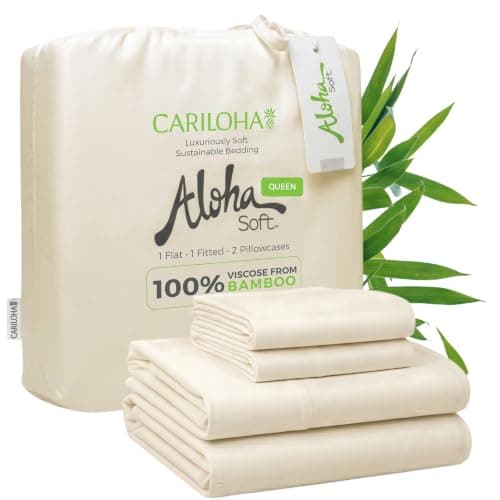
How to Wash Bamboo Sheets
Bamboo viscose is weak when wet, which is why these sheets pill and thin early. The routine that prevents it, what fabric softener actually does to the fiber, and the first-wash vinegar question.
Our pick: Cariloha Aloha Soft 100% Organic Bamboo Viscose
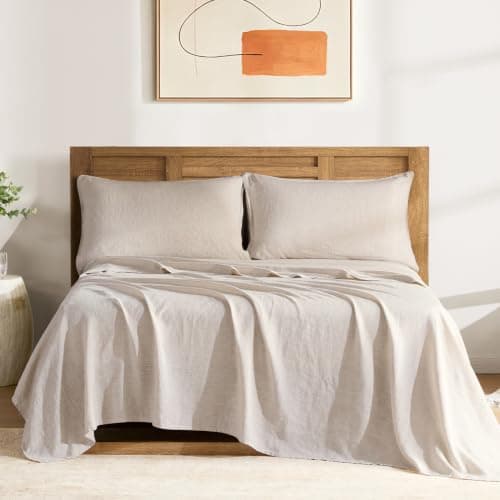
How to Soften Linen Sheets
Flax softens through mechanical action, not products. The routine that gets a new linen set comfortable fastest, what vinegar and baking soda do and do not do, and why softener backfires.
Our pick: DAPU 100% Pure French Linen Sheet Set (170 GSM)
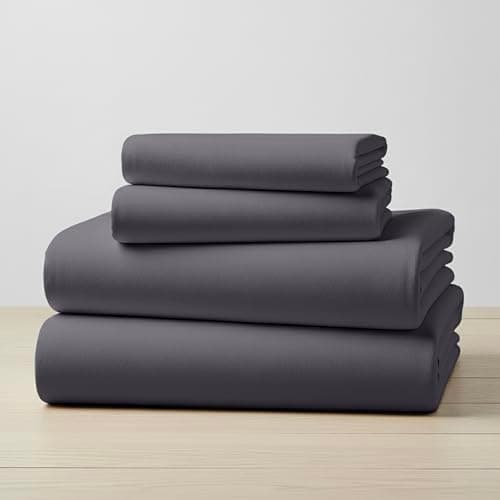
How to Wash Flannel Sheets
Flannel's nap is both the feature and the fragile part. The wash routine that protects it, why the first-wash fuzz is normal, and how to de-pill a set that has already shed.
Our pick: Mellanni 100% Cotton Flannel Sheet Set (180 GSM)
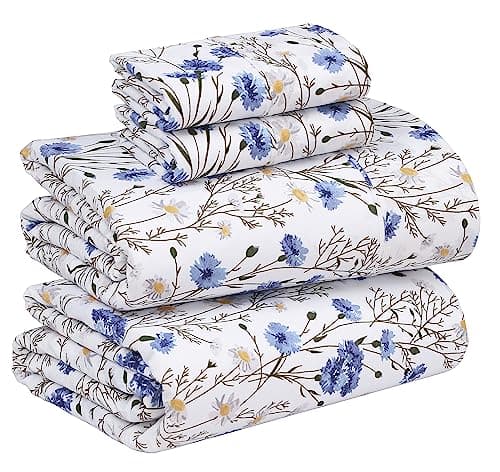
Why Do Sheets Pill?
Pilling is mechanical, not a defect. Why short fibers and strong polyester are the worst combination, which weaves resist it, what slows it down - and why you cannot reverse it.
Our pick: RUVANTI 100% Cotton Percale Sheets
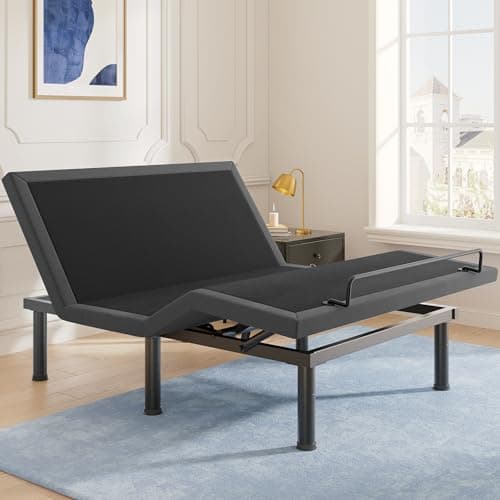
Can You Put an Adjustable Bed in a Bed Frame?
The slats come out, the base goes in on its own legs, and the frame becomes furniture around it. The four measurements to take first, the frame types that genuinely will not work, and why leg height is the spec almost no listing states.
Our pick: Tami T450 Adjustable Bed Frame, Queen
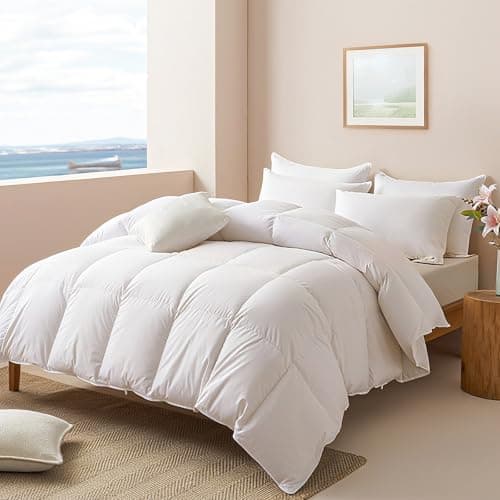
Baffle Box vs Sewn Through
The two ways a comforter is stitched, what each does to warmth and lifespan, and why a cheap baffle-box comforter can be a worse buy than an honest sewn-through one.
Our pick: APSMILE Goose Feather Down Fibers Comforter, Baffle Box
Flannel vs Fleece Sheets
Brushed cotton against brushed polyester. Why fleece feels warmer for ten seconds and flannel sleeps warmer for eight hours, and the two-layer build that beats choosing one.
Our pick: Mellanni 100% Cotton Flannel Sheet Set (180 GSM)
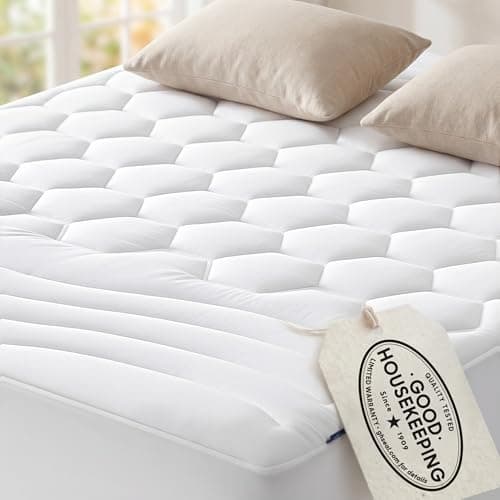
Mattress Topper vs Mattress Pad
Thin and washable, or thick and feel-changing. The real difference between a pad and a topper, which problem each solves, and the one problem neither of them solves.
Our pick: Bedsure Quilted Mattress Pad
What Is GSM in Bed Sheets?
Grams per square meter, explained. Why GSM beats thread count on flannel and linen, what the common numbers feel like in a real bed, and why most listings refuse to print it.
Our pick: Mellanni 100% Cotton Flannel Sheet Set (180 GSM)
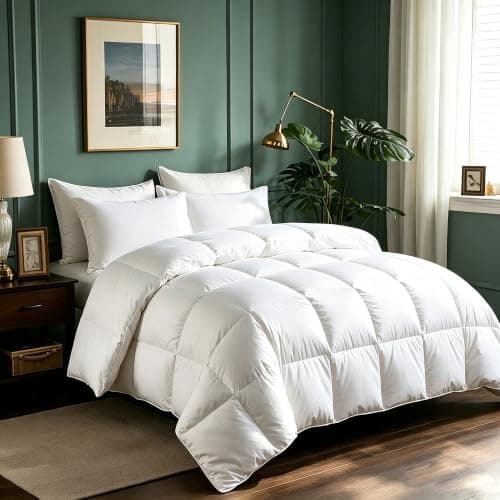
How Often Should You Replace a Comforter?
Four one-minute tests for whether a comforter is done - loft, fill distribution, smell and warmth - plus the single habit that doubles the life of the next one.
Our pick: Serta Goose Feather Down Fiber Comforter
Why Is My Down Comforter Flat?
The difference between a clumped comforter and a dead one, the long low-heat dry that revives the first, and the three tests that identify the second.
Our pick: APSMILE Goose Feather Down Fibers Comforter, Baffle Box
How to Keep a Comforter in a Duvet Cover
Why an insert ends up in one corner by 3am, the four fixes in order of cost, and the size mismatch that makes all of them fail.
Our pick: California Design Den 400TC Cotton Sateen
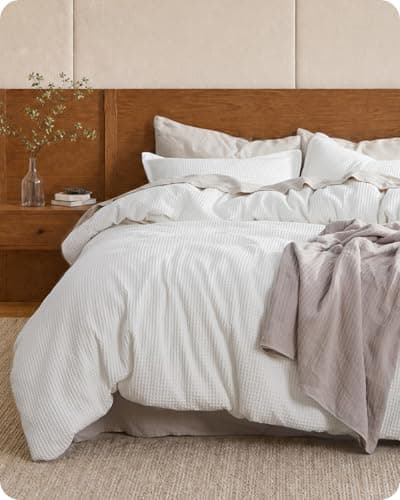
What Is Waffle Weave Bedding?
Waffle weave is a honeycomb structure that traps air, so it insulates better than a flat weave of the same weight. Where it works, where it snags, and the honest answer about waffle sheets.
Our pick: Bedsure PureWoven 100% Cotton Waffle Duvet Cover Set, 3 Piece
The pages with nothing to sell
These are the reference pages. No picks, no buy buttons, no commission — just the facts you need before a product page is any use to you. They exist because most of the confusion in this category isn't about which mattress to buy; it's about vocabulary that's been deliberately muddied.
Start with sizes if you're buying a frame or a room
Mattress sizes is the plainest page here: every standard US size in inches, in a table, with the two things people actually get wrong. First, a King and a California King are not big-and-bigger — a King is wider (76 inches) and a Cal King is longer(84 inches). If you're tall you want the Cal King; if you share the bed with a sprawler you want the King. Second, a Twin XL is the same width as a Twin but four inches longer, which is why two of them side by side make a split king.
Sizes also decide what will physically fit together, which is the other reason people land here with a tape measure in hand. The commonest version of that question is whether an adjustable base can go inside a bed frame you already own — usually it can, once the slats or box spring come out and the base stands on its own legs, but it turns on four measurements and on a leg-height spec that almost no product listing publishes.
Then firmness, because the scale is fiction
The firmness guide exists to explain that the 1–10 firmness scale everyone quotes has no standards body behind it. It is a marketing convention. One brand's 6 is another's 7, and there is no referee.
Worse — and this is the bit that actually costs people money — firmness isn't a fixed property of the mattress at all. It's a relationship between the mattress and your body. The same bed reads firmer to a lighter person and softer to a heavier one, because weight is what compresses foam. So "medium-firm" on a spec sheet is not a promise; it's a hint about what the manufacturer was aiming at. That single fact explains most of the one-star reviews in this industry.
The same page separates firmness from support, which get used interchangeably and are completely different things. Firmness is how the surface feels. Support is whether your spine stays in line. A mattress can be very firm and support you badly.
Materials: the two comparisons that decide most purchases
Memory foam vs hybrid is the mattress fork. Foam contours and isolates movement; hybrid breathes and supports the edges. If you sleep hot, the coil core wins and no amount of cooling-gel marketing changes it — foam insulates because that's what foam is.
Percale vs sateen is the bedding fork, and it catches people out because both are usually cotton. The difference is the weave, not the fiber. Percale is a plain grid: crisp, matte, breathable. Sateen floats threads across the surface: silky, lustrous, warmer. Hot sleepers want percale. Thread count is largely a distraction in both cases.
Why these pages have no products on them
Because they'd be worse if they did. The moment a reference page has a buy button on it, every sentence in it becomes suspect — you'd be right to wonder whether we're explaining fill power or steering you.
These pages do link to our roundups, and we do earn a commission if you buy from those. That's the deal, stated plainly: here's how the site is funded and here's what we won't do for money. If a guide here ever reads like an advert for a specific product, we've failed and you should email us about it.
Recently added
Four that fill real gaps. Baffle box vs sewn through is the comforter construction question that decides whether your duvet has cold lines across it; what GSM means covers the one number that actually predicts how warm a flannel or linen sheet will be; flannel vs fleece sheets explains why one of them feels warmer and the other sleeps warmer; and why is my down comforter flat will probably save you the price of a replacement.
What's missing
Deliberately: anything medical. No sleep apnea, no insomnia, no CPAP, no supplements. Those are health questions with real consequences, and the sites that cover them properly retain actual doctors to review the copy. We don't have one, so we stay out of it rather than improvising. More on where we draw the lines.