The Best Mattresses for Heavy People
Heavier bodies compress foam further, which means the support core matters far more than the plush bit on top. Here are six coil-based beds worth considering, what their listings actually promise, and the spec none of them will tell you.
We earn a commission if you buy through our links. It doesn't affect our picks — and we never take free products. How this site is funded.
Quick picks
| # | Product | Best for | Price |
|---|---|---|---|
| 1 | BedStory 14" Firm Queen Hybrid Tall, firm, coil-based, and it comes with a year to change your mind — the combination I'd want if I were shopping this segment. Best for: Most heavier sleepers | Most heavier sleepers | Check price on Amazon → #ad — we earn a commission. |
| 2 | 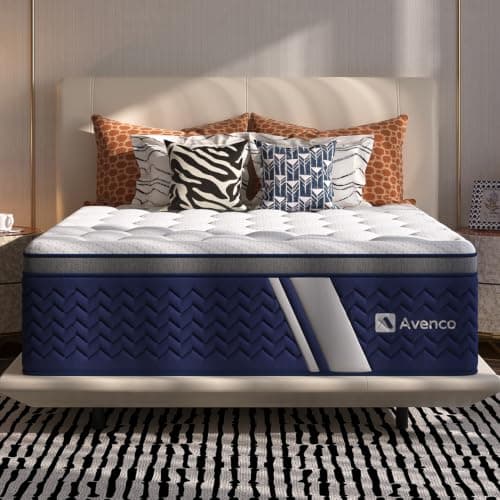 Avenco SyncDeep 12" Firm Hybrid The one listing here that says out loud it is built for larger sleepers, and backs it with a firm surface, pocket coils and a reinforced perimeter. Best for: Firm support and a reinforced edge, cheap | Firm support and a reinforced edge, cheap | $288.18 · View on Amazon Price as of October 18, 2026. #ad — we earn a commission. |
| 3 | 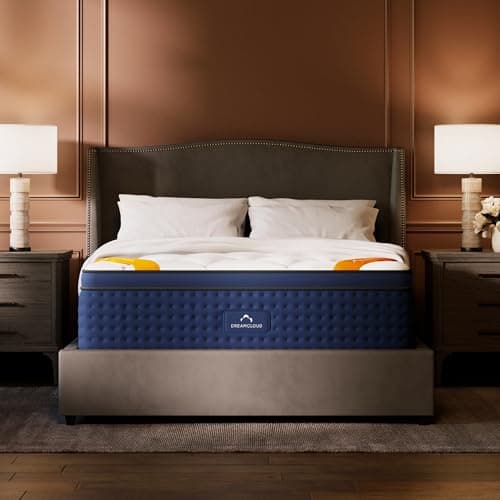 DreamCloud Premier Rest 14" Cal King The one I'd buy if the budget stretched — a forever warranty is a company betting its own money that the bed won't sag. Best for: Spending properly, once | Spending properly, once | $1,357.57 · View on Amazon Price as of October 18, 2026. #ad — we earn a commission. |
| 4 | 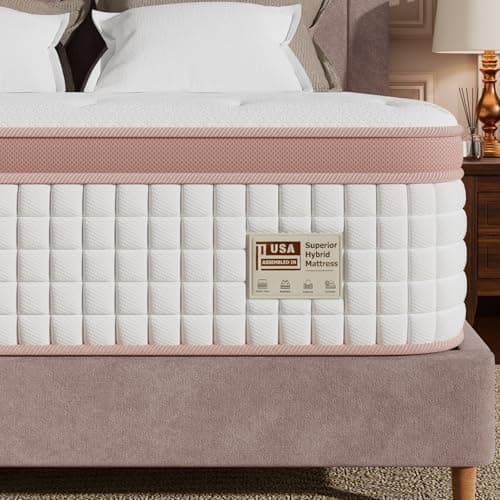 RRESTA 14" Extra Firm Queen Hybrid The firmest listing in this set, and among the tallest — 14 inches of extra-firm hybrid. If you've bottomed out on every foam bed you've owned, start here. Best for: Back sleepers who want no sink at all | Back sleepers who want no sink at all | Check price on Amazon → #ad — we earn a commission. |
| 5 | 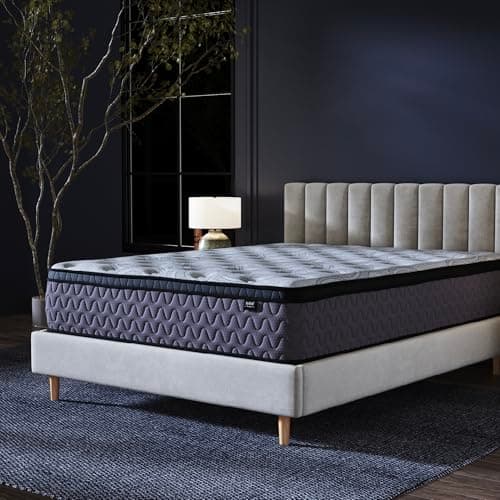 Ashley 12" Medium Firm Hybrid A conventional innerspring hybrid from an actual furniture manufacturer, which is worth something when the warranty matters. Best for: Buying from a company that existed before Amazon | Buying from a company that existed before Amazon | Check price on Amazon → #ad — we earn a commission. |
| 6 | 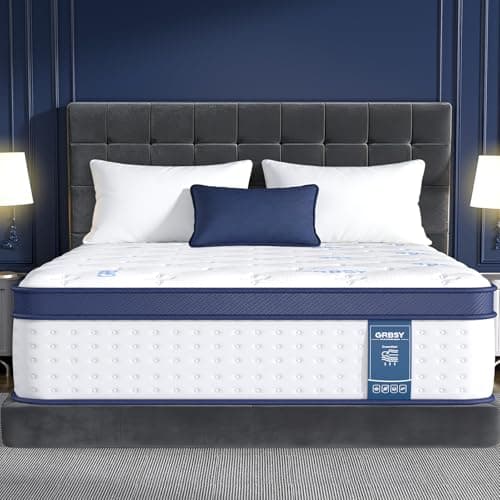 14" 7-Zone Queen Hybrid (unbranded) 14 inches of pocket-coil hybrid for less than most 10-inch foam beds. Buy it knowing exactly what you're not getting. Best for: The lowest price that still has coils | The lowest price that still has coils | $259.99 · View on Amazon Price as of October 18, 2026. #ad — we earn a commission. |
The industry would rather not talk about this
Search for a mattress for a heavier body and you will find an entire genre of writing that never says the word. Beds get sold as "heavy-duty", "extra supportive", "built for all body types" — anything except a plain sentence about who the product is for. That coyness is not politeness. It is what happens when an industry would like your money but hasn't done the engineering to earn it, and it leaves a very large group of people shopping in the dark.
So, plainly: if you weigh more than roughly 230 lb, most of the mattress market is not built for you, the ones that are won't say so, and almost none of them publish the two numbers that would let you check. The good news is that the physics here is unusually simple, and you can reason your way to a decent bed from the specs that areprinted on the listing. That's what this page does.
The support core is the whole decision
Every mattress is two things stacked: a comfort layer that decides how it feels for the first few seconds, and a support core that decides whether it holds you up for the next eight hours. Marketing is almost entirely about the first one. For a heavier body, nearly everything that matters is the second one.
Here's why. Foam supports you by compressing — it gives way until the resistance of the material matches the load pressing into it. Put a heavier load on the same foam and it simply compresses further before it finds that balance. So the comfort layer that would have cradled a 140 lb sleeper gets squashed flat by a 260 lb one, and that sleeper is now resting on whatever is underneath. The plush top layer you paid for is no longer part of the conversation. Whatever is beneath it is your mattress.
There's a second effect that only shows up later. Polyurethane foam gradually takes a permanent set under sustained load — the material doesn't fully spring back, and the dip becomes the shape of you. Every foam mattress does this eventually. Load it harder and it happens sooner. A steel coil behaves differently: it pushes back in proportion to how far it's compressed, and it doesn't soften the way foam does. That is the entire argument for hybrids in this segment, and it's why every pick above has coils in it. If you want the longer version of that trade-off, it's in memory foam vs hybrid.
Height is room, not luxury
Listings sell height as indulgence — deeper is plusher, thicker is more luxurious. Ignore that framing. Height is simply how many inches the designer had to work with, and it's the easiest quality signal to read off a title.
A 14-inch mattress can hand eight or nine inches to a coil core and still have several inches of comfort foam on top. A 10-inch mattress has to do both jobs in ten inches, so one of them gets starved — and it's almost always the core, because the comfort layer is what sells the photo. That is the actual mechanism behind "cheap foam beds bottom out". Not bad foam, necessarily. Just not enough of it, arranged badly.
Twelve inches is my floor for this segment and 14 is better. Below 12 you are relying on the comfort layer to do structural work it was never designed for.
The two numbers nobody will give you
Now the uncomfortable part, and the reason shopping this category feels like guesswork: the two specs that would settle the question are missing from every single listing on this page.
- Weight capacity.Not one of these six states a limit. It isn't a required disclosure, so most sellers simply don't make one — which conveniently means they can never be held to it. If you read a precise capacity figure for one of these models somewhere else, ask where it came from.
- Foam density.Density is how much material is actually in the foam, and it's the best single predictor of whether a comfort layer survives five years of use. It is also where cost hides, which is exactly why it's the last number a budget brand wants printed next to its price. None of these publish it either.
I'm not going to invent either figure to make this page feel more authoritative. The absence is the finding. It tells you the segment is underserved, and it tells you what to do instead: buy on construction — coils, height, firmness — and buy on the trial period, because the trial is the only promise anyone here is actually making you.
Firm and supportive are not the same word
These get used interchangeably and they describe different things. Firmness is a surface sensation, decided mostly by the top couple of inches. Support is whether your spine stays in line, decided by the core. A bed can be firm and unsupportive — a thin, hard foam slab that still collapses in the middle under load — and that combination is the worst of both worlds. It's also a lot of what gets sold as "orthopedic".
The other thing worth knowing is that firmness labels are relative to you. There is no industry standard behind "medium firm", and the person who chose that word had an average body in mind. Compress the same mattress further and it reads softer. So a medium firm bed will often arrive feeling like a medium if you're heavier, which is why erring firmer usually lands you closer to what the label promised. The firmness guide walks through how weight and sleeping position interact, and it is worth ten minutes before you spend anything.
What about edge support?
It comes up constantly in this segment and for good reason — the edge is where you sit to put your shoes on, and it's the part of a mattress that collapses first under concentrated load. A perimeter of reinforced coils fixes it; an all-foam bed generally can't.
I'd love to rank these six on it. I can't, because not one of their listings mentions edge support at all, and I'm not going to pretend a pocket-coil bed has a reinforced perimeter because it probably ought to. What I can say is that the coil-based builds above have the structure that makes decent edge support possible, and an all-foam bed does not.
What I'd actually do
Buy the tallest hybrid you can afford from a seller who will take it back after a year. That sentence does more work than any spec sheet on this page, because a 365-night trial is a company voluntarily carrying the risk that its own bed sags under you — which is precisely the risk nobody will quantify for you up front.
If money is tight, the budget hybrids above are a genuinely better buy than a thicker all-foam bed at the same price, and it isn't close. A 14-inch coil core at the bottom of this market is a real thing; a 14-inch budget foam bed at the same price is a comfort layer with ambitions. And if you're shopping the wider Amazon catalog rather than just this segment, the best mattresses on Amazon page covers the same brands from a different angle — including the ones I'd steer you away from here.
One last honest note. If you are well over 300 lb, or you're over 300 lb and share the bed, I'd think hard about buying from a brand with a phone number and a proper returns process rather than from a marketplace listing — even though this page earns a commission when you buy from the marketplace. The specs you need are the ones nobody prints, and at that point the quality of the company's customer service is a more useful spec than anything in the title.
The picks, in full
1. Best for Most heavier sleepers
BedStory 14" Firm Queen Hybrid
Tall, firm, coil-based, and it comes with a year to change your mind — the combination I'd want if I were shopping this segment.
#ad — we earn a commission.
Key specs
- 14" hybrid
- Firm (as listed)
- Zoned lumbar support (as listed)
- 365-night trial
- 10-year warranty
- CertiPUR-US certified
- Made in USA (as listed)
What's good
- 14 inches is the tallest build here, which is the only way a bed gets a deep support core AND a comfort layer instead of making one do both jobs
- A 365-night trial at this end of the market is unusual — and trial length is the only protection you have when the listing won't tell you a weight limit
- Sold as Firm rather than medium-firm. Firmer surfaces resist the deeper compression a heavier body applies, so this is the right direction to be aiming
What's not
- "Zoned lumbar support" is the seller's phrase and there's no published detail behind it — treat it as marketing until proven otherwise
- BedStory is an Amazon-native brand. There's no showroom, no decades of trading history, and the warranty is only as good as the company honoring it
- The listing states no weight capacity and no foam density, so you're buying on trial length rather than on specification
Skip this one if
You're a side sleeper. Firm plus 14 inches of hybrid is built to stop you sinking, and that's exactly what punishes a hip and a shoulder pressed into it all night. The Ashley 12-inch Medium Firm Hybrid below is the softer version of the same idea.
2. Best for Firm support and a reinforced edge, cheap
Avenco SyncDeep 12" Firm Hybrid
The one listing here that says out loud it is built for larger sleepers, and backs it with a firm surface, pocket coils and a reinforced perimeter.
Price as of October 18, 2026. #ad — we earn a commission.
Key specs
- 12" hybrid
- Firm (as listed)
- Individually wrapped pocket coils (as listed)
- Reinforced perimeter edge support (as listed)
- 100-night trial, 10-yr protection; fiberglass free (as listed)
What's good
- Sold as firm rather than medium firm. Firmer surfaces resist the deeper compression a heavier body applies, so this is the right direction to be aiming
- Reinforced perimeter support is the spec that matters most here and gets discussed least: the edge is where you sit to put your shoes on, and a collapsing edge is the first thing to go on a cheap bed
- A stated 100-night risk-free trial and a 10-year term is real protection in a category where no listing will tell you a weight limit
What's not
- Like every bed on this page it publishes no weight capacity, no coil count and no coil gauge — the firmness and the edge support are described, not specified
- 12 inches rather than 14, so there's less room for the comfort layer and the core to do separate jobs than the taller picks here
- Avenco is an Amazon-native brand. There's no showroom, no decades of trading history, and the warranty is only as good as the company honoring it
Skip this one if
You want maximum support and don't care how it feels for the first fortnight. Go straight to the BedStory or the RRESTA — both are 14 inches, and more bed is the safer error in this segment.
3. Best for Spending properly, once
DreamCloud Premier Rest 14" Cal King
The one I'd buy if the budget stretched — a forever warranty is a company betting its own money that the bed won't sag.
Price as of October 18, 2026. #ad — we earn a commission.
Key specs
- 14" hybrid
- Memory foam over a coil core
- 365-night trial
- Forever warranty (as listed)
- CertiPUR-US certified
- Cal King
What's good
- A lifetime warranty is the closest thing to a durability claim anyone on this page makes. It costs a brand real money to offer, so they only do it when their own returns data supports it
- 14-inch hybrid with 365 nights to decide — the two things that matter most in this segment, together, from a brand with a real returns operation
- A larger surface is genuinely useful for a bigger body. Cal King is the longest standard size, which matters if you're tall as well as heavy
What's not
- It's several times the price of the budget hybrids above, and much of the gap is brand and warranty administration rather than steel and foam
- This is the Cal King listing specifically. If you want a queen you're on a different ASIN with different stock and possibly a different price
- Stock on this listing runs thin — it has shown as down to the last unit, so it may not be there when you look
Skip this one if
You don't need a Cal King. You'd be buying a size to get a mattress, which is an expensive way round the problem — the BedStory is a 14-inch firm hybrid with the same 365-night trial in a queen.
4. Best for Back sleepers who want no sink at all
RRESTA 14" Extra Firm Queen Hybrid
The firmest listing in this set, and among the tallest — 14 inches of extra-firm hybrid. If you've bottomed out on every foam bed you've owned, start here.
#ad — we earn a commission.
Key specs
- 14" hybrid
- Extra firm (as listed)
- Coil-and-foam hybrid, in a box (as listed)
- Queen
What's good
- Extra firm is a rung above everything else here. The heavier you are the more any surface gives under you, so starting from firmer leaves you somewhere sensible
- 14 inches is at the tall end of this page — deep enough for a real coil support core AND a comfort layer instead of asking one to do both, which is exactly what a heavier body needs
- A pocket-coil hybrid flexes under an uneven load, and a heavier body doesn't press evenly across a mattress — the coils give where the weight actually lands
What's not
- Extra firm on a hybrid is unforgiving. There is no version of this that feels plush, and the listing doesn't pretend otherwise
- The listing commits to no trial period, no warranty term, no weight capacity and no foam density — you're buying the firmness and the height with little else in writing, so buy from a seller you can return to
- RRESTA is an Amazon-native brand with no track record to lean on if year-three sag is your problem
Skip this one if
You sleep on your side, or you're not certain firm is what you want. Extra firm will hold your hips up and leave your shoulder to fend for itself. Read the firmness guide before you commit to this one.
5. Best for Buying from a company that existed before Amazon
Ashley 12" Medium Firm Hybrid
A conventional innerspring hybrid from an actual furniture manufacturer, which is worth something when the warranty matters.
#ad — we earn a commission.
Key specs
- 12" hybrid innerspring
- Medium firm (as listed)
- Gel memory foam for lumbar support (as listed)
- Pocket springs, CertiPUR-US certified foam (as listed)
- Queen
What's good
- Ashley is a furniture company with a physical retail network, not a marketplace listing. If you ever need to argue about a warranty, there's someone to argue with
- Innerspring plus a foam comfort layer is the oldest, best-understood construction in the business — nothing here is trying to be clever
- Medium firm, 12 inches: an unremarkable, sensible spec that will not surprise you in either direction
What's not
- No trial period stated on the listing at all. Against the 365-night trials elsewhere on this page, that's a serious gap
- The listing states no coil count, no coil gauge, no foam density and no weight capacity — and capacity is the one number a heavier sleeper most needs, so its absence matters more here than anywhere else on this page
- "Gel memory foam for lumbar support" describes where the foam is, not what it does
Skip this one if
The trial period is what you're buying. Without one you're committing on day one to a bed that hasn't settled — the BedStory gives you a year, for less money.
6. Best for The lowest price that still has coils
14" 7-Zone Queen Hybrid (unbranded)
14 inches of pocket-coil hybrid for less than most 10-inch foam beds. Buy it knowing exactly what you're not getting.
Price as of October 18, 2026. #ad — we earn a commission.
Key specs
- 14" hybrid
- 7-zoned pocket coils (as listed)
- Cooling gel memory foam
- Medium firm (as listed)
- Assembled in USA (as listed)
- Queen
What's good
- The cheapest way onto a 14-inch coil support core on this page, and height plus coils are the two things this segment actually needs
- Pocket coils move independently, which helps under an uneven load — a heavier body doesn't press down evenly across a mattress
- 7-zone means the coil firmness varies along the bed's length, firmer under the hips. On paper that's the right idea for a heavier torso
What's not
- The listing has no brand name in it. That is not a small thing: a warranty from a seller you can't name is not a warranty
- No trial period stated, no warranty stated, no density, no capacity. You are buying construction and nothing else
- "Assembled in USA" says where it was put together, not where the foam or the steel came from
Skip this one if
You want any recourse in year two. This is the pick for someone who needs a coil bed today at the lowest possible price and accepts that if it sags, that's the end of the story. Everyone else should pay a little more for the BedStory's trial and warranty.
Common questions
What weight can these mattresses actually hold?
Not one of the listings on this page states a weight limit, and that is the honest answer. Weight capacity is not a required disclosure and most sellers avoid it, so anyone quoting you a precise figure for these specific models is either reading a different listing or making it up. What you can act on is construction: a coil support core, 12 inches or more of height, and a firmer surface all resist deeper compression than thin all-foam does. Judge on that, and on the trial period, because the trial is the only guarantee you're being given.
Why do people keep saying hybrid rather than memory foam for heavier bodies?
Because of how the two materials fail. Foam holds you up by compressing, so a heavier load pushes further into it and leaves less material between you and the base — and polyurethane foam gradually takes a set under sustained load, which is what a body impression is. A steel coil pushes back proportionally and doesn't soften the same way. That's not a knock on foam generally; it's that the heavier the load, the more of the work lands on the support core, and steel is better at that job than foam is.
Does mattress height really matter, or is it just marketing?
It matters, though not for the reason the listings imply. Height isn't comfort — it's room. A 14-inch mattress can give the support core eight or nine inches of its own and still have a proper comfort layer on top. A 10-inch bed has to do both jobs in ten inches, so something gets thin, and it's usually the core. That's why a 10-inch budget foam mattress bottoms out under a heavier person and a 14-inch hybrid doesn't: not because it's plusher, because there's more of it.
Should I buy firmer than I think I want?
Probably, yes, and here's the reasoning. Firmness labels are written for an average body and there's no industry standard behind any of them. The same mattress reads softer the heavier you are, because you compress it further — so a medium firm bed can arrive feeling like a medium. Erring firmer usually lands you closer to the label than erring softer does. The exception is side sleeping, where a firm surface has to be talked out of hurting your shoulder and hip.
Why won't anyone publish the foam density?
Because they don't have to, and because density is where cost hides. Density describes how much material is actually in the foam, and it's the single best predictor of whether a comfort layer will still be there in five years — which makes it the last number a budget seller wants next to the price. None of the listings on this page publish it. Until that changes, trial length and warranty are the closest usable proxies: a company offering a year to return it, or a lifetime warranty, is making a bet about durability with its own money.
Sources
Where the facts on this page come from. We cite other people's testing because we don't do our own — here's what that means.
Read next
- The Best Mattress Toppers for Heavy PeopleSix mattress toppers thick and dense enough to still cushion a heavier body instead of bottoming out onto the bed beneath — re-ranked depth- and density-first — plus the honest limit that no topper fixes a sagging core, with cons and a skip note on every pick.
- The Best Mattresses for Lightweight PeopleSix softer, plusher mattresses matched to a lighter frame — because a light body reads every bed firmer than the label says — with published specs and an honest note on who each one is wrong for.
- King vs California KingThe name suggests Cal King is the bigger bed. The math says otherwise: a King is wider, a Cal King is longer, and a King has slightly more total space.
- The Best Firm MattressesSix firm mattresses led by the two whose listings actually say "firm" — with honest cons and who each is wrong for. A genuinely firm bed is rarer than the label admits.
- The Best Mattresses for SeniorsSix mattresses judged on the two things that actually matter with age — a firm edge and a sensible height to rise from, and a medium-firm feel you can reposition on — with honest cons and a skip-this-one on every pick.
- The Best Mattresses on AmazonSix Amazon mattresses worth your money, with live prices and an honest note on who each one is wrong for.
- The Best Mattresses for Lower Back PainSix mattresses judged purely on support and spinal alignment — and why medium-firm, not firm, is where the evidence points.
- The Best Mattresses in a BoxHow the boxed-mattress format really works — compression, off-gassing, expansion — plus six picks and who each one is wrong for.
- Mattress Firmness: The 1-10 Scale, HonestlyWhat the 1-10 firmness scale actually means, why one brand's 6 is another's 7, and how your bodyweight changes the answer.
- Memory Foam vs Hybrid MattressesFoam or coils? The six differences that matter, and the one axis that settles it for most buyers.