The Best Mattresses in a Box
A mattress in a box is a shipping decision, not a quality one — but it takes away the one thing showrooms are for. Here's what compression actually does, and the six boxed beds I'd consider.
We earn a commission if you buy through our links. It doesn't affect our picks — and we never take free products. How this site is funded.
Quick picks
| # | Product | Best for | Price |
|---|---|---|---|
| 1 | 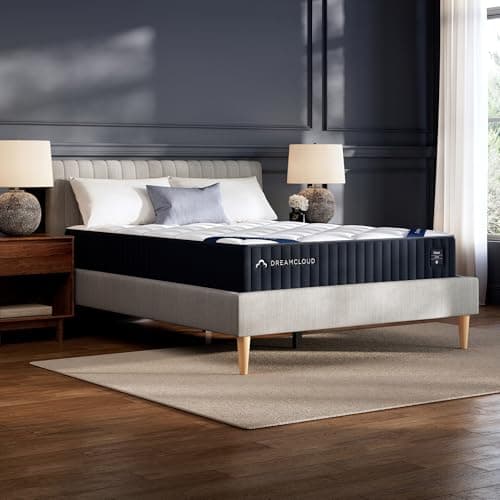 DreamCloud Classic 12" Hybrid A year to send it back and coils to move air. Buying blind, that's the combination I'd want. Best for: Most people | Most people | $699.00 · View on Amazon Price as of October 18, 2026. #ad — we earn a commission. |
| 2 | 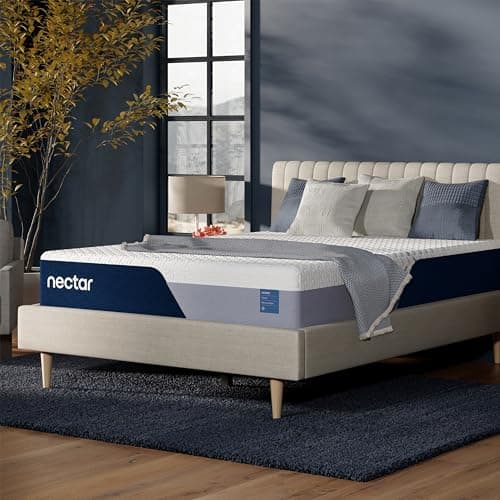 Nectar Classic 12" Queen The archetypal bed in a box, and the trial is still the best reason to buy it. Best for: The safest all-foam choice | The safest all-foam choice | $699.00 · View on Amazon Price as of October 18, 2026. #ad — we earn a commission. |
| 3 | 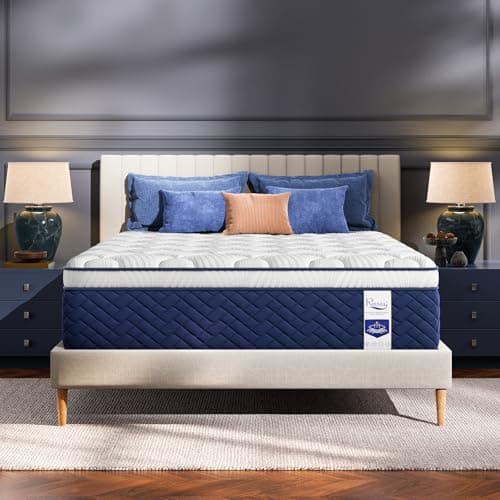 RRESTA 14" Medium Firm Queen Hybrid The rare budget listing that offers a full year to change your mind — which is the whole ballgame in this format. Best for: A long trial on a small budget | A long trial on a small budget | Check price on Amazon → #ad — we earn a commission. |
| 4 | 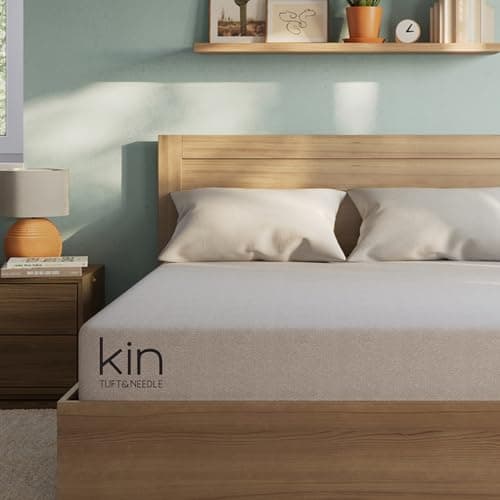 Kin by Tuft & Needle 10" Medium Firm Tuft & Needle's cheaper line, and the one pick here that isn't memory foam — which some people will much prefer. Best for: Adaptive foam without the memory-foam feel | Adaptive foam without the memory-foam feel | $749.00 · View on Amazon Price as of October 18, 2026. #ad — we earn a commission. |
| 5 | 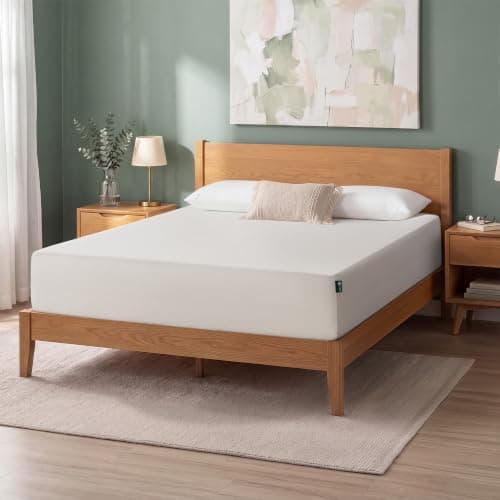 Zinus Green Tea 12" Memory Foam The cheapest boxed bed I wouldn't talk someone out of. You're not getting a Nectar, and that's fine. Best for: A tight budget | A tight budget | $299.99 · View on Amazon Price as of October 18, 2026. #ad — we earn a commission. |
| 6 | 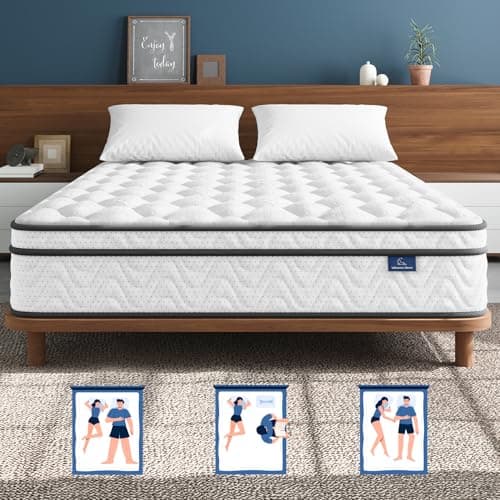 Vesgantti 12" Queen Hybrid Pocket springs in a box for less than most all-foam beds. Buy it for the construction, not the brand. Best for: The cheapest way to get coils | The cheapest way to get coils | Check price on Amazon → #ad — we earn a commission. |
The box is a shipping decision, not a quality one
"Bed in a box" gets treated as a category of mattress. It isn't. It's a logistics format, and the reason it exists has nothing to do with how you sleep and everything to do with the fact that a queen mattress is an appalling object to move. Uncompressed, it's a two-person job, a truck, a delivery window and a staircase argument. Compressed, it's a parcel — and a parcel goes in the normal shipping network at normal shipping prices.
That single change is what killed the mattress showroom's monopoly, and it's why the beds above cost what they do. It also created a new problem, which is the actual subject of this page: you are now buying, sight unseen and body unlaid, the single piece of furniture that most determines how you feel tomorrow. Everything worth knowing about this format follows from that one trade.
What compression actually does
The nervous question first, because everyone has it: does squashing a mattress into a box a third of its size ruin it?
For foam and hybrid beds, no — and the reason is structural rather than reassuring. Foam is mostly air held in an open cell structure. Compress it and you're pushing air out of the cells; release it and the cells draw air back in and the material returns to shape. That's what the material does, and these beds are designed around the process from the first sketch. Pocket coils survive it too, because each spring is in its own fabric pocket and can lie flat without tangling with its neighbours — which is precisely why the boxed-mattress boom runs on pocket-coil hybrids rather than the old connected innersprings.
What compression genuinely can't handle is a rigid support system: a traditional connected innerspring unit, a solid latex core in some constructions, anything with a frame in it. Those still ship uncompressed, and their absence from the boxed market is a real constraint on what you can buy this way, even if it's not one that affects most buyers.
So the honest summary is that the box costs you nothing in the mattress and everything in the shopping. The material is fine. The problem is that you can't lie on it.
Off-gassing: what the smell is, and how long it really lasts
Open the plastic and there's a smell. It is chemical, it is noticeable, and it is the single most-complained-about thing in the first 24 hours of owning a boxed bed.
It's off-gassing — volatile organic compounds released from the foam as it decompresses. The bed has been sealed in plastic since the factory, so everything the foam wanted to release has been accumulating in there with nowhere to go. Unwrap it and you get the lot at once. That's why day one is the worst day by a distance.
In practice it clears in hours to a few days, faster with a window open and the mattress out of its wrapper in a ventilated room. Unbox it in the morning rather than at bedtime and you've solved most of it. If a bed still smells strongly after a week, that's not normal and it's worth raising with the seller.
If you're sensitive to this, the thing to look for is CertiPUR-US on the listing — several picks above state it — because the program includes testing the foam for low VOC emissions alongside certifying it's made without ozone depleters, certain flame retardants, mercury, lead and formaldehyde. It won't mean no smell. It means the foam has been tested rather than merely described.
Expansion, and the mattress you didn't buy
Manufacturers generally quote 24 to 72 hours to full expansion, and most of the drama is over within an hour or two — the theatrical part, where it unfurls across the floor, is nearly all of the visible change. You can usually sleep on it that night.
But there's a subtler point hiding in that timeline, and it matters more than the number. The mattress at hour four is measurably not the mattress at day three, and the mattress at day three is not the mattress at week five, because foam softens with use and your body adapts to a new surface at roughly the same pace. So the bed you judge on night one is a bed that doesn't exist yet. Cold slows the process down noticeably — if it came off a delivery van in January, be patient with it.
This is the whole reason the next section is the most important one on the page.
The trial period is the entire ballgame
You cannot lie on a mattress you buy in a box. That's the deal. Everything the format gives you — the price, the doorstep delivery, the choice — is paid for with the twenty minutes you'd have spent in a showroom deciding whether the thing suits your body.
The trial period is what you get in exchange, and it is the single most valuable number on any boxed-mattress listing. Not the height. Not the firmness label, which has no standard behind it. Not the cooling marketing. The trial, because it's the only term on the page that transfers risk from you back to the seller.
And the length changes the nature of the thing entirely:
- 30 days or a plain returns window.Not enough. The mattress hasn't finished softening and you haven't finished adapting, so you're deciding about a bed that isn't there yet.
- 100 nights.The industry standard, and genuinely workable — three months is past the settling period. It's what the Kin above offers.
- 365 nights.A different proposition. A full change of season, which matters because a bed that's fine in March can be unbearable in August. This is what the DreamCloud, Nectar and RRESTA picks above give you, and it is why they're ranked where they are.
- No trial stated.Two picks above are in this position, and I've said so in their cons. It's survivable at the budget end, where the whole bed costs less than the risk premium on a longer trial. It is not survivable on your main bed.
Read the terms rather than the headline, though. Some trials require you to keep the bed a minimum number of nights before you can return it — the brand knows perfectly well that week one is unrepresentative, which is a tacit admission of everything above. And a trial from an established brand with a returns department is a materially different promise to the same number printed by a seller you've never heard of.
Foam or hybrid, in a box
Both compress, so the format doesn't decide this for you — which means it's the same choice you'd face anywhere. Foam absorbs movement and insulates. A coil core lets air through and pushes back harder, at the cost of passing more motion across the bed. If you sleep hot, that's the fork in the road and no gel infusion will argue you out of it; if you share with someone restless, it points the other way. The full version of that argument is in memory foam vs hybrid, and it's worth reading before you pick from the list above rather than after.
One useful pattern in the picks: the hybrid and the foam bed from the same parent company carry identical trial and warranty terms. When the commercial terms are held constant, the choice really does come down to the material — which is a cleaner comparison than this category usually allows.
What I'd do
Pick the construction that matches how you sleep, then buy the longest trial you can get within that. In this format the trial is not a tiebreaker — it's the primary spec, and everything else is a secondary characteristic of a bed you haven't touched.
Then actually use it. Give it three or four weeks before you form a view, put a diary note at the six-month mark so a 365-night trial doesn't quietly lapse while you get used to something you don't like, and don't let sunk cost make the decision for you. The whole point of a year is that you're allowed to change your mind in it.
One caution about that trial before you lean on it: the length is a policy of whoever you bought from, not a property of the mattress. Zinus limits its 100 nights in writing to beds bought on its own site. Our page on who owns the online mattress companies works through where each brand's trial actually lives — and which of the names on your shortlist turn out to share a parent company.
If you want to see how these beds sit against the wider marketplace catalog, the best mattresses on Amazon page covers the same ground from the retailer's side — including how to read a listing that's been written for the search box rather than for you. And if what you really want is the lowest price a boxed bed can sensibly go, our cheap mattresses guide is built around exactly that, fiberglass check and all.
One case where a box is the wrong answer: a bed you only need for a few nights a year. A compressed foam mattress is built to be unrolled once and left there, not folded back up after a weekend — for that job, buy an air mattress instead, and spend the difference on the bed you actually sleep in.
The picks, in full
1. Best for Most people
DreamCloud Classic 12" Hybrid
A year to send it back and coils to move air. Buying blind, that's the combination I'd want.
Price as of October 18, 2026. #ad — we earn a commission.
Key specs
- 12" hybrid
- Gel memory foam over a coil core
- 365-night trial
- Forever warranty (as listed)
- Fiberglass free (as listed)
- CertiPUR-US certified
What's good
- 365 nights is long enough to be a real substitute for lying on it in a shop — you get a full change of season before you have to decide
- A coil core is mostly open space, so air moves through it. No all-foam bed can replicate that, whatever the cooling layer is called
- A lifetime warranty costs a brand real money to offer. They do it when their own returns data says the bed holds up
What's not
- Coils transmit motion in a way foam doesn't. If your partner is restless, this is the wrong direction and the Nectar below is the right one
- It's near the top of the sensible price range here — you're paying for the trial and the warranty as much as the materials
- "Luxury" in the listing title is marketing. This is a competent hybrid, not a luxury product
Skip this one if
You share the bed with someone who moves all night. Coils carry movement across the mattress; the all-foam Nectar and Kin picks below are built to swallow it.
2. Best for The safest all-foam choice
Nectar Classic 12" Queen
The archetypal bed in a box, and the trial is still the best reason to buy it.
Price as of October 18, 2026. #ad — we earn a commission.
Key specs
- 12" all-foam
- Medium firm (as listed)
- Cooling top layer (as listed)
- 365-night trial
- Forever warranty (as listed)
What's good
- A 365-night trial and a lifetime warranty on a foam bed at this price — the same terms as the DreamCloud above, because both brands are owned by Resident
- Foam absorbs movement instead of passing it on, which is a genuine property of the material rather than a claim
- Medium firm is the least-wrong default when you genuinely don't know what you like, and buying in a box means you probably don't
What's not
- All-foam. Foam insulates rather than ventilating, so it runs warmer than a coil bed no matter what the top layer is marketed as
- "Medium firm" is a manufacturer's word with no industry standard behind it — it's a hint about intent, not a measurement
- It costs meaningfully more than the budget boxed beds below, and the materials gap is smaller than the price gap
Skip this one if
You sleep hot. Buy the DreamCloud hybrid above — this is the same company, the same trial, and a support core that actually breathes.
3. Best for A long trial on a small budget
RRESTA 14" Medium Firm Queen Hybrid
The rare budget listing that offers a full year to change your mind — which is the whole ballgame in this format.
#ad — we earn a commission.
Key specs
- 14" hybrid
- 7-zone support (as listed)
- Medium firm (as listed)
- 365-night trial
- Fiberglass free (as listed)
- CertiPUR-US certified
What's good
- A 365-night trial at the budget end is genuinely unusual — most beds at this price give you a return window measured in weeks, if that
- 14 inches is the tallest build here, which means the coil core and the comfort layer each get room to do their own job
- States both fiberglass free and CertiPUR-US, which is more disclosure than most marketplace listings bother with
What's not
- RRESTA is an Amazon-native brand with no trading history. A 365-night trial is only worth as much as the company administering it
- "Hotel Collection" and "7-zone support" are the seller's phrasing with no published detail behind either
- No warranty length stated on the listing, which is a strange omission next to a trial that long
Skip this one if
You want the trial to be backed by a company that will still exist in year eight. The DreamCloud and Nectar give you the same year plus a lifetime warranty from an established brand.
4. Best for Adaptive foam without the memory-foam feel
Kin by Tuft & Needle 10" Medium Firm
Tuft & Needle's cheaper line, and the one pick here that isn't memory foam — which some people will much prefer.
Price as of October 18, 2026. #ad — we earn a commission.
Key specs
- 10" adaptive foam (as listed)
- Medium firm (as listed)
- 100-night trial
- 10-year limited warranty
- Fiberglass free (as listed)
- CertiPUR-US certified
What's good
- Adaptive foam isn't memory foam. It springs back rather than slowly holding an impression, so if you dislike the sinking, stuck feeling of memory foam this is a different experience entirely
- Tuft & Needle is an established brand and Kin is its lower-priced line — the same company behind a cheaper bed
- Foam springs back faster here, which makes changing position easier than on a deep memory-foam bed
What's not
- 100 nights, not 365. That's the industry-standard trial and it is a third of what the two Resident brands give you
- 10 inches is the thinnest bed here — less material for the comfort layer and support core to split between them
- 10-year limited warranty against the lifetime warranties above. Both are real; one is a bigger bet
Skip this one if
You've never owned a foam mattress and don't know what you like. 100 nights sounds generous and isn't, for a first-time buyer — take the 365-night trial and use it.
5. Best for A tight budget
Zinus Green Tea 12" Memory Foam
The cheapest boxed bed I wouldn't talk someone out of. You're not getting a Nectar, and that's fine.
Price as of October 18, 2026. #ad — we earn a commission.
Key specs
- 12" all-foam
- Medium firm (as listed)
- Green tea infused foam
- CertiPUR-US and Oeko-Tex certified (as listed)
- Queen
What's good
- A fraction of the price of the Resident beds, and the gap in materials is smaller than the gap in price
- Zinus has sold this line for years — the ASIN is stable, stock rarely disappears, and there's a real company behind it
- States both CertiPUR-US and Oeko-Tex, covering the foam and the textiles separately
What's not
- No trial period stated on the listing. In a format where you can't lie on it first, that is the single biggest thing you're giving up to save money
- The green tea infusion is an odor-control claim, not a performance one. It is not doing anything for your sleep
- All-foam, so the heat trade-off applies, without even a cooling top layer to soften it
Skip this one if
This is your main bed for the next decade. Without a trial you're committing on night one, before the foam has settled or you've adapted — that's the wrong bet on a bed you'll spend 3,000 nights on.
6. Best for The cheapest way to get coils
Vesgantti 12" Queen Hybrid
Pocket springs in a box for less than most all-foam beds. Buy it for the construction, not the brand.
#ad — we earn a commission.
Key specs
- 12" hybrid
- Memory foam over pocket springs (as listed)
- Medium firm (as listed)
- Fiberglass free (as listed)
- 60" x 80" x 12" (as listed)
What's good
- The lowest price here for an actual coil support core — and coils are what a foam bed at the same price cannot give you at any thickness
- Pocket springs move independently, so they contour better than a connected innerspring and pass on less movement
- States fiberglass free and publishes real dimensions rather than just a size name
What's not
- No trial period and no warranty length stated on the listing. You're buying construction and nothing else
- Vesgantti is a marketplace brand with no showroom and no long record to lean on
- "Ergonomic design" is a word, not a feature. There's no published detail behind it
Skip this one if
You want recourse if it sags in year three. Nothing on this listing promises you any. Pay more for the RRESTA and get the same coil construction with a year to return it.
Common questions
Does compressing a mattress into a box damage it?
For foam and hybrid mattresses, no — these beds are engineered from the start to be compressed, rolled and recovered, and the compression is a shipping step rather than a compromise. Foam is mostly air, so squeezing it out and letting it back in is something the material tolerates by design. What the format costs you isn't durability, it's the showroom: you're buying a bed you have never lain on. That's why trial length matters more than any spec on the listing page.
How long does the smell from a new mattress in a box last?
Usually hours to a few days, and it fades faster with the windows open and the mattress unwrapped in the room it'll live in. The smell is off-gassing — volatile organic compounds released from the foam once it's out of the plastic and expanding. It's strongest on day one because that's when the mattress has been sealed longest. If a bed still smells strongly after a week, that's worth a complaint. CertiPUR-US certification, which several listings above state, includes testing the foam for low VOC emissions, so it's a reasonable thing to look for if you're sensitive to it.
How long does a mattress in a box take to fully expand?
Manufacturers generally quote 24 to 72 hours, and most of the visible expansion happens in the first hour or two. You can usually sleep on it the first night. But the difference between a bed at hour four and the same bed at day three is real, which matters for a specific reason: the mattress you judge on night one is not the mattress you bought. Cold rooms slow expansion down, so if it arrived off a winter delivery van, give it longer before deciding anything.
Why does the trial period matter so much for a boxed mattress?
Because it's the only thing replacing the twenty minutes you'd have spent lying on it in a shop. And it needs to be long, not just present. Foam softens over the first few weeks of use, and your body adapts to a new surface over a similar timescale, so the first fortnight on any new mattress is unrepresentative in both directions — a bed that feels wrong on night three may be right by week five, and vice versa. A 30-day window forces you to decide before the mattress has settled. A 365-night trial genuinely replaces the showroom.
What happens if I want to return a mattress in a box?
It varies enormously and it's worth reading the actual terms before you buy, not after. The one thing that is nearly universal: you will not be re-boxing it. Compression needs industrial equipment, so brands generally arrange collection or ask you to donate it locally and show proof. Some trials require you to keep the bed for a minimum period first — often 30 nights — before a return is allowed. And a trial offered by an established brand with a returns operation is a different proposition to the same number of nights printed on a marketplace listing by a seller you've never heard of.
Sources
Where the facts on this page come from. We cite other people's testing because we don't do our own — here's what that means.
Read next
- Mattress in a Box vs TraditionalBed-in-a-box means buying online and trying it at home on a long sleep trial; traditional means lying on the showroom floor model and buying in-store. How they compare on price, trial, off-gassing, feel and delivery.
- How to Set Up a Bed in a BoxA step-by-step guide to unboxing a compressed mattress: carry the box in first, cut the vacuum wrap safely, let it expand, and know when it's ready to sleep on.
- Online Mattress Companies: Who Actually Owns WhatA map of who owns which online mattress brand, why that quietly decides your shortlist, where the sleep trial actually lives when you buy through a retailer, and seven beds from five different companies that are worth the money.
- Mattress Sleep Trials: How Returns Really WorkHow mattress sleep trials and returns really work — the mandatory break-in period, who pays return shipping, restocking and pickup fees, the one-return-per-order limit, why a trial isn't a warranty, and how buying on Amazon changes the deal entirely.
- How to Store a Mattress the Right WayHow to store a mattress without ruining it — clean and dry first, lay it flat instead of on its side, and keep it off a damp floor. The mistakes that quietly wreck a stored bed.
- The Best RV and Camper MattressesWhy size comes before everything with an RV bed, why a boxed mattress beats a traditional one through a camper door, and six short-queen picks with an honest note on who each is wrong for.
- The Best Adjustable Bed Bases (For Mattresses That Can Bend)Six adjustable bed bases chosen on the one rule that matters - your mattress has to bend on it - plus motor noise, weight capacity and which features are worth paying for. Honest cons on every pick.
- How to Break In a New MattressWhy a new mattress feels too firm at first, how to actually break one in, and how to tell a normal adjustment period from a genuinely wrong mattress.
- Do You Need a Box Spring?A plain-English answer on box springs: what they were built for, why most modern mattresses don't want one, and the slat-spacing rule that decides whether your base voids the warranty.
- The Best Bed Frames (No Box Spring Required)Six platform bed frames that replace the box spring, chosen on slat spacing, noise, storage and whether a headboard's included — with honest cons on every pick.
- The Best Mattresses on AmazonSix Amazon mattresses worth your money, with live prices and an honest note on who each one is wrong for.
- The Best Memory Foam MattressesWhat memory foam actually is, what it can and can't do, and the six I'd buy — with an honest note on who should skip each one.
- The Best Mattresses for Heavy PeopleSix coil-based mattresses built to hold a heavier body up, with published specs and an honest note on who each one is wrong for.
- The Best Cheap MattressesWhat a low price really buys, the fiberglass fire-barrier issue to check before you order, and six genuinely cheap mattresses with an honest note on who each is wrong for.
- The Best Air MattressesSix air mattresses for guests, spare rooms and floors - with the physics of why they soften overnight, and the one use case where an air bed is the wrong buy.
- Memory Foam vs Hybrid MattressesFoam or coils? The six differences that matter, and the one axis that settles it for most buyers.
- Mattress Firmness: The 1-10 Scale, HonestlyWhat the 1-10 firmness scale actually means, why one brand's 6 is another's 7, and how your bodyweight changes the answer.