Tuft & Needle vs Nectar
Both of these are 12-inch all-foam queens, which makes them look interchangeable. They aren't. They use foam that behaves in opposite ways, on purpose — one is built so you don't sink, the other so you do.
We earn a commission if you buy through our links. It doesn't affect our picks — and we never take free products. How this site is funded.
Quick picks
| # | Product | Best for | Price |
|---|---|---|---|
| 1 | 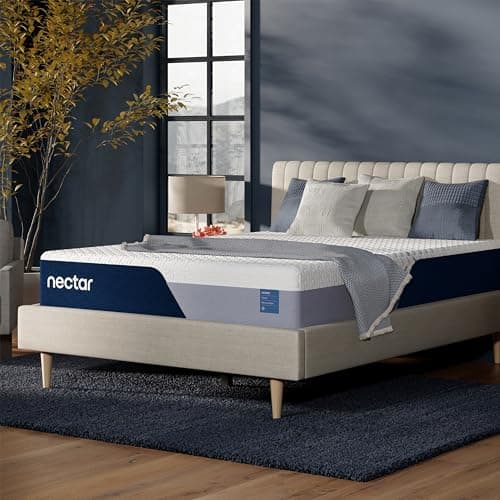 Nectar Classic 12" Queen The safer default, and the one to pick if you want the bed to cradle you rather than hold you up. Best for: Side sleepers and the undecided | Side sleepers and the undecided | $699.00 · View on Amazon Price as of October 18, 2026. #ad — we earn a commission. |
| 2 | 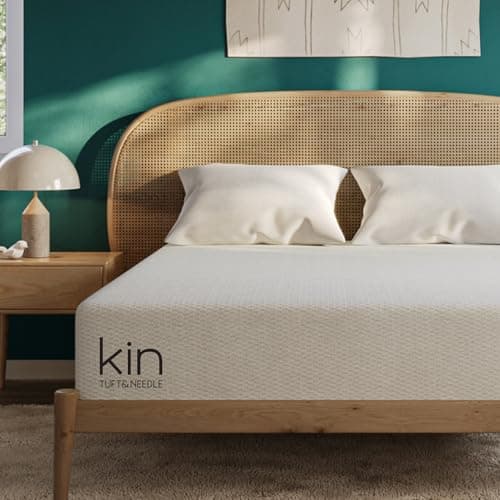 Kin By Tuft & Needle Medium 12" Adaptive Foam Queen The one to buy if you move a lot in the night and want to sleep on a mattress rather than in one. Best for: People who hate feeling stuck | People who hate feeling stuck | $849.00 · View on Amazon Price as of October 18, 2026. #ad — we earn a commission. |
Two 12-inch foam queens that are not the same product
On paper these two look like the same thing at slightly different prices. Both are 12-inch all-foam queen mattresses in a box. Both are sold around the middle of the firmness range. Neither has coils. If you were sorting Amazon by category and height, they'd sit next to each other.
They're built to do opposite things. The Nectar Classic is listed as contouring memory foam. The Kin is listed as adaptive foam. Those are not two brands' words for the same material — they describe foams engineered to behave in genuinely different ways, and the difference is the entire reason this page exists. Get this one right and the height, the firmness label and the price are all downstream of it.
What the two foams actually do
This is a material property, not an opinion, so it's worth being precise about.
Memory foam is viscoelastic.The "visco" part means it flows under sustained load; the "elastic" part means it eventually returns. It softens in response to your body heat and your weight, yields progressively wherever the pressure is concentrated, and recovers slowly once you move. The practical consequence is the sensation everyone recognizes: the bed forms itself around you, holds you, and takes a moment to let go. Nectar leans into this — the listing says contouring, and contouring is the whole point.
Adaptive foam is built for rebound.Tuft & Needle's adaptive foam is their own formulation, and the design target is the opposite one: respond to your shape without holding it, and spring back quickly when the load moves. You rest nearer the surface. The bed supports you rather than surrounding you.
Everything else follows from that single difference, and it follows in both directions.
Where contouring wins: pressure relief
Lie on your side and your entire body weight goes through two narrow points — one hip, one shoulder. What you need there is a material that gets out of the way deeply and locally, without abandoning your waist, which needs the opposite treatment. Progressive, load-dependent yielding is exactly what viscoelastic foam does. That is why memory foam and side sleeping keep appearing in the same sentence, and why Nectar's listing is comfortable naming pressure relief and back pain relief as its design intent.
Where responsiveness wins: moving, and heat
The same slow recovery that lets memory foam cradle you is what makes it feel like work to move on. If you change position often through the night, you spend the night pulling out of a depression the mattress made of you and waiting for a new one. Some people never notice. Others find it genuinely unpleasant and can't explain why. A faster-rebound foam removes the problem at the source.
Heat cuts the same way. Memory foam maximizes contact with your body — that's the mechanism — and contact is how your heat gets into the mattress and stays against you. A foam that holds you nearer the surface touches less of you. That's a structural advantage rather than a marketing one, which makes it more durable than any cooling layer, since surface cooling materials do their work early in the night and then reach equilibrium with you.
Keep the scale honest, though. Both of these are all-foam beds, and foam insulates. Adaptive foam is the cooler foam. If sleeping hot is the reason you're here, the gap between these two is small next to the gap between foam and a coil core, which is the argument in memory foam vs hybrid.
What the listings actually say, side by side
All quoted from the sellers' own Amazon listing titles. Where a title doesn't state something, the row says so.
| Attribute | Kin by Tuft & Needle 12" | Nectar Classic 12" |
|---|---|---|
| Foam type | Adaptive foam — responsive | Memory foam — contouring |
| Height | 12" | 12" |
| Firmness (as listed) | Medium | Medium firm |
| Design goal | Balanced support, sleep nearer the surface | Contour and cradle pressure points |
| Ease of moving | Favored by fast rebound | Limited by slow recovery |
| Deep pressure relief | Resisted by design | The point of the material |
| Trial | 100 nights | 365 nights |
| Warranty | 10-year limited | Forever warranty |
| Certifications (as listed) | Fiberglass-free, CertiPUR-US | Not stated in the listing title |
The middle rows are the honest core of this page: they're not a scorecard, they're the same trade-off written out twice. Every row one bed "wins" is a row it loses somewhere else, because they're the same physical property viewed from two ends. The rows that are genuinely one-sided are the last three — and note that they don't all point the same way.
The one place Nectar wins outright
Terms. Nectar publishes a 365-night trial and a forever warranty; the Kin listing publishes 100 nights and a 10-year limited warranty. Ten years is the industry-standard figure, so this isn't Tuft & Needle being stingy — it's Nectar being unusual. But the gap is real, and it costs the seller real money to offer, which is what makes it a signal rather than a slogan.
The trial matters most precisely because of what this page is about. You cannot know from reading which foam you prefer. It's a physical sensation and people are genuinely divided on it. So the trial period is not a nice-to-have here — it's the mechanism by which you find out. A year is long enough to be sure. A hundred nights is enough to confirm something you already knew.
Which gives you a clean rule. If you already know which foam you like, buy the foam you like.If you don't, the longer trial is worth more than the material preference you can't yet name — so buy the Nectar, and use the year.
The verdict, by who you actually are
Buy the Nectar if you sleep on your side, or you're guessing
Two separate reasons landing on the same bed. Side sleepers need localized sink at the hip and shoulder, and that's what contouring foam is for. And anyone who can't confidently say which foam they prefer should take the year to find out. If you're shopping because your lower back is the problem rather than your hip, that's a support question rather than a material one — the firmness guide is the better starting point.
Buy the Tuft & Needle if you hate feeling stuck
If you've slept on memory foam and disliked it — the hug, the heat, the effort of rolling over — that's not a preference you should try to talk yourself out of, and a 365-night trial is worthless if you know on night one. Adaptive foam is the answer to that specific complaint. Combo sleepers who shift between positions all night are the clearest case: the responsiveness stops working against you every time you move.
Buy neither if you sleep hot, or you're a heavier sleeper
Two disqualifiers that apply to both beds equally. If heat is your main complaint, both of these are foam, and you want a coil core — start with DreamCloud vs Nectar, where the same brand offers a hybrid answer.
And if you weigh over roughly 230 lb, a 12-inch all-foam bed has no coil support core to stop you bottoming out through the comfort layer. That applies to the Nectar and the Kin alike, whatever the foam chemistry does, and neither listing is aimed at you. The wider field is on the best mattresses on Amazon and our overall picks; if you want the rest of the all-foam category, that's here. And here's how we pick, including why every product on this site carries a reason not to buy it.
The picks, in full
1. Best for Side sleepers and the undecided
Nectar Classic 12" Queen
The safer default, and the one to pick if you want the bed to cradle you rather than hold you up.
Price as of October 18, 2026. #ad — we earn a commission.
Key specs
- 12" all-foam
- Medium firm (as listed)
- Contouring memory foam with a cooling top layer
- 365-night trial
- Forever warranty
What's good
- Contouring memory foam is viscoelastic — it yields progressively under a concentrated load, which is exactly what a hip and a shoulder are when you lie on your side
- A 365-night trial against Tuft & Needle's published 100 nights. If you're guessing at what you want, that gap is the most valuable difference between these two beds
- Nectar publishes a forever warranty; the Kin listing publishes a 10-year limited warranty. Both are real terms, but one is considerably longer
- The listing names back pain relief and pressure relief as the design intent, which at least tells you honestly what the bed is aiming at
What's not
- The property that makes memory foam contour is the property that makes it slow to recover — the material takes a moment to let go of you when you move
- Memory foam is the warmer of the two approaches. It maximizes contact with your body by design, and contact is how heat transfers to you
- "Medium firm" is a manufacturer's word with no standard behind it, and it reads differently depending on your weight
- The listing title states no fiberglass-free or CertiPUR-US claim, where the Kin listing states both
Skip this one if
You already know you dislike the sinking, hugged feeling of memory foam. That feeling isn't a flaw in this mattress — it's the entire design goal, and no amount of trial period will make you like it. Buy the Tuft & Needle below, which is built to do the opposite.
2. Best for People who hate feeling stuck
Kin By Tuft & Needle Medium 12" Adaptive Foam Queen
The one to buy if you move a lot in the night and want to sleep on a mattress rather than in one.
Price as of October 18, 2026. #ad — we earn a commission.
Key specs
- 12" adaptive foam
- Medium (as listed)
- Cooling pressure relief, balanced support (as listed)
- 100-night trial
- 10-year limited warranty
- Fiberglass-free, CertiPUR-US (as listed)
What's good
- Adaptive foam is a faster-rebound material than memory foam. It pushes back rather than holding a shape, which is why changing position on it doesn't involve climbing out of a depression
- Less contact area than a contouring foam means less of your body wrapped in an insulator — a structural advantage on heat, unlike a cooling layer that saturates
- The listing states fiberglass-free and CertiPUR-US explicitly. The flame barrier is usually undisclosed on this market, so saying so is worth something
- "Medium" rather than "medium firm" — the seller is aiming this at a softer surface preference than the Nectar
What's not
- A 100-night trial against Nectar's 365. That's the real cost of choosing this one, and it lands hardest on people who don't yet know their preference
- 10-year limited warranty where Nectar publishes forever. Ten years is the industry-standard figure — it's not bad, it's just ordinary
- Kin is Tuft & Needle's value sub-brand, not the T&N Original the name is famous for. You're buying the house's cheaper line and should know it
- A responsive foam gives up ground on deep pressure relief. That's the trade being made, not a manufacturing shortfall
Skip this one if
You sleep on your side and your hip or shoulder is the reason you're mattress shopping. A responsive foam is designed to resist exactly the deep, localized sink that a side sleeper's pressure points need. The Nectar is built for that job instead.
Common questions
What's the difference between adaptive foam and memory foam?
They're both foam, but they're engineered to behave in opposite ways. Memory foam is viscoelastic: it softens in response to heat and pressure and recovers slowly, so it forms itself around you and holds the shape for a moment after you move. That's the cradling, hugging sensation people either love or hate. Adaptive foam — Tuft & Needle's term for their proprietary formulation — is built for faster rebound: it pushes back and returns to shape quickly, so you rest more on top of the surface than in it. Neither approach is better. They suit different people, and that's the actual decision on this page.
Which one is better for side sleepers?
The specs point at the Nectar. Side sleeping puts your whole body weight through two narrow contact points — the hip and the shoulder — and what those points need is a material that yields deeply and locally underneath them while still supporting the waist. That progressive yielding is precisely what viscoelastic memory foam is designed to do. A responsive foam resists it by design. This isn't a knock on Tuft & Needle; it's the same trade-off read from the other end.
Which one sleeps cooler?
Reasoning from the materials, adaptive foam has the structural advantage, and it's not because of the cooling language on either listing. Memory foam works by maximizing contact with your body, and contact is how your heat gets into the mattress and stays there. A responsive foam that holds you nearer the surface simply touches less of you. That said, both are all-foam beds, and foam is an insulator either way. If heat is your main complaint, the difference between these two is a rounding error next to the difference between foam and a coil core.
Is Kin the same as a real Tuft & Needle mattress?
It's Tuft & Needle's value line, and worth being clear about. The T&N Original is the mattress the brand's reputation was built on; Kin is the cheaper range sold alongside it. The Kin listing does state adaptive foam, so it's the same material approach rather than a rebadge of something unrelated. But if you're buying because of what you've read about Tuft & Needle over the years, check that the reviews you're reading are about the model you're putting in your basket. The names are close enough to catch people out.
How long should I sleep on a new mattress before deciding?
At least three to four weeks. Foam softens with use and your body adapts to a new surface, so the first several nights on any new bed are unrepresentative — and this matters more here than usual, because a responsive foam and a memory foam feel most different when they're both brand new. Three weeks in, they've both settled. That's also why the trial gap between these two is the most practically important spec on the page.
Sources
Where the facts on this page come from. We cite other people's testing because we don't do our own — here's what that means.
Read next
- Tuft & Needle vs CasperTwo bed-in-a-box hybrids head to head: Tuft & Needle keeps a neutral, responsive single feel, Casper zones the support firmer under the hips and softer under the shoulders. Which you buy depends on how your body loads the bed.
- Nectar vs CasperCasper's listing sells motion isolation. Nectar's sells a 365-night trial and a forever warranty. Here's which promise is worth more.
- DreamCloud vs NectarSame parent company, same trial, same warranty. The decision comes down to hybrid vs all-foam — here's which side you belong on.
- The Best Memory Foam MattressesWhat memory foam actually is, what it can and can't do, and the six I'd buy — with an honest note on who should skip each one.
- The Best Mattresses on AmazonSix Amazon mattresses worth your money, with live prices and an honest note on who each one is wrong for.
- The Best MattressesSix mattresses worth buying, from a budget hybrid to a deep-foam premium bed — with a plain note on who each one is wrong for.
- Zinus vs LucidThe two default budget Amazon foam beds head to head: Zinus wins on price and a track record, Lucid on picking your own firmness. Which one you buy depends on how sure you are.