The Best Sheets on Amazon
Amazon sells sheets by the number on the front of the packet, and that number is the least useful thing on the page. Here's how to read a sheet listing properly, and the six sets I'd buy.
We earn a commission if you buy through our links. It doesn't affect our picks — and we never take free products. How this site is funded.
Quick picks
| # | Product | Best for | Price |
|---|---|---|---|
| 1 | 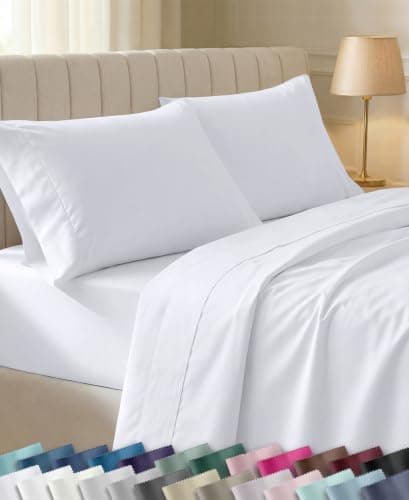 California Design Den 400 Thread Count Cotton Sateen Sheet Set 400 single-ply threads of real cotton in a sateen weave is the sensible end of this market. Everything above it is arithmetic. Best for: Most people | Most people | |
| 2 | Threadmill Supima Cotton 656 Thread Count Sheet Set If you want to spend real money on sheets, spend it on the fiber. Supima is the only cotton claim on Amazon with an audit behind it. Best for: Buying once | Buying once | Check price on Amazon → #ad — we earn a commission. |
| 3 | 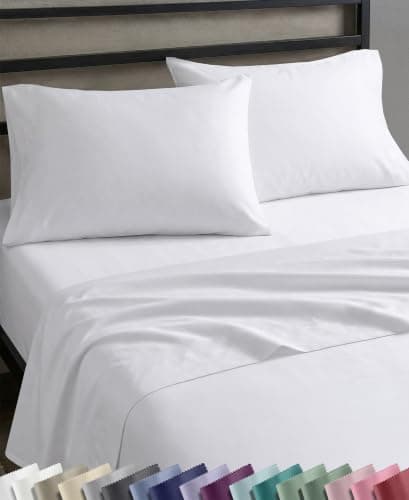 California Design Den Natural 100% Cotton Sheet Set The cheapest set here I'd call properly good. It's the 400-count pick with less polish and the same fiber. Best for: Real cotton on a budget | Real cotton on a budget | |
| 4 | 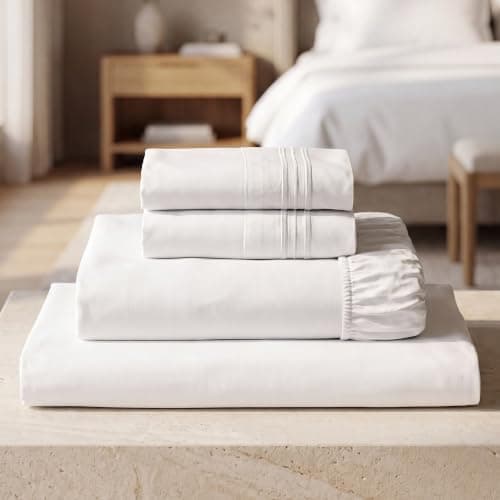 Mellanni Iconic Collection 4-Piece Sheet Set One of the most-bought sheet sets on Amazon, and its listing title tells you neither the fiber nor the weave. Worth understanding before you join in. Best for: The default Amazon sheet | The default Amazon sheet | |
| 5 | 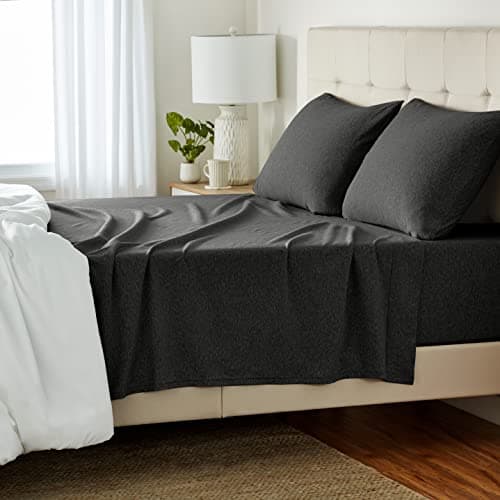 Amazon Basics Cotton Jersey Sheet Set Knitted, not woven — this is t-shirt fabric for your bed. Genuinely nice if that's what you want, and a mistake if you don't know that's what it is. Best for: People who like sleeping in a t-shirt | People who like sleeping in a t-shirt | $42.99 · View on Amazon Price as of October 18, 2026. #ad — we earn a commission. |
| 6 | 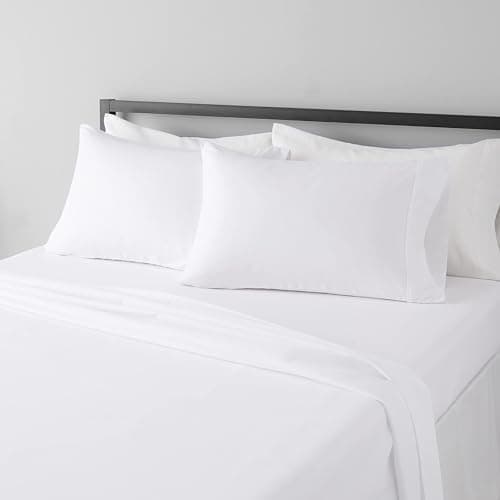 Amazon Basics Microfiber Sheet Set The cheapest thing here by a mile. It's polyester, it's honest about being polyester, and there are situations where that's the correct purchase. Best for: The lowest possible price | The lowest possible price | $17.04 · View on Amazon Price as of October 18, 2026. #ad — we earn a commission. |
Amazon sheet listings are written for the search box, not for you
A sheet is a simple product. It is a rectangle of cloth. There are exactly four things you need to know before buying one — what fiber it is, how it's woven, how deep the fitted corner is cut, and what it costs — and Amazon's bestselling sheet listings routinely tell you one of those four.
What they tell you instead is a number. A big one, on the front, usually next to the words "hotel luxury". That number is thread count, it stopped carrying useful information somewhere around 400, and the entire premium sheet market on Amazon is built on the fact that you've been trained to read it as a quality score. It isn't. Below is what each spec actually does, in the order that matters.
Thread count: the number that quit at 400
Thread count is threads per square inch. That's it. It is a density measure, not a quality measure, and like most density measures it has a ceiling: past a certain point you physically cannot fit more yarn into a square inch of cloth without making each yarn thinner and weaker. For real single-ply cotton that ceiling arrives somewhere between 400 and 600. A 400-count sheet in good cotton and a 600-count sheet in good cotton are different in ways you would struggle to notice; a 400-count sheet in good cotton and a 400-count sheet in bad cotton are different the first night.
So how does anyone sell a 1,200-count sheet? Arithmetic. Here is the trick, and once you've seen it you can't unsee it:
- A ply is one strand of yarn. Yarns can be spun from several thin plies twisted together instead of one thick strand.
- A mill weaves cloth at, say, 300 yarns per square inch — a perfectly ordinary density — using a four-ply yarn.
- It then counts every ply as a thread. 300 × 4 = a "1,200 thread count" sheet, printed in gold on the packaging.
- The cloth still has 300 threads in it. And the four thin plies inside each yarn are individually weaker and pill sooner than one properly spun single-ply thread would have. The big number was achieved by making the sheet worse.
This isn't a fringe practice. Look at Threadmill on this very page: the same brand sells the same Supima cotton at 656, at 1,000 and at 1,200 thread count. The cotton doesn't change. The number is a dial the marketing department turns. I've picked the 656 deliberately — it's the one where the number and the cloth are still on speaking terms.
Practical rule: 200-400 for percale, up to ~600 for sateen, ignore anything with four digits.If a listing brags about a four-figure count and doesn't say "single-ply", it isn't.
"Egyptian cotton" is a place, and nobody's checking
The fiber is what thread count is pretending to be a proxy for, and it's where the real difference lives. Cotton comes in staple lengths — the length of the individual fiber before it's spun. Longer staples mean fewer loose fiber ends sticking out of the yarn, which means a smoother sheet that pills less and lasts longer. Extra-long staple (ELS) cotton is genuinely, noticeably better cloth, and it's worth paying for.
Which is exactly why the words are worth stealing. "Egyptian cotton" means ELS cotton grown in the Nile delta, and it is one of the most abused terms in retail — a geographic claim with no practical enforcement between the field and the Amazon listing. Sheets sold as Egyptian cotton have been found, repeatedly and at large scale, to contain little or none of it. The term is not a lie by definition; it is simply unverifiable at the point where you're standing.
Supimais the workaround. It's a licensed trademark for American-grown ELS cotton, and licenses can be revoked, which means somebody has a financial reason to police it. Same fiber category, checkable claim. When I'm paying up for cotton — which is the only spec on a sheet genuinely worth paying up for — that's the word I look for, and it's why the Threadmill Supima is the splurge pick above rather than any of the four-figure "Egyptian" sets.
Weave: the spec that isn't a number
Same cotton, two weaves, two completely different products. This is the thing shoppers skip and then blame the brand for.
Percale is a plain one-over-one-under weave. It leaves gaps, air moves through them, and it feels crisp, matte and dry — the good-hotel sheet. It wrinkles. Sateenfloats three or four threads across the surface before tucking under, which exposes more fiber and creates the sheen and the slippery softness. It also closes the gaps and lays more fiber against your skin, so it sleeps warmer. Neither is better. They're for different people and different rooms, and almost every "these sheets made me sweat" complaint on the internet is a sateen sold to a hot sleeper. The long version is in percale vs sateen; if you already know you run warm, skip this page and go straight to the cooling sheets roundup, which is percale-first for exactly this reason.
There's also jersey, which is not woven at all — it's knitted, like a t-shirt. Thread count is meaningless on a knit. It stretches over any mattress, never wrinkles, and traps more air than a woven sheet, which makes it cozy in a cold room and unpleasant in a warm one. That's the Amazon Basics jersey above: a good product that a lot of people buy without realizing it's a fundamentally different kind of cloth. And microfibersidesteps the whole conversation, because it isn't cotton at all — it's polyester spun very fine, where thread count is pure theater and the number on the box means nothing. If that's the aisle you're in, our best microfiber sheets roundup covers it properly.
Deep pockets: the spec that causes the returns
Ask anyone who sells bedding what comes back and why, and the answer isn't fiber disappointment. It's fit. Fitted sheets are cut for a mattress height, and mattresses have quietly grown from the 9 or 10 inches sheets were standardized around to 12, 14, even 16 inches — then people add a topper on top, adding another two to four.
Do this before you buy anything:
- Measure your mattress at the side, from the top seam to the bottom seam, with the topper on it. That's your real height, and it's usually more than you'd guess.
- Add an inch. The sheet needs to reach under the mattress, not merely touch the underside.
- Buy only sheets whose listing statesa pocket depth at or above that number. "Deep pockets" with no figure is a vibe, not a measurement.
- If the listing states nothing, assume shallow. Note that the Mellanni set above doesn't state a depth in its title and the same brand sells a separate "Extra Deep" listing — which tells you what the standard one is.
Corner straps or all-around elastic are worth a small premium on a thick bed. A fitted sheet that pops off one corner at 3am doesn't get fixed at 3am. It gets fixed at 3am for four nights and then returned.
What a listing has to say before I'll buy it
Here's the whole filter, and it eliminates most of the category in about four seconds: the listing must state the fiber, and it must state the weave.That's it. Not the thread count — the fiber and the weave. Those two facts determine how a sheet feels, how it handles your body heat, how long it survives, and whether you'll like it. A seller who won't tell you either one, on the product page of a product that is nothing but cloth, has made a choice about what they'd rather you focused on.
And the honest caveat, on a page that earns a commission when you buy: sheets are one of the few things in a bedroom where the expensive option genuinely isn't needed for most people. A 400-count cotton set does 95% of what a Supima set does for a fraction of the outlay, and if you're buying for a guest room, the cheapest cotton on this page is the right answer and I'd rather you spent the difference on a duvet insert that's actually right for your room— which is a much bigger lever on how you sleep than the cotton under you. That's how we pick everything here, and what we refuse to claim while doing it.
The picks, in full
1. Best for Most people
California Design Den 400 Thread Count Cotton Sateen Sheet Set
400 single-ply threads of real cotton in a sateen weave is the sensible end of this market. Everything above it is arithmetic.
Key specs
- 100% cotton (as listed)
- 400 thread count (as listed)
- Sateen weave
- Deep pockets (as listed)
- "Good Housekeeping Award Winner" (seller's claim in the listing title)
What's good
- 400 is roughly where a genuine single-ply cotton count tops out before mills start counting plies to inflate the number — you are getting the last honest rung of the ladder
- The fiber and the weave are both stated on the listing, which sounds like nothing and puts it ahead of most of Amazon's bestselling sheets
- Sateen gives you the soft, faintly lustrous hand that most people mean when they say they want nice sheets
What's not
- It's a sateen. The weave floats threads over the surface to make it soft, and those floats close up the airflow — this is not the sheet for a hot bed
- Sateen snags. One rough toenail or a watch clasp and you have a pulled thread that will not go back
- The Good Housekeeping badge is the seller quoting an award in their own product title. It is a marketing line, not a spec
Skip this one if
You sleep hot. Sateen is the wrong weave for you regardless of how good the cotton is — go to our cooling sheets roundup and buy a percale instead. The weave matters more than the brand here.
2. Best for Buying once
Threadmill Supima Cotton 656 Thread Count Sheet Set
If you want to spend real money on sheets, spend it on the fiber. Supima is the only cotton claim on Amazon with an audit behind it.
#ad — we earn a commission.
Key specs
- 100% American Supima cotton (as listed)
- 656 thread count (as listed)
- Sateen weave
- Elasticized deep pocket (as listed)
- Queen, 4-piece
What's good
- Supima is a licensed trademark for American extra-long-staple cotton, and the licensing program is the reason it's the one premium-cotton term on Amazon that means something — unlike "Egyptian", which anybody can print
- Longer staples mean fewer fiber ends poking out of the yarn: less pilling, a smoother surface, and a sheet that stays smooth for years rather than months
- 656 is a high count but Threadmill states the fiber honestly alongside it, so you can tell what you're actually paying for
What's not
- This is the most expensive set on the page by a distance, and the fiber — not the thread count — is where that money went
- Sateen again, so the same heat trade-off as the pick above applies
- Threadmill sells 656, 1,000 and 1,200 thread count sets in the same Supima cotton. The cotton is the constant; the number is the marketing dial
Skip this one if
You want cool sheets, or you're buying for a guest room. This is a buy-once, keep-a-decade purchase in a warm-sleeping weave — it's the wrong sheet for a hot bed and comically the wrong sheet for a room used four nights a year.
3. Best for Real cotton on a budget
California Design Den Natural 100% Cotton Sheet Set
The cheapest set here I'd call properly good. It's the 400-count pick with less polish and the same fiber.
Key specs
- 100% cotton (as listed)
- Sateen weave
- Deep pockets (as listed)
- Queen set
What's good
- 100% cotton at close to microfiber money — this is the pick that makes the cheap polyester sets hard to justify
- Cotton absorbs moisture rather than repelling it, which is the single biggest functional gap between this and anything synthetic at the same price
- Same brand and the same weave as the top pick, so you know roughly what you're getting
What's not
- The listing doesn't state a thread count. Given everything else on this page, I'd argue that's honest rather than suspicious — but you are buying without that number
- Sateen, so it's soft rather than airy
- "Natural" in the product name is a mood, not a specification
Skip this one if
You want a crisp hotel-style sheet. This is a soft, drapey sateen — if you like the bed to feel taut and cool, you want percale, which is a different product entirely.
4. Best for The default Amazon sheet
Mellanni Iconic Collection 4-Piece Sheet Set
One of the most-bought sheet sets on Amazon, and its listing title tells you neither the fiber nor the weave. Worth understanding before you join in.
Key specs
- 4-piece queen set
- Fiber: not stated in the listing title
- Weave: not stated in the listing title
What's good
- Mellanni has sold this line for years across dozens of colorways — the ASIN is stable, the stock is deep and the returns process is well-worn
- It is cheap, it is available in every color, and it will be on your bed in two days
- A defensible choice for a rental, a kid's room, or a bed you don't sleep in
What's not
- The listing title states no fiber and no weave. On a product where fiber and weave decide literally everything, that is not a small omission — it is the whole spec sheet, missing
- The set is sold on color and price, which tells you what the seller thinks you're buying on
- Deep-pocket depth isn't stated in the title either, and a separate "Extra Deep" listing exists — which strongly implies this one isn't
Skip this one if
You care what your sheets are made of. You cannot find out from this listing, and if the fiber matters to you — it should — spend a little more on one of the cotton picks above, which say what they are.
5. Best for People who like sleeping in a t-shirt
Amazon Basics Cotton Jersey Sheet Set
Knitted, not woven — this is t-shirt fabric for your bed. Genuinely nice if that's what you want, and a mistake if you don't know that's what it is.
Price as of October 18, 2026. #ad — we earn a commission.
Key specs
- 100% cotton jersey (as listed)
- Knit construction, not woven
- 4-piece queen set: flat, fitted, pillowcase
What's good
- Jersey is a knit, so it stretches — it goes onto an awkward or over-thick mattress in a way a woven sheet simply can't, and it never wrinkles
- It is cotton, so it still handles moisture properly, unlike the microfiber alternatives at this price
- Soft from the first night with no break-in period
What's not
- Thread count doesn't apply to a knit at all, so you have no density number to compare against anything — you're buying a texture
- Knits are warmer than plain wovens: the loops trap air, which is why t-shirts and jumpers are knitted. This is not a hot-sleeper sheet
- Jersey stretches out over time and pills where you move most
Skip this one if
You sleep hot, or you want a bed that looks made. Jersey is warm and it drapes like a t-shirt — take a woven cotton above, or a percale from the cooling roundup.
6. Best for The lowest possible price
Amazon Basics Microfiber Sheet Set
The cheapest thing here by a mile. It's polyester, it's honest about being polyester, and there are situations where that's the correct purchase.
Price as of October 18, 2026. #ad — we earn a commission.
Key specs
- Microfiber (polyester) (as listed)
- 14" deep pockets (as listed)
- Wrinkle-resistant (as listed)
- 4-piece queen set
What's good
- Costs less than a takeaway. For a spare bed, a student flat, a camper or a first apartment, arguing about staple length is missing the point
- It states a 14-inch pocket depth, which is more than the far more expensive Mellanni listing manages
- Genuinely wrinkle-resistant — polyester doesn't crease, which is why hotels below a certain price use it
What's not
- Polyester doesn't absorb moisture, it repels it. In a bed that means your sweat stays on your skin instead of leaving it. This is the mechanism behind every complaint about sheets sleeping hot
- Microfiber is an insulator by nature — the same fiber and construction family as fleece
- It will pill, and once polyester pills there's no recovering it
Skip this one if
You will sleep in this bed regularly. Microfiber's price is its only real argument, and the cotton picks above cost very little more — buy this for the guest room and cotton for yourself.
Common questions
What thread count should I actually look for?
Between 200 and 400 for a percale, and up to about 600 for a sateen. Above that you are almost certainly paying for creative counting rather than better cloth. A genuine single-ply cotton weave runs out of room somewhere around 400 to 600 threads per square inch — you physically cannot fit more yarn in without making the yarn thinner and worse. When a listing says 1,000 or 1,200, the mill has usually taken a multi-ply yarn and counted each ply separately.
How does multi-ply thread counting work?
A ply is a single strand of yarn. A two-ply yarn is two thin strands twisted together, a four-ply is four. A mill can weave 250 four-ply yarns per square inch and advertise that as a 1,000 thread count sheet, even though the cloth has 250 actual threads in it — and the four thin plies making up each yarn are weaker and pill faster than one properly spun thread would. This is why a 1,000-count sheet can feel worse than a 400-count one. Look for the word single-ply, or an extra-long-staple fiber claim like Supima, and treat any four-figure count as a red flag rather than a feature.
Is Egyptian cotton worth paying for?
The fiber is, if it's genuine. The label very often isn't. Egyptian cotton properly refers to extra-long-staple cotton grown in the Nile delta, and long staples make a smoother, stronger, less pill-prone sheet. The problem is that the term is a geographic description with no meaningful enforcement in most retail channels — investigations have repeatedly found sheets labeled Egyptian cotton that contained little or none of it. If you want the extra-long-staple fiber and want to know you got it, Supima is the safer word: it's a licensed trademark for American ELS cotton, and the license is the mechanism that makes the claim checkable.
Why do so many sheet sets get returned?
Pocket depth, more than anything else. A fitted sheet is cut for a specific mattress height, mattresses have got thicker, and a topper adds several inches more. If your bed measures 15 inches with the topper on and the sheet is cut for 14, the corners will pop off every night and you will send it back. Measure your mattress at the side, seam to seam, with the topper in place, add an inch, and only buy sheets whose listing states a pocket depth at or above that number. If a listing doesn't state a depth, assume it's shallow.
Are the sheets on Amazon the same as the ones sold in shops?
Often, but the variant is where it goes wrong. One listing can carry a dozen colors, several sizes and sometimes more than one fabric, all pooled under a single star rating. The reviews you're reading may be for a different colorway in a different weave with a different pocket depth. Check that the fiber, weave and pocket depth on the exact variant you're adding to the basket match what you think you're buying — the dropdown changes the product, not just the color.
Sources
Where the facts on this page come from. We cite other people's testing because we don't do our own — here's what that means.
Read next
- The Best Percale SheetsFive percale sheet sets - the crisp, cool, matte cotton weave hot sleepers want - spanning budget organic to a cooling finish, with honest notes on wrinkling and fit.
- The Best Microfiber SheetsSix microfiber sheet sets whose listings state the fiber, the pocket depth and the piece count - plus why the 1800 on the box is not a thread count, and who should buy cotton instead.
- How Often Should You Wash Your Sheets?About once a week for most people - but sweat, pets, allergies, and skin can push it higher. Here is how to set an honest sheet-washing schedule.
- What Is Egyptian Cotton?What Egyptian cotton really is - an extra-long-staple fiber - why staple length, not the country name, drives quality, and how to shop past one of bedding's most abused labels.
- How to Fold a Fitted SheetHow to fold a fitted sheet neatly: the corner-nesting method step by step, an easier roll (or 'burrito') alternative, the cardboard trick for a store-display finish, and how to fold the whole set together so your linen closet stays tidy.
- The Best Budget SheetsSix genuinely cheap sheet sets worth owning, split by fiber - microfiber, cotton and bamboo/rayon - with the honest trade-off of each stated plainly and a note on who should spend a little more.
- How to Make Your BedThe correct bedding layer order from protector to pillows, the hotel-bed method for a crisp finish, how to keep a fitted sheet from slipping and a duvet from bunching, plus a fast daily reset versus a full remake.
- How to Choose Bed SheetsFiber is the biggest decision — cotton, linen, bamboo, microfiber or Tencel — then weave (percale vs sateen), then fit and care. Thread count matters least.
- Bed Sheet Sizes: How to Match Sheets to Your MattressSheet sizes are named to match mattress footprints, so a Queen set fits a Queen bed. Fit really comes down to footprint plus pocket depth — here is every size, the Twin and King gotchas, and how to measure.
- How to Keep Fitted Sheets From SlippingWhy fitted sheets slip off — usually a pocket-depth mismatch or tired elastic — and the fixes that hold, from measuring for the right depth to all-around elastic, grippy pads, straps, and better tucking.
- How to Wash Bed Sheets (by Fabric)A wash-and-dry method for every kind of sheet — cotton and percale, sateen, linen, bamboo viscose, flannel and microfiber — plus how often to wash, how to handle new sheets, and why sheets pill and how to slow it down.
- What Are Deep-Pocket Sheets?Deep-pocket sheets have deeper side walls for thick mattresses. Standard fits up to ~13-14 in, deep pocket ~15-17 in, extra deep beyond that — the pocket must clear your mattress plus any topper.
- Thread Count: What It Really MeansThread count is real up to roughly 400-600. Above that, it is mostly a counting trick — and fiber and weave matter more than the number ever did.
- The Best Duvet CoversSix duvet covers worth buying, plus the one word on the label that separates cotton from polyester, why corner ties matter more than thread count, and how to size a cover to your insert.
- The Best Bamboo Sheets, Chosen HonestlySix bamboo-viscose sheet sets that sleep silky and cool for hot sleepers — chosen on fiber and label honesty rather than the word bamboo, with real cons on every pick.
- The Best Cooling Sheets for Hot SleepersSix sheet sets that actually breathe, chosen on fiber and weave rather than marketing — plus who should skip each one.
- Percale vs Sateen SheetsTwo weaves, one decision: crisp and breathable, or silky and warm. Plus why thread count is mostly a marketing number.
- The Best Duvet InsertsSix duvet inserts worth buying, plus the two numbers sellers conflate, why baffle-box construction beats box stitching, and how to pick warmth for your room.
- The Best Sateen SheetsFive sateen sheet sets - the silky, lustrous, wrinkle-resistant cotton weave - from a budget 300-count to a plush high-count set, with honest notes on heat, pilling and the thread-count game.
- Linen vs Bamboo SheetsLinen's airflow, longevity and lived-in look versus bamboo-rayon's silky, drapey, cool-to-the-touch feel — plus the labeling truth almost no bamboo listing says out loud.
- The Best Flannel Sheets for WinterSix genuinely warm cotton flannel sets, chosen on fiber and GSM rather than marketing — with an honest note on who should skip each and the fleece-flannel trap to dodge.
- The Best Linen SheetsSix linen sheet sets — pure French flax and softer cotton-linen blends — chosen on fiber honesty and value, with the price-and-wrinkle trade stated plainly on each.
- The Best Mattress ProtectorsSix mattress protectors that block liquid without sleeping hot or crinkling — fitted pads and zippered encasements — with an honest note on who each is wrong for.
- How to Clean a MattressA step-by-step method for cleaning a mattress — routine refresh, stains, sweat and smells — built around the one rule that saves it: never soak it.