The Best Cooling Comforters
"Cooling comforter" is really two different products: a cold-touch fabric that feels great for the first few minutes, and a light, breathable fill that keeps you from overheating at 3am. Most people buy the first expecting the second. Here's how a comforter actually keeps a hot sleeper cool, which does which, and six worth buying - with an honest note on who should skip each.
We earn a commission if you buy through our links. It doesn't affect our picks — and we never take free products. How this site is funded.
Quick picks
| # | Product | Best for | Price |
|---|---|---|---|
| 1 | 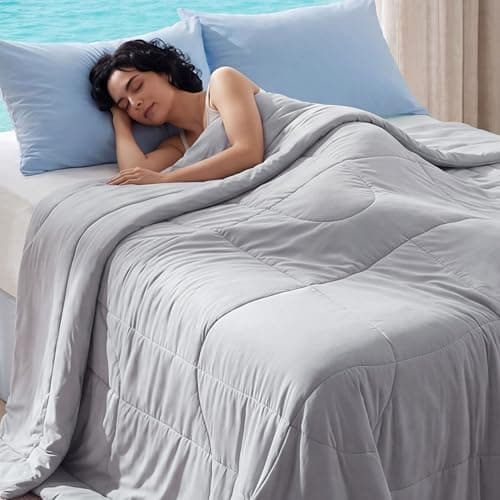 Bedsure Cooling Comforter, Dual-Sided Cool Tech The pick most people mean when they search for a cooling comforter, and the right one to start with. It's built around a contact-cooling surface rather than a fill claim - a narrow effect, but honestly deployed, and a bare comforter is the one place in the bed it makes sense. Best for: Best overall cooling comforter | Best overall cooling comforter | |
| 2 | 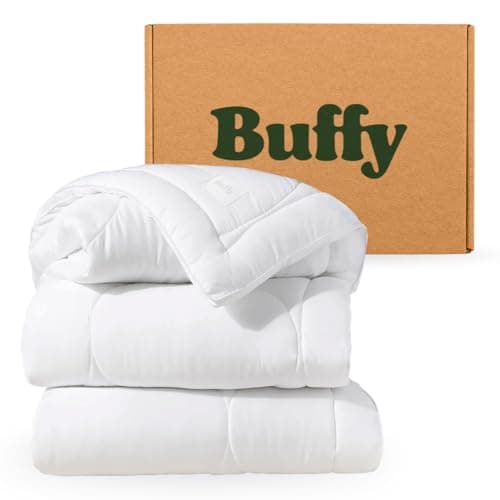 Buffy Cloud Eucalyptus Lyocell Duvet Insert The one to buy if you overheat at 3am rather than at bedtime. Lyocell fill instead of down or polyester: it moves moisture along the fiber and releases it rather than holding it against you, which is the mechanism that actually keeps a hot sleeper dry all night. It's also the only pick here I'd cheerfully machine wash. Best for: Best for staying cool all night | Best for staying cool all night | $199.00 · View on Amazon Price as of October 18, 2026. #ad — we earn a commission. |
| 3 | 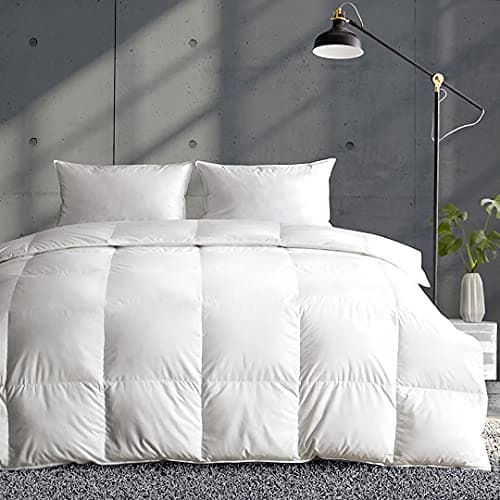 APSMILE Lightweight Down Feather Fibers Comforter For the sleeper who wants a real down duvet but keeps overheating under theirs. A summer-weight down comforter is the most under-bought item in bedding - the fix for a hot bed is less fill, not worse fill, and this cuts the fill weight while keeping the down feel and a breathable cotton shell. Best for: Best light down feel | Best light down feel | $109.00 · View on Amazon Price as of October 18, 2026. #ad — we earn a commission. |
| 4 | 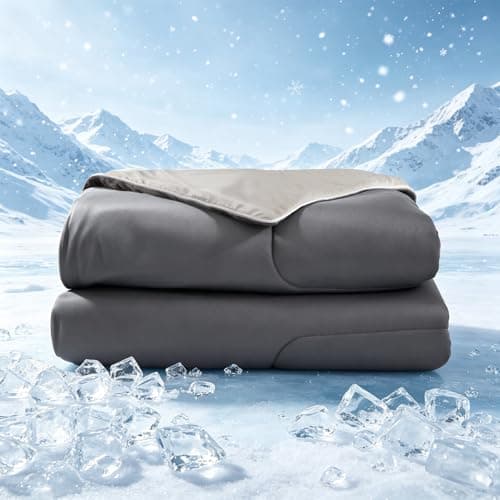 Cosybay Cooling Comforter, Double-Sided Cold Tech The same contact-cooling idea as the Bedsure, far cheaper and in a more generous size. If the cool-touch concept appeals, this is the cheap way to find out whether it does anything for you before spending more. Best for: Best budget cooling | Best budget cooling | |
| 5 | 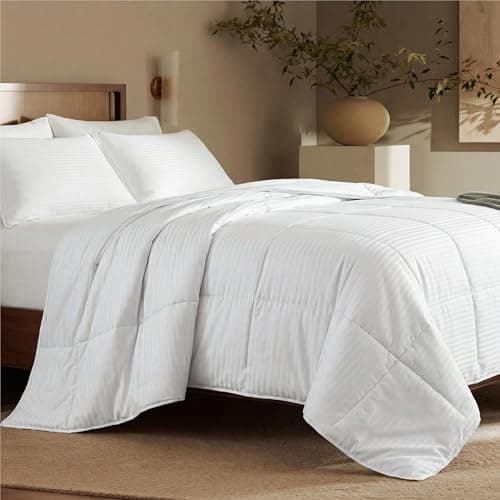 Bedsure Lightweight Quilted Cooling Duvet Insert Down-alternative done sensibly for the person who runs a cover: light, quilted, washable and cheap. Buy it as a summer insert and it makes complete sense - just don't expect the fill to do the cooling. Best for: Best if you use a duvet cover | Best if you use a duvet cover | |
| 6 | 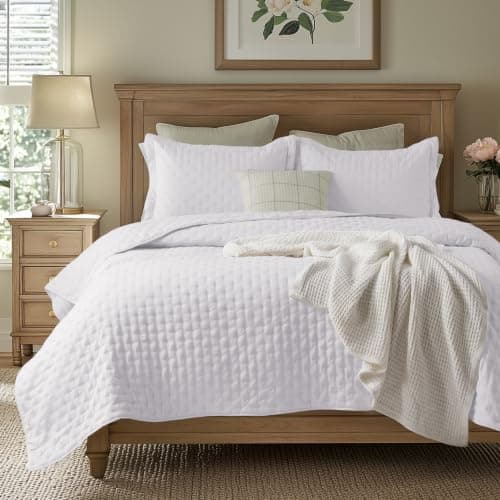 Bedsure Lightweight Summer Quilt Not a comforter at all, and that's the point - the thinnest layer here, a low-loft coverlet for the nights when a full comforter is too much and a bare sheet is too little. When the room is genuinely hot, this is the honest answer a fluffier pick can't be. Best for: Best for the very hottest nights | Best for the very hottest nights |
"Cooling comforter" is two products in one search
The word does a lot of work it can't back up. When you search for a cooling comforter you get two genuinely different things sold under the same phrase, and buying the wrong one for your problem is the single most common mistake in this whole category.
The first is a contact-cool comforter: a fabric engineered to conduct heat away from your skin the instant you touch it, so the bed feels cold when you climb in. That effect is real and it feels great — for a few minutes. Contact cooling has a fixed capacity: once the cloth warms to your body temperature it's spent, and the rest of the night is governed by whatever fill is behind it. It's an at-bedtime effect, not a 3am one. The second is a light, breathable comforter: less fill in it, made of a fiber that moves the moisture you shed away from you rather than trapping it. That's the one that actually keeps a hot sleeper comfortable all night, because overheating in bed is a heat-and-humidity problem, not a cold-touch one.
So the first question isn't which comforter — it's which problem you have. Are you hot getting in, and fine once you settle? A contact-cool surface is a cheap, pleasant fix. Do you wake up hot at 3am, or sweat through the bed? A cold-touch cloth was spent hours ago; you need a low, breathable fill instead. Everything below is sorted by that distinction, and I've been honest on every pick about which of the two jobs it actually does. If your problem is the opposite of this whole page — a cold room, not a hot sleeper — our winter comforters roundup is the mirror image of this one.
The four things that decide whether you overheat
Get these four right, in this order, and the marketing around them barely matters. Get the order wrong — chase the cooling word before the fill weight — and you'll buy something that's cold for five minutes and hot for the rest of the night.
- Fill weight — how much insulation is in it. This is the lever, and almost no listing prints it. A comforter keeps you warm by trapping a layer of still air, so the less fill it holds, the less it insulates and the cooler it sleeps. A genuinely light summer weight will out-cool a heavier comforter with a cooling label every time, because the insulation is the thing actually cooking you. Buy light first; treat everything else as a refinement on top of that.
- What the fill is made of.Fiber decides the all-night behavior. Cellulose fills — eucalyptus lyocell, and a cotton-shelled down or down-feather blend — breathe and move moisture, so they carry heat and humidity away instead of holding it against you. Polyester down-alternative is the weakest here: it doesn't absorb moisture, so it repels sweat back at you, and "cooling" printed on a synthetic fill is fighting its own material. Its honest advantages are price and easy washing, not cool sleep.
- A contact-cool surface — the bonus, not the plan.A cool-touch face is a genuine, pleasant thing, and a bare comforter is the one place in the bed it makes sense, because the fabric is right against your skin with no cover to dampen it. Just size the expectation: it's an at-bedtime effect with a fixed capacity, worth having on top of a light comforter and no substitute for one.
- Size, shell and construction.A shell that breathes — cotton or lyocell — matters as much as the fill, because a dense, sealed shell traps the moisture the fill is trying to release. And a comforter that overhangs the mattress edge seals the sides of the bed, so cold — or in summer, cool — air isn't pumped in and out every time you turn. On a tall or shared bed, an inch or two of extra width does more than a spec-sheet cooling claim.
Most of the confusion in this category comes from treating "cooling" as one feature when it's really these four questions. Answer the one that matches your night — hot getting in, hot at 3am, sweaty, or drafty at the sides — and the pick falls out of it.
The picks, sorted by how they keep you cool
The Bedsure Cooling Comforteris the pick most people mean when they search this, and the right place to start: a dual-sided cool-touch surface on a bare summer-weight comforter, which is exactly the right place in the bed for contact cooling. It's honest about being a summer weight, and it's the priciest way to buy a cold first touch — so buy it if you're hot getting in, and look elsewhere if you're hot at 3am. The Buffy Cloud eucalyptus lyocellis that elsewhere: a low, breathable cellulose fill that moves moisture all night and — uniquely here — washes at home, which is the pick I'd point a genuine night-sweater at first, at the cost of being the dearest thing listed and a flatter, cover-first insert rather than a fluffy bare comforter.
If you want a real down duvet but keep overheating under yours, the APSMILE Lightweight Down Feather Fibers is the fix that most people never think to buy: less fill, not worse fill, in a breathable organic-cotton shell — a summer-weight down feel that lofts and drapes without the insulation. For the cheapest way to find out whether contact cooling does anything for you at all, the Cosybay runs the same cold-touch idea as the Bedsure for a fraction of the money and in a more generous size, at the cost of a listing that names no fiber or fill at all.
The two remaining picks are for specific setups. The Bedsure Lightweight Quilted Cooling insert is the sensible buy if you run a duvet cover — light, washable, cheap, with eight corner tabs to hold it flat — as long as you pair its polyester fill with a breathable cover and don't ask the fill itself to cool you. And the Bedsure Lightweight Summer Quiltisn't a comforter at all: it's the thinnest layer on the page, for the genuinely hot nights when a full comforter is too much and a bare sheet is too little. Three of these carry the Bedsure name because Bedsure dominates the budget cooling-bedding shelf — they're genuinely different products, and I've said on each where it's wrong for you.
Cool the bed, not just the comforter
A comforter is one layer, and on a hot night it's rarely the layer doing the most damage. The one against your skin matters more: a light comforter over hot, dense sheets still leaves you sweating, so breathable sheets are usually the bigger and cheaper win — our cooling sheets roundup is the obvious companion to anything here, and a cooling pillowhandles the spot that traps the most heat around your head. If you've lightened the top layers and you're still hot, the heat is usually coming up from the mattress underneath you, which is the expensive conversation and the one worth having last. And if the real issue is soaked-through nights rather than a stuffy room, our guide to stopping night sweats walks the whole stack from the sheets down — and is honest about when the answer is a doctor, not more bedding.
If you're torn on the fill itself, the fill-weight logic that governs this whole page is the same one behind the warm end of the category — our guide to fill powerexplains why a "high fill power" comforter can still be a cool one, and the general best comforters roundup and how to choose a comforter guide cover the all-season middle if a dedicated summer weight is more than your room needs.
What I can't measure
The honest part, and the reason this page reads differently from the ones with cooling scores. I have not tested any of these.There is no lab behind this site, no thermal camera to tell you how cool any of them actually sleep, no scale to weigh the fill, and no way to verify a "high FP" claim or a "cold tech" finish. Anyone who hands you a precise surface-temperature reading for a comforter they bought on Amazon last week is inventing it. What I can do is read the label the way you should: separate a contact-cool surface from a breathable fill, flag when a listing names a fabric but hides the fiber, point out that a polyester "cooling" fill is fighting its own material, and reason from how the materials behave — lyocell moves moisture, cotton-shelled down breathes, contact cooling spends itself in minutes — because that is physics, not a measurement I took. Where a listing leaves a number out, I've left it out here too, and told you it's missing rather than guessing. Prices and availability move, so check the current price on the retailer before you buy.
The picks, in full
1. Best for Best overall cooling comforter
Bedsure Cooling Comforter, Dual-Sided Cool Tech
The pick most people mean when they search for a cooling comforter, and the right one to start with. It's built around a contact-cooling surface rather than a fill claim - a narrow effect, but honestly deployed, and a bare comforter is the one place in the bed it makes sense.
Key specs
- Dual-sided cool tech fabric (as listed)
- Lightweight, for summer (as listed)
- Queen, 88 x 88 in
What's good
- Contact cooling makes far more sense on a comforter than on anything else in the bed: this fabric is the surface touching your skin, with no cover over it dampening the effect
- Dual-sided means both faces are the cooling cloth, so it still works when you flip it in the night - genuinely useful rather than a spec-sheet line
- It's sold as a lightweight summer comforter rather than an all-season one, which is the more honest product and the correct weight for a hot sleeper
What's not
- Contact cooling has a fixed capacity. It moves heat out of your skin quickly on first touch, then reaches your temperature and stops - it's an at-bedtime effect, not a 3am one
- The listing names a fabric technology but not a fiber, and fiber is what decides the all-night behavior - so the part that matters most after the first few minutes isn't stated
- It's the most expensive pick on this page, for a lightweight summer comforter
Skip this one if
Your problem is at 3am, not at bedtime. Contact cooling is spent within minutes - if you wake up hot in the small hours, a low, breathable fill like the Buffy or the APSMILE below does more than any cool-touch cloth can.
2. Best for Best for staying cool all night
Buffy Cloud Eucalyptus Lyocell Duvet Insert
The one to buy if you overheat at 3am rather than at bedtime. Lyocell fill instead of down or polyester: it moves moisture along the fiber and releases it rather than holding it against you, which is the mechanism that actually keeps a hot sleeper dry all night. It's also the only pick here I'd cheerfully machine wash.
Price as of October 18, 2026. #ad — we earn a commission.
Key specs
- Eucalyptus lyocell fill (as listed)
- Machine washable (as listed)
- Lightweight, all-season (as listed)
- Temperature-regulating (seller's claim)
- Queen/Full
What's good
- Lyocell is a cellulose fiber - it moves moisture along the fiber and releases it rather than holding it against you, a different and better mechanism than polyester's repel-and-trap, and the reason it doesn't get clammy
- Machine washable at home, which no feather fill on this page genuinely is. If night sweats are your problem, being able to actually wash the thing you sweat into outranks almost everything else
- No feathers, so no feather allergy and no quills working through the shell over the years - and it breathes far better than the contact-cool synthetics above once the first few minutes are past
What's not
- It is by a distance the most expensive insert here, and the fill is not down
- Lyocell fill doesn't loft like down does - you get a flatter, denser, more blanket-like duvet, which plenty of people prefer but isn't the cloud look
- It's a duvet insert, so it wants a cover over it; "temperature-regulating" is the brand's phrase - lyocell genuinely handles moisture well, but no fill regulates temperature in the sense that word implies
Skip this one if
You want a comforter you can throw on the bed bare, or the deep fluffy hotel loft. This is a flatter insert built for a cover - if you want cool-to-the-touch out of the bag with nothing over it, the Bedsure or Cosybay contact-cool picks suit you better.
3. Best for Best light down feel
APSMILE Lightweight Down Feather Fibers Comforter
For the sleeper who wants a real down duvet but keeps overheating under theirs. A summer-weight down comforter is the most under-bought item in bedding - the fix for a hot bed is less fill, not worse fill, and this cuts the fill weight while keeping the down feel and a breathable cotton shell.
Price as of October 18, 2026. #ad — we earn a commission.
Key specs
- Down and feather fibers (as listed)
- 100% organic cotton cover (as listed)
- "High FP summer duvet" (as listed - no figure given)
- For warm weather / hot sleepers (as listed)
- Full/Queen, 90 x 90 in
What's good
- The right way to build a hot-room duvet: less fill, not worse fill. Cut the fill weight and keep the down quality and you get something that still lofts and drapes but carries far less insulation
- Cotton shell, so the moisture you shed overnight can leave rather than condensing in the fill - the thing that actually makes a warm bed feel clammy
- A genuine second duvet: keeping a light one for summer and a warmer one for winter costs less over a decade than fighting a single all-season duvet does
What's not
- "High FP" appears in the title with no number attached - fill power is a measured figure on a defined test, and a listing that says "high" and stops has told you nothing you can check
- A summer duvet is genuinely too cold for a cold room - not a flaw, it's the design, but people buy it as their only duvet and then complain
- Feather blends still can't be casually machine washed, and down insulates more than the contact-cool synthetics do, so on the very hottest, most humid nights even a light one can be a touch much
Skip this one if
This will be your only duvet and you have actual winters, or feathers set off an allergy. It won't stretch across both ends of the year - buy a medium-warmth main duvet and add this for summer, and if feathers are the issue the Buffy lyocell above is the fill for you.
4. Best for Best budget cooling
Cosybay Cooling Comforter, Double-Sided Cold Tech
The same contact-cooling idea as the Bedsure, far cheaper and in a more generous size. If the cool-touch concept appeals, this is the cheap way to find out whether it does anything for you before spending more.
Key specs
- Double-sided cold tech fabric (as listed)
- For hot sleepers / night sweats (as listed)
- Breathable summer comforter (as listed)
- Queen, 90 x 90 in
What's good
- 90 x 90 inches - bigger than most queen comforters here, and the overhang is what stops air being pumped up the sides of the bed every time somebody moves
- Delivers the same cool-to-the-touch effect as the Bedsure at a fraction of the money, which makes it a low-risk way to test whether contact cooling helps you at all
- Silky rather than brushed, so it doesn't cling to damp skin the way a fleecy microfiber shell does
What's not
- No fiber stated, no fill stated, no weight stated - you are buying a fabric adjective, and "cold tech" is a brand name for a finish, not a technology anyone can look up
- Cosybay is an Amazon-native brand with no trading history to lean on and no returns operation beyond Amazon's
- Like all contact cooling it's an at-bedtime effect: the cool-touch surface reaches your temperature within minutes and the rest of the night is on the (unstated) fill
Skip this one if
You want to know what your bedding is made of before you sleep under it, or you need all-night cool rather than a cold first touch. This listing won't tell you the fill - the APSMILE above at least names it, and the Buffy actually breathes.
5. Best for Best if you use a duvet cover
Bedsure Lightweight Quilted Cooling Duvet Insert
Down-alternative done sensibly for the person who runs a cover: light, quilted, washable and cheap. Buy it as a summer insert and it makes complete sense - just don't expect the fill to do the cooling.
Key specs
- Down alternative fill (as listed)
- Quilted (as listed)
- Lightweight / summer comforter (as listed)
- 8 corner tabs (as listed)
- Machine washable (as listed)
- Queen, 88 x 88 in
What's good
- Eight corner tabs, not four - the anchor points that stop the insert migrating into a lump at the bottom of the cover, and eight hold a duvet flat in a way four never do
- Machine washable without ceremony, polyester's genuine advantage over down, which is why it belongs in a kid's room or a guest room a hot sleeper visits
- Sold as a lightweight summer insert rather than an all-season compromise, which is the honest low fill weight a hot sleeper wants inside a breathable cover
What's not
- Down alternative is polyester - it doesn't absorb moisture, so it repels the sweat back at you rather than moving it away, and "cooling" in the title is fighting that
- Polyester fiberfill clumps and flattens over repeated washes, so the washability that makes it appealing is also what wears it out
- 88 x 88 inches is a snug queen, so there's not much overhang to tuck on a thick mattress
Skip this one if
You sleep hot AND want the fill itself to breathe. That sounds like this insert, but polyester is the wrong material for moving sweat away - pair it with a breathable cotton or lyocell cover, or step up to the Buffy lyocell above, which is washable and actually breathes.
6. Best for Best for the very hottest nights
Bedsure Lightweight Summer Quilt
Not a comforter at all, and that's the point - the thinnest layer here, a low-loft coverlet for the nights when a full comforter is too much and a bare sheet is too little. When the room is genuinely hot, this is the honest answer a fluffier pick can't be.
Key specs
- Queen lightweight coverlet
- Clover ultrasonic pattern (as listed)
- Bright white, all-season (as listed)
- 90 x 96 in (as listed)
What's good
- This is what a summer quilt is best at: a genuinely thin top layer for hot nights, the one job it does better than any comforter in the bed
- Bright white reads clean and reflects rather than soaks up warmth, and it's the one color you can bleach back toward new after a summer of use
- 90 by 96 inches (as listed) gives real overhang, so it seals the sides of the bed on a warm night instead of riding up and pumping air every time you move
What's not
- "Ultrasonic" quilting is a heat-and-pressure bond, not sewn thread - and that only works on synthetic fibers, so by construction this is a poly coverlet however white it reads, not cotton against you
- A bonded, embossed pattern can flatten and lose its raised look over many washes faster than a stitched-through pattern holds up
- Bright white shows every mark, and a synthetic face won't take a hot sanitizing wash the way cotton will, so stains are harder to shift
Skip this one if
You want cotton against your skin, or a layer you'll still use once the weather turns. This is a deliberately thin synthetic summer coverlet - for anything more, the APSMILE light down or a breathable cotton set is the right call.
Common questions
What actually makes a comforter cooling?
Two completely different things, and the word 'cooling' gets used for both. The first is a contact-cool surface: a fabric engineered to conduct heat away from your skin the moment you touch it, so it feels cold getting into bed. That effect is real but it has a fixed capacity - once the cloth warms to your body temperature, which takes a few minutes, it's spent, and it does nothing at 3am. The second is low insulation in a breathable fiber: a comforter with less fill in it, made of a material that moves the moisture you shed away from you rather than trapping it. That's the one that actually keeps a hot sleeper comfortable all night, because overheating in bed is really a heat-and-humidity problem, not a cold-touch one. The best cooling comforter for you depends on which problem you have: cold-touch for the sleeper who's hot getting in, low breathable fill for the sleeper who wakes up hot.
Do cooling comforters really work for night sweats?
They help, but the marketing oversells the contact-cool ones for exactly the wrong problem. If you soak the bed at 3am, a cold-touch surface has been spent for hours by then, so it isn't the fix - what helps is a lower fill weight in a fiber that moves moisture, so the sweat can leave instead of condensing against you. Natural cellulose fills like eucalyptus lyocell and breathable cotton-shelled down do this well; dense polyester fiberfill does it poorly, which is why 'cooling' printed on a synthetic insert is fighting its own material. The comforter is also only one layer. If night sweats are persistent, start with breathable sheets and a cooler room too, and treat soaked-through nights that don't improve as a reason to see a doctor rather than buy more bedding - our night sweats guide covers the whole stack.
Is a lighter comforter or a 'cooling' one better for hot sleepers?
For most hot sleepers, a lighter comforter beats a heavier one with a cooling label. The single biggest lever on how warm a comforter sleeps is how much fill is in it - fill weight - and a genuinely light summer weight in a breathable fiber will out-cool a heavier comforter that leans on a cool-touch cloth, because insulation is the thing actually cooking you. A cooling surface is a nice bonus on top of a light comforter, not a substitute for one. So the order of priorities is: pick a low, summer fill weight first; prefer a fiber that breathes and moves moisture (lyocell, cotton-shelled down); and treat contact cooling as the at-bedtime extra it is. A heavy comforter with a cold-touch face is the worst of both - cold for five minutes, then a hot 3am.
What is the coolest comforter fill?
For all-night cool, cellulose fibers win: eucalyptus lyocell and a light, cotton-shelled down or down-feather blend both breathe and move moisture, so they carry heat and humidity away instead of trapping it. Lyocell is the standout for a sweaty sleeper because it moves moisture along the fiber and is washable at home; light down breathes and lofts but insulates more, so buy it in a genuine summer weight. Polyester down-alternative is the weakest cooling fill - it doesn't absorb moisture, so it repels sweat back at you, and no amount of 'cooling' branding changes that; its real advantages are price and washability. Above the fill, a breathable cotton or lyocell shell matters as much as what's inside, because a sealed, dense shell traps the moisture the fill is trying to release. Match the fill to how you sleep, not to the biggest cooling claim on the box.
Should a hot sleeper use a comforter with a duvet cover or bare?
It depends on which cooling mechanism you're relying on. A contact-cool comforter has to be bare against your skin to work at all - put a cover over the cool-touch face and you've canceled the one thing you paid for, which is why those are sold to use without a cover. A breathable insert is the opposite: it's built to live inside a cover, and if you choose a cotton or lyocell cover you actually add breathability while making the whole thing washable, since the cover takes the laundry. So the rule is simple. Buying for a cold first touch? Use it bare. Buying a light, breathable fill for all-night cool? Put it in a breathable cover and wash the cover often. What you don't want is a dense, non-breathable cover over any of them - that seals in the heat and humidity every one of these is trying to release.
Do you earn a commission on these links?
Yes, and it's fair to say so plainly. I earn an Amazon commission if you buy through the links on this page, and that's what funds the site. The rate is effectively the same across every comforter here, so there's nothing I make more money by steering you toward - which is why the page is honest that the cheapest way to test contact cooling is the budget Cosybay, and that the pick most likely to actually keep you cool all night, the Buffy lyocell, is the priciest thing listed rather than something I'm marking up. I haven't slept under all six and I don't run a test lab, so I quote the seller's specs marked 'as listed' rather than inventing measured warmth or temperature scores, and the FTC's endorsement guides are the reason this disclosure is here at all.
Sources
Where the facts on this page come from. We cite other people's testing because we don't do our own — here's what that means.
Read next
- The Best ComfortersSix comforters worth buying, the comforter-versus-duvet decision most buyers get backwards, and why all-season weight is usually the wrong compromise.
- The Best Comforters for WinterSix genuinely warm comforters for a cold bedroom, sorted by how each fill holds heat - premium down, temperature-regulating wool, and dense down alternative - with an honest note on who should skip each.
- The Best Cooling Sheets for Hot SleepersSix sheet sets that actually breathe, chosen on fiber and weave rather than marketing — plus who should skip each one.
- The Best Duvet InsertsSix duvet inserts worth buying, plus the two numbers sellers conflate, why baffle-box construction beats box stitching, and how to pick warmth for your room.
- The Best Quilts and CoverletsSix lightweight quilts worth buying, the quilt-versus-comforter difference most buyers get backwards, and why 100% cotton beats a cheaper microfiber coverlet.
- How to Stop Night Sweats (the Bedding-and-Temperature Side)The sleep-environment fixes for night sweats, from the sheets against your skin down to the mattress under you — breathable weaves, a bed that ventilates, a cooler pillow, a lighter comforter and a cooler room. Plus when soaked nights are a reason to see a doctor, not rearrange the bed.
- How to Choose a ComforterFive levers decide a comforter: fill (down, down alternative, wool, or cotton), warmth level for your climate, finished comforter versus insert-plus-cover, size and drape, and construction and care.
- What Is Fill Power?Fill power measures the loft and quality of down — how many cubic inches one ounce fluffs up to fill — so higher fill power means fluffier, warmer-for-its-weight down. It is not the same as warmth: that depends on fill power and fill weight together. Here's how to read the number and the typical quality bands.
- The Best Temperature for Sleep (and How Your Bedding Gets You There)The bedroom temperature commonly recommended for sleep is around 65-68 F (about 18-20 C), because your body lowers its core temperature to fall and stay asleep and a warm room fights that. This guide covers why, plus the bedding levers that get you there — breathable sheets, a mattress that ventilates, a cooler pillow, seasonal comforter weight, and simple airflow.
- The Best Cooling PillowsSix cooling pillows that actually move air, an honest read on gel infusions, and a note on who each one is wrong for.
- The Best Cooling Mattresses for Hot SleepersSix mattresses that actually sleep cooler, led by hybrids because a coil core is the only cooling feature that doesn't saturate by midnight — with honest cons on every pick.
- How to Cool Down a Memory Foam MattressFoam sleeps hot because a solid core insulates and cannot breathe. Fix it from the outside in — a breathable pad or topper, cooling sheets, a cooler room — and know when the bed itself is the real problem.