The Best Mattress Toppers for Back Pain
A topper can ease a bad back in two honest ways: softening a bed that's too firm so your lower back and shoulders settle, or adding a denser, firmer layer to one that's gone slightly too soft so the hips stop sinking. What it can't do is rescue a sagging, worn-out mattress — that bed needs replacing. Here are six worth buying, re-ranked support-first.
We earn a commission if you buy through our links. It doesn't affect our picks — and we never take free products. How this site is funded.
Quick picks
| # | Product | Best for | Price |
|---|---|---|---|
| 1 | 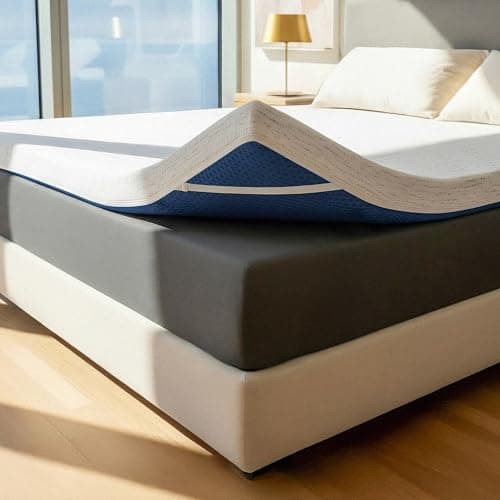 ViscoSoft 3" Select High Density Topper, Queen The one I'd buy first for a bad back. Density is the spec that matters most here, because a dense topper holds its shape instead of packing down into the very kind of trench you're trying to escape. Best for: Best overall for a bad back | Best overall for a bad back | $179.95 · View on Amazon Price as of September 12, 2026. #ad — we earn a commission. |
| 2 | 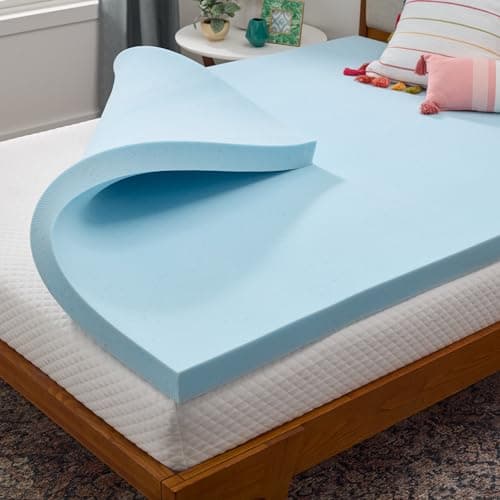 Linenspa 3" Gel Infused Memory Foam Topper, Queen The most common back-pain fix on the page. If your bed holds you up fine but presses your shoulders and hips into a hard surface, three inches of plush foam lets the lumbar curve settle instead of bridging a gap all night. Best for: Softening a bed that's too firm | Softening a bed that's too firm | $89.99 · View on Amazon Price as of September 12, 2026. #ad — we earn a commission. |
| 3 | 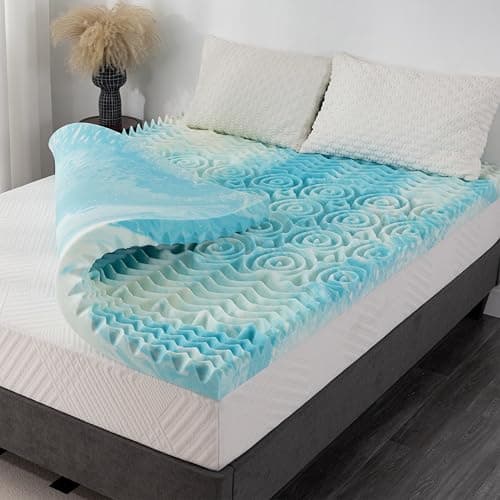 MLILY 3" Gel Memory Foam Egg Crate Topper, 5 Zones, Queen Zoned foam is cut firmer under the hips and softer under the shoulders, which is exactly the profile a side sleeper's spine needs to stay level — a real construction difference, not a printed claim. Best for: Zoned support for side sleepers | Zoned support for side sleepers | |
| 4 | 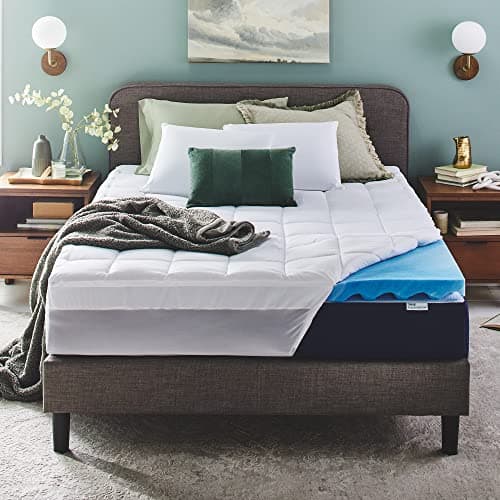 Sleep Innovations Dual Layer 4" Topper, Queen Four inches in two layers is the strongest feel-change here, for a bed so firm it's the reason your back hurts. But more foam is a double-edged fix for a spine, so read the skip note before you reach for it. Best for: A bed that feels like a plank | A bed that feels like a plank | $139.99 · View on Amazon Price as of September 12, 2026. #ad — we earn a commission. |
| 5 | 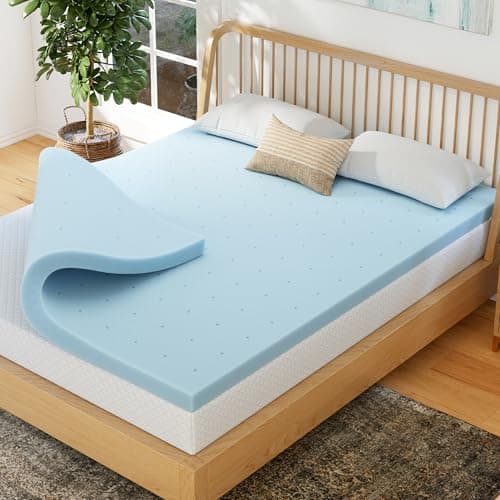 EGOHOME 3" Gel Memory Foam Topper, Queen The cheapest way to find out whether a topper is actually your back's answer before you spend properly on one — or before you accept that the bed itself is the fault. Best for: Testing the idea before you commit | Testing the idea before you commit | |
| 6 | 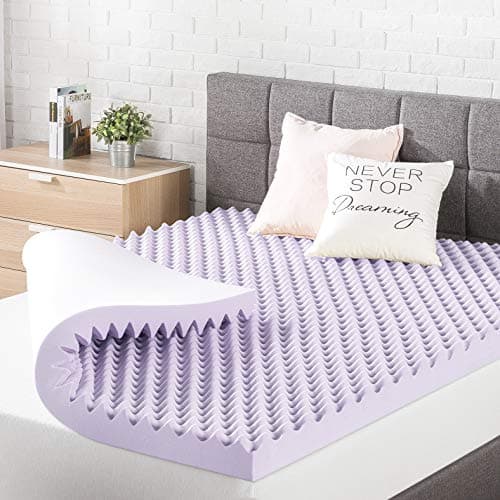 Best Price Mattress 3" Egg Crate Topper, Queen The one honest cooling feature here is a shape, not a chemical — the channels leave physical air gaps. It's the pick if heat is part of what's wrecking your sleep, with the trade that channels cost cushioning depth. Best for: Hot sleepers with a bad back | Hot sleepers with a bad back | $71.49 · View on Amazon Price as of September 12, 2026. #ad — we earn a commission. |
Two honest ways a topper helps a back — and one it can't
A mattress topper is a soft layer you lay on top of the bed you already own. It has no structure of its own and it isn't attached to anything, so it can only ever change how your bed feels, never how it holds you up. For a sore back, that limit is the whole story, and it runs in two directions that genuinely help — plus one that doesn't help at all.
The first fix is the common one. Your mattress supports you fine, but its surface is too firm: it holds your hips and pelvis up in line, but it's so hard that your shoulder and hip can't sink into it, so your waist bridges an air gap and the muscles along your lower back hold that curve all night. Three inches of plush foam fills the gap. Your shoulder and hip settle, the lumbar curve is supported instead of suspended, and the morning stiffness eases. This is what a topper is genuinely good at.
The second fix is narrower and gets less airtime. Your bed has gone slightly too soft — not worn out, just a touch plusher than your back likes — and your hips are beginning to settle a little below the line of your shoulders and heels. A denser, firmer topper laid on top adds a more supportive surface that resists that sink and nudges your pelvis back toward level. It works only while the core underneath is still sound; it is a surface correction, not a structural one.
And the one it can't do: a topper cannot fix a sagging, worn-out mattress. That's the case this page is most anxious to talk you out of, because it's where people waste the most money.
Read this first: a topper can't fix a sag
If your mattress has a visible dip where you sleep — a hollow the surface no longer springs back from — a topper will not save it, and buying one is throwing good money after bad. A dip is a failure of the support core: the foam or the coils underneath have fatigued and collapsed in the spot that takes your weight every night. A topper is soft material laid over the top, so it drapes into the dip and follows its shape. You sink into the same trench you were sinking into before — only now the trench is softer. You'll sag more comfortably, and your spine will hold the same bad curve it held before.
This is the same load-bearing honesty from our guide on how to fix a sagging mattress: stacking softness on top of a collapsed core can make the alignment worse, not better, because you've added depth to the very dip that drops your hips out of line. There's a two-minute test that tells you which problem you have, and it's worth more than any product choice on this page.
- The straightedge test.Strip the bed and lay something rigid and straight across it — a broom handle, a spirit level, a length of timber. Look at the gap under it along the middle third, where you actually sleep. If you can see daylight, you have a dip, and a dip is structural. A topper won't reach it.
- The where-does-it-hurt test.Wake with your lower back sore, in the same spot every morning, easing once you've been up half an hour? That's the signature of your middle sinking lower than your shoulders and heels overnight. If it lines up with a visible dip, the support core has gone.
- The age test.If you can't remember buying the bed and it has started to feel actively worse rather than merely wrong, the materials have fatigued. Fatigue doesn't reverse, and a new layer on top doesn't reach the part that failed.
See a dip, or pain that has migrated to the middle of your back? Don't buy a topper. That bed needs replacing, and our mattresses for back pain page is where to start — the beds there are built with a real support core and a medium-firm surface, and several carry a warranty against exactly the sag you're looking at. Flat bed that's simply too hard, or one that's drifted a little too soft over a core that's otherwise sound? Read on — a topper is the right, and far cheaper, tool.
Criterion one: match the topper to your problem, not to a rule
There is no single "best topper for a bad back," because back pain on a firm bed and back pain on a soft bed need opposite corrections. Getting this match right matters more than which specific product you pick.
If your bed is too firm, you want a plush, contouring topper — memory foam that lets your shoulder and hip sink so the lumbar curve stops bridging a gap. That's the Linenspa, the zoned MLILY for side sleepers, or, for a genuinely plank-hard bed, the four-inch Sleep Innovations. If your bed has gone slightly too soft, plush foam is the wrong direction — it pushes your hips down further. You want the densest, most supportive layer you can get, which is the ViscoSoft, and you want to keep the total soft foam shallow so you don't float even further off the support core. Our guide on making a mattress firmer or softer works through both directions in more detail.
A word on the firmness folklore, because it's the most expensive wrong turn in the whole category: firmer is not automatically better for a bad back. Sleep Foundation's read of the research is that a medium-firm surface tends to ease lower back pain more effectively than a hard one for most people, because a too-firm surface holds your hips up but leaves the lumbar curve and shoulders unsupported. A topper is one of the cheapest ways to walk a too-firm bed back toward that medium-firm middle — which is the opposite of what most people assume a topper is for.
Criterion two: density first, thickness second
Thickness is what every listing advertises. Density is what decides whether the thing still supports your back in two years, and for a bad back it matters even more than usual — because a topper that packs down develops its own shallow dip, and a dip is precisely what drops your hips out of line. In other words, a cheap topper can slowly recreate the sagging-bed problem you bought it to escape.
Density is how much foam is packed into a given volume. Dense foam has more material in the same space, resists permanent compression, and springs back; cheap foam is aerated — less material, same size — and less material is what turns into a permanent body-shaped trench. The frustration is that almost no listing prints a density number. What you get instead is a signal: brands that care about density say so in the title, because they know it's the expensive part. That's why the ViscoSoft leads with "high density" while the budget picks lead with thickness and cooling. It's a claim rather than a measurement, and it's the best you're going to get.
On thickness, three inches suits most backs and most problems. Two inches is a nudge — not enough material to get between you and a hard mattress, so you compress straight through to the surface you were trying to escape. Four inches is the strongest change of feel and the right answer for a genuinely plank-hard bed, but every inch of soft foam is another inch of distance between your body and the support core that keeps your spine in line. Float high enough above it and the core has no say in what your hips do — which is why the four-inch pick carries a skip note for back sleepers and heavier bodies, the ones most likely to sink past level. The heavier you are and the more you sleep on your back, the more you should lean toward three inches over four.
Criterion three: memory foam or latex
Every pick on this page is polyurethane memory foam, because that's what the value end of the market sells and it's genuinely good at the softening job. Memory foam contours: it molds to your shape and fills the gaps, which is exactly what a too-firm bed needs. Its honest weaknesses are that it insulates and sleeps warm, and that the cheaper it is, the faster it packs down.
Latex is the other material worth knowing about, and it behaves differently: denser, springier, far more durable, and more supportivethan contouring — it pushes back rather than swallowing you. For the second kind of back problem — a bed that's gone slightly too soft and needs firming up — a firm latex topper is the better tool in principle, because it adds a supportive surface rather than a plush one. The catch is that it costs several times what these foam toppers do and is heavy enough to need two people, which is why it isn't among the value picks here. If your problem is a too-soft bed and your budget can stretch, latex is the material to look for; if your problem is a too-firm bed, memory foam is the right and cheaper answer.
One more material-adjacent point that decides whether you still like your topper in year two: the cover. Foam can't be washed — soak it and you own a wet sponge that takes a week to dry and never fully recovers — so "does the cover come off" is really the question of whether you can ever clean the thing. The ViscoSoft's removable, machine-washable cover is its quiet argument for costing more; the budget picks are bare foam under a fitted sheet, which works, but means a deep-pocket sheet becomes non-optional once you've added three or four inches to the height of your bed — a detail that catches people out on delivery day.
What I can't measure
The honesty this site runs on: I haven't slept on all six of these, I don't run a test lab, and I own no rig to measure spinal alignment or a durometer to verify a foam's density. So I can't hand you a measured firmness number or a lab-verified sag depth, and where a spec above says "as listed," that means it's the seller's claim repeated, not confirmed. Anyone selling you precise back-pain scores for a stack of toppers bought online is inventing them.
What I can do is reason from construction, and for a bad back the construction tells you most of what matters. A denser foam holds a level surface longer than a cheap one; a plush topper softens a too-firm bed while a dense one firms a slightly-too-soft one; three inches keeps the support core within reach where four can float you off it; and no topper, at any density, reaches a support core that has already collapsed. None of that is a reading off a machine — it's how the materials behave, and it's more honest than a number I'd have to fabricate.
And the line that matters most on a page about pain: a topper is a comfort adjustment, not a treatment. It can bring a too-firm or slightly-too-soft surface back toward the neutral alignment a spine wants overnight, and for a lot of people that's genuinely enough to stop waking up stiff. But it treats a mattress, not a back. If your pain is persistent, wakes you, or doesn't track with the state of your bed, that's a conversation for a doctor, not a checkout page — no topper at any price is medical equipment.
The commission, said plainly
We earn an Amazon commission if you buy through the links here, and that funds the site. It's worth being blunt about the conflict, because this page spends a good deal of its length telling some of you to buy nothing at all — to skip the topper and replace a sagging bed instead. We make considerably more when someone buys a mattress than a topper, so that advice runs toward the more profitable outcome, which is uncomfortable but true. Where it runs the other way — the too-firm reader who should keep a sound mattress and spend a little on the right three inches of foam — we'll tell you that too, because a site that can't say "buy the cheap thing" isn't worth reading on the expensive ones. The general mattress topper guide covers picks beyond back pain, and no brand sees any of this before it publishes.
The picks, in full
1. Best for Best overall for a bad back
ViscoSoft 3" Select High Density Topper, Queen
The one I'd buy first for a bad back. Density is the spec that matters most here, because a dense topper holds its shape instead of packing down into the very kind of trench you're trying to escape.
Price as of September 12, 2026. #ad — we earn a commission.
Key specs
- 3" high-density memory foam
- Ventilated
- Premium removable rayon cover
- Queen
What's good
- High density is the whole argument for a back: a topper that packs down develops its own shallow dip, and a dip is what drops your hips out of line in the first place — a denser foam resists that longer and keeps the surface level under your pelvis
- The cover comes off and washes, which is what keeps a topper worth sleeping on in year two rather than a soft, tired layer you've stopped trusting — and a topper you don't trust is one you end up blaming your back on
- Ventilated construction means the foam is perforated rather than a solid slab, so the layer you added for your spine doesn't turn the bed into a heat trap and cost you the sleep the support was meant to buy
What's not
- It's the most expensive topper here, and past a certain point the sensible money for a bad back goes toward the mattress itself rather than a thicker patch laid on top of it
- "High density" is the seller's phrase — they lead with it, which is a signal worth having, but the listing gives you the claim rather than a number to check against
- It's a plush memory-foam layer, so it softens a firm bed; it will not firm up a bed that has already gone too soft, which is the opposite problem and needs the opposite fix
Skip this one if
Your mattress sags. Run the straightedge test on this page first — a dense topper laid over a worn-out dip still drapes into the dip, and no amount of density on top rebuilds a support core that has collapsed underneath.
2. Best for Softening a bed that's too firm
Linenspa 3" Gel Infused Memory Foam Topper, Queen
The most common back-pain fix on the page. If your bed holds you up fine but presses your shoulders and hips into a hard surface, three inches of plush foam lets the lumbar curve settle instead of bridging a gap all night.
Price as of September 12, 2026. #ad — we earn a commission.
Key specs
- 3" gel-infused memory foam
- Plush feel (as listed)
- CertiPUR-US certified foam
- Queen
What's good
- Three inches of plush foam is the right dose for the most common cause of a sore back on a firm bed: the surface is too hard for your shoulder and hip to sink into, so your waist bridges an air gap and your muscles hold the curve all night — foam fills that gap
- Linenspa has sold this line for years, so the listing is stable and the thing arrives looking like the photo, which matters when you're buying a specific feel to solve a specific alignment problem
- CertiPUR-US certified, one of the few checkable facts on any foam listing — it covers what the foam is made of and what it emits, and it costs the brand real money to carry
What's not
- Plush is the only feel it comes in. If your bed is already a touch too soft and your hips are the thing sinking, this pushes you further in the wrong direction rather than back toward level
- The gel infusion pulls a little heat at the surface early and then saturates — you're still adding three inches of insulating foam under your back, and that has one thermal direction
- No removable cover, so cleaning means spot-cleaning bare foam, and a topper that's awkward to keep clean is one you replace sooner than its foam is actually spent
Skip this one if
Your hips already sink and your lower back aches from a bed that's gone too soft. Adding plush foam softens the surface further — you want a firmer, denser layer, or a firmer bed. See the firmer-or-softer guide linked below.
3. Best for Zoned support for side sleepers
MLILY 3" Gel Memory Foam Egg Crate Topper, 5 Zones, Queen
Zoned foam is cut firmer under the hips and softer under the shoulders, which is exactly the profile a side sleeper's spine needs to stay level — a real construction difference, not a printed claim.
Key specs
- 3" gel memory foam, 60 x 80 in queen (as listed)
- 5 zones (as listed)
- Cooling gel infusion (as listed)
- Egg-crate convoluted surface (as listed)
- CertiPUR-US certified foam (as listed)
What's good
- Zoning means the foam is physically cut to different firmnesses along its length, so the shoulder region yields while the region under your hips stays firmer — that's the shape that keeps a side sleeper's spine straight instead of letting the heavy middle drop
- Shoulders are the classic side-sleeper alignment problem: a flat slab has to let one joint sink deep while still holding your waist up, and one uniform layer can't do both at once — zones are an honest attempt at both
- An egg-crate surface on top of the zoning is a second, separate mechanism: the convoluted peaks and valleys leave air channels through the foam, which is the only structural thing a foam topper can do about heat
What's not
- Zoning is a modest effect, not a different category of product — a real difference from a flat slab, but don't expect to feel five distinct zones under you
- The zones are cut for an assumed body length and layout. Sleep diagonally, or sit notably tall or short, and the firmer hip zone isn't under your hips — which is where its whole back-pain argument lives
- It's still a plush memory-foam layer overall, so like the others here it softens a firm bed and won't add support to one that has gone soft
Skip this one if
You sleep on your back or your front. The zones are cut for a side sleeper's shoulder-and-hip problem; a back sleeper needs even support down the whole spine, which the plain dense ViscoSoft or Linenspa serves better.
4. Best for A bed that feels like a plank
Sleep Innovations Dual Layer 4" Topper, Queen
Four inches in two layers is the strongest feel-change here, for a bed so firm it's the reason your back hurts. But more foam is a double-edged fix for a spine, so read the skip note before you reach for it.
Price as of September 12, 2026. #ad — we earn a commission.
Key specs
- 4" total, dual layer
- 3" cooling gel memory foam base
- 1" fluffy pillow-top cover
- Ultra soft support (as listed)
What's good
- Four inches in two layers is a genuinely different build — the foam contours while the pillow top does the initial softness — so for a rock-hard bed that leaves your lumbar bridging a gap, it's the most cushioning on the page
- The pillow-top layer sits between you and the memory foam, taking the edge off the deep sinking sensation that some people find aggravates rather than eases a stiff back
- If your bed is genuinely plank-hard, the milder three-inch toppers can under-shoot; this one won't leave you still sleeping on a surface that's too firm for your shoulder and hip
What's not
- Four inches of soft foam is four inches between you and the support core, and the further your pelvis floats above it, the more your hips can settle deeper than the rest of you — the exact motion that aggravates a lower back
- It's the heaviest layer here to handle, and getting a fitted sheet over a mattress plus four inches is a real wrestling match
- Two layers of foam is two layers of insulation — the warmest pick on the page, and nothing in the listing changes that
Skip this one if
You sleep on your back or weigh more than average. Four inches of soft foam lets the hips sink past level, which is how you wake with a sorer lower back than you started with — take the three-inch ViscoSoft or Linenspa instead.
5. Best for Testing the idea before you commit
EGOHOME 3" Gel Memory Foam Topper, Queen
The cheapest way to find out whether a topper is actually your back's answer before you spend properly on one — or before you accept that the bed itself is the fault.
Key specs
- 3" gel-infused memory foam
- Pressure relieving (as listed)
- CertiPUR-US certified foam
- Queen
What's good
- It's the least you can spend to answer the only question that matters for your back: does adding a softer surface fix the alignment, or is the support core underneath the real fault?
- CertiPUR-US certified, genuinely reassuring at this price — the same certification the expensive picks carry, covering what the foam is and what it emits
- Three inches of plush foam for a modest outlay is enough to tell you whether a too-firm surface was your problem, which is worth knowing before a bigger decision
What's not
- EGOHOME is an Amazon-native brand with no showroom and no long trading record to lean on
- No removable cover, and at the cheap end it's density that's been saved on — which is exactly the property that decides whether it's still three supportive inches next year or a packed-down layer with its own dip
- The cooling language does the same light work it does on every foam listing — expect it to sleep like foam, which is to say warm
Skip this one if
You already know a firm bed is your problem and you're keeping the topper for years. Cheap foam is cheap because it's less dense, and less dense foam is the first to develop the trench that recreates the very sag you were escaping — pay up for the ViscoSoft.
6. Best for Hot sleepers with a bad back
Best Price Mattress 3" Egg Crate Topper, Queen
The one honest cooling feature here is a shape, not a chemical — the channels leave physical air gaps. It's the pick if heat is part of what's wrecking your sleep, with the trade that channels cost cushioning depth.
Price as of September 12, 2026. #ad — we earn a commission.
Key specs
- 3" egg crate (convoluted) foam
- Lavender infusion
- CertiPUR-US certified foam
- Queen
What's good
- Egg crate is channels, not texture — the peaks and valleys leave physical air gaps, and air moving through a gap is the only cooling that doesn't saturate after an hour, so the fix for your back doesn't cost you the sleep to heat
- Less foam touches you overall, which is less material holding heat against you — the same reason a slatted bench sleeps cooler than a solid one
- The cheapest way to soften a too-firm bed without dropping to a no-name brand
What's not
- The lavender infusion is a scent claim, not a sleep feature; it fades, and if you dislike it you can't remove it
- Convoluted foam has less material in it than a solid slab of the same nominal height, so it compresses further and gives a back less genuine cushioning than the 3" figure implies
- Egg crate flattens under a fitted sheet over time, and flattened egg crate is a thin slab with a bumpy surface — the cushioning your back was relying on goes first
Skip this one if
Heat isn't part of your problem. The channels cost cushioning depth, so if you just need a too-firm bed to feel softer for your back, the solid three-inch Linenspa gives you more foam for the same idea.
Common questions
Can a mattress topper help with back pain?
It can, in two specific situations, and it's worth being clear about which. If your mattress supports you fine but its surface is too firm, a plush topper lets your shoulder and hip settle so your lower back isn't bridging a gap all night, which eases a lot of firmness-related stiffness. If your bed has gone slightly too soft over a still-sound core, a denser, firmer topper adds a more supportive surface that keeps your hips from sinking below the line of your spine. What a topper can't do is add support a worn-out mattress has lost, or treat a back condition — it changes the surface you sleep on, nothing deeper. Persistent pain that doesn't track with the state of your bed is a question for a doctor, not a new topper.
Should I get a firm or a soft topper for a bad back?
It depends entirely on why your back hurts, and this is where most people go wrong. If your bed is too firm — your shoulder and hip are pressed into a hard surface and your lumbar curve is left unsupported — you want a soft, plush topper that lets those points sink and fills the gap. If your bed is slightly too soft and your hips are sinking below your spine, you want the opposite: a dense, firm topper that resists the sink. Note that firmer is not automatically better for a bad back; Sleep Foundation's read of the research is that a medium-firm surface tends to ease lower back pain more effectively than a hard one for most people. A topper is a cheap way to move a too-firm bed toward that middle.
Will a topper fix a sagging mattress?
No, and this is the single most important thing to know before you spend anything. A topper is soft material laid on top of your bed, so it takes the shape of whatever is underneath it. Lay one over a sagging mattress and it drapes into the dip — you sink into the same trench, just on a softer surface, and your spine holds the same bad curve. A sag is a failure of the support core underneath, and support has to come from below; a layer on top can't rebuild it. If you can lay a straightedge across your bed and see daylight under the middle where you sleep, that mattress needs replacing, not a topper.
What thickness of topper is best for back pain?
Three inches suits most backs and most problems. Two inches is a nudge — not enough material to meaningfully get between you and a firm mattress. Four inches is the strongest change of feel and the right call for a genuinely plank-hard bed, but every inch of soft foam is another inch between your body and the support core that keeps your spine in line, so a thick, soft topper can let your hips sink past level, which is the exact motion a sore lower back dislikes. The heavier you are and the more you sleep on your back, the more you should favor three inches over four. And density matters more than the extra inch: a dense three-inch topper supports a back better than a soft four-inch one.
Do you earn a commission on these recommendations?
Yes — we earn an Amazon commission if you buy through our links, and that funds the site. It's worth being blunt about the conflict on this page, because we make considerably more when someone replaces a mattress than when they buy a topper. That cuts both ways here: we tell the too-firm reader to keep their sound mattress and buy the cheap foam that fixes it, and we tell the reader with a sagging bed to replace it — the more profitable call for us, but also the honest one, because no topper reaches a collapsed core. We take no free products, sell no placement, and no brand sees this page before it publishes.
Sources
Where the facts on this page come from. We cite other people's testing because we don't do our own — here's what that means.
Read next
- The Best Mattress ToppersSix mattress toppers worth buying, and the simple test that tells you whether a topper will fix your bed or waste your money.
- The Best Mattresses for Lower Back PainSix mattresses judged purely on support and spinal alignment — and why medium-firm, not firm, is where the evidence points.
- The Best Budget Mattresses for Back PainSix genuinely affordable mattresses that support a bad back — budget hybrids and medium-firm foam with a real support core — plus the cheap builds to avoid, and honest cons and a skip note on every pick.
- How to Fix a Sagging MattressThe honest triage for a sagging mattress: check the base first, the fixes that actually help, the myths that don't, and when a warranty — and a topper — stop being able to save it.
- Do You Need a Mattress Topper?The honest decision guide: the four times a mattress topper is exactly the right fix, the two times it's a waste of money, and a 60-second test to tell them apart.
- How to Make a Mattress Firmer or SofterHow to soften or firm up a mattress that feels off — toppers, bases, temperature, and the honest limits of each fix before you're better off using the sleep trial.