The Best Mattress Pads
A mattress pad is the smallest of the three layers people confuse — thinner than a topper, less sealed than a protector. Its whole job is a little softness you can throw in the wash. Six that do that job well, and the honest limits of what a pad can and can't do.
We earn a commission if you buy through our links. It doesn't affect our picks — and we never take free products. How this site is funded.
Quick picks
| # | Product | Best for | Price |
|---|---|---|---|
| 1 | 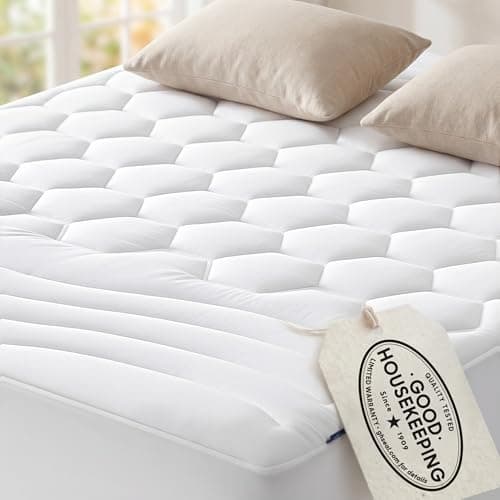 Bedsure Quilted Mattress Pad The one I'd reach for first: a quilted fitted pad with a genuinely deep pocket and a noiseless surface, from a brand whose listings stay put. It does the small job a pad is for and doesn't pretend to do more. Best for: Best overall | Best overall | |
| 2 | 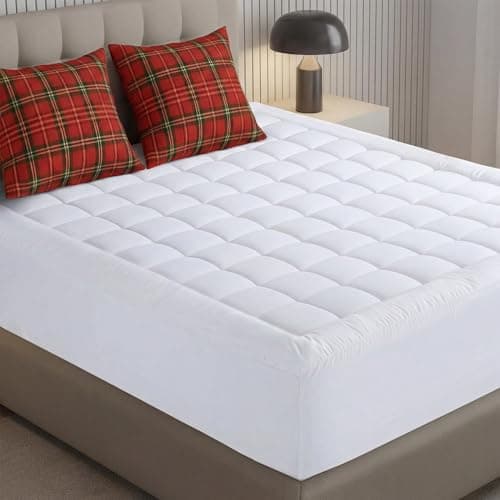 Utopia Bedding Quilted Mattress Pad About the cheapest way to add a quilted layer to your bed from a brand that reliably ships what it pictures. A fluffier feel than the Bedsure, a shallower pocket, and a price that makes owning two painless. Best for: Best budget | Best budget | Check price on Amazon → #ad — we earn a commission. |
| 3 | 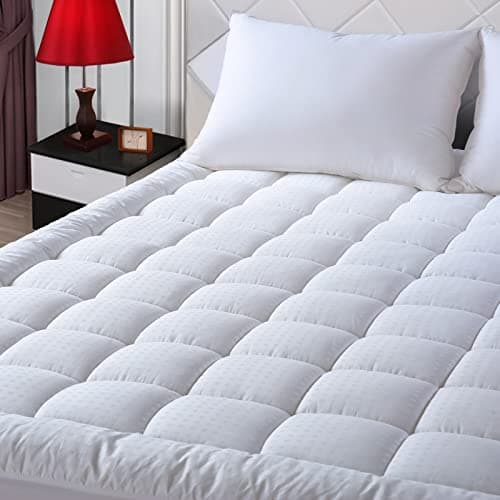 EASELAND Cotton Pillow-Top Mattress Pad The pick when you want the pad to actually feel like something — a cotton-surfaced pillow-top that adds a real cushion of softness and breathes better than the poly quilts. A pad leaning as far toward 'topper' as a pad honestly goes. Best for: Plush cotton pillow-top | Plush cotton pillow-top | $42.99 · View on Amazon Price as of September 10, 2026. #ad — we earn a commission. |
| 4 | 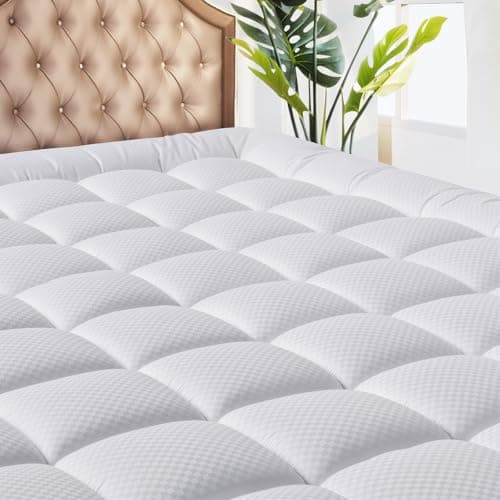 MATBEBY Cooling Quilted Mattress Pad A quilted pillow-top pad sold on cooling, with the same generous 8-to-21-inch pocket as the Bedsure. The pick if you like a padded surface but sleep warm — with the usual caveat about what a thin pad can do about heat. Best for: Best cooling | Best cooling | $31.99 · View on Amazon Price as of September 10, 2026. #ad — we earn a commission. |
| 5 | 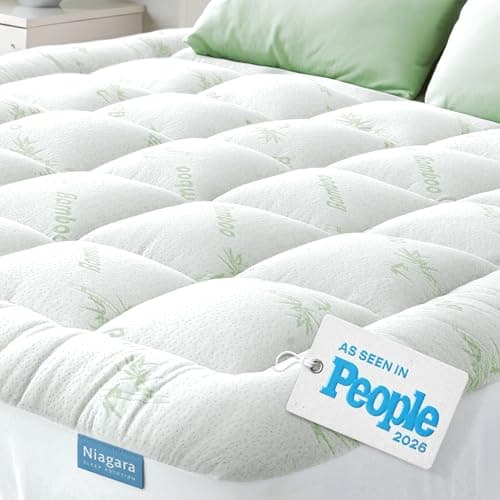 Niagara Sleep Solution Bamboo Pillow-Top Pad A rayon-from-bamboo pillow-top pad, aimed at the same warm sleeper as the MATBEBY but with a smoother, cooler-feeling surface. Soft and pleasant; the bamboo label deserves one honest footnote. Best for: Bamboo, cooling plush | Bamboo, cooling plush | $39.99 · View on Amazon Price as of September 10, 2026. #ad — we earn a commission. |
| 6 | 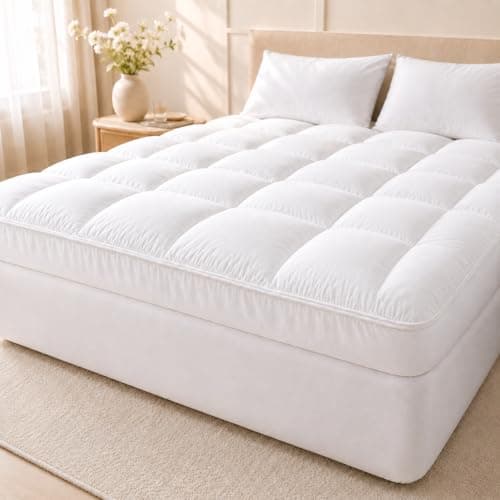 SafeRest CloudGuard (Waterproof + Padded) The one exception to the 'pads aren't waterproof' rule: an extra-padded quilted pillow-top with a genuine waterproof membrane underneath. Buy it when you want a pad's softness and a protector's barrier in a single layer. Best for: When you want padding AND waterproofing | When you want padding AND waterproofing |
A pad, a topper, and a protector are three different products
Three layers get shelved together, sold with overlapping words, and confused for one another constantly — and the confusion costs people money. So before anything else, here is the plain difference, because getting it right is worth far more than picking the perfect product in the wrong category.
A mattress padis the smallest of the three. It's a thin, quilted, fitted layer that slips over your mattress like a deep fitted sheet, adds a touch of surface softness, and — this is the entire point of it — comes off and goes in your washing machine. You wash the pad instead of trying to wash the mattress. That's the job. It is a modest job, and a good pad does it quietly and gets forgotten about, which is exactly what you want.
A topperis a different animal. It's two to four inches or more of foam or fiber that you lay on the bed to change how it feels— to firm up a bed that's too soft or, far more often, to soften one that's too hard. A topper is thick enough to genuinely alter the feel of a mattress. A pad is not, and isn't trying to be. If your real complaint is that your bed is too firm, you do not want anything on this page — you want a mattress topper, and we'll point you back there more than once, because it's the most common reason people end up disappointed by a pad.
A protector is different again. Its one job is defense: a waterproof membrane whose whole purpose is a sealed barrier against spills, sweat, accidents and stains, keeping liquid out of the mattress and your warranty intact. A protector is about keeping the bad stuff out; a pad is about adding a little good stuff — softness — on top. The overlap that muddies everything is that a pad offers a whisper of the protector's function and a whisper of the topper's, without actually being either. If what you need is real waterproofing, buy a mattress protector.
Now the mess that makes this genuinely hard to shop. Amazon listings for pads routinely stuff "topper" and "protector" into the title and the bullet points, because those are the words people search for. A quilted pad barely an inch thick gets sold as a "pillow-top topper," and a merely water-resistant one gets listed right beside genuinely waterproof protectors. So throughout this page we quote the seller's specs with an "(as listed)" tag and we don't repeat the marketing as fact. When a pad's title says "topper" or "waterproof," read the construction, not the keyword — the keyword is there for the search box, not for you.
What a pad does, and the four things worth checking
Once you accept that a pad is the small job — a washable layer of light softness — the shopping gets simple. There are really only four things that separate a pad you forget is there from one you rip off in a week.
- Fill.This is the surface feel and how warm it runs. Down-alternative and polyester quilts (the Bedsure, the Utopia) are the cheapest and fluffiest and breathe the least, so they sleep a touch warmer. A cotton surface (the EASELAND) breathes and moves moisture better and feels more natural against the skin. A rayon-from-bamboo surface (the Niagara) feels smooth and cool to the touch and wicks well, with the honest footnote that "bamboo" is the raw material and viscose is the fabric — cool and pleasant, but not a cooling technology. Pick the fiber by how warm you sleep and how much you care about the hand-feel.
- Pocket depth.The single most common pad complaint after noise, and the most avoidable. Measure your mattress from the top seam to the bottom seam — with any topper already on it — and match that to the pad's stated pocket depth. Too shallow a pocket and the pad rides up and pings off the corners in the night. Modern mattresses run deep, so the Bedsure and MATBEBY, which stretch to 21 inches, are the safe pick for a tall bed; a 16-inch pocket like the Utopia's is fine for a standard mattress but tight once a topper is stacked on.
- Quiet.A pad that crinkles when you move is a pad you will hate and remove, and that noise comes from a stiff backing. Look for one specifically sold as "noiseless" — every quilted pick here is — and a well-made pad under a normal sheet should be silent. If yours crinkles, that's a build-quality miss, not an unavoidable feature of pads.
- Washability.This is the reason a pad exists, so make sure it's genuinely machine washable and then use that. The pad is the layer catching your sweat and body oils under the sheet, so it does get dirty even though it's out of sight. The painless way to run one is to own two: one on the bed while the other's in the wash, so the mattress is never left bare.
One build distinction is worth naming, because the listings blur it. A flat quiltedpad (the Bedsure, the Utopia, the MATBEBY) stitches a thin layer of fill between two fabric faces — the softness is even and slight, and it's the classic "disappears under the sheet" pad. A pillow-toppad (the EASELAND, the Niagara) piles more fill into a plusher surface, so it feels closer to a very thin topper. Both are still pads — both are thin enough to leave the mattress's feel essentially intact — but if you want the most cushioning a pad can honestly give, look for pillow-top; if you want the pad to change as little as possible about a bed you already like, look for a flat quilt. Neither is "better"; they're aimed at different wants.
So who is a pad actually right for? Someone whose mattress is basically fine and who wants a small, washable upgrade — a slightly softer, cleaner surface between them and the bed, renewed with a spin in the machine. That's a real and worthwhile want, and if it's yours, a pad is the correct and cheapest tool. It is the wrong tool for a firm bed, a sagging bed, a cold bed or a spill risk, and each of those has a better answer elsewhere on this site.
There's a fifth thing some pads add, and it's worth being clear about: light water-resistance. Most quilted pads will slow a small spill and absorb some sweat, and that is a nice bonus — but it is a bonus, not a seal. It is not waterproofing. A real spill soaks through a standard pad to the mattress underneath. If you want a pad that genuinely blocks liquid, you need one with a stated waterproof membrane, which on this page means the SafeRest CloudGuard — the single pick here that is both a padded pad and an actual waterproof barrier. It trades some breathability and runs warmer for that seal, which is the honest cost of putting a membrane in a comfort layer. Everything else here is water-resistant at most, and we say so on each one.
A pad will not fix a bad bed
This is the part a page selling pads has every reason to skip, so here's the plainest version. A pad is a thin soft layer that follows the shape of whatever is beneath it. That fact decides both of the things it cannot do.
It cannot fix a sagging mattress. Lay a pad over a dip and the pad drapes straight into the dip — you sink into the same trench you were already sinking into, just very slightly softer on top. Sag is a failure of the mattress's support core, and support has to come from underneath, which a thin layer on top has no way to supply. A thick topper can't reverse a sag either, for exactly the same reason. There's a two-minute test for whether you have a real dip in our guide to fixing a sagging mattress, and if you do, no pad and no topper on this whole site will save you — you're looking at the bed itself. When it's time to replace it, the mattresses on Amazon worth buying is where to start.
It also cannot fix a mattress that's too firm. That's a real, solvable problem — but it's a topper's problem, not a pad's. A pad adds a gentle cushion of surface softness, enough to take a slight edge off; it does not have the two to four inches of material it would take to actually change how firm the bed feels underneath you. If the reason you're shopping is that your bed feels like a plank, buy a topperinstead and skip this page entirely. Buying a pad to soften a hard bed is the most common way people end up feeling let down by one, and it isn't the pad's fault — it was aimed at the wrong target.
One more thing a pad is the wrong tool for: warmth. A quilted pad adds a little loft, not real heat, so if what you actually want from the extra layer is to stop waking up cold, a pad won't deliver it. A heated layer like an electric blanketis the honest fix for that, and it costs less than most of the pads here. A pad is for softness and easy washing. Match the tool to the actual complaint and you'll be happy with it; expect it to do a topper's, protector's or blanket's job and you won't.
What we can't measure
We haven't slept on any of these pads, and there is no test lab behind this site. So we won't hand you a softness score, a breathability rating, or a "runs 4 degrees cooler" number we never took — anyone printing figures like that for a quilted pad bought on Amazon last week is inventing them. What a thin fabric layer feels like after a year of your specific body, your washing machine and your bed is not something anyone can measure for you in advance, and we're not going to pretend otherwise.
What we cando is read the construction and tell you which pad is wrong for which person. Poly quilts are fluffy, cheap and warmer; cotton breathes and lasts; rayon-from-bamboo feels cool and wears sooner; a waterproof membrane seals but insulates. A deep pocket grips a tall bed; a shallow one slips. "Noiseless" is the spec that decides whether you keep it. Those are things you can reason out from what a pad is made of and how it's built, which is why every pick above carries a real "skip this one if." The full method — and what we will and won't claim — is on how we review.
And the honest disclosure, because you should always know where the money goes: we earn an Amazon commission when you buy through our links, and that funds the site. It's worth being blunt on this page in particular, because a pad is one of the cheaper things we can send you to buy — and half of this page is spent telling readers to buy a topper, a protector, or a whole new mattress instead, all of which pay us more or the same for solving the problem a pad can't. We take no free products, sell no placement, and no brand sees this page before it publishes. If a pad is genuinely what you want — a little softness you can throw in the wash — the six above are the ones worth your money, and the Bedsure is where I'd start.
The picks, in full
1. Best for Best overall
Bedsure Quilted Mattress Pad
The one I'd reach for first: a quilted fitted pad with a genuinely deep pocket and a noiseless surface, from a brand whose listings stay put. It does the small job a pad is for and doesn't pretend to do more.
Key specs
- Quilted fitted mattress pad
- 8-21" deep pocket (as listed)
- Noiseless, breathable (as listed)
- Machine washable
- Queen 60x80
What's good
- The 8-to-21-inch stretch pocket is the widest fit range here, so it grips a thick modern mattress — or one with a topper already on it — instead of pinging off the corners at 3am, which is the failure that kills cheap pads
- It's sold as noiseless, and quiet is the spec that decides whether you keep a pad or tear it off — a quilted surface with no crinkle stays invisible under your sheet the way a pad should
- Bedsure is one of the more established Amazon bedding brands, so the listing is stable and the pad turns up looking like the photo — boring, and exactly what you want from a layer you'll wash every month
What's not
- The added softness is a light quilted cushion, not the plush cradle a thick pillow-top or a topper gives you — set the expectation accordingly
- A quilted poly surface breathes less than cotton or bamboo, so it runs a touch warmer than the cotton and bamboo picks below
- It's water-resistant at best, not waterproof — the quilting will slow a small spill but it is not the sealed barrier a protector is, and nothing in the listing claims otherwise
Skip this one if
You actually want a waterproof barrier. A quilted pad resists a little moisture and no more — if the job is spills, pets or kids, buy a real protector or the SafeRest CloudGuard below, which is a pad and a waterproof layer in one.
2. Best for Best budget
Utopia Bedding Quilted Mattress Pad
About the cheapest way to add a quilted layer to your bed from a brand that reliably ships what it pictures. A fluffier feel than the Bedsure, a shallower pocket, and a price that makes owning two painless.
#ad — we earn a commission.
Key specs
- Quilted fitted pad
- Deep pocket up to 16" (as listed)
- Fluffy pillow-topper feel (as listed)
- Machine washable
- Queen 60x80
What's good
- It's roughly the least you can spend on a real quilted pad rather than a no-name one, and Utopia is one of Amazon's most dependable budget bedding names
- The listing calls the feel fluffy and pillow-topper-like, so of the everyday poly pads here it adds the most obvious hit of surface softness for the money
- Cheap enough to buy two, which is the honest way to run any washable layer — one on the bed while the other's in the machine, so the mattress is never left bare
What's not
- The pocket stretches to 16 inches, which is fine for a standard mattress but tight for a thick bed or one with a topper on it — measure before you assume it fits
- Budget fill flattens sooner than denser cotton, so the fluffy feel it's sold on softens off over a year or two of washing
- Water-resistant at most, not waterproof — the quilting is a mild buffer, not a barrier, so don't buy this for spill protection
Skip this one if
Your mattress is tall or has a topper on it. A 16-inch pocket rides up and slips off a deep bed — the Bedsure's 8-to-21-inch pocket or the deep-pocket MATBEBY is the safer fit.
3. Best for Plush cotton pillow-top
EASELAND Cotton Pillow-Top Mattress Pad
The pick when you want the pad to actually feel like something — a cotton-surfaced pillow-top that adds a real cushion of softness and breathes better than the poly quilts. A pad leaning as far toward 'topper' as a pad honestly goes.
Price as of September 10, 2026. #ad — we earn a commission.
Key specs
- Cotton pillow-top pad
- Quilted (as listed)
- Machine washable
- Queen
What's good
- A cotton surface breathes and moves moisture better than a poly quilt, so it's the more comfortable choice against your skin and runs cooler than the Bedsure or Utopia
- It's built as a pillow-top rather than a flat quilt, so it adds the most genuine plushness of the everyday pads here without crossing into topper thickness
- Machine washable like the rest, so the extra cushioning doesn't cost you the one thing a pad is for — washing the layer instead of the mattress
What's not
- Cotton needs more drying time and can wrinkle or shrink slightly if you run it hot, so it's a bit more laundry fuss than a thin poly pad
- The listing is lighter on pocket-depth detail than the Bedsure and MATBEBY, so check your mattress height against the size chart before buying
- It's a pillow-top pad, not a topper — it adds a cushion, but if your bed is genuinely too firm this isn't enough material to change that; that's a topper's job
Skip this one if
You need a deep, guaranteed pocket fit or a stated cooling build. The cotton pillow-top is about plushness, not spec sheets — for a sure deep fit take the Bedsure, and for cooling take the MATBEBY.
4. Best for Best cooling
MATBEBY Cooling Quilted Mattress Pad
A quilted pillow-top pad sold on cooling, with the same generous 8-to-21-inch pocket as the Bedsure. The pick if you like a padded surface but sleep warm — with the usual caveat about what a thin pad can do about heat.
Price as of September 10, 2026. #ad — we earn a commission.
Key specs
- Cooling quilted pad
- 8-21" deep pocket (as listed)
- Pillow-top, machine washable (as listed)
- Queen 60x80
What's good
- It pairs a pillow-top feel with the widest 8-to-21-inch pocket here, so you get added softness and a firm grip on a deep mattress in one pad
- A pad is a thin layer sitting right between you and the mattress, so a cooler-sold surface here is more likely to be felt than a cooling claim buried deep inside a foam bed
- Quilted and machine washable, so the cushioning washes with everything else — no bare foam to spot-clean the way a topper leaves you
What's not
- 'Cooling' on a thin quilted pad is a surface-feel claim, not a mechanism — a pad has no coil core and can't move air the way a mattress does, so it takes the edge off rather than solving heat
- The pillow-top adds a little insulating fill back on top, which works against the cooling it's sold on — you can't have maximum plush and maximum cool in the same thin layer
- Water-resistant only, not waterproof, like the other quilted pads here
Skip this one if
Heat is your real, wake-at-3am problem rather than a bedtime preference. A thin pad can't ventilate a hot mattress — the fix is your sheets or the bed itself, not the pad.
5. Best for Bamboo, cooling plush
Niagara Sleep Solution Bamboo Pillow-Top Pad
A rayon-from-bamboo pillow-top pad, aimed at the same warm sleeper as the MATBEBY but with a smoother, cooler-feeling surface. Soft and pleasant; the bamboo label deserves one honest footnote.
Price as of September 10, 2026. #ad — we earn a commission.
Key specs
- Rayon-from-bamboo pillow-top pad
- Ultra soft, cooling (as listed)
- Machine washable
- Queen
What's good
- A rayon-from-bamboo surface feels cool and smooth to the touch and wicks moisture well, so it's a genuinely nice-feeling everyday pad for someone who runs warm
- It's built as a soft pillow-top, so it adds real cushioning as well as a cooler surface — more feel than a flat quilt
- Machine washable, so the soft surface stays serviceable with no special care beyond the usual gentle cycle
What's not
- 'Bamboo' here is a raw material, not a fabric — what you get is rayon (viscose), a regenerated fiber that's smooth and cool but not a cooling technology, and it's worth reading the spec rather than the marketing
- Viscose is a weaker fiber when wet and can pill or thin at stress points sooner than cotton over years of hot washes
- Like every pad here except the SafeRest, it's not waterproof — soft and breathable, but not a spill barrier
Skip this one if
You want the longest-lasting surface. Rayon-from-bamboo feels great but cotton outlasts it through repeated washing — if durability beats the cool hand-feel for you, the EASELAND cotton pad is the sturdier buy.
6. Best for When you want padding AND waterproofing
SafeRest CloudGuard (Waterproof + Padded)
The one exception to the 'pads aren't waterproof' rule: an extra-padded quilted pillow-top with a genuine waterproof membrane underneath. Buy it when you want a pad's softness and a protector's barrier in a single layer.
Key specs
- Waterproof quilted pillow-top pad
- Extra padded, plush (as listed)
- Fitted deep pocket (as listed)
- Machine washable
- Queen
What's good
- It's the only pick here that's actually waterproof — a real membrane backing means it does the protector's job of sealing out spills, sweat and accidents while still adding a padded top
- The extra padding gives it more of a pad's plush surface feel than a thin protector, so you're not choosing between comfort and protection — it's built to be both
- SafeRest is the most established name in the protection category, so the waterproof claim comes from the brand most bedding guides treat as the reference
What's not
- A waterproof membrane traps more heat than the breathable cotton and bamboo pads above — the barrier that stops liquid also slows airflow, so it's the warmest-sleeping pick here
- It's heavier and slower to dry than a thin quilted pad, and high dryer heat can shorten a membrane's life, so it wants a little more laundry care
- It protects the top and sides like a fitted pad, not all six sides — it's not a zippered encasement, so it does nothing about bed bugs
Skip this one if
You just want a light, breathable touch of softness and already own a protector. The waterproof layer adds warmth you don't need here — take the cotton EASELAND or the bamboo Niagara for a cooler, simpler pad.
Common questions
What's the difference between a mattress pad, a topper, and a protector?
They're three different jobs, and the words get used interchangeably in a way that costs people money. A mattress pad is the thinnest: a quilted fitted layer that slips over the mattress like a deep fitted sheet, adds a touch of surface softness, and — this is the whole point — comes off and goes in the washing machine, so you wash the pad instead of the mattress. A topper is much thicker, usually two to four inches or more of foam or fiber, and its job is to change how the bed feels: to firm up a soft bed or soften a hard one. A protector is a thin layer whose one job is a waterproof barrier that seals spills, sweat and stains out of the mattress. Most people who think they want a 'pad' to fix a hard bed actually want a topper, and most who want protection from spills want a protector. A pad is for a little added softness plus easy washing, and not much else.
Will a mattress pad make my bed softer?
A little, and only a little. A pad is a thin quilted or pillow-top layer, so it adds a gentle cushion of surface softness — enough to take a slight edge off, not enough to change the character of the bed. If your mattress feels fine and you just want a touch more plushness and an easy-wash top layer, a pad is exactly right, and the cotton or bamboo pillow-top picks add the most. But if your bed is genuinely too firm and you're hoping to fix that, a pad won't do it. Changing how firm a bed feels is a topper's job, because a topper is thick enough to actually get between you and the mattress. Buying a pad to solve a too-firm bed is the single most common way people are disappointed by one.
Are mattress pads waterproof?
Most are not — they're lightly water-resistant at best. A standard quilted pad will slow a small spill and soak up some sweat, but the quilting is not a sealed membrane, so a real spill soaks through to the mattress. This matters because Amazon listings often shelve pads right next to genuinely waterproof protectors and even put 'waterproof' or 'protector' in the title, so it's easy to buy the wrong thing. If keeping liquid out of the mattress is your actual goal — because of kids, pets, or protecting a warranty — buy a purpose-built waterproof protector, or a pad that specifically states a waterproof membrane, like the SafeRest CloudGuard on this page, which is a padded pad and a waterproof barrier in one. Read the construction, not the keyword in the title.
Can a mattress pad fix a sagging mattress?
No. A pad is a thin soft layer that follows the shape of whatever is under it, so laid over a dip it just drapes into the dip — you sink into the same trench, only slightly softer on top. Sag is a failure of the mattress's support core, and support has to come from underneath, which a thin pad has no way to provide. A thick topper can't fix a sag either, for the same reason. If your mattress has a visible dip where you sleep, the honest answer is that no surface layer will solve it and you need to address the bed itself or replace it. Don't spend money on a pad expecting it to reverse a worn-out mattress; it can't, and you'll be out the money and still sore.
How do I wash a mattress pad?
That's the pad's whole reason to exist, so it's easy on purpose. Almost every pad is machine washable: run it on a warm or cool gentle cycle with a normal amount of detergent, and skip fabric softener, which can coat the fibers and flatten the loft over time. Tumble dry on low — high heat is the main thing that wears a pad out early, and on a waterproof pad like the SafeRest it can damage the membrane. Wash it every one to two months on a bed you sleep in nightly, and immediately after any spill or accident, since it's the layer catching your sweat and body oils under the sheet. Owning two pads makes this painless: one's on the bed while the other's in the wash, so the mattress is never left uncovered.
Sources
Where the facts on this page come from. We cite other people's testing because we don't do our own — here's what that means.
Read next
- The Best Heated Mattress PadsFive heated mattress pads that warm the bed from underneath - including dual-zone models for couples - spanning a budget pick to a premium Sunbeam, with honest safety notes.
- How to Wash a Mattress Pad (by Fill Type)How to wash a mattress pad by what's inside it — cotton and poly-fiberfill in the machine, down cool and slow, wool cold and air-dried, foam spot-cleaned only. Plus the low-heat rule for any waterproof-backed pad and how often it needs doing.
- Mattress Pad vs Mattress ProtectorPad, protector, and topper are three different products people confuse. A protector is a waterproof barrier, a pad adds a little softness, a topper changes the feel — here is which one your bed needs.
- The Best Mattress ToppersSix mattress toppers worth buying, and the simple test that tells you whether a topper will fix your bed or waste your money.
- The Best Mattress ProtectorsSix mattress protectors that block liquid without sleeping hot or crinkling — fitted pads and zippered encasements — with an honest note on who each is wrong for.
- The Best Electric Blankets, Throws and Heated Mattress PadsSix honest electric-blanket, throw and heated-mattress-pad picks - chosen by shape and safety features, not lab scores - with a plain-English safety checklist for heated bedding.
- How to Fix a Sagging MattressThe honest triage for a sagging mattress: check the base first, the fixes that actually help, the myths that don't, and when a warranty — and a topper — stop being able to save it.
- The Best Mattresses on AmazonSix Amazon mattresses worth your money, with live prices and an honest note on who each one is wrong for.