Tuft & Needle vs Zinus
One is a premium Amazon hybrid with a name behind it; the other is a budget hybrid at roughly a third of the price. Both are foam over coils, so there's no foam-versus-hybrid argument to settle — just whether the premium buys you anything you'll actually feel, and what each listing is willing to promise.
We earn a commission if you buy through our links. It doesn't affect our picks — and we never take free products. How this site is funded.
Quick picks
| # | Product | Best for | Price |
|---|---|---|---|
| 1 | 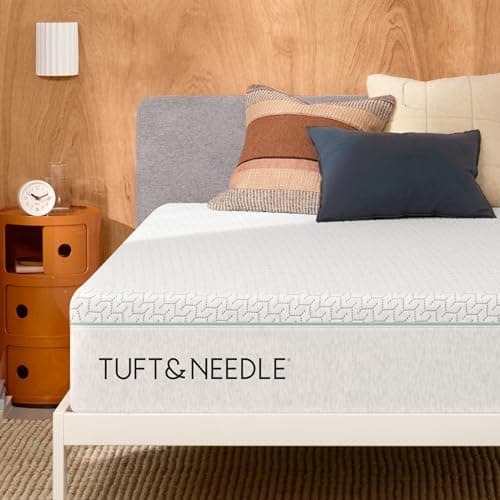 Tuft & Needle Original Hybrid A considered, balanced hybrid with a proprietary adaptive foam over individually-wrapped coils and a stated 100-night trial. The premium buys a more refined comfort layer and a longer window to change your mind — worth it for a main bed. Best for: A refined build + longer trial | A refined build + longer trial | $1,545.00 · View on Amazon Price as of September 10, 2026. #ad — we earn a commission. |
| 2 | 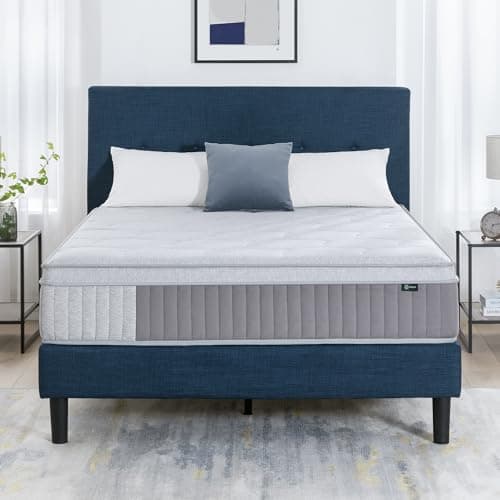 Zinus 12" Cool Support Hybrid A genuine coil core — cooling foam over pocketed coils — for a fraction of a premium hybrid's price. When the budget is the priority and you still want springs rather than a foam slab, this is the least-money way to get them. Best for: A real coil core for the least money | A real coil core for the least money | Check price on Amazon → #ad — we earn a commission. |
Why these two, and what the fight is actually about
This is the cross-shop that comes up the moment someone decides they want springs, not a foam slab, and then looks at the price tags. On one side is the Tuft & Needle Original Hybrid — a premium, brand-name Amazon hybrid. On the other is the Zinus 12" Cool Support Hybrid — a budget hybrid at roughly a third of the price. The question isn't subtle, and it isn't about construction type. It's this: is the Tuft & Needle worth paying roughly triple for?
Notice what this comparison is not. Both of these are hybrids — foam comfort layers over a coil core. So the big structural argument that usually separates two mattresses, foam versus hybrid, is simply not in play here. Nobody gets to wave "but it has coils" as a trump card, because they both do. That strips the decision down to the things a premium actually buys — a more considered comfort layer, a longer trial, a brand behind the warranty — weighed against a price gap that is large and real. Everything below is one of those.
One ground rule before we go further, because it shapes every line on this page: we don't own a lab, and we didn't test either of these beds. We're not going to tell you one "feels" firmer or scored higher on some rig, because we'd be making that up. What we can do — honestly — is line up what each seller publishes on its own listing, tell you where a listing goes quiet, and give you our read on who each bed is for. Where a listing doesn't state something, the answer is "Not stated," and we leave it there.
The comfort layer: a considered build versus a value build
In a hybrid, the coils do the support and the foam on top does the feel. The coils in these two are broadly the same idea — individually-wrapped or pocketed springs that move somewhat independently — so the real difference lives in that comfort layer, and this is where the premium earns its keep or doesn't.
Tuft & Needle's comfort layer is its own adaptive foam, the material the brand built its name on, sitting over individually-wrapped coils. That matters less because of any spec sheet and more because of what it represents: a considered, balanced build from a company whose whole reputation rides on that foam feeling right, and whose name is on the warranty if it doesn't. You're paying for a designed comfort layer, not a generic one.
The Zinus uses a cooling foam over pocketed coils — a value build that does the same structural job without a proprietary material or a design reputation behind it. That is not an insult; it's the honest trade. You get a genuine coil core and a competent foam layer for a fraction of the money, and what you give up is the more refined, brand-backed comfort layer the Tuft & Needle is selling. If the comfort layer is the part of a mattress you notice first every night — and for most people it is — that's exactly what the premium is for.
We're describing published construction here, not a feel we tested. Both are listed around the middle of the firmness range — the Tuft & Needle as a medium, the Zinus as medium firm — which our firmness guide explains is the most broadly accommodating zone, but also means neither is built for someone who knows they want a genuinely soft or genuinely firm surface.
The trial: 100 nights versus what the listing doesn't say
Here is the difference that gets overlooked and shouldn't. A mattress is one of the few things you can't judge in the store, or in an hour, or even in a night — a bed's feel is a relationship between it and your body that takes a couple of weeks to reveal. So the length of the trial window isn't a bonus term; on a mattress it's close to the most valuable thing on the listing.
Tuft & Needle states a 100-night trial. That's a real window to find out whether the medium feel actually suits you, and it's a large part of what the premium buys — the freedom to be wrong and send it back. The Zinus listing doesn't clearly state a comparable long trial, so on this page we treat its trial length as Not stated. We won't invent one on Zinus's behalf, and we won't tell you it doesn't exist — we're telling you the listing doesn't commit to it, which means you should confirm the current return terms yourself before you count on them.
This is the quiet reason the price gap is smaller than it looks on a main bed. When you buy the Tuft & Needle, part of what you're paying for is the option to change your mind risk-free for months. When you buy the Zinus, you're buying more on faith. For a bed you'll sleep on for a decade, that option is worth real money. For a guest-room bed, it largely isn't.
Price: the gap is the whole point
We don't print prices here — they move too often, and the live figures in the picks above will always be more accurate than a number typed today. But the shape of it is stable and worth stating plainly: the Zinus is far cheaper, on the order of a third of the Tuft & Needle's price. This isn't two beds a few dollars apart where you might as well get the nicer one. It's a premium hybrid versus a budget hybrid, and the gap is large enough that it should be the first thing you weigh, not the last.
The right way to think about that spend isn't "which is better" — it's "how much am I going to sleep on this?" Cost spread across a decade of nightly use makes the premium look small. Cost spread across an occasional guest makes it look enormous. Same two beds, opposite answers, and the deciding variable is you, not them.
It's also worth being honest about what the premium does notbuy. It doesn't buy a different category of mattress — the Zinus is a real hybrid with a real coil core, not a compromised imitation of one. It doesn't buy you out of the medium firmness zone, since both beds live there. And it doesn't buy a guarantee you'll prefer the feel; that's exactly why the stated trial on the Tuft & Needle carries so much of the value. Paying more here buys refinement and reassurance, not a different rulebook.
What the listings actually say, side by side
Drawn from the sellers' own Amazon listings. Where a listing doesn't state something, that's what the row says — we don't fill blanks on your behalf, and none of this is a feel we tested.
| Attribute | Tuft & Needle Original Hybrid | Zinus 12" Cool Support |
|---|---|---|
| Construction | Hybrid — foam over individually-wrapped coils | Hybrid — foam over pocketed coils |
| Feel / comfort layer | Proprietary adaptive foam; considered, balanced build | Cooling foam; value build |
| Firmness (as listed) | Medium | Medium firm |
| Trial length | 100-night (stated) | Not stated |
| Fiberglass | Fiberglass-free (as listed) | Fiberglass-free (as listed) |
| Foam certification | CertiPUR-US (as listed) | CertiPUR-US (as listed) |
| Price bracket | Premium — roughly triple | Budget — much lower |
The verdict, by who you actually are
Buy the Tuft & Needle if this is your main bed
If this is the bed you'll sleep on every night for the next decade, the premium is defensible and we'd spend it. You're getting a more considered comfort layer — the brand's own adaptive foam over individually-wrapped coils — a stated 100-night trial that lets you actually judge the bed instead of gambling, and a company standing behind the warranty. Spread across ten years of nightly use, the extra cost is small, and the trial alone closes a lot of the risk gap. This is the pick when the bed matters and you'll be on it constantly.
Buy the Zinus if the budget is the priority
Here's the specific reason to go the other way. If the point is to get a real coil core for the least possible money — a guest room, a first apartment, a kid's room, a spare bed, a stopgap — the Zinus does the structural job for roughly a third of the price. You still get pocketed coils and the airflow that comes with them, which is more than an all-foam budget bed gives you at the same money. You give up the longer trial and the more refined comfort layer, and for a bed that isn't your nightly main event, that's a trade worth making. Don't pay triple for reassurance you won't use.
A word before you decide either way
Both are listed as fiberglass-free and CertiPUR-US, so the two questions that usually haunt budget beds are answered on both listings — but the safe habit still holds: never unzip and remove the cover of any mattress, and confirm the current listing's materials and return terms before you buy, because listings change. Both sit around the middle of the firmness range, so if you already know you need something genuinely soft or genuinely firm, neither is your bed and our firmness guide will point you better. And if the budget is the whole story and you want to see the wider field rather than just these two, the cheap mattresses roundup covers the bottom of the market properly, while the best on Amazon page zooms back out to the full picture.
The picks, in full
1. Best for A refined build + longer trial
Tuft & Needle Original Hybrid
A considered, balanced hybrid with a proprietary adaptive foam over individually-wrapped coils and a stated 100-night trial. The premium buys a more refined comfort layer and a longer window to change your mind — worth it for a main bed.
Price as of September 10, 2026. #ad — we earn a commission.
Key specs
- Hybrid: adaptive foam over individually-wrapped coils
- Medium feel (as listed)
- 100-night trial (as listed)
- Fiberglass-free, CertiPUR-US (as listed)
- 10-yr limited warranty (as listed)
What's good
- The comfort layer is Tuft & Needle's own adaptive foam over individually-wrapped coils — a considered, balanced build with a brand behind it, rather than a generic foam-over-coils spec, and there's a company on the other end of the warranty
- The listing states a 100-night trial, which on a mattress is the single most valuable term there is — a bed's feel is a relationship with your body that takes weeks to judge, and a real trial window is the only honest way to find out
- Fiberglass-free and CertiPUR-US are both stated on the listing, so the fire barrier and the foam chemistry are covered without you having to dig
What's not
- It costs roughly triple the Zinus, and a hybrid this price is a real commitment rather than an impulse buy — the premium is defensible, but it is a premium
- It's sold as one medium feel, so if you already know you want something markedly firmer or softer, the fixed feel is a gamble the trial exists to cover, not to prevent
- Like any medium-feel hybrid, it's a balanced compromise — dedicated stomach sleepers who need a genuinely firm surface, or heavier sleepers who want maximum support, may find it too yielding
Skip this one if
The budget is the whole point and the bed is a guest room, a first apartment or a kid's room. If you don't need the longer trial or a more refined comfort layer, you're paying roughly triple for reassurance you won't use — buy the Zinus instead.
2. Best for A real coil core for the least money
Zinus 12" Cool Support Hybrid
A genuine coil core — cooling foam over pocketed coils — for a fraction of a premium hybrid's price. When the budget is the priority and you still want springs rather than a foam slab, this is the least-money way to get them.
#ad — we earn a commission.
Key specs
- 12" hybrid
- Medium firm (as listed)
- Cooling foam over pocketed coils
- Bed in a box
- Queen
What's good
- It's a true hybrid at a budget-foam price — pocketed coils under a cooling-foam comfort layer for roughly a third of what the Tuft & Needle costs, which is the whole reason to be on this page
- A pocketed-coil core moves air in a way a solid foam block can't, so this has a structural cooling advantage over an all-foam budget bed at the same money
- Medium firm is the least-wrong default if you don't yet know your preference, and it suits back sleepers and lighter stomach sleepers reasonably well
What's not
- The listing doesn't clearly state a long sleep-trial the way the Tuft & Needle does — so on trial length, treat it as Not stated and check the current listing before you count on being able to return it
- The comfort layer is a value cooling-foam build without a proprietary foam or a brand's design reputation behind it — it does the job, but it isn't the considered layer the premium bed is selling
- Budget hybrids soften faster than pricier builds, and the fire barrier on inexpensive beds is a fair question — confirm the current listing's materials, and never unzip and remove the cover of any budget mattress
Skip this one if
This is your main bed for the next decade and you want the longer trial and a more refined comfort layer. If you'll sleep on it every night for years, the Tuft & Needle's extra spend buys reassurance and a build you'll feel — pay up for the bed you live on.
Common questions
Is Tuft & Needle or Zinus better?
Neither is better across the board — they're built for different budgets and different jobs. Both are hybrids (foam over coils), both are fiberglass-free and CertiPUR-US as listed, so there's no foam-versus-hybrid argument between them. Tuft & Needle costs roughly triple and gives you a more considered comfort layer — its own adaptive foam over individually-wrapped coils — plus a stated 100-night trial and a brand behind the warranty. Zinus gives you a genuine pocketed-coil core for a fraction of the price. Buy the Tuft & Needle for a main bed where the trial and the refined build matter; buy the Zinus when the budget is the priority and you just want real springs for the least money.
Is Tuft & Needle worth the extra money?
For a main bed, usually yes; for a guest room, usually no. The premium buys three things you can point to: a proprietary adaptive-foam comfort layer that's a more considered build than a generic value foam, a stated 100-night trial that gives you weeks to judge a bed properly instead of guessing, and a company on the other end of the warranty. On a mattress you'll sleep on every night for a decade, those are worth real money. On a bed for occasional guests or a kid's room, they're reassurance you'll rarely use — and the Zinus gives you a real coil core for roughly a third of the price. Match the spend to how much you'll actually sleep on it.
Do Tuft & Needle and Zinus sleep hot?
Both are hybrids with a coil core, which is the good news — pocketed coils let air move through the mattress in a way a solid foam slab never can, so both have a structural head start on heat over any all-foam bed. The heat you do feel on either comes from the foam comfort layer on top, not the springs underneath. Tuft & Needle uses its adaptive foam; Zinus uses a cooling foam over its coils. Neither listing is something we tested, so we won't claim one runs cooler than the other — we're comparing what's published, and on construction both are better positioned for airflow than a foam bed. If sleeping cool is your top priority, our cooling-mattress page covers what actually moves the needle.
Are these good for side sleepers or back sleepers?
It depends on the feel each is listed at, and on your body. Tuft & Needle is listed as a medium, which is the most accommodating single feel for side sleepers — it lets the shoulder and hip sink while the coils support underneath — and it works for back sleepers too. Zinus is listed as medium firm, which leans toward back and lighter stomach sleepers and can read too firm for a dedicated side sleeper, especially a lighter one who needs more give at the shoulder. Firmness isn't fixed, though: the same bed feels firmer to a lighter person and softer to a heavier one. Our firmness guide walks through matching feel to your weight and position before you buy.
Do you make money from these links?
Yes. We earn an Amazon commission if you buy through them, and that funds the site. We don't accept free products, we don't sell placement, and no brand sees a page before it publishes. Being straight about it is the point: on this page the pricier mattress would pay us more per sale, and we're still telling you to buy the cheap Zinus if the bed is for a guest room. The recommendation follows what fits you, not what pays best — that's the whole reason the trust is worth anything.
Sources
Where the facts on this page come from. We cite other people's testing because we don't do our own — here's what that means.
Read next
- Tuft & Needle vs LucidA value coil-core hybrid against a budget all-foam bed: Tuft & Needle brings airflow, edge support and a trial; Lucid is cheaper and lets you choose your firmness. Which wins depends on whether ventilation or price matters more to you.
- Zinus vs LucidThe two default budget Amazon foam beds head to head: Zinus wins on price and a track record, Lucid on picking your own firmness. Which one you buy depends on how sure you are.
- Nectar vs ZinusBudget vs premium, same category: Nectar and Zinus are both 12-inch medium-firm all-foam beds. Nectar wins on trial and warranty for a nightly main bed; Zinus wins on price for a guest room or stopgap.
- The Best Hybrid MattressesSix hybrid mattresses judged on what makes a coil core worth it over all-foam — airflow, edge support, responsiveness — with honest cons and a skip-this-one note on every pick.
- The Best Cheap MattressesWhat a low price really buys, the fiberglass fire-barrier issue to check before you order, and six genuinely cheap mattresses with an honest note on who each is wrong for.
- The Best Mattresses on AmazonSix Amazon mattresses worth your money, with live prices and an honest note on who each one is wrong for.