The Best Pillows for Stomach Sleepers
Stomach sleeping is the one position that wants almost no pillow at all. Your face is already at mattress level, so any real loft cranks your head up and back and twists your neck sideways all night. The goal is the flattest loft you can get — and here's how to hit it.
We earn a commission if you buy through our links. It doesn't affect our picks — and we never take free products. How this site is funded.
Quick picks
| # | Product | Best for | Price |
|---|---|---|---|
| 1 | 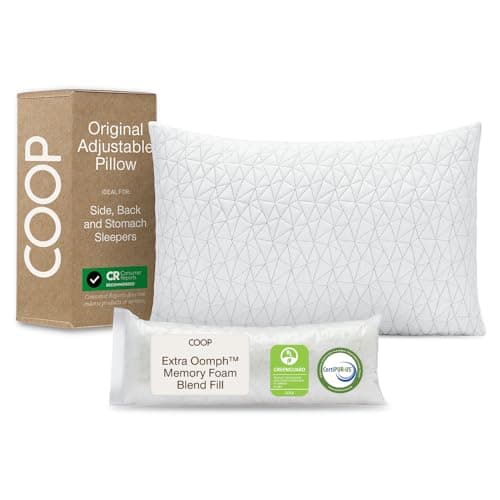 Coop Home Goods Original Adjustable The one adjustable that goes low enough. It ships over-filled, but you can pull nearly all the fill out and get it flatter than most dedicated thin pillows — which is exactly what a stomach sleeper wants. Best for: Most people (empty it out flat) | Most people (empty it out flat) | $89.00 · View on Amazon Price as of September 10, 2026. #ad — we earn a commission. |
| 2 | 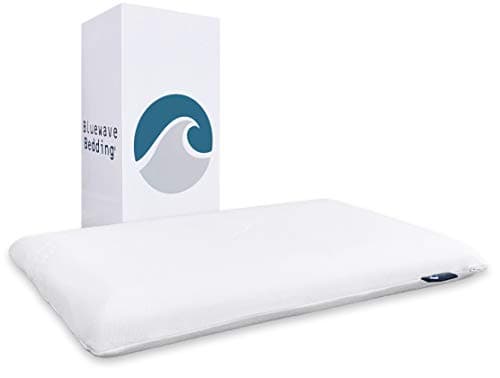 Bluewave Bedding Ultra Slim Gel Memory Foam A pillow built to be flat rather than emptied down to flat. At 2.75 inches of gel foam it's in the right range for a stomach sleeper out of the box, and a single sheet of foam holds that low loft instead of drifting. Best for: Best dedicated ultra-thin | Best dedicated ultra-thin | |
| 3 | 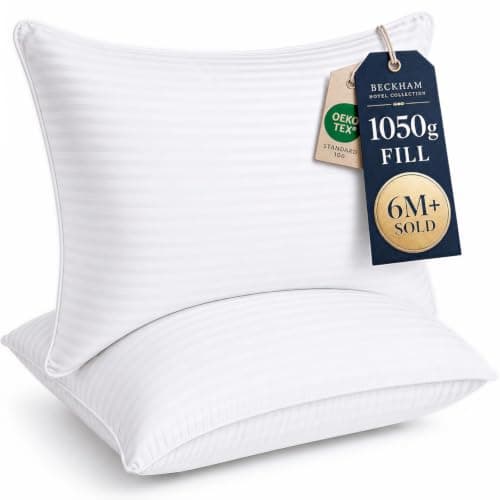 Beckham Hotel Collection Down Alternative (Set of 2) Two soft fiber pillows for less than one foam pick. Soft fill is bad at holding a set height — but a stomach sleeper wants the least height of anyone, so a pillow that squashes to almost nothing is a feature here, not a flaw. Best for: Best budget (soft, compresses flat) | Best budget (soft, compresses flat) | $59.99 · View on Amazon Price as of September 10, 2026. #ad — we earn a commission. |
| 4 | 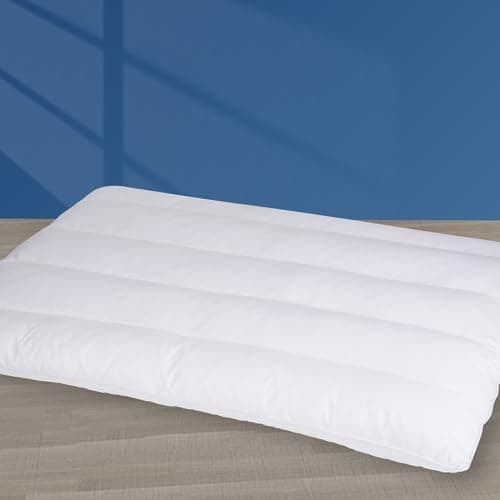 MINUPWELL Ultra Flat Thin Pillow A pillow that names the job in its title. At 2.5 inches it's about as low as a dedicated pillow goes, aimed squarely at stomach sleepers who want flat without emptying a bag of foam. Best for: Ultra-flat value | Ultra-flat value | $23.99 · View on Amazon Price as of September 10, 2026. #ad — we earn a commission. |
| 5 | 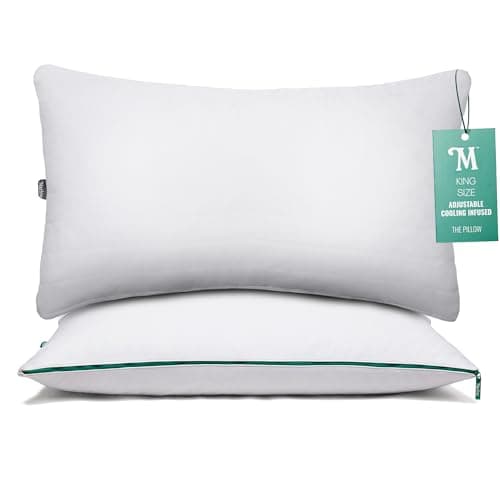 Marlow Adjustable Memory Foam Pillow Adjusts by zipping the side gussets rather than pulling out fill, so you can drop it toward its lowest setting without a bag of leftover foam. A cleaner adjustable, with a narrower range than the Coop. Best for: Adjustable, lower the loft | Adjustable, lower the loft | $85.00 · View on Amazon Price as of September 10, 2026. #ad — we earn a commission. |
| 6 | 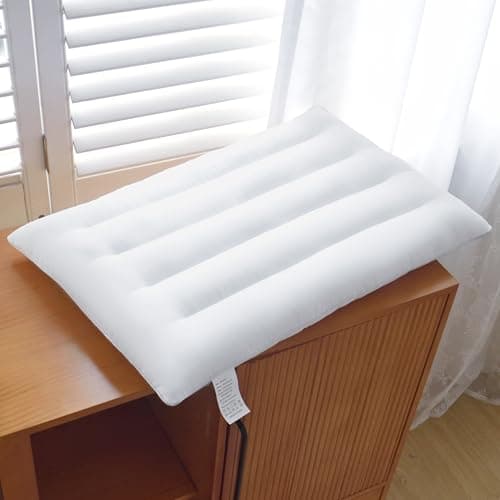 Suhedy Thin Flat Pillow The cheapest way onto a genuinely thin pillow. At 2.5 inches it's in the stomach-sleeper range, and if you're not sure flat is for you, this is the low-cost way to find out before spending more. Best for: Cheapest ultra-thin | Cheapest ultra-thin | $14.99 · View on Amazon Price as of September 10, 2026. #ad — we earn a commission. |
A stomach sleeper has no gap to fill — so the pillow's job is almost nothing
Most pillow advice drowns in preference and marketing. Stomach sleeping cuts through it faster than any other position, because the geometry is so lopsided it barely leaves room for opinion.
Lie face-down on a hard floor with no pillow. Your cheek and forehead rest almost on the surface — the front of your body is against the floor, and there is no gap under your head at all. Compare the other two positions. A side sleeper suspends the head above a gap as tall as the shoulder is thick, the biggest gap in bedding. A back sleeper has a small hollow behind the neck to fill. The stomach sleeper has neither: your face is already at mattress level, so there is nothing for a pillow to fill. That is the whole reason this position is the odd one out.
So the spec falls straight out of the geometry. A stomach sleeper needs the flattest pillow there is — or no pillow at all. Not medium. Not thin-ish. As flat as you can get. Everything else on this page is about how to hit near-zero loft and which pillows will actually let you.
A tall pillow does two bad things to a stomach sleeper at once, and it does them all night. First it lifts your head up and back: because your chest and shoulders are already flat on the mattress, any height under your head has nowhere to go, so it hinges your head backward, jams your chin away from your chest, and holds your neck in extension for hours. Second — and this part is unique to your position — your face can't press into the mattress, so your head is turned hard to one side just to breathe, and a tall pillow makes that twist worse by stacking height onto the sideways angle. Up-and-back plus twisted-sideways is the stomach sleeper's specific failure, and a firm, lofty pillow guarantees both.
This is why the usual pillow "upgrades" are traps for you. A contour pillow, with its raised ridge to support the neck, is close to the worst thing a stomach sleeper can buy — the ridge is engineered to prop the neck up, which is the exact motion you're trying to avoid. A tall, firm side-sleeper pillow is next worst. If you've been waking with a stiff, sore neck and reached for a "better," more supportive pillow, you may have been buying more of the problem. The fix runs the other way: less pillow, not more. Where a side sleeper needs height that holds and a back sleeper needs a medium that holds, you need almost nothing — and you need it soft enough to give way even further under the weight of your head.
Two honest routes to flat: a dedicated ultra-thin, or an adjustable emptied out
There are really only two reliable ways to get a pillow flat enough for a stomach sleeper, and both are on this list.
A dedicated ultra-thin pillow. The simpler route. These are built to be flat — roughly two to three inches — rather than adjusted down to it. You take one out of the bag and it is already at the height you want, with no fiddling. The trade is that the height is fixed: if 2.5 inches is still a shade tall for your frame, there is nothing to remove. But for most stomach sleepers a purpose-made thin pillow lands close enough, and it is finished on arrival — which is why two of them sit high on this page.
An adjustable, emptied out.The other route, and the more flexible one. A shredded-fill adjustable like the Coop ships over-filled — flat wrong for you as it comes — but you can unzip it and pull nearly all the fill out, which drops it flatter than almost any fixed pillow. The advantage is that you are not betting on a number: you dial the loft down a handful at a time until your head sits nearly level, then stop. The price is a bag of leftover foam and some fiddling, and even emptied it keeps a little residual loft from the cover. The zip-adjust kind, like the Marlow, is cleaner — you lower it from the outside in seconds — but its lowest setting doesn't get as flat as a fully-emptied Coop. The same adjustable-first logic runs through our best-pillows shortlist; it just points at the lowest setting here instead of a medium.
Whichever route you take, the fill matters as much as the starting height — and it matters in the opposite direction from every other position. A stomach sleeper wants a fill that gives way further under the head, one that flattens rather than pushing back. That is why soft down-alternative, the fiber that's wrong for a side sleeper because it collapses under the shoulder gap, is right for you: here, collapsing is the point. A firmer foam pad holds its low loft more consistently but presses back against your face; a soft fiber pillow squashes to almost nothing but wanders and clumps within a year or two. Neither is strictly better — it's whether you value a steady low height (foam) or the flattest possible give (fiber).
What to avoid, stated plainly: anything tall, anything firm and lofty, and any contour pillow. Those are all built around the one thing a stomach sleeper doesn't want — held height. A firm pillow that keeps its shape under your head is a feature for a side sleeper and a liability for you. If a listing brags about "supportive" loft or an "ergonomic" neck ridge, it's describing a pillow built for someone else's position.
There's no tape measure involved in getting this right. Lie on your front the way you actually sleep, on the pillow you have now, and have someone look at you from the side — or prop a phone against the headboard and film ten seconds. You're checking one thing: whether your head is roughly level with the mattress, or propped up off it with your chin hinged back and your neck craned. If it looks cranked upward, the pillow is too tall — go thinner, or pull fill out until your head settles. If it already sits nearly flat and your neck looks relaxed and continuous with your spine, you're there. That line, not an inch count, is the target — and it's the same honest test we'd run for any position, just aimed at flat instead of a set loft.
The pillow you really need is under your hips, not your head
Here's the tip most stomach-sleeper roundups skip, because it doesn't sell the pillow they're reviewing: the biggest problem with sleeping on your stomach usually isn't your neck — it's your lower back. And the cheapest fix has nothing to do with the pillow under your head.
When you lie face-down, your midsection is the heaviest part of you and it sinks into the mattress while your ribs and hips don't sink as far. That drops your belly into a hollow and arches your lower back — hyperextends it — for hours at a time. That arch, more than the neck twist, is why stomach sleepers so often wake with a sore lower back. The fix is almost free: slide a thin, flat pillow under your hips and lower pelvis. It lifts your midsection just enough to take the sag out of your lower back and flatten the arch toward neutral. A soft down-alternative pillow — the second one from that budget pair above — is ideal for the job, precisely because it squashes down into a low, gentle wedge. It is the rare piece of sleep advice that costs almost nothing and targets the real problem.
The mattress underneath does the other half of this job, and it pulls in the same direction. A soft mattress lets your midsection sink even deeper, deepening the arch; a firmer one holds your hips up closer to the level of your shoulders and keeps your spine straighter. This is the one position where firmer is almost always better, and it's why our stomach-sleeper mattress picks lean firm — a firm bed and a flat pillow are solving the same alignment problem from opposite sides. If you're not sure where your current bed falls, our firmness guide walks through what soft, medium and firm actually do under a body. Get the mattress firm and the hip pillow in place, and the flat head pillow has far less work to do.
Stomach sleeping is the hardest position — and what we can't measure
Two honest caveats close this out, and they matter more here than on any other position page.
First: stomach sleeping is genuinely the hardest position on your spine, and plenty of people shopping for a stomach-sleeper pillow would be better served changing position than buying anything. The neck twists sideways to let you breathe; the lower back arches; and no pillow fully undoes either — the flattest pillow on earth still leaves your head turned to one side. If you can train yourself onto your back or side, that does more for your spine than any purchase on this page. The classic trick is a body pillow to hug and prop against so you can't easily roll all the way onto your front. We're not going to pretend a pillow is a substitute for that, because it isn't. But we also know position is a deep habit that's hard to break, and lying awake fighting it has a real cost of its own — so if you sleep on your stomach, the sensible thing is to make it as flat and as supported as possible, which is exactly what this page is for.
And this is a page about alignment — keeping your head near level and your lower back out of a deep arch — not about diagnosing pain. If you wake with neck, shoulder or lower-back pain that persists, that's a question for a doctor or a physio, not a shopping page, and no pillow on any list is a treatment. Our neck-pain pillow page works through loft and support for aching necks, but it lands on the same rule: get the alignment right because it's the cheap, sensible thing you can control, and see a professional about anything that doesn't settle.
Second, what this page is and isn't. There's no test lab here. We haven't slept on all six, we don't own a pressure mat or a way to measure the angle of a neck, and we haven't scored anything — anyone handing you a number for a pillow they bought on Amazon last week is inventing it. What we can do is reason from the shape of the thing: a stomach sleeper's head is already at mattress level, so any real loft cranks the neck up and twists it, and the flattest, softest pillow does the least harm. That's geometry and construction, not a measurement, and we'll tell you which pillow is wrong for which sleeper rather than pretend we ranked them on a bench. The full method is on how we review, and what we refuse to claim.
The picks, in full
1. Best for Most people (empty it out flat)
Coop Home Goods Original Adjustable
The one adjustable that goes low enough. It ships over-filled, but you can pull nearly all the fill out and get it flatter than most dedicated thin pillows — which is exactly what a stomach sleeper wants.
Price as of September 10, 2026. #ad — we earn a commission.
Key specs
- Adjustable cross-cut memory foam fill
- Remove nearly all fill for a very low loft
- CertiPUR-US / GreenGuard Gold (as listed)
- Queen
What's good
- A stomach sleeper's target is the lowest loft possible, and this is the rare pillow you can take almost all the way down to it — unzip it and remove fill by the handful until it's barely there, which no fixed pillow lets you do
- The shredded, soft fill compresses further under the weight of your head, so even the little you leave in flattens rather than propping your face up and twisting your neck
- CertiPUR-US and GreenGuard Gold are both listed, and Coop runs a real returns operation, so if flat-enough still isn't flat enough you can send it back
What's not
- It arrives filled for a side sleeper, so out of the bag it's completely wrong for you until you open it and scoop most of the foam out — it's a kit, not a finished pillow
- You end up with a bag of leftover foam you'll never use, and re-emptying it after a wash is a chore
- Even fully emptied it keeps a cover and a little residual loft, so a purpose-built ultra-thin pillow can start lower still
Skip this one if
You want something that's flat straight out of the bag with no fiddling — a dedicated 2-to-3-inch pillow below is finished on arrival. Skip it too if you're really a side sleeper who only rolls onto your front sometimes; keep it full for your side and you'll be way too tall on your stomach.
2. Best for Best dedicated ultra-thin
Bluewave Bedding Ultra Slim Gel Memory Foam
A pillow built to be flat rather than emptied down to flat. At 2.75 inches of gel foam it's in the right range for a stomach sleeper out of the box, and a single sheet of foam holds that low loft instead of drifting.
Key specs
- Ultra-slim gel memory foam
- 2.75" height (as listed)
- For stomach & back sleepers (as listed)
- Standard size
What's good
- 2.75 inches as listed is squarely in the range a stomach sleeper wants — low enough that your head isn't cranked up and back, without the fiddling an adjustable needs
- A single sheet of foam holds that low height night after night instead of packing down, so the loft you buy is the loft you keep
- Gel foam runs a touch cooler than a solid block, which matters when your face is pressed flat against the pillow all night
What's not
- A fixed height is a fixed bet — if 2.75 inches is still a shade tall for your frame there's nothing to remove, unlike an emptied Coop
- The gel is a surface treatment on an insulating foam, so it takes the edge off heat rather than solving it
- It's firmer than a squashy fiber pillow, so a face pressed into it feels the foam more than it would a soft down-alternative
Skip this one if
You want to go even lower or fine-tune the height — an emptied adjustable or a soft fiber pillow gives you more room to drop below this. Skip it too if you run hot and press your whole face into the pillow; gel foam only slows the warm-up, it doesn't stop it.
3. Best for Best budget (soft, compresses flat)
Beckham Hotel Collection Down Alternative (Set of 2)
Two soft fiber pillows for less than one foam pick. Soft fill is bad at holding a set height — but a stomach sleeper wants the least height of anyone, so a pillow that squashes to almost nothing is a feature here, not a flaw.
Price as of September 10, 2026. #ad — we earn a commission.
Key specs
- Down-alternative fill
- Set of 2
- Soft support that compresses flat (as listed)
- Standard/Queen (as listed)
What's good
- A stomach sleeper wants a pillow that flattens under the weight of the head, and soft down-alternative does exactly that — it collapses to a low loft the moment you lie on it, the same trait that ruins it for a side sleeper
- The cheapest route on the page, and you get two, so both sides of the bed are handled at once or you keep a spare — and a second one is ideal for going under your hips (see below)
- Fiber is easy to fold, thin out or scrunch, so you can leave it flatter than any foam pillow will ever sit
What's not
- Soft fiber springs back unevenly and clumps within a year or two, so the flat you get on night one wanders and won't last
- There's no firm floor to how low it goes, so on a firm mattress it can flatten past useful and leave your head almost on the bed with your chin tipped up
- No real adjustment beyond scrunching, and the loft you get is whatever the fill happens to give on the night
Skip this one if
You want a low loft that holds steady for years — foam does that and soft fiber doesn't. Skip it too if you ever want firm neck support; this is deliberately soft and low, which is right for your front and wrong the moment you roll onto your side.
4. Best for Ultra-flat value
MINUPWELL Ultra Flat Thin Pillow
A pillow that names the job in its title. At 2.5 inches it's about as low as a dedicated pillow goes, aimed squarely at stomach sleepers who want flat without emptying a bag of foam.
Price as of September 10, 2026. #ad — we earn a commission.
Key specs
- Ultra-thin flat pillow
- 2.5" height (as listed)
- For stomach sleepers (as listed)
- Standard 18x26
What's good
- 2.5 inches as listed is at the flat end of the range, so your head stays close to level with the mattress instead of being propped up off it
- It's built for the position out of the box — no fill to remove, no scrunching, it arrives finished at the height you want
- A budget price for a purpose-made thin pillow, and cheaper than the adjustable route once you count the foam you'd throw away
What's not
- A fixed 2.5 inches can't be lowered further, so if you want closer to nothing you're back to an emptied adjustable or no pillow at all
- Thin pillows from smaller brands vary in firmness from batch to batch, and the listing gives you the height but little else to judge
- It's one standard-size pad, so a wider frame may want to fold or double a section, which a single thin pillow doesn't love
Skip this one if
You want adjustability or a big, plush pillow to sink into — this is a deliberately minimal pad, not that. Skip it if you're a combination sleeper who spends real time on your side; it's far too low to fill a shoulder gap.
5. Best for Adjustable, lower the loft
Marlow Adjustable Memory Foam Pillow
Adjusts by zipping the side gussets rather than pulling out fill, so you can drop it toward its lowest setting without a bag of leftover foam. A cleaner adjustable, with a narrower range than the Coop.
Price as of September 10, 2026. #ad — we earn a commission.
Key specs
- Adjustable memory foam
- Zippered gussets to lower the loft (as listed)
- Removable cover
What's good
- The side zips take loft out from the outside in seconds, so a stomach sleeper can set it near its lowest without unzipping and scooping foam onto the floor
- Adjustment is reversible, so you can drop it flat for your front and raise it again on the nights you end up on your back — which suits a combination sleeper
- Marlow is Brooklinen's pillow line, so there's a real company and returns process behind it, and the cover comes off to wash
What's not
- The zip range is narrower than emptying shredded fill by hand, so its lowest setting won't get as flat as a fully-emptied Coop or a dedicated 2.5-inch pad
- It's a premium price for the mechanism, more than the plain thin pillows on this page
- Even at its lowest it's a full foam pillow with real loft, so it's the least flat of the picks aimed at your position
Skip this one if
You want the flattest possible result — this bottoms out higher than an emptied adjustable or a dedicated ultra-thin. Skip it too if you're strictly a stomach sleeper who never changes position; you'd be paying for a range you won't use.
6. Best for Cheapest ultra-thin
Suhedy Thin Flat Pillow
The cheapest way onto a genuinely thin pillow. At 2.5 inches it's in the stomach-sleeper range, and if you're not sure flat is for you, this is the low-cost way to find out before spending more.
Price as of September 10, 2026. #ad — we earn a commission.
Key specs
- Ultra-slim flat pillow
- 2.5" height (as listed)
- For stomach & back sleepers (as listed)
What's good
- 2.5 inches as listed puts it in the right low range, so it keeps your head near level instead of propping it up like a standard pillow
- It's the cheapest pick here, which makes it the low-risk way to test whether a flat pillow settles the neck ache a tall one gives you
- Built for stomach and back sleeping, so it doubles for the nights you roll onto your back without suddenly becoming too tall
What's not
- A budget pillow from a small brand, so firmness and longevity are less predictable than the established names above
- A fixed height with no way to adjust, so if it's slightly off there's nothing to tune
- Thin, low-cost fill can pack down over time, drifting from flat toward flatter-than-useful
Skip this one if
You want a known brand, a sleep trial, or a real returns operation behind your purchase — this is a bare budget listing. Skip it too if you need any real loft; it's built to be minimal, which is wrong for side sleeping.
Common questions
What pillow is best for stomach sleepers?
The flattest one you can get, or none at all. Lying face-down, your head is already almost at mattress level, so there's no gap to fill the way there is on your side or back. Any real loft props your head up and back and twists your neck sideways all night. The best pillow is therefore a dedicated ultra-thin one — roughly two to three inches — or an adjustable pillow emptied of most of its fill, in a soft fill that flattens further under the weight of your head. Avoid tall, firm, and contour foam pillows entirely; they're built to hold height, which is the one thing you don't want.
How thick should a stomach sleeper's pillow be?
As thin as you can stand — for most stomach sleepers that means somewhere around two to three inches, and flatter is usually better than thicker. We won't hand you a single number, because the right height depends on your frame and how far your face sinks into your mattress, and any exact figure would be an average that fits almost nobody. The test isn't a tape measure: lie on your front and check that your head isn't cranked up and back with your chin jammed away from your chest. If it is, the pillow is too tall — go thinner, or take fill out until your head sits nearly level with the bed.
Can stomach sleepers use a memory foam pillow?
Only a very thin one, or an adjustable you can empty out — never a tall or contour foam pillow. The problem with most memory foam pillows for a stomach sleeper is that they're built to hold a fixed height, and holding height is exactly wrong when you want your head almost flat. A contour pillow is the worst case: its raised ridge is designed to prop the neck up, which cranks a stomach sleeper's head back all night. A low-profile foam pad of around 2.5 inches, or a shredded-fill adjustable emptied down to almost nothing, are the only foam options that make sense. Soft down-alternative that squashes flat is often the easier route.
Is it bad to sleep on your stomach?
It's the hardest position on your spine, and if you can comfortably change, many people are better off doing so. Face-down, your neck is turned sharply to one side for hours so you can breathe, and your lower back arches because your midsection sinks into the mattress while your hips don't. Neither is doing your spine any favors. That said, sleeping position is a deeply ingrained habit that's genuinely hard to change, and lying awake all night fighting it has its own cost. If you do sleep on your stomach, the sensible move is to make it as flat and as supported as possible — the thinnest pillow you can, and a firm mattress under you. If you wake with pain that persists, that's a question for a doctor or physio, not a shopping page.
Should stomach sleepers use no pillow at all?
For some people, yes — going pillowless is a legitimate option for a stomach sleeper, and it's cheaper than anything on this page. With no pillow your head stays level with the mattress, which is close to the goal. The catch is that a bare mattress is firmer and warmer against your face than most people like, and turning your head to one side on a flat surface can still strain your neck. A very thin pillow — two to three inches of soft fill — usually beats nothing, because it gives your cheek a little cushion without propping your head up. Try no pillow for a few nights; if your neck prefers a whisper of loft, a dedicated ultra-thin pillow is the next step.
Sources
Where the facts on this page come from. We cite other people's testing because we don't do our own — here's what that means.
Read next
- The Best Soft PillowsFive pillows soft and low enough to let a head settle close to the mattress instead of propping it up — plush down, soft down-alternative fiber, and an adjustable emptied out — with honest cons and a skip note on every one.
- The Best Pillows for Back SleepersSix pillows that hit the medium loft a back sleeper needs — enough to fill the neck's hollow without tipping the head forward — with honest cons on every pick.
- The Best Pillows, Picked by How You SleepSix pillows picked by sleeping position and fill type — side, back, stomach, adjustable vs fixed — with honest cons and a skip note on every one.
- The Best Pillows for Neck PainSix pillows ranked by loft and support geometry — plus a straight answer about what a pillow can and cannot do for your neck.
- The Best Mattresses for Stomach SleepersSix firm mattresses that keep a stomach sleeper's hips from sinking — the one thing that decides whether the position wrecks your lower back.
- Mattress Firmness: The 1-10 Scale, HonestlyWhat the 1-10 firmness scale actually means, why one brand's 6 is another's 7, and how your bodyweight changes the answer.