How Often Should You Replace a Comforter?
Judge the comforter, not the calendar. A good down comforter in a duvet cover can outlast a decade; a budget polyester insert that gets washed monthly is finished in two or three years. The four tests below take about a minute and are far more reliable than any number of years.
We earn a commission if you buy through our links. It doesn't affect our picks — and we never take free products. How this site is funded.
Stop counting years
There is no useful number of years for a comforter, and anyone who gives you one is guessing on your behalf. The spread is enormous and it depends on three things you already know about your own bedding: what the fill is, whether there is a cover over it, and how often it goes in a washing machine.
A down comforter with a tightly woven cotton shell, kept inside a duvet cover and washed once a year, can stay genuinely good for a decade and beyond. A budget polyester insert used bare and washed monthly can be finished in two or three. Same category, five times the difference — which is why the test has to be the object, not the calendar.
The four tests, in order
All four take about a minute between them. Fail two and it is time; fail three and it was time a while ago.
- The shake test — loft. Hold it by one edge and shake it out. A healthy comforter springs back to most of its original thickness within a few seconds. A dead one stays limp and hangs rather than puffs. Loft is warmth: the fill traps still air, and a comforter that cannot hold its height cannot hold air.
- The window test — even fill. Lay it flat and look across it with a window behind. If you can see light through thin patches, or feel lumps where the fill has piled up, the fill no longer covers the comforter. Washing redistributes it temporarily and gravity undoes that within a week. This is a structural failure, not a cleaning problem.
- The smell test — after airing. Everything smells a bit after a season. Hang it outside on a dry day for a few hours, then check. A musty or sour note that survives a thorough airing is body oil and moisture deep in the fill, and at that point washing is treating a symptom.
- The warmth test — honest comparison. Is it keeping you as warm as it used to at the same room temperature? People adapt to declining bedding slowly and compensate with a blanket without noticing they have done it. If you have added a layer over the top in the last year, that is the test answering itself.
What actually kills a comforter
| Failure | What causes it | Which fill | Recoverable? |
|---|---|---|---|
| Loss of loft | Repeated washing; compression | Both | Often, if down. Rarely, if polyester |
| Fill migration | Stitching that lets fill move within a box | Both | No |
| Fill escaping the shell | Loose weave; seams opening | Mostly down and feather | No |
| Embedded smell | Body oil and moisture in the fill | Both | Sometimes, once |
| Clumping | Washed and dried while still damp | Mostly down | Yes - re-dry it properly |
Two rows there are worth sitting with. Clumping is not death — a comforter that feels lumpy right after a wash usually just needs a much longer tumble on low heat, and that is a fixable problem. Migration is death — once the fill has left an area permanently, there is nothing to put it back.
The one habit that doubles the life of the next one
Use a duvet cover and wash the cover, not the comforter.
Every wash cycle is mechanical damage to the fill: polyester fibers crush and stay crushed, and down clusters fracture and lose the springiness that makes them worth buying. A cover takes the body oil, sweat and dirt — the actual reasons bedding needs washing — and goes in the machine weekly with the sheets. The comforter underneath then needs washing once or twice a year instead of monthly, which is the difference between a few years and a decade.
If your insert has corner tabs and your cover has ties, use them; an insert that migrates inside its cover is the one way this setup goes wrong. Do you need a duvet cover makes the full case, and how to wash a comforter covers doing it properly on the rare occasions you must.
Buy the next one so this takes longer to come around
Three specs predict comforter longevity better than price does, and all three are usually printed on the listing:
- A natural-fiber shell. Cotton lets moisture out of the fill. A polyester shell holds it in, and trapped moisture matts fill and feeds smell. This is the most underrated spec in the category.
- Baffle-box construction. Fabric walls between compartments hold loft evenly and spread stress across fabric instead of concentrating it on perforated stitch lines. The full comparison is here.
- A published fill figure. Fill power or fill weight. Not because a number guarantees quality, but because sellers who publish measurements are a different population from sellers who publish adjectives.
And buy the right warmth. The most common reason a perfectly good comforter gets replaced early is that it was always too warm for the room, so it got kicked off and supplemented until it was unusable. How to choose a comforter covers matching weight to room, and the ranked lists are on best comforters, down comforters and comforters under $50 if the replacement needs to be cheap.
A note on what we are not claiming
We have not run a multi-year longevity study on comforters, and we are not going to publish a lifespan in years as though we measured one. What this page gives you instead is the set of physical failures a comforter actually suffers, how to check for each in under a minute, and which ones can be reversed. That is the honest version of the question. Our method is on how we review.
Quick picks
| # | Product | Best for | Price |
|---|---|---|---|
| 1 | 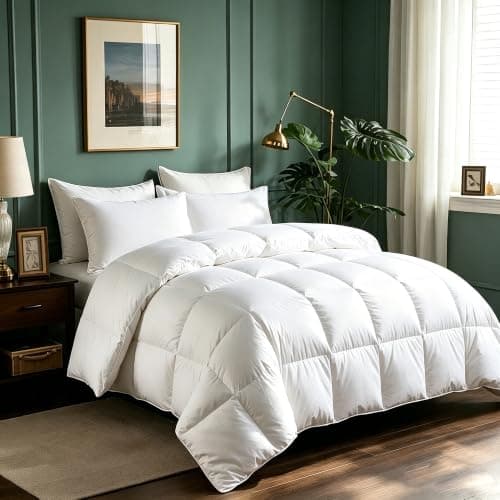 Serta Goose Feather Down Fiber Comforter A cotton-covered feather-and-down-fiber comforter at a mid-range price, with a stated warmth level - the right amount of comforter to buy when the old one has gone flat and you do not want to think about it again for years. Best for: The sensible replacement for most beds | The sensible replacement for most beds | $72.99 · View on Amazon Price as of October 18, 2026. #ad — we earn a commission. |
| 2 | 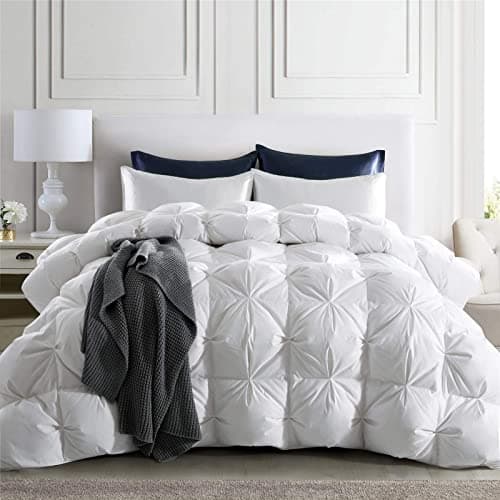 puredown 800 Fill Power Goose Down If you are tired of replacing comforters, this is the construction that stops the cycle: real down clusters at a published 800 fill power, baffle boxes to hold the loft, and a tight cotton shell to keep the fill in. Best for: Buying once and not doing this again | Buying once and not doing this again | |
| 3 | 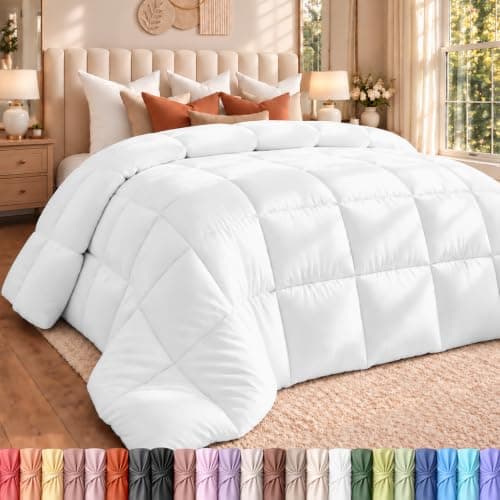 Utopia Bedding Quilted Box-Stitched Duvet Insert Buy this, put a cover over it, and wash the cover instead. It is the cheapest honest insert available and the whole point is that it almost never goes in the machine. Best for: The cheap insert half of the strategy that actually works | The cheap insert half of the strategy that actually works | $29.98 · View on Amazon Price as of October 18, 2026. #ad — we earn a commission. |
The picks, in full
1. Best for The sensible replacement for most beds
Serta Goose Feather Down Fiber Comforter
A cotton-covered feather-and-down-fiber comforter at a mid-range price, with a stated warmth level - the right amount of comforter to buy when the old one has gone flat and you do not want to think about it again for years.
Price as of October 18, 2026. #ad — we earn a commission.
Key specs
- Goose feathers and down fiber fill (as listed)
- 100% cotton cover (as listed)
- All season, medium warmth (as listed)
- Hypoallergenic (as listed)
- Queen, 90 x 90 in
What's good
- A 100% cotton cover is the single best predictor of a long life in a comforter: cotton lets moisture out of the fill instead of holding it in, and trapped moisture is what matts and degrades a fill over years
- "Medium warmth" is stated, so the seller has committed to a direction rather than hiding behind "all-season" - that makes it easier to buy the right weight and therefore easier to keep using it
- A natural fill recovers loft when it is dried properly, which a flattened polyester fill largely cannot
What's not
- "Goose feathers down fiber" is feather-forward, not pure down - read that phrase slowly, because it is written to be skimmed
- "Hypoallergenic" on a feather product describes how the feathers were washed, not the absence of what people react to
- A feather fill needs careful laundering - a commercial machine and a long low-heat dry, not a Sunday wash
Skip this one if
You want to wash it at home every month. For that, a polyester insert inside a cover is the honest build - the Utopia below plus a cover you wash weekly.
2. Best for Buying once and not doing this again
puredown 800 Fill Power Goose Down
If you are tired of replacing comforters, this is the construction that stops the cycle: real down clusters at a published 800 fill power, baffle boxes to hold the loft, and a tight cotton shell to keep the fill in.
Key specs
- 800 fill power goose down (as listed)
- 100% cotton shell, 700 thread count (as listed)
- Baffle-box, extra warmth (as listed)
- Full/Queen
What's good
- It is sold as goose down rather than "down feather fiber", so the fill is the springy clusters that recover loft after compression - the physical property that decides how long a comforter stays useful
- 800 fill power is a published, measured figure rather than the word "high", and baffle-box construction gives that fill room to reach full height instead of pinching it flat at every seam
- A tightly woven cotton shell is what stops down clusters working out through the fabric, which is the slow death of a cheap down comforter
What's not
- It is several times the price of a budget replacement, and that money buys fill quality rather than extra years of shell
- "Extra warmth" is genuinely warm - too much comforter for a heated bedroom, and an over-warm duvet gets kicked off rather than slept under
- Down laundering is a chore: commercial machine, very long low-heat dry, no softener
Skip this one if
Your bedroom is warm or you want low-maintenance bedding. A too-warm comforter gets replaced early for the wrong reason.
3. Best for The cheap insert half of the strategy that actually works
Utopia Bedding Quilted Box-Stitched Duvet Insert
Buy this, put a cover over it, and wash the cover instead. It is the cheapest honest insert available and the whole point is that it almost never goes in the machine.
Price as of October 18, 2026. #ad — we earn a commission.
Key specs
- Down alternative fill (as listed)
- Box stitched (as listed)
- Corner tabs (as listed)
- Machine washable (as listed)
- Queen, 88 x 88 in
What's good
- Inside a duvet cover, the cover takes the dirt and the wear - so the insert's fill is spared the repeated washing that flattens polyester, which is the single biggest lever on comforter lifespan
- Corner tabs tie it into a cover so the two move as one piece instead of separating in the night
- It is cheap enough that replacing it when it does finally flatten is a minor decision rather than a project
What's not
- Box stitching plus budget polyester is the combination most likely to go flat early - this is a few-years insert even treated well
- 88 x 88 inches is a true queen footprint with no extra drape, so on a tall mattress it looks short at the sides
- No stated warmth weight, so the loft is unspecified
Skip this one if
You want to use it bare on the bed. The shell is plain and the stitching utilitarian - this is built to be covered.
Common questions
How often should you replace a comforter?
When it fails the tests, not when it reaches an age. The range is genuinely wide: a good down comforter with a cotton shell, kept inside a duvet cover and rarely washed, can stay useful for a decade or more, while a budget polyester insert washed monthly can be finished in two or three years. Rather than counting, check four things - does it still loft when shaken, is the fill still evenly distributed, does it smell clean after airing, and does it still keep you warm at the temperature it used to. Two or more failures means it is done.
How can you tell if a comforter is worn out?
Lay it flat and look across it against a window. Thin patches where you can see light through the fill, and lumps where that fill has migrated to, mean the fill no longer covers the comforter evenly - and no amount of washing redistributes it permanently. Then shake it: a healthy comforter springs back to most of its original thickness within a few seconds, while a dead one stays limp. Finally, a musty smell that survives a day outdoors is moisture and body oil deep in the fill, which is the point at which washing stops helping.
Does washing a comforter shorten its life?
Yes, substantially, and this is the most actionable fact on the page. Every wash cycle mechanically batters the fill: polyester fibers crush and stay crushed, and down clusters break down and lose loft. That is why a duvet cover is the highest-return purchase in bedding - the cover absorbs the body oil, sweat and dirt and goes in the wash weekly, while the comforter underneath might need washing once or twice a year instead of monthly. Same comforter, several times the service life.
Can a flat comforter be revived?
Sometimes, if the fill is natural. Down and feather clusters clump when damp and dry unevenly; a long tumble on low heat with a few dryer balls breaks the clumps apart mechanically and often restores most of the loft. A thorough airing outdoors on a dry day helps too. What cannot be revived is polyester fiber that has been permanently crushed by washing, or any fill that has migrated into lumps and left bare patches - that is a structural failure of the comforter, not a temporary state.
Is it the comforter or the cover that needs replacing?
Check which one has failed. Covers die from fabric wear - thinning, seams opening, zippers failing, color going flat - and they are far cheaper to replace than the fill layer. Comforters die from fill failure: loss of loft, migration, embedded smell. If the fill is still lofty and even, buy a new cover and keep the comforter. People replace the expensive half surprisingly often because the cheap half is what they can see.
How long should a duvet insert last?
Longer than a bare comforter of the same quality, because the cover is taking the abuse. A budget polyester insert inside a cover that gets washed weekly might give you five years instead of two or three; a down insert treated the same way can go well beyond that. The failure mode shifts too - inserts tend to go flat rather than dirty, because the dirt never reaches them. That is the whole argument for the insert-plus-cover build rather than a single comforter you wash.
Sources
Where the facts on this page come from. We cite other people's testing because we don't do our own — here's what that means.
Read next
- The Best Down ComfortersSix down comforters worth buying, the difference between real down and the feather blends most listings hide, and how fill power, fill weight and the shell decide what you get.
- The Best Duvet InsertsSix duvet inserts worth buying, plus the two numbers sellers conflate, why baffle-box construction beats box stitching, and how to pick warmth for your room.
- The Best ComfortersSix comforters worth buying, the comforter-versus-duvet decision most buyers get backwards, and why all-season weight is usually the wrong compromise.
- When to Replace Your PillowThe honest signs a pillow is finished — lost loft, permanent lumps, waking stiff, yellowing and odor — plus rough lifespans by fill type and the fold and flat-hand tests that tell you for sure.
- How to Wash a Comforter or Duvet InsertA wash-and-dry method for comforters and duvet inserts by fill — down and feather, down-alternative and polyester — plus the machine-size problem that quietly ruins big comforters, the duvet-cover shortcut, and the honest test for when to replace instead.
- Baffle Box vs Sewn ThroughThe two ways a comforter is stitched, what each does to warmth and lifespan, and why a cheap baffle-box comforter can be a worse buy than an honest sewn-through one.
- Why Is My Down Comforter Flat?The difference between a clumped comforter and a dead one, the long low-heat dry that revives the first, and the three tests that identify the second.