The Best Mattress Toppers for Side Sleepers
A side sleeper carries their whole width on a shoulder and a hip, so those two points have to sink for the spine to run level — which makes the right topper here plush and deep, the exact opposite of the firm brief a bad back wants. A soft topper is the cheapest way to walk a slightly-too-firm bed toward that give. What it can't do is rescue a sagging one. Here are five worth buying, re-ranked plush-first.
We earn a commission if you buy through our links. It doesn't affect our picks — and we never take free products. How this site is funded.
Quick picks
| # | Product | Best for | Price |
|---|---|---|---|
| 1 | 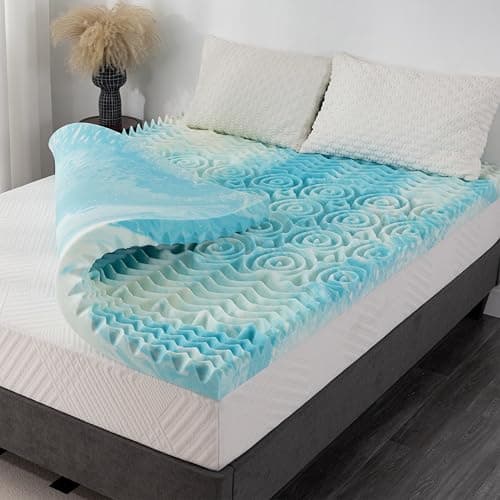 MLILY 3" Gel Memory Foam Egg Crate Topper, 5 Zones, Queen Zoned foam is cut softer under the shoulder and firmer under the hips — the exact profile a side sleeper's spine wants, so the shoulder sinks in while the waist stays held up. A real construction difference, not a printed claim. Best for: Best overall for side sleepers | Best overall for side sleepers | |
| 2 | 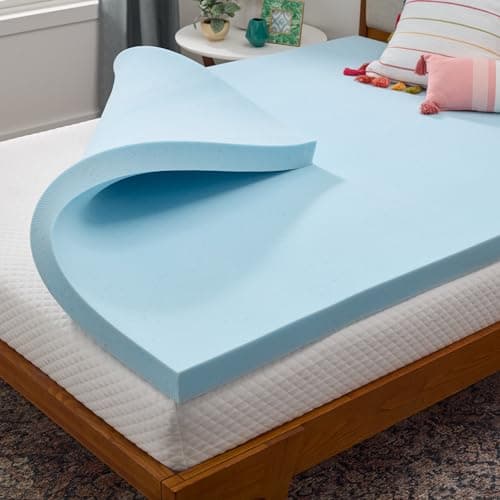 Linenspa 3" Gel Infused Memory Foam Topper, Queen The purest plush pick, and the one I'd reach for first if your bed is simply too firm under your shoulder and hip. Three inches of soft foam is the right dose of give for a lighter side sleeper to actually sink in. Best for: Plushest pressure relief | Plushest pressure relief | $89.99 · View on Amazon Price as of September 12, 2026. #ad — we earn a commission. |
| 3 | 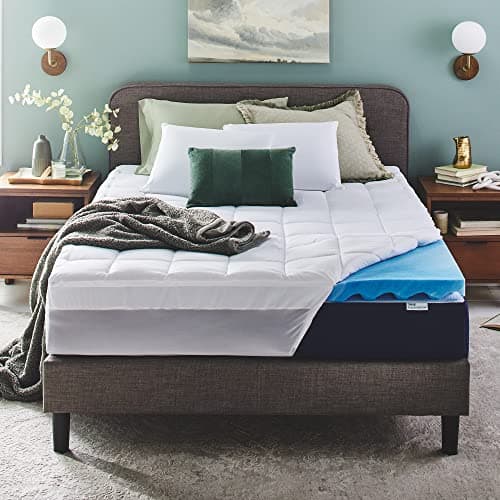 Sleep Innovations Dual Layer 4" Topper, Queen Four inches in two layers is the most cushioning here, and for a broad-shouldered side sleeper or a genuinely plank-hard bed, depth is what lets the shoulder drop far enough for the spine to level out. Best for: Broad shoulders / the deepest sink | Broad shoulders / the deepest sink | $139.99 · View on Amazon Price as of September 12, 2026. #ad — we earn a commission. |
| 4 | 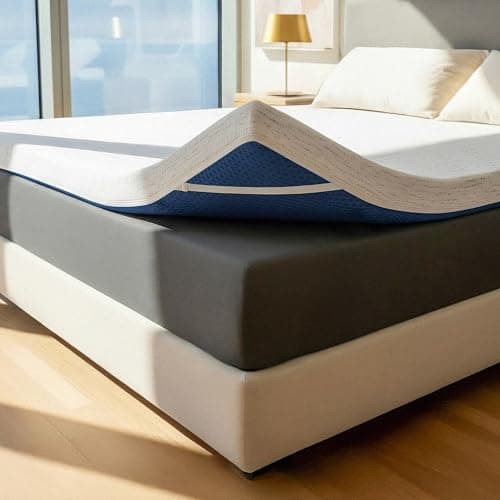 ViscoSoft 3" Select High Density Topper, Queen A plush layer that's also dense, which is the combination a heavier side sleeper needs — soft enough to let the shoulder sink, dense enough not to pack flat into a trench by year two. The removable washable cover is the other reason it's the keep-it pick. Best for: The plush pick that lasts | The plush pick that lasts | $179.95 · View on Amazon Price as of September 12, 2026. #ad — we earn a commission. |
| 5 | 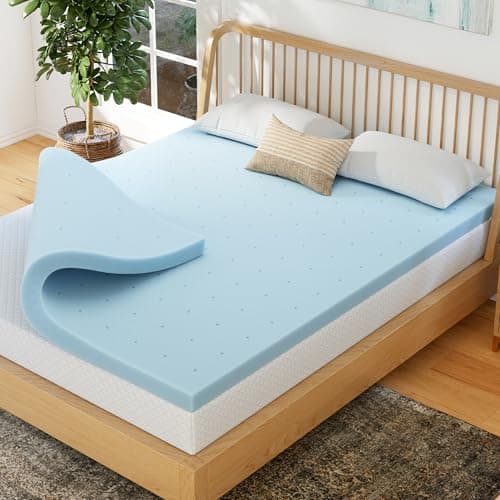 EGOHOME 3" Gel Memory Foam Topper, Queen The cheapest way to find out whether a plush layer is what your shoulder and hip actually need — before you spend properly on one, or before you accept the bed itself is the wrong feel for side sleeping. Best for: Testing the idea cheaply | Testing the idea cheaply |
A side sleeper needs the bed to give, not to hold firm
Start with where your weight lands, because it decides everything else. On your side, your body is not spread across the mattress — it's balanced on two narrow points, the shoulder and the hip, with the waist arching over the gap between them. Those two joints carry your whole width against the surface, and the waist is left bridging air. On a bed that's too firm, the shoulder and hip can't sink in, so they take the full pressure and your waist has nothing under it — your spine bows sideways instead of running straight, and you wake with a dead arm, a sore shoulder, or an ache in the hip you were lying on.
The fix is the opposite of what a firm-bed reflex tells you. A side sleeper wants the surface to give: soft enough that the shoulder and hip settle down into it, deep enough that they don't hit bottom, so the waist is supported and the spine levels out. That is exactly the reverse of the brief a bad back on a slightly-too-soft bed wants, where the job is to firm the surface up and stop the hips sinking. If your problem is a spine that needs holding rather than a shoulder that needs cushioning, you're on the wrong page — the topper picks for back pain re-rank these same products support-first. This page is about pressure relief and plushness: letting the shoulder and hip drop so the rest of you lies straight.
A plush topper is the cheapest, most direct way to buy that give. If your mattress holds you up perfectly well but its surface is simply too hard for side sleeping, you don't need a new bed — you need three or four inches of soft foam between you and the surface you already own. That's a small purchase that solves a specific, common problem, and it's what the five picks here are for.
Read this first: a topper softens a firm bed, it can't fix a sag
Before you buy anything, be sure which problem you actually have, because a topper only solves one of them. A topper is soft material laid on top of your mattress. It has no structure of its own and isn't attached to anything, so it can only change how the bed feels, never how it holds you up. It takes the shape of whatever is underneath it.
That means it can genuinely fix too firm: a flat, hard surface that presses on your shoulder and hip becomes a soft one that lets them sink, and side-sleeper pressure eases immediately. But it cannot fix worn out. If your mattress has a dip where you sleep — a hollow the surface no longer springs back from — a topper drapes straight into the dip and follows its shape. You sink into the same trench you were sinking into before, only now it's softer, and your spine holds the same bad sideways bow. You'll sag more comfortably and wake just as sore.
There's a two-minute test that tells you which you have. Strip the bed and lay something rigid and straight across it — a broom handle, a spirit level, a length of timber — then look at the gap under it along the middle third, where you actually sleep. See daylight? That's a dip, and a dip is structural failure a topper won't reach; that bed needs replacing, and a soft mattress built for side sleepers is where to look. Flat surface that's simply too hard under your shoulder? That's exactly what a plush topper is for. Our guide on making a mattress firmer or softer walks through the softening direction in more detail — a topper is the first tool in it.
Criterion one: soft, not supportive
This is the criterion that flips the usual mattress advice on its head. The received wisdom that firmer is better, and that a topper should "add support," is aimed at back and stomach sleepers and at hips that sink too far. For a side sleeper it's the wrong instinct. You are not trying to stop anything sinking — you wantthe shoulder and hip to sink, because that's how the spine gets level. So the feel you're shopping for is plush, contouring, soft: a surface that yields under a joint rather than pushing it back up.
That's why the Linenspa, which comes in one feel and that feel is plush, is the plainest expression of the brief, and why the zoned MLILY sits at the top of the page: its foam is cut softer under the shoulder and firmer under the hips, which is the single most side-sleeper-shaped thing any topper here does. The shoulder gets the deep give it needs while the heavier hip is held a touch more, so the spine stays straight instead of the whole middle dropping. It's a modest effect rather than a different category of product — don't expect to feel five distinct zones — but it's a real construction difference cut in exactly the right place for how you sleep.
The honest limit on softness is at the other end of the scale: if your bed is already soft, or you already lie there with your hips dropping too far, a plush topper pushes you further the wrong way. Softness is the right answer only when the surface under it is genuinely too firm. Match the topper to the problem, not to the label on the box.
Criterion two: thickness — three inches to sink, four for broad shoulders
Depth matters more for a side sleeper than for almost anyone else, because your shoulder has to travel. A back sleeper is nearly flat against the bed; a side sleeper's shoulder sticks out several inches and has to drop that far into the surface before the waist gets supported. A topper too thin to let it drop is a topper that does nothing — you compress straight through the foam and land on the hard bed you were trying to escape.
Two inches is that too-thin nudge and rarely worth the trip for a side sleeper. Three inches is the sweet spot for a lighter-to-average frame: enough plush foam for the shoulder and hip to genuinely settle in, while the support core stays within reach so you're not floating. If you have broad shoulders or carry more weight, though, three inches of soft foam can pack flat under the shoulder and let it bottom out — that's the case for four inches, like the dual-layer Sleep Innovations, whose extra depth gives a wider shoulder somewhere to go. The trade runs the other way for a lighter sleeper: four inches of soft foam is more give than a light frame needs, and it can leave you perched on top or let the hips settle past level. More is not automatically better. Match the depth to your build, and when you're genuinely torn, three inches is the safer default.
Criterion three: memory foam or latex for the shoulder
Every pick on this page is memory foam, and for a side sleeper that's a deliberate choice rather than a limitation of the budget end. Memory foam contours: it molds around the shoulder and hip and holds that shape for as long as you lie there, which gives the deepest, most cradling sink and the most pressure relief at exactly the two points a side sleeper needs it. If the feeling you're after is the shoulder disappearing into the bed, memory foam is what delivers it, and it's the reason the whole category exists.
Latex is the other material worth knowing about, and it relieves pressure a different way. It's buoyant — springier, more durable, and it pushes back rather than swallowing you — so it spreads the load across the shoulder rather than letting the joint drop deep into it. A side sleeper who dislikes the hugged, slow-to-recover feel of memory foam, or who runs hot, may genuinely prefer a firm-ish latex topper. The catch is real: latex costs several times what these foam toppers do and is heavy enough to need two people to handle, which is why it isn't among the value picks here. If deep contouring around the shoulder is the goal — and for most side sleepers it is — memory foam is the right and far cheaper answer. The broader mattress topper guide covers where latex earns its premium.
Density and the cover: whether the plush actually lasts
Here's the trap in shopping purely on softness: the cheapest, plushest foam is also the fastest to pack down, and a plush topper that has packed flat is no longer plush — it's a thin, tired layer that lets your shoulder press through to the bed again. Density is the spec that decides which way yours goes. Dense foam has more material in the same space, so it cushions the shoulder and still springs back; cheap foam is aerated — less material, same size — and less material is what compresses into a permanent shoulder-shaped dent. For a side sleeper, and especially a heavier one, that makes density the difference between a topper that still works in year two and one that quietly stops.
Almost no listing prints a density number. What you get is a signal: brands that care about density say so in the title, because they know it's the expensive part. That's why the ViscoSoft leads with "high density" while the budget picks lead with thickness and cooling. It stays plush longer, which is its whole argument, and it's the pick for a heavier side sleeper who'd flatten a cheaper foam. The corollary is worth saying plainly: buy the cheapest topper here, the EGOHOME, and you're buying the least dense one — it's an excellent way to test whether a plush layer fixes your bed at all, but it's the first to develop the dent. Buy it knowing what it is.
The other thing that decides whether you still like your topper in year two is the cover. Foam can't be washed — soak it and you own a wet sponge that takes a week to dry and never fully recovers — so "does the cover come off" is really the question of whether you can ever clean the thing. The ViscoSoft's removable, machine-washable cover is its quiet second argument for costing more. The budget picks are bare foam under a fitted sheet, which works, but means a deep-pocket sheet becomes non-optional once you've added three or four inches to the height of your bed — a detail that catches people out on delivery day.
One more thing worth pairing with the topper, since it fixes the other half of the same alignment problem: your pillow. A topper levels the spine from the shoulders down; the right pillow for side sleepers fills the wider gap between your ear and the mattress so your neck stays in line too. Getting one right and ignoring the other is half a fix.
What I can't measure
The honesty this site runs on: I haven't slept on all five of these, I don't run a test lab, and I own no rig to measure spinal alignment or a durometer to verify a foam's density. So I can't hand you a measured firmness number or a lab-verified sink depth, and where a spec above says "as listed," that means it's the seller's claim repeated, not confirmed. Anyone selling you precise pressure-relief scores for a stack of toppers bought online is inventing them.
What I can do is reason from construction, and for a side sleeper the construction tells you most of what matters. A plush topper lets the shoulder and hip sink where a firm one won't; zoned foam softens under the shoulder while holding the hip; three inches suits a lighter frame and four gives a broad shoulder more room; a denser foam keeps its plushness where a cheap one packs flat; and no topper, at any softness, reaches a support core that has already collapsed. None of that is a reading off a machine — it's how the materials behave, and it's more honest than a number I'd have to fabricate.
And the line that matters most: a topper is a comfort adjustment, not a treatment. It can bring a too-firm surface back toward the give a side sleeper's shoulder needs, and for a lot of people that's genuinely enough to stop waking up sore. But it changes a mattress, not a body. If a shoulder, hip, or back ache is persistent, wakes you, or doesn't track with the state of your bed, that's a conversation for a doctor, not a checkout page — no topper at any price is medical equipment.
The commission, said plainly
We earn an Amazon commission if you buy through the links here, and that funds the site. It's worth being blunt about the conflict, because this page spends a good deal of its length telling some of you to buy nothing at all — to skip the topper and replace a sagging bed instead. We make considerably more when someone buys a mattress than a topper, so that advice runs toward the more profitable outcome, which is uncomfortable but true. Where it runs the other way — the side sleeper whose bed is merely too firm, who should keep a sound mattress and spend a little on the right plush three or four inches — we'll tell you that too, because a site that can't say "buy the cheap thing" isn't worth reading on the expensive ones. No brand sees any of this before it publishes.
The picks, in full
1. Best for Best overall for side sleepers
MLILY 3" Gel Memory Foam Egg Crate Topper, 5 Zones, Queen
Zoned foam is cut softer under the shoulder and firmer under the hips — the exact profile a side sleeper's spine wants, so the shoulder sinks in while the waist stays held up. A real construction difference, not a printed claim.
Key specs
- 3" gel memory foam, 60 x 80 in queen (as listed)
- 5 zones (as listed)
- Cooling gel infusion (as listed)
- Egg-crate convoluted surface (as listed)
- CertiPUR-US certified foam (as listed)
What's good
- Zoning means the foam is physically cut to different firmnesses along its length, so the shoulder region yields deeper while the region under the hips holds — that's the shape that lets a side sleeper's shoulder drop in without the waist collapsing behind it
- Shoulders are the whole side-sleeper problem: lie on your side and one joint has to sink a long way while your waist is still held level, and a single flat slab can't do both at once — zones are an honest attempt at both
- An egg-crate surface on top of the zoning is a second, separate mechanism: the convoluted peaks and valleys leave air channels through the foam, which is the only structural thing a foam topper can do about heat
What's not
- Zoning is a modest effect, not a different category of product — a real difference from a flat slab, but don't expect to feel five distinct zones under you
- The zones are cut for an assumed body length and layout, so if you sleep diagonally or sit notably tall or short, the softer shoulder zone isn't under your shoulder — which is where its whole argument lives
- It's still three inches of gel foam, so a much heavier side sleeper can press through to the firmer bed beneath — broad or heavier shoulders get more room to sink from the deeper Sleep Innovations
Skip this one if
You sleep on your back or your front. The soft-shoulder, firm-hip zoning is cut for a side sleeper's shape; a back or stomach sleeper wants even support down the whole spine, not a shoulder-shaped soft spot — the plain Linenspa or the support-first back-pain cut serves you better.
2. Best for Plushest pressure relief
Linenspa 3" Gel Infused Memory Foam Topper, Queen
The purest plush pick, and the one I'd reach for first if your bed is simply too firm under your shoulder and hip. Three inches of soft foam is the right dose of give for a lighter side sleeper to actually sink in.
Price as of September 12, 2026. #ad — we earn a commission.
Key specs
- 3" gel-infused memory foam
- Plush feel (as listed)
- CertiPUR-US certified foam
- Queen
What's good
- Plush is exactly the feel a side sleeper wants: on your side, your shoulder and hip carry your whole width against the surface, and soft foam lets those two points settle so your spine runs level instead of bowing over a hard bed
- Linenspa has sold this line for years, so the listing is stable and the thing arrives looking like the photo, which matters when you're buying a specific soft feel to solve a specific pressure problem
- CertiPUR-US certified, one of the few checkable facts on any foam listing — it covers what the foam is made of and what it emits, and it costs the brand real money to carry
What's not
- Plush is the only feel it comes in, so if your bed is already soft and your hips are the thing sinking too far, this pushes you further in the wrong direction rather than back toward level
- The gel infusion pulls a little heat at the surface early and then saturates — you're still adding three inches of insulating foam under you, and that has one thermal direction
- No removable cover, so cleaning means spot-cleaning bare foam, and a topper that's awkward to keep clean is one you replace sooner than its foam is actually spent
Skip this one if
You're a heavier side sleeper or you have broad shoulders. Three inches of soft foam can compress flat under more weight and let your shoulder press straight through to the firm bed underneath — step up to the four-inch Sleep Innovations, or the denser ViscoSoft, so you don't bottom out.
3. Best for Broad shoulders / the deepest sink
Sleep Innovations Dual Layer 4" Topper, Queen
Four inches in two layers is the most cushioning here, and for a broad-shouldered side sleeper or a genuinely plank-hard bed, depth is what lets the shoulder drop far enough for the spine to level out.
Price as of September 12, 2026. #ad — we earn a commission.
Key specs
- 4" total, dual layer
- 3" cooling gel memory foam base
- 1" fluffy pillow-top cover
- Ultra soft support (as listed)
What's good
- Four inches in two layers is a genuinely different build — the memory foam contours while the pillow top does the initial softness — so a wide shoulder has real room to sink instead of pressing through a thin layer to the hard bed beneath
- The pillow-top layer sits between you and the memory foam, taking the edge off the deep sinking sensation that some people find too much in plain memory foam
- If your bed is genuinely plank-hard, the three-inch toppers can under-shoot for a side sleeper; this one has the depth to actually get your shoulder and hip below the surface
What's not
- Four inches of soft foam is four inches between you and the support core, so a lighter sleeper can float on top of it while a heavier one can let the hips settle past level — depth cuts both ways
- It's the heaviest layer here to handle, and getting a fitted sheet over a mattress plus four inches is a real wrestling match
- Two layers of foam is two layers of insulation — the warmest pick on the page, and nothing in the listing changes that
Skip this one if
You're a lighter side sleeper or you already like how soft your bed feels. Four inches of plush foam is more give than a light frame needs, and it can leave you floating on the surface or sinking your hips past level — the three-inch Linenspa or zoned MLILY is the more measured amount of sink.
4. Best for The plush pick that lasts
ViscoSoft 3" Select High Density Topper, Queen
A plush layer that's also dense, which is the combination a heavier side sleeper needs — soft enough to let the shoulder sink, dense enough not to pack flat into a trench by year two. The removable washable cover is the other reason it's the keep-it pick.
Price as of September 12, 2026. #ad — we earn a commission.
Key specs
- 3" high-density memory foam
- Ventilated
- Premium removable rayon cover
- Queen
What's good
- Density is what lets a plush topper stay plush: soft foam that's also dense cushions the shoulder without compressing all the way down to the bed beneath, which is exactly the failure a lighter, cheaper topper hits under a heavier side sleeper
- The cover comes off and washes, which is what keeps a topper worth sleeping on in year two rather than a soft, tired layer you've stopped trusting
- Ventilated construction means the foam is perforated rather than a solid slab, so the plush layer you added for pressure relief doesn't turn the bed into a heat trap
What's not
- It's the most expensive topper here, and past a certain point the sensible money for a side sleeper goes toward a softer mattress rather than a thick patch laid on a hard one
- "High density" is the seller's phrase — they lead with it, which is a signal worth having, but the listing gives you the claim rather than a number to check against
- Dense foam contours a touch more slowly than the softest budget foam, so the plushest instant sink belongs to the Linenspa; this trades a little of that for durability
Skip this one if
You just want to test whether a plush topper fixes a too-firm bed before you spend properly. The cheap EGOHOME answers that for a fraction of the money — come back for the ViscoSoft once you know you're keeping it.
5. Best for Testing the idea cheaply
EGOHOME 3" Gel Memory Foam Topper, Queen
The cheapest way to find out whether a plush layer is what your shoulder and hip actually need — before you spend properly on one, or before you accept the bed itself is the wrong feel for side sleeping.
Key specs
- 3" gel-infused memory foam
- Pressure relieving (as listed)
- CertiPUR-US certified foam
- Queen
What's good
- It's the least you can spend to answer the only question that matters: does adding a soft, pressure-relieving surface let your shoulder and hip settle, or is your bed the wrong shape for side sleeping altogether?
- CertiPUR-US certified, genuinely reassuring at this price — the same certification the expensive picks carry, covering what the foam is and what it emits
- The listing leads with "pressure relieving," which for once is the right property to wave at a side sleeper — three inches of plush foam for a modest outlay is enough to tell you whether a softer surface is the fix
What's not
- EGOHOME is an Amazon-native brand with no showroom and no long trading record to lean on
- No removable cover, and at the cheap end it's density that's been saved on — which is exactly the property that decides whether a plush topper stays plush or packs flat under a shoulder within a year
- The cooling language does the same light work it does on every foam listing — expect it to sleep like foam, which is to say warm
Skip this one if
You're a heavier side sleeper or you already know you're keeping the topper for years. Cheap foam is cheap because it's less dense, and less dense plush foam is the first to compress flat under a shoulder — pay up for the ViscoSoft.
Common questions
Why do side sleepers want a plush mattress topper?
Because of where your weight lands. When you lie on your side, your whole body width bears down on two narrow points — the shoulder and the hip — while your waist is left holding a curve in between. On a firm surface, those two points can't sink in, so they take the pressure and your waist bridges a gap, which pushes your spine out of a straight line and leaves you numb-armed or aching in the morning. A plush topper gives the shoulder and hip somewhere to go: they settle into the soft foam, your waist is supported instead of suspended, and your spine runs level from neck to hips. That's the opposite of the firm, dense surface a bad back on a too-soft bed wants — for a side sleeper, softness and depth are the point, not a compromise.
Memory foam or latex for a side sleeper's shoulder?
Both can work, but they cushion a shoulder in different ways and it's worth knowing which you're buying. Memory foam contours: it molds around the shoulder and hip and holds that shape, so it gives the deepest, most cradling sink and the most pressure relief at those two points — which is exactly what most side sleepers are chasing, and it's why every pick on this page is memory foam. Latex is buoyant rather than sinking: it's springier and pushes back, so it relieves pressure by spreading the load rather than by letting a joint drop deep into it. A side sleeper who dislikes the hugged, slow-to-recover feel of memory foam, or who runs hot, may prefer a firm-ish latex topper for the shoulder. The catch is that latex costs several times as much and is heavy enough to need two people, which is why the value picks here are all foam. If deep contouring around the shoulder is the goal, memory foam is the right and cheaper answer.
What thickness of topper should a side sleeper get?
Three inches suits most side sleepers; go to four if you're broad-shouldered or heavier. A side sleeper needs the topper to be deep enough that the shoulder and hip can actually sink in rather than compressing straight through to the firm bed underneath, and two inches usually isn't — you bottom out on the surface you were trying to escape. Three inches of plush foam gives a lighter-to-average frame real room to settle. If you have broad shoulders or carry more weight, three inches can still pack flat under the shoulder, and four inches (like the dual-layer pick here) gives you the extra depth to sink without hitting bottom. The trade with four inches is that a lighter side sleeper can float on top of it or let the hips settle too far, so more is not automatically better — match the depth to your build.
Will a topper fix a bed that's too firm for side sleeping?
Yes — that's the one job a topper does genuinely well. If your mattress supports you fine but its surface is simply too hard for your shoulder and hip to sink into, a plush topper is the cheapest and most direct fix there is: three or four inches of soft foam softens the surface so those pressure points settle and your spine levels out. What a topper can't fix is a sagging, worn-out mattress. A topper is soft material laid on top, so it takes the shape of whatever is under it — lay one over a dip and it drapes into the dip, and you sink into the same trench, just on a softer surface. If you can lay a straightedge across your bed and see daylight under the middle where you sleep, that mattress needs replacing, not a topper. A topper softens a firm bed; it can't rebuild a collapsed core.
Do you earn a commission on these recommendations?
Yes — we earn an Amazon commission if you buy through our links, and that funds the site. It's worth being blunt about the conflict, because we make considerably more when someone replaces a mattress than when they buy a topper. That cuts both ways here: we tell the side sleeper with a merely-too-firm bed to keep the mattress and spend a little on the right plush foam, and we tell the reader with a sagging bed to replace it — the more profitable call for us, but also the honest one, because no topper reaches a collapsed core. We take no free products, sell no placement, and no brand sees this page before it publishes.
Sources
Where the facts on this page come from. We cite other people's testing because we don't do our own — here's what that means.
Read next
- The Best Cooling Mattress ToppersFive gel and ventilated mattress toppers that take the edge off a warm bed, chosen honestly - plus the crucial caveat that a topper is a surface tweak, not a cure, and when a cooling mattress or cooling sheets is the better buy.
- The Best Mattress ToppersSix mattress toppers worth buying, and the simple test that tells you whether a topper will fix your bed or waste your money.
- The Best Mattress Toppers for Back PainSix mattress toppers that can ease back pain by matching the surface to your problem — softening a too-firm bed or firming a slightly-too-soft one — plus the honest limit that no topper fixes a sagging mattress, with cons and a skip note on every pick.
- The Best Mattresses for Side SleepersSix mattresses with comfort layers deep enough to let a shoulder and hip sink — the actual problem side sleepers are trying to solve.
- The Best Pillows for Side SleepersSix pillows tall and firm enough to fill a side sleeper's shoulder gap without collapsing into it by midnight.
- How to Choose a Mattress TopperChoose a topper by spec: name the problem first, then match material, thickness, and density to it — with the honest caveat that a topper changes feel, not support.
- How to Make a Mattress Firmer or SofterHow to soften or firm up a mattress that feels off — toppers, bases, temperature, and the honest limits of each fix before you're better off using the sleep trial.