The Best Luxury Mattresses
Moving up a price tier can buy real things: a better coil core, a deeper comfort layer, a year-long trial, a stated warranty, and a brand with a returns department you can actually phone. It can also buy nothing but a word on the box. Six premium beds worth the money for the right buyer, and the honest reason a luxury price never guarantees a better night for your body.
We earn a commission if you buy through our links. It doesn't affect our picks — and we never take free products. How this site is funded.
Quick picks
| # | Product | Best for | Price |
|---|---|---|---|
| 1 | Nectar Ultra 15" Hybrid The deepest hybrid here, and the one where the premium buys something you can point to: a thick comfort layer over a coil core, plus the strongest terms on the page — a stated 1-year trial and a forever warranty. The upgrade for a side sleeper or a hot sleeper who wants more cradle without giving up the airflow. Best for: Best overall luxury | Best overall luxury | Check price on Amazon → #ad — we earn a commission. |
| 2 | 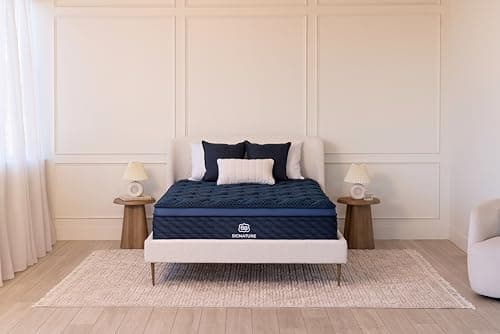 Brooklyn Bedding Signature Hybrid 13" Medium The luxury move here isn't a plusher slab — it's the ability to order the exact feel your body wants. A 13-inch coil-core hybrid that Brooklyn Bedding lists in soft, medium and firm, built in-house rather than white-labeled. Premium spent on getting the firmness right the first time instead of gambling on an average. Best for: Best customizable luxury | Best customizable luxury | $1,098.75 · View on Amazon Price as of September 12, 2026. #ad — we earn a commission. |
| 3 | 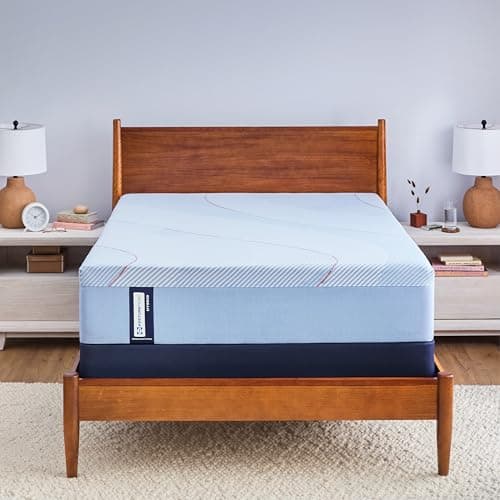 Sealy Posturepedic Fayette 12" Medium Hybrid The luxury of a name your grandparents could place, and a manufacturer that was building beds long before the internet sold them. A real coil-core hybrid with a conventional tight-top feel and a returns operation with decades behind it — the premium pick when brand backing and a bed you can lie on in a store matter more than a printed trial. Best for: Best legacy / showroom name | Best legacy / showroom name | $999.00 · View on Amazon Price as of September 12, 2026. #ad — we earn a commission. |
| 4 | 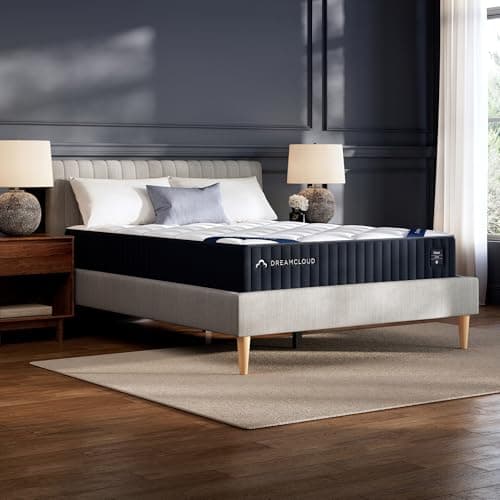 DreamCloud 12" Hybrid The bed that proves a luxury feel doesn't need the top-of-the-range price. A medium-firm coil-core hybrid from an established brand with the longest trial on the page — 365 nights — and a returns operation behind it. The sensible way up a tier when you want premium terms without paying flagship money. Best for: Best accessible luxury | Best accessible luxury | $699.00 · View on Amazon Price as of September 12, 2026. #ad — we earn a commission. |
| 5 | 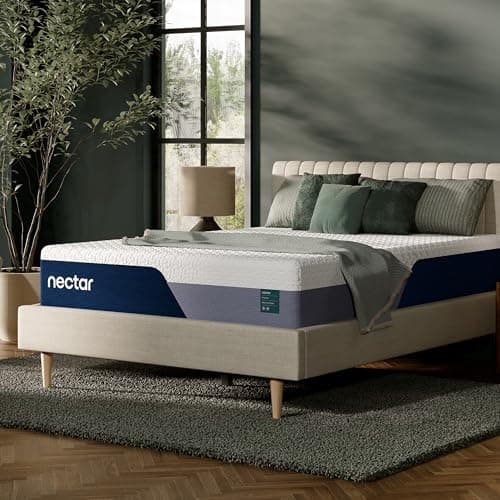 Nectar Premier 13" Queen The luxury foam pick, for people who want to sink into a bed rather than lie on top of one. Thirteen inches of contouring memory foam — a deeper build than almost anything sold in a box — with the same 365-night trial and forever warranty as the hybrids. Premium spent on depth and a deep, quiet hug, not on springs. Best for: Best premium all-foam | Best premium all-foam | |
| 6 | 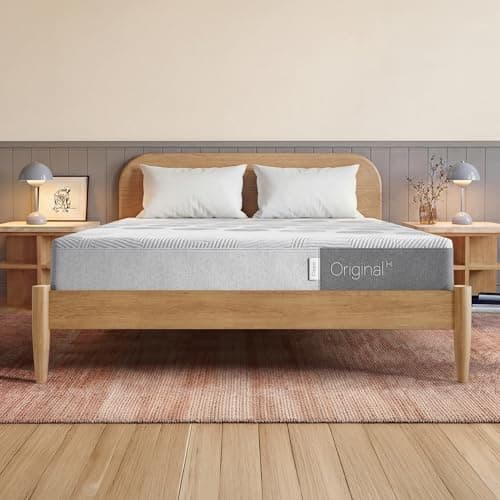 Casper Original Hybrid Still listed on Amazon, but no longer the bed Casper sells: the current lineup runs The One, Dream and Snow, with the Dream in this model's place. The engineering is real — zoned support foam over a coil core, firmer under the hips and softer under the shoulders, with a 100-night trial and CertiPUR-US stated on the listing — so it's a fair buy if a discontinued generation clearing out is what you want. It is not where to start if you want the bed Casper is currently building. Best for: Best outgoing-generation buy | Best outgoing-generation buy | $1,495.00 · View on Amazon Price as of September 12, 2026. #ad — we earn a commission. |
What "luxury" is supposed to mean, and what it often doesn't
There are two completely different things sold under the word "luxury," and telling them apart is the whole job of this page. The first is real: money spent on a better coil core, a deeper and denser comfort layer, a longer trial, a warranty the maker only writes because it expects the bed to last, and a company with a returns department you can actually reach. Those cost more to build and back, so a higher price is doing honest work. The second is a nameplate — a word like "luxury," "premium" or "orthopedic" typed onto a listing by a marketer, or a heritage brand charging for familiarity rather than a better night. Both wear the same adjective, and only one is worth your money.
This is the upgrade-buyer's page, so it assumes you've already decided you might spend more, and it tries to tell you what that extra spend actually gets you. If you're not sure you want to spend up at all, start on our overall best mattresses list, which runs from budget to premium and is honest about when the cheaper bed is the right call. This page is the narrower question: when the premium is real, and when it's a word.
What premium money actually buys
Read past the adjectives on a luxury listing and the price is usually paying for some combination of four concrete things. Get these straight and you can look at any premium bed and say what your money is buying.
- A better support core and a deeper comfort layer.The coil core is the one construction choice you can't retrofit later, and a premium bed tends to put a better one under a thicker, denser foam layer. Depth isn't a vanity spec: a 13-inch build like the Nectar Premier gives a shoulder and hip more room to sink before the support core stops them, which is exactly what a side sleeper is paying for. A coil core also ventilates and holds the edge in a way a foam slab can't — the reasons our best hybrid roundup leads with spring beds.
- A longer trial.This is the most valuable thing money buys on a mattress, and it's the one people undervalue. A bed can feel perfect for a week and wrong by the second month, and you cannot run that test in a shop. A stated 365-night or year-long trial — the DreamCloud and both Nectar picks here — covers a full change of seasons and lets you correct a wrong guess without eating the cost. Where a listing states a shorter trial, or none at all, that's a real cost, not a neutral blank.
- A warranty a brand actually stands behind.A "forever" warranty is a durability bet the maker is putting in writing — the kind of term a company only offers when its returns data says it can. It's worth more from a brand with a real operation behind it than from an anonymous listing, which is why brand backing is part of what the premium buys. Our best for back pain roundup weighs these same terms when support is the priority.
- Engineering or a choice you can't get cheaper. Sometimes the premium buys a genuine design decision: the Casper's zoned support, firmer under the hips and softer under the shoulders, or Brooklyn Bedding letting you order the same bed in soft, medium or firm. Those are real features a budget bed doesn't attempt. The test is whether you'll use them — zoning only helps if your hips land on the firmer band, and a firmness choice only helps if you can choose it correctly.
Notice what isn't on that list: infusion buzzwords, "luxury" in a product title, and the word "orthopedic," which has no regulated meaning on a mattress. Green tea, copper and charcoal are odor-control claims, not sleep features, and a heritage name is worth paying for only if the returns operation behind it genuinely reassures you — not because the logo is old.
It's worth being blunt about diminishing returns, because that's the trap on this tier. The market wants you to believe value climbs smoothly with price; it doesn't. It climbs in steps, and the steps shrink as you go up. The step from a no-name foam slab to a coil core with a stated trial and a real brand behind it is enormous — that's the jump worth making. The step from a good mid-tier bed to a flagship buys depth, a nicer cover, zoning and a longer warranty: all real, all incremental, and rarely worth twice the money to a sleeper who can't say which of them they actually need. Work out which step you're paying for before you pay for it, and the premium stops being a leap of faith.
The honest counterweight: price is not comfort
Here is the caveat that has to sit right next to the recommendation, because without it the whole page is half a lie. A premium price does not guarantee a better night's sleep for your body. Firmness is not a property you can buy more of — it's a relationship between the bed and the body pressing on it, and the second half of that equation isn't in the listing at any price. The same luxury bed reads firmer to a lighter person and softer to a heavier one, and a beautifully built premium mattress tuned to the wrong feel for your weight and sleeping position will sleep worse for you than a mid-priced bed with the right feel.
That's not a reason to avoid spending up. It's a reason to spend up in the right order. Match the feel to your body first — our firmness guide maps weight and position onto the scale, and the best medium-firm roundup covers the feel most people are steered toward — and only then decide how far up the tier your budget justifies. A luxury bed in the right feel is a genuine upgrade. A luxury bed in the wrong feel is an expensive way to sleep badly, which is precisely why every pick above carries a trial-length note and a plain statement of who should skip it. On a premium bed, the return policy is doing as much work as the foam.
How the six sort out
Put the criteria together and the picks arrange themselves by what you actually want the premium to buy. Want the best all-round upgrade, where the money buys real depth over a coil core and the strongest terms on the page? The Nectar Ultra hybrid. Want to order the exact feel your body needs rather than accept an average? The Brooklyn Bedding Signature, in soft, medium or firm. Want a legacy name and a returns operation with a century behind it? The Sealy. Want premium terms — the longest trial here — without flagship money? The DreamCloud, the accessible way up a tier. Want to sink into a deep, quiet foam hug rather than lie on springs? The all-foam Nectar Premier. And if you specifically want a discontinued generation at whatever the sellers are clearing it for, the Casper Original Hybrid is that bed — the zoned engineering is real, but Casper itself has replaced it with the Dream, so buy it for the discount or don't buy it at all. Six premium beds, six different reasons the price is justified — or not, for you.
Two of these decisions turn on the same fork every mattress page comes back to: coils or foam. Five of the six here are hybrids because a coil core is the upgrade most premium buyers actually benefit from — it ventilates, holds the edge, and lasts. The all-foam Nectar Premier is here for the buyer who specifically wants the deep, motion-isolating hug foam does best, and if you're choosing between the two constructions, our memory foam versus hybrid guide and the head-to-head Brooklyn Bedding versus Nectar comparison lay out the trade-off in full.
Who should skip the luxury tier entirely
A roundup that only tells you to spend more isn't worth much, so here's the honest other side: several people should not be on this page at all.
Anyone buying a bed they won't use every night.A guest room, a college dorm, a stopgap while you save — a forever warranty and a 13-inch comfort layer are wasted on a bed you'll replace in a couple of years or sleep on twice a month. The premium terms are the whole point of a luxury bed, and if you won't be around long enough to collect on them, most of what you're paying for goes unused. A budget pick from the overall best list is the smarter money for occasional use.
Anyone who hasn't settled their feel yet.If you don't know whether you want soft or firm, foam or coils, spending up first is backwards — you're buying premium construction around a feel you might return. Work out the feel on a mid-priced bed with a long trial, learn what your body wants, and then, if you still want to, spend up on that feel done better. Buying luxury to figure out what you like is the most expensive way to run the experiment.
What I can't measure
The honesty this site runs on: I haven't slept on all six of these, I don't run a test lab, and I own no rig to measure firmness, coil quality or how a comfort layer holds up over years. So I can't hand you a measured firmness number or a durability figure, and where a spec above says "as listed," that means it's the seller's claim repeated, not confirmed. Nobody can honestly hand you a precise "this luxury bed is 22% better" for a mattress bought online last week — that number would be invented, and a premium price makes fabricated precision more tempting, not less.
What I can do is reason from construction and from the terms the seller publishes, and for the luxury question the terms tell you most of what matters. A coil core ventilates and supports; more comfort-layer depth gives a joint more room to sink; a longer stated trial protects you where a bed is slow to reveal its faults; a forever warranty is a durability bet in writing; a real returns operation is worth something in year seven. Those are structural facts and printed promises, not readings I took off a machine — and they're more honest than a score I'd have to make up. That's why every card above pairs the reasoning with a plain note on who should skip it, and why the bed I'd point most upgraders to first isn't automatically the priciest.
And since it's fair to ask: I earn an Amazon commission if you buy through the links here, and that's what funds the site. On a page of premium beds the dearer ones would pay slightly more, which is exactly why the counterweight above is stated so plainly — a luxury price never guarantees a better night for your body, the accessible DreamCloud earns its place as much as the flagships, and when the honest answer is a mid-priced bed with the right feel over an expensive one with the wrong feel, that's the answer. If a bad back rather than an upgrade is what's driving the search, our back-pain page judges these trade-offs on support first; and if you share the bed, the best mattresses for couples page weighs motion and edge support the way a shared premium bed should be judged.
The picks, in full
1. Best for Best overall luxury
Nectar Ultra 15" Hybrid
The deepest hybrid here, and the one where the premium buys something you can point to: a thick comfort layer over a coil core, plus the strongest terms on the page — a stated 1-year trial and a forever warranty. The upgrade for a side sleeper or a hot sleeper who wants more cradle without giving up the airflow.
#ad — we earn a commission.
Key specs
- 15" hybrid
- Medium firm (as listed)
- Memory foam over individually-wrapped coils
- 1-year trial (as listed)
- Forever warranty (Nectar's published term)
What's good
- At 15 inches it carries the most comfort-layer depth on this page, so a shoulder and hip get real room to sink while the coils underneath keep air moving — the rare premium bed that serves side sleeping and cooling at the same time
- The listing states a full 1-year trial and Nectar publishes a forever warranty for the Ultra, the strongest terms here — the durability bet a brand only makes when it expects the build to hold up
- The extra foam over the coils solves the usual hybrid complaint — that the springs feel too present for a side sleeper — without giving up the ventilated core, which is exactly the kind of thing a premium build spends its money on
What's not
- It's among the priciest picks on the page, and the depth and terms are what the premium is buying — pay for them only if you'll use the cradle
- Fifteen inches with a plush top is a lot of bed to move, and it may sit tall enough to need deep-pocket sheets you'll have to buy separately
- The deeper comfort layer leans softer, so it's the wrong direction for a stomach sleeper or anyone who wants a firm platform
Skip this one if
You sleep on your stomach or want a firm, on-top-of-the-bed feel. The depth and cradle here are tuned for side sleepers, so a stomach or strict back sleeper pays a premium for softness they don't want — the tight-top Sealy or the medium-firm DreamCloud suits you better.
2. Best for Best customizable luxury
Brooklyn Bedding Signature Hybrid 13" Medium
The luxury move here isn't a plusher slab — it's the ability to order the exact feel your body wants. A 13-inch coil-core hybrid that Brooklyn Bedding lists in soft, medium and firm, built in-house rather than white-labeled. Premium spent on getting the firmness right the first time instead of gambling on an average.
Price as of September 12, 2026. #ad — we earn a commission.
Key specs
- 13" hybrid
- Medium feel (as listed)
- CertiPUR-US certified foam
- Also listed in soft and firm feels
What's good
- Firmness choice is a genuine premium feature: Brooklyn Bedding lists this build in soft, medium and firm (as listed), so you match the feel to your weight and position rather than accept the one-size average a boxed bed ships — the closest thing on this page to a bespoke fit
- A 13-inch coil-core hybrid gives you real depth over a ventilated spring core, so a shoulder gets room to sink while the coils keep air moving and hold the edge — the deep, supportive build the price is buying
- Brooklyn Bedding manufactures its own mattresses rather than reselling a generic slab, and the foam is CertiPUR-US certified (as listed), so the firmness options are real builds and the foam chemistry is answered in writing
What's not
- The listing doesn't state a trial or warranty length in its title, which is exactly the reassurance you want when you're choosing a firmness blind — you're picking soft, medium or firm without lying on any of them
- It's usually the priciest way into this comparison, and a coil core carries a partner's movement more than the all-foam picks here
- Choosing the feel only helps if you can choose it correctly — get the firmness wrong and a premium bed with no stated trial is an expensive mistake to reverse
Skip this one if
You have no idea what firmness you want and would rather lean on a long trial than a spec sheet, or a restless partner is the problem you're solving. A firmness choice only helps if you can make it, and coils carry motion — a hesitant or motion-sensitive buyer is safer with the DreamCloud's stated year or an all-foam Nectar below.
3. Best for Best legacy / showroom name
Sealy Posturepedic Fayette 12" Medium Hybrid
The luxury of a name your grandparents could place, and a manufacturer that was building beds long before the internet sold them. A real coil-core hybrid with a conventional tight-top feel and a returns operation with decades behind it — the premium pick when brand backing and a bed you can lie on in a store matter more than a printed trial.
Price as of September 12, 2026. #ad — we earn a commission.
Key specs
- 12" hybrid
- Medium (as listed)
- Tight top
- Encased coils
What's good
- Sealy is a mainstream manufacturer with a trading history stretching back to the 1800s and a warranty operation that predates bed-in-a-box brands by decades — real brand backing you can actually reach in year seven, which is a legitimate thing to pay up for
- It's a genuine hybrid: encased coils under a tight top (as listed), so it ventilates instead of insulating, firms up the perimeter, and resists your hips mechanically — the coil-core advantages are here, not just the heritage
- The tight top puts less soft material between you and the coils, so the support system does more of the work — a traditional, even feel with nothing engineered to get used to, which is exactly what some upgraders want from a premium bed
What's not
- No trial length or warranty term is stated in the listing title — a striking gap next to the year-long boxed brands here, on a bed you can't judge without sleeping on it for weeks
- "Posturepedic" is a Sealy trademark from the 1950s, not a specification — it tells you nothing measurable about this particular bed, and some of the premium is simply the name
- The listing shows a made-to-order dispatch rather than a next-day box, so you wait for it, and you pay something for the pedigree as you do with any legacy brand
Skip this one if
You want the safety net of a stated home trial before you commit, or a plush deep-contouring hug. This listing publishes neither a trial nor a soft, deep build — if a written return window matters most, the DreamCloud's stated year is the safer premium buy, and a side sleeper wants the Nectar Premier's depth instead.
4. Best for Best accessible luxury
DreamCloud 12" Hybrid
The bed that proves a luxury feel doesn't need the top-of-the-range price. A medium-firm coil-core hybrid from an established brand with the longest trial on the page — 365 nights — and a returns operation behind it. The sensible way up a tier when you want premium terms without paying flagship money.
Price as of September 12, 2026. #ad — we earn a commission.
Key specs
- 12" hybrid
- Memory foam over an innerspring coil core
- 365-night trial (as listed)
- Medium firm feel
- Queen
What's good
- The 365-night trial stated on the listing is the longest here, and a trial is the single most valuable thing money buys on a mattress you can't lie on first — it lets you learn whether the bed suits your body and still send it back if it doesn't
- A medium-firm foam layer over a full coil core is the feel and build the widest range of sleepers get along with, so it's the premium pick that takes the biggest risk off the table rather than betting on a specialist feel
- DreamCloud is an established brand with a real returns department standing behind the year-long trial, so the terms are backed by a company you can actually reach — the brand backing that separates a genuine upgrade from a nameplate
What's not
- Medium firm is deliberately unspecialized — a dedicated side sleeper who wants a deep cradle, or a heavier body that wants firm push-back, is better served by a more pointed pick above
- The coil core transmits a partner's movement more than solid foam does, the standing trade-off of every hybrid on this page
- It's the entry to the premium tier, not the flagship — you get the terms and the coil core, but not the deep 15-inch comfort layer the pricier Nectar Ultra spends its money on
Skip this one if
You already know you want something specific — a plush deep cradle, a firm platform, or a customizable feel. This is the safe generalist upgrade; if you have a strong, known preference, the Nectar Premier's depth or the Brooklyn Bedding's firmness options fit it better.
5. Best for Best premium all-foam
Nectar Premier 13" Queen
The luxury foam pick, for people who want to sink into a bed rather than lie on top of one. Thirteen inches of contouring memory foam — a deeper build than almost anything sold in a box — with the same 365-night trial and forever warranty as the hybrids. Premium spent on depth and a deep, quiet hug, not on springs.
Key specs
- 13" all-foam
- Medium firm (as listed)
- Contouring memory foam
- Cooling upgrade (as listed)
- 365-night trial
- Forever warranty (as listed)
What's good
- Thirteen inches is a deeper build than almost anything sold in a box, and depth here isn't a vanity spec — a thicker comfort layer gives a shoulder and hip more room to sink before the support core stops them, which is what the premium buys
- Solid foam absorbs a partner's movement instead of passing it along, so it's the quiet, motion-isolating half of the luxury field — the pick when a restless bedmate is part of the problem
- It carries the same stated 365-night trial and forever warranty (as listed) as the flagship hybrids, so buying the deep foam bed doesn't cost you the long safety net or the durability promise
What's not
- It's all-foam, so it insulates and sleeps warmer than any hybrid on this page — the trial and warranty don't change the physics of a solid core with no coils to move air
- The "cooling upgrade" (as listed) over the standard build is a surface treatment: it works at the start of the night and then saturates, so it takes the edge off rather than running cool all night
- You're paying the premium for depth, and depth mostly earns its keep if you're a side sleeper or carry your weight in your hips and shoulders — a lighter back sleeper won't use most of it
Skip this one if
You sleep hot. This is the deepest slab of foam on the page, which makes it the warmest thing here — the exact opposite of what you need. A coil-core pick like the Nectar Ultra or the DreamCloud does the contouring job with air moving through it.
6. Best for Best outgoing-generation buy
Casper Original Hybrid
Still listed on Amazon, but no longer the bed Casper sells: the current lineup runs The One, Dream and Snow, with the Dream in this model's place. The engineering is real — zoned support foam over a coil core, firmer under the hips and softer under the shoulders, with a 100-night trial and CertiPUR-US stated on the listing — so it's a fair buy if a discontinued generation clearing out is what you want. It is not where to start if you want the bed Casper is currently building.
Price as of September 12, 2026. #ad — we earn a commission.
Key specs
- Hybrid: zoned support foam over coils
- Medium feel (as listed)
- Firmer under the hips, softer under shoulders (as listed)
- 100-night trial (as listed)
- CertiPUR-US (as listed)
What's good
- Zoning is a genuine premium feature, not a marketing word: the support foam is built firmer under the hips and softer under the shoulders (as listed), the kind of engineered surface budget beds don't attempt and a real answer to the question of what luxury actually buys
- It's a coil-core hybrid, so the upgrade doesn't cost you the airflow and edge support a spring core gives — you get the engineered feel and the ventilated core in one bed rather than paying premium money for a warmer all-foam slab
- The listing states a 100-night trial and CertiPUR-US certification (as listed), so the premium comes with printed terms rather than a promise you take on faith — you can test the engineering at home and the foam's chemistry is answered in writing
What's not
- The stated 100-night trial is the shortest on this page — roughly a third of what the Nectar and DreamCloud beds give you — which is a real gap on a purchase this personal, where the safety net is worth as much as the bed
- Zoning is an engineered feel: it only pays off if your hips actually land on the firmer band, and some sleepers read a bed that changes firmness underneath them as "built" rather than natural
- You're paying a premium for the Casper name and the design work, and neither guarantees the feel suits your body — the honest catch on every luxury bed here
- It's the previous generation, and it's the only pick here that is. Casper has moved on to the Dream, so seller stock, sizes and any goodwill on a discontinued model only get thinner from now on — pay flagship money for it and you're paying it for last year's bed
Skip this one if
You want the bed Casper is actually building today, the longest possible safety net, or you already know you dislike an engineered, zoned surface. This is the outgoing generation with the shortest stated trial on the page — worth buying knowingly for a clearing price, not at full freight. Every other pick above is current, and the DreamCloud's stated year is the safer upgrade for anyone hesitant.
Common questions
What actually makes a mattress "luxury"?
Honestly, two different things wear the same word, and only one of them is worth paying for. The real version is construction and terms you can point to: a better coil core, a deeper and denser comfort layer, a longer stated trial, a warranty a brand only writes when it expects the bed to last, and a company with a real returns operation behind all of it. Those are genuine upgrades over a budget bed, and they cost more to build, so a higher price is doing real work. The fake version is a nameplate — a word like "luxury," "premium" or "orthopedic" typed onto a listing by a marketer, or a heritage brand name charging a premium for familiarity rather than a better bed. The way to tell them apart is to read past the adjectives to the height, the construction, the trial length and the warranty. If the premium is buying those, it's luxury. If it's buying a word, it isn't.
Is a more expensive mattress actually better?
Up to a point, and then no. The jump from the bottom of the market to the middle buys a lot: a coil support core, a stated trial, and a warranty from a company that still exists. But above the mid tier the curve flattens hard. Premium money buys depth, zoning, nicer covers and a more sophisticated comfort layer — all real, none of them four-times-better real. And here is the part the price tag can't fix: firmness is a relationship between the bed and your body, not a property you can buy more of. A luxury bed built around the wrong feel for your weight and sleeping position will sleep worse for you than a mid-priced bed with the right feel. So a higher price improves the odds of good materials and good terms, but it never guarantees a better night for your specific body. Match the feel first, then decide how far up the tier your budget justifies.
When is it worth paying up for a luxury mattress?
When you can name the specific thing the premium is buying and you know you'll use it. It's worth paying up for a longer trial if you're not certain of your feel, because the trial is the only mechanism that lets you correct a wrong guess without eating the cost. It's worth paying up for a deeper comfort layer if you're a side sleeper or carry weight in your hips and shoulders, because depth gives those joints somewhere to go. It's worth paying up for a coil core if you sleep hot, and for brand backing if being able to reach a returns department in year seven genuinely reassures you. What it's not worth doing is paying up for the word alone. If you can't articulate which upgrade you need, you don't need it — and a bed like the DreamCloud gets you premium terms without flagship money.
Does a longer trial or warranty really matter at this price?
It matters more at this price, not less, because you have more money at risk. A mattress can feel perfect for the first week and wrong by the second month, once the novelty fades and your body settles into it — and you cannot run that test in a showroom. A year-long trial covers a summer and a winter, so you find out while you can still send the bed back. Several picks here state 365 nights or a full year; the Casper states 100 nights, and the Sealy and Brooklyn Bedding listings don't state a trial term at all, which we read as a real cost rather than a neutral blank. A warranty works the same way: a "forever" term is a durability bet the maker is putting in writing, and a legacy brand's returns operation is worth something in year seven. On a premium bed, treat the trial and warranty as headline specs, not fine print.
Do you make money from these links?
Yes. We earn an Amazon commission if you buy through the links here, and that's what funds the site. We don't accept free products, we don't sell placement, and no brand sees a page before it publishes. The commission is a percentage of the sale, so on a page of premium beds the pricier ones would pay us slightly more — which is exactly why we spell out, on every card, who should skip it, and why we say plainly that a luxury price never guarantees a better night for your body. If the right call for you is the more accessible DreamCloud rather than the flagship, or a mid-priced bed from another page entirely, we say so.
Sources
Where the facts on this page come from. We cite other people's testing because we don't do our own — here's what that means.
- Sleep Foundation — best mattress (construction and firmness by sleeper type)
- Sleep Foundation — what is a hybrid mattress
- Sleep Foundation — mattress firmness scale and body-weight guidance
- Casper — current mattress lineup (the One, Dream, Snow; no Original Hybrid)
- FTC — Endorsement guides (why this disclosure exists)
Read next
- The Best MattressesSix mattresses worth buying, from a budget hybrid to a deep-foam premium bed — with a plain note on who each one is wrong for.
- The Best Hybrid MattressesSix hybrid mattresses judged on what makes a coil core worth it over all-foam — airflow, edge support, responsiveness — with honest cons and a skip-this-one note on every pick.
- The Best Medium-Firm MattressesSix medium-firm mattresses - the most widely-recommended feel - led by hybrids and foam that genuinely land in the middle, each with honest cons and a note on who it's wrong for. Why medium-firm is the safe default, and the two groups who should ignore it.
- The Best Mattresses for CouplesSix mattresses for two people, organized around the one trade-off that decides couples' sleep — motion isolation versus edge support — with honest cons and a skip-it note on every pick.
- The Best Mattresses for Lower Back PainSix mattresses judged purely on support and spinal alignment — and why medium-firm, not firm, is where the evidence points.
- Brooklyn Bedding vs NectarA genuine hybrid-versus-foam decision: Brooklyn Bedding's Signature gives you a coil core and a choice of firmness; Nectar gives you a plush foam hug and a year to change your mind. The pick turns on airflow, motion and how sure you are of your feel.