The Best Medium-Firm Mattresses
Medium-firm is the feel most people get steered toward, and for most people it's the right steer: supportive enough to hold the hips up, soft enough to let the shoulders in. Six genuinely medium-firm beds, and an honest note on the two groups who want something else.
We earn a commission if you buy through our links. It doesn't affect our picks — and we never take free products. How this site is funded.
Quick picks
| # | Product | Best for | Price |
|---|---|---|---|
| 1 | 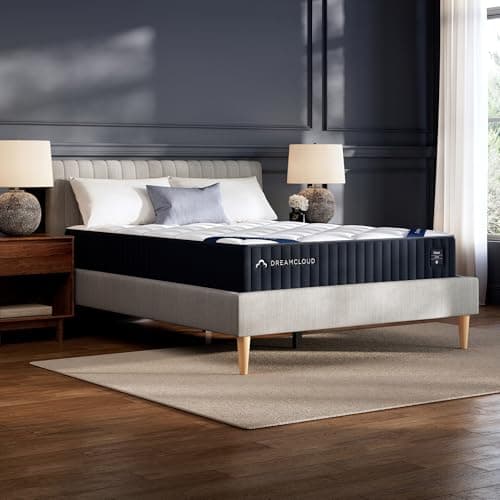 DreamCloud Classic 12" Hybrid The medium-firm all-rounder, and the bed I'd point most people to first: a coil core under a foam comfort layer, a genuine middle feel, and a full year to decide whether it suits your body. On a page where the honest answer is that medium-firm fits most people, the trial is what protects the few it doesn't. Best for: Best overall | Best overall | $699.00 · View on Amazon Price as of September 12, 2026. #ad — we earn a commission. |
| 2 | 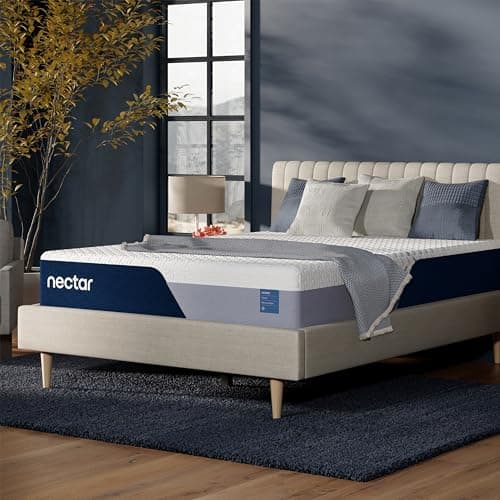 Nectar 12" Memory Foam The medium-firm bed for people who want to settle into the surface a little rather than lie on top of it. All-foam, so it cradles more than the hybrids here, with a 1-year trial and a forever warranty stated on the listing. The premium foam pick when this is your everyday bed. Best for: Best all-foam / main bed | Best all-foam / main bed | $699.00 · View on Amazon Price as of September 12, 2026. #ad — we earn a commission. |
| 3 | 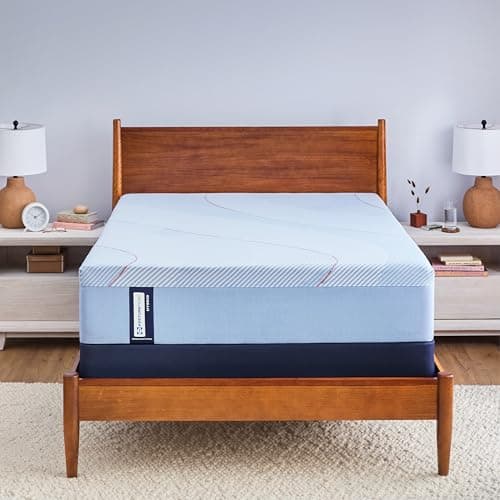 Sealy Posturepedic Fayette 12" Medium Hybrid Medium, encased coils, and a company that was making mattresses long before the internet sold them. The medium-firm pick when you want a legacy name and a real returns operation behind the bed rather than an Amazon-native brand. Best for: Best brand-name | Best brand-name | $999.00 · View on Amazon Price as of September 12, 2026. #ad — we earn a commission. |
| 4 | Zinus Green Tea 12" Memory Foam The most known quantity at the bottom of the market, and a genuine medium-firm all-foam bed in a box. Not the cheapest thing on Amazon, but the cheapest one I'd point most people at — the smart money when medium-firm doesn't have to be your main bed for a decade. Best for: Best budget | Best budget | Check price on Amazon → #ad — we earn a commission. |
| 5 | 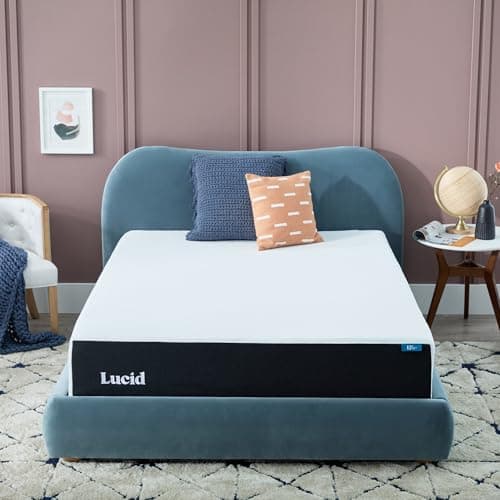 Lucid 12" Medium Firm Gel Memory Foam The pick when a restless partner is part of the problem: solid foam absorbs movement instead of passing it across the bed, and this one is medium firm as listed. Lucid also sells the same build in plush and firm, so it's the easiest medium-firm bed here to swap if the feel turns out wrong. Best for: Best for couples | Best for couples | $449.99 · View on Amazon Price as of September 12, 2026. #ad — we earn a commission. |
| 6 | 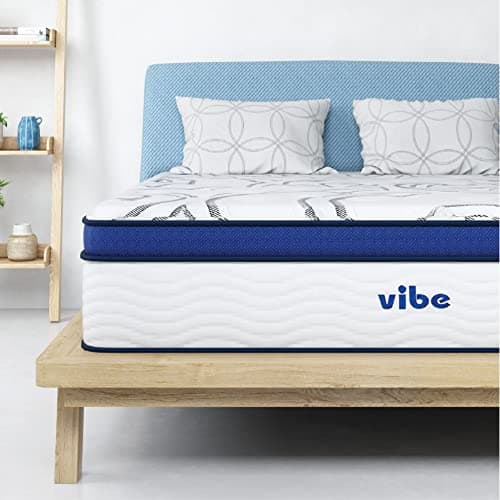 Vibe Quilted Hybrid 12" The cheapest honest way to get a coil core under a medium-firm surface that also runs cool. A spring core ventilates the way no foam bed can, under a quilted top with a little more give than the flat foam beds here. Best for: Best for hot sleepers on a budget | Best for hot sleepers on a budget | $399.99 · View on Amazon Price as of September 12, 2026. #ad — we earn a commission. |
Why "medium-firm" is the answer you keep hearing
If you've read more than two mattress guides you've noticed they nearly all point at the same feel. Ask a review site, a sleep-clinic blog, or the salesperson on a showroom floor which mattress suits the most people, and the answer comes back medium-firm with a consistency that starts to look like a conspiracy. It isn't one. Medium-firm wins the recommendation because it is the feel that does two opposite jobs at once well enough for the widest range of bodies: it is supportive enough to keep the heavy parts of you — hips, pelvis — lifted in line with the rest of your spine, and yielding enough to let the parts that stick out — shoulders, and the small of your back — settle in rather than press against something hard.
Those two jobs pull in opposite directions, which is the whole reason firmness is hard to shop for. Go too firm and only your shoulders and hips touch the bed; your lumbar curve is left bridging a gap, held up all night by the muscles that are supposed to be resting. Go too soft and your hips, the heaviest part of you, sink furthest, and your spine bows into a hammock. Medium-firm is the target between the two, and it's the default for a specific and large set of sleepers: back sleepers, the combination sleepers who change position through the night and can't optimize for just one, average-weight bodies, and — per Sleep Foundation's read of the research — most people with lower back pain. If you don't already know that your body wants something else, this is the feel to start with, which is exactly why it's recommended so relentlessly.
That's also the honest reason this page exists as the mirror image of our best firm mattresses roundup. That page is for the minority who genuinely prefer a hard surface and have to hunt for a bed that's truly firm rather than firm-ish. This one is for everyone else — the majority the whole market is quietly built around.
"Medium-firm" is a word, not a measurement
Here is the caveat that has to sit right next to the recommendation, because without it the recommendation is half a lie: "medium-firm" is not a regulated term. No standards body defines it, nobody audits the number on the box, and any seller can print it on any bed made of anything. There is a loose 1-to-10 firmness scale that reviewers use — medium-firm lands around a 6 to 7 — but it's a convention, not a specification, and one company's medium-firm is another company's medium or another's firm. Our mattress firmness guidetakes that scale apart in full, and it's worth ten minutes before you spend real money on a single word.
The deeper problem is that firmness isn't even a fixed property of the mattress. It's a relationship between the bed and the body pressing on it. Foam and coils both compress in proportion to the weight applied, which means the identical mattress feels different to two different people, and the difference is not small:
- Under about 150 lb:you don't press far into a bed before it resists, so a medium-firm mattress already reads as firm to you. A genuinely firm one can feel like a board. If you're light and you sleep on your side, the middle may be firmer than you actually want.
- Roughly 150 to 230 lb: the middle, where the label roughly matches the feel. This is the core audience for every bed on this page, and a medium-firm hybrid or a full-depth medium-firm foam bed keeps you supported without going harsh.
- Over about 230 lb: you compress a medium-firm foam bed further before it pushes back, so the same label reads softer to you. You want the feel on a coil core, which keeps resisting after foam would have bottomed out — the hybrids here, not the all-foam picks.
The practical takeaway is that a lighter person and a heavier person shopping for the "same" medium-firm feel should not end up on the same bed. Don't buy the word; buy the feel relative to your weight.
What actually makes a bed medium-firm — how to buy one
Once you've accepted that the label is a starting point rather than a guarantee, three things on the listing tell you most of what you need. Get these right and the marketing around them barely matters.
- A genuine middle feel, not the firm-or-soft extremes. Read the listing for "medium" or "medium firm" rather than "firm" or "plush," and treat the word as a hint about where the maker aimed. Most boxed beds cluster in this zone anyway — it's the volume seller — so the middle is the easy part of the market to shop. The harder judgment is which of two medium-firm beds is right for you, and that comes down to the next two points.
- Foam or hybrid — the same feel, two different characters. A medium-firm all-foam bed (the Nectar, the Zinus, the Lucid) achieves the feel by being stiff, and it cradles you: you settle into the surface, and the foam absorbs a partner's movement. A medium-firm hybrid (the DreamCloud, the Sealy, the Vibe) achieves the feel with a coil core, and it supports you from underneath: it reads a touch springier, ventilates far better, and holds its support longer, but it carries motion across the bed. Neither is more "medium-firm" than the other — they're the same destination reached two ways. If you share the bed with a restless partner, the couples trade-off between them is laid out on our best mattresses for couples page.
- Full depth, so the middle feel has room to exist. Depth is where budget beds cut hardest. A 12-inch mattress has room for a comfort layer that cushions AND a core that supports, which is precisely the two-part job a medium-firm feel asks for; a thin 6- or 8-inch slab has to be one or the other and usually ends up neither. Every flagship pick here is a genuine full-depth build for exactly that reason.
There's a fourth thing that isn't a spec of the mattress at all but matters more here than on almost any other page: the trial length. A medium-firm feel is the safest bet precisely because it suits the most bodies, but "most" is not "all," and no listing can tell you in advance which side of the average yours falls on. A long trial — DreamCloud states 365 nights, Nectar a full year — is the only mechanism that lets you learn the answer on the bed itself and still send it back if the middle turns out wrong for you. On a feel this personal, the return policy is doing as much work as the foam. Where a listing is silent on the trial, as several here are, read that as a real cost, not a neutral blank.
Put those together and the picks sort themselves. Want the safest overall medium-firm with a year to be sure? The DreamCloud hybrid. Prefer to sink into foam on a bed built to last? The Nectar. A legacy brand behind the return? The Sealy. Spending as little as sensible? The Zinus. A restless partner in the mix? The Lucid, which isolates motion and comes in other feels if the middle turns out wrong. Run hot on a budget? The Vibe, whose coil core ventilates the way no foam bed can. Six beds, one feel, six different reasons to pick each.
Who should ignore this whole page
Medium-firm is the safe default, not a universal one, and the honest job of a roundup like this is to name the people it's wrong for before they spend the money. There are two groups, and they sit at opposite ends of the scale from each other.
Dedicated light side sleepers who want plush.If you sleep on your side and you don't weigh much, medium-firm is probably firmer than you want. On your side, your shoulder and hip are narrow points carrying your whole weight, and they need to sink into the surface so your spine can run straight. A lighter body doesn't press far enough into a medium-firm bed to let that happen, so pressure builds at the shoulder and hip and the spine bends sideways — the recipe for a numb arm at 3am. You want the plush end of the scale, not the middle. A heavier side sleeper can often carry a medium-firm bed because they compress it more, but a light one is fighting it all night.
Strict stomach sleepers who want firm.If you sleep face-down and stay there, your hips are the unopposed heavy point, and on a medium-firm surface they sink until your lower back arches backward — the opposite failure to the side sleeper's, and just as uncomfortable. A strict stomach sleeper generally wants firmer than the middle, so the hips stay level with the shoulders. That's the whole argument of our firm roundup, and it's where you should be if that's you. Everyone in between those two ends — which is most people — is who this page is for.
What I can't measure
The honesty this site runs on: I haven't slept on all six of these, I don't run a test lab, and I own no rig to measure firmness or spinal alignment. So I can't hand you a measured firmness number, and where a spec above says "as listed," that means it's the seller's claim repeated, not confirmed. Firmness is one of the hardest things to measure honestly even with equipment, because — as the whole middle of this page argues — it changes with the body lying on it. Anyone handing you a precise "6.5 out of 10" for a bed someone bought online last week is inventing the decimal.
What I can do is reason from construction, and for a medium-firm bed the construction tells you most of what matters. A coil core supports from underneath and ventilates; solid foam cradles and isolates motion but runs warmer and softens sooner; a full-depth build has room to both cushion and support where a thin one doesn't; the same medium-firm label reads firmer to a lighter body and softer to a heavier one. None of that is a reading I took off a machine — it's how the materials behave under a load, and it's more honest than a number I'd have to fabricate. That's why every card above pairs the reasoning with a plain statement of who the bed is wrong for, and why the safest single move on a feel this personal is the DreamCloud's year-long trial: it lets you be wrong without paying for it.
And since it's fair to ask: I earn an Amazon commission if you buy through the links here, and that's what funds the site. The rate is effectively the same across every mattress on this page, so there's nothing I make more by steering you toward — which is why the bed I point most people at first isn't the priciest, and why the budget Zinus is here for the jobs that don't need a main bed. If your real question is support for a bad back rather than the feel itself, the back-pain page judges these same trade-offs on alignment first; and if you already know you want something harder than the middle, the firm roundup is where to go. And if you sleep face-up, the middle of the range is where the guidance actually points you — our best mattresses for back sleepers explains why, and how your body weight moves the target. The middle is the right place to start — it just isn't the only place to end up.
The picks, in full
1. Best for Best overall
DreamCloud Classic 12" Hybrid
The medium-firm all-rounder, and the bed I'd point most people to first: a coil core under a foam comfort layer, a genuine middle feel, and a full year to decide whether it suits your body. On a page where the honest answer is that medium-firm fits most people, the trial is what protects the few it doesn't.
Price as of September 12, 2026. #ad — we earn a commission.
Key specs
- 12" hybrid
- Gel memory foam over coils
- 365-night trial
- Forever warranty (as listed)
- Fiberglass-free (as listed)
- CertiPUR-US certified
What's good
- A coil core holds the hips and pelvis up mechanically while a foam layer above still yields to a shoulder — which is exactly the balancing act "medium-firm" is trying to name, done by two components instead of one compromised slab
- The listing states a 365-night trial and a forever warranty (as listed), the longest terms on this page — and a trial matters most precisely because "medium-firm" reads slightly differently to every body that lies on it
- A hybrid ventilates better than any all-foam bed here because air moves through the coil layer, so you get the middle-of-the-road feel without the heat that solid-foam medium-firm beds carry
What's not
- "Luxury" in the product line name means nothing measurable — it's a competent medium-firm hybrid, not a different class of bed
- Coils carry a partner's movement across the bed more than solid foam does, so a restless bedmate is felt more here than on the Nectar or the Lucid
- It comes in one feel — if you already know your body wants the firmer or softer end, a single medium build leaves you leaning on the trial rather than choosing up front
Skip this one if
You already know you want plush or genuinely firm, not the middle. DreamCloud builds this one feel, so a dedicated light side sleeper or a committed firm-bed sleeper is better served elsewhere — the Lucid below is sold in plush and firm too, and our firm roundup is one click away.
2. Best for Best all-foam / main bed
Nectar 12" Memory Foam
The medium-firm bed for people who want to settle into the surface a little rather than lie on top of it. All-foam, so it cradles more than the hybrids here, with a 1-year trial and a forever warranty stated on the listing. The premium foam pick when this is your everyday bed.
Price as of September 12, 2026. #ad — we earn a commission.
Key specs
- 12" all-foam
- Medium firm (as listed)
- 1-year trial (as listed)
- Forever warranty (as listed)
- Queen
What's good
- Solid memory foam gives a medium-firm bed a softer, more enveloping character than a coil core does — the same "medium firm" label, but the version that hugs rather than pushes back, which suits people who dislike the springy feel of a hybrid
- The listing states a full 1-year trial and a forever warranty (as listed) — a real season to learn whether this reading of medium-firm fits your body, backed by a durability promise a brand only makes when it expects the foam to hold up
- It's built and priced as a main bed: a denser, balanced medium-firm foam aimed at nightly use for years, not a value slab that drifts toward too-soft in a season
What's not
- All-foam insulates, so it sleeps warmer than any hybrid on this page — the trial and warranty don't change the physics of a solid core with no coils to move air
- It costs roughly double the Zinus below, which is the whole budget-versus-premium question — for occasional use most of what you pay for goes unused
- One medium-firm option on the listing, so if you already know you want notably softer or firmer, this exact bed doesn't let you choose it
Skip this one if
You sleep hot, or the bed is for a guest room you'll rarely use. Foam holds heat no matter how premium the build, and a forever warranty is wasted on a bed you'll replace in a couple of years — take a coil-core pick for heat, or the budget Zinus for occasional use.
3. Best for Best brand-name
Sealy Posturepedic Fayette 12" Medium Hybrid
Medium, encased coils, and a company that was making mattresses long before the internet sold them. The medium-firm pick when you want a legacy name and a real returns operation behind the bed rather than an Amazon-native brand.
Price as of September 12, 2026. #ad — we earn a commission.
Key specs
- 12" hybrid
- Medium (as listed)
- Tight top
- Encased coils
What's good
- The listing states "medium" plainly (as listed) over encased coils — a coil core doing the support work under a tight top, which is close to the traditional idea of a medium-firm bed most people picture
- A tight top puts less soft material between you and the support system than a pillow-top does, so the coils do more of the work of holding you level — a cleaner medium feel with less surface plush to settle and soften
- Sealy is a decades-old manufacturer with a genuine warranty and returns operation, a real point of contact in year seven that most marketplace mattress names can't offer
What's not
- No trial length or warranty term is stated in the listing title — a striking gap next to DreamCloud's stated 365 nights, on a feel you can't judge without sleeping on it
- "Posturepedic" is a Sealy trademark from the 1950s, not a specification — it tells you nothing measurable about this bed
- The listing shows a made-to-order dispatch window rather than a next-day box, so you wait for it, and you pay something for the name as you do with any legacy brand
Skip this one if
You want an easy way to reverse a wrong guess. This listing doesn't publish a trial period, and on a feel as personal as medium-firm the ability to send it back is worth more than brand heritage — take the DreamCloud's stated year instead.
4. Best for Best budget
Zinus Green Tea 12" Memory Foam
The most known quantity at the bottom of the market, and a genuine medium-firm all-foam bed in a box. Not the cheapest thing on Amazon, but the cheapest one I'd point most people at — the smart money when medium-firm doesn't have to be your main bed for a decade.
#ad — we earn a commission.
Key specs
- 12" all-foam
- Medium firm (as listed)
- Green tea infused foam
- CertiPUR-US and Oeko-Tex certified (as listed)
- Queen
What's good
- Zinus has sold this exact line for years, so the listing is stable and there's a real company behind it — not a given at this price, and it matters more than it sounds on a budget bed
- It states both CertiPUR-US and Oeko-Tex (as listed), covering the foam chemistry and the textiles separately — most beds this cheap state one or neither
- A genuine 12-inch depth, so the medium-firm comfort layer has room to cushion without bottoming out — not the 6- and 8-inch slabs that crowd this price
What's not
- "Medium firm" is Zinus's own word with no scale behind it — treat it as a statement of intent, not a measurement, and expect a value bed to soften faster than a premium one
- All-foam, so it insulates — there's no coil core moving air through it, and the green tea infusion is an odor claim, not a cooling one
- No long trial stated on the listing — you're relying on Amazon's standard return window, far shorter than the year the premium boxed brands give you
Skip this one if
This is your main bed for the next ten years. Budget foam softens fastest of any construction here, and a medium-firm bed that drifts soft stops being medium-firm — buy it for a guest room or a stopgap, and spend up to the DreamCloud or Nectar for a bed you'll keep.
5. Best for Best for couples
Lucid 12" Medium Firm Gel Memory Foam
The pick when a restless partner is part of the problem: solid foam absorbs movement instead of passing it across the bed, and this one is medium firm as listed. Lucid also sells the same build in plush and firm, so it's the easiest medium-firm bed here to swap if the feel turns out wrong.
Price as of September 12, 2026. #ad — we earn a commission.
Key specs
- 12" all-foam
- Medium firm (as listed)
- Gel memory foam
- Bamboo charcoal infused
- Fiberglass-free (as listed)
- CertiPUR-US certified
What's good
- Solid foam soaks up a partner's movement rather than transmitting it, so you aren't jolted awake mid-turn — the one thing a coil-core medium-firm hybrid can't match
- Medium firm is the listed feel, and Lucid sells the identical build in plush and firm — so if this reading of the middle turns out too hard or too soft for your body, there's a direct swap without changing brands
- The listing states fiberglass-free and CertiPUR-US certified (as listed), both worth having and neither standard at this price
What's not
- There's no coil core, so the medium-firm feel comes from the foam being stiff rather than from springs pushing back — the trade a hybrid avoids, and it runs warmer for it
- Foam softens over years of use, and a softening medium-firm bed drifts toward soft — the durability argument against all-foam is a fair one
- Motion isolation is the whole reason to pick this over a hybrid, so a solo sleeper gives up the more durable coil core for a benefit they'll never use
Skip this one if
You sleep alone and run warm. The motion isolation that justifies choosing foam over coils does nothing for a solo sleeper, and solid foam sleeps hotter than any hybrid here — take the DreamCloud or the Vibe for a cooler, coil-backed medium-firm.
6. Best for Best for hot sleepers on a budget
Vibe Quilted Hybrid 12"
The cheapest honest way to get a coil core under a medium-firm surface that also runs cool. A spring core ventilates the way no foam bed can, under a quilted top with a little more give than the flat foam beds here.
Price as of September 12, 2026. #ad — we earn a commission.
Key specs
- 12" hybrid
- Innerspring core, gel memory foam pillow top (as listed)
- Fiberglass free (as listed)
- CertiPUR-US certified (as listed)
- Queen
What's good
- A coil core is mostly open space, so air moves through it — the only cooling feature that doesn't saturate partway through the night, and it keeps the support core lively while it does it
- The quilted pillow top softens the surface over a core that still pushes back, which lands the bed in medium-firm territory and is a hard combination to find this cheap
- It states fiberglass free and CertiPUR-US certified (as listed) — the single most important safety check on any budget mattress, printed plainly
What's not
- Coils transmit movement, so if you share the bed with someone restless this passes their tossing across to you in a way the all-foam picks don't
- No trial length or warranty term is stated on the listing, and Vibe is a marketplace brand without a long record behind whatever the warranty turns out to be
- "Pillow top" here is a thin quilted layer, not a plush hotel-style topper — set the expectation accordingly, and read the feel as the firm end of medium
Skip this one if
You or your partner move a lot at night, or you want a bed to last a decade. Coils carry motion and a budget hybrid uses fewer, lighter ones that fatigue sooner — take the all-foam Lucid for motion isolation, or step up to the DreamCloud for durability.
Common questions
What does "medium-firm" actually mean?
In practice it means the middle of the firmness scale — roughly a 6 to 7 out of 10, where 1 is a cloud and 10 is a plank — but the honest answer is that it's a manufacturer's word, not a measurement. No standards body defines firmness, nobody audits the number on the box, and any seller can print "medium firm" on any bed. What the label is trying to describe is a surface that resists your weight enough to keep your hips and pelvis lifted in line with your spine, while still yielding enough to let your shoulders and the small of your back settle in rather than press against something hard. When it's done well, that combination supports the heavy parts of you and cushions the parts that stick out at the same time — which is why it's the feel most guides land on. Read the word as a statement of intent and judge the bed on its construction: a coil core or a full-depth foam block, the stated feel, the trial length.
Why is medium-firm the most-recommended feel?
Because it offends the fewest bodies. A boxed-bed maker is trying to please the widest possible buyer with a single product it can ship compressed in a carton, and medium-firm is the feel that works for the most people at once: soft enough that a side sleeper can tolerate a night on it, firm enough that a back sleeper doesn't sink into a hammock. That's the commercial reason. The physiological reason lines up with it — for most sleepers a neutral spine (hips and shoulders supported so the lumbar curve is neither flattened nor arched) is easiest to hit on a surface in the middle rather than at either extreme. It's the default for back sleepers, for most combination sleepers who change position through the night, and for average-weight bodies. Sleep Foundation also generally steers lower-back-pain sufferers toward medium-firm rather than the firmest option. None of that makes it right for everyone — it makes it the safest place to start.
Is a medium-firm mattress right for me?
For most people, yes — but weight and sleeping position move the answer, because firmness is relative to the body pressing on it. The same medium-firm bed reads firmer to a lighter person, who doesn't compress it far before it resists, and softer to a heavier person, who sinks further into the same surface before meeting the same resistance. Roughly: back sleepers and combination sleepers of average weight are the core audience for this feel. Under about 150 lb you compress a bed less, so a medium-firm bed already reads firm to you — a dedicated light side sleeper may want to step softer. Over about 230 lb you compress a medium-firm foam bed until it reads soft, so you'll want the feel on a coil core (a hybrid) or to size up toward firm. And strict stomach sleepers usually want firmer than medium so the hips don't sag. Match the feel to your weight and position, not to the printed label alone.
Is medium-firm the same as "best for back pain"?
They point in the same direction, which is why the two pages overlap, but they're not identical questions. Sleep Foundation's read of the research is that medium-firm mattresses tend to reduce lower back pain more effectively than firm ones for most people, because a too-hard surface leaves gaps under the lumbar curve and dumps weight onto the shoulders and hips. So a genuine medium-firm feel is the sensible starting point for a bad back — that's the thesis of our back-pain page too. The difference is that a back-pain buyer is judging support and spinal alignment above all else, while this page is about the feel itself, for anyone choosing it on preference or general recommendation rather than a specific complaint. We're a mattress site, not doctors, and no bed at any price treats a back condition — persistent pain is a conversation for a doctor, not a checkout page.
Do you make money from these links?
Yes. We earn an Amazon commission if you buy through the links here, and that's what funds the site. We don't accept free products, we don't sell placement, and no brand sees a page before it publishes. The commission rate is effectively the same across every mattress on this page, so there's nothing we make more by steering you toward — which is why the bed I point most people at first isn't the most expensive one, and why every card tells you plainly who should skip it. When the cheaper bed is the right call, we say so.
Sources
Where the facts on this page come from. We cite other people's testing because we don't do our own — here's what that means.
Read next
- The Best Luxury MattressesSix premium-tier mattresses judged on what luxury money actually buys - better coils and foams, longer trials, real warranties, brand backing - with honest cons and a skip note on every one. Plus the honest catch: the right feel at a mid price beats the wrong luxury bed.
- The Best Firm MattressesSix firm mattresses led by the two whose listings actually say "firm" — with honest cons and who each is wrong for. A genuinely firm bed is rarer than the label admits.
- The Best MattressesSix mattresses worth buying, from a budget hybrid to a deep-foam premium bed — with a plain note on who each one is wrong for.
- The Best Mattresses for Lower Back PainSix mattresses judged purely on support and spinal alignment — and why medium-firm, not firm, is where the evidence points.
- Mattress Firmness: The 1-10 Scale, HonestlyWhat the 1-10 firmness scale actually means, why one brand's 6 is another's 7, and how your bodyweight changes the answer.
- The Best Mattresses for CouplesSix mattresses for two people, organized around the one trade-off that decides couples' sleep — motion isolation versus edge support — with honest cons and a skip-it note on every pick.
- The Best Hybrid MattressesSix hybrid mattresses judged on what makes a coil core worth it over all-foam — airflow, edge support, responsiveness — with honest cons and a skip-this-one note on every pick.