The Best Hybrid Mattresses
A hybrid is one idea: a coil support core with a foam comfort layer on top. The coils do the work you actually notice — airflow, edge support, bounce — and the foam decides how it feels. Six worth buying, and who each one is wrong for.
We earn a commission if you buy through our links. It doesn't affect our picks — and we never take free products. How this site is funded.
Quick picks
| # | Product | Best for | Price |
|---|---|---|---|
| 1 | 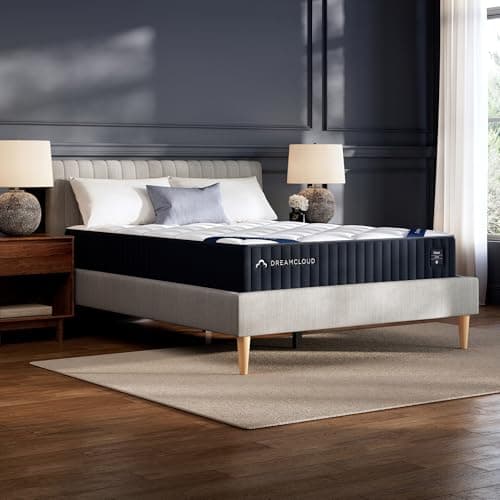 DreamCloud 12" Hybrid A textbook medium-firm hybrid from an established brand with the longest trial on the page. The safe default if you just want a good coil-core bed and don't want to overthink it. Best for: Most people | Most people | $699.00 · View on Amazon Price as of September 8, 2026. #ad — we earn a commission. |
| 2 | Nectar Ultra 15" Hybrid The deepest hybrid here, with a thick comfort layer over a coil core. The upgrade pick when you sleep on your side, run hot, or want more cradle without giving up the airflow. Best for: Hot & side sleepers (upgrade) | Hot & side sleepers (upgrade) | Check price on Amazon → #ad — we earn a commission. |
| 3 | 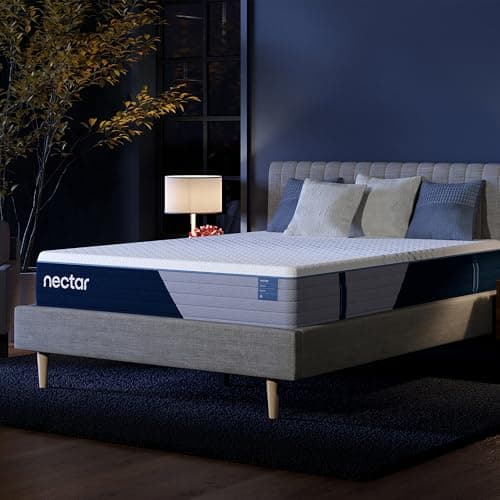 Nectar 12" Hybrid The Ultra's sensible sibling: the same coil-core idea in a standard 12-inch build at a lower price. A brand-name hybrid without the flagship premium. Best for: Balanced brand-name value | Balanced brand-name value | $849.00 · View on Amazon Price as of September 8, 2026. #ad — we earn a commission. |
| 4 | 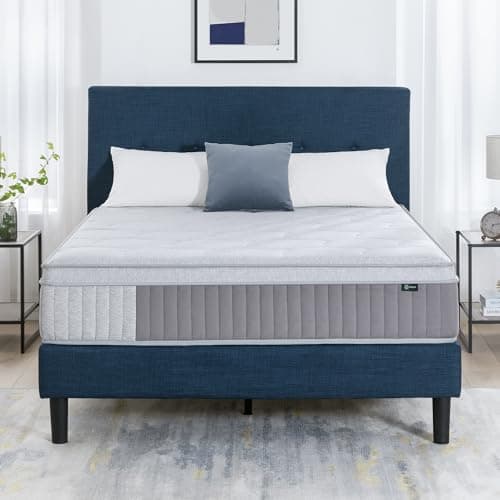 Zinus 12" Cool Support Hybrid A medium-firm coil-core hybrid at a budget price from one of Amazon's most established mattress brands. If you want the real mechanism without the brand premium, start here. Best for: Best value | Best value | Check price on Amazon → #ad — we earn a commission. |
| 5 | 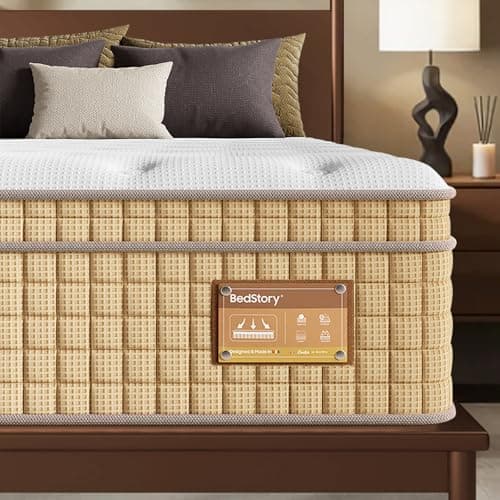 BedStory 14" Firm Hybrid The firm, tall pick: 14 inches with zoned lumbar coils and a firm surface. Aimed at back and stomach sleepers and heavier bodies that sink through softer beds. Best for: Firm support / heavier bodies | Firm support / heavier bodies | |
| 6 | 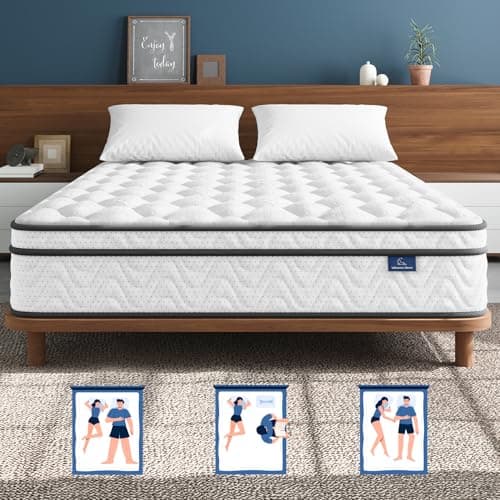 Vesgantti 12" Hybrid The cheapest way onto a coil core here: a gel-foam-over-coils boxed hybrid. You're buying the mechanism, not the trial length or the brand. Best for: Rock-bottom budget | Rock-bottom budget | $245.99 · View on Amazon Price as of September 8, 2026. #ad — we earn a commission. |
A hybrid is one idea: a coil core with foam on top
Strip away the marketing and a hybrid mattress is a simple sandwich. At the bottom is a support core made of steel coils. On top of it is a comfort layer made of foam — usually memory foam, sometimes latex or a polyfoam. That's it. Everything a listing says about zones, infusions and proprietary layers is detail sitting on those two facts. And of the two, the coil core is the one that earns the category its place, because it does three things a block of foam physically cannot.
First, it breathes. A coil core is mostly empty space, so air moves through the middle of the bed and carries your heat away all night rather than trapping it against you — the single biggest reason a hybrid sleeps cooler than an all-foam bed, and the reason our cooling roundupleads with hybrids. Second, it holds the edge. Coils resist compression at the perimeter, so you can sit on the side to tie your shoes and sleep to the very edge without the "rolling off a cliff" feeling a foam bed gives. Third, it pushes back. Coils are springs, so the bed responds and lifts instead of swallowing you, which is why a hybrid feels athletic where foam feels slow. If none of those three things appeals to you, you don't want a hybrid — you want memory foam, and that's a legitimate choice, not a lesser one.
It's worth saying what those three benefits feel like in a real bedroom, because on a spec sheet they sound abstract. Airflow is the difference between throwing the covers off at 3am and sleeping through. Edge support is being able to use the whole surface of a bed you paid for — sitting on the side to dress, sleeping close to the edge on a shared queen without feeling like you'll slide off, and getting in and out without the perimeter caving. Responsiveness is the bed lifting with you when you change position instead of holding you in the last shape you made, which matters most to combination sleepers who move through the night and to anyone who finds foam's slow "quicksand" sink unsettling. None of those three is a luxury; they're the practical reasons the category exists and outsells all-foam in most stores.
What makes one hybrid worth more than another
Once you've decided you want a coil core, the beds stop competing on "hybrid or not" and start competing on how well the two layers are built and matched. Here is what we actually weigh, and what we deliberately ignore.
- The comfort layer decides the feel. The coils are the engine; the foam on top is the interior. A thick, soft comfort layer gives a side sleeper the cradle their shoulder and hip need. A thin, firm one gives a back or stomach sleeper the flat platform they need. Same coil core, opposite beds — which is why the deep side-sleeper pick and the firm heavier-body pick on this page are both hybrids and both correct for their person. When a listing tells you the height and firmness, it's telling you about this layer.
- Coil gauge and zoning, read skeptically.Sellers love to quote coil counts, gauges (wire thickness) and "zoned" lumbar support. These can be real — pocketed coils that move independently do follow the body better than a connected innerspring, and firmer coils under the midsection do help a heavier torso. But we quote every one of these as the seller lists it, because we have no way to open the bed and count. Treat a coil spec as a claim, not a verified number, and weight it accordingly.
- Comfort-layer depth over total height.A 14-inch bed isn't automatically better than a 12-inch one; what matters is how much of that height is usable foam over the coils versus base padding. A tall bed with a shallow comfort layer feels firmer than a shorter one with a deep plush top. Height is a headline; depth is the story.
- Trial length and warranty, because a hybrid reveals itself slowly.The weak points of a hybrid — a comfort layer that softens into an impression, coils you can feel through thinning foam — show up over weeks and months, not in a showroom minute. A stated year-long trial from a brand with a real returns operation is worth a genuine premium, and it's why the DreamCloud and Nectar picks lead the page despite costing more than the value hybrids.
What we don't weigh: infusion buzzwords. Gel, copper, graphite, green tea and charcoal are surface treatments or odor claims, and none of them changes what the coil core does. If you want the full physics of foam versus coils before you spend, our memory foam vs hybrid guide lays it out, and the firmness guidetranslates "medium firm" into what it'll feel like for your weight and position.
A word on price tiers, since they map onto this list cleanly. At the top sit the brand-name hybrids — an established company, a stated year-long trial, a deep comfort layer and a returns operation you can actually phone. In the middle are the same coil-core idea in a standard build with shorter or unstated trials. At the bottom are boxed hybrids that give you a real coil core and little else — no long trial, a smaller brand, a comfort layer that will soften sooner. Every one of those tiers is a legitimate buy; what changes as you go down is not whether you get coils but how much protection and comfort-layer life you get around them. The right tier is the cheapest one whose trial and durability you're comfortable living with, which is a different answer for a student furnishing a first apartment than for someone buying the bed they'll keep for a decade.
Who a hybrid is wrong for
A roundup that only tells you who should buy the thing it's selling isn't worth much, so here's the honest other side. There are two sleepers for whom a hybrid is the wrong default, and if you're one of them you should read this before the buy buttons.
Very light side sleepers who want a deep cradle.Coils push back, and pushing back is the last thing a 120-pound side sleeper wants under their shoulder. If your weight isn't enough to compress the comfort layer and engage the coils, a hybrid can feel like sleeping on a firm floor with a thin pad, and the pressure lands right on the hip and shoulder joint. A light side sleeper is often happier on an all-foam bed that surrounds the joint instead of resisting it. The exception is a hybrid with a genuinely deep, soft comfort layer — the 13-inch Nectar Premier on this page exists for exactly that buyer — but a thin firm hybrid is the wrong purchase for a light body every time.
Motion-sensitive couples.This is the standing trade-off of the whole category and we're not going to hide it. Springs transmit movement. When your partner rolls over or climbs out at 6am, a coil core carries more of that motion across the bed than solid foam does, because foam absorbs the energy and coils pass it along. If a restless bedmate waking you is the actual problem you're trying to solve, the airflow and edge support of a hybrid may not be worth the motion you'll feel, and an all-foam bed is likely the better answer. Pocketed coils that move independently soften this — they're better than a connected innerspring — but no hybrid isolates motion as well as a good foam bed. Be honest with yourself about which problem matters more.
If you read those two and neither is you, a hybrid is very probably your bed, and this page is the shortlist. One more honest caveat before you buy: if either description is a maybe rather than a clear no, that's precisely what the year-long trials on the leading picks are for. Buy the hybrid, sleep on it for a full month before you judge it — a new bed feels firm until the comfort layer breaks in — and if the motion or the firmness turns out to be a dealbreaker, an established brand's trial lets you send it back. That safety net is worth more than the little you'd save on a no-trial listing you'd then be stuck with. If back pain is what's driving the search rather than heat or feel, our back-pain roundup weighs support differently and is the better starting point.
How to read this list, and what we can't tell you
The six picks are ordered by who they suit, not by a score, because we don't assign scores. The DreamCloud leads as the generalist default — medium firm, longest trial, established brand — and the rest fan out from there: the Nectar Ultra for depth and side sleeping, the standard Nectar for the same idea at less money, the Zinus for the best coil-core value, the BedStory for a firm platform under a heavier body, and the Vesgantti for the rock-bottom budget. Each one carries a "skip this if" because the fastest way to be happy with a mattress is to rule out the ones that are wrong for you before you look at price.
Now the part a mattress site has a financial reason to skip: we haven't slept on any of these. There is no test lab behind this site, no testers, and no measurements — so we can't hand you a firmness number we recorded or a durability figure we clocked, and anyone who does for a bed they bought on Amazon last week is inventing it. What we can do is reason from construction and from the facts the seller publishes. Coils ventilate and support; foam depth sets the feel; a stated trial protects you where a hybrid is slow to show its faults. Those are structural facts, not opinions we're dressing up as tests. Every spec on this page is quoted as the listing states it, and where a claim is the seller's we mark it "as listed" so you know exactly whose word you're taking. If you want to see hybrids weighed against foam beds in one place, our best mattresses on Amazon page covers both, and our overall best listis the wider shortlist this page is drawn from. If a hybrid's comfort layer is the part you don't want — because you sleep hot, want a firmer surface, or are furnishing a spare room — our best innerspring mattresses covers the same coil core with a thin cushion instead of a thick one.
The picks, in full
1. Best for Most people
DreamCloud 12" Hybrid
A textbook medium-firm hybrid from an established brand with the longest trial on the page. The safe default if you just want a good coil-core bed and don't want to overthink it.
Price as of September 8, 2026. #ad — we earn a commission.
Key specs
- 12" hybrid
- Memory foam over an innerspring coil core
- 365-night trial (as listed)
- Medium firm feel
- Queen
What's good
- It's the middle of the road done right: a medium-firm foam layer over a full coil core, which is the feel and build the largest number of sleepers get along with — the reason it's the default pick rather than a specialist one
- A 365-night trial is the longest here, and a hybrid is exactly the kind of bed that trial length is for, because coil support and airflow reveal themselves over months, not one showroom minute
- DreamCloud is an established brand with a real returns operation behind the year-long trial, so the terms are backed by a company you can actually reach
What's not
- Medium firm is deliberately unspecialized — a dedicated side sleeper who wants deep cradle, or a heavier body that wants firm push-back, is each better served by a more pointed pick below
- The coil core transmits a partner's movement more than solid foam does, which is the standing trade-off of every bed on this page
- It's a mid-to-upper-price bed; the value hybrids lower down get you the same coil-core airflow for less
Skip this one if
You already know you want something specific — a plush deep cradle, a firm platform, or the lowest possible price. This is the generalist. If you have a strong preference, one of the specialist picks below fits it better.
2. Best for Hot & side sleepers (upgrade)
Nectar Ultra 15" Hybrid
The deepest hybrid here, with a thick comfort layer over a coil core. The upgrade pick when you sleep on your side, run hot, or want more cradle without giving up the airflow.
#ad — we earn a commission.
Key specs
- 15" hybrid
- Medium firm (as listed)
- Memory foam over individually-wrapped coils
- 1-year trial (as listed)
- Forever warranty (Nectar's published term)
What's good
- At 15 inches it has the most comfort-layer depth on the page, so a shoulder and hip get real room to sink while the coils underneath keep air moving — the rare bed that serves side sleeping and cooling at once
- A 1-year trial is printed on the listing and Nectar publishes a forever warranty for the Ultra - the strongest terms here, and both are the maker's own commitments rather than our characterization
- The extra foam over the coils solves the usual hybrid complaint — that the coils feel too present for a side sleeper — without giving up the ventilated core
What's not
- The priciest pick on the page, and the depth and terms are what you're paying the premium for
- Fifteen inches with a plush top is a lot of bed to move, and it may sit tall enough to need deep-pocket sheets
- The deeper comfort layer leans softer, so it's the wrong direction for a stomach sleeper or anyone who wants a firm platform
Skip this one if
You're on a budget or you sleep on your stomach. The depth and cradle here are aimed at side sleepers and the price is the highest on the page — a firm or a value pick below fits a back/stomach sleeper or a tight budget far better.
3. Best for Balanced brand-name value
Nectar 12" Hybrid
The Ultra's sensible sibling: the same coil-core idea in a standard 12-inch build at a lower price. A brand-name hybrid without the flagship premium.
Price as of September 8, 2026. #ad — we earn a commission.
Key specs
- 12" hybrid
- Medium firm (as listed)
- Memory foam over coils
- 1-year trial (as listed)
- Queen
What's good
- You get an established brand's hybrid and its 1-year trial at a noticeably lower price than the Ultra, because you're dropping three inches of comfort foam, not the coil core that matters
- Medium firm over a full coil core is the broad-appeal setup, and at this price it's the value-conscious way into a name-brand bed
- The 1-year trial on the listing is unusually long for the price bracket, which is real protection on a bed you can only judge over months
What's not
- At 12 inches the comfort layer is shallower than the Ultra, so a dedicated side sleeper gets less cradle for the shoulder and hip
- Medium firm is the generalist tuning — neither the plushest nor the firmest option here
- As with any hybrid, the coils carry more partner movement than an all-foam Nectar would
Skip this one if
You specifically want maximum cradle for side sleeping or the strongest warranty on the page — that's the Ultra one row up, and the step up in depth is the reason it costs more.
4. Best for Best value
Zinus 12" Cool Support Hybrid
A medium-firm coil-core hybrid at a budget price from one of Amazon's most established mattress brands. If you want the real mechanism without the brand premium, start here.
#ad — we earn a commission.
Key specs
- 12" hybrid
- Medium firm (as listed)
- Cooling foam over pocketed coils
- Bed in a box
- Queen
What's good
- You get an actual pocketed-coil core — the thing that ventilates and supports — for a fraction of what the name-brand hybrids cost, which makes it the value pick on the page
- Pocketed coils move more independently than a connected innerspring, so support follows your body a little better and motion carries across the bed a little less than a cheap hybrid usually manages
- Zinus is one of the longest-running Amazon-native mattress brands, with stable listings and a track record behind the warranty
What's not
- The comfort foam above the coils is thinner than the premium hybrids, so pressure relief for a dedicated side sleeper is more modest
- No long trial stated in the listing, unlike the DreamCloud and Nectar year-long terms
- "Cooling foam" is a surface treatment; the coils do the real ventilating, and the marketing credits the wrong layer
Skip this one if
You want a plush, deep, hotel-feeling bed. This is a firm-ish value hybrid — if depth and cradle matter as much as the coil core, the Nectar Ultra is the bed you actually want.
5. Best for Firm support / heavier bodies
BedStory 14" Firm Hybrid
The firm, tall pick: 14 inches with zoned lumbar coils and a firm surface. Aimed at back and stomach sleepers and heavier bodies that sink through softer beds.
Key specs
- 14" hybrid
- Firm feel (as listed)
- Zoned lumbar support (as listed)
- CertiPUR-US (as listed)
- 365-night trial, 10-yr warranty (as listed)
What's good
- A firm surface over a tall 14-inch coil core is the setup a heavier body or a stomach sleeper needs — it keeps hips from settling into a hammock and keeps the spine flatter
- The listing states zoned lumbar coils, meaning firmer support under the midsection where a heavier torso otherwise sinks, which is the right idea for the sleepers it targets
- A 365-night trial and CertiPUR-US foam certification are both on the listing — long protection and a foam-emissions cert at a price well under the brand names
What's not
- Firm is firm: a light side sleeper will find no cradle here and wake up with a sore shoulder, which is the whole point of the skip note
- Zoned lumbar support and firm feel are seller descriptions, not something we or any standards body have verified
- BedStory is a smaller brand than DreamCloud or Nectar, so the warranty stands behind a less-established returns operation
Skip this one if
You're a lighter person or a side sleeper who wants pressure relief. A firm bed only pays off when your weight is enough to engage the coils — under it, this just feels hard, and the Nectar Ultra or a softer pick above is the bed you want.
6. Best for Rock-bottom budget
Vesgantti 12" Hybrid
The cheapest way onto a coil core here: a gel-foam-over-coils boxed hybrid. You're buying the mechanism, not the trial length or the brand.
Price as of September 8, 2026. #ad — we earn a commission.
Key specs
- 12" hybrid
- Gel memory foam over coils (as listed)
- Bed in a box
- Queen
What's good
- It's the lowest-priced route to an actual coil core on this page, which means you're paying for the airflow and support that define a hybrid rather than a cooling adjective on a foam slab
- A gel memory foam comfort layer over coils gives it a softer first feel than the firm value picks, which suits a lighter back or side sleeper on a tight budget
- Boxed and compressed for easy delivery, so it arrives like any bed-in-a-box without a freight appointment
What's not
- The listing is thin on the details that matter — no clearly stated trial length or long warranty — so you're committing with less protection than the pricier beds publish
- A budget coil-and-foam build compresses faster than a premium one, so plan on a shorter useful life than the brand-name hybrids
- Vesgantti is a small brand, so support and warranty stand behind a limited operation if something goes wrong
Skip this one if
You want a long trial or you're a heavier body. There's no year-long safety net stated here, and a budget coil core won't push back for a heavier sleeper — the BedStory firm or a DreamCloud is the sturdier call.
Common questions
Is a hybrid better than memory foam?
For most people, yes — but 'better' depends on what you want, so here's the honest split. A hybrid has a coil support core, which gives you three things an all-foam bed physically can't: air moves through the coils so it sleeps cooler, the coils resist compression at the edge so you can sit and sleep to the perimeter, and they push back so the bed feels responsive instead of sinky. Memory foam wins on exactly two things in return — it isolates a partner's movement better because there are no springs to carry it, and it gives a deeper, slower, dead-quiet cradle. So a hot sleeper, a couple who wants edge support, or anyone who dislikes the 'stuck in the bed' foam feel should buy a hybrid. A light sleeper with a restless partner who loves being cradled should look hard at foam. Most people fall in the first group.
Do hybrid mattresses sag?
Any mattress can sag, and where a hybrid gives out is usually the comfort layer, not the coils. The coil core is steel and holds its shape for years; what wears first is the foam sitting on top of it, which compresses into a body impression over time the same way an all-foam bed does. That's why the comfort-layer quality matters as much as the coil count on the spec sheet — a thick, dense foam layer over a good core lasts, and a thin cheap one over the same core dents sooner. Rotating the mattress head-to-foot every few months spreads the wear and buys you time. It's also the reason we weight trial length and warranty so heavily on the picks above: a sag shows up over months, which is exactly the window a year-long trial covers.
Are hybrids good for side sleepers?
They can be excellent, but the number that matters is the comfort layer, not the word 'hybrid.' A side sleeper needs the shoulder and hip to sink in so the spine stays straight, and that cradle comes from the foam on top — so a hybrid with a thick, soft comfort layer over the coils is a genuinely great side-sleeper bed, while a thin, firm one leaves the shoulder propped up and aching. That's why the deep 15-inch Nectar Ultra is our side-sleeper upgrade and the firm 14-inch BedStory is explicitly the wrong bed for a side sleeper. Same category, opposite outcomes, decided entirely by how much foam sits above the springs. Our side-sleeper page goes deeper on the depth-and-firmness math.
Do hybrids sleep cool?
Cooler than all-foam, and for a real structural reason rather than a marketing one. The coil core is mostly open space, so air moves through the middle of the bed and carries your heat away all night — that's the one cooling mechanism that doesn't run out of capacity the way a gel or a cool-touch cover does. The catch is the foam comfort layer on top: it still contours and insulates a little, so a hybrid runs cooler than foam, not cold. A deep, plush comfort layer traps slightly more heat than a thin firm one, which is the small trade-off you make for side-sleeper cradle. If sleeping hot is your whole reason for shopping, a hybrid is the answer and our cooling page ranks them by exactly that.
Is a boxed hybrid as good as an in-store one?
The construction is the same idea — coils under foam — and a boxed hybrid can absolutely match an in-store one; what you're really trading is the showroom test for a longer at-home trial. A bed-in-a-box arrives compressed and takes a day or two to expand fully, and it may smell faintly of foam ('off-gassing') for a few days before it clears. What you give up is lying on it in the store; what you get back is a trial that lets you sleep on it for months in your own room, which is a far better test than five minutes under fluorescent lights. The one thing to check is the fine print: an established brand with a stated year-long trial and a real returns operation is worth more than a rock-bottom listing with no trial named, because a hybrid's weak points only show up weeks in.
Sources
Where the facts on this page come from. We cite other people's testing because we don't do our own — here's what that means.
Read next
- What Are Pocketed Coils?Pocketed coils are individually wrapped springs that move independently for better contouring, motion isolation and zoned support - the heart of the modern hybrid, with the coil-count and gauge marketing debunked honestly.
- Hybrid vs Innerspring MattressesTwo coil beds, one real difference: the comfort layer on top. How cushion depth and pocketed-versus-connected coils decide which one fits you.
- Lucid vs Brooklyn BeddingBudget all-foam versus premium hybrid: the Lucid 12-inch lets you choose your firmness in foam for less, while the Brooklyn Bedding Signature buys you a coil core for airflow, edge support and bounce. Which wins depends on whether you sleep hot and how much you'll pay.
- The Best Luxury MattressesSix premium-tier mattresses judged on what luxury money actually buys - better coils and foams, longer trials, real warranties, brand backing - with honest cons and a skip note on every one. Plus the honest catch: the right feel at a mid price beats the wrong luxury bed.
- What Is a Hybrid Mattress?A hybrid is a coil support core under a real foam or latex comfort layer. What the coil count and gauge do, how it differs from all-foam and old innersprings, and who it suits.
- Pillow Top vs Euro TopTwo ways to add a plush comfort layer to a mattress: a pillow top sewn on top with a visible gusset, or a Euro top stitched flush inside the border. What each one does to feel, edge support and lifespan.
- Sealy vs CasperTwo coil-core hybrids from very different lineages: the legacy Sealy Posturepedic with a traditional tight-top feel against Casper's zoned support and stated 100-night trial. Same category, different philosophy - which fits depends on you.
- Brooklyn Bedding vs DreamCloudTwo premium coil-core hybrids head to head: Brooklyn Bedding lets you choose soft, medium or firm and leans supportive; DreamCloud is the plusher, one-feel luxe bed with a 365-night trial. Which wins depends on whether you know your firmness.
- Casper vs LucidA premium hybrid against a budget foam bed that lets you pick the feel: Casper gives you a coil core, airflow and edge support at several times the price; Lucid is the cheaper all-foam bed sold in plush, medium and firm. Which is right depends on your budget and whether you need coils.
- Tuft & Needle vs LucidA value coil-core hybrid against a budget all-foam bed: Tuft & Needle brings airflow, edge support and a trial; Lucid is cheaper and lets you choose your firmness. Which wins depends on whether ventilation or price matters more to you.
- Innerspring vs Memory FoamBounce and breathability versus a deep contouring hug — and why most modern buyers are better served by the hybrid in between than by either extreme.
- Tuft & Needle vs ZinusA premium hybrid against a budget hybrid: Tuft & Needle brings a more considered comfort layer and a stated 100-night trial; Zinus brings a real coil core for a fraction of the price. Which one you buy depends on whether it's your main bed.
- The Best Mattresses for Combination SleepersSix responsive mattresses that let a combination sleeper turn over easily, led by hybrids because a coil core springs back faster than a deep foam hug — with honest cons and a skip-this-one note on every pick.
- Memory Foam vs Hybrid MattressesFoam or coils? The six differences that matter, and the one axis that settles it for most buyers.
- The Best Cooling Mattresses for Hot SleepersSix mattresses that actually sleep cooler, led by hybrids because a coil core is the only cooling feature that doesn't saturate by midnight — with honest cons on every pick.
- The Best Mattresses on AmazonSix Amazon mattresses worth your money, with live prices and an honest note on who each one is wrong for.
- The Best Mattresses for Lower Back PainSix mattresses judged purely on support and spinal alignment — and why medium-firm, not firm, is where the evidence points.
- The Best MattressesSix mattresses worth buying, from a budget hybrid to a deep-foam premium bed — with a plain note on who each one is wrong for.