The Best Down Comforters
Down is the fluffy undercoat of a goose or duck, not its feathers - and most budget "down" comforters are quietly a feather blend. Here's how to read the label, what fill power and fill weight actually mean, and six comforters worth the money.
We earn a commission if you buy through our links. It doesn't affect our picks — and we never take free products. How this site is funded.
Quick picks
| # | Product | Best for | Price |
|---|---|---|---|
| 1 | 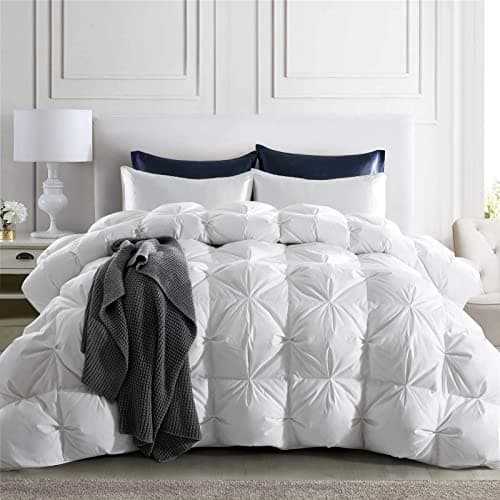 puredown 800 Fill Power Goose Down The rare listing that states a real fill power and a pure-goose-down fill in the same breath. If you want the genuine article, this is where the page starts. Best for: Best premium (true high-fill-power down) | Best premium (true high-fill-power down) | |
| 2 | 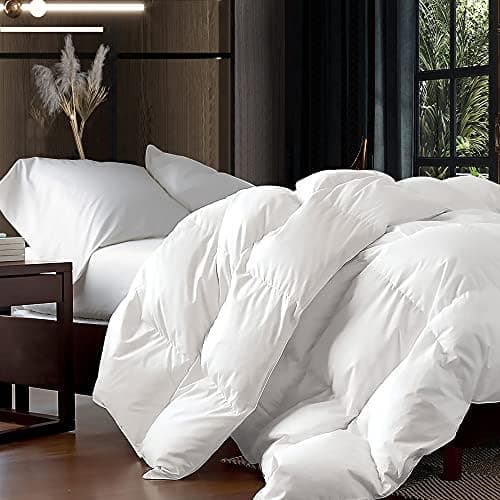 Egyptian Bedding Goose Down & Feather Fiber A goose down and feather-fiber blend that actually prints its fill weight - 48 ounces, all-season - which is more honesty about warmth than most of this category offers. Best for: All-season value | All-season value | $164.95 · View on Amazon Price as of September 10, 2026. #ad — we earn a commission. |
| 3 | puredown Goose Feather Down Comforter The budget way to get a real cotton shell over a natural fill. It's feather-forward, and the corner ties tell you it's built to live inside a duvet cover. Best for: Best budget cotton-shell | Best budget cotton-shell | Check price on Amazon → #ad — we earn a commission. |
| 4 | 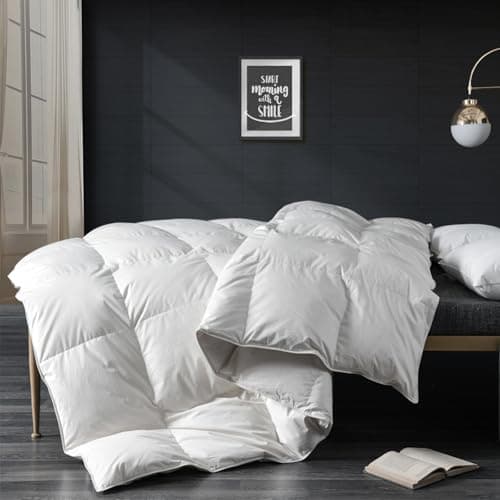 APSMILE Down Comforter (Organic Cotton) An organic-cotton shell over a down fill, all-season weight. The pick if the shell material matters to you as much as what's inside it. Best for: Organic-cotton shell | Organic-cotton shell | $149.00 · View on Amazon Price as of September 10, 2026. #ad — we earn a commission. |
| 5 | 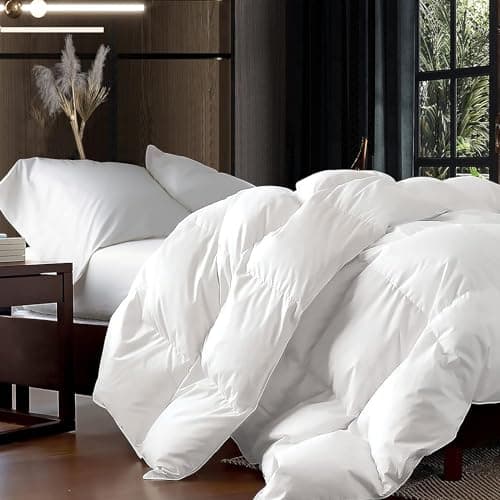 Egyptian Bedding Oversized 98x98 The one to buy for a deep or pillow-top bed. A 98-by-98 blend with 56 ounces of fill, built to drape over a tall mattress instead of perching on top of it. Best for: Oversized for deep or pillow-top beds | Oversized for deep or pillow-top beds | $179.95 · View on Amazon Price as of September 10, 2026. #ad — we earn a commission. |
| 6 | 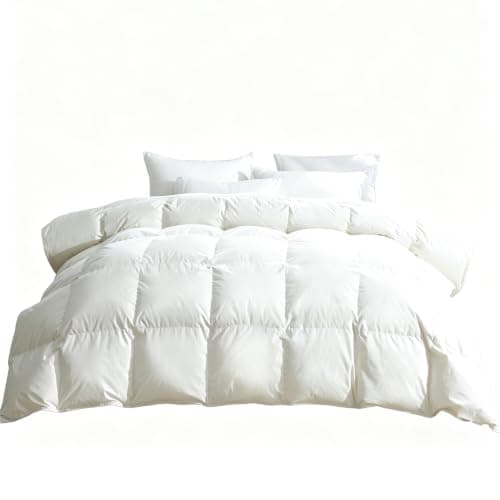 APSMILE All-Season Down-Feather Comforter A lightweight down-feather comforter for a warm room. A summer-weight down layer is the most under-bought thing in bedding, and this is a sensible one. Best for: Lightweight all-season | Lightweight all-season |
Down is not feathers, and the label is counting on the confusion
Start here, because it unpicks most of the marketing at once. Down is not feathers.Down is the soft, three-dimensional undercoat that grows on the chest and belly of a goose or a duck - fluffy clusters with no hard quill, which is exactly why they trap so much air per ounce and loft up into that cloud you're paying for. A feather is the flat, stiff, quilled thing you picture when you hear the word. They are two different materials off the same bird, and only one of them is what makes a comforter warm and light.
This matters because a great many comforters sold as "down" are mostly feather. Feathers are cheaper and heavier, so a blend pads out the fill weight at a lower cost - and the product name is written to slide past you. "Goose down feather fiber", "feather and down", "down feather blend": read those slowly and you'll notice the word feather is right there, usually first, because the fill tends to be listed heaviest component first. On this page, only the puredown 800 and the APSMILE organic are sold as down fill. The two Egyptian Bedding picks, the budget puredown, and the APSMILE lightweight are all blends, and their names say so if you look.
A blend is not a scam. It drapes, it breathes, and it feels far nicer than polyester fiberfill, all for a fraction of what real down costs - which is a perfectly good reason to buy one. The trap is paying a pure-down price for a feather-heavy blend because the listing let you assume. Feather has two real downsides beyond warmth-per-ounce: it's heavier for the same insulation, and its quills can slowly work their way through a loose shell and prick you at two in the morning. If you want the fuller version of this comparison, including where synthetic fill fits, that's our down vs down alternative guide. If a blend is fine and you plan to run it inside a cover, several picks here overlap with our duvet insert roundup, which is chosen on the same fill logic.
One more label word worth decoding: goose versus duck. Both are real down, and a good duck down easily beats a mediocre goose down - the bird matters less than the fill power. As a rule, goose clusters run a little larger and loftier, which is why the very highest fill powers tend to be goose, and duck down can occasionally carry a faint farmyard smell until it's well washed and aired. But don't pay a premium for the word "goose" sitting on top of a low-grade fill. The fill power number tells you far more about what you're getting than the species does, and a listing that leads with "goose" and never mentions a fill power is selling you the reassuring word, not the loft.
Fill power is the quality; fill weight is the warmth
Two numbers decide what a down comforter is, they are constantly confused, and understanding the difference is most of the skill in buying one.
Fill poweris a quality measure. It's the number of cubic inches that a single ounce of the down lofts up to fill under a standard test. Higher means each ounce is fluffier, traps more air, and lasts longer before it packs down. Roughly: 600 is good, 700 to 800 is premium, and 800-plus is exceptional. The puredown 800 at the top is the only pick here that prints a real fill power figure - and that alone is a quiet signal of confidence, because fill power comes from a defined test and a seller with a good one puts it on the box. The APSMILE lightweight says "high fill power" with no number, which is the tell: a measured figure that's genuinely high gets printed as a figure.
Fill weightis how many ounces of that fill are actually in the comforter. This is the number that sets total warmth, and it's the one almost nobody advertises - which is why it's notable that both Egyptian Bedding picks state theirs (48 oz for the all-season, 56 oz for the oversized). Warmth is fill power and fill weight working together: total loft is roughly one multiplied by the other.
Here's the fact that catches everyone out, and it's worth holding onto: a high fill power comforter can be a cool one.Stuff a shell with a small amount of magnificent 800-fill down and you get something feather-light that drapes beautifully and barely warms you - a summer comforter. Stuff a shell with a lot of ordinary 600-fill down and you get a heavy winter comforter that costs less. Fill power on its own tells you the down is good, not that the bed will be warm; it's like knowing a car's fuel efficiency but not the size of its tank. So when you shop, ask two questions, not one: how good is the down, and how much of it is there? Most listings answer neither, and the honest thing to do with a listing that answers neither is to treat its warmth as a guess.
The shell decides whether the down stays in - and off your face
The fill gets all the attention, but the fabric around it does two jobs that make or break the comforter, and both come down to how the shell is woven and built.
The first job is being down-proof. Down clusters are tiny, and quills are sharp; a loose or coarse weave lets them migrate out and poke through, so you slowly lose fill and gain the odd stab in the night. A tight, high-thread-count 100% cotton shell is what keeps everything where it belongs - and cotton earns its place for a second reason, which is that it breathes. Down needs to shed the moisture you give off overnight; a cotton shell lets that vapor pass, while a cheap polyester shell traps it in the fill where it flattens the loft and makes the bed feel clammy. That's why every pick on this page has a cotton shell of some kind. Note the caveat on the oversized Egyptian Bedding, though: "Egyptian cotton" refers to the cotton's origin and long staple, not to how tightly it's woven, so it isn't on its own a promise of down-proofing.
Thread count is the number sellers reach for on the shell, and it's worth the same skepticism you'd bring to anywhere else it appears. A genuinely tight, fine weave is what actually stops down escaping, and a high thread count usually reflects one - but the figure is easy to inflate by counting plied yarns twice, so a claimed 700 you can nearly see daylight through is worth less than an honest, dense 300. What you want on the label is the shell described as down-proof or downproof, ideally in long-staple cotton, rather than just a big number that's doing the same job as "high fill power" with no figure behind it.
The second job is holding the fill in place, and it hinges on one word most people skip:
- Baffle-boxconstruction - the puredown 800 and both Egyptian Bedding picks - sews vertical fabric walls between the top and bottom shells. The down lives in three-dimensional boxes and can loft to its full thickness everywhere, including at the seams, so warmth is even across the whole comforter and the fill can't drift into one corner.
- Sewn-through or box-stitchedconstruction stitches the two shells straight together in a grid. It's cheaper and it does stop the fill migrating, but at every seam the shell is two layers of cloth with no fill between them - a grid of thin cold lines you can feel with your hand in a cool room. On a light summer comforter you won't much notice. On the one you sleep under in January, pay for baffle-box.
One more thing the shell can't do by itself: stay clean. Down doesn't take a weekly wash, so the smart move is to run the comforter inside a duvet coverand let the cover take the laundry - the corner ties on the budget puredown and the tabs on both APSMILE picks exist for exactly that. If you'd rather buy one finished, washable object and skip the cover system entirely, that's a different product and it's covered on our best comforters page.
Ethics, care, and the parts I can't measure
Down comes off a live animal, and where it comes from is a fair thing to care about. The certification to look for is the Responsible Down Standard (RDS), an independent scheme that traces the down back through the supply chain and requires that it not come from live-plucked or force-fed birds. None of the listings on this page state an RDS certification, which doesn't prove anything bad - but it does mean the sourcing is on the seller's word rather than an auditor's, and if animal welfare is a dealbreaker for you, that absence is worth weighing.
Care is where good down gets ruined, so it's worth saying plainly. Down and down-feather comforters want a gentle wash in a very large machine with a mild detergent, and then a long, patient, low-heat tumble dry with a few dryer balls or clean tennis balls thrown in to knock the clumps apart as they dry. The failure mode is pulling it out while it's still damp in the core: trapped moisture clumps the fill and can go musty where you'll never see it. Many people dry-clean high-fill-power down instead, which is the safest route. And the winter-weight picks pair naturally with warm sheets - if you're building a cold-room bed, our flannel sheets roundup is the obvious companion, because a warm comforter over cold sheets still leaves you cold on contact.
Now the honest part, and the reason this page reads differently from the ones with star ratings. I have not tested any of these. There's no lab behind this site, no scale to weigh the fill, no way to verify a fill power figure or count the down clusters against the feather in a blend, and no thermal camera to tell you how warm any of them sleep. Anyone who hands you a precise warmth score for a comforter they bought on Amazon last week is inventing it. What I can do is read the label the way you should - flag when a listing states a real number and when it hides behind a word, point out that a blend is a blend no matter what the title implies, and reason from the materials, because down breathes and lofts and feather doesn't, and that's how the material behaves, not a measurement I took. Where a listing doesn't give a number, I've said so rather than guessed one. That's the whole method, and the numbers the sellers left out are left out here too, on purpose.
The picks, in full
1. Best for Best premium (true high-fill-power down)
puredown 800 Fill Power Goose Down
The rare listing that states a real fill power and a pure-goose-down fill in the same breath. If you want the genuine article, this is where the page starts.
Key specs
- 800 fill power goose down (as listed)
- 100% cotton shell, 700 thread count (as listed)
- Baffle-box, extra warmth (as listed)
- Full/Queen
What's good
- 800 fill power is printed on the listing, not implied - and 800 is exceptional loft, the number premium brands charge for. A stated figure from a defined test is worth more than any warmth adjective on this page
- It's sold as goose down rather than "goose down feather fiber", so you're buying the fluffy clusters that do the insulating, not the flat quilled feathers that pad out a blend
- A 700-thread-count 100% cotton shell is tight enough to be down-proof, and baffle-box construction gives the down room to loft to full thickness instead of pinching flat at every seam
What's not
- 800-fill down with "extra warmth" fill weight is a genuine winter comforter - lovely in a cold room, too much in a warm one, and there is no dialing it down
- It's the most expensive pick here, which is what real high-fill-power goose down costs; the blends below feel similar on the first night for a fraction of the money
- Even a down-proof shell wants a cover over it to keep body oils off, and the listing doesn't state a Responsible Down Standard certification, so the sourcing is on the seller's word
Skip this one if
You sleep hot, or your bedroom stays warm year round. This is a warm, lofty winter comforter you can't turn down - the APSMILE lightweight or the Egyptian Bedding all-season below carry far less heat.
2. Best for All-season value
Egyptian Bedding Goose Down & Feather Fiber
A goose down and feather-fiber blend that actually prints its fill weight - 48 ounces, all-season - which is more honesty about warmth than most of this category offers.
Price as of September 10, 2026. #ad — we earn a commission.
Key specs
- Goose down & feather-fiber blend (as listed)
- 48 oz fill weight, all-season (as listed)
- Baffle-box design (as listed)
- Queen 90x90
What's good
- 48 oz of fill is stated outright. Fill weight is the number that sets total warmth and almost nobody publishes it, so a listing that commits to one lets you compare warmth instead of guessing
- Baffle-box construction means fabric walls hold the fill in three-dimensional boxes, so it lofts evenly rather than sliding into a lump at the foot of the bed
- A goose down and feather blend drapes and follows your shape the way polyester fiberfill never does, at a price a long way below pure down
What's not
- "Goose down & feather fiber" is a blend, not pure down. The feather portion is heavier, flatter and less lofty than down, which is exactly why 48 oz of it costs what it does
- It states a fill weight but no fill power, so you know how much fill is in there but not how good it is - warmth yes, quality no
- Feather blends can't be tossed in the machine casually. Wash it wrong and the fill clumps, so this is a gentle-cycle or dry-clean item, not a weekly wash
Skip this one if
You want pure, high-loft down and you're willing to pay for it. A blend is heavier and flatter for the same warmth - the puredown 800 above is the pick if loft and longevity matter more than price.
3. Best for Best budget cotton-shell
puredown Goose Feather Down Comforter
The budget way to get a real cotton shell over a natural fill. It's feather-forward, and the corner ties tell you it's built to live inside a duvet cover.
#ad — we earn a commission.
Key specs
- Goose feather-down blend (as listed)
- 100% cotton shell, 500 thread count (as listed)
- Corner ties (as listed)
- Full/Queen
What's good
- A 100% cotton shell at this price is unusual - cotton breathes, so the moisture you shed overnight leaves the fill instead of condensing in it and flattening the loft
- Corner ties mean it anchors inside a duvet cover, which is the right way to run a natural-fill comforter: the cover takes the laundry and the fill stays clean for years
- Feather-and-down still drapes and lofts far better than any polyester alternative, and this is about the cheapest honest route into that feel
What's not
- "Goose feather down" lists feather first for a reason - it's feather-forward, so heavier and less lofty than a down-led blend, and quills can work through the shell over the years
- 500 thread count is a looser weave than the down-proof premium shells, so it's more likely to leak the odd quill and shed a little fill
- No fill power and no fill weight are stated, so you're buying on the word "down" in the title rather than on any number you can check
Skip this one if
You want to use it bare, without a cover. The corner ties and the feather-forward fill both point at the duvet system - if you want a finished bed straight out of the box, our comforters roundup is the better page.
4. Best for Organic-cotton shell
APSMILE Down Comforter (Organic Cotton)
An organic-cotton shell over a down fill, all-season weight. The pick if the shell material matters to you as much as what's inside it.
Price as of September 10, 2026. #ad — we earn a commission.
Key specs
- Down fill, all-season (as listed)
- 100% organic cotton cover (as listed)
- Corner tabs (as listed)
- Queen 90x90
What's good
- A 100% organic cotton cover is the draw here - it breathes like any cotton and skips the heavy chemical finishing, which matters on the layer that sits against you all night
- It's sold as down fill rather than a feather blend, so you're closer to real clusters and real loft than the feather-forward picks on this page
- Corner tabs let it anchor inside a cover, and all-season weight makes it a sensible single comforter for a moderate, steady bedroom
What's not
- "Down fill, all-season" with no fill power and no fill weight is a warmth word, not a spec - you can't tell how lofty the down is or how much of it is in there
- All-season is a middle amount of insulation chosen to be tolerable rather than right; in a room that swings hot and cold it's slightly wrong at both ends
- The listing doesn't state a Responsible Down Standard certification, so the animal-welfare sourcing is unverified and on the brand's word
Skip this one if
Your bedroom runs genuinely cold in winter. An all-season down comforter won't carry a cold room - pair it with warm flannel sheets, or step up to the winter-weight puredown 800 above.
5. Best for Oversized for deep or pillow-top beds
Egyptian Bedding Oversized 98x98
The one to buy for a deep or pillow-top bed. A 98-by-98 blend with 56 ounces of fill, built to drape over a tall mattress instead of perching on top of it.
Price as of September 10, 2026. #ad — we earn a commission.
Key specs
- Goose down & feather fiber (as listed)
- Oversized 98x98 (as listed)
- 100% Egyptian cotton cover, 56 oz (as listed)
- Baffle-box
What's good
- 98 x 98 inches is genuinely oversized - it overhangs a thick or pillow-top mattress properly, and the overhang is what stops cold air being pumped up the sides of the bed every time someone turns over
- 56 oz of fill is stated, and on an oversized comforter that fill weight matters more than usual because there's far more surface area to keep warm
- Baffle-box construction under an Egyptian cotton cover keeps the fill lofted and evenly spread across a large comforter, where sewn-through stitching would leave cold grid lines
What's not
- It's a goose down and feather fiber blend, so the same story as the other Egyptian Bedding pick: heavier and flatter for its warmth than pure down would be
- 56 oz across a 98-inch comforter is a lot to wash and dry, and feather blends need a big drum and a patient low-heat dry to avoid clumping inside
- "Egyptian cotton" describes the cotton's origin and staple length, not how tight the weave is, so it isn't on its own a guarantee the shell is fully down-proof
Skip this one if
You have a standard-depth mattress. On a 10-inch bed a 98-inch comforter is too much fabric and pools on the floor - the 90 x 90 Egyptian Bedding all-season above is the right size for a normal bed.
6. Best for Lightweight all-season
APSMILE All-Season Down-Feather Comforter
A lightweight down-feather comforter for a warm room. A summer-weight down layer is the most under-bought thing in bedding, and this is a sensible one.
Key specs
- Down-feather fibers (as listed)
- 100% organic cotton, high fill power (as listed)
- Medium warmth (as listed)
- Full/Queen 90x90
What's good
- Lightweight down-feather over an organic cotton shell is the right way to build a warm-room comforter: less fill, not worse fill, so it still lofts and drapes while carrying far less heat
- The organic cotton cover breathes, which is exactly what you want on a comforter for a warm bedroom where trapped moisture is what makes the bed feel clammy
- A genuine second comforter - keeping a light one for summer and a warm one for winter works better over a decade than fighting one all-season compromise
What's not
- "High fill power" appears with no number attached. Fill power is a measured figure; a listing that says "high" and stops has told you nothing you can check
- It's a down-feather blend, so feather-forward again - heavier and less lofty than pure down, and capable of shedding the occasional quill
- A lightweight comforter is genuinely too cold for a cold room. That's the design, not a fault, but people buy it as their only comforter and complain in January
Skip this one if
This will be your only comforter and you have real winters. It won't stretch to cover a cold room - buy it as your summer layer and run the winter-weight puredown 800 or the 48 oz Egyptian Bedding above for the cold months.
Common questions
What is fill power in a down comforter?
Fill power measures the quality and loft of the down, not how warm the comforter is. It's the number of cubic inches that one ounce of the down springs up to fill under a standard test, so higher fill power means each ounce traps more air, lofts higher, feels fluffier and lasts longer. Around 600 is good, 700 to 800 is premium, and 800-plus is exceptional. What fill power does not tell you is total warmth, because that also depends on fill weight - how many ounces are actually in the comforter. A small amount of 800-fill down makes a light, airy summer comforter; a large amount of 600-fill down makes a heavy winter one. Fill power tells you the down is good, not that the comforter is warm.
Is a down or a down-feather comforter better?
Down is better if you can afford it and aren't allergic. Down is the fluffy three-dimensional undercoat from a goose or duck's chest, with no quill - it's the part that lofts and insulates. A down-feather or 'down feather fiber' blend mixes in flat, quilled feathers, which are cheaper, heavier and less lofty, and whose quills can eventually poke through a loose shell. A blend still drapes and breathes far better than polyester and costs a fraction of pure down, so it's a reasonable buy - just know it's heavier and flatter for the same warmth, and that the word 'down' in the title is doing a lot of work when the fill is mostly feather. If you want the light, deep, hotel loft, that is what pure high-fill-power down does and a blend doesn't.
How do I know if a comforter is real down?
Read the label, because the name is written to be skimmed. Pure down says 'goose down' or 'duck down', ideally with a fill power figure like 700 or 800. A blend says 'goose down feather fiber', 'feather and down', or 'down feather' - and the word order is a clue, because fill is usually listed heaviest-first, so 'feather down' is more feather than down. A very cheap 'down' comforter is almost always a blend or mostly feather; genuine high-fill-power down is expensive and the seller advertises the number because it's the selling point. If a listing brags about being 'down' but never states a fill power, assume it's a blend and price it accordingly.
How do you wash a down comforter?
Gently, and not often. Down and down-feather comforters need a very large machine so the fill can move, a mild detergent, a gentle cycle, and a long, low-heat tumble dry with a few dryer balls or clean tennis balls to break up the clumps as it dries. The mistake that ruins down is stopping while it's still damp inside - trapped moisture makes the fill clump and can go musty where you can't see it, so dry it far longer than feels necessary. Many people dry-clean instead, which is safest for high-fill-power down. The bigger point is to avoid washing it at all: run it inside a duvet cover, wash the cover weekly, and the down itself only needs cleaning once or twice a year.
Do down comforters make you too hot?
It depends far more on the fill weight than on the word 'down'. Down is actually very breathable - it passes the moisture you shed overnight through instead of holding it against you, which is why a well-made down comforter can feel cooler than a polyester one of the same warmth. What makes you too hot is buying too much fill for your room: a heavy, high-fill-weight winter comforter in a warm bedroom will cook you no matter how good the down is. The fix is to match the weight to your room - a lightweight or 'summer weight' down comforter for a warm room, a heavier one only for a genuinely cold one - rather than assuming down means hot.
Sources
Where the facts on this page come from. We cite other people's testing because we don't do our own — here's what that means.
Read next
- The Best Comforters for WinterSix genuinely warm comforters for a cold bedroom, sorted by how each fill holds heat - premium down, temperature-regulating wool, and dense down alternative - with an honest note on who should skip each.
- Wool vs Down ComforterDown is the loftiest, lightest, warmest-for-its-weight fill with a cloud-like feel, but it can sleep hot and needs careful washing. Wool regulates temperature across seasons, wicks moisture, resists dust mites, and is low-maintenance but heavier and flatter. Here's how to choose between the two natural fills.
- What Is Fill Power?Fill power measures the loft and quality of down — how many cubic inches one ounce fluffs up to fill — so higher fill power means fluffier, warmer-for-its-weight down. It is not the same as warmth: that depends on fill power and fill weight together. Here's how to read the number and the typical quality bands.
- How to Choose a ComforterFive levers decide a comforter: fill (down, down alternative, wool, or cotton), warmth level for your climate, finished comforter versus insert-plus-cover, size and drape, and construction and care.
- Comforter Sizes: What Size Fits Your BedTypical comforter and duvet-insert dimensions by bed size, why comforters run small on thick modern mattresses so many people size up, and how to measure for the drape you want.
- TOG Ratings: What the Warmth Number Really MeansA TOG rating measures a duvet's warmth — higher means warmer — and nothing about its quality or fill amount. Here's how to pick a TOG by season and by whether you sleep hot or cold, plus why US comforters often skip the number entirely.
- How to Wash a Comforter or Duvet InsertA wash-and-dry method for comforters and duvet inserts by fill — down and feather, down-alternative and polyester — plus the machine-size problem that quietly ruins big comforters, the duvet-cover shortcut, and the honest test for when to replace instead.
- The Best Down PillowsSix real goose down and feather pillows, sorted by how much down is actually in them — plush pure down to firmer feather blends — with honest cons and a skip note on every one.
- The Best Quilts and CoverletsSix lightweight quilts worth buying, the quilt-versus-comforter difference most buyers get backwards, and why 100% cotton beats a cheaper microfiber coverlet.
- Down vs Down AlternativeDown is warmer for its weight, lofty and long-lasting but pricier and higher-maintenance. Down alternative is cheaper, hypoallergenic and easy-care but heavier and shorter-lived. Here's how fill power and fill weight decide which is right for you.
- The Best ComfortersSix comforters worth buying, the comforter-versus-duvet decision most buyers get backwards, and why all-season weight is usually the wrong compromise.
- The Best Duvet InsertsSix duvet inserts worth buying, plus the two numbers sellers conflate, why baffle-box construction beats box stitching, and how to pick warmth for your room.
- The Best Duvet CoversSix duvet covers worth buying, plus the one word on the label that separates cotton from polyester, why corner ties matter more than thread count, and how to size a cover to your insert.
- The Best Flannel Sheets for WinterSix genuinely warm cotton flannel sets, chosen on fiber and GSM rather than marketing — with an honest note on who should skip each and the fleece-flannel trap to dodge.