The Best Cotton Sheets
Two sheets can both say 100% cotton and be made of genuinely different stuff. The difference is the length of the individual fiber, it is what separates a set that softens for a decade from one that pills in a year, and almost no label states it outright. Six sets ranked by how much their fiber claim can actually be checked.
We earn a commission if you buy through our links. It doesn't affect our picks — and we never take free products. How this site is funded.
Quick picks
| # | Product | Best for | Price |
|---|---|---|---|
| 1 | 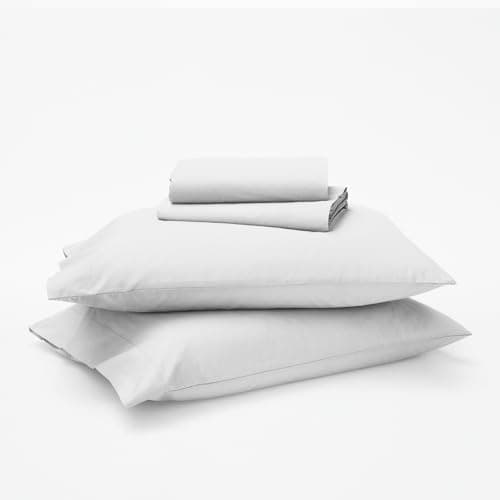 Tuft & Needle Supima Cotton Percale Sheet Set A verifiable fiber, a sane weave, and no thread-count number anywhere on the listing. That last absence is a feature, and it is why this is the set we would buy first. Best for: Best overall | Best overall | |
| 2 | 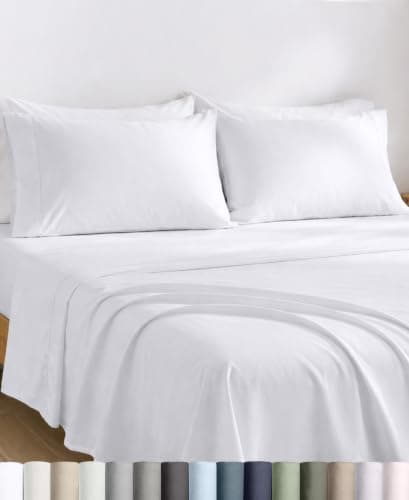 California Design Den 100% Egyptian Cotton Deep Pocket Queen Sheets The Egyptian-cotton label is loosely policed, so what you are really buying here is a brand with a track record for accurate cotton listings. That is worth something — it is just not the same as a certification. Best for: Best Egyptian-labeled set | Best Egyptian-labeled set | |
| 3 | 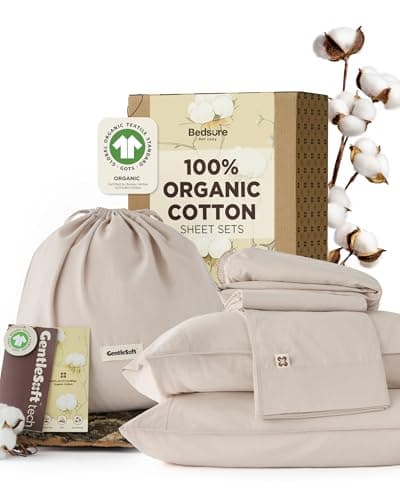 Bedsure PureWoven 100% GOTS Certified Organic Cotton Sheets The only certification on this page that is genuinely independent and genuinely auditable. Just be clear about what it certifies — it is a claim about how the cotton was grown and processed, not about how long the fiber is. Best for: Best certified organic | Best certified organic | |
| 4 | 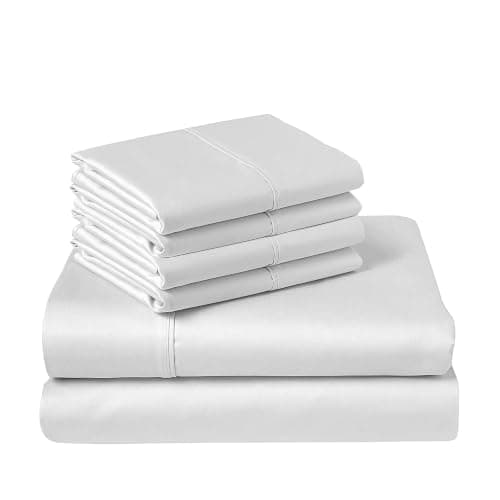 Pizuna 100% Cotton Sheets Set, 400 Thread Count A 400 thread count is a real number rather than a marketing one, and this set ships with four pillowcases instead of two. Unglamorous, plausible, and priced in the middle. Best for: Best believable thread count | Best believable thread count | $97.99 · View on Amazon Price as of September 10, 2026. #ad — we earn a commission. |
| 5 | 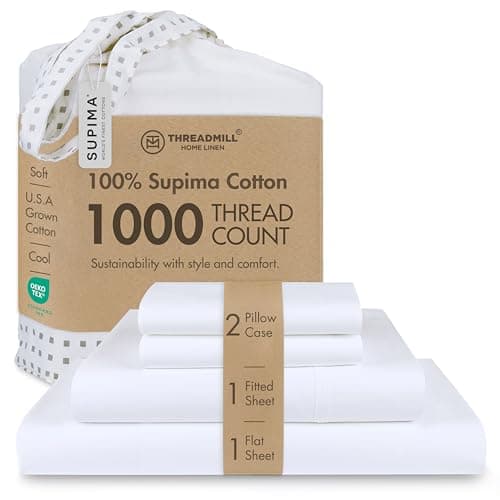 Threadmill Supima Cotton Sateen Sheet Set Buy this for the fiber and ignore the number. It is verified Supima in a sateen weave, which is the silky end of cotton — and the four-figure thread count on the box is the part we would not pay a cent for. Best for: Best silky Supima | Best silky Supima | $149.99 · View on Amazon Price as of September 10, 2026. #ad — we earn a commission. |
| 6 |  Comfort Spaces 100% Cotton Percale Sheets The cheapest genuine 100% cotton set here, in the weave that suits cheap cotton best. Buy it for a guest room, a kid's bed or a stopgap, and expect exactly what you paid for. Best for: Best budget | Best budget |
"Cotton" is not one material
Two sheet sets can both say 100% cotton on the packet and be made of genuinely different fiber. The variable is staple — the length of the individual cotton fiber before it is spun into yarn — and it decides almost everything you will notice about a sheet over its life.
USDA puts the numbers plainly. Upland cotton, Gossypium hirsutum, has a staple of about 1 to 1 1/4 inches and accounts for roughly 97% of US production. Pima, Gossypium barbadense — the extra-long-staple type — measures 1 3/8 inches or longer and is the remaining 3%. That gap of a third of an inch is not cosmetic. Longer fibers spin into a stronger, smoother, more uniform yarn with far fewer short ends sticking out of it, and those short ends are what work loose in the wash, ball up into pills, and turn a sheet fuzzy and thin at the hip and heel.
That is the whole reason a good long-staple sheet gets softer every year while a cheap one gets worse. Sleep Foundation describes regular cotton as short-staple and usually found in less expensive sheets, and Pima and Supima as long-staple cottons that yield breathable, plush and durable fabric. So the question worth asking in front of a listing is not "is this cotton?" It is which cotton — and the answer is very often not on the label at all.
Which claims on the label actually prove something
Because the fiber length is rarely stated outright, you end up shopping by proxy. Not all proxies are worth the same, and this is the ranking this whole page is built on:
- Supima — the strongest claim. Supima is a trademark applied to extra-long-staple American Pima cotton grown in the American west and southwest, and Supima describes it as less than 1% of the cotton grown in the world. A brand cannot simply write it on a package; it is a licensed mark with an owner who polices it. When a listing says Supima, the fiber length is effectively settled.
- A licensed Egyptian trustmark — strong, if present. The Cotton Egypt Association licenses a trustmark for genuine Egyptian cotton. A licensed logo is real evidence in the same way Supima is.
- The bare phrase "Egyptian cotton" — weak. Genuine Egyptian cotton is extra-long-staple and excellent. The phrase, however, is not tightly enforced at retail, and plenty of what carries it is blended, ordinary-staple, or grown elsewhere. Our Egyptian cotton guide takes that apart properly. Treat the phrase alone as marketing and the brand's track record as the actual evidence.
- GOTS organic — a real certification about a different thing. The Global Organic Textile Standard certifies textiles made with organic fibers across every step from fiber processing and spinning through wet processing, manufacturing and trading, with criteria for chemical inputs, wastewater and traceability. It is auditable and it means what it says. It just says nothing whatsoever about staple length, so organic and long-staple are two separate purchases.
- "100% cotton" — a floor, not a claim. It tells you there is no polyester in the fabric, which is genuinely worth knowing, and nothing else. Assume ordinary upland cotton unless something else on the listing says otherwise.
Read the picks above against that ladder and the ordering explains itself. The set we would buy first is the one whose fiber claim can be checked and whose listing does not lean on a number instead.
Thread count is the number to ignore
Almost every cotton sheet is sold on thread count, and it is close to the least useful figure on the box. Sleep Foundation puts quality cotton broadly at 200 to 400 — around 200 to 400 for a good percale, 300 to 600 for a good sateen, because a sateen weave floats more yarn across the face of the fabric and so counts higher by construction.
Above that the number decouples from the fabric. The mechanism is specific: manufacturers use double- or triple-ply yarns, usually of lower quality, and because each thread technically contains two or three fibers, it gets counted two or three times. Sleep Foundation's advice is blunt — be wary of extremely high thread counts such as 900 or more, since this is often an indication of low-quality sheets dressed up with a trick. A four-figure number on a package is a marketing decision, not a finer weave, which is why one pick above is recommended for its fiber with an explicit instruction to disregard the number printed next to it. Our thread count guide has the full mechanics if you want them.
Weave second: percale or sateen
Fiber decides how long the sheet lasts. Weave decides how it feels tonight, and the two decisions are independent — you can buy short-staple percale or Supima sateen, and both exist on this page.
Percale is a plain over-under weave: matte, breathable, crisp in the way a good hotel bed is crisp, and softer with every wash. It is the weave to buy if you sleep hot, and it is the honest weave at a low price because a plain weave has nowhere to hide poor fiber. Sateen floats more yarn on the surface, which is what gives it drape, sheen and a smooth hand straight out of the packet — and also what makes it warmer and less airy. Neither is better in the abstract. Our percale vs sateen guide works through which suits which sleeper, and if you already know your answer, the dedicated percale and sateen roundups go deeper on each weave than this page does.
What cotton is good at, and where another fiber wins
Cotton is the default for reasons that hold up: it breathes, it absorbs, it is easy to launder, and it spans nearly every price point, which is why Sleep Foundation credits the category's appeal to its sheer diversity. For most people, most of the time, a good cotton sheet is the correct answer and the rest of this section is optional reading.
There are two cases where it is not. If you sleep genuinely hot and have already tried percale, linen breathes better still — at a higher price and with a rumpled look you either want or you don't; our linen picks cover it. And if the budget is the binding constraint, the honest comparison is against rayon-from-bamboo and microfiber rather than against better cotton — our cotton vs bamboo guide runs that trade, and our microfiber page is blunt that the cheapest synthetic option does not breathe the way cotton does. What we would not do is buy a poly-cotton blend to save a few dollars over a real cotton percale.
Two practical things nobody mentions until it's too late
Pocket depth. The single most common reason a perfectly good sheet set gets sent back is that the fitted sheet will not reach around the mattress. Mattresses have got taller — a 13- or 14-inch bed is ordinary now, and a topper adds several inches on top of that. Measure the mattress you actually own, from the top surface to where it meets the frame, and match it to a stated pocket depth. Only some listings state one; where a listing is silent, treat it as a standard depth. Our guide to deep pocket sheets covers the measuring properly.
The first wash. Cotton relaxes and shrinks somewhat the first time it is laundered, which is normal and is partly why a new set can feel tight or stiff for a week or two. This is also when a cheap short-staple sheet starts revealing itself, because the loose fiber ends that will eventually pill begin working free. Wash a new set before you judge it, and give a percale a month before deciding it is too crisp — the softening is real and it is gradual. If you are working out a whole bed rather than just the sheets, our guide to choosing bed sheets starts from scratch.
What we can't measure
We have not slept on these sets, we have not laundered them fifty times, and we do not own a microscope to count fiber ends. There is no test lab behind this site. So we are not going to give you a softness score or tell you which of these will still look good in year six, because we would be inventing it — and a fabricated number is worse than no number.
What we can do is read exactly what each listing commits to in writing, rank those claims by how verifiable they actually are, and say plainly when a set's headline claim is one nobody polices. That is why several picks above carry a con that amounts to "the listing does not say", and why the most expensive set here comes with an instruction to ignore its own biggest selling point. The full method, including the claims we refuse to make, is on how we review. And if price rather than fiber is the thing driving this purchase, our budget sheets page covers the cheap end across every material honestly, including where a synthetic genuinely beats a bad cotton.
The picks, in full
1. Best for Best overall
Tuft & Needle Supima Cotton Percale Sheet Set
A verifiable fiber, a sane weave, and no thread-count number anywhere on the listing. That last absence is a feature, and it is why this is the set we would buy first.
Key specs
- 100% Supima cotton (as listed)
- Percale weave (as listed)
- Queen, 'Cloud' colorway
- 4-piece set
What's good
- Supima is a trademark, not an adjective. It is applied to extra-long-staple American Pima cotton, which USDA measures at 1 3/8 inches or longer against 1 to 1 1/4 inches for the ordinary upland cotton in most sheets — so the word on this listing is doing real work that "100% cotton" cannot
- The listing quotes no thread count at all, which on this page counts in its favor. A brand confident in its fiber does not need to advertise a number, and the number is the part of a sheet label most easily inflated
- Percale over long-staple cotton is the combination that ages well: a crisp, breathable plain weave with few short fiber ends to work loose, so it softens with washing rather than pilling
What's not
- Percale is crisp, and crisp reads as "rough" to anyone shopping for a silky hand. If that is you, this is the wrong weave and one of the sateen picks below is the right one
- The listing states no thread count, no pocket depth and no GSM, so beyond the fiber and the weave there is very little published to check
- It is among the pricier sets here, and the colorway choice on this listing is narrow
Skip this one if
You want a sheet that feels smooth and cool-slick the moment you get in. Percale gets softer over months, not overnight — read our percale vs sateen guide before you commit to a weave.
2. Best for Best Egyptian-labeled set
California Design Den 100% Egyptian Cotton Deep Pocket Queen Sheets
The Egyptian-cotton label is loosely policed, so what you are really buying here is a brand with a track record for accurate cotton listings. That is worth something — it is just not the same as a certification.
Key specs
- 100% Egyptian cotton (as listed)
- Deep pocket (as listed)
- Queen, White
- 4-piece set
What's good
- California Design Den builds its whole catalog on stated cotton content rather than fiber blends, and it is the brand behind one of the sateen picks elsewhere on this site — that consistency is the strongest signal available when the label itself is not policed
- Deep pocket is stated, which matters more than most shoppers expect: a fitted sheet that will not reach around a modern mattress is the single most common reason a good set gets returned
- Genuine Egyptian cotton is extra-long-staple, and where the claim holds you get the same physical advantage Supima gives — a stronger, smoother, more uniform yarn with fewer short fiber ends
What's not
- "Egyptian cotton" is not tightly enforced at retail. This listing names no Cotton Egypt Association trustmark and no staple length, so the fiber claim rests on the brand's reputation rather than on anything you can verify
- No thread count and no weave named in the listing title, so you cannot tell from the page whether you are getting percale crispness or sateen drape
- It costs meaningfully more than the plain-cotton sets further down without a verifiable fiber claim to justify the gap
Skip this one if
You want proof rather than reputation. If the fiber claim is the reason you are paying up, buy one of the Supima sets instead — our Egyptian cotton guide explains exactly why that label is the weaker promise.
3. Best for Best certified organic
Bedsure PureWoven 100% GOTS Certified Organic Cotton Sheets
The only certification on this page that is genuinely independent and genuinely auditable. Just be clear about what it certifies — it is a claim about how the cotton was grown and processed, not about how long the fiber is.
Key specs
- 100% cotton (as listed)
- GOTS certified organic (as listed)
- Queen
- 4-piece set
What's good
- GOTS covers every step of production from fiber processing and spinning through wet processing, manufacturing and trading, with criteria for chemical inputs, wastewater and traceability — so unlike most bedding claims, there is a document behind it
- For anyone who cares about what was used on the crop and in the dyehouse, this is the pick, and it is the only set here where that question is answered by a third party rather than by marketing copy
- Bedsure is one of the highest-volume bedding brands on the marketplace, which in practice means stable listings and a returns operation that actually functions
What's not
- GOTS says nothing about staple length or fabric quality. An organic sheet can be short-staple cotton, and this listing names no staple length — so on the axis this page is built around, it is unverified
- No thread count and no weave stated in the listing title, so the hand of the fabric is a surprise until it arrives
- You are paying a certification premium for an environmental claim, not for a better-feeling sheet — those are different purchases and it is worth being honest about which one you are making
Skip this one if
Your priority is how the sheet feels and how long it lasts. Organic is a farming claim; long-staple is a performance claim. If you want the second one, buy Supima and read our guide on choosing bed sheets first.
4. Best for Best believable thread count
Pizuna 100% Cotton Sheets Set, 400 Thread Count
A 400 thread count is a real number rather than a marketing one, and this set ships with four pillowcases instead of two. Unglamorous, plausible, and priced in the middle.
Price as of September 10, 2026. #ad — we earn a commission.
Key specs
- 100% cotton (as listed)
- 400 thread count (as listed)
- Queen, with 4 pillowcases (as listed)
- White
What's good
- 400 sits at the top of the range Sleep Foundation gives for quality cotton sheets — 200 to 400 — rather than in the inflated territory above it, so the number on this box is one you can take at face value
- Four pillowcases rather than the usual two is a genuine, boring, practical advantage: it is a spare set between washes for the item that gets dirtiest fastest
- A plain 100% cotton set at a sane thread count is the low-regret purchase in this category — nothing here is trying to sell you a story
What's not
- The listing makes no staple-length claim at all, so assume ordinary upland cotton. That is not a fault, it is what most cotton is — but it means this set will not have the longevity of the Supima picks
- No weave stated in the listing title, so whether it arrives crisp or smooth is not something you can determine before buying
- It costs more than sets with equivalent published specs, and the extra pillowcases are much of what you are paying for
Skip this one if
You are buying sheets to last a decade. Ordinary-staple cotton at a fair price is a four-or-five-year sheet, and if longevity is the point the fiber has to be long — start with the Tuft & Needle set at the top.
5. Best for Best silky Supima
Threadmill Supima Cotton Sateen Sheet Set
Buy this for the fiber and ignore the number. It is verified Supima in a sateen weave, which is the silky end of cotton — and the four-figure thread count on the box is the part we would not pay a cent for.
Price as of September 10, 2026. #ad — we earn a commission.
Key specs
- 100% Supima cotton (as listed)
- Sateen weave (as listed)
- 1000 thread count (as listed)
- Queen, White
- 4-piece set
What's good
- It is Supima, which is the trademark applied to extra-long-staple American Pima cotton — a fiber Supima itself describes as under 1% of the cotton grown in the world, and the claim on this listing is the checkable kind
- Sateen is the weave for anyone who finds percale too crisp: more yarn surface on the face of the fabric, so it drapes and feels smooth rather than papery, and long-staple fiber is what keeps that smoothness from turning fuzzy
- Threadmill sells across several thread counts and colorways in the same Supima line, so if the number below bothers you there are lower-count versions of the same fiber
What's not
- The thread count is the problem. Sleep Foundation puts quality sateen at 300 to 600 and warns shoppers to be wary of extremely high thread counts such as 900 or more, because multi-ply yarns get counted two or three times to inflate the figure — this listing is at 1000
- Sateen is less breathable than percale by construction, so a hot sleeper is buying the wrong weave here no matter how good the fiber is
- It is the most expensive set on this page, and part of that price is the number we just told you to ignore
Skip this one if
You sleep hot. Sateen's smooth face is the least airy cotton weave there is — our best cooling sheets page leads with percale and other builds that actually move heat.
6. Best for Best budget
Comfort Spaces 100% Cotton Percale Sheets
The cheapest genuine 100% cotton set here, in the weave that suits cheap cotton best. Buy it for a guest room, a kid's bed or a stopgap, and expect exactly what you paid for.
Key specs
- 100% cotton (as listed)
- Percale weave (as listed)
- Queen, 4-piece
- Diamond Blue colorway
What's good
- Percale is the right weave at this price. A plain over-under weave has nowhere to hide, so a budget percale is honest about what it is in a way a budget sateen — which needs good fiber to stay smooth — is not
- It is genuine 100% cotton rather than a poly-cotton blend or microfiber, which means it breathes; our microfiber page is blunt that the synthetic alternative at this price does not
- At this price a sheet set is close to a consumable. For a spare room, a bunk, or a household with kids, buying two cheap cotton sets beats babying one expensive one
What's not
- No staple-length claim, no thread count and no certification of any kind in the listing — assume ordinary short-staple upland cotton, which is what the price implies
- Short-staple cotton has more loose fiber ends, so this is the set on this page most likely to pill and thin at the wear points within a couple of years
- The colorway on this listing is a specific patterned blue rather than a plain white, which matters if you are matching an existing room
Skip this one if
This is your main bed and you want it to last. A budget percale is a spare-room sheet — for a bed you sleep in every night, the fiber is worth paying for, and our budget sheets page covers the value end across every fiber if price is the binding constraint.
Common questions
What is the best type of cotton for sheets?
Long-staple or extra-long-staple cotton, whatever country it comes from. Staple is the length of the individual cotton fiber, and USDA puts Pima — the extra-long-staple type — at 1 3/8 inches or longer, against 1 to 1 1/4 inches for the ordinary upland cotton that makes up the overwhelming majority of the crop. Longer fibers spin into a stronger, smoother, more uniform yarn with fewer short ends to work loose, which is the physical reason a good long-staple sheet gets softer with washing instead of pilling. Sleep Foundation describes regular cotton as short-staple and found in less expensive sheets, and Pima and Supima as long-staple cottons that yield breathable, plush, durable fabric. Buy the fiber length, not the country name.
Is Supima better than Egyptian cotton?
They are the same underlying thing — extra-long-staple cotton — but Supima is the one you can actually verify. Supima is a trademark applied to extra-long-staple American Pima cotton grown in the American west and southwest, and Supima states it is less than 1% of the cotton grown in the world. "Egyptian cotton" is a descriptive phrase that is not tightly policed at retail, so a set can carry it without being extra-long-staple at all. The Cotton Egypt Association does license a trustmark for genuine Egyptian cotton, and a licensed logo is real evidence — but the bare phrase on a listing is not. Where you cannot verify, buy Supima.
What thread count is best for cotton sheets?
Roughly 200 to 400 for cotton generally, per Sleep Foundation — 200 to 400 for a quality percale and 300 to 600 for a quality sateen, because a sateen weave uses more yarn on the face of the fabric. Above that the number stops meaning much. Sleep Foundation warns shoppers to be wary of extremely high thread counts such as 900 or more, because manufacturers inflate the figure by using double- or triple-ply yarns — usually of lower quality — and counting each thread two or three times. A four-figure thread count is a marketing decision, not a finer fabric. Treat the range as a sanity check and spend your attention on the fiber instead.
Are organic cotton sheets better?
Better for a different question than the one most people are asking. GOTS — the Global Organic Textile Standard — certifies textiles made with organic fibers and covers every step from fiber processing and spinning through wet processing, manufacturing and trading, with criteria for chemical inputs, wastewater and traceability. That is a real, audited claim about how the cotton was grown and finished. What it is not is a claim about staple length or fabric quality, and GOTS makes no such claim. So an organic sheet can be short-staple cotton that pills. If your concern is what was sprayed on the crop, buy certified organic. If your concern is how the sheet feels in year five, buy long-staple.
Percale or sateen for cotton sheets?
Percale if you sleep hot or like a crisp, hotel-bed feel; sateen if you want smooth drape and a softer hand out of the packet. It is the same cotton woven two ways. Percale is a plain over-under weave — breathable, matte, crisp at first and softer with every wash. Sateen floats more yarn across the surface, which is what makes it smooth and lustrous, and also what makes it warmer and less airy. Neither is better in the abstract, and the weave decision is independent of the fiber decision: you can buy short-staple percale or Supima sateen. Our percale vs sateen guide walks through which one suits which sleeper.
Sources
Where the facts on this page come from. We cite other people's testing because we don't do our own — here's what that means.
- USDA Economic Research Service — cotton sector at a glance (Pima vs upland staple length and crop share)
- Supima — what Supima cotton is (extra-long-staple American Pima; share of world cotton)
- Sleep Foundation — best thread count for sheets (ranges by weave; inflated multi-ply counts)
- Sleep Foundation — best material for bed sheets (cotton types and staple length)
- Global Organic Textile Standard — what GOTS covers
- Cotton Egypt Association — the Egyptian Cotton trustmark
- FTC — Endorsement guides (why this disclosure exists)
Read next
- The Best Percale SheetsFive percale sheet sets - the crisp, cool, matte cotton weave hot sleepers want - spanning budget organic to a cooling finish, with honest notes on wrinkling and fit.
- The Best Sateen SheetsFive sateen sheet sets - the silky, lustrous, wrinkle-resistant cotton weave - from a budget 300-count to a plush high-count set, with honest notes on heat, pilling and the thread-count game.
- What Is Egyptian Cotton?What Egyptian cotton really is - an extra-long-staple fiber - why staple length, not the country name, drives quality, and how to shop past one of bedding's most abused labels.
- Thread Count: What It Really MeansThread count is real up to roughly 400-600. Above that, it is mostly a counting trick — and fiber and weave matter more than the number ever did.
- Percale vs Sateen SheetsTwo weaves, one decision: crisp and breathable, or silky and warm. Plus why thread count is mostly a marketing number.
- The Best Budget SheetsSix genuinely cheap sheet sets worth owning, split by fiber - microfiber, cotton and bamboo/rayon - with the honest trade-off of each stated plainly and a note on who should spend a little more.
- Cotton vs Bamboo SheetsCotton's durability and get-softer-with-age value versus bamboo-rayon's silky, cool, drapey feel — plus the labeling truth almost no bamboo listing says out loud.
- How to Choose Bed SheetsFiber is the biggest decision — cotton, linen, bamboo, microfiber or Tencel — then weave (percale vs sateen), then fit and care. Thread count matters least.