The Best Budget Mattresses for Back Pain
The problem with shopping cheap for a bad back is that the very cheapest mattresses — the thin 8-inch slabs and the plush budget foam — are the ones most likely to make it worse. These six spend the money where a spine actually needs it: a real support core and a medium-firm surface, at a price that still counts as budget.
We earn a commission if you buy through our links. It doesn't affect our picks — and we never take free products. How this site is funded.
Quick picks
| # | Product | Best for | Price |
|---|---|---|---|
| 1 | 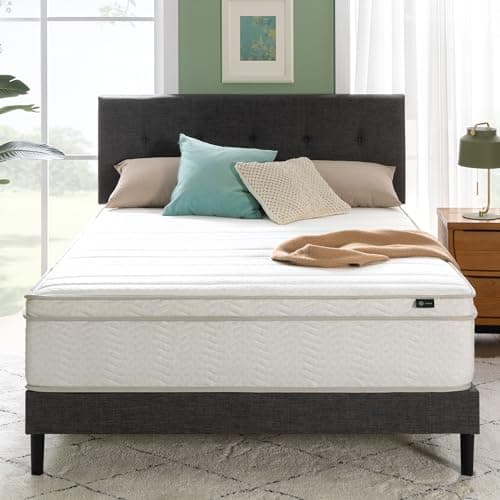 Zinus 12" Foam and Spring Hybrid The cheapest bed here with a genuine coil support core, and for a bad back the core is the part that decides whether your hips stay lifted. Everything else on this page is a variation on that idea. Best for: Best overall on a budget | Best overall on a budget | $268.27 · View on Amazon Price as of September 12, 2026. #ad — we earn a commission. |
| 2 | Zinus Green Tea 12" Memory Foam The most known-quantity foam bed at the bottom of the market, at a genuine 12-inch depth so the comfort layer has room to cushion without bottoming out onto the floor. The safe default if you want foam, not coils. Best for: Best budget all-foam | Best budget all-foam | Check price on Amazon → #ad — we earn a commission. |
| 3 | 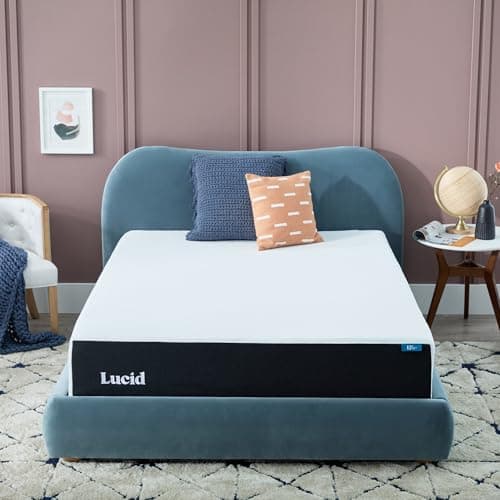 Lucid 12" Medium Firm Gel Memory Foam The pick when a restless partner is part of the back problem: solid foam absorbs movement instead of passing it across the bed, and medium-firm is the right surface for most bad backs. The priciest bed here, but still firmly value territory. Best for: Best for couples / motion isolation | Best for couples / motion isolation | $449.99 · View on Amazon Price as of September 12, 2026. #ad — we earn a commission. |
| 4 | 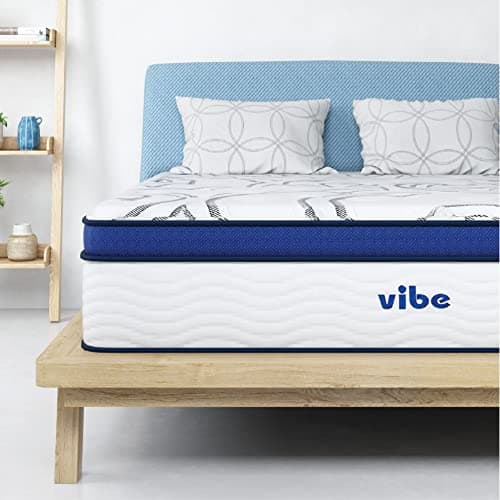 Vibe Quilted Hybrid 12" The cheapest honest way to get coils under a bad back that also runs warm. A spring core ventilates the way no foam bed can, under a quilted surface with a little more give than the flat foam beds here. Best for: Best for hot sleepers with a bad back | Best for hot sleepers with a bad back | $399.99 · View on Amazon Price as of September 12, 2026. #ad — we earn a commission. |
| 5 | 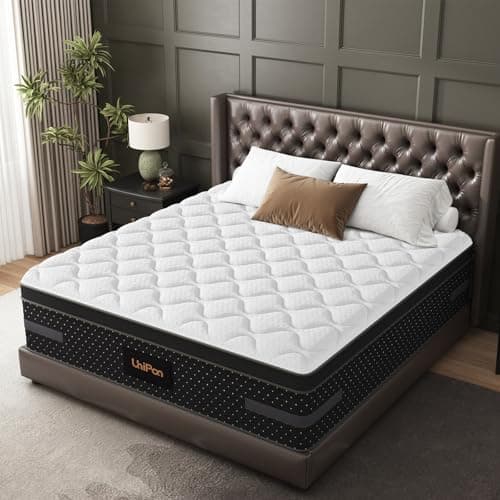 UniPon 12" Firm Hybrid Here because some people genuinely sleep better on a firm bed, and it's a hybrid, so the firmness comes from the coil core doing its job rather than from a hard slab of foam. Just don't buy it because you heard firm is better for a bad back — it usually isn't. Best for: Best firm option (if you truly prefer firm) | Best firm option (if you truly prefer firm) | |
| 6 | 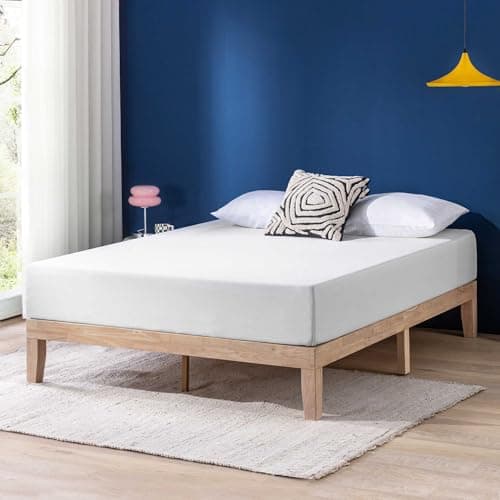 Best Price Mattress 10" Memory Foam About as little as you can spend on a queen from a brand that isn't an anonymous string of capital letters. Medium firm and full enough to support a lighter back — but it's the thinnest bed here, and honesty means saying so. Best for: Lowest price that's still sensible | Lowest price that's still sensible | $172.36 · View on Amazon Price as of September 12, 2026. #ad — we earn a commission. |
The trap in buying cheap for a bad back
Here is the fact that should govern this whole purchase: the very cheapest mattresses are the ones most likely to make a bad back worse. It sounds backwards, but the logic is simple. A sore lower back needs a mattress to do two jobs at once — hold the heavy parts of you (hips, pelvis) up in a straight line, and cushion the parts that stick out (shoulders, hips again) so they aren't pressing into something hard. The cheapest way to hit a low price is to cut material, and the material that gets cut is the support core. An 8-inch foam slab or a plush budget bed feels pillowy for the five minutes you test it, then lets a hip sink overnight and the lumbar spine sags into a hammock behind it. You wake up stiff and blame the bed, correctly.
So the question isn't whether a cheap mattress can support a bad back — it can — it's whichcheap mattress does. That's a narrower list than either of the two pages that flank this one. Our main mattresses-for-back-pain page ranks the most supportive beds at any price and leads with premium boxed brands that cost more than everything here. Our cheap-mattresses pageranks value across every need and includes thin beds that are perfect for a child's room and wrong for a bad back. This page is the overlap: the cheapest mattresses that still put the money where a spine needs it. If your budget can stretch, the main back-pain page has beds that last longer and carry a real trial; if support isn't your first concern, the cheap page is broader. Everyone else, read on.
How to buy one: four things, in order of importance
Once you've accepted that a bad back sets the priorities, four things on the listing tell you almost everything. Get these right and the marketing around them barely matters.
- A real support core.This is the whole game. At this price it means one of two things: a coil (hybrid) core, which is the more durable and better-ventilating option, or a full-depth block of medium-firm foam. What you're avoiding is a thin, soft core that lets the hips drop. Between two beds at the same price, the one with springs at the bottom is usually the safer bet for a spine — the coils are what keep your pelvis lifted after the comfort foam has done its part.
- A medium-firm feel, not firm. Match the surface to the research, not the folklore. Firmnessis a manufacturer's word with no standards body behind it, but the honest target for most bad backs is medium-firm: supportive enough to hold the heavy parts, soft enough to let the lumbar curve and the shoulders settle. Firm genuinely suits some people (there's a firm pick here for them), but Sleep Foundation's read of the research is that medium-firm mattresses tend to ease lower back pain more effectively than firm ones. Buying firm "because it's better for your back" is the classic wrong turn.
- Full depth — 10 to 12 inches.Depth is where budget beds cut hardest, and it's the cut that hurts a back most. A 12-inch mattress has room for a comfort layer that cushions AND a core that supports; a 6- or 8-inch slab has to be one or the other, and for a bad back it's usually neither. Every flagship pick on this page is a genuine full-depth build for exactly this reason. Our mattress thickness guide walks through how many inches a given body actually needs.
- "Fiberglass free" on the listing.This is a safety check, not a comfort one, but it belongs on any cheap-mattress checklist. Many inexpensive foam beds use a woven fiberglass fire barrier under a removable cover to meet the US federal open-flame standard; it's inert sealed, but the fibers shed and spread through a home if the cover is ever unzipped. The fix is to buy a listing that states "fiberglass free" — several picks here do — or to never remove the cover. Our cheap-mattress guide covers this in full, including why CertiPUR-US certification says nothing about fiberglass.
Put those together and the picks sort themselves. Want the cheapest bed with a genuine coil core? The Zinus hybrid. Prefer foam and a known quantity? The Zinus Green Tea. A restless partner in the mix? The Lucid. Run hot? The Vibe. Truly prefer firm? The UniPon. Rock-bottom price for a lighter body? The Best Price 10-inch — with its honest thinness caveat.
Don't buy this for a bad back
The picks above are the ones to buy. Two whole categories of cheap mattress are the ones to walk past, and they're worth naming because they're the cheapest and most tempting things on the shelf.
The thin slabs.Six- and eight-inch all-foam beds are the lowest price on the market and there's a reason they're that cheap: there isn't enough material in them to support and cushion at the same time. They're a genuinely good buy for a light child, a bunk, or an occasional guest — we recommend some for exactly that on the cheap-mattresses page— but a bad back resting on one is effectively resting on the floor once the thin foam compresses. If a spine is the point, don't buy for depth below 10 inches.
The plush budget beds. A soft, plush cheap mattress is the right call for a lighter side sleeper, whose shoulder and hip need to sink so the spine stays level. It is the wrong call for a heavier sleeper or a dedicated back sleeper: under more weight or a flatter posture, plush lets the hips drop straight past the point of alignment, which is the specific motion a sore lower back hates. Plush also gives way soonest under load, so the property that helps a light body fails a heavier one twice over. For a bad back, medium-firm is the floor and the ceiling.
What I can't measure
The honesty this site runs on: I haven't slept on all six of these, I don't run a test lab, and I own no rig to measure spinal alignment or a durometer to verify a firmness. So I can't hand you a measured firmness number or a lab-verified sag depth, and where a spec above says "as listed," that means it's the seller's claim repeated, not confirmed. Anyone giving you precise back-pain scores for a stack of mattresses bought online is inventing them.
What I can do is reason from construction, and for a bad back the construction tells you most of what matters. A coil core is more durable and more supportive than a thin foam one; a full-depth build has room to cushion and support where a thin one doesn't; medium-firm holds the spine straighter than either extreme; plush and thin are the two shapes that betray a back. None of that is a reading I took off a machine — it's how the materials behave, and it's more honest than a number I'd have to fabricate. Every card above pairs that reasoning with a plain statement of who the bed is wrong for, and a note that no mattress at any price treats a back condition — persistent pain is a conversation for a doctor, not a checkout page.
And since it's fair to ask: I earn an Amazon commission if you buy through the links here, and that's what funds the site. The rate is effectively the same across every mattress on this page, so there's nothing I make more by steering you toward — which is why the bed I point most people at first, the sub-$300 Zinus hybrid, is among the least profitable things listed, and why every card tells you who should skip it. If your budget can reach further, the beds on our main back-pain page last longer and carry a real trial; if your pain is a pressure problem in the hip rather than the lower back, the hip-pain pageflips the firmness advice on its head; and if you're still deciding what feel you want at all, the how-to-choose-a-mattress guide starts from scratch.
The picks, in full
1. Best for Best overall on a budget
Zinus 12" Foam and Spring Hybrid
The cheapest bed here with a genuine coil support core, and for a bad back the core is the part that decides whether your hips stay lifted. Everything else on this page is a variation on that idea.
Price as of September 12, 2026. #ad — we earn a commission.
Key specs
- 12" hybrid
- Medium firmness (as listed)
- Foam over springs
- Fiberglass-free (as listed)
- Certified safe foams and fabric (as listed)
What's good
- It puts springs at the very bottom of the market, where almost everything else is a solid foam block — and the support core is what holds your pelvis up so the lower back doesn't sag into a hammock overnight
- The firmness lands at medium as listed, which is the right neighbourhood for a bad back rather than the rock-hard extreme the old folklore points you toward
- Zinus has sold mattresses on Amazon for years, so the listing is stable and there's a real company behind it — not a given at this price
What's not
- A budget hybrid uses fewer, cheaper coils, so the construction is right but built to a price — it will fatigue sooner than a mattress that costs three times as much
- No trial period worth the name, and the warranty terms on this line are a fraction of what the premium boxed brands publish, which matters more when you're buying for a bad back you can't test in advance
- "Durable support" in the title is a claim with no density number or coil count attached to it
Skip this one if
You weigh much over roughly 230 lb. A budget coil count is the first thing to give way under a heavier load, and a sagging support core is the exact failure that hurts a back — spend up a tier, or see our full back-pain page for beds built for more weight.
2. Best for Best budget all-foam
Zinus Green Tea 12" Memory Foam
The most known-quantity foam bed at the bottom of the market, at a genuine 12-inch depth so the comfort layer has room to cushion without bottoming out onto the floor. The safe default if you want foam, not coils.
#ad — we earn a commission.
Key specs
- 12" all-foam
- Medium firm (as listed)
- Green tea infused foam
- CertiPUR-US and Oeko-Tex certified (as listed)
- Queen
What's good
- Twelve inches is a full-depth build, not the 6- and 8-inch slabs that crowd this price — there's enough material to both cushion the shoulders and keep the hips supported, which a thin bed can't do at once
- Medium firm as listed is the range most backs do best on, and memory foam distributes pressure evenly so no single point takes the strain
- It states both CertiPUR-US and Oeko-Tex, covering the foam chemistry and the textiles separately — most beds this cheap state one or neither
What's not
- It's all-foam, so it insulates and sleeps warmer than any hybrid here; the green tea infusion is an odor claim, not a cooling one
- No trial period stated on the listing — you're relying on Amazon's standard return window, which is far shorter than the year the premium boxed brands give you
- "Medium firm" is Zinus's own word with no scale behind it, so treat it as a statement of intent rather than a measurement
Skip this one if
You sleep hot or you share the bed with a heavier partner. Solid foam traps heat and softens fastest under load — for a bad back that runs warm, take the coil-core Vibe or Zinus hybrid instead so the support core keeps ventilating.
3. Best for Best for couples / motion isolation
Lucid 12" Medium Firm Gel Memory Foam
The pick when a restless partner is part of the back problem: solid foam absorbs movement instead of passing it across the bed, and medium-firm is the right surface for most bad backs. The priciest bed here, but still firmly value territory.
Price as of September 12, 2026. #ad — we earn a commission.
Key specs
- 12" all-foam
- Medium firm (as listed)
- Gel memory foam
- Bamboo charcoal infused
- Fiberglass-free (as listed)
- CertiPUR-US certified
What's good
- Solid foam soaks up a partner's movement rather than transmitting it, so you're not jolted awake mid-turn — broken sleep is its own aggravation for a sore back, whatever the mattress does for support
- Medium firm as listed is the target range for back pain, and Lucid sells the same build in plush and firm if this feel turns out wrong for your body
- Fiberglass-free and CertiPUR-US certified, both stated on the listing — worth having and not standard at this price
What's not
- There's no coil core, so the foam achieves its support by being stiff rather than by springing back — the exact trade a hybrid avoids, and it runs warmer for it
- Foam softens over years of use, and a softening support core is what a sagging bed is — the durability argument against all-foam is a fair one
- At the top of this page's price band, it's the least 'budget' of the budget picks — justified only if motion isolation genuinely matters to you
Skip this one if
You sleep alone. Motion isolation is the entire reason to pick foam over coils here, and it does nothing for a solo sleeper — you'd give up the more durable coil support core for a benefit you'll never use. Take the Zinus hybrid.
4. Best for Best for hot sleepers with a bad back
Vibe Quilted Hybrid 12"
The cheapest honest way to get coils under a bad back that also runs warm. A spring core ventilates the way no foam bed can, under a quilted surface with a little more give than the flat foam beds here.
Price as of September 12, 2026. #ad — we earn a commission.
Key specs
- 12" hybrid
- Innerspring core, gel memory foam pillow top (as listed)
- Fiberglass free (as listed)
- CertiPUR-US certified (as listed)
- Queen
What's good
- A coil core is mostly open space, so air moves through it — the only cooling feature in any mattress that doesn't saturate partway through the night, and it keeps the support core lively while it does it
- It states fiberglass free on the listing, which is the single most important thing to check on any cheap mattress before you unzip the cover
- The quilted pillow top softens the surface over a core that still pushes back, which is a hard combination to find this cheap and a comfortable one for a back that dislikes a hard-flat feel
What's not
- Coils transmit movement, so if you share the bed with someone restless this passes their tossing across to you in a way the all-foam picks don't
- No trial length or warranty term is stated on the listing, and Vibe is a marketplace brand without a long record behind whatever the warranty turns out to be
- "Pillow top" here is a thin quilted layer, not a plush hotel-style topper, so set the expectation accordingly
Skip this one if
You or your partner move a lot at night. Coils carry motion — take the all-foam Lucid or Zinus Green Tea and accept running a little warmer, or add a fan to the room.
5. Best for Best firm option (if you truly prefer firm)
UniPon 12" Firm Hybrid
Here because some people genuinely sleep better on a firm bed, and it's a hybrid, so the firmness comes from the coil core doing its job rather than from a hard slab of foam. Just don't buy it because you heard firm is better for a bad back — it usually isn't.
Key specs
- 12" hybrid
- Firm (as listed)
- Back and hip support, zoned support (as listed)
- Fiberglass-free (as listed)
- CertiPUR-US certified
- 365-night trial
- 10-year warranty
What's good
- A 365-night trial and a 10-year warranty at a budget price, both stated in the listing — unusually generous terms for a bad back you can't test before it arrives, and rare this cheap
- Firm genuinely is the right answer for some people: heavier sleepers, and back or stomach sleepers whose midsection needs more resistance than a medium bed provides
- It's a hybrid, so the firm feel comes from the spring core rather than from a punishing foam surface, which keeps some give at the top
What's not
- Firm is the folklore answer to back pain and the folklore is wrong for most people — Sleep Foundation's read of the research is that medium-firm mattresses tend to ease lower back pain more effectively than firm ones
- "Back & Hip Support" and "Zoned Support" in the title are seller copy; they describe an intention, not a verified property
- UniPon is an Amazon-native brand, so that 365-night trial is only as good as a company with no long trading history behind it
Skip this one if
You picked firm because someone told you it's better for your back. That's the most common wrong turn in mattress shopping and this bed is the shape of it — unless you've slept on a firm mattress and preferred it, start medium-firm with the Zinus hybrid.
6. Best for Lowest price that's still sensible
Best Price Mattress 10" Memory Foam
About as little as you can spend on a queen from a brand that isn't an anonymous string of capital letters. Medium firm and full enough to support a lighter back — but it's the thinnest bed here, and honesty means saying so.
Price as of September 12, 2026. #ad — we earn a commission.
Key specs
- 10" all-foam
- Medium firm (as listed)
- Cooling gel infused (as listed)
- Certified safe foams and fabric (as listed)
- Queen
What's good
- One of the cheapest queens on this page from a brand with a real trading history in this exact category, so the listing and stock are more dependable than a random marketplace name
- Medium firm as listed is the right target for a bad back, and 10 inches of foam is enough to cushion and support a lighter body without bottoming out
- The listing states certified-safe foams and fabric, which is more disclosure than most beds under this price bother to print
What's not
- Ten inches of all-foam means a thinner comfort layer over a thinner core — there's less material to split between cushioning and support than on the 12-inch beds above, which matters most for a back
- It's all-foam, so it insulates; the cooling gel slows the surface warming up but doesn't stop it saturating partway through the night
- No stated trial length, and a thin budget foam bed is the fastest-fatiguing construction there is — the support you buy today softens sooner than a thicker build's would
Skip this one if
You weigh much over 200 lb, or this is your main bed for the next decade. A thin all-foam bed lets a heavier body sink past the point of alignment and fatigues fastest — step up to the 12-inch Zinus hybrid, or treat this as a spare-room or stopgap bed.
Common questions
Can a cheap mattress really be good for back pain?
Yes, but only if it spends its limited budget in the right place. A bad back needs two things from a mattress: a support core firm enough to keep your hips and pelvis from sinking out of alignment, and a comfort layer soft enough that your shoulders and hips aren't forced to press into a hard surface. The problem with the very cheapest mattresses is that they cut the support core — an 8-inch slab or a plush budget foam bed feels fine for five minutes in a showroom, then lets a heavier hip sink overnight and the lower back sags with it. So a cheap mattress can absolutely support a bad back; what it can't do is be cheap AND thin AND soft at once. Every pick on this page is a full-depth build (mostly 12 inches) with either a coil core or a firm-enough foam core, which is where a budget should go if a spine is the priority. What you give up at this price is longevity and the long risk-free trial, not support on day one.
Is a firm mattress better for lower back pain?
This is the most common and most expensive myth in mattress shopping, so it's worth stating plainly: no, firmer is not automatically better for a bad back. Sleep Foundation's read of the research is that medium-firm mattresses tend to reduce lower back pain more effectively than firm ones for most people. The reason is that a too-firm surface holds your hips up but leaves gaps under the lumbar curve and the shoulders, so your muscles work all night to fill them; a medium-firm surface supports the heavy parts while still letting the curves settle in. Firm is genuinely right for some people — heavier sleepers, dedicated back and stomach sleepers — which is why there's a firm pick on this page. But if you're choosing firm only because you heard it's better for your back, that's usually the wrong turn. Start at medium-firm, which is where most of these beds sit.
What's the difference between this page and your main back-pain and cheap mattress pages?
They answer different questions. Our main best-for-back-pain page ranks the most supportive mattresses at any price, so it leads with premium boxed beds like DreamCloud and Brooklyn Bedding that cost more than everything here. Our cheap-mattresses page ranks the best value across every need, so it includes thin 8-inch beds that are perfect for a child's room or a guest bed but wrong for a bad back. This page is the intersection: the cheapest mattresses that still genuinely support a spine. That means it leaves out both the premium beds (too expensive) and the thin guest-room slabs (too little support), and keeps the full-depth budget hybrids and medium-firm foam beds in the middle. If your budget can stretch, the main back-pain page has beds that will last longer and carry a real trial; if support isn't your first concern, the cheap page is broader.
Which cheap mattress should I avoid if I have back pain?
Avoid two builds specifically. First, the very thin ones — 6- and 8-inch all-foam mattresses. They're the cheapest thing on the market and they're fine for a light child or an occasional guest, but there simply isn't enough material in them to cushion your shoulders and support your hips at the same time, so a bad back ends up resting on what is effectively the floor. Second, avoid plush or 'soft' budget foam beds if you're a heavier sleeper or a back sleeper. Plush is the correct choice for a lighter side sleeper, but under more weight or a flatter posture it lets the hips drop past the point where the spine stays level — the exact motion that aggravates a lower back. The safer budget shape for a bad back is a full-depth (10-12 inch) mattress described as medium or medium-firm, ideally with a coil core. And on any cheap foam mattress, look for 'fiberglass free' on the listing before you buy — it's a safety check, not a comfort one, and our cheap-mattress guide explains why.
How long will a budget mattress last before the back support fades?
Be realistic: a budget mattress is a few-year purchase, not a decade one, and the support core is the part that fatigues. Cheaper foams soften faster than dense premium foams, and budget hybrids use fewer, lighter coils that lose their spring sooner — so the support that feels fine at delivery gradually gives way, and for a bad back that gradual sag is exactly the failure to watch for. That's the honest trade you make for the low price. You can stretch it: a supportive bed frame or slats no more than a few inches apart stop the mattress sagging in the middle, rotating it head-to-foot every few months spreads the wear, and a firm mattress topper can buy a year once the surface starts to soften. But if you need a mattress to reliably protect a bad back for eight or ten years, the budget tier isn't where that lives — one of the premium boxed beds on our main back-pain page, with a real warranty against sag, is the honest answer.
Sources
Where the facts on this page come from. We cite other people's testing because we don't do our own — here's what that means.
Read next
- Firm or Soft Mattress for Back Pain?The honest answer is neither extreme: medium-firm suits most back-pain sleepers, and the reason - keeping your spine neutral - tells you how to shop.
- The Best Mattresses for Lower Back PainSix mattresses judged purely on support and spinal alignment — and why medium-firm, not firm, is where the evidence points.
- The Best Cheap MattressesWhat a low price really buys, the fiberglass fire-barrier issue to check before you order, and six genuinely cheap mattresses with an honest note on who each is wrong for.
- The Best Mattresses for Hip PainSix mattresses judged on pressure relief and alignment for side sleepers — led by memory foam and plush hybrids, because the hip needs to sink in, not be held out.
- Mattress Firmness: The 1-10 Scale, HonestlyWhat the 1-10 firmness scale actually means, why one brand's 6 is another's 7, and how your bodyweight changes the answer.
- How to Choose a MattressThe five questions that decide a mattress — construction, position, weight, firmness, trial — in the order that collapses the field fastest.