The Best Cheap Mattresses
Cheap doesn't have to mean regret. Here's what your money actually buys at the bottom of the market, the fiberglass question nobody wants to explain, and six inexpensive beds I'd stand behind.
We earn a commission if you buy through our links. It doesn't affect our picks — and we never take free products. How this site is funded.
Quick picks
| # | Product | Best for | Price |
|---|---|---|---|
| 1 | 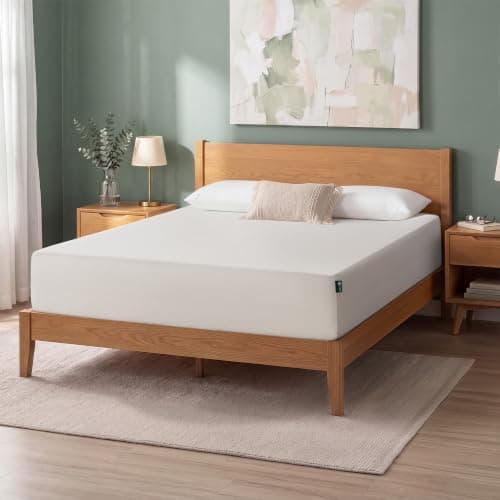 Zinus Green Tea 12" Memory Foam The cheap mattress I'd point most people at first. Not because it's the cheapest, but because it's the most known quantity at the bottom of the market. Best for: The safe default | The safe default | |
| 2 | 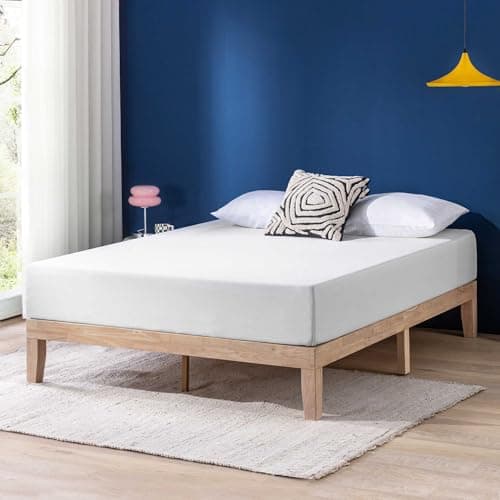 Best Price Mattress 10" Memory Foam About as little as you can spend on a full-size queen without buying an anonymous listing. Medium firm, cooling gel, and a name that's been on Amazon for years. Best for: The lowest sensible queen price | The lowest sensible queen price | Check price on Amazon → #ad — we earn a commission. |
| 3 | 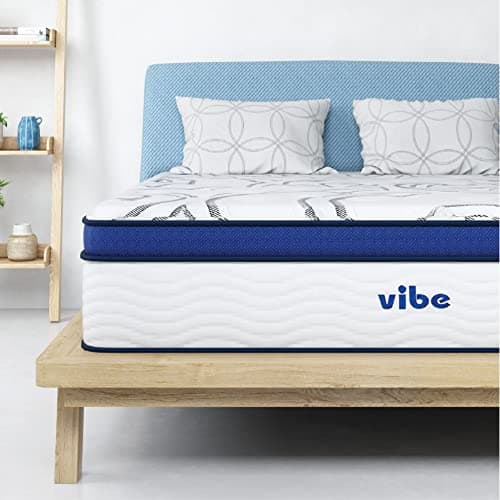 Vibe Quilted Hybrid 12" The cheapest honest way to get coils under you. If you run warm and can't stretch to a premium hybrid, this is the compromise that isn't really one. Best for: Sleeping hot on a budget | Sleeping hot on a budget | $399.99 · View on Amazon Price as of September 8, 2026. #ad — we earn a commission. |
| 4 | 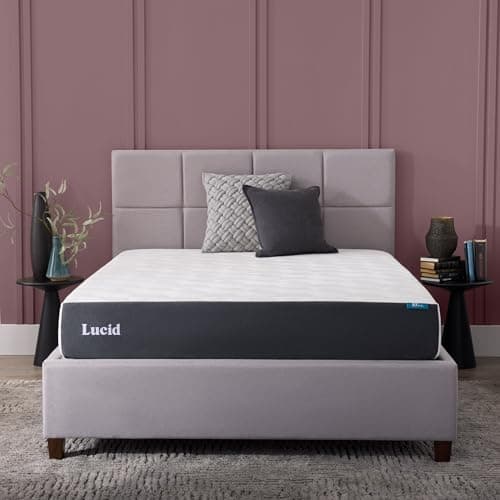 Lucid 10" Plush Gel Memory Foam The one to buy if you sleep on your side and medium-firm has always felt like a plank to you. Plush is the correct end of the scale for the position, and this is a cheap way to get it. Best for: Side sleepers on a budget | Side sleepers on a budget | $349.99 · View on Amazon Price as of September 8, 2026. #ad — we earn a commission. |
| 5 | 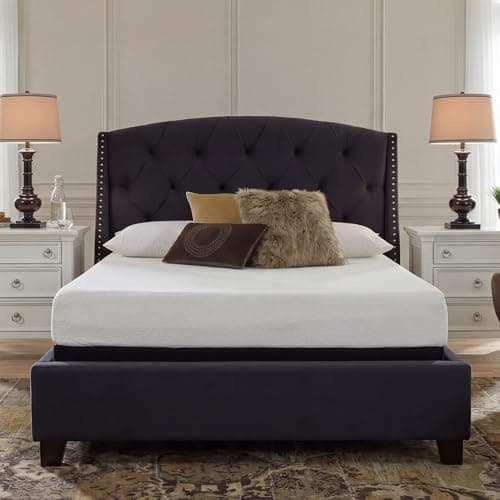 Signature Design by Ashley Chime 8" If a brand you've heard of matters to you at this price, this is it — and it states fiberglass free on the listing, which is the reassurance most budget beds won't give you. Best for: A recognizable name, fiberglass free | A recognizable name, fiberglass free | |
| 6 | 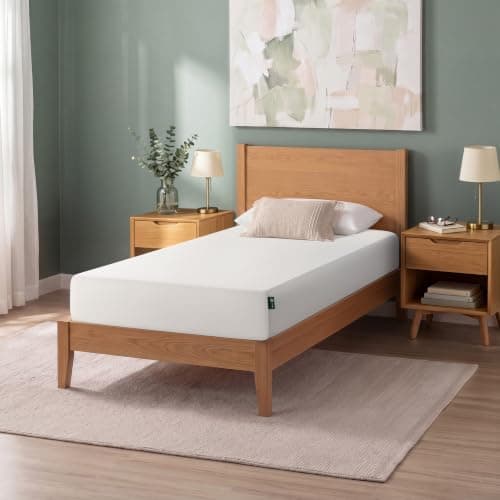 Zinus Green Tea 8" Twin The cheapest bed on this page I'd actually buy — because for a child, a guest room or a bunk, thin and inexpensive is exactly right, not a compromise. Best for: Kids, guests and bunks | Kids, guests and bunks |
What "cheap" actually buys you — and what it doesn't
There's a lazy assumption baked into a lot of mattress writing that cheap means bad, and that anyone spending under four figures is making a mistake they'll regret every morning. That's wrong, and it's wrong in a way that costs people money. The foam in a budget bed and the foam in a mid-range one are more alike than the price gap suggests. What actually separates the two is a short, specific list, and once you can see it, a cheap mattress becomes a deliberate choice rather than a gamble.
Here is what your money buys as you move up from the bottom of the market. It buys depth— more inches of material, so the comfort layer and the support core aren't fighting over the same two inches. It buys the company behind the return — an established brand with an actual support desk instead of a marketplace storefront that may not exist next year. It buys a longer trial, which on a bed you can't lie on first is the only thing transferring risk back to the seller. And, crucially, it buys a safer fire barrier than the fiberglass sock the very cheapest beds rely on. What it does notbuy, until you spend a great deal more, is dramatically better foam. That's the honest shape of this market, and every pick above is chosen to get you as much of that list as possible for as little as possible.
The fiberglass problem — the one thing to check before you order
If you read nothing else on this page, read this. Every mattress sold in the United States has to pass a federal open-flame test — 16 CFR Part 1633 — designed to slow how fast a bed catches and spreads fire. Brands have to put something between you and the foam to pass it, and the cheapest thing that works is a woven fiberglass sock, hidden under the outer cover, acting as a flame barrier.
Sealed inside a zipped cover and left alone, fiberglass is inert and does its job quietly. The problem is what happens when someone treats the cover the way covers invite you to treat them — unzips it and throws it in the wash. Once the fiberglass layer is exposed, the fibers can shed, get picked up by the vacuum, and spread through a home in a way that is genuinely difficult and expensive to clean up. Search the phrase "fiberglass mattress" and you'll find the horror stories; they're real, and they cluster at the budget end because that's where the cheap fire barrier lives.
The fix costs you nothing but attention. Look for "fiberglass free" stated on the listing— several picks above say it plainly, which is exactly why they're here. If a cheap mattress doesn't say what its fire barrier is made of, assume it's fiberglass and follow the one unbreakable rule: never remove the cover. Buy a zip-on mattress protector and wash that instead. Do that and even a fiberglass bed stays safe; the danger is entirely in unzipping it.
Off-gassing, and what the CertiPUR-US label really means
Open a boxed foam bed and there's a smell — chemical, noticeable, and worst on the first day. That's off-gassing: volatile organic compounds released from the foam once it's out of the plastic it was sealed in at the factory. It clears in hours to a few days, faster with a window open and the bed unwrapped in the room it'll live in. Unbox it in the morning, not at bedtime, and you've handled most of it.
The label to look for here is CertiPUR-US, which several picks above state, and it's worth being precise about what it does. It certifies the foam's chemistry: tested for low VOC emissions, and made without ozone depleters, certain flame retardants, formaldehyde, and heavy metals like mercury and lead. That's a real, useful thing to have on a cheap bed. But note what it is not: it says nothing about fiberglass, because fiberglass is a fire barrier, not part of the foam. A mattress can be honestly CertiPUR-US certified and still contain a fiberglass sock. So they're two separate checks — CertiPUR-US for what's in the foam, and a distinct "fiberglass free" statement for the fire barrier. Don't let one stand in for the other.
How long a cheap mattress really lasts
Be honest with yourself about the timeline and a cheap bed makes far more sense. A budget all-foam mattress is the fastest-fatiguing construction on the market. The comfort layer softens and takes a body impression sooner than a denser premium foam or a coil core would, and the thinner the bed, the faster it gets there, because there's simply less material to spread the wear across. Think in terms of a few years, not the decade a premium bed is built for.
That's not an argument against buying one — it's an argument for buying one for the right job. A mattress that costs a fraction of a premium bed and lasts a third as long can still be the smarter purchase, especially in a guest room that gets used a dozen nights a year, under a child who'll outgrow the size before they wear out the foam, or as a deliberate stopgap while you save for the bed you actually want. The mistake isn't buying cheap. It's buying cheap and then expecting it to behave like something it isn't.
Firmness on a budget: match it to your body, not the marketing
The most common way people waste money on a cheap mattress isn't buying a bad bed — it's buying the wrong firmness, which no price fixes. Firmness isn't a fixed property of a mattress; it's a relationship between the bed and your body. The same "medium firm" foam reads soft to a heavier sleeper and hard to a lighter one, because a heavier body compresses the comfort layer further before it meets resistance.
The short version: side sleepers generally want softer, because a shoulder and hip need to sink for the spine to stay level — that's why the plush Lucid is on this page. Back and stomach sleepers, and heavier sleepers of any position, generally want firmer, so the hips don't drop into a hammock — that's the medium-firm Zinus and Ashley Chime. If you genuinely don't know, medium firm is the least-wrong default. Our mattress firmness guide walks through the body-weight adjustments properly, and it's worth five minutes before you order, because getting this right on a cheap bed beats getting it wrong on an expensive one every time.
When cheap is the right call — and when it isn't
Cheap is the rightanswer more often than the industry wants to admit. A guest room that hosts a dozen nights a year does not need a thousand-dollar bed. A child who will jump the size before they flatten the foam is perfectly served by an inexpensive twin — the thinness that would fail an adult is a non-issue for a light body. A first apartment, a dorm, a temporary setup during a move or a renovation: these are all jobs where paying for a decade of durability you won't use is the waste, not the saving.
Cheap is the wronganswer when it's your main bed for the foreseeable future and you sleep on it every night. There, the few-year lifespan and the shorter trial stop being acceptable trade-offs and start being the thing that wakes you up sore. If that's you, it's worth reading the wider best mattresses roundup and the best on Amazonpage, which cover beds a tier or two up where a longer trial and a coil core come as standard. And if the appeal of "cheap" is really the appeal of "delivered in a box without a showroom trip," note that the format itself doesn't have to mean bargain-basement — our bed-in-a-box guide covers the same convenience at every price, including the year-long trials that the very cheapest listings skip.
What I'd actually buy
For most people who genuinely want to spend as little as sensible on a real bed, I'd start with the 12-inch Zinus at the top: it's the most known quantity down here, deep enough to work, and certified on both the foam and the textiles. If you sleep hot, spend the small step up to the Vibe hybrid and get a coil core moving air through it. If you're a side sleeper, the plush Lucid is the one built for your shoulder. And if it's for a kid or a guest, the 8-inch Zinus twin is the cheapest bed on the page I'd still stand behind — because for that job, thin and inexpensive isn't a compromise, it's the correct spec.
Whatever you choose, run the two checks that actually matter at this price: confirm it says fiberglass free, or resolve never to unzip the cover; and match the firmness to your body, not to the word in the title. Do those two things and a cheap mattress stops being a gamble. It becomes exactly what it should be — the right amount of bed for the job, and no more. That's the whole method, and it's written out in full on how we review.
The picks, in full
1. Best for The safe default
Zinus Green Tea 12" Memory Foam
The cheap mattress I'd point most people at first. Not because it's the cheapest, but because it's the most known quantity at the bottom of the market.
Key specs
- 12" all-foam
- Medium firm (as listed)
- Green tea infused foam
- CertiPUR-US and Oeko-Tex certified (as listed)
- Queen
What's good
- Zinus has sold this exact line for years. The ASIN is stable, stock rarely vanishes, and there's a real company standing behind the listing — none of which is a given at this price
- States both CertiPUR-US and Oeko-Tex, which covers the foam's chemistry and the textiles separately. Most beds this cheap state one or neither
- 12 inches is a genuine full-depth build, not the 6- and 8-inch slabs that dominate this price point — the comfort layer has room to actually do something
What's not
- No trial period stated on the listing. You're relying on Amazon's standard return policy, which is far shorter than the year the premium boxed brands give you
- All-foam, so it insulates. There's no coil core moving air through it and the green tea infusion is an odor claim, not a cooling one
- "Medium firm" is Zinus's own word with no scale behind it — treat it as a hint about intent, not a measurement
Skip this one if
You sleep hot. This is a solid block of insulating foam with nothing ventilating it. Take the Vibe hybrid below, which puts a coil core under the same kind of comfort layer for not much more.
2. Best for The lowest sensible queen price
Best Price Mattress 10" Memory Foam
About as little as you can spend on a full-size queen without buying an anonymous listing. Medium firm, cooling gel, and a name that's been on Amazon for years.
#ad — we earn a commission.
Key specs
- 10" all-foam
- Medium firm (as listed)
- Cooling gel infused (as listed)
- Certified safe foams and fabric (as listed)
- Queen
What's good
- One of the cheapest queen mattresses on this page from a brand that isn't a random string of capital letters — Best Price Mattress has a real trading history in this exact category
- Gel infusion is a real, if modest, tweak: the gel adds thermal mass that slows the surface warming up. It won't sleep cool, but it takes the edge off a foam bed's worst habit
- The listing states certified-safe foams and fabric, which is more disclosure than most beds under this price bother to print
What's not
- 10 inches with an all-foam build means a thin comfort layer over a thin core. There's less material here to split between cushioning and support than on the 12-inch beds above
- "Cooling gel" on an all-foam bed is a slowing-down, not a solution — foam still insulates, and gel saturates partway through the night
- No stated trial length. At this price the whole bed costs less than the risk premium on a long trial, which is the honest trade you're making
Skip this one if
This is your main bed for the next decade. A thin, budget all-foam bed is the fastest-fatiguing construction there is — buy the 12-inch Zinus above if you want the cheap end to last, or spend up a tier entirely.
3. Best for Sleeping hot on a budget
Vibe Quilted Hybrid 12"
The cheapest honest way to get coils under you. If you run warm and can't stretch to a premium hybrid, this is the compromise that isn't really one.
Price as of September 8, 2026. #ad — we earn a commission.
Key specs
- 12" hybrid
- Innerspring core, gel memory foam pillow top (as listed)
- Fiberglass free (as listed)
- CertiPUR-US certified (as listed)
- Queen
What's good
- A coil core is mostly open space, so air moves through it. That's the only cooling feature in any mattress that doesn't saturate partway through the night, and no all-foam bed at any price can copy it
- States fiberglass free on the listing, which — as the guide below explains — is the single most important thing to look for at this price
- The pillow top gives it a softer surface than the flat foam beds here, over a core that still pushes back. That combination is hard to find this cheap
What's not
- Coils transmit movement. If you share the bed with someone restless, this passes their tossing across to you in a way solid foam doesn't
- No trial length or warranty term stated on the listing, and Vibe is a marketplace brand without a long record behind whatever the warranty turns out to be
- "Pillow top" here is a thin quilted layer, not a plush hotel-style topper. Set the expectation accordingly
Skip this one if
You or your partner move a lot at night. Coils carry motion; take the all-foam Zinus at the top and accept running a little warmer, or add a fan to the room.
4. Best for Side sleepers on a budget
Lucid 10" Plush Gel Memory Foam
The one to buy if you sleep on your side and medium-firm has always felt like a plank to you. Plush is the correct end of the scale for the position, and this is a cheap way to get it.
Price as of September 8, 2026. #ad — we earn a commission.
Key specs
- 10" all-foam
- Plush (as listed)
- Gel and bamboo charcoal infused
- Fiberglass free (as listed)
- CertiPUR-US certified (as listed)
What's good
- Lucid sells this same bed in plush, medium and firm — most budget brands build one feel and make you take it. Being able to pick the plush version is the whole reason it's here
- A plush comfort layer starts yielding under less load, which is exactly what a shoulder and hip need to sink so a side sleeper's spine stays level
- States fiberglass free and CertiPUR-US, both of which are worth having and neither of which is standard at this price
What's not
- Plush gives way sooner under heavier loads too, so the property that helps a lighter side sleeper lets a heavier one's hips drop past the point of alignment
- The bamboo charcoal infusion is an odor claim, not a performance one — it does nothing measurable for how you sleep
- 10 inches is on the thinner side for deep contouring. There's only so far a shoulder can sink before it reaches the core
Skip this one if
You weigh much over 200 lb or you sleep on your back. Plush lets a heavier body or a flatter sleeping posture sink too far — take a medium-firm bed like the Zinus or the Ashley Chime instead.
5. Best for A recognizable name, fiberglass free
Signature Design by Ashley Chime 8"
If a brand you've heard of matters to you at this price, this is it — and it states fiberglass free on the listing, which is the reassurance most budget beds won't give you.
Key specs
- 8" all-foam
- Medium firm (as listed)
- Gel memory foam, green tea and charcoal (as listed)
- Fiberglass free (as listed)
- Queen
What's good
- Ashley is a large, established furniture company, so there's an actual corporate returns and support operation behind this rather than a marketplace storefront
- States fiberglass free plainly — you don't have to dig through the Q&A section guessing, which at this price is genuinely unusual
- Medium firm is the least-wrong default for a guest room or a combination sleeper who doesn't know what they like yet
What's not
- 8 inches is thin for an adult's main bed. The comfort layer and support core are sharing very little material, so a heavier sleeper will feel the floor of it
- All-foam, so the heat trade-off applies and there's no cooling core to offset it
- Green tea and charcoal are odor-control extras, not sleep features. Don't pay them any mind in the decision
Skip this one if
You're over about 200 lb or you want one bed to last ten years. An 8-inch foam bed is a light-duty, few-years construction — size up to the 12-inch Zinus or move up a price tier for a main bed.
6. Best for Kids, guests and bunks
Zinus Green Tea 8" Twin
The cheapest bed on this page I'd actually buy — because for a child, a guest room or a bunk, thin and inexpensive is exactly right, not a compromise.
Key specs
- 8" all-foam
- Medium firm (as listed)
- Green tea infused foam
- CertiPUR-US certified (as listed)
- Twin
What's good
- A light child doesn't need a deep comfort layer — they don't weigh enough to compress one — so 8 inches of foam is genuinely sufficient here rather than a cut corner
- The same stable, long-running Zinus line as the queen at the top, at a fraction of the price because it's a twin
- 8 inches fits bunk beds and trundles that a 12-inch bed would overhang, and it's light enough for one person to wrestle onto a top bunk
What's not
- Too thin for an adult's everyday bed — a grown sleeper will compress through it and feel the base
- All-foam and un-cooled, though that matters far less for a child than it does for you
- No trial stated, but at a twin's price the stakes are low enough that it barely registers
Skip this one if
It's for a teenager who's nearly adult-sized, or an adult guest who stays often. Then it's too thin — step up to a 10- or 12-inch bed. Our kids' page has more on sizing a bed to a growing body.
Common questions
How much do you have to spend for a decent cheap mattress?
For a queen, a genuinely usable foam bed starts in the low-to-mid hundreds rather than under a hundred, and a cheap hybrid with coils sits a little above that. The beds on this page cluster in that range. Below it you're mostly buying 6-inch foam slabs and anonymous listings where nobody stands behind the warranty. The honest framing is that price buys three things at this end of the market: the depth of the bed, the reputation of the company administering any return, and whether it uses a fiberglass fire barrier or a safer one. It does not buy a meaningful difference in the foam itself until you spend a good deal more.
Do cheap mattresses contain fiberglass?
Many inexpensive foam mattresses do, and it's the single most important thing to check before you buy one. Every mattress sold in the US has to pass a federal open-flame test (16 CFR Part 1633), and the cheapest way for a manufacturer to meet it is a woven fiberglass sock under the outer cover, acting as a flame barrier. Left alone and zipped up, it's inert and does its job. The problem is that the cover is often removable and washable-looking, and if you unzip it the fiberglass fibers can shed and spread through a home — an expensive, miserable cleanup. The fix is simple: look for "fiberglass free" stated on the listing (several picks above state it), and if a cheap mattress doesn't say what its fire barrier is, assume fiberglass and never remove the cover.
What does CertiPUR-US actually certify, and does it cover fiberglass?
CertiPUR-US certifies the polyurethane foam's chemistry: it's tested for low VOC emissions and made without ozone depleters, certain flame retardants, formaldehyde, and heavy metals like mercury and lead. It's a genuinely useful label and worth looking for. But it does not address fiberglass at all — fiberglass is a fire barrier layer, not part of the foam, so a bed can be honestly CertiPUR-US certified and still contain a fiberglass sock. That's why the two things are separate checks: CertiPUR-US for what's in the foam, and a distinct "fiberglass free" statement for the fire barrier.
How long does a cheap mattress last?
Set the expectation at a few years, not a decade. A budget all-foam bed is the fastest-fatiguing construction on the market: the comfort layer softens and develops a body impression sooner than a denser premium foam or a coil core would, and thinner beds reach that point faster because there's less material to share the load. That isn't a reason to avoid them — it's a reason to buy them for the right job. A cheap bed that costs a fraction of a premium one and lasts a third as long can still be the sensible purchase, especially for a guest room, a child who'll outgrow it, or a stopgap while you save.
Are cheap mattresses bad for your back?
Not inherently — a cheap bed with the right firmness for your body supports your spine as well as an expensive one with the right firmness. What actually hurts backs is a firmness mismatch and a worn-out support core, and the second is where cheap beds are more exposed, because a budget bed that sags after two years stops supporting you long before you'd expect to replace it. Match the firmness to how you sleep and your body weight (our firmness guide walks through this), buy enough depth that the core isn't doing the cushioning's job, and replace it when it starts to dip rather than nursing it for another year.
Why are some Amazon mattresses so cheap?
Mostly because the box cut out the showroom and the sales floor, and marketplace competition did the rest — the same forces that made bed-in-a-box a category. At the very bottom, price also drops because of what you're not getting: a thinner build, no trial period, a marketplace seller instead of an established brand, and sometimes a fiberglass fire barrier instead of a costlier alternative. Cheap on Amazon isn't a trick, but the lowest prices are lowest for reasons, and the reasons are exactly the checks on this page.
Sources
Where the facts on this page come from. We cite other people's testing because we don't do our own — here's what that means.
Read next
- When Is the Best Time to Buy a Mattress?Mattress sales are nearly constant, so timing is about spotting the deals that are real - the holiday weekends, the model-changeover clearances, and the countdown timers that mean nothing.
- How Much Does a Mattress Cost?What drives a mattress price - type, size, materials, trial, warranty and marketing - and where paying more stops buying anything real for most sleepers.
- The Best Mattresses for a College DormWhy a dorm changes the maths — cheap, light and movable over long-haul durability — plus the Twin XL size question, when a topper beats a new mattress, and five inexpensive picks with an honest note on who each is wrong for.
- Fiberglass in Mattresses: What to KnowWhy so many budget foam mattresses hide a fiberglass fire barrier, why it is safe until you unzip the cover, and how to spot a fiberglass-free bed before you buy.
- What Is CertiPUR-US?What CertiPUR-US actually certifies about mattress foam, the chemicals it screens out, and the two big things it says nothing about - fiberglass and whether a bed is organic.
- The Best Mattresses for a Guest RoomWhy a spare bed changes the maths — value and a broadly-agreeable medium feel over long-haul durability — plus six mattresses for adult guests, kids' rooms and the no-spare-room case, with an honest note on who each is wrong for.
- The Best Budget Mattresses for Back PainSix genuinely affordable mattresses that support a bad back — budget hybrids and medium-firm foam with a real support core — plus the cheap builds to avoid, and honest cons and a skip note on every pick.
- The Best RV and Camper MattressesWhy size comes before everything with an RV bed, why a boxed mattress beats a traditional one through a camper door, and six short-queen picks with an honest note on who each is wrong for.
- Nectar vs ZinusBudget vs premium, same category: Nectar and Zinus are both 12-inch medium-firm all-foam beds. Nectar wins on trial and warranty for a nightly main bed; Zinus wins on price for a guest room or stopgap.
- The Best Mattresses on AmazonSix Amazon mattresses worth your money, with live prices and an honest note on who each one is wrong for.
- The Best Mattresses in a BoxHow the boxed-mattress format really works — compression, off-gassing, expansion — plus six picks and who each one is wrong for.
- The Best MattressesSix mattresses worth buying, from a budget hybrid to a deep-foam premium bed — with a plain note on who each one is wrong for.
- The Best Mattresses for KidsSix twin mattresses for children, judged on durability and cleanability — with an honest note on who each one is wrong for.
- Mattress Firmness: The 1-10 Scale, HonestlyWhat the 1-10 firmness scale actually means, why one brand's 6 is another's 7, and how your bodyweight changes the answer.
- Zinus vs LucidThe two default budget Amazon foam beds head to head: Zinus wins on price and a track record, Lucid on picking your own firmness. Which one you buy depends on how sure you are.
- The Best Mattress ProtectorsSix mattress protectors that block liquid without sleeping hot or crinkling — fitted pads and zippered encasements — with an honest note on who each is wrong for.