The Best Bed Risers That Won't Tip Your Bed Over
A bed riser has one job: lift your bed a few inches without letting it slide off. Get the height, the weight rating and the cup-to-leg fit right and it's the cheapest upgrade in the bedroom; get them wrong and it's a heavy bed on four brittle stilts. Six that hold, and who each is wrong for.
We earn a commission if you buy through our links. It doesn't affect our picks — and we never take free products. How this site is funded.
Quick picks
| # | Product | Best for | Price |
|---|---|---|---|
| 1 | 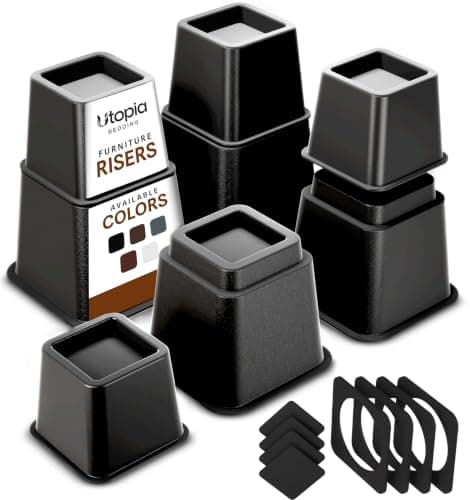 Utopia Bedding Adjustable Bed Risers (3 & 5 in) The default answer for most beds: cheap, and adjustable between a modest 3-inch access lift and a 5-inch storage lift, so you pick the height instead of buying twice. Best for: Best value / adjustable | Best value / adjustable | |
| 2 | 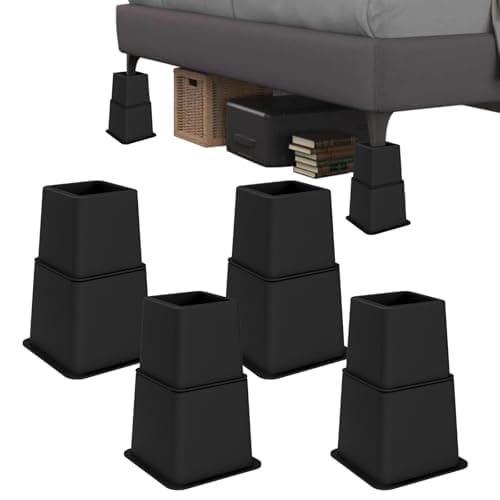 Demiwise Heavy Duty Bed Risers (3/5/8 in) The one that reaches 8 inches when you need deep storage or to clear big bins underneath — with the honest catch that 8 inches is the least stable setup on the page. Best for: Best for extra height | Best for extra height | $30.59 · View on Amazon Price as of September 10, 2026. #ad — we earn a commission. |
| 3 | 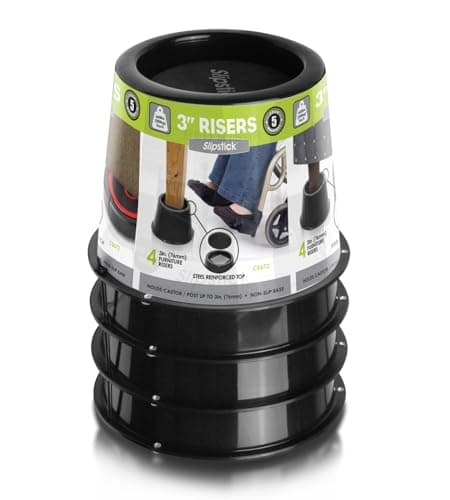 Slipstick CB672 3-Inch Bed Risers The sturdy one: steel-reinforced, a very high listed capacity, and a rubber cup that grips a caster or foot and won't gouge the floor. Only 3 inches, and that's the point. Best for: Heavy-duty + floor protection | Heavy-duty + floor protection | $18.49 · View on Amazon Price as of September 10, 2026. #ad — we earn a commission. |
| 4 | 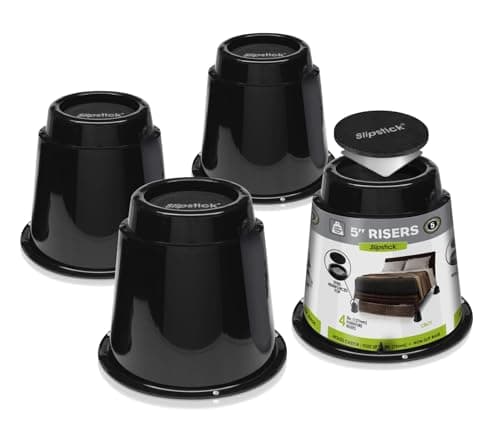 Slipstick CB671 5-Inch Bed Risers The CB672's taller sibling: the same steel-reinforced strength and floor-friendly top, but 5 inches of real storage lift in a single piece rather than a stack. Best for: Heavy-duty, taller lift | Heavy-duty, taller lift | $24.99 · View on Amazon Price as of September 10, 2026. #ad — we earn a commission. |
| 5 | 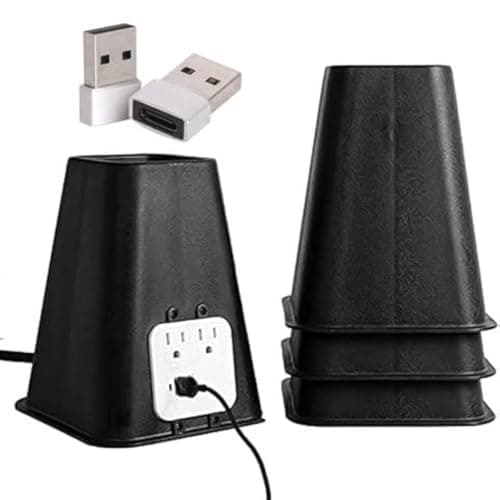 Bee Neat Heavy Duty Bed Riser with USB Outlet The one with charging built in: lift the bed 7.25 inches and gain a USB outlet at mattress height. Genuinely handy in a dorm, with more that can go wrong — and it is the tallest lift on this page. Best for: Built-in power / dorm | Built-in power / dorm | $39.99 · View on Amazon Price as of September 10, 2026. #ad — we earn a commission. |
| 6 | 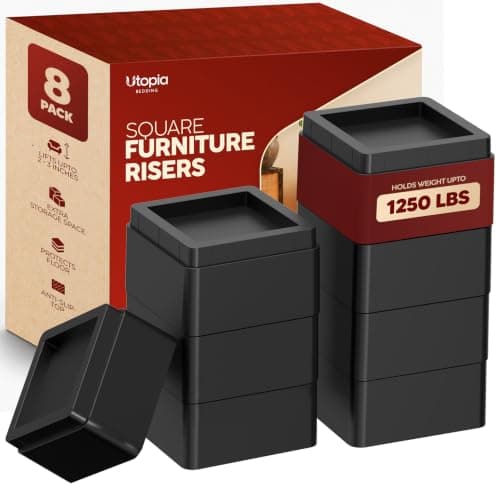 Utopia Bedding Adjustable Bed Risers (2 in, 8-Pack) The low, steady option: 2 inches for a gentle boost getting in and out or under a couch, and an 8-pack so you can lift two pieces of furniture at once. Best for: Low lift / multi-furniture | Low lift / multi-furniture | $19.99 · View on Amazon Price as of September 10, 2026. #ad — we earn a commission. |
What a bed riser is for, and the one number to decide first
A bed riser is one of the cheapest genuinely useful things you can buy for a bedroom, and one of the easiest to buy wrong. All it does is lift each corner of your bed — or a couch, or a desk — a few inches off the floor. People buy them for three reasons, and it's worth being clear which one is yours, because it changes what to buy:
- Under-bed storage. The big one. Lifting the bed 5 to 8 inches turns the dead space underneath into a home for bins, luggage and off-season clothes.
- Getting in and out.A bed that sits too low is hard on knees and hips. A couple of inches can be the difference between dropping onto the bed and easing onto it — which is exactly why so many older people and anyone with bad knees buy them.
- Fitting a frame over something. Sometimes you need to clear a low platform, a trundle or a robot vacuum, or match the height of a base sitting next to the bed.
The one number to settle before anything else is how much height you actually want, because everything else follows from it. Two to three inches is a modest boost — easier in and out, room for a slim bin. Five to eight inches is real storage. And here's the part the product photos won't tell you: taller is not automatically better. The higher you lift a bed, the tippier it gets, and the more a heavy frame wants to rock or walk on top of the risers. So the honest rule is to buy the least height that does your job, not the most the riser offers. If all you need is an easier climb into bed, a 2-to-3-inch riser is steadier and safer than an 8-inch tower you didn't need.
Height also changes the whole bed, not just the gap underneath. Add 5 inches of riser to a 14-inch frame and a 12-inch mattress and your sleeping surface is closing in on two and a half feet off the floor — which some people love and shorter people find a genuine climb. Before you assume tall is good, measure it against the bed you sleep on now. Our guide to mattress thicknesscovers how the mattress itself stacks into that total, and it's worth doing the arithmetic before you order, not after the bed is up on blocks and you're hopping to get into it.
The four things that actually matter
Once you've settled on height, four things separate a riser that quietly does its job for years from one that scratches your floor or drops your bed at 2am. In rough order of how much they matter:
- Height, matched to your frame.The first filter, and the reason it leads the list: modest for access, tall for storage, and no taller than you need — because height and stability pull against each other, and the tallest setup is the one most likely to rock.
- Weight capacity, read honestly.Every decent riser lists a capacity, and we've reproduced each brand's figure as listed rather than inventing one. But read the number the way you'd read a bridge sign: it assumes the load is shared evenly across all four risers, a bed and two people lying flat, not one person sitting hard on a single corner. A loaded queen with two adults and a stack of storage bins is a lot of weight landing on four small footprints. Thin plastic risers list capacities around 1,300 pounds; steel-reinforced ones list far more, and that's the pick for a heavy bed or heavier sleepers.
- Stability and fit — the cup has to hold the leg. The one people skip and the one that actually drops beds. The top of every riser is a recessed cup or holder, and your frame's leg, corner or caster has to seat down into it so the bed can't slide off sideways. A cup too big for a slim metal leg, or a round leg perched on a square cup, leaves the bed free to walk off under the sideways nudge of someone climbing in. Look at what your frame actually stands on — a flat corner, a round foot, a wheel — and match the cup to it. If your frame's feet are an awkward shape, that's a sign to reconsider the frame; our best bed frames roundup covers bases with feet that seat cleanly.
- Floor protection.A riser sits between a very heavy point load and your floor, all day, every day. A rubber or padded base spreads that load and grips; bare hard plastic can scratch hardwood, dent vinyl and slide on tile. On a hard floor this matters as much as capacity — a cracked plastic riser and a gouged floorboard cost more than the whole set did.
One thing cuts both ways, so it's worth saying plainly. Risers make a low bed easier to climb into, which is the whole reason a lot of people buy them — but the taller the bed gets, the further it is to sit down onto and the more it can rock, and past a point that works against the very person you bought it for. Height also makes fitted sheets fight you: a taller mattress riding further up wants deeper-pocket sheets, and a bed that shifts even slightly on its risers pulls tucked corners loose. Neither is a dealbreaker; both are worth knowing before they annoy you.
Plastic or steel, stacking, and the tip-over math
The biggest quality divide on this page is plastic versus steel-reinforced. Most bed risers are molded plastic — light, cheap and perfectly fine for a normal bed at a modest height. The heavy-duty ones, like the Slipstick pair here, put a steel reinforcement inside the plastic and list capacities several times higher. You don't always need the steel: a light bed at 3 inches is well within what good plastic holds. But if your bed is heavy, if you or your partner are heavier, or if you're loading real weight into storage underneath, the steel-reinforced riser is the one that isn't working near its limit — and that margin is the whole point of buying it.
Then there's stacking. Some risers, including the Slipsticks, are designed to stack one on another to gain height. It works, and the maker allows it, but be honest about what it does to stability: two risers stacked are less steady than one riser of the same total height, because now there's a joint in the middle that can shift. If you need 6 inches, a single taller riser is steadier than two short ones towered up. Treat the listed capacity as a single-tier number and give yourself a margin whenever you stack.
Which brings us to the tip-over math nobody actually does. A bed on risers is a heavy object standing on four small stilts. The taller the stilts and the higher the center of gravity, the less sideways force it takes to rock or topple the whole thing — and a bed gets plenty of sideways force every time someone sits on the edge, climbs in, or leans over to reach the floor. This isn't a reason to avoid risers; millions of beds sit on them safely. It's a reason to respect two limits at once: don't exceed the stated weight capacity, and don't go taller than you need. The dangerous combination is the one that looks most impressive in the listing — maximum height under a heavy bed, ideally stacked — and it's exactly the setup most likely to walk a corner off a riser in the middle of the night. If you want height and rock-solid stability together, a riser may honestly be the wrong tool: an adjustable bed base raises the head and foot on an engineered mechanism instead of balancing the whole frame on blocks, and a proper platform frame is built low and stable from the start.
One feature deserves a clear-eyed look: built-in power. The Relaxweex risers put an outlet and USB ports into the riser itself, which is genuinely handy in a dorm or anywhere the wall socket is across the room — you lift the bed and gain charging at mattress height with fewer cords across the floor. Just know what you're adding: electronics under a bed are more things that can fail, and a plain riser has nothing to break. If you don't need the power, the plainer, cheaper riser lifts the bed just as well.
A last word on box springs and height, since people reach for risers to solve a height problem a base could solve better. If your bed sits low because you skipped a foundation, risers are a fix — but so is reconsidering the base. Our guide on whether you need a box spring walks through when a foundation earns its keep and when a platform or a taller frame is a cleaner answer than balancing your existing frame on four blocks. And if you're setting up a new compressed mattress from scratch, our bed-in-a-box guide covers the mattress side of the same decision.
What we can't tell you about these risers
Here's the part most "best bed risers" lists leave out. We haven't loaded these risers until they cracked, we don't own a load cell or a torque wrench, and there's no test lab behind this site. So we can't tell you the exact pound at which a plastic riser splits, how many years of nightly weight it takes before one goes brittle, or precisely how your particular frame's feet will sit in a particular cup. Anyone handing you those numbers for a riser they bought online last month is guessing with a straight face.
What we can do is read the design and tell you what it means, because most of what matters here is mechanical, not a measurement. A steel-reinforced riser holds more than thin molded plastic — that's the material, not our opinion. A rubber or padded base grips and spreads load where bare plastic slides and gouges — that's contact, not a test result. A cup sized to your frame's leg holds it; a cup too big lets it walk off — that's geometry you can check yourself with the bed you already own, and it's the single most important thing to get right. Taller and heavier is tippier than lower and lighter — that's physics, and no listing repeals it. Those are the honest, checkable reasons behind every pick and every "skip this if" above, and the full method is on how we review.
So do the two things a listing won't do for you. First, look at what your bed actually stands on and match the cup to it — flat foot, round foot or caster — because a riser that doesn't seat your leg securely is a fall risk no capacity number cancels. Second, buy the least height that does your job and stay well inside the stated weight rating, because the impressive-looking setup — maximum height, maximum load, stacked for good measure — is the one that fails. Get those two right and a bed riser is the cheapest genuinely useful upgrade in the room: more storage, an easier climb into bed, and a frame that sits exactly where you want it. Get them wrong and it's a heavy bed balanced on four brittle stilts. The whole difference is in the choosing.
The picks, in full
1. Best for Best value / adjustable
Utopia Bedding Adjustable Bed Risers (3 & 5 in)
The default answer for most beds: cheap, and adjustable between a modest 3-inch access lift and a 5-inch storage lift, so you pick the height instead of buying twice.
Key specs
- Adjustable 3" or 5" height (as listed)
- Supports up to 1,300 lbs (as listed)
- Set of 4, black
What's good
- One set covers two jobs — snap it low for an easier climb in and out, or tall for real under-bed storage — so you're not guessing the height before the bed is even up on it
- The listed 1,300 lb rating (spread across all four) is plenty for a normal bed and two sleeping adults, which is the load these are actually asked to carry
- A recessed cup on top seats a standard flat or round frame foot, so a typical metal or wood frame drops in and stays put rather than perching on a flat pad
What's not
- It's molded plastic, so on a hard floor the base can scratch or slide, and a single overloaded corner is where plastic cracks — the rating assumes weight shared evenly, not one person landing on one leg
- 5 inches is the ceiling here; if you want deep storage you can't go taller without a different riser
- At the 5-inch setting a light metal frame gets noticeably tippier than at 3 inches, so match the height to how heavy and steady your bed is
Skip this one if
You've got a heavy bed, heavier sleepers, or you want more than 5 inches of lift. Plastic and a 5-inch cap put you near the sensible limit — step up to the steel-reinforced Slipstick for load, or the Demiwise if you need 8 inches.
2. Best for Best for extra height
Demiwise Heavy Duty Bed Risers (3/5/8 in)
The one that reaches 8 inches when you need deep storage or to clear big bins underneath — with the honest catch that 8 inches is the least stable setup on the page.
Price as of September 10, 2026. #ad — we earn a commission.
Key specs
- Adjustable 3", 5", or 8" (as listed)
- Supports up to 1,300 lbs (as listed)
- Set of 4, for bed/couch/table
What's good
- Three stackable heights topping out at 8 inches give the most under-bed clearance here — the pick when you're storing tall bins or fitting a frame over something low
- The listing covers couches and tables too, so one set can lift a sofa for cleaning or raise a desk, not just the bed
- The 1,300 lb listed rating and the same recessed-cup design as the Utopia mean it seats a standard frame foot at whatever height you choose
What's not
- 8 inches is where tip-over risk stops being theoretical: a tall plastic stack under a heavy bed is the least steady configuration on this page, and every sideways lean works against it
- The higher you go, the further the bed is to climb into and the harder fitted sheets are to keep tucked as the mattress rides up
- Plastic construction means the same floor-scratch caution as the other molded risers, and the top setting relies on the segments locking together squarely
Skip this one if
You care more about stability than clearance, or your bed is heavy. Height is the enemy of steadiness — if you don't genuinely need 8 inches, a lower steel Slipstick holds far more weight and rocks far less.
3. Best for Heavy-duty + floor protection
Slipstick CB672 3-Inch Bed Risers
The sturdy one: steel-reinforced, a very high listed capacity, and a rubber cup that grips a caster or foot and won't gouge the floor. Only 3 inches, and that's the point.
Price as of September 10, 2026. #ad — we earn a commission.
Key specs
- 3" lift (as listed)
- Supports up to 2,640 lbs (as listed)
- Steel-reinforced caster-cup top
- Set of 4, stackable (as listed)
What's good
- The listed 2,640 lb capacity is the highest here, so a heavy bed, heavier sleepers, or a loaded storage haul underneath stays well inside what the riser is rated to hold instead of near its limit
- The rubber caster-cup top does two jobs at once — it grips a wheel or a foot so the bed can't walk off, and its soft base spreads the load and protects hardwood instead of scratching it
- Steel reinforcement inside the plastic is the honest difference from a bargain riser: it's the part that stops a heavy corner load from cracking the cup
What's not
- It only lifts 3 inches, so it's an access-and-strength pick, not a deep-storage one, unless you stack
- Stacking to gain height is allowed but adds a joint that can shift, so two stacked are less steady than one riser of the same height — treat 2,640 lbs as a single-tier number
- It costs more than a thin plastic set, which is the price of the steel and the rubber you're actually buying
Skip this one if
You want 5 to 8 inches of lift from a single piece. This is a 3-inch riser first and foremost — stacking works, but if height is the goal, take the 5-inch CB671 or the Demiwise instead.
4. Best for Heavy-duty, taller lift
Slipstick CB671 5-Inch Bed Risers
The CB672's taller sibling: the same steel-reinforced strength and floor-friendly top, but 5 inches of real storage lift in a single piece rather than a stack.
Price as of September 10, 2026. #ad — we earn a commission.
Key specs
- 5" lift (as listed)
- Supports up to 2,640 lbs (as listed)
- Steel-reinforced holder top
- Set of 4, stackable (as listed)
What's good
- Five inches from one riser is usable under-bed storage without stacking, and stacking is where the wobble creeps in — so this is the steadier way to get storage height under a heavy bed
- It keeps the 2,640 lb listed rating, so heavy frames and heavier sleepers are covered at the taller height, not just the short one
- The steel-reinforced holder and cushioned base carry over from the 3-inch model, gripping the leg and protecting the floor
What's not
- At 5 inches the bed sits taller and tippier than on the 3-inch version — a big capacity number doesn't cancel the tip-over that comes from height
- The deep holder fits standard legs and casters, but you should confirm your frame's foot seats all the way down into it rather than balancing near the rim
- Like the CB672, it's a premium price next to a plastic set, and 5 inches is still the ceiling from a single tier
Skip this one if
You only need a couple of inches or the lowest possible tip risk. The 3-inch CB672 is the steadier of the two — go to 5 inches only because you actually want the storage, not because taller sounds better.
5. Best for Built-in power / dorm
Bee Neat Heavy Duty Bed Riser with USB Outlet
The one with charging built in: lift the bed 7.25 inches and gain a USB outlet at mattress height. Genuinely handy in a dorm, with more that can go wrong — and it is the tallest lift on this page.
Price as of September 10, 2026. #ad — we earn a commission.
Key specs
- 7.25" lift (as listed)
- Built-in USB outlet (as listed)
- Heavy duty (as listed)
- Set of 4
What's good
- It solves two problems in one buy — 7.25 inches of storage lift plus a USB outlet right where you charge your phone, so fewer cords snake across the floor to a far-off wall socket
- That 7.25-inch lift is the most under-bed clearance on this page, which is the difference between sliding a shallow tray under the bed and fitting real storage bins
- For a dorm or a rental where the nearest outlet is inconveniently placed, building the charging into the bed's own footprint is a tidy fix a plain riser can't offer
What's not
- It's electronics living under a bed — an outlet and wiring are more things that can fail, plus a dust and heat consideration a plain block of plastic simply doesn't have
- At 7.25 inches this is the tallest and therefore the tippiest lift here, and the taller the bed the more a fitted sheet fights to stay tucked; the charging feature buys you nothing on stability
- The listing does not publish a weight capacity, unlike the Slipstick sets on this page — so if load rating is what you're shopping on, this is not the one to buy blind
Skip this one if
You don't actually need power at the bed, or you want a modest lift. The USB outlet and the 7.25-inch height are the whole premium here — without them you're overpaying for a lift a plain steel or plastic riser does with nothing to break.
6. Best for Low lift / multi-furniture
Utopia Bedding Adjustable Bed Risers (2 in, 8-Pack)
The low, steady option: 2 inches for a gentle boost getting in and out or under a couch, and an 8-pack so you can lift two pieces of furniture at once.
Price as of September 10, 2026. #ad — we earn a commission.
Key specs
- Adjustable 2" height (as listed)
- 8-pack (as listed)
- Black
What's good
- Two inches is the least tippy lift on the page — a small, stable nudge that makes a low bed easier to climb into or slides a slim bin underneath without turning the bed into a tower
- The 8-pack covers a bed and a couch, or a whole desk, so it's the practical buy when you want to raise more than one thing
- It's the cheapest way onto this list, and for the modest job it does that's exactly right
What's not
- Two inches is a nudge, not a shelf — it won't clear the bins and luggage a 5-inch riser will, so it's the wrong tool if storage is the goal
- The listing doesn't state a weight capacity, so treat it as light-to-medium duty and don't ask it to hold a heavy bed you'd normally put on steel
- It's molded plastic, so the same floor-scratch and single-corner-load cautions as the other plastic risers apply
Skip this one if
You want real under-bed storage. Two inches barely clears anything — step up to the 5-inch Utopia or the steel 5-inch Slipstick for room you can actually use underneath.
Common questions
Are bed risers safe, or will my bed tip over?
They're safe for the vast majority of beds if you respect two limits: the stated weight capacity and a sensible height. A bed on risers is a heavy object standing on four small stilts, so the taller you go and the more you load it, the less sideways force it takes to rock or topple — and a bed gets sideways force every time someone sits on the edge or climbs in. The setups that fail are the impressive-looking ones: maximum height, a heavy bed, often risers stacked for extra lift. Keep the height no taller than you actually need, stay inside the listed capacity, and make sure each frame leg seats fully down into its cup so the bed can't slide off sideways. Do that and a riser is safe; skip the tall tower under a heavy bed if all you wanted was to get in and out more easily.
How much weight can bed risers hold?
Each riser lists its own capacity, and we've passed along each brand's figure as listed rather than inventing one. Thin plastic risers commonly list around 1,300 pounds for a set of four; steel-reinforced ones like the Slipsticks list far more, up to about 2,640 pounds. Read that number the way you'd read a bridge sign: it assumes the load is shared evenly across all four risers with a bed and two people lying flat, not one person dropping hard onto a single corner. A loaded queen with two adults and storage bins underneath is a lot of weight landing on four small footprints, so heavier beds and heavier sleepers should choose steel-reinforced risers and treat the plastic sets as light-to-medium duty. We don't own a load tester, so we won't quote a breaking point we never measured — we're reproducing the listed rating and telling you where the real stress goes.
How tall should bed risers be?
Only as tall as your job needs, and no taller. Two to three inches is a modest boost — easier to get in and out, room for a slim bin. Five to eight inches is real under-bed storage. The catch is that height and stability pull against each other: the higher you lift a bed, the tippier it becomes, so the tallest riser is not the best one, it's just the one with the most room underneath. Decide what you're actually buying — easier access or deep storage — and buy the least height that delivers it. And remember the riser height adds on top of your frame and mattress, so a tall riser under a thick mattress can put the sleeping surface well over two feet up. Measure the total against the bed you sleep on now before you assume taller is better.
Will bed risers scratch my hardwood floor?
They can, if the base is bare hard plastic on a hard floor. A riser concentrates a very heavy point load onto a small footprint and holds it there all day and night, so a bare-plastic base can scratch hardwood, dent vinyl and slide on tile. The fix is to choose a riser with a rubber or padded base — like the cushioned tops on the Slipstick risers — which spreads the load and grips instead of gouging, or to set a felt pad or a scrap of rug under each one. On a hard floor this matters as much as capacity: a gouged floorboard costs more to fix than the whole set of risers cost to buy.
Do bed risers work with any bed frame?
Mostly, but the part to check is the cup, not the frame. The top of a riser is a recessed cup or holder, and your frame's leg, corner or caster has to seat securely down into it. A flat wooden or metal foot drops in cleanly; a caster wheel needs a cup shaped to cradle it; a round leg on a square cup, or a slim leg lost in an oversized cup, can leave the bed free to slide off sideways. Before you buy, look at what your bed actually stands on and match the riser's cup to it. If your frame has a solid platform base that sits flat on the floor instead of legs, risers may not seat at all — that's a sign to look at the frame itself rather than force the issue.
Sources
Where the facts on this page come from. We cite other people's testing because we don't do our own — here's what that means.
Read next
- The Best Bed Frames (No Box Spring Required)Six platform bed frames that replace the box spring, chosen on slat spacing, noise, storage and whether a headboard's included — with honest cons on every pick.
- The Best Adjustable Bed Bases (For Mattresses That Can Bend)Six adjustable bed bases chosen on the one rule that matters - your mattress has to bend on it - plus motor noise, weight capacity and which features are worth paying for. Honest cons on every pick.
- Mattress Thickness: How Many Inches Do You Need?The typical mattress thickness ranges from 6 to 14+ inches, what each is really built for, and why total thickness matters less than comfort-layer depth and build quality.
- Do You Need a Box Spring?A plain-English answer on box springs: what they were built for, why most modern mattresses don't want one, and the slat-spacing rule that decides whether your base voids the warranty.
- The Best Mattresses in a BoxHow the boxed-mattress format really works — compression, off-gassing, expansion — plus six picks and who each one is wrong for.