The Best Comforters for Winter
Warmth comes from how much fill is in the comforter and how well it lofts - not from the word "winter" on the packaging. Here's how a comforter actually keeps a cold room warm, which fill does it best, and six worth buying when the heating can't keep up.
We earn a commission if you buy through our links. It doesn't affect our picks — and we never take free products. How this site is funded.
Quick picks
| # | Product | Best for | Price |
|---|---|---|---|
| 1 | 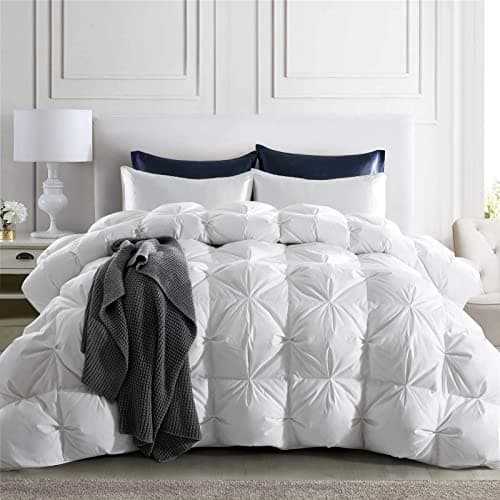 puredown 800 Fill Power Goose Down The warmest, best-built pick here, and the one to buy if a cold room is the whole problem. 800-fill goose down in an extra-warmth weight is a true winter comforter - lofty, light for its heat, and printed with a real number instead of an adjective. Best for: Warmest overall (premium down) | Warmest overall (premium down) | |
| 2 | 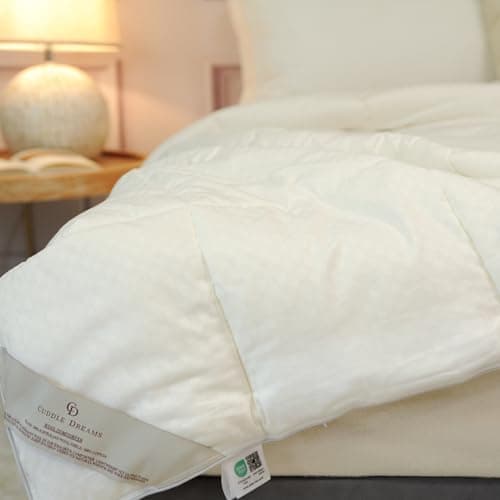 CUDDLE DREAMS Classic Wool Comforter (Midweight) The pick for anyone who runs warm under down but still feels the cold. Wool warms by regulating rather than trapping - it holds heat while moving your moisture out - so it's the least clammy way to stay warm in winter. Best for: Warm without the sweat (wool) | Warm without the sweat (wool) | |
| 3 | Serta Down Illusion Extra Warmth Down Alternative The one to buy if feathers make you sneeze but you still want winter heat. It is an explicitly extra-warmth down alternative from a name-brand, so you get a genuine winter weight without any down in the room. Best for: Warmest hypoallergenic (down alternative) | Warmest hypoallergenic (down alternative) | Check price on Amazon → #ad — we earn a commission. |
| 4 | 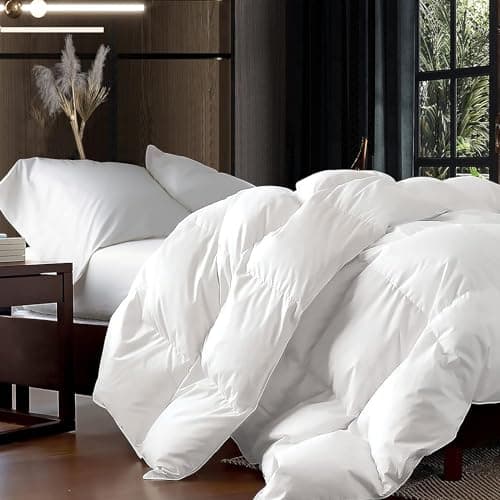 Egyptian Bedding Oversized 98x98 (56 oz) The winter pick for a shared bed or a tall mattress. 56 ounces of fill is a lot of warmth, and at 98 by 98 inches it hangs well past the mattress edge - which is what actually stops the cold-air pump every time someone rolls over. Best for: Couples, deep beds and drafts | Couples, deep beds and drafts | $179.95 · View on Amazon Price as of September 14, 2026. #ad — we earn a commission. |
| 5 | 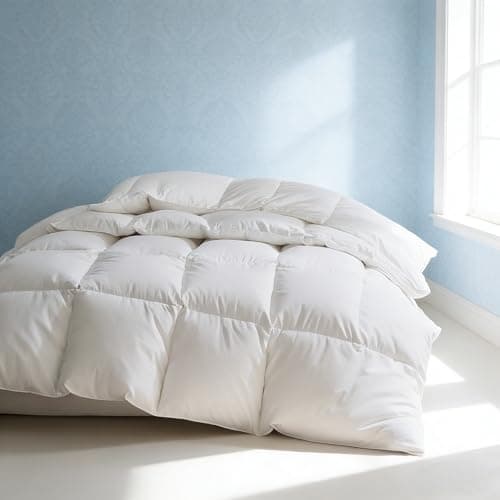 Martha Stewart Hotel Collection Goose Feather Down The natural-fill pick for a hotel-style bed on a smaller budget. A cotton-shelled feather-and-down insert with a warmth direction stated, built to live inside a duvet cover where it stays clean for years. Best for: Feather-down warmth inside a cover | Feather-down warmth inside a cover | |
| 6 | 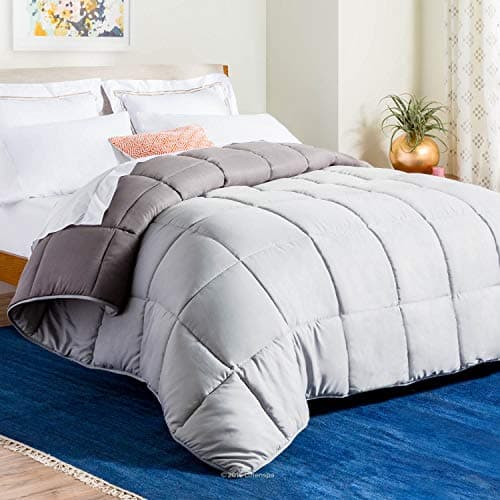 Linenspa Reversible Down Alternative Comforter The cheapest honest way onto a warmer bed, from a brand with a long, stable Amazon history. It is an all-season weight, not a true winter one - so buy it for a mildly cool room, or as the layer you build a cold-room bed around. Best for: Budget warmth, honestly labeled | Budget warmth, honestly labeled | $44.99 · View on Amazon Price as of September 14, 2026. #ad — we earn a commission. |
Warmth is a number the label mostly hides
A comforter keeps you warm by trapping a thick, still layer of air against your body, and how much heat it holds comes down to one thing above all: how much fill is in it.That figure is called fill weight, it is measured in ounces, and it is the single most useful number for a winter shopper - which is exactly why almost no listing prints it. Instead you get warmth words: "all-season", "extra warmth", "winter weight". Those words are the manufacturer's aim, not a spec you can check, so the first skill in buying a winter comforter is knowing which words are doing real work and which are decoration.
The second number people reach for is fill power, and it is worth understanding because it is constantly confused with warmth. Fill power measures the quality of down - how high one ounce lofts - not how warm the comforter is. High fill power means fluffier, longer-lasting down that traps more air per ounce, but a small amount of superb 800-fill down makes a light comforter, while a lot of ordinary fill makes a heavy, warm one. So fill power tells you the down is good; fill weight tells you the bed will be warm. If you want the long version, our guide to fill power walks through it, and the TOG rating guidecovers the European warmth scale you'll sometimes see printed on a duvet, which is the closest thing to an honest warmth number the category offers.
Everything below is chosen for one job - keeping a cold bedroom warm - and ranked by how well each fill actually does it, not by which has the glossiest listing. Where a listing states a real number, I've leaned on it. Where it hides behind a warmth word, I've said so.
The four warmth mechanisms, and which fill wins each
There isn't one "warmest" fill, because warmth isn't the only thing that decides whether you sleep well in winter. There are really four ways a comforter can keep you comfortable in the cold, and a different fill wins each.
- Most heat for the least weight - down. High-fill-power goose down traps more air per ounce than anything else, so it warms a cold room without a smothering weight and drapes to follow your shape. It is the warmest, lightest option and the most expensive, and it is the reason the puredown 800 leads this page. The trade-off is care and cost, and that it breathes so well a lightweight down comforter can be too cool - with down you buy the weight, not just the word. Our dedicated down comforters roundup goes deeper on reading a down label.
- Warm without the sweat - wool. Wool regulates rather than simply traps: it insulates while wicking away the moisture you shed overnight, so it warms you without the damp, stuffy feeling a heavy synthetic can give in a closed winter bedroom. It is the answer for the very common sleeper who is cold getting in and too hot by 3am under down. It gives up a little peak warmth for that regulation, which is why the wool pick here is a midweight, not a slab.
- Warmth on a budget, or with an allergy - down alternative. A dense, extra-warmth polyester microfiber gets genuinely warm for a fraction of down's price, washes in a normal machine, and has no feathers to set off a fill allergy. The cost is breathability: it moves moisture poorly, so a heavy synthetic can feel stuffier. The trick is to buy one that actually states an extra-warmth weight rather than a vague "all-season".
- Sealing the cold out - size and construction.This one isn't a fill at all. A comforter that overhangs the mattress edge stops cold air being pumped up the sides every time a sleeper turns, and baffle-box construction keeps the fill lofted evenly instead of leaving cold, fill-free grid lines at every sewn-through seam. On a shared or deep bed, an oversized baffle-box comforter can out-perform a warmer fill in a too-small size.
Most of the confusion in this category comes from treating warmth as a single ladder when it's really these four questions. Answer the one that matches your problem - too cold, too clammy, too expensive, or too drafty - and the pick falls out of it.
The picks, sorted by how they keep you warm
The puredown 800 is the warmest, best-built comforter on the page and the one to buy when a cold room is the entire problem: real, stated 800-fill goose down in an extra-warmth weight, lofting evenly in a baffle-box shell. It is also the priciest, and its warmth has no give - in anything but a cold room it is too much. If you run warm under down but still feel the cold, the CUDDLE DREAMS wool is the smarter buy: midweight wool warms while it regulates, so you get heat without the clammy 3am overheat, at the cost of a little peak warmth and easy washing.
For a feather allergy or a tighter budget, the Serta Down Illusion Extra Warmthis the standout down alternative because it commits to an extra-warmth weight in writing rather than hiding behind "all-season" - a name-brand winter synthetic with no down in the room. On a shared bed, a tall mattress, or one plagued by drafts, the Egyptian Bedding oversized 98x98 wins on a different axis entirely: 56 stated ounces of fill and a genuine overhang that seals the sides, which can beat a warmer fill in a too-small size.
The Martha Stewart Hotel Collection feather-down is the natural-fill pick for a hotel look on a smaller budget, honest about being a medium-warmth layer rather than the whole cold-room answer - it belongs inside a duvet cover that takes the laundry. And the Linenspa reversible is the honest budget entry: cheap, washable and all-season, which means it warms a mildly cool room or acts as the base layer you build a cold-room bed around, not a true winter comforter on its own.
Build the bed, don't just buy the comforter
A warm winter bed is layered, and the comforter is only the middle of it. The layer people underrate is the one against their skin: a warm comforter over cold, smooth sheets still leaves you cold on contact, so swapping to brushed cotton is often the biggest cheap win of the season - our flannel sheets roundup is the obvious companion to anything on this page. If the room itself is genuinely frigid, heat added under you does more than more fill on top: a heated mattress pad or an electric blanket warms the bed before you get in and costs far less to run than heating the whole room. And a duvet cover over your existing comforter traps another layer of still air for a few dollars.
If your problem is the opposite - you bought a winter comforter and now overheat - that's not a fault, it's a mismatch, and the fix is a lighter or more breathable fill rather than a warmer one. Our cooling comforters roundup is the mirror image of this page for a hot sleeper, the general best comforters roundup and the how to choose a comforter guide both cover the all-season and cooling end, and the wool vs down comparison is worth reading if you're torn between the two natural fills here.
What I can't measure
The honest part, and the reason this page reads differently from the ones with warmth scores. I have not tested any of these.There is no lab behind this site, no scale to weigh the fill, no thermal camera to tell you how warm any of them actually sleep, and no way to verify a fill power figure or count down against feather in a blend. Anyone who hands you a precise warmth rating for a comforter they bought on Amazon last week is inventing it. What I can do is read the label the way you should: flag when a listing states a real number and when it hides behind a word, point out that a blend is a blend and an "all-season" is not a winter weight no matter what the title implies, and reason from how the materials behave - down lofts and breathes, wool regulates, dense synthetic traps and holds moisture - because that is physics, not a measurement I took. Where a listing leaves a number out, I've left it out here too, and told you it's missing rather than guessing. Prices and availability move, so check the current price on the retailer before you buy.
The picks, in full
1. Best for Warmest overall (premium down)
puredown 800 Fill Power Goose Down
The warmest, best-built pick here, and the one to buy if a cold room is the whole problem. 800-fill goose down in an extra-warmth weight is a true winter comforter - lofty, light for its heat, and printed with a real number instead of an adjective.
Key specs
- 800 fill power goose down (as listed)
- 100% cotton shell, 700 thread count (as listed)
- Baffle-box, extra warmth (as listed)
- Full/Queen
What's good
- 800 fill power is printed on the listing rather than implied, and 800 is exceptional loft - each ounce traps a lot of air, which is exactly what turns a cold room warm without piling on weight
- It is sold as goose down, not "down feather fiber", so the fill is the fluffy clusters that insulate rather than the flat quills that pad out a cheaper blend
- Baffle-box construction lets the down loft to full thickness at every seam instead of pinching flat, so there are no thin cold grid lines across the bed on a January night
What's not
- It is the most expensive pick on the page, which is what real high-fill-power goose down costs - the down alternative and feather picks below feel similar on the first night for a fraction of the money
- An extra-warmth 800-fill comforter is genuinely too much for a warm or even a moderate room, and there is no dialing it down; buy it for a cold bedroom, not an average one
- The listing states no Responsible Down Standard certification, so the animal-welfare sourcing is on the seller's word, and down still wants a cover over it to keep body oils off the shell
Skip this one if
Your bedroom is only a little cool, or it swings warm at times. This is a committed winter comforter you can't turn down - the wool or the Serta down alternative below carry real warmth with far more give.
2. Best for Warm without the sweat (wool)
CUDDLE DREAMS Classic Wool Comforter (Midweight)
The pick for anyone who runs warm under down but still feels the cold. Wool warms by regulating rather than trapping - it holds heat while moving your moisture out - so it's the least clammy way to stay warm in winter.
Key specs
- Wool fill (as listed)
- Midweight, all-season (as listed)
- Queen
What's good
- Wool is the great temperature regulator: it insulates while wicking the moisture you shed overnight away from you, so you get warmth without the damp, stuffy feeling a heavy synthetic can give in a closed winter bedroom
- A midweight wool comforter carries real warmth but breathes, which suits the very common winter sleeper who is cold when they get in and too hot by 3am under pure down
- Wool is naturally more flame-resistant and more dust-mite-resistant than most fills, and it drapes with a reassuring, settled weight rather than floating like down
What's not
- It is described as midweight and all-season, not winter-weight, so in a genuinely frigid room it warms less aggressively than the extra-warmth down or down-alternative picks here - it regulates rather than roasts
- The listing states the wool fill but not a shell fabric or a fill weight, so how tightly it is cased and exactly how much wool is inside are on the brand's word, not a printed number
- Wool comforters are usually spot-clean or dry-clean rather than machine-wash items, and wool can carry a faint natural scent when new until it airs out
Skip this one if
You want the maximum, cocooning heat of a lofty down comforter, or you want something you can throw in the wash. Wool trades a little peak warmth for regulation and needs gentler care - the puredown above is warmer, the Linenspa below is more washable.
3. Best for Warmest hypoallergenic (down alternative)
Serta Down Illusion Extra Warmth Down Alternative
The one to buy if feathers make you sneeze but you still want winter heat. It is an explicitly extra-warmth down alternative from a name-brand, so you get a genuine winter weight without any down in the room.
#ad — we earn a commission.
Key specs
- Down alternative fill (as listed)
- Extra warmth weight (as listed)
- Hypoallergenic (as listed)
- Corner loops (as listed)
- Queen
What's good
- It states an extra-warmth weight outright, which is the single most useful thing a comforter listing can tell you - it is committing to being a winter comforter, not an all-season compromise dressed up as one
- Down alternative is a synthetic microfiber, so there are no feathers and no down to trigger a fill allergy, and it washes far more easily than any natural fill on this page
- Corner loops let it anchor inside a duvet cover, so you can run it as a warm insert and let the cover take the weekly laundry
What's not
- "Hypoallergenic" here means no down, not no allergens in general - it does nothing about dust or detergent, so it is the right word only if feathers are your specific problem
- Microfiber does not move moisture the way down or wool does, so a dense, extra-warm synthetic can feel a touch stuffier if your room is closed up and the heat comes on overnight
- The listing does not state a fill weight in ounces, so "extra warmth" is the manufacturer's warmth word rather than a figure you can check against another comforter
Skip this one if
You sleep hot or your room is only mildly cool. An extra-warmth synthetic has no give at the top end - if you want warmth you can breathe under, the wool above is the better call.
4. Best for Couples, deep beds and drafts
Egyptian Bedding Oversized 98x98 (56 oz)
The winter pick for a shared bed or a tall mattress. 56 ounces of fill is a lot of warmth, and at 98 by 98 inches it hangs well past the mattress edge - which is what actually stops the cold-air pump every time someone rolls over.
Price as of September 14, 2026. #ad — we earn a commission.
Key specs
- Goose down & feather fiber (as listed)
- Oversized 98x98 (as listed)
- 100% Egyptian cotton cover, 56 oz (as listed)
- Baffle-box
What's good
- 56 oz of fill is stated, and fill weight is the number that sets total warmth - most listings hide it, so one that commits to a heavy figure like this lets you buy warmth on purpose rather than by guesswork
- 98 x 98 inches genuinely overhangs a thick or pillow-top bed, and that overhang is the unsung winter feature: it seals the sides so a turning partner doesn't pump cold air under the covers
- Baffle-box construction under a cotton cover keeps the heavy fill lofted and evenly spread, where cheap sewn-through stitching would leave a cold grid across a comforter this size
What's not
- It is a goose down and feather-fiber blend, so it is heavier and flatter for its warmth than pure down would be - the feather portion does some of the work and you feel the weight
- 56 oz across a 98-inch comforter is a large, heavy thing to wash and dry, and blends need a big drum and a patient low-heat dry or the fill clumps inside
- On a standard-depth mattress a 98-inch comforter is simply too much fabric and pools on the floor; the size that makes it great for a deep bed makes it wrong for a low one
Skip this one if
You sleep alone on a standard-depth bed. The oversize and the 56 oz are aimed at a big, tall, two-person bed - on a normal single mattress the puredown or the wool above is the right amount of comforter.
5. Best for Feather-down warmth inside a cover
Martha Stewart Hotel Collection Goose Feather Down
The natural-fill pick for a hotel-style bed on a smaller budget. A cotton-shelled feather-and-down insert with a warmth direction stated, built to live inside a duvet cover where it stays clean for years.
Key specs
- White goose feathers and down fiber (as listed)
- 100% cotton cover (as listed)
- All season, medium warmth (as listed)
- Hypoallergenic (as listed)
- Queen, 90 x 90 in
What's good
- It states "medium warmth", which is more of a spec than most inserts commit to - a manufacturer's word rather than a measurement, but at least it points at a room temperature
- A cotton shell lets the natural fill breathe and dry out during the day, so it doesn't get clammy the way a sealed synthetic can in a warm-heated winter bedroom
- A generous 90 x 90 queen overhangs the mattress properly, and running it inside a cover means the cover takes the laundry while the feather-down stays clean
What's not
- It is feathers-and-down, not pure down, so it is heavier and less lofty for its warmth - the packaging name flatters the fill
- "Medium warmth" is the honest limit here: it is aimed at a room in the high 60s Fahrenheit, so in a genuinely cold room it is a layer, not the whole answer
- No fill power and no fill weight are stated, and "hypoallergenic" on a feather product refers to how the feathers were washed, not to the absence of what people react to
Skip this one if
Your bedroom runs genuinely cold and you want one comforter to carry it. Medium-warmth feather-down won't - step up to the extra-warmth Serta or the puredown 800 above, or pair this with warm flannel sheets.
6. Best for Budget warmth, honestly labeled
Linenspa Reversible Down Alternative Comforter
The cheapest honest way onto a warmer bed, from a brand with a long, stable Amazon history. It is an all-season weight, not a true winter one - so buy it for a mildly cool room, or as the layer you build a cold-room bed around.
Price as of September 14, 2026. #ad — we earn a commission.
Key specs
- Down alternative fill (as listed)
- Box stitch construction (as listed)
- 8 duvet loops (as listed)
- Reversible, two colors (as listed)
- All-season (as listed)
- Queen
What's good
- It is by far the cheapest pick here, which makes it the sensible way to add warmth to a spare room or a kid's bed without spending down money
- Eight duvet loops mean it works bare now and as an insert inside a warm cover later, so you can layer a cover over it to add heat as the season turns
- Reversible and washable: down alternative takes a normal machine wash, which none of the natural fills on this page really do
What's not
- It is an all-season weight, so on its own it is not a true winter comforter - in a genuinely cold room you will feel it, and that is a labeling honesty point, not a defect
- Box-stitch construction sews straight through, leaving a grid of thin, fill-free cold lines you can feel with your hand in a cool room
- Down alternative is polyester, so it doesn't move moisture away from you the way down or wool does, and it is marketed for kids, teens and adults in one breath - which tells you where the durability sits
Skip this one if
Your bedroom is genuinely cold and this will be your only cover. It is built to be affordable and all-season, not warm above all - for a cold room start with the wool, the Serta or the puredown above.
Common questions
What is the warmest type of comforter for winter?
For sheer peak warmth, high-fill-power goose down in a heavy fill weight wins - it traps the most air per ounce, so it warms a cold room without a smothering weight. But 'warmest' isn't the only question. Wool warms almost as well while regulating temperature and moving moisture, so it feels far less clammy for people who overheat under down. A dense, extra-warmth down alternative gets close to both on warmth for much less money and with no feathers, at the cost of breathability. So the honest answer is: down for the most warmth, wool for warmth you can breathe under, and extra-warmth down alternative for warmth on a budget or with a feather allergy. Match the fill to how you sleep, not just to the biggest warmth claim.
What makes a comforter warm - fill power or fill weight?
Both, and people confuse them constantly. Fill power measures the quality and loft of down - how many cubic inches one ounce springs up to fill - so higher fill power means fluffier, longer-lasting down that traps more air per ounce. Fill weight is how many ounces of fill are actually in the comforter, and it is the number that sets total warmth. The catch that trips everyone up: a high fill power comforter can be a cool one, because a small amount of superb 800-fill down makes a light summer comforter, while a lot of ordinary fill makes a heavy winter one. For winter you want enough fill weight to carry a cold room. The frustrating part is that almost no listing prints fill weight, which is why the ones that do - like the 56 oz Egyptian Bedding here - are worth noticing.
Is a down or a down alternative comforter better for winter?
Down is warmer for its weight and breathes better, so it is the better winter comforter if you can afford it and aren't allergic - a heavy, high-fill-power down comforter is the warmest, lightest thing you can put on a cold bed. Down alternative is a polyester microfiber: a good extra-warmth one gets genuinely warm and costs a fraction of down, washes easily, and has no feathers to trigger a fill allergy, but it is heavier for the same warmth and doesn't move moisture as well, so it can feel stuffier. Pick down for warmth-to-weight and breathability, down alternative for price, washability and allergies. If feathers are your specific problem, an explicitly extra-warmth down alternative like the Serta on this page is the winter buy.
How do I make my bed warmer for winter without buying a new comforter?
Layer, and start from the mattress up. A warm bed is built in stages: warm sheets against your skin, the comforter over them, and heat added underneath if the room is really cold. Swapping to flannel or another brushed-cotton sheet is the biggest cheap win, because a warm comforter over cold sheets still leaves you cold on contact. Add a lightweight blanket or a duvet cover over your existing comforter to trap another layer of air. If the room is genuinely frigid, a heated mattress pad or an electric blanket warms the bed before you get in and uses less energy than heating the whole room. And close the obvious gaps - a comforter that hangs past the mattress edge stops cold air being pumped up the sides every time you turn over.
What temperature is too cold to sleep without a winter comforter?
Sleep researchers generally put the ideal bedroom in the mid to high 60s Fahrenheit, and a body cools naturally to fall asleep, so a slightly cool room is normal and healthy. It becomes a comforter problem when the room drops into the low 60s or below and you can't keep your core warm - that's the point where an all-season comforter stops coping and a winter weight earns its place. Rather than chase one perfect number, notice the symptoms: if you wake cold in the early hours, tuck your hands in, or pull a second blanket over, your current comforter isn't carrying the room and a warmer fill or an added layer is the fix. If you overheat instead, you have too much fill for your room, and the answer is a lighter or more breathable comforter, not a warmer one.
Sources
Where the facts on this page come from. We cite other people's testing because we don't do our own — here's what that means.
Read next
- The Best Down ComfortersSix down comforters worth buying, the difference between real down and the feather blends most listings hide, and how fill power, fill weight and the shell decide what you get.
- The Best ComfortersSix comforters worth buying, the comforter-versus-duvet decision most buyers get backwards, and why all-season weight is usually the wrong compromise.
- The Best Cooling ComfortersSix comforters for hot sleepers and night sweats, sorted by how they actually keep you cool - cold-touch fabric at bedtime versus a light, breathable fill all night - with an honest note on who should skip each.
- The Best Duvet InsertsSix duvet inserts worth buying, plus the two numbers sellers conflate, why baffle-box construction beats box stitching, and how to pick warmth for your room.
- Wool vs Down ComforterDown is the loftiest, lightest, warmest-for-its-weight fill with a cloud-like feel, but it can sleep hot and needs careful washing. Wool regulates temperature across seasons, wicks moisture, resists dust mites, and is low-maintenance but heavier and flatter. Here's how to choose between the two natural fills.
- What Is Fill Power?Fill power measures the loft and quality of down — how many cubic inches one ounce fluffs up to fill — so higher fill power means fluffier, warmer-for-its-weight down. It is not the same as warmth: that depends on fill power and fill weight together. Here's how to read the number and the typical quality bands.
- TOG Ratings: What the Warmth Number Really MeansA TOG rating measures a duvet's warmth — higher means warmer — and nothing about its quality or fill amount. Here's how to pick a TOG by season and by whether you sleep hot or cold, plus why US comforters often skip the number entirely.
- How to Choose a ComforterFive levers decide a comforter: fill (down, down alternative, wool, or cotton), warmth level for your climate, finished comforter versus insert-plus-cover, size and drape, and construction and care.
- The Best Flannel Sheets for WinterSix genuinely warm cotton flannel sets, chosen on fiber and GSM rather than marketing — with an honest note on who should skip each and the fleece-flannel trap to dodge.
- The Best Electric Blankets, Throws and Heated Mattress PadsSix honest electric-blanket, throw and heated-mattress-pad picks - chosen by shape and safety features, not lab scores - with a plain-English safety checklist for heated bedding.
- The Best Heated Mattress PadsFive heated mattress pads that warm the bed from underneath - including dual-zone models for couples - spanning a budget pick to a premium Sunbeam, with honest safety notes.
- The Best Duvet CoversSix duvet covers worth buying, plus the one word on the label that separates cotton from polyester, why corner ties matter more than thread count, and how to size a cover to your insert.
- The Best Quilts and CoverletsSix lightweight quilts worth buying, the quilt-versus-comforter difference most buyers get backwards, and why 100% cotton beats a cheaper microfiber coverlet.