The Best Duvet Covers
A duvet cover is a giant pillowcase for your insert — the part you actually wash. Get the material right and it lasts years; miss the word "cotton-like" and you paid cotton money for polyester. Six covers worth owning, and who each is wrong for.
We earn a commission if you buy through our links. It doesn't affect our picks — and we never take free products. How this site is funded.
Quick picks
| # | Product | Best for | Price |
|---|---|---|---|
| 1 | 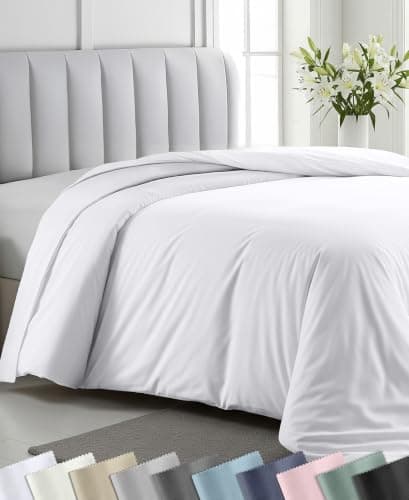 California Design Den 400TC Cotton Sateen The one I'd buy: a listing that actually says 100% cotton, with corner ties inside to hold the insert flat. Almost everything else in this price bracket is polyester wearing a cotton adjective. Best for: Best overall (real cotton) | Best overall (real cotton) | $49.99 · View on Amazon Price as of September 10, 2026. #ad — we earn a commission. |
| 2 | 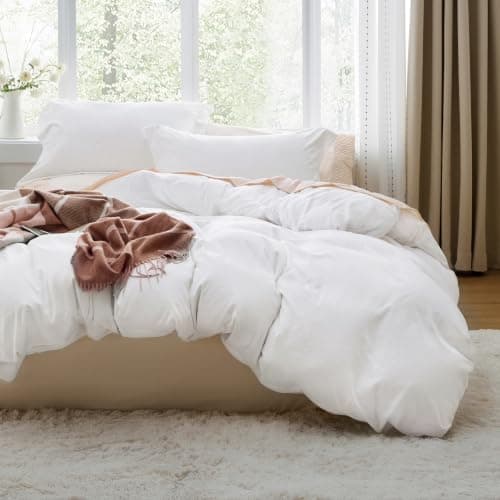 Bedsure White Duvet Cover (3-Piece) A clean white set with a zipper and two shams for the price of the cover alone elsewhere. Just know that "cotton-like" is Bedsure's own phrase for polyester — you're buying soft and cheap, not cotton. Best for: Best value | Best value | |
| 3 | 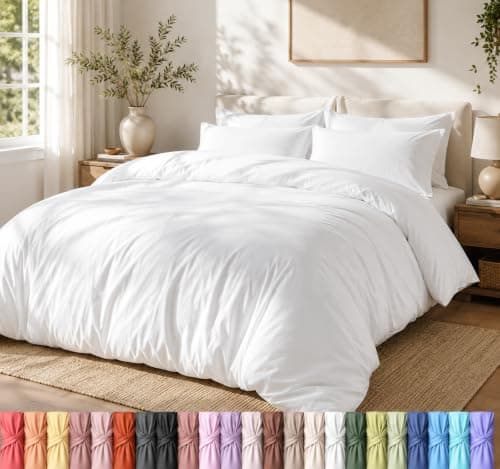 Utopia Bedding Duvet Cover Set The cheapest complete set here, brushed microfiber with a zipper and pillowcases thrown in. Buy it for a guest room or a kid's bed and it makes total sense — for your own bed, know what you're getting. Best for: Best budget | Best budget | $19.99 · View on Amazon Price as of September 10, 2026. #ad — we earn a commission. |
| 4 | 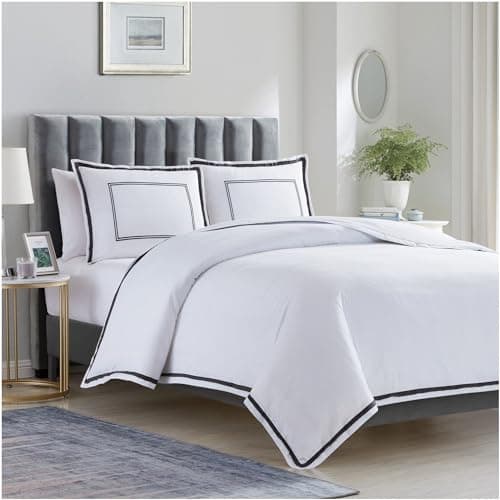 Mellanni Iconic Duvet Cover Set If you're set on microfiber, this is the one to buy: Mellanni's brushed poly is genuinely soft and stays smooth. It's honest about being microfiber, which is more than half the category manages. Best for: Best microfiber (wrinkle-resistant) | Best microfiber (wrinkle-resistant) | $39.97 · View on Amazon Price as of September 10, 2026. #ad — we earn a commission. |
| 5 | 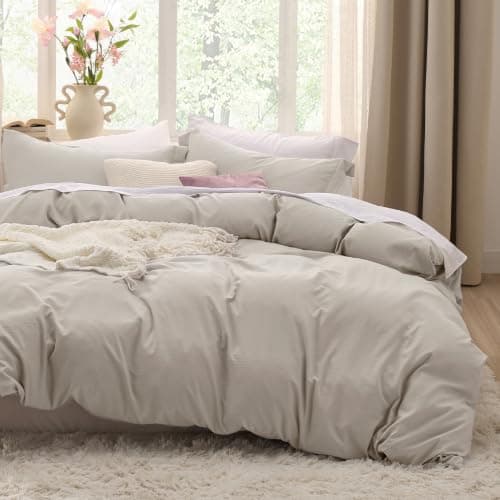 Bedsure Prewashed Linen-Look Cover The relaxed, textured look of linen at a fraction of linen money — because it isn't linen. It's a soft "cotton-like" fabric with a linen texture, and if the look is what you're after, it lands it. Best for: Linen look for less | Linen look for less | $32.99 · View on Amazon Price as of September 10, 2026. #ad — we earn a commission. |
| 6 | 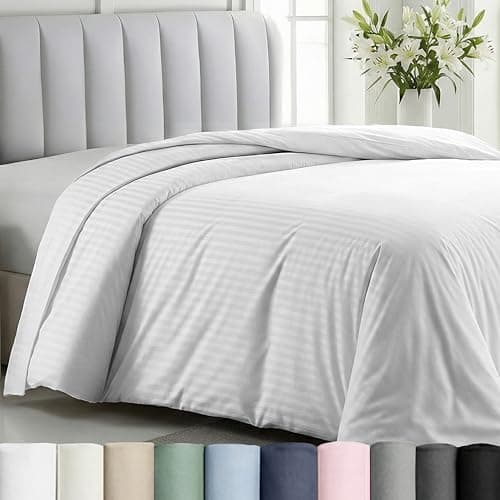 California Design Den Striped Cotton The overall pick's fabric with a stripe on it — real 100% cotton sateen, buttons and corner ties, for anyone who wants a pattern without dropping to a polyester print. Best for: Patterned premium cotton | Patterned premium cotton | $54.99 · View on Amazon Price as of September 10, 2026. #ad — we earn a commission. |
First: a cover is the shell, not the thing inside it
A duvet cover is an empty fabric shell — think of a giant pillowcase — that a separate duvet insert slips inside. The cover is the part you see and the part you wash. The insert is the plain white sack of down or polyester that does the warming and is never meant to be looked at. You buy the two separately, on purpose, and the reason is the entire point of the system: you wash the cheap shell, not the pricey insert.The cover comes off and goes through the machine every week like your sheets; the insert stays clean and dry inside it for years. That's the whole deal, and it's why people who use covers rarely go back.
This trips up a lot of first-time buyers, so let's be blunt about what a cover is not. It is not the insert — a cover on its own is an empty bag that will not keep you warm, and if you buy one expecting fill inside it you'll be disappointed at the door. And it is not a comforter, which is the rival design where the decorative outer and the fill are sewn into one unit that goes on the bed bare and gets washed whole. A comforter is one object you buy once; a cover-and-insert is two objects that work as a team. If you want to buy a single thing, put it on the bed and be finished, you want a comforter and that's a different roundup. If you want to change how your bed looks without buying new bedding, launder the outer as easily as a sheet, and buy fill quality once and keep it for a decade, you want a cover and an insert. Most people frustrated with their bedding bought the wrong one of these two things.
So the buying job on this page is narrow and specific. You are shopping for a shell, and a shell is judged on four things: what it's made of, how it closes, whether it holds the insert still, and whether it fits. Get those four right and you have a cover that works for years. The most expensive-sounding one of the four — the material — is also the one the marketing works hardest to blur, so that's where we start.
Cotton vs "cotton-like": the one word that decides it
Here is the single most useful thing on this page, and it turns on a hyphenated adjective. When a listing says the cover is "cotton-like", "microfiber", or "brushed microfiber", it is telling you, in the politest possible way, that the fabric is polyester. Not cotton. Cotton-like. The word "like" is carrying the entire disclosure. Only a listing that states "100% cotton"— flatly, with no softening adjective — is actually selling you cotton. That's not a scandal so much as a habit of the category, but once you can read it, half the marketing stops working on you.
Why it matters, fiber by fiber:
- Cotton (the real thing).A natural fiber that breathes. The heat and moisture you shed overnight pass through the woven shell instead of being held against the insert, so the bed feels cooler and drier. Cotton is durable — it gets softer with washing rather than wearing out — and it's the fiber in every cover here that says 100% cotton, meaning both California Design Den picks. Its one real cost is that it wrinkles, and a smooth sateen weave shows it. That's the trade: breathability comes with creases.
- Polyester (sold as "cotton-like" or "microfiber"). Cheap, soft the second you open the bag, and near enough wrinkle-free. Those are genuine advantages and they're why microfiber sells in the volume it does. But polyester does not absorb moisture — it repels it — so instead of letting the damp and warmth escape, it holds them against the insert. The practical result is that a microfiber cover sleeps a bit warmer, and over time it pills where it rubs. The Bedsure sets, the Utopia set, and the Mellanni Iconic are all this material, whatever the product name suggests.
- "Linen-look" and other lookalikes.Same trick, different target. The Bedsure linen-look cover copies the slubby texture and matte drape of real flax linen at a fraction of the price — but it's a "cotton-like" synthetic, so you get the appearance without the airflow that makes actual linen cool to sleep under. Fine if you want the look; a letdown if you wanted the temperature.
None of this makes polyester covers a mistake. A microfiber set is soft, tidy, wrinkle-free and cheap, and for a guest room, a kid's bed, or anyone who hates ironing, that package is exactly right. The mistake is paying attention to the word "cotton" and missing the word "like" — buying a synthetic while believing it's a natural fiber. Read the material line, take "cotton-like" to mean polyester, and buy on purpose. If breathability is what you're truly after, that's also the whole argument behind our cooling sheets — the layer touching your skin matters more than the one under it.
Closure, corner ties, and matching the size
With the fiber settled, the other three criteria are quick, and one of them is quietly the most important feature on the whole cover.
Closure — zipper vs buttons. This is the end of the cover that opens so you can load the insert. A zipper runs the full opening, closes the whole end so nothing peeks out, and is the faster way to stuff an insert in — the Bedsure and Utopia sets use one. Its weakness is the zip itself: it can snag the fabric or break, and a dead zipper usually retires the cover. Buttons— on both California Design Den picks — are slower to do up along a row, but there's far less to fail, they don't catch the cloth, and a loose one you just sew back on. For a cover you'll wash constantly and want to keep, buttons tend to age better; for speed, a zipper wins. It's a genuine trade, not a right-and-wrong.
Corner ties — the feature worth more than thread count. Inside a good cover, each corner has a small fabric loop. You knot it to the matching loop on your insert, and now the fill physically cannot migrate — it stays anchored flat across the bed. Skip the ties and your insert slides, over the course of a few nights, into a heavy lump at the foot of the cover while the top half lies empty and cold. This is the number one complaint people have about duvet covers, and it is entirely solved by four bits of string. Both California Design Den picks state corner ties; the microfiber sets here largely don't, which is why you'll sometimes see people safety-pinning the corners of a cheap cover — that's the same fix, done manually. If you're choosing between two covers, ties beat a higher thread count every time.
Size — match the cover to the insert, not the mattress. A cover and its insert should be the same nominal size, but check the actual inches, because brands vary and a queen isn't always the same queen. You want the cover the same size as the insert or a touch smaller, so the insert fills the corners and holds the shell taut. Buy a cover too big and even with ties the insert swims and the fabric flaps; too small and it won't sit flat or fit at all. Buying both new? Buy them together to matching dimensions. Buying a cover for an insert you already own? Measure the insert first and buy to that number. This is the same overhang logic that governs the fill itself over on our duvet inserts and down comforters pages — a well-sized system is flat, tucked, and draft-free; a mismatched one fights you nightly.
And care, the fourth criterion, is where the whole system pays off.The reason you went to a cover-and-insert in the first place is that the shell washes like a sheet while the expensive fill stays out of the machine — so use that. A cotton cover can go through a normal warm wash and comes back to life every time; wash it roughly as often as your sheets, because it's in exactly the same contact with your skin. Its one demand is that it wrinkles, so it wants pulling straight out of the machine and shaking out, or a quick press if a crisp bed matters to you. A microfiber cover is even lower-maintenance — cool wash, low heat, and it comes out smooth — but the same low-heat rule is doing double duty: polyester can hold onto odors and scorches at high temperatures, so keep the dryer gentle. Whichever you own, wash the cover and leave the insert alone, air the insert occasionally instead, and the pair will outlast several one-piece comforters bought over the same years. That divisibility is the entire argument for a cover, and it only works if you actually take the shell off and wash it.
What we can't measure, and how we picked
Now the honest part, because it's the point of this site. We haven't slept under any of these covers, we haven't run them through a wash-and-wear lab, and we don't own the equipment to score breathability, pilling resistance, or how many washes a seam survives. There's no test bench behind this page. So we're not going to hand you a number that says one cover breathes 12% better than another — anyone printing figures like that for a set of covers they bought on Amazon is inventing them, and inventing data is the one thing this site won't do.
What we cando is read the label honestly and reason from the material — and with covers, the material tells you most of what you need. Cotton breathes and wrinkles; polyester is cheap, soft, wrinkle-resistant and sleeps warmer; "cotton-like" means polyester; corner ties stop the bunching; and the size has to match the insert. Those aren't measurements, they're fiber facts, and they hold regardless of which listing you're looking at. Every spec we quote is marked "as listed" because it comes straight from the seller's own page, and every price is left out on purpose — prices move daily, so you'll see the live one at the link rather than a stale number from us. If you want the fuller argument about natural versus synthetic fill and fiber, it's laid out in our down vs down alternative guide. Buy the cover whose fiber matches how you sleep, tie the corners, match the size, and you'll get a bed that looks made and stays that way — which is the entire job of the washable shell.
The picks, in full
1. Best for Best overall (real cotton)
California Design Den 400TC Cotton Sateen
The one I'd buy: a listing that actually says 100% cotton, with corner ties inside to hold the insert flat. Almost everything else in this price bracket is polyester wearing a cotton adjective.
Price as of September 10, 2026. #ad — we earn a commission.
Key specs
- 100% cotton, 400 thread count sateen (as listed)
- Button closure + corner ties (as listed)
- Queen/Full (as listed)
- Good Housekeeping award (as listed)
What's good
- The material line reads 100% cotton, not "cotton-like" — which is the whole decision on this page. Cotton breathes, so the moisture you shed overnight passes through the shell instead of being held against the insert, and it wears in rather than wearing out
- Corner ties are stated, and they're the feature that stops your insert migrating into a lump at the foot of the bed. On a cover you'll fight without them, they're worth more than the thread count
- Sateen is the smooth, faintly lustrous weave of cotton — it feels closer to hotel bedding than a matte percale, and this one is a long-selling listing with a Good Housekeeping mention behind it
What's not
- Cotton wrinkles, and sateen shows it. Off the line it looks rumpled in a way microfiber never does — if a crisp, ironed look matters to you, that's the trade you're making for breathability
- Button closure, not a zipper. Buttons are more durable and less likely to snag, but stuffing the insert in and doing up a row of buttons is a slower job than a single zip
- 400 thread count sateen is a mid-weight cotton, not a thick luxury percale — a plus for year-round use, but don't expect it to feel heavy or substantial in the hand
Skip this one if
You want it to look pressed with zero effort, or you hate ironing. Cotton creases — that's the flip side of it breathing. If a wrinkle-free bed matters more than the fiber, buy the Mellanni Iconic microfiber below and accept a warmer-sleeping shell.
2. Best for Best value
Bedsure White Duvet Cover (3-Piece)
A clean white set with a zipper and two shams for the price of the cover alone elsewhere. Just know that "cotton-like" is Bedsure's own phrase for polyester — you're buying soft and cheap, not cotton.
Key specs
- Cotton-like polyester (microfiber) (as listed)
- 3-piece: cover + 2 shams (as listed)
- Zipper closure, 90x90 (as listed)
- Prewashed (as listed)
What's good
- You get three pieces — the cover and two matching shams — which is a whole coordinated bed for what a single cotton cover costs, and the classic white reads clean in almost any room
- A zipper runs the full opening, which is faster to load an insert into than a row of buttons and closes the whole end so nothing peeks out
- Prewashed, so it arrives soft and won't shrink dramatically the first time through the machine — polyester's genuine advantages are that it's cheap, soft out of the bag, and near enough wrinkle-free
What's not
- "Cotton-like" is not cotton. This is microfiber — polyester — and polyester doesn't absorb moisture, so it holds the warmth and damp against the insert rather than letting it breathe. It sleeps a touch warmer, which is the cost of the softness and the price
- No corner ties are stated in the listing, so a loose insert can shift inside the zipped shell — you may end up safety-pinning the corners yourself
- Polyester pills over time where it rubs, and a bright white shows every mark, so it's the set you'll be laundering most often
Skip this one if
You sleep hot or want a natural fiber against your bedding. Microfiber traps heat by design — for a shell that breathes, pay up for the California Design Den cotton, and accept that it wrinkles as the price of breathability.
3. Best for Best budget
Utopia Bedding Duvet Cover Set
The cheapest complete set here, brushed microfiber with a zipper and pillowcases thrown in. Buy it for a guest room or a kid's bed and it makes total sense — for your own bed, know what you're getting.
Price as of September 10, 2026. #ad — we earn a commission.
Key specs
- Brushed microfiber (polyester) (as listed)
- 3-piece with pillowcases (as listed)
- Zipper closure (as listed)
- Queen (as listed)
What's good
- It costs less than a couple of takeaways and includes the cover plus pillowcases — a full made bed for the price of nothing, which is exactly right for a spare room or a first flat
- Brushed microfiber is soft the moment you open it and needs no ironing, so it always looks tidy with zero effort — the reason this listing sells in the volume it does
- A zipper closure makes loading the insert quick, and Utopia Bedding is a long-established Amazon-native brand with a stable listing behind the warranty
What's not
- Brushed microfiber is polyester through and through. The brushing makes it feel plush but doesn't change the fiber — it won't absorb moisture and it sleeps warm, so it's the wrong shell for a hot sleeper
- No corner ties are mentioned, so the insert relies on the zipper alone to stay put and can bunch when you move
- It's built to a price. Expect the fabric to thin and pill faster than a cotton cover, and to be replacing rather than treasuring it
Skip this one if
This is the bed you sleep in every night for years. Budget microfiber is a short-life, warm-sleeping shell — for your own bed buy the cotton California Design Den; for a guest room this is the sensible spend.
4. Best for Best microfiber (wrinkle-resistant)
Mellanni Iconic Duvet Cover Set
If you're set on microfiber, this is the one to buy: Mellanni's brushed poly is genuinely soft and stays smooth. It's honest about being microfiber, which is more than half the category manages.
Price as of September 10, 2026. #ad — we earn a commission.
Key specs
- Brushed microfiber (as listed)
- 3-piece Iconic Collection (as listed)
- Wrinkle & fade resistant (as listed)
- Queen (as listed)
What's good
- Wrinkle and fade resistance is where polyester genuinely beats cotton — this comes off the line looking pressed and holds its color wash after wash, so if a crisp bed with no ironing is the goal, this is the material that delivers it
- Mellanni's microfiber is one of the softest-feeling budget fabrics on Amazon, and the three-piece set gives you matching shams for a finished look
- It's affordable, machine washable without ceremony, and forgiving — the practical choice for a busy household that wants the bed made and tidy in seconds
What's not
- It is still microfiber, which is polyester. All the wrinkle resistance in the world doesn't make it breathe — it traps heat and moisture against the insert, so it sleeps warmer than any cotton cover here
- No corner ties are stated, so you're depending on the closure and a well-sized insert to stop the fill sliding around inside
- Polyester eventually pills at friction points and can hold static in dry air — comfort quirks cotton simply doesn't have
Skip this one if
You run hot or you specifically want a natural fiber. This is the best of the microfibers, but it's still an insulating synthetic — a hot sleeper should take the breathable cotton pick and accept that cotton wrinkles more than the synthetic you are leaving.
5. Best for Linen look for less
Bedsure Prewashed Linen-Look Cover
The relaxed, textured look of linen at a fraction of linen money — because it isn't linen. It's a soft "cotton-like" fabric with a linen texture, and if the look is what you're after, it lands it.
Price as of September 10, 2026. #ad — we earn a commission.
Key specs
- Cotton-like soft, linen texture (as listed)
- Prewashed (as listed)
- Queen (as listed)
What's good
- It nails the casual, lived-in linen aesthetic — the slubby texture and matte finish — for a price real linen never touches, which is the entire reason to buy it
- Prewashed, so it arrives soft with that already-broken-in drape and won't shrink surprisingly the first wash
- The texture hides wrinkles the way flat weaves can't, so it looks intentionally relaxed rather than crumpled, and needs no ironing to pull off the look
What's not
- "Linen-look" and "cotton-like" are both doing quiet work here — this is a synthetic imitation, not linen and not cotton. Real linen is a flax fiber that breathes brilliantly and cools; a polyester copy has the look but none of that airflow
- Because it's synthetic, it sleeps warmer than the flax it's imitating — you get the texture without the temperature benefit that makes actual linen worth its price
- No corner ties are stated, so a loose insert can drift inside the shell
Skip this one if
You wanted linen for how cool and breathable it sleeps, not just the look. This copies the appearance, not the fiber — if breathability is the point, buy genuine flax linen or the cotton pick above instead.
6. Best for Patterned premium cotton
California Design Den Striped Cotton
The overall pick's fabric with a stripe on it — real 100% cotton sateen, buttons and corner ties, for anyone who wants a pattern without dropping to a polyester print.
Price as of September 10, 2026. #ad — we earn a commission.
Key specs
- 100% cotton, 400 thread count sateen (as listed)
- Striped, button closure + corner ties (as listed)
- Queen/Full (as listed)
What's good
- It's genuine 100% cotton in a pattern, which is rarer than it should be — most striped and printed covers at this price are polyester, so this lets you have a design without giving up the breathable fiber
- Corner ties and a button closure are both stated: the ties hold the insert flat and the buttons are durable and snag-free, the same well-sorted build as the plain sateen pick
- Sateen takes the woven stripe cleanly and keeps the soft, faintly lustrous hotel-bedding feel, so the pattern reads considered rather than loud
What's not
- Same cotton caveat as its plain sibling — it wrinkles, and a striped sateen shows creasing along the lines, so it wants a shake-out or a press to look its best
- Buttons mean a slower load than a zipper when you're wrestling the insert in
- A woven stripe is a committed look — it coordinates less freely with busy bedrooms than the plain white sets do
Skip this one if
You want a bold printed graphic or a zip-fast, iron-never cover. This is a subtle woven stripe in wrinkle-prone cotton — for loud prints or wrinkle resistance, the microfiber sets are where the choice is, at the cost of breathability.
Common questions
What is the difference between a duvet cover and a comforter?
A duvet cover is an empty fabric shell — a giant pillowcase — that a separate duvet insert or comforter slips inside. The cover is the part you see and the part you wash; the insert is the plain fill sack that provides the warmth and never gets seen. A comforter is the other model entirely: the decorative outer fabric and the fill are one sewn unit, it goes on the bed bare, and when it's dirty the whole thing goes in the machine. The cover-and-insert system exists so you can wash the cheap shell weekly like your sheets and keep the expensive insert clean and dry inside it for years. If you'd rather buy one object and be done, you want a comforter, not a cover.
Are cotton or microfiber duvet covers better?
It depends on what you're optimizing for, but the honest starting point is that they're different materials pretending to be the same one. Cotton is a natural fiber: it breathes, so the moisture and heat you shed overnight pass through the shell instead of being held against the insert, and it grows softer and more durable over years of washing. Its cost is that it wrinkles. Microfiber — which is what "cotton-like" and "brushed" almost always mean — is polyester: it's cheap, soft straight out of the bag, and near enough wrinkle-free, but it doesn't absorb moisture, so it traps heat and sleeps warmer, and it pills over time. If you sleep hot or want a fiber that lasts, buy cotton. If you want a tidy, affordable, no-iron bed and don't mind the warmth, microfiber is a reasonable pick — just buy it knowing it's polyester.
Do duvet covers have zippers or buttons?
Both are common, and neither is clearly better — they're a trade-off. A zipper runs the full opening, closes the whole end so nothing peeks out, and is the faster way to load an insert. Its weakness is the zipper itself: it can snag the fabric or fail, and a broken zip usually ends the cover. Buttons (and ties or poppers) are slower to do up along a row, but there's less to break, they don't catch the fabric, and if one comes loose you sew it back on. For a cover you'll wash constantly and want to last, buttons tend to age better; for speed and a fully closed end, a zipper wins. Far more important than either is whether the cover has inner corner ties to anchor the insert.
How do I keep my insert from bunching in the cover?
Two things do most of the work. First, buy a cover with inner corner ties — small fabric loops in each corner that you knot to the loops on your insert so the fill can't migrate. This is the single most useful feature on a cover and it's worth choosing over a higher thread count. If your insert has no corner loops, a few safety pins do the same job. Second, match the sizes: an insert that's too small swims inside a big cover and slides into a lump at the foot of the bed, while one that's too large won't sit flat. Get the ties tied and the sizes matched and the bunching problem is essentially solved; skip both and no amount of shaking keeps it flat.
What size duvet cover do I need?
Match the cover to your insert, not to your mattress. The cover and the insert should be the same nominal size — a queen cover for a queen insert — but check the actual stated dimensions in inches, because brands vary. Ideally the cover is the same size as or very slightly smaller than the insert, so the insert fills the corners and holds the cover taut rather than swimming inside it with empty fabric flapping. If your insert runs oversized (say a generous 90 by 90 queen), make sure the cover is cut to match. When you're buying both new, buy them together to the same dimensions. When you're buying a cover for an insert you already own, measure the insert first and buy to that.
Sources
Where the facts on this page come from. We cite other people's testing because we don't do our own — here's what that means.
Read next
- How to Choose a Duvet CoverChoosing a duvet cover comes down to sizing it to your insert, picking a closure and corner ties that stop the fill from shifting, and choosing a fabric and weave — percale, sateen, linen or microfiber — that gets the feel and temperature you want.
- How to Wash a Duvet CoverA wash-and-dry method for duvet covers by fabric — cotton and percale, sateen, linen, bamboo viscose and microfiber — plus why you close the buttons and turn it inside out, how often to actually wash it, and the California-roll trick for re-stuffing the insert.
- Duvet vs ComforterA comforter is a single finished bedspread you use as-is; a duvet is an insert that goes inside a washable cover. How they differ on laundering, styling, warmth, and cost — and a clear verdict for which to buy.
- The Best Duvet InsertsSix duvet inserts worth buying, plus the two numbers sellers conflate, why baffle-box construction beats box stitching, and how to pick warmth for your room.
- The Best ComfortersSix comforters worth buying, the comforter-versus-duvet decision most buyers get backwards, and why all-season weight is usually the wrong compromise.
- The Best Down ComfortersSix down comforters worth buying, the difference between real down and the feather blends most listings hide, and how fill power, fill weight and the shell decide what you get.
- The Best Cooling Sheets for Hot SleepersSix sheet sets that actually breathe, chosen on fiber and weave rather than marketing — plus who should skip each one.
- Down vs Down AlternativeDown is warmer for its weight, lofty and long-lasting but pricier and higher-maintenance. Down alternative is cheaper, hypoallergenic and easy-care but heavier and shorter-lived. Here's how fill power and fill weight decide which is right for you.