The Best Mattresses for Lightweight People
A lighter body doesn't sink into a mattress as far, so the same bed reads firmer to you than to the person who set the label — and firm can feel like a plank. Here are six softer, plusher beds worth considering, what their listings actually promise, and the specs you can safely skip.
We earn a commission if you buy through our links. It doesn't affect our picks — and we never take free products. How this site is funded.
Quick picks
| # | Product | Best for | Price |
|---|---|---|---|
| 1 | 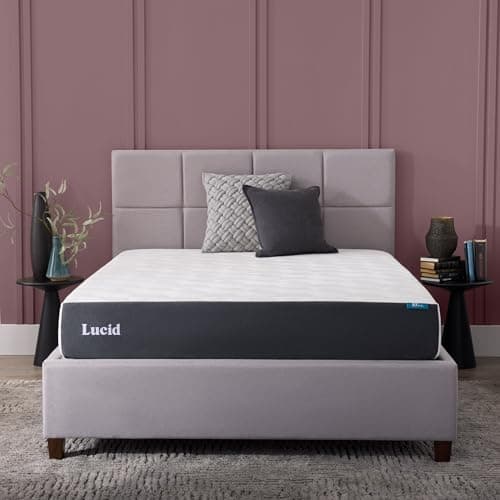 Lucid 10" Plush Gel Memory Foam Plush and only 10 inches — which for a lighter body isn't the budget compromise it looks like, but the right specification. Soft enough to reach its cradle under less weight, with no heavy-duty core you'd be paying for and never pressing into. Best for: Most lightweight sleepers | Most lightweight sleepers | $349.99 · View on Amazon Price as of September 12, 2026. #ad — we earn a commission. |
| 2 | 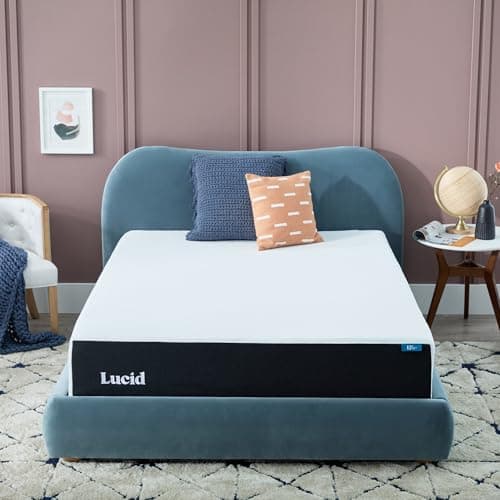 Lucid 12" Plush Gel Memory Foam The same plush foam as the pick above with two more inches under you — worth it if you're a lighter combination sleeper who moves between positions, or you just want more comfort layer to sink into. Best for: Lightweight sleepers who want more room | Lightweight sleepers who want more room | $449.99 · View on Amazon Price as of September 12, 2026. #ad — we earn a commission. |
| 3 | 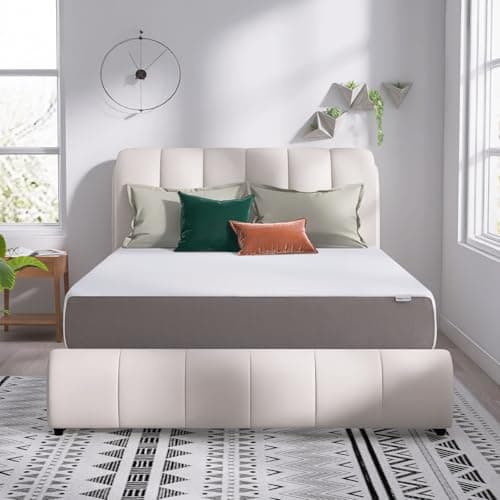 Amazon Basics 12" Memory Foam, Soft Plush A soft plush 12-inch foam bed at the bottom of the market, and soft plush is the correct end of the scale for a lighter frame. The feel is right for you; everything else is basic, as advertised. Best for: The lowest sensible price | The lowest sensible price | $432.31 · View on Amazon Price as of September 12, 2026. #ad — we earn a commission. |
| 4 | 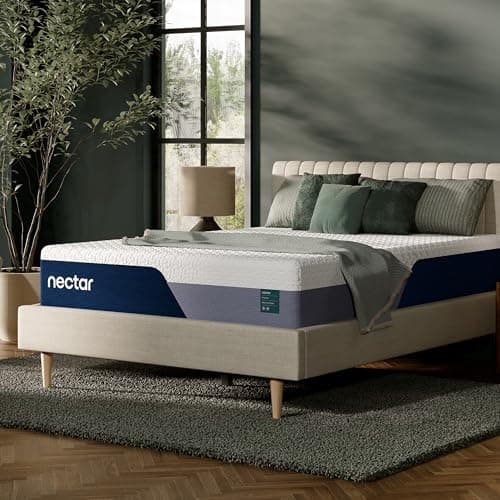 Nectar Premier 13" Queen The one to buy if firmness is the variable you're least sure of — and for a lighter body it usually is. It's more bed than you strictly need and it reads firmer than the plush picks, but a full year to change your mind is worth more to a light sleeper than another inch of foam. Best for: Spending properly, once | Spending properly, once | |
| 5 | 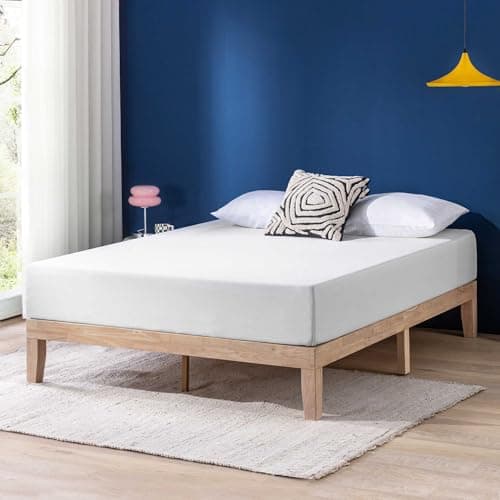 Best Price Mattress 10" Memory Foam Medium firm and only 10 inches — and for a lighter back or stomach sleeper that combination works, because a light body reads medium firm as medium and never needs the depth. The sensible pick when you want a touch more support than plush. Best for: Lighter back and stomach sleepers | Lighter back and stomach sleepers | $172.36 · View on Amazon Price as of September 12, 2026. #ad — we earn a commission. |
| 6 | Zinus Green Tea 12" Memory Foam The most known quantity at the bottom of the market — but it's medium firm and a solid 12-inch block, so it reads firm to a lighter body. Here for the light sleeper who shares with a heavier partner, or who genuinely prefers a firmer surface. Best for: A known quantity, or a shared bed | A known quantity, or a shared bed | Check price on Amazon → #ad — we earn a commission. |
The mattress you're shown was sized for someone heavier
Almost every mattress review, firmness label and "best of" list is written with an average adult in mind, and the average adult in those calculations weighs more than a lot of the people reading them. That matters more than it sounds, because a mattress does not have a fixed firmness — it has a firmness relative to the body pressing into it. Weigh less than the person the label was written for, and the same bed shows up at your door feeling harder than the word on the box promised.
So, plainly: if you weigh somewhere under roughly 130 lb — and treat that as a guide, not a rule, because height, build and how you sleep all move the line — most of the mattress market is quietly aimed over your head. The beds marketed hardest are firm, tall and built around a heavy-duty support core, and every one of those traits works against a lighter frame. The good news is that the fix is cheaper than the problem, not more expensive: a lighter body needs lessbed, not more, and this page is about spending your money on the part that actually helps you — a soft, yielding surface — and skipping the parts you're being upsold that you'll never compress.
Why the same bed feels firmer to you
Here is the whole mechanism, and it is the exact mirror of the problem heavier sleepers have. Foam supports you by compressing: it yields until the resistance of the material matches the load pressing into it. A heavier body pushes further into the same foam before it finds that balance; a lighter body pushes in less far. Put a 120 lb sleeper on a mattress that a 200 lb sleeper finds "medium firm", and the lighter sleeper never sinks far enough to reach the soft, cradling part of the stroke. They ride on top of it. To them, that medium-firm bed feels firm, and a genuinely firm bed feels like a padded plank.
This is not a preference or a fussiness — it is arithmetic. The comfort layer only does its job once your body weight has pressed it into its yielding range, and a light body may not weigh enough to get there. That's why lighter sleepers so often buy a well-reviewed, "supportive" mattress and wake up with sore shoulders and hips, wondering what they did wrong. They did nothing wrong. They bought a bed calibrated for a heavier person, and it never softened under them. Our firmness guide takes the weight-and-firmness relationship apart in full; it is worth ten minutes before you spend anything.
The correction is to shift one notch softer than the reviews aimed at "most people" tell you to. Where an average-weight back sleeper is pointed at medium-firm, a lighter one is usually happier at medium; where the average side sleeper wants medium, the lighter side sleeper often wants plush. You are not being indulgent by choosing the softer option. You are choosing the firmness that will actually reach its cradle under your weight.
What "lightweight" actually means here
The roughly 130 lb figure I keep using is a signpost, not a threshold, and it's worth being clear about why. There is no industry definition of a "lightweight" sleeper, and the number that matters isn't your weight in isolation — it's how much pressure your body puts into a given area of the mattress. A tall, lean person and a short, broad one at the same weight press differently; a broad-shouldered side sleeper concentrates their weight onto a smaller footprint than a back sleeper of identical mass spread flat. So treat 130 lb as the neighborhood where the "the label feels too firm" effect usually starts to bite, not a line you cross into a different category. If you're a little over it and firm beds have always felt hard to you, this page is still yours. If you're a little under it and you've always liked a firm surface, trust your own back over the number.
You don't need the support core a heavier sleeper does
Every mattress is two things stacked: a comfort layer that decides how it feels, and a support core that decides whether it holds your hips up over eight hours. For a heavier body, the core is nearly the whole decision — put enough load on a bed and the comfort layer squashes flat, and whatever is underneath becomes the mattress. That's the argument on our mattresses for heavy people page, and it runs the opposite way here.
A lighter body simply does not press the comfort layer flat. Your hips do not sink to the point where the core has to rescue your spine, so the heavy-duty coil cores, the extra-firm bases and the 14-inch builds that a heavier sleeper genuinely needs are, for you, mostly weight and cost you will never call on. This is the happiest news on the page: the expensive engineering in a mattress is the support structure, and a lighter sleeper can skip most of it without giving anything up. You are the one shopper who can buy a cheaper, simpler, softer bed and get a better night for it, not a worse one.
It also flips the usual foam-versus-hybrid advice. Heavier sleepers are steered toward hybrids because a steel coil resists deep compression and doesn't take a permanent set the way foam does under a big load. You are not applying a big load. An all-foam bed, which contours closely and cushions a light frame beautifully, is very often the right call for you — and it happens to be the cheaper construction. Coils are a solution to a problem you mostly don't have.
Thinner is often fine — and it saves you money
Listings sell height as luxury, and heavier sleepers are told, correctly, to buy tall — a 14-inch bed has room for a deep support core and a comfort layer both. But height is just how many inches the designer had to work with, and a lighter body needs fewer of them. You are not going to compress through a comfort layer and bottom out onto the core, which is the exact failure that forces a heavier sleeper up to 12 and 14 inches. A 10- or 12-inch bed has all the material a light frame will ever engage.
That is why a thin, plush foam mattress — the kind our cheap-mattress guideis full of — is not a compromise for a lighter sleeper the way it is for a heavier one. The thinness that would let a 220 lb body sink to the floor is simply irrelevant to a 115 lb one; the shoulder and hip never travel that far. So the 10-inch plush beds near the top of this page are ranked where they are on purpose: for you, thin and soft is not the budget option you settle for, it is the correct specification. Buy the depth you'll use, not the depth the listing photo is selling.
Position still decides the rest
Being lightweight sets the starting point — softer than the label suggests — but how you sleep still steers the final choice, and it interacts with your weight rather than replacing it.
- Side sleepersalready want the soft end of the range so the shoulder and hip can sink and the spine stays level, and being lightweight pushes that further still: if medium-firm has always felt like a board to you, that's these two facts stacking. Plush is very often your answer. Our side-sleeper page works through the geometry.
- Back sleeperswant the hips supported without the lumbar curve left hanging. A lighter back sleeper can usually drop to a true medium — firmer than that and a light frame won't compress the surface enough to fill in behind the small of the back.
- Stomach sleepers are the one exception that wants a touch more firmness to stop the hips dropping and over-arching the lower back — but even here, a lighter body needs less firmness than the average stomach sleeper to achieve the same thing.
None of this contradicts the softer-than-the-label rule. It just fine-tunes it: start one notch softer than a heavier person in your position would, and let the trial period confirm the rest.
What I can't measure
The honesty this site runs on: I haven't slept on all six of these, there's no test lab behind this page, and I own no rig to measure how far a given body sinks into a given bed or a durometer to check a firmness. So I can't hand you a measured firmness number or tell you the exact weight at which a particular mattress stops working, and where a spec above says "as listed," that's the seller's claim repeated, not confirmed. Anyone publishing precise sink-depth figures for a light body on a stack of mattresses bought online is inventing them.
What I can do is reason from construction, and for a lighter sleeper the construction points one clear way: softer surfaces reach their cradle under less load, plush beats firm because you won't compress firm enough to matter, all-foam contours a light frame more kindly than coils built to resist weight you don't apply, and thin is enough because you never travel far enough to need the depth. None of that is a reading off a machine — it's how the materials behave under less weight, and it's more honest than a number I'd have to fabricate. Every card above pairs that reasoning with a plain note on who the bed is wrong for, and none of it is medical advice: if you wake in pain that a change of mattress doesn't fix, that's a conversation for a doctor, not a checkout page.
What I'd actually do
Buy the softest bed that still supports your hips, in the least mattress that does the job, from a seller who'll take it back if the feel is wrong. For most lighter sleepers that points at a plush 10- or 12-inch foam bed near the top of this page — enough give to reach its cradle under your weight, and none of the heavy-duty core you'd be paying for and never pressing into. If firmness is the variable you're least sure of, and for a lighter body it usually is, spend up for the one bed here with a full year to change your mind; the trial is worth more to you than another inch of foam.
And the honest disclosure, because you should have it: I earn an Amazon commission if you buy through the links here, and that's what funds the site. The rate is effectively the same across every mattress on this page, so there's nothing I make more by steering you toward — which is why the bed I point most lighter sleepers at first is one of the cheapest things listed, and why every card tells you plainly who should skip it. If you're at the other end of the scale from this page, the mattresses for heavy people guide flips every argument here on its head; if you want to understand the firmness-and-weight relationship from scratch, the firmness guide is the place to start.
The picks, in full
1. Best for Most lightweight sleepers
Lucid 10" Plush Gel Memory Foam
Plush and only 10 inches — which for a lighter body isn't the budget compromise it looks like, but the right specification. Soft enough to reach its cradle under less weight, with no heavy-duty core you'd be paying for and never pressing into.
Price as of September 12, 2026. #ad — we earn a commission.
Key specs
- 10" all-foam
- Plush (as listed)
- Gel and bamboo charcoal infused
- Fiberglass free (as listed)
- CertiPUR-US certified (as listed)
What's good
- Lucid sells this exact bed in plush, medium and firm, and plush is the version a lighter frame actually needs — most budget brands build one firmness and make you take it, which for a light sleeper is usually the wrong one
- A plush comfort layer starts yielding under less load, which is the whole problem a lighter body has to solve: you don't weigh enough to compress a firmer surface into its soft range, and this one gives way before that becomes an issue
- At 10 inches it's the least mattress here, and for a light body that's a feature — you never travel far enough to need more depth, so the thinness costs you nothing and the price reflects it
What's not
- Plush gives way sooner under heavier loads too, so the property that makes it right for you makes it wrong for a heavier partner sharing the bed
- The bamboo charcoal infusion is an odor claim, not a performance one — it does nothing measurable for how you sleep
- 10 inches is genuinely thin, so if you're at the upper edge of "lightweight" or you share with someone heavier, there's less material in reserve than the 12-inch plush beds below
Skip this one if
You weigh much over 130 lb, or you sleep on your stomach. Plush lets a heavier body or a flatter posture sink past where the spine stays level — step up to a medium-firm bed like the Best Price 10-inch, or read our heavy-people page if you're well over the line.
2. Best for Lightweight sleepers who want more room
Lucid 12" Plush Gel Memory Foam
The same plush foam as the pick above with two more inches under you — worth it if you're a lighter combination sleeper who moves between positions, or you just want more comfort layer to sink into.
Price as of September 12, 2026. #ad — we earn a commission.
Key specs
- 12" all-foam
- Plush (as listed)
- Gel memory foam
- Bamboo charcoal infused
- Fiberglass-free (as listed)
- CertiPUR-US certified
What's good
- Plush again, and again offered in a choice of firmnesses, so you get the soft feel a lighter body needs rather than whatever single firmness a budget brand happened to build
- The extra two inches over the 10-inch version give a shoulder and hip a little more room to sink, which helps if you switch between your side and your back through the night
- Fiberglass-free and CertiPUR-US certified, both stated on the listing — worth having at this price, where neither is a given
What's not
- It's a touch more bed than the lightest sleepers strictly need — the 10-inch plush does the same job for less if you don't want the extra depth
- Plush foam softens fastest under load, so it's the wrong pick for a heavier partner even though it's right for you
- No trial length or warranty term in the listing title, which is a real gap on a bed you're buying for a feel you're guessing at
Skip this one if
You share the bed with a heavier partner, or you sleep hot. Plush all-foam gives way under a heavier body and insulates for both of you — a firmer or coil-cored bed suits a mixed-weight couple better.
3. Best for The lowest sensible price
Amazon Basics 12" Memory Foam, Soft Plush
A soft plush 12-inch foam bed at the bottom of the market, and soft plush is the correct end of the scale for a lighter frame. The feel is right for you; everything else is basic, as advertised.
Price as of September 12, 2026. #ad — we earn a commission.
Key specs
- 12" all-foam
- Soft plush feel (as listed)
- Breathable (as listed)
What's good
- Soft plush is exactly the direction a lighter body wants, and this is about the cheapest place to get it without buying an unknown brand off an anonymous listing
- Amazon Basics is Amazon's own line, so the returns process is Amazon's — a lower-friction path than chasing a third-party seller if the feel turns out wrong
- 12 inches is enough depth for the comfort layer to cushion a light frame properly, unlike the 8-inch beds it sits next to at this price
What's not
- "Soft plush" is Amazon's own description with no scale behind it, and for a lighter sleeper soft-versus-medium is the entire decision
- All-foam with no stated cooling layer at all — "breathable" is doing a lot of unsupported work in that title
- No trial or warranty terms in the listing, and Amazon Basics is not a mattress company — there's no sleep-engineering story here, just a competent commodity
Skip this one if
This is your bed for the next decade. It's a well-priced commodity, not a durable one, and a soft foam layer is the part that fatigues first — if you sleep on it every night for years, spend up to the Nectar and its year-long trial.
4. Best for Spending properly, once
Nectar Premier 13" Queen
The one to buy if firmness is the variable you're least sure of — and for a lighter body it usually is. It's more bed than you strictly need and it reads firmer than the plush picks, but a full year to change your mind is worth more to a light sleeper than another inch of foam.
Key specs
- 13" all-foam
- Medium firm (as listed)
- Contouring memory foam
- Cooling upgrade (as listed)
- 365-night trial
- Forever warranty (as listed)
What's good
- A 365-night trial is the single most useful thing on this page for a lighter sleeper, because firmness is the one variable you can't judge until you've slept on it — and a light body is the most sensitive to getting it wrong
- 13 inches of contouring memory foam holds its impression rather than pushing back, which is the behavior a light shoulder and hip want — it cradles rather than resists
- A forever warranty and an established brand behind it, which is a level of backing none of the budget picks here can match
What's not
- "Medium firm" will read firmer to you than to the heavier sleeper the label was written for, so if you're at the lighter end this may still feel too firm out of the box — the trial exists precisely for that
- 13 inches is more depth than a lighter body will ever compress into, so you're paying for material you won't fully use
- It's several times the price of the plush budget beds above, and much of the gap is brand, trial and warranty rather than a feel that suits you better
Skip this one if
You already know you want a soft, plush feel and you're on a budget. Then you're paying a premium for a year-long trial you may not need and a medium-firm surface that runs against the grain for a light frame — the plush Lucids give you the right feel for far less.
5. Best for Lighter back and stomach sleepers
Best Price Mattress 10" Memory Foam
Medium firm and only 10 inches — and for a lighter back or stomach sleeper that combination works, because a light body reads medium firm as medium and never needs the depth. The sensible pick when you want a touch more support than plush.
Price as of September 12, 2026. #ad — we earn a commission.
Key specs
- 10" all-foam
- Medium firm (as listed)
- Cooling gel infused (as listed)
- Certified safe foams and fabric (as listed)
- Queen
What's good
- Medium firm reads a notch softer to a lighter body than the label intends, so what would be too firm for an average sleeper often lands about right for a light back or stomach sleeper who wants some resistance
- 10 inches is thin, and for a light frame that's fine rather than a compromise — you never sink far enough to need more, and the price is lower for it
- Best Price Mattress has a real trading history in this category, so the listing and stock are steadier than a random marketplace name, and it states certified-safe foams and fabric
What's not
- Medium firm is still the wrong direction for a lighter side sleeper — if you sleep on your side, the plush picks above are built for you and this isn't
- "Cooling gel" on an all-foam bed slows the surface warming up but doesn't stop it — foam insulates and the gel saturates partway through the night
- No stated trial length, so you're committing on day one to a firmness you're guessing at — less of a risk for a light body on a medium-firm bed than on a plush one, but still a gap
Skip this one if
You sleep on your side, or you want the softest possible feel. Medium firm won't let a light shoulder sink the way side sleeping needs — take the plush Lucid at the top instead.
6. Best for A known quantity, or a shared bed
Zinus Green Tea 12" Memory Foam
The most known quantity at the bottom of the market — but it's medium firm and a solid 12-inch block, so it reads firm to a lighter body. Here for the light sleeper who shares with a heavier partner, or who genuinely prefers a firmer surface.
#ad — we earn a commission.
Key specs
- 12" all-foam
- Medium firm (as listed)
- Green tea infused foam
- CertiPUR-US and Oeko-Tex certified (as listed)
- Queen
What's good
- Zinus has sold this exact line for years, so the ASIN is stable, stock rarely vanishes, and there's a real company behind the listing — none of which is a given at this price
- It states both CertiPUR-US and Oeko-Tex, covering the foam chemistry and the textiles separately, which most beds this cheap state one of or neither
- If you share the bed with a heavier partner, a medium-firm bed is the fairer compromise than a plush one — it gives them the support they need while still reading softer to you than to them
What's not
- For a lighter sleeper on their own, medium firm reads firm — you may not weigh enough to compress it into its cushioning range, which is the exact problem this page is about
- All-foam, so it insulates — there's no coil core moving air through it, and the green tea infusion is an odor claim, not a cooling one
- "Medium firm" is Zinus's own word with no scale behind it — treat it as a hint about intent, not a measurement, and expect it to feel firmer than that to a light frame
Skip this one if
You're a lighter sleeper buying for yourself and you want comfort, not compromise. On your own you'll likely find this too firm — the plush Lucid or the soft-plush Amazon Basics are built for a light body; this one is built for the average one.
Common questions
Does a lighter person need a softer mattress?
As a rule, yes. A mattress doesn't have a fixed firmness — it has a firmness relative to the body pressing into it, because foam supports you by compressing until its resistance matches your weight. A lighter body doesn't press as far, so it never reaches the soft, cradling part of the surface that a heavier body sinks into. The practical result is that the same bed feels firmer the lighter you are, and a firm bed can feel like a padded plank. Sleep Foundation's guidance for lighter sleepers points the same way: shift roughly one step softer than the standard recommendation for your sleeping position. Where an average side sleeper is steered to medium, a lighter one often wants plush; where an average back sleeper wants medium-firm, a lighter one is usually happier at medium. It isn't indulgence — it's choosing the firmness that will actually soften under your weight.
Why does a firm mattress feel harder to a lightweight person?
Because firmness is a relationship between the bed and the body, not a fixed number, and the labels are written for an average weight that's heavier than a lightweight sleeper. Foam only cushions once your body has compressed it into its yielding range. A heavier person's weight presses a firm surface into that range; a lighter person's may not, so they ride on top of the hard part of the stroke and never reach the give underneath. The same physics that makes a bed feel too soft to a heavier person makes it feel too hard to a lighter one — you're each experiencing a different firmness on identical foam. That's why a lightweight sleeper can buy a well-reviewed, supportive mattress and wake up with sore shoulders and hips: the bed was calibrated for someone who outweighs them, and it never softened under their frame.
Do lightweight sleepers need a thinner or thicker mattress?
Thinner is usually fine, and often better value. Thickness matters most as insurance against bottoming out — a heavier body compresses through a thin comfort layer and hits the support core, which is why heavier sleepers are told to buy 12 to 14 inches. A lighter body never travels that far. Your shoulder and hip don't sink deep enough to reach the core, so a 10- or 12-inch bed has all the material you'll ever engage, and the extra depth on a taller bed is mostly weight and cost you won't use. This is one of the few places in mattress shopping where the cheaper option is also the correct one: buy the depth you'll actually compress, not the depth the listing photo is selling. The exception is if you share the bed with a heavier partner, in which case buy for their body, not yours.
Does sleeping position still matter if I'm lightweight?
Yes — being lightweight sets your starting point, and your position fine-tunes it from there. Side sleepers want the soft end so the shoulder and hip can sink and the spine stays level, and being lightweight pushes that further still, so plush is very often the answer. Back sleepers want the hips supported without leaving the lumbar curve hanging, and a lighter back sleeper can usually drop to a true medium. Stomach sleepers are the one group that wants a touch more firmness to keep the hips from over-arching the lower back — but even they need less firmness than an average-weight stomach sleeper to get there. In every case the rule is the same: start about one notch softer than a heavier person in your position would, and let a trial period confirm the rest.
Do you make a commission from these recommendations?
Yes, and you should know it. I earn an Amazon commission when you buy through the links on this page, and that's what pays for the site. The rate is effectively the same across every mattress here, so there's nothing I earn more by steering you toward — which is deliberately why the bed I point most lighter sleepers at first is one of the cheapest things listed, and why every pick carries a plain note on who should skip it. The one thing I won't do is invent a test I didn't run or a firmness I didn't measure to make a more expensive bed look better. The recommendations follow the construction, not the commission.
Sources
Where the facts on this page come from. We cite other people's testing because we don't do our own — here's what that means.
Read next
- The Best Mattresses for Heavy PeopleSix coil-based mattresses built to hold a heavier body up, with published specs and an honest note on who each one is wrong for.
- The Best Mattresses for Side SleepersSix mattresses with comfort layers deep enough to let a shoulder and hip sink — the actual problem side sleepers are trying to solve.
- The Best Cheap MattressesWhat a low price really buys, the fiberglass fire-barrier issue to check before you order, and six genuinely cheap mattresses with an honest note on who each is wrong for.
- The Best Mattresses for SeniorsSix mattresses judged on the two things that actually matter with age — a firm edge and a sensible height to rise from, and a medium-firm feel you can reposition on — with honest cons and a skip-this-one on every pick.
- Mattress Firmness: The 1-10 Scale, HonestlyWhat the 1-10 firmness scale actually means, why one brand's 6 is another's 7, and how your bodyweight changes the answer.
- The Best Memory Foam MattressesWhat memory foam actually is, what it can and can't do, and the six I'd buy — with an honest note on who should skip each one.