The Best Innerspring Mattresses
An innerspring is a steel coil core with a thin layer of cushioning over it. Everything good about the category and everything wrong with it comes from that one sentence. Six beds whose listings actually say innerspring, what the coil type changes, and the sleepers we'd send somewhere else.
We earn a commission if you buy through our links. It doesn't affect our picks — and we never take free products. How this site is funded.
Quick picks
| # | Product | Best for | Price |
|---|---|---|---|
| 1 | 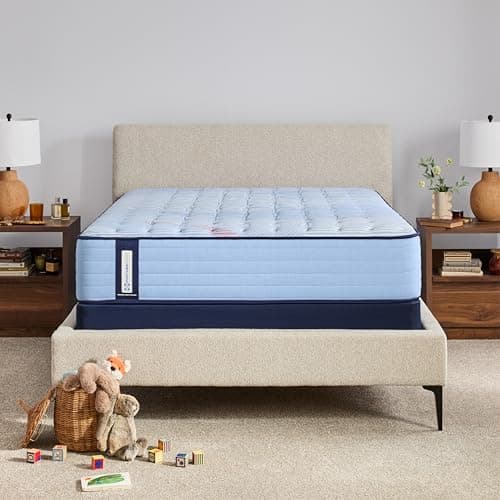 Sealy Posturepedic Fayette 13" Firm Tight Top Innerspring The listing says innerspring and it says tight top, which settles the only question that matters in this category. A firm traditional coil bed from a company that has been building them for decades. Best for: Best overall | Best overall | $859.99 · View on Amazon Price as of September 7, 2026. #ad — we earn a commission. |
| 2 | 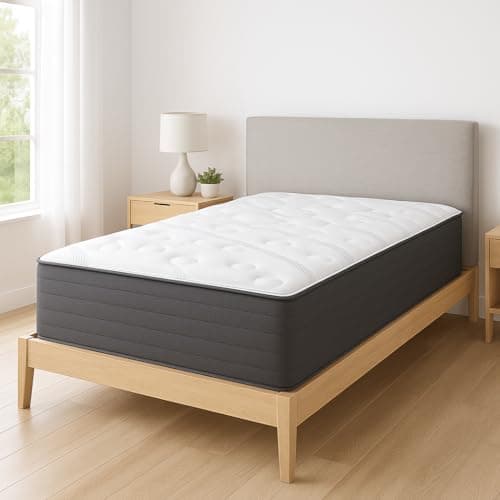 Greaton 14" Firm Double-Sided Tight Top Innerspring A flippable innerspring, which is close to extinct. Since the category's real weakness is how fast one surface wears out, a bed with two of them is the most useful answer anyone on this page offers. Best for: Best two-sided | Best two-sided | $572.97 · View on Amazon Price as of September 7, 2026. #ad — we earn a commission. |
| 3 | Sealy Posturepedic Fayette 13" Medium Tight Top Innerspring The same bed as our top pick with the feel dialed back one notch. Innersprings skew firm by construction, so a genuine medium in this category is worth knowing about. Best for: Best if firm is too firm | Best if firm is too firm | $908.60 · View on Amazon Price as of September 7, 2026. #ad — we earn a commission. |
| 4 | 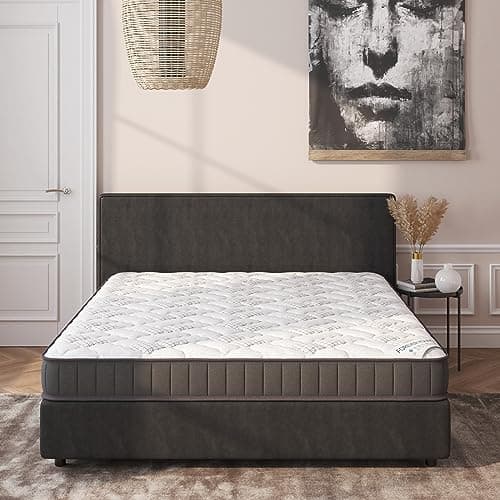 Ottomanson 7.5" Medium Firm Bonnell Coil Innerspring The most transparent listing here: it names the coil system, states fiberglass free, and states where it was made. At the budget end of this category, that combination is the whole reason to pick one bed over another. Best for: Best stated fiberglass-free | Best stated fiberglass-free | $317.32 · View on Amazon Price as of September 7, 2026. #ad — we earn a commission. |
| 5 | 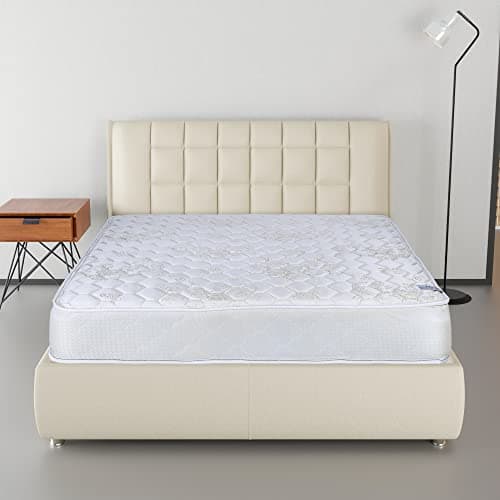 Greaton 9" Gentle Firm Tight Top Innerspring A thin, cheap, traditional coil bed for a room that gets slept in a dozen nights a year. The short lifespan that counts against this category barely applies at that duty cycle. Best for: Best for a guest room | Best for a guest room | $310.62 · View on Amazon Price as of September 7, 2026. #ad — we earn a commission. |
| 6 | 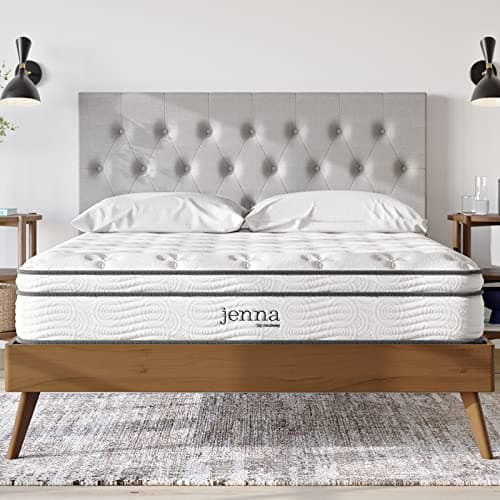 Modway Jenna 10" Innerspring The cheapest bed here and the only one that states individually encased coils. If the thing putting you off an innerspring is the motion transfer, this is the pick that addresses it. Best for: Best budget | Best budget | $208.96 · View on Amazon Price as of September 7, 2026. #ad — we earn a commission. |
An innerspring is coils under a thin cushion. That is the entire definition
Sleep Foundation describes a traditional innerspring as consisting primarily of a layer of interconnected steel coils with a thin layer of cushioning beneath the cover. Read that again and notice which word is doing the work: thin. Springs are not what makes a mattress an innerspring — a hybrid has springs too. What makes it an innerspring is that there is almost nothing on top of them.
Every strength of this category and every weakness falls straight out of that one structural fact. Air moves freely through a coil unit and there is no thick foam slab above it to trap heat, so an innerspring is the coolest-sleeping construction you can buy. It is cheap, because foam is the expensive part of a modern mattress. It feels firm and supportive in the way people mean when they say a bed feels "traditional" — you sleep on it rather than sinking into it. And it cannot do pressure relief, because pressure relief is a job for a comfort layer and there isn't one.
This matters commercially, not just academically. A great many beds sold under the word "innerspring" on a marketplace are pocketed-coil hybrids with three or four inches of foam on top, and you find out when it arrives. Every pick on this page has either the word "Innerspring" or a named coil system in its live listing title, because that is the only check we can actually make from here. If you want the full anatomy of the difference, our hybrid vs innerspring guide takes the two builds apart layer by layer.
The four coil types, and what each one costs you
The coil unit is most of what you are buying, and there are four designs in general use. Sleep Foundation lays them out clearly, and the differences are real rather than marketing:
- Bonnell coils. The original: hourglass-shaped springs, each knotted at the end and joined to its neighbors by a network of thin helical wires. Inexpensive and durable, with reliable edge support. The costs are that the coils move as one unit — minimal contouring, more noise from wire friction — and that a Bonnell core can be prone to sagging in the center of the mattress.
- Offset coils. The same hourglass idea with squared sides and a hinged connection, so the coils flex like a hinge under light pressure and push back harder as load increases. That buys better contouring and less motion transfer and noise than Bonnell, at a higher manufacturing cost that shows up in the price.
- Continuous wire coils. Rows of loose coils formed from a single length of wire and tied together with helicals. Firm, stable, highly durable and inexpensive — but tightly connected, so motion travels across the bed and contouring is worse than offset.
- Pocketed coils. Springs individually wrapped in fabric sleeves that are sewn or glued together, so each one moves independently. Minimal motion transfer and noise, better contouring, better resistance to sagging — and the most expensive of the four. This is the coil type almost every modern hybrid uses, and our pocketed coils guide covers why.
The practical translation is short. If you share the bed, connected coils — Bonnell and continuous — will pass your partner's movement across to you, and Sleep Foundation is blunt that traditional innersprings are less than ideal for couples for exactly this reason. If you sleep alone and want a firm, airy, inexpensive bed, connected coils are the cheapest route to one and there is nothing wrong with buying them deliberately.
Be ready for most listings not to say. Of the six beds on this page, one names a Bonnell system and one states individually encased coils; the other four say nothing about coil type at all. That is normal in this category and it is not automatically a red flag — it usually means the spec sheet was written for a showroom tag rather than a marketplace page. It does mean you cannot verify it, and we would rather say so than invent a coil count.
Coil count and gauge: the two numbers, and what they are worth
When a listing does publish numbers, these are the two. Coil count for a queen usually falls between 400 and 1,200, and Sleep Foundation advises avoiding counts below 400 at that size — that is the closest thing to a floor anyone publishes. Gauge measures wire thickness on a scale of roughly 13 to 17, where a lower number means thicker, firmer wire and a higher number means thinner and more flexible. So a 13-gauge coil bed will feel firmer and hold up harder than a 17-gauge one, all else being equal.
The caveat matters as much as the numbers: Sleep Foundation is explicit that count alone does not determine quality, because coil material, tempering, height and design all feed into how a unit performs. A well-built 600-coil bed can beat a badly built 900-coil one, and a big number on a cheap listing is a marketing decision as often as an engineering one. Treat 400 as a floor to avoid going under, not as a target to optimize.
Who should buy an innerspring — and who should walk away
This is the part most roundups skip, so here it is plainly. An innerspring is the right purchase if you sleep hot and want the construction that moves the most air; if you specifically like a firm surface and the sensation of lying on top of the bed; if you are furnishing a guest room, a bunk, a trundle or a child's room where a coil bed's shorter life barely registers; or if the budget is the binding constraint and you would rather have a real steel core than a thicker slab of cheap foam.
It is the wrong purchase in three cases, and we would rather lose the sale than fudge them:
- You sleep on your side. A shoulder and a hip need somewhere to sink so the spine stays level, and a thin comfort layer has nowhere to offer. This is not a firmness preference, it is geometry. Start with our side-sleeper picks instead.
- You share the bed with someone restless. Connected coils transfer motion by design. A pocketed-coil hybrid or an all-foam bed both solve this, and no amount of coil count fixes it on a Bonnell or continuous unit.
- You want pressure relief. If your reason for shopping is a sore hip, a sore shoulder, or a bed that feels like it is pushing back at you, you want a comfort system — which is precisely what this category leaves out. Read memory foam vs hybrid and buy a different construction.
If you got here from the coil side of the argument and are not certain which build you want, our best hybrid mattresses page is the direct comparison — same steel core, a real comfort system on top, and a longer expected life for the extra money.
Two things to check before you buy a cheap one
The budget end of this category is where the site's two standing warnings both apply at once.
The first is fiberglass. Inexpensive mattresses commonly use a woven fiberglass fire barrier under a removable cover to meet the US federal open-flame standard. Left sealed it is inert; unzip the cover and the fibers shed and spread through a home. The fix is simple — buy a listing that states "fiberglass free", or never remove the cover — and exactly one bed on this page states it outright. Our mattress fiberglass guide has the full picture, including why a CertiPUR-US mark does not answer this question.
The second is what it sits on. Coil beds are less forgiving of a bad base than foam beds are, because an unsupported span is where a spring unit starts to sag. On a platform bed with closely spaced slats you are fine. On an old metal frame with nothing but side rails, you need a foundation under it. Our do you need a box spring guide works through the cases, and our box spring pickscover the hardware if the answer turns out to be yes. Budget for it before you decide an innerspring is the cheap option — sometimes it isn't.
Six years, and the flippable exception
The number worth knowing before you spend anything: Sleep Foundation puts the average lifespan of a traditional innerspring at about six years, against six to eight for a hybrid. That is not a scandal, it is a trade — you are paying less up front for a bed with a shorter runway, and whether that is a good deal depends entirely on how hard the bed gets used.
It also explains why one pick here is built differently from the rest. A double-sided mattress can be flipped, so wear is shared across two surfaces rather than concentrated on one. It is a design that has almost vanished from the market, because a foam comfort layer can only face one way — which means the flippable bed is a virtue you can essentially only find in this category. The catch is human rather than mechanical: a 14-inch double-sided queen is heavy, and a bed you never actually turn over is a single-sided bed you overpaid for.
What we can't measure
We have not slept on any of these, and we have not cut one open. There is no test lab behind this site, no coil-count audit, no rig measuring how far a spring unit deflects under load. So we are not going to hand you a durability score or tell you which of these will still be flat in year seven, because we would be making it up.
What we can do is read what each listing actually commits to in writing, apply the published guidance on how the four coil types behave, and be straight about the gaps — which is why several picks above carry a con that amounts to "the listing does not say". That is a real finding about a real product, and it is more useful to you than a confident number nobody measured. The full method, including the claims we refuse to make, is on how we review.
One last practical note. Because the trial period is the only thing that can tell you whether a firm coil bed suits your body, and because most listings in this category publish no trial at all, the safest way to buy an innerspring is the oldest one: go and lie on the feel in a shop, then buy whichever construction matched it. That is a real advantage of the mainstream picks here over the marketplace-only ones, and it is worth more than a coil count you cannot verify.
The picks, in full
1. Best for Best overall
Sealy Posturepedic Fayette 13" Firm Tight Top Innerspring
The listing says innerspring and it says tight top, which settles the only question that matters in this category. A firm traditional coil bed from a company that has been building them for decades.
Price as of September 7, 2026. #ad — we earn a commission.
Key specs
- 13" innerspring
- Firm feel (as listed)
- Tight top (as listed)
- Posturepedic line
- Queen
What's good
- The title states both "Innerspring" and "Tight Top", which is rarer than it sounds — most beds sold as innersprings on a marketplace are pocketed-coil hybrids with several inches of foam, and you only find out when it arrives
- A firm surface over a thin cushion is the classic innerspring proposition done properly: you sleep on the bed rather than in it, air moves through the coil core, and nothing between you and the springs is there to trap heat
- Sealy sells through physical retailers, so this is one of the few beds here whose feel you can go and lie on before committing — the only real substitute for a trial period
What's not
- "Posturepedic" is a Sealy trademark dating to the 1950s, not a specification. The listing states no coil type, no coil count and no gauge, so there is nothing to check against the numbers further down this page
- No trial length and no warranty term appear in the listing, which is a real gap on a bed most people will buy without lying on it
- It is the second-priciest bed here, and a good part of that price is buying a legacy name rather than a measurably better coil
Skip this one if
You are a side sleeper. A thin comfort layer gives a shoulder and hip nowhere to sink, and no amount of coil quality fixes that — our best mattresses for side sleepers page leans plusher on purpose.
2. Best for Best two-sided
Greaton 14" Firm Double-Sided Tight Top Innerspring
A flippable innerspring, which is close to extinct. Since the category's real weakness is how fast one surface wears out, a bed with two of them is the most useful answer anyone on this page offers.
Price as of September 7, 2026. #ad — we earn a commission.
Key specs
- 14" innerspring
- Firm feel (as listed)
- Double-sided, tight top both faces (as listed)
- Queen
What's good
- Double-sided construction is the direct answer to this category's biggest problem. Sleep Foundation puts the average traditional innerspring at about six years; a bed you can flip spreads that wear across two surfaces instead of grinding down one
- A tight top on both faces means you get the same firm feel whichever way up it goes, so flipping is a maintenance job rather than a change of bed
- Fourteen inches is the tallest build here, which matters on a coil bed — more height above the springs is the only cushioning you are going to get
What's not
- A 14-inch double-sided queen is heavy and awkward. Flipping it is a two-person job you have to actually remember to do, or the second surface is decoration
- Greaton is a small manufacturer. Whatever warranty exists stands behind a far thinner support and returns operation than Sealy's
- The listing states no coil type, no count, no gauge and no trial length, so the two-sided build is the only verifiable thing about it
Skip this one if
You will not flip it. The entire argument for paying more than the thin budget beds here is the second surface — if the mattress is going to sit one way up for six years, buy the cheaper Greaton below and replace it sooner.
3. Best for Best if firm is too firm
Sealy Posturepedic Fayette 13" Medium Tight Top Innerspring
The same bed as our top pick with the feel dialed back one notch. Innersprings skew firm by construction, so a genuine medium in this category is worth knowing about.
Price as of September 7, 2026. #ad — we earn a commission.
Key specs
- 13" innerspring
- Medium feel (as listed)
- Tight top (as listed)
- Posturepedic line
- Queen
What's good
- A thin comfort layer cannot do much softening, which is why almost every innerspring on the market is firm or extra firm — a stated medium is genuinely hard to find in this category
- It is the identical construction and brand as the firm Fayette, so the feel is the only variable you are changing. That makes it an unusually clean decision compared with cross-shopping two different manufacturers
- Medium is the widest-tolerance feel there is, so if an innerspring is going into a room where you do not control who sleeps in it, this is the safer call
What's not
- It is the most expensive bed on this page, and it costs more than the firm version of the same mattress
- "Medium" over a thin cushion is still firmer than a medium hybrid. If you are expecting hybrid-style give, this will not deliver it and you should be buying a different construction entirely
- Same gaps as its sibling: no coil type, count, gauge, trial length or warranty term stated anywhere in the listing
Skip this one if
What you actually want is pressure relief. A softer label on a thin comfort layer is not the same thing as cushioning — read our memory foam vs hybrid guide and buy a bed with a real comfort system instead.
4. Best for Best stated fiberglass-free
Ottomanson 7.5" Medium Firm Bonnell Coil Innerspring
The most transparent listing here: it names the coil system, states fiberglass free, and states where it was made. At the budget end of this category, that combination is the whole reason to pick one bed over another.
Price as of September 7, 2026. #ad — we earn a commission.
Key specs
- 7.5" innerspring
- Medium firm (as listed)
- Bonnell coil system (as listed)
- Fiberglass free (as listed)
- Made in USA (as listed)
- Queen
What's good
- It is the only listing here that names a traditional coil system outright. Bonnell is the original interconnected hourglass design — Sleep Foundation describes it as inexpensive, durable, and reliable at the edges, so you know exactly what you are getting
- "Fiberglass free" is stated on the listing, and cheap coil beds are precisely where a woven fiberglass fire barrier turns up. Getting that in writing matters more at this price than anywhere else on the site
- Made in the USA and shipped in a box, which is an unusual pairing at the budget end of this category and means there is a domestic entity standing behind the claim
What's not
- At 7.5 inches this is the thinnest bed here by some way. Sleep Foundation notes Bonnell coils move as one unit and offer minimal contouring, so what you get is a firm traditional surface and nothing more
- The same source notes Bonnell cores can be prone to sagging in the center of the mattress — the exact failure a heavier sleeper on a thin bed will find first
- No coil count, no gauge, no trial length and no warranty term in the listing, so the coil system is named but not quantified
Skip this one if
This is your main bed and you weigh more than average. A thin Bonnell build is a guest-room, bunk or stopgap mattress — for a bed slept in nightly by a heavier body, see our best mattresses for heavy people.
5. Best for Best for a guest room
Greaton 9" Gentle Firm Tight Top Innerspring
A thin, cheap, traditional coil bed for a room that gets slept in a dozen nights a year. The short lifespan that counts against this category barely applies at that duty cycle.
Price as of September 7, 2026. #ad — we earn a commission.
Key specs
- 9" innerspring
- Gentle firm feel (as listed)
- Tight top (as listed)
- Queen
What's good
- The six-year average lifespan that makes an innerspring a questionable main bed is close to irrelevant in a spare room — a bed slept on twenty nights a year is not accumulating that wear
- Nine inches fits a daybed, a trundle, a bunk or a low frame where a 13- or 14-inch mattress physically will not, and it is far easier to carry up a staircase
- "Gentle firm" is the softest label on this page after the Sealy medium, which makes it more forgiving for a guest whose preferences you do not know
What's not
- Nine inches leaves very little above the coils. On consecutive nights you will feel them, and a guest staying a week will notice
- The listing states no coil type, no count, no gauge and — unlike the Ottomanson — no fiberglass statement, which is the check we would most want at this price
- Small brand, minimal warranty operation, and no trial length published
Skip this one if
It is going in your own bedroom. This is a spare-room mattress and we would rather say so than sell it as something else — for a bed you sleep on every night, start at the top of this page or read our best mattresses roundup.
6. Best for Best budget
Modway Jenna 10" Innerspring
The cheapest bed here and the only one that states individually encased coils. If the thing putting you off an innerspring is the motion transfer, this is the pick that addresses it.
Price as of September 7, 2026. #ad — we earn a commission.
Key specs
- 10" innerspring
- Individually encased coils (as listed)
- Memory foam comfort layer (as listed)
- Also listed in an 8" version
- Queen
What's good
- Individually encased coils move independently instead of dragging their neighbors along, which is the single biggest complaint about traditional innersprings in a shared bed — Sleep Foundation credits pocketed coils with minimal motion transfer and noise
- It names a memory foam comfort layer, so there is at least some cushioning between you and the springs rather than a quilted cover and hope
- It is the least expensive bed on this page by a wide margin, and Modway lists the same build in an 8-inch height if you need it thinner for a bunk or trundle
What's not
- Pocketed coils plus a foam layer is the construction that starts shading into hybrid territory. We would call this an entry-level coil bed rather than a traditional innerspring, and you should buy it knowing that
- No coil count, no gauge, no trial length and no fiberglass statement in the listing — at this price the fiberglass question is the one we would most want answered
- The comfort layer at this price is thin enough that a heavier sleeper will reach the springs, and the pocketed coils will not save you from that
Skip this one if
You want a real comfort system over the coils. This is a budget coil bed, not a cushioned one — if you want foam depth as well as springs, our best hybrid mattresses page is the right category.
Common questions
What exactly is an innerspring mattress?
A steel coil support core with a thin layer of cushioning over it, under the cover. Sleep Foundation defines a traditional innerspring as consisting primarily of a layer of interconnected steel coils with a thin layer of cushioning beneath the cover — and the word doing the work in that sentence is thin. That is what separates it from a hybrid, which puts several inches of foam or latex over pocketed coils. Both have springs. Only one is built to let you feel them, and that is the whole point of the category: you sleep on an innerspring rather than in it.
Is an innerspring or a hybrid better?
They are built for different people, and for most shoppers today a hybrid is the safer answer. A hybrid puts a real comfort system over the coils, so it does pressure relief that an innerspring structurally cannot, and Sleep Foundation gives hybrids a longer average lifespan — six to eight years against about six for a traditional innerspring. An innerspring wins on price, on airflow, on the firm traditional feel some people specifically want, and on being simple enough that there is less to go wrong. If you sleep hot, want a firm surface, are furnishing a spare room, or are working to a budget, the innerspring is the right buy. If you sleep on your side or need cushioning, it is not.
How many coils should a queen innerspring have?
Sleep Foundation puts the usual range for a queen at 400 to 1,200 coils and advises avoiding counts below 400 at that size. It also cautions that count alone does not determine quality — coil material, tempering, height and design all matter, and a well-built 600-coil unit can outperform a poorly built 900-coil one. Gauge is the companion number: coil gauge runs roughly 13 to 17, where a lower number means thicker, firmer wire and a higher number means thinner and more flexible. Most budget listings publish neither figure, which is worth knowing before you treat a missing number as a bad one — usually it just means nobody wrote it down.
Do innerspring mattresses need a box spring?
Not always, and it depends on the frame rather than the mattress. A traditional coil bed sitting on a bed frame with no center support or slat deck needs a foundation under it, and a box spring is the traditional answer. On a platform bed with closely spaced slats, or on a solid deck, you generally do not need one. What you should not do is put a coil mattress on widely spaced slats and assume it will be fine — the unsupported spans are where a coil unit starts to sag. Our guide on whether you need a box spring works through the cases, and our box spring picks cover the hardware.
How long does an innerspring mattress last?
About six years on average, per Sleep Foundation, which is shorter than the six to eight years it gives hybrids. That is the honest headline number for the category and it is why a double-sided model — a bed you can flip so the wear is shared between two surfaces — is genuinely worth paying for if you will actually flip it. It is also why a cheap innerspring can be the correct purchase for a guest room, a child's room or a stopgap while you save: at twenty nights a year, a six-year surface life is not the constraint it is on a bed slept in nightly.
Sources
Where the facts on this page come from. We cite other people's testing because we don't do our own — here's what that means.
- Sleep Foundation — mattress coil types (Bonnell, offset, continuous, pocketed; gauge and coil count)
- Sleep Foundation — best innerspring mattresses (definition, lifespan, motion transfer, airflow)
- Sleep Foundation — mattress firmness scale and body-weight guidance
- FTC — Endorsement guides (why this disclosure exists)
Read next
- The Best Hybrid MattressesSix hybrid mattresses judged on what makes a coil core worth it over all-foam — airflow, edge support, responsiveness — with honest cons and a skip-this-one note on every pick.
- Hybrid vs Innerspring MattressesTwo coil beds, one real difference: the comfort layer on top. How cushion depth and pocketed-versus-connected coils decide which one fits you.
- Innerspring vs Memory FoamBounce and breathability versus a deep contouring hug — and why most modern buyers are better served by the hybrid in between than by either extreme.
- What Are Pocketed Coils?Pocketed coils are individually wrapped springs that move independently for better contouring, motion isolation and zoned support - the heart of the modern hybrid, with the coil-count and gauge marketing debunked honestly.
- The Best Box Springs, and the Honest Case for Not Buying OneSix box springs and foundations ranked on the things that actually decide it - height, deck rigidity, published weight capacity, noise and whether it fits up your stairs - with the warranty trap spelled out and an honest skip note on every pick.
- Do You Need a Box Spring?A plain-English answer on box springs: what they were built for, why most modern mattresses don't want one, and the slat-spacing rule that decides whether your base voids the warranty.
- The Best Firm MattressesSix firm mattresses led by the two whose listings actually say "firm" — with honest cons and who each is wrong for. A genuinely firm bed is rarer than the label admits.
- Fiberglass in Mattresses: What to KnowWhy so many budget foam mattresses hide a fiberglass fire barrier, why it is safe until you unzip the cover, and how to spot a fiberglass-free bed before you buy.