The Best Cheap Pillows
A pillow is the cheapest sleep fix in the house, and the cheapest ones can be genuinely good buys. The honest catch is that budget fill compresses and clumps faster than foam or down, so you replace them sooner - which is fine, because a pillow is the least expensive thing in the whole bed to get right. Five cheap pillows worth the money, and who each is wrong for.
We earn a commission if you buy through our links. It doesn't affect our picks — and we never take free products. How this site is funded.
Quick picks
| # | Product | Best for | Price |
|---|---|---|---|
| 1 | 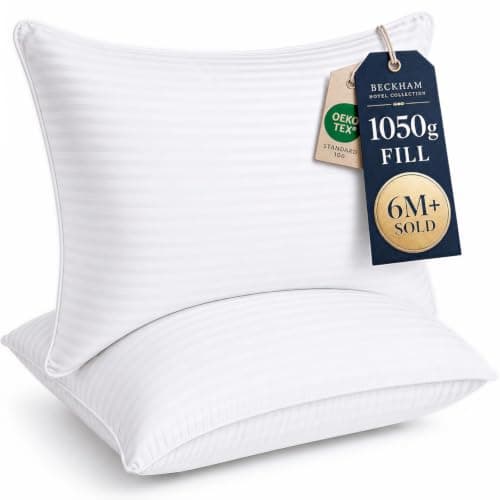 Beckham Hotel Collection Down Alternative (Set of 2) Two soft, hotel-style pillows for about what one foam pillow costs — the default cheap pick I'd hand most back and stomach sleepers before they overthink it. Nothing here is premium, but for the money it's the most pillow most people need. Best for: Best cheap overall | Best cheap overall | $59.99 · View on Amazon Price as of September 12, 2026. #ad — we earn a commission. |
| 2 | 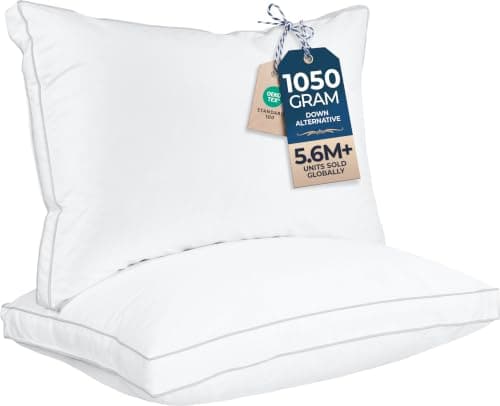 Utopia Bedding Gusset Bed Pillows (Set of 2) The lowest cost per pillow here, and it still throws in a gusset — the side wall that helps fiber hold height. If you want down alternative that won't pancake on night one and you're counting every dollar, start here. Best for: Cheapest per pillow | Cheapest per pillow | |
| 3 | 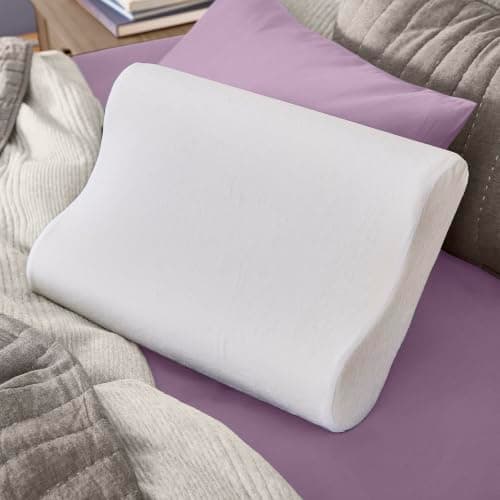 Sleep Innovations Memory Foam Contour A cheap way into a foam pillow that actually holds its shape all night, unlike the fiber two-packs. A fixed contour ridge cradles the neck and drops under the head — the low-commitment way for a back sleeper to test whether a contour settles a morning neck ache. Best for: Best cheap memory foam | Best cheap memory foam | $44.99 · View on Amazon Price as of September 12, 2026. #ad — we earn a commission. |
| 4 | 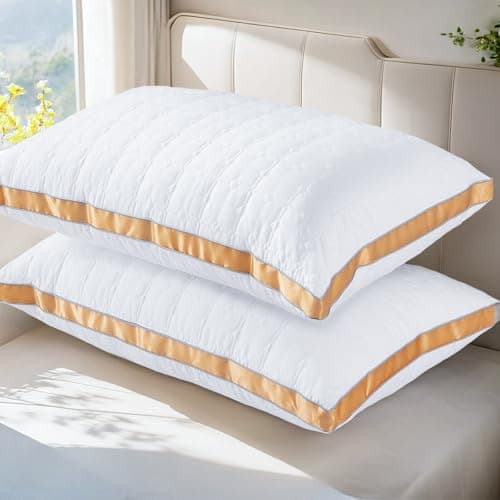 mislili Cooling Gusseted Pillows (Set of 2) The value cooling pick: a gusset for loft and a cooling cover for heat, in a two-pack that undercuts the brand-name coolers. The most feature per dollar on the page for a hot sleeper who won't pay a brand premium for the same idea. Best for: Best cheap for hot sleepers | Best cheap for hot sleepers | $49.99 · View on Amazon Price as of September 12, 2026. #ad — we earn a commission. |
| 5 | 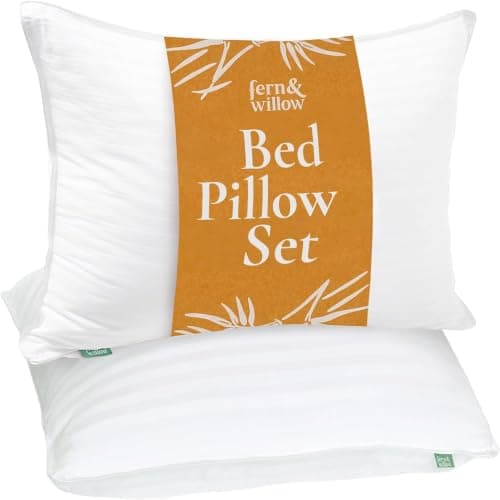 Fern and Willow Premium Pillows (Set of 2) The plush pick at the top of the budget bracket: a denser, cloud-like down alternative with a cooling cover and a medium-firm feel. It costs more than the rock-bottom two-packs here, but it's still a two-pack, so the per-pillow price stays firmly in cheap territory. Best for: Best cheap plush | Best cheap plush | $46.99 · View on Amazon Price as of September 12, 2026. #ad — we earn a commission. |
The pillow is the cheapest thing in the bed to get right
Of everything you sleep on, the pillow is the one where spending little and sleeping well overlap the most. A mattress is a big, hard-to-return commitment where the jump from cheap to mid-tier buys real construction. A pillow isn't like that. Its whole job is simple and physical: fill the gap between your head and the mattress so your neck stays level with the rest of your spine. A well-chosen budget pillow does that on night one just as well as an expensive one, because the loft and the shape come from the fill and the build, not from the price tag. That's why a cheap pillow is one of the highest-return purchases in the whole bedroom — get it right and you fix a stiff neck for the price of a takeaway. Nobody agonizes over a pillow the way they agonize over a mattress, and they're right not to: the stakes of getting it wrong are low and the cost of fixing it is a few dollars, which is exactly why it's worth getting right rather than sleeping for years on whatever came stuffed in with the sheets.
So this page is narrower than the main best-pillow list, which sorts every type by sleeping position, and than the down alternative roundup, which defends one fill in depth. Here the question is money: what are the cheapest pillows that are genuinely worth buying, and what do you have to accept to sleep on them? The answer to the second half is honest and short, and it's the next section.
The honest catch: cheap pillows die faster
Here is the caveat that has to sit right next to the recommendation. Cheap pillows compress and wear out faster than expensive ones — that is the trade you are making for the low price, and pretending otherwise would be the dishonest version of this page. Budget down-alternative fiber packs down, mats and clumps as you sleep on it, and once the loft is gone, fluffing only redistributes what's left; it doesn't bring the height back. On the cheapest fills that's roughly a one-to-two-year pillow. Solid foam, like the contour pick here, lasts longer because it recovers its shape rather than matting flat — which is exactly why it's the better value over its life despite the similar price.
That shorter life is not a reason to avoid a cheap pillow. It's a reason to think about it correctly: a budget pillow is a consumable you replace on a schedule, not an heirloom you nurse for a decade. And because the pillow is the least expensive thing in the whole bed, replacing it is painless — most of the good budget picks come two to a box for roughly what a single mid-range pillow costs, so you can fix both sides of the bed and swap them out when they flatten without it stinging. There's a simple test for when that moment arrives, and it works on any pillow: fold it in half, and if it just lies there folded instead of springing back open, it's done. Most people are sleeping on a pillow that failed that test a year ago — our guide to washing pillows covers how to stretch the life of the one you have in the meantime.
How to buy a cheap pillow without buying junk
Once you've accepted that a budget pillow is a shorter-lived item, there are only a few things worth checking. Everything else on the listing is noise, and none of it justifies paying more.
- Match the loft to how you sleep — this decides everything. A stomach sleeper wants the flattest, softest pillow so the neck isn't cranked back; a back sleeper wants a touch more, ideally a contour that cradles the neck; a side sleeper needs the most height the fill can hold to fill the shoulder gap. Get this wrong and the cheapest or the dearest pillow both give you a sore neck. Our how to choose a pillow guide walks through the gap-and-loft math if you're not sure which you are.
- A gusset, if you need height on a budget.This is the single most useful cheap upgrade and the one most people don't know to look for. A gusset is a vertical side wall sewn around the pillow that gives the fill somewhere to stand, so it holds real loft under weight instead of squashing flat. For a side sleeper on a budget it's close to mandatory — it's why the Utopia and mislili gusseted sets are the side-sleeper picks here, not the soft flat Beckham two-pack.
- A cooling cover, only if you sleep hot.Polyester fiber insulates, so a plain cheap pillow can hold heat against your head. A cool-touch cover puts a cooler surface between you and the fill. It's a real help with an honest limit — it feels cold at bedtime and then equalizes to your body — so pay the small premium for it only if heat is actually your problem, not by default. If it's your main complaint, start with our memory foam and cooling picks before you decide.
- A value two-pack, where the budget math lives.Because cheap fill is cheap, most of the good picks come two to a box for about what one mid-range pillow costs. That lets you do both sides of the bed, keep a matching spare, and — the important part — replace them without wincing when they wear out. A two-pack isn't a gimmick at this price; it's the whole economic argument for buying budget fiber.
Put those together and the five picks almost sort themselves. Want the cheapest soft default? The Beckham two-pack. Counting every dollar? The Utopia gusseted pair, the lowest cost per pillow here. Want a cheap foam pillow that holds its shape and a contour for a sore neck? The Sleep Innovations. Sleep hot without paying a brand premium? The mislili cooling set. Want the plushest, most upmarket feel that's still genuinely cheap? Fern and Willow. Five budget pillows, five different budget jobs.
Fiber or foam: the cheap divide
Almost every budget pillow is one of two materials, and the split decides how it feels and how long it lasts, so it's worth thirty seconds before you buy. Down-alternative fiber — the Beckham, Utopia, mislili and Fern and Willow picks — is soft synthetic fill, mostly air by volume. It breathes well, washes easily in one piece, feels lovely on night one, and costs the least, which is why four of the five picks here use it. What it will not do is hold a tall, firm shape: it collapses under your head, and it wears out first. That's not a flaw so much as the deal you strike for the price, and it's the whole reason fiber is sold in cheap two-packs rather than as a single pillow you keep.
Solid memory foam — the Sleep Innovations contour — is the other side of the divide. A molded block holds one exact shape all night, so the support you feel at lights-out is the support you get at dawn, and it recovers its shape rather than matting flat, so it lasts noticeably longer than fiber. The costs are equally clear: it can't be adjusted, and it sleeps the warmest of anything here. So the honest cheap rule is simple. Pick fiber when you want softness, airflow and the lowest possible price, and pick foam when you want a shape that holds and outlives the fiber — and don't expect either cheap material to quietly behave like the other. Our down alternative roundup goes deeper on the fiber side if that's the way you lean.
When cheap is the wrong call
A budget roundup that never says "spend more" isn't being honest, so here are the cases where the cheapest pillow is a false economy.
A dedicated side sleeper who wants loft that lasts.A cheap gusseted pillow holds height better than a flat one, but budget fiber still packs down over months, and a side sleeper feels a collapsing pillow first and worst — the shoulder gap reopens and the neck bends toward the bed. If you sleep on your side every night and you're tired of re-buying, an adjustable shredded-foam pillow you can pack out to your exact shoulder width holds up longer and is worth the step up; the side-sleeper picks rank that problem specifically.
Anyone with a persistent, specific neck problem.The cheap contour here is a great low-commitment way to test whether a molded shape settles a mild morning ache. But a fixed budget shape only fits the neck it was molded for, and if you have real, ongoing neck pain, an adjustable or properly ergonomic pillow that you can tune — or a conversation with a physio — does more than a cheap fixed lobe. We're a bedding site, not clinicians; a cheap pillow is a fine experiment, not a treatment.
What I can't measure
The honesty this site runs on: I haven't slept on all five of these, I don't run a lab, and I own no force gauge, thermal camera, or rig to count how many nights it takes a fill to flatten. So I can't hand you a firmness number, a measured loft, or a surface-temperature reading — and anyone who hands you those for a stack of cheap pillows bought on Amazon last week is inventing them. Where a spec above says "as listed," that means it's the seller's claim repeated, not confirmed.
What I can do is reason from what the materials are, and with cheap pillows the material tells you almost everything. Polyester fiber is soft and gives way — you can feel that in your hand, no rig required. It insulates, so it holds heat; it compresses and doesn't recover, so it flattens; a gusset gives the fill a wall to stand against, so it holds loft longer; solid foam keeps one shape, so it lasts longer than fiber but sleeps warmer. None of that is a measurement I took — it's how the stuff behaves, and it's more honest than a number I'd have to make up. That's why every card above pairs the reasoning with a plain statement of who the pillow is wrong for.
And since it's fair to ask: I earn an Amazon commission if you buy through the links here, and that's what keeps the site running. The rate is effectively the same across every pillow on this page, so there's nothing I make more money by pushing — which is exactly why the pick I steer most people toward is the cheapest thing here, the Beckham two-pack, and why the "skip this if" on every card sometimes points you at spending a little more or a little less. A pillow is the cheapest sleep fix you can buy: match the loft to how you sleep, add a gusset if you're on your side, add a cooling cover only if you run hot, and replace it when it fails the fold test. Do that and you've solved the most overlooked part of the bed for less than the cost of a night out. If it turns out you need loft that holds for years rather than months, our memory foam pillow page is the step up, and the main best-pillow list sorts every type by position first.
The picks, in full
1. Best for Best cheap overall
Beckham Hotel Collection Down Alternative (Set of 2)
Two soft, hotel-style pillows for about what one foam pillow costs — the default cheap pick I'd hand most back and stomach sleepers before they overthink it. Nothing here is premium, but for the money it's the most pillow most people need.
Price as of September 12, 2026. #ad — we earn a commission.
Key specs
- Down-alternative fill
- Set of 2, Standard/Queen (as listed)
- Soft support for back/stomach/side (as listed)
What's good
- A set of two for roughly what a single mid-range pillow costs is the cheapest honest way to fix both sides of a bed at once, or to keep a matching spare for guests — the whole budget argument in one box
- Loose fiber fill is mostly air, so it breathes better than a solid foam pillow and doesn't wrap heat around your head — a real edge the low price hides
- Soft and machine-washable, which is the point of a cheap fiber pillow: you throw the whole thing in the wash, not just the case, and replace it without wincing when it wears out
What's not
- Fiber compresses under your head and won't hold a tall shape, so it reads low-loft the moment your weight lands on it
- You can't adjust it — what's in the bag is the loft you get, and if it's wrong for you it stays wrong
- Cheap down alternative flattens and clumps faster than foam or real down, so treat a set like this as a consumable you'll replace within a year or two, not a pillow you nurse for a decade
Skip this one if
You sleep on your side. Soft fiber collapses into the gap between your ear and the mattress, the one thing a side sleeper's pillow must not do — a gusseted pick below holds height better, or step up to an adjustable pillow on our main list.
2. Best for Cheapest per pillow
Utopia Bedding Gusset Bed Pillows (Set of 2)
The lowest cost per pillow here, and it still throws in a gusset — the side wall that helps fiber hold height. If you want down alternative that won't pancake on night one and you're counting every dollar, start here.
Key specs
- Down-alternative fill, gusseted
- Set of 2, Queen (as listed)
- Hotel-style (as listed)
What's good
- It's the cheapest cost-per-pillow pick on the page: two pillows for close to what a single mid-range one costs, which is the budget value proposition in its purest form
- The gusset is a vertical side panel that gives the fill somewhere to sit, so it holds more loft under weight than a flat fiber pillow at the same price — a real feature, not a markup
- Utopia is one of the highest-volume basics brands on Amazon, so the listing is stable and the fill is a known, unfussy quantity rather than a one-off from an unknown seller
What's not
- A gusset slows the collapse, it doesn't stop it — this is still soft polyester fiber, not foam, and it will pack down over months
- Budget fill can settle unevenly, so it wants an occasional shake and re-fluff to keep the corners full
- No cooling cover, so it insulates like any plain polyester pillow if you run hot
Skip this one if
You wake up damp-hot. Plain fiber with no cooling layer traps heat against your head — take the cheap cooling mislili set below, or read our dedicated cooling page before you commit.
3. Best for Best cheap memory foam
Sleep Innovations Memory Foam Contour
A cheap way into a foam pillow that actually holds its shape all night, unlike the fiber two-packs. A fixed contour ridge cradles the neck and drops under the head — the low-commitment way for a back sleeper to test whether a contour settles a morning neck ache.
Price as of September 12, 2026. #ad — we earn a commission.
Key specs
- Solid contour memory foam
- Fixed ergonomic shape
- Medium support (as listed)
- Queen (as listed)
What's good
- It's the cheapest way here to buy a pillow that holds one shape all night — solid foam doesn't flatten under your head the way budget fiber does, so it lasts longer and is better value over its life than its low price suggests
- The molded ridge is built to sit under the neck and support its natural curve while the head settles into the dip — the geometry a lot of back sleepers are missing on a flat pillow
- A cheap, low-commitment way to test whether a contour pillow settles your morning neck ache before you spend more on a fancier ergonomic one
What's not
- A fixed shape fits the neck it was molded for — if your proportions are off from the mold there's no adjusting it, and it can feel like sleeping on someone else's pillow
- Solid memory foam is the warmest-sleeping fill here; it wraps and insulates, so a hot sleeper will notice, and there's no cooling cover to take the edge off
- Two different ridge heights mean there's a right way up and a wrong way up, so it takes a few nights to learn which lobe suits you
Skip this one if
You sleep on your stomach, or you toss between positions all night. A contour pillow only works when your head stays in the dip — roll off it and you're fighting the shape, so a flat, soft two-pack above suits a mover or a stomach sleeper better.
4. Best for Best cheap for hot sleepers
mislili Cooling Gusseted Pillows (Set of 2)
The value cooling pick: a gusset for loft and a cooling cover for heat, in a two-pack that undercuts the brand-name coolers. The most feature per dollar on the page for a hot sleeper who won't pay a brand premium for the same idea.
Price as of September 12, 2026. #ad — we earn a commission.
Key specs
- Down-alternative fill, gusseted
- Set of 2, Queen (as listed)
- Cooling, hotel-quality (as listed)
What's good
- It stacks the two features that actually matter — a gusset to hold loft and a cooling cover to fight heat — into one cheap two-pack, so a hot sleeper doesn't have to choose between price and features
- The side-wall gusset means it holds height better under a shoulder than the flat budget sets, so it's the closest thing here to a value side-sleeper fiber pillow
- A cooling cover at this price makes it the sensible cheap default for a hot sleeper, rather than paying a brand premium for the same coating over the same fiber
What's not
- mislili is a smaller Amazon-native brand than Beckham or Utopia, so there's less of a track record behind the warranty and the fill quality
- As with every cooling cover, the cold-touch feel fades to neutral once the surface warms to your body — the gusset is doing more lasting work than the coating
- Budget fiber in a gusset still needs regular fluffing to keep the walls full, and it'll flatten on the same fiber timeline as the rest
Skip this one if
You want a premium, plush, luxury-feeling pillow. This is a value pick that prioritizes features over finish — if plushness is the point, the Fern and Willow set below feels a class above.
5. Best for Best cheap plush
Fern and Willow Premium Pillows (Set of 2)
The plush pick at the top of the budget bracket: a denser, cloud-like down alternative with a cooling cover and a medium-firm feel. It costs more than the rock-bottom two-packs here, but it's still a two-pack, so the per-pillow price stays firmly in cheap territory.
Price as of September 12, 2026. #ad — we earn a commission.
Key specs
- Down-alternative fill
- Set of 2, Queen 28x20 (as listed)
- Cooling cover, medium-firm (as listed)
What's good
- It's built plush and dense rather than thin, so it feels closer to a proper luxury down pillow than the flat budget sets do — the most upmarket feel on the page for still-cheap money
- The cooling cover addresses the one real weakness of polyester fiber — that it insulates — by sitting a cooler-touch surface between you and the fill
- A medium-firm feel gives a bit more neck support than the softest picks, which widens who it suits toward combination sleepers who want more than a soft, flat pillow
What's not
- Denser, plusher fill costs more, so this is the priciest set on the page rather than a rock-bottom two-pack — value, not the outright cheapest
- A cool-touch cover pulls heat on contact but equalizes to your body over the night — it takes the edge off, it isn't air conditioning
- More fill means more to re-fluff; a plush fiber pillow needs regular shaking to stop it settling into clumps, and it's still fiber, so it flattens sooner than foam
Skip this one if
You want the flattest, softest possible pillow for stomach sleeping, or the absolute lowest price. This is built up to a medium-firm plush loft on purpose — a stomach sleeper wants the low, soft Beckham set, and a bargain-hunter wants the cheaper Utopia gusseted pair.
Common questions
Are cheap pillows actually worth buying?
For most people, yes — a pillow is the one part of the bed where cheap and good overlap the most. What a pillow has to do is simple: fill the gap between your head and the mattress so your neck stays level with your spine. A well-chosen budget pillow does that just as well on night one as an expensive one, because loft and support come from the fill and the shape, not the price. Where the money goes on a premium pillow is durability and finish — it holds its loft for longer and feels a little nicer in the hand. So the honest answer is that a cheap pillow is genuinely worth buying if you accept it as a shorter-lived item and replace it on schedule. The two-packs here lean into that: because they're cheap, you can fix both sides of the bed and swap them out when they flatten without it stinging.
How long do cheap pillows last?
Less time than expensive ones, and that's the trade you're making for the low price. Cheap down-alternative fiber compresses, mats and clumps as you sleep on it, and once the loft is gone no amount of fluffing brings it back — it's roughly a one-to-two-year pillow, sometimes less on the very cheapest fills. Solid foam like the Sleep Innovations contour lasts longer, often several years, because foam recovers its shape rather than matting flat, which is part of why it's the better-value cheap pick over its life. There's a simple test that works on any pillow: fold it in half, and if it just lies there folded instead of springing back open, it's finished. Because these are cheap and often sold in twos, the honest way to think about a budget pillow is as a consumable you replace on a schedule, not an heirloom.
What's the cheapest good pillow for a side sleeper?
A gusseted one, not the softest one. Side sleepers have the biggest gap to fill — the width of a shoulder — so they need a pillow that holds real height under weight without collapsing, and a soft flat fiber pillow is exactly wrong because collapsing is what it does. On a budget, the fix is a gusset: a vertical side wall that gives the fill somewhere to stand, so it keeps more loft under your head. The Utopia gusseted set and the cooling mislili set here are the cheapest way to get that, and they're the picks a side sleeper should start with. If a cheap gusseted pillow still packs down too far under your shoulder, the next honest step up is an adjustable shredded-foam pillow you can pack out to your exact shoulder width, which our main pillow list covers.
Do cheap cooling pillows really work?
Partly, and it helps to know which part. A cooling cover feels genuinely cold when you first lie down because it pulls heat from your skin — but it warms to your body temperature within minutes and then it's just a pillow. What keeps working through the night is airflow: loose fiber with a gusset has air gaps for heat to escape, so it vents better than a solid foam block. So a cheap cooling pillow like the mislili set does help a hot sleeper, but it's the loose fill and the gusset doing the lasting work, not the coating. If you run hot enough that you're waking up damp at 3am rather than warm at bedtime, the cover alone won't fix it, and our dedicated cooling-pillow page is worth reading before you buy.
Do you make money from these links?
Yes. We earn an Amazon commission if you buy through the links here, and that's what funds the site. We don't accept free products, we don't sell placement, and no brand sees a page before it publishes. The rate is effectively the same across every pillow on this page, so there's nothing here we make more by pushing — which is why the pick we steer most people toward, the cheap Beckham two-pack, is about the least profitable thing on the page, and why every card tells you plainly who should skip it. On a page about spending as little as sensible, that matters: we've no reason to talk you into more pillow than you need.
Sources
Where the facts on this page come from. We cite other people's testing because we don't do our own — here's what that means.
Read next
- The Best Pillows, Picked by How You SleepSix pillows picked by sleeping position and fill type — side, back, stomach, adjustable vs fixed — with honest cons and a skip note on every one.
- The Best Down Alternative PillowsSix down alternative pillows — the soft, washable, hotel-style fiber pick — ranked by plushness, gusset support and cooling, with honest cons and a skip note on every one.
- The Best Memory Foam Pillows, Adjustable vs ContourSix memory foam pillows split by the only distinction that matters — adjustable shredded fill you can dial versus a fixed contour you must match to your position — with honest cons and a skip note on every one.
- The Best Pillows for Side SleepersSix pillows tall and firm enough to fill a side sleeper's shoulder gap without collapsing into it by midnight.
- How to Choose a PillowSleeping position sets pillow loft — side high and firm, back medium, stomach low or none — then fill, firmness, your mattress and cooling fine-tune it.
- How to Wash Pillows (by Fill Type)A wash-and-dry method for every pillow fill type — down, down-alternative, memory foam, latex and buckwheat — plus the protector trick that cuts the job in half and the fold test for when it's time to replace one.