Why Do Sheets Pill?
Pills are short, broken fiber ends that have worked loose and tangled into balls. Two things decide whether your sheets do it: how short the fibers are, and how strong they are - which is why cheap microfiber pills worst and long-staple cotton percale barely does.
We earn a commission if you buy through our links. It doesn't affect our picks — and we never take free products. How this site is funded.
A pill is fiber that used to be in your sheet
Pilling looks like something that has arrived on the fabric. It is the opposite: a pill is made of fiber that has come out of the yarn. Every woven fabric has fiber ends at its surface. Friction - your body moving against the sheet, the sheet rubbing against itself in a washer, the tumble of a dryer - works those ends loose. They do not drift away; they catch on neighboring ends and tangle into a dense little ball, anchored to the cloth by the fibers still attached at the bottom.
That is why pilling concentrates where you move most: the middle of the fitted sheet, the top edge where your arms rest, the pillowcase under your cheek. It is mechanical wear, and no fabric is immune to it. What differs enormously is how fast it happens and whether the pills then stay.
Two fiber properties decide almost everything
Fiber length (staple). Short-staple fibers mean more individual fiber ends per square inch, so there is far more available to work loose. Long-staple cotton and flax have fewer ends, spun into smoother, stronger yarn. This is the real reason long-staple cotton costs more - not a thread count number.
Fiber strength. This one is counterintuitive, and it is why polyester sheets pill so visibly. Polyester is strong, so when a pill forms the fibers holding it are strong too - the ball will not break away. It stays attached, collects more loose ends, and grows. A cotton pill is comparatively brittle: it snaps off in the next wash and disappears. Same amount of surface wear, completely different outcome on the bed.
Put those together and the worst-case fabric is short, strong, brushed fibers - which is a precise description of cheap brushed microfiber. The best case is long, moderately strong, unbrushed natural fiber in a tight weave.
How the common fabrics actually behave
| Fabric | Pilling tendency | Why |
|---|---|---|
| Cotton percale | Lowest | Tight weave, short floats, no nap; pills break off |
| Linen | Very low | Long, strong flax fibers; few loose ends |
| Cotton sateen | Low to moderate | Long surface floats feel silky but abrade |
| Bamboo viscose / lyocell | Moderate | Weak when wet - surface fibers break during the wash |
| Cotton flannel | High at first, then settles | Brushing deliberately raises loose fiber ends |
| Brushed microfiber | Highest | Short, strong polyester - pills form and never leave |
Flannel is the interesting row. It pills most in its first few washes and then calms down, because brushing loosened a finite population of fiber ends that shed and are gone - washing flannel sheets covers how to get through that stage. Microfiber is the opposite: it starts smooth and gets steadily worse, because nothing ever falls off.
What slows it down
- Smaller loads. The most effective single change. Sheets grinding against a packed drum is the biggest avoidable friction source in their life.
- Wash sheets on their own. Towels are abrasive, zippers and hooks snag, and both accelerate everything above.
- Cooler water, gentle cycle. Heat weakens fibers, and cellulosic fibers are weakest while wet - see washing bamboo sheets.
- Less detergent, no softener. Residue and waxy coating both hold grit against the fabric. Half a cup of distilled white vinegar in the rinse strips residue instead of adding to it.
- Low dryer heat, or a line. The tumble is friction, and heat makes fiber more fragile while it happens.
- Rotate two sets. Halving the nights on each sheet halves the wear on it, which no laundry setting can match.
Removing pills, and what that does not fix
A battery fabric shaver is genuinely good at this. Lay the sheet flat and dry and run it over the pilled areas; it shears the balls off at the surface without pulling at the weave. A sweater comb works more slowly, and a disposable razor used lightly will do in a pinch. Never pick pills off by hand - that drags more fiber out of the yarn and seeds the next crop.
Be clear about what you have done, though. The fiber in those pills came out of your sheet, and shaving does not put it back. On a brushed polyester set that pills continuously you are signing up for the job every few months, which is usually the point at which people conclude the real answer was a different fabric. That argument in full is in microfiber vs cotton sheets.
Buy the structure, not the treatment
An anti-pilling finish is a real thing and it does help, especially on brushed and blended fabrics where pilling is otherwise inevitable. But a finish is a coating applied to a fabric, and coatings wear off. A weave and a staple length do not.
So if a pill-free surface is what you want for years rather than months, buy the structure: long-staple cotton in a percale weave, unbrushed, and wash it gently. If you want a napped or silky surface - and plenty of people reasonably do - then buy the treated version and accept the maintenance. The three sets below cover both routes, with live prices: one percale that resists pilling structurally, and two that state an anti-pilling finish. Deeper rosters are on best percale sheets and best cotton sheets.
Quick picks
| # | Product | Best for | Price |
|---|---|---|---|
| 1 | 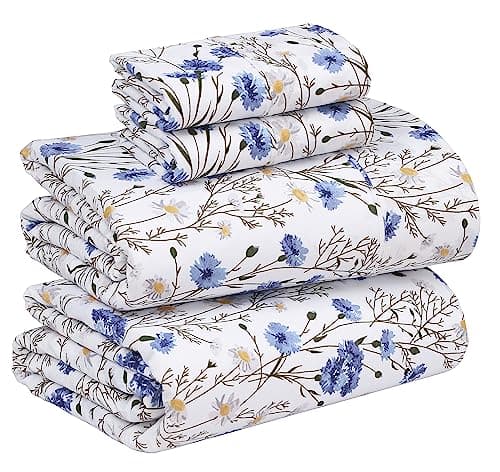 RUVANTI 100% Cotton Percale Sheets Plain 100% cotton in a percale weave - no raised nap to shed and no long floats to abrade. The structural answer to pilling. Best for: The structure that pills least | The structure that pills least | |
| 2 | 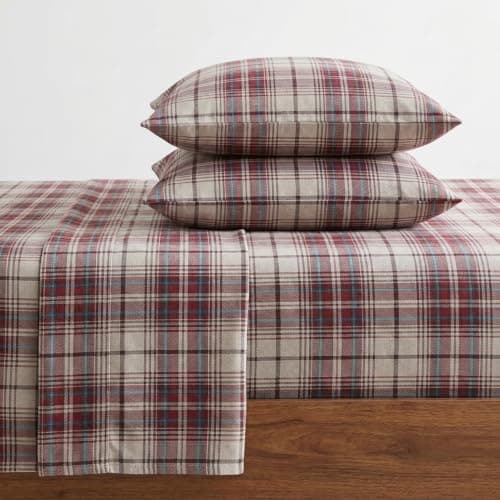 Eddie Bauer Cotton Flannel Sheet Set Flannel that states an anti-pilling finish. If you want a napped sheet, this is how to get one with less shedding. Best for: A brushed sheet treated against it | A brushed sheet treated against it | $53.94 · View on Amazon Price as of October 18, 2026. #ad — we earn a commission. |
| 3 | 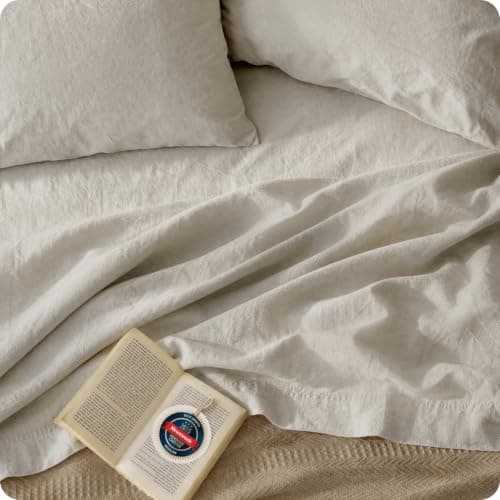 Bedsure Cotton-Linen Blend Sheet Set A cotton-linen blend sold as anti-pilling. Blends are where pills usually show up first, so the stated finish earns its place. Best for: A blend that states the treatment | A blend that states the treatment |
The picks, in full
1. Best for The structure that pills least
RUVANTI 100% Cotton Percale Sheets
Plain 100% cotton in a percale weave - no raised nap to shed and no long floats to abrade. The structural answer to pilling.
Key specs
- 100% cotton, percale weave (as listed)
- 4-piece set (as listed)
- Crisp, breathable finish
- Range of colors incl. Sweet Pea (as listed)
What's good
- A percale is a tight one-over-one-under weave with short float lengths, so there is very little exposed yarn to rub loose - the single most pill-resistant sheet structure in common use
- Unbrushed cotton has no raised nap, which removes the other main source of loose fiber ends entirely
- When cotton does shed, the pills are weak and break off in the wash rather than clinging to the surface the way polyester pills do
What's not
- Percale feels crisp rather than soft out of the bag and takes several washes to relax
- The listing does not state a staple length, so you cannot confirm how long the fibers are
- Cotton wrinkles, and percale shows it
Skip this one if
You want a silky or fuzzy bed. Percale is deliberately crisp and matte - a sateen or a flannel is the texture you are after, and both pill more.
2. Best for A brushed sheet treated against it
Eddie Bauer Cotton Flannel Sheet Set
Flannel that states an anti-pilling finish. If you want a napped sheet, this is how to get one with less shedding.
Price as of October 18, 2026. #ad — we earn a commission.
Key specs
- Cotton flannel (as listed)
- Anti-pilling & wrinkle resistant (as listed)
- Matching pillowcases + fitted sheet
- Plaid and solid options
What's good
- An anti-pilling finish holds more of the brushed nap in place, which addresses the exact mechanism that makes flannel the most pill-prone fabric in a bed
- It is cotton, so the pills that do form are brittle and shed in the wash instead of welding themselves to the surface
- Wrinkle resistance is a real benefit on heavy brushed cotton
What's not
- "Anti-pilling" means less, not none - a brushed fabric always sheds somewhat at first
- No GSM is stated, so the warmth is unconfirmed
- Patterned flannel fades faster than a solid over many washes
Skip this one if
You want zero pilling. No napped fabric can promise that - buy the percale if a pill-free surface is the priority.
3. Best for A blend that states the treatment
Bedsure Cotton-Linen Blend Sheet Set
A cotton-linen blend sold as anti-pilling. Blends are where pills usually show up first, so the stated finish earns its place.
Key specs
- Cotton-linen blend (as listed)
- Anti-pilling (as listed)
- 16 in deep pocket (as listed)
- 4-piece queen set
What's good
- Blends mix fibers of different strengths and lengths, which is a classic recipe for pilling - so a stated anti-pilling finish on a blend is more meaningful than on a pure fiber
- Linen's long fibers resist pilling well on their own; the cotton brings the softness
- A stated 16-inch pocket means the fitted sheet is not stretched to its limit, and tension accelerates surface wear
What's not
- The blend ratio is not stated, so how much linen you are getting is unknown
- A blend does not deliver flax's full breathability or lifespan
- Mid-to-high price for a blend
Skip this one if
You want the most durable surface for the money. A pure long-staple cotton percale resists pilling structurally, with no finish required.
Common questions
What causes sheets to pill?
Friction working short fiber ends loose from the surface of the fabric, after which they roll up and tangle with each other into small balls. Every woven fabric has fiber ends at its surface; the question is how many, how short, and how firmly they are held. Rubbing - against your body, against itself in the wash, against the drum of a dryer - pulls those ends out of the yarn. They do not fall off, they catch on their neighbors, and a pill is the result. This is mechanical wear, not a manufacturing defect, which is why no fabric is completely immune.
Why do my sheets pill so fast?
Usually some combination of short-staple fibers, polyester content, and an aggressive laundry routine. Short fibers have more loose ends per square inch of fabric, so there is simply more to work free. Polyester makes it worse in a counterintuitive way: the fiber is strong, so once a pill forms it will not break off - it stays welded to the surface and keeps growing, where a weaker cotton pill snaps away in the next wash. Add a packed washer, hot water and high dryer heat and you have maximized every variable at once.
Which sheets pill the least?
Long-staple cotton in a percale weave, as a general rule. Two reasons: long fibers have fewer loose ends to shed, and a percale's tight one-over-one-under structure leaves very little exposed yarn for friction to catch. Linen resists pilling well too, because flax fibers are long and strong. The worst offenders are cheap brushed microfiber - short, strong polyester fibers with a raised nap - and then brushed natural fabrics like flannel, which shed early by design before settling down. Sateen sits in between, because its long surface floats feel lovely but abrade more easily than a percale's.
Can you reverse pilling?
You can remove pills, but you cannot undo the wear. A battery fabric shaver is the right tool - it cuts the balls off flush with the surface without dragging at the weave - and a sweater comb or a carefully used disposable razor does the same job more slowly. What you must not do is pick them off with your fingers, which pulls more fiber out of the yarn and makes the next crop worse. Understand what shaving is: cosmetic maintenance. The fiber in those pills came out of your sheet and is not going back.
Does fabric softener stop pilling?
No, and it tends to make things worse over time. Softener coats fibers with a waxy film, which gives a temporarily smoother feel that can mask early pilling - but the coating also stiffens and traps grit against the fabric, and it accumulates with every wash. On brushed fabrics it flattens the nap, and on cellulosic fibers like bamboo viscose or lyocell it blocks the moisture handling you paid for. If your sheets feel rough, the better move is to strip the residue with half a cup of distilled white vinegar in the rinse and use less detergent.
Is pilling covered by a warranty?
Almost never, and that is not usually unreasonable. Pilling is classified as normal wear rather than a defect, because it is caused by use and laundering rather than by a fault in the goods - so most bedding warranties exclude it explicitly. Where you do have a case is a set that pills severely within the first few washes, which suggests genuinely poor fiber quality rather than ordinary wear. That is worth a return request inside the return window, which is a different thing from a warranty claim and much more likely to succeed.
Sources
Where the facts on this page come from. We cite other people's testing because we don't do our own — here's what that means.
Read next
- Percale vs Sateen SheetsTwo weaves, one decision: crisp and breathable, or silky and warm. Plus why thread count is mostly a marketing number.
- Microfiber vs Cotton SheetsMicrofiber is cheap, brushed-soft polyester that traps heat; cotton is the pricier natural fiber that breathes. How they compare on price, feel, temperature, pilling and care, and which wins for budget and for hot sleepers.
- The Best Percale SheetsFive percale sheet sets - the crisp, cool, matte cotton weave hot sleepers want - spanning budget organic to a cooling finish, with honest notes on wrinkling and fit.
- How to Wash Flannel SheetsFlannel's nap is both the feature and the fragile part. The wash routine that protects it, why the first-wash fuzz is normal, and how to de-pill a set that has already shed.
- How to Wash Bamboo SheetsBamboo viscose is weak when wet, which is why these sheets pill and thin early. The routine that prevents it, what fabric softener actually does to the fiber, and the first-wash vinegar question.
- Thread Count: What It Really MeansThread count is real up to roughly 400-600. Above that, it is mostly a counting trick — and fiber and weave matter more than the number ever did.
- How to Wash Bed Sheets (by Fabric)A wash-and-dry method for every kind of sheet — cotton and percale, sateen, linen, bamboo viscose, flannel and microfiber — plus how often to wash, how to handle new sheets, and why sheets pill and how to slow it down.