The Best Mattresses for Back Sleepers
Lie face-up and there is a gap between the small of your back and the mattress. Whether a bed fills that gap or bridges over it decides how your morning feels — not how firm it is, not how expensive it is. Six beds built to fill it, and who each one is wrong for.
We earn a commission if you buy through our links. It doesn't affect our picks — and we never take free products. How this site is funded.
Quick picks
| # | Product | Best for | Price |
|---|---|---|---|
| 1 | 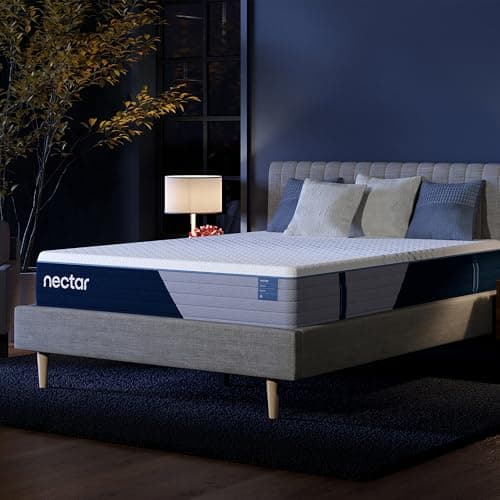 Nectar 12" Hybrid Medium firm, memory foam over a coil core, and a full year to send it back. It is the construction the mainstream guidance points back sleepers at, bought without having to guess. Best for: Most back sleepers | Most back sleepers | $849.00 · View on Amazon Price as of October 18, 2026. #ad — we earn a commission. |
| 2 | 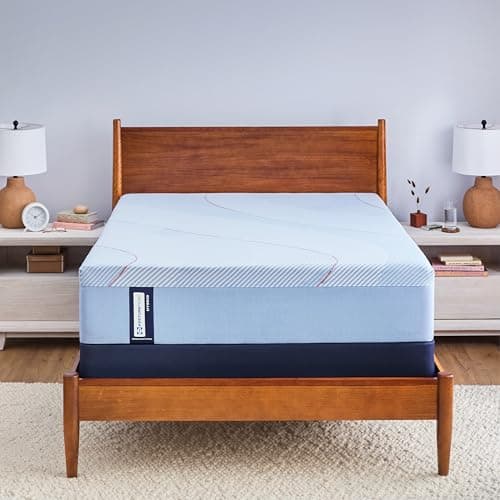 Sealy Posturepedic Fayette 12" Medium Hybrid Medium, encased coils, tight top, and a manufacturer with showroom floors. If you would rather test a feel with your own back than read about it, this is the pick. Best for: A brand you can lie on in a shop first | A brand you can lie on in a shop first | $999.00 · View on Amazon Price as of October 18, 2026. #ad — we earn a commission. |
| 3 | 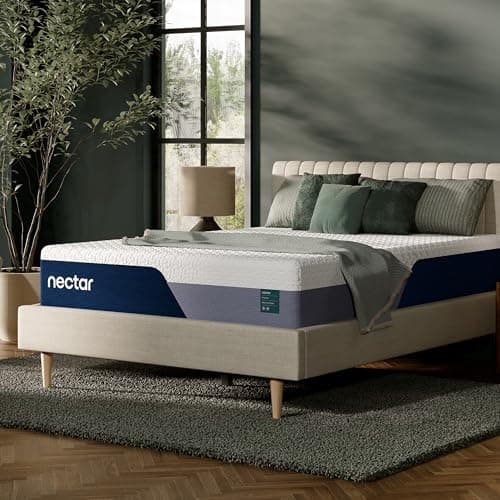 Nectar Premier 13" Memory Foam The most contouring bed here that is still rated medium firm. If your complaint is that firm beds leave your lower back hanging in mid-air, this is the shape of the answer. Best for: Filling the lumbar gap (all-foam) | Filling the lumbar gap (all-foam) | $999.00 · View on Amazon Price as of October 18, 2026. #ad — we earn a commission. |
| 4 | 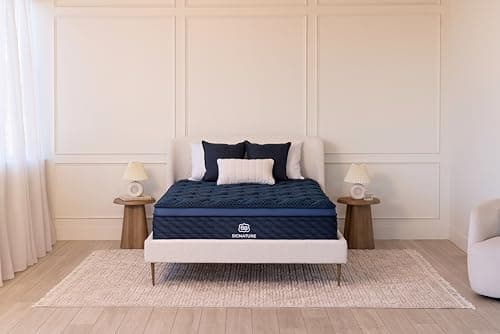 Brooklyn Bedding Signature Hybrid 13" Medium The same 13-inch hybrid build listed in soft, medium and firm. Since the correct firmness for a back sleeper is set by body weight, being able to choose is worth real money. Best for: Picking your own firmness | Picking your own firmness | $1,098.75 · View on Amazon Price as of October 18, 2026. #ad — we earn a commission. |
| 5 | BedStory 14" Firm Hybrid Fourteen inches, a firm surface, and a zoned lumbar claim, for a fraction of what the name-brand hybrids cost. The pick for a body that compresses medium-firm until it isn't. Best for: Heavier back sleepers | Heavier back sleepers | Check price on Amazon → #ad — we earn a commission. |
| 6 | 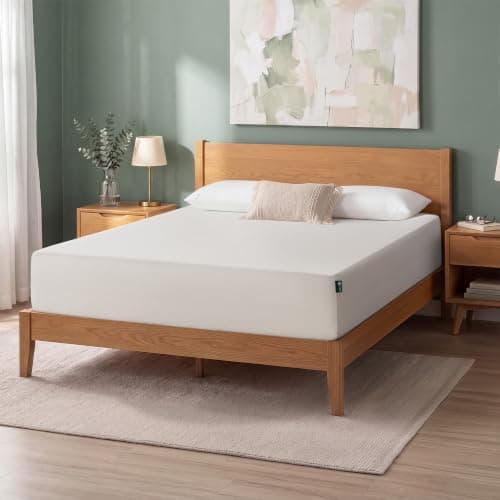 Zinus 12" Green Tea Memory Foam A medium-firm 12-inch foam bed from the most established Amazon-native mattress brand, at a fraction of what the name-brand hybrids here cost. The right firmness, without the frills. Best for: Best budget | Best budget | $299.99 · View on Amazon Price as of October 18, 2026. #ad — we earn a commission. |
The gap under your lower back is the whole problem
Lie face-up on a flat floor and run a hand under the small of your back. There is a space there — a couple of inches of air between your lumbar spine and the surface, because your lower back curves forward and the floor does not. That gap is the entire back-sleeper question, and every recommendation on this page is an answer to it.
A mattress can do one of three things with that space. It can be soft enough that your hips and pelvis — the heaviest part of you, sitting right in the middle of the bed — sink below the line of your shoulders, which flattens the curve and turns your spine into a shallow hammock. It can be firm enough that your hips stay level but the surface runs flat beneath the curve and never touches it, so your lower back spends the night unsupported while your shoulder blades and sacrum carry all your weight. Or it can do the thing you actually want: hold the pelvis up while the material above the support core climbs into the gap and fills it.
Sleep Foundation puts it about as plainly as it can be put — too soft a mattress may cause a back sleeper's hips to sink in too far, while too firm a mattress may not allow their hips to sink in far enough. Both failures produce the same symptom, a lower back that aches in the morning and loosens up an hour after you get out of bed, and people routinely respond to that symptom by buying a firmer mattress when half the time they needed a softer one. That is why this page is organized around the gap rather than around a firmness number.
Four things a back sleeper's mattress has to get right
"Medium firm" is the shorthand answer, and it is not wrong — but it is a description of a feel, not a list of jobs. A bed that works face-up has to do four separate things, and most of the beds that fail back sleepers fail exactly one of them:
- Hold the hips level. Your pelvis is the heaviest single region of your body and it sits unsupported in the middle of the mattress, with none of the natural width that props up a shoulder when you are on your side. If the support core gives way there, everything above and below it follows. This is the job coils do best.
- Fill the lumbar curve. Above the support core you want material that is compliant enough to rise into the gap under your lower back. A rock-hard surface leaves that curve hanging in mid-air, which is why genuinely firm beds so often disappoint the people who buy them for their backs. Contouring foam is what does this job.
- Stay even, end to end. Face-up, your weight is spread across the whole length of the bed rather than concentrated at two points. A surface with a soft quilted top that compresses unevenly under the hips, or an older bed with a developed dip, undoes the first two jobs no matter what the firmness label says. This is part of why tight tops suit this position better than deep pillow tops do.
- Match your body weight.Firmness is not a fixed property of a mattress. It is a relationship between the surface and the load on it, and the same bed reads "medium" to one person and "soft" to another who weighs eighty pounds more. Getting this bracket right does more for a back sleeper than any other single decision.
Read those four back and the shape of the answer is already visible: a firm-ish support core with a compliant layer on top of it, sized to your body. That is a hybrid, or a deep all-foam bed rated at the firmer end. It is not, despite the folklore, the firmest mattress in the shop.
Medium-firm, and how your weight moves the target
Sleep Foundation's back-sleeper guidance lands on medium to medium firm — roughly a 6 on the informal 1-10 scale the industry uses — for most people between 130 and 230 pounds. Below about 130 pounds, a medium or even medium-soft feel often works better, because a lighter body does not compress the surface far enough for a firmer bed to make contact with the lumbar curve at all. Above about 230 pounds, the target moves up to medium firm or firm, because a heavier pelvis pushes further into the identical surface before it meets resistance.
Those brackets are the most useful thing on this page, so it is worth being clear about what they mean in practice:
- Under about 130 lb:you will not weigh enough to engage a firm bed. Buy the contour, not the support — the Nectar Premier is aimed at you, and a bed listed "firm" is likely to feel like a plank.
- Roughly 130-230 lb:the mainstream medium-firm recommendation is written for you. The Nectar 12" Hybrid and the Sealy Fayette are both squarely in this band, and either is a low-regret choice.
- Over about 230 lb:a bed labeled medium firm will read softer to you than the label suggests. You want a genuine firm on a coil core, which is why the BedStory 14" is on this page at all, and why the budget all-foam pick carries an explicit warning against buying it at your weight.
One caution about the number itself: there is no standards body behind the 1-10 firmness scale. Two manufacturers can both print "medium firm" on beds that feel meaningfully different, and neither is lying. Our mattress firmness guide explains how the scale came about and why the word on the listing is a starting point rather than a specification. If you want the wider field of beds in this band regardless of sleeping position, our best medium-firm mattresses page covers it.
Why hybrids keep winning this page
A back sleeper needs two things that pull in opposite directions: resistance under the hips and compliance under the lumbar curve. A single material has to compromise between them. A hybrid does not have to — the pocketed-coil core supplies the resistance, the foam comfort layer above it supplies the compliance, and the two are separate layers doing separate jobs. Sleep Foundation reaches the same conclusion from the other direction, calling a hybrid's balance of contouring and support a good fit for this position.
That is the whole argument, and it is why four of the six picks here have springs in them. It also explains the second-order benefits that come along for free: coils move air through the bed, so hybrids sleep cooler than an equivalent foam slab, and a coil perimeter holds its edge better when you sit on the side of the bed. The cost is motion transfer — springs carry a partner's movement across the mattress in a way solid foam does not.
All-foam is still a legitimate choice for a back sleeper, and two picks here are exactly that. A deep foam bed rated medium firm gets you the lumbar contact better than almost anything else, because there is more compliant material to climb into the gap; it just asks you to accept more trapped heat and slower response in exchange. If you are weighing the two constructions properly, our memory foam vs hybrid guide takes the trade apart layer by layer. The short version for this page: buy the hybrid if you sleep hot or move around, buy the deep foam if you lie still and share the bed with someone who doesn't.
What the mattress can't do
Two things matter to a back sleeper that no mattress on this page addresses, and both are cheaper than a bed.
The first is your pillow. Face-up, the gap under your neck is smaller than a side sleeper's and larger than a stomach sleeper's, so you want a medium loft — Sleep Foundation describes it as a pillow that fills the space between your neck and the mattress, no more. Too tall and your chin is pushed toward your chest all night; too flat and your head tips backward. It is the same alignment logic as the mattress, applied to a much shorter section of spine, and our pillow picks for back sleepers are organized around exactly that loft range.
The second is a pillow under your knees. Cleveland Clinic notes that people with back or neck pain often find relief sleeping on their back with a pillow bolstered under the knees, because bending the knees slightly reduces the pull on the lower back and lets the lumbar spine settle nearer to neutral. If your mattress is a little too firm and leaving that curve unsupported, a knee bolster is the cheapest experiment available — and if it works, you have learned something concrete about what your current bed is doing wrong before you spend hundreds replacing it.
There is one honest caveat worth stating outright, because it has nothing to do with spines and everything to do with whether back sleeping suits you at all. Sleeping face-up increases snoring, and Sleep Foundation notes that obstructive sleep apnea symptoms are more severe lying on your back, because gravity pulls the tongue and surrounding tissue backward and narrows the airway. A mattress cannot change that. If you snore heavily or wake unrefreshed, the right next step is a doctor, not a bed — everything here is about alignment, and we publish no medical advice.
If you are not really a back sleeper
Most people describe themselves by the position they fall asleep in, which is not always the position they spend the night in. It is worth being honest with yourself before you buy, because the beds that suit each position genuinely differ.
If you start on your back and wake on your side, you need responsiveness more than you need a specific firmness, and our combination-sleeper picks lead with beds that let you turn over easily. If side sleeping actually dominates your night, you want more give under the shoulder and hip than anything here provides — start with our side-sleeper page. If you drift onto your stomach, the advice inverts entirely and firmness becomes the priority, which our stomach-sleeper page covers. And if what brought you here is pain rather than position, the overlap is real but the framing is different — read our best mattresses for back pain alongside this one. The sleep positions guide sorts out which category you actually belong in.
What we can't measure
We have not slept on any of these beds. There is no test lab behind this site, no pressure-mapping rig, no roster of testers lying face-up while someone photographs the gap under their lumbar spine. So we are not going to give you a support score, because we would be inventing it, and an invented number is worse than no number at all.
What we can do is read what each manufacturer commits to in writing — the stated firmness, the construction, the trial length — apply the geometry at the top of this page, cite the published guidance where it exists, and tell you plainly who each bed is wrong for. That is why every pick here carries a "skip this one if" note pointing somewhere else. The full method, including the claims we refuse to make, is on how we review.
It also means the trial period is doing work that we cannot do for you. Whether a mattress fills your lumbar gap is not something you can judge lying still in a showroom for four minutes, and it is certainly not something you can judge from a photograph — it takes a couple of weeks of waking up and noticing how your lower back feels before the coffee. That is why the stated one-year windows on the two Nectars and the 365 nights on the BedStory are flagged so heavily above, and why we say plainly when a listing publishes no trial at all. Buy the right construction for your body weight, then use every night of the window to confirm it.
The picks, in full
1. Best for Most back sleepers
Nectar 12" Hybrid
Medium firm, memory foam over a coil core, and a full year to send it back. It is the construction the mainstream guidance points back sleepers at, bought without having to guess.
Price as of October 18, 2026. #ad — we earn a commission.
Key specs
- 12" hybrid
- Medium firm (as listed)
- Memory foam over coils
- 1-year trial (as listed)
- Queen
What's good
- Medium firm sits in the middle of the band Sleep Foundation puts back sleepers in — medium to medium-firm for most people between 130 and 230 lb — so this is the default rather than a bet on a feel you have not tried
- Foam over coils does both back-sleeper jobs at once: the coil core resists a pelvis that wants to drop, while the memory foam above it is compliant enough to rise into the lumbar curve instead of bridging across it
- The stated one-year trial matters more here than on most pages, because whether a bed supports your lower back is a question you answer over weeks of mornings, not in four minutes lying still in a shop
What's not
- A coil core carries a partner's movement across the bed more than a solid foam slab does, so a restless bedmate is felt
- Firmness is relative to the load on it — if you are meaningfully over about 230 lb, a bed labeled medium firm will read softer to you and may still let your hips settle
- It costs several times what the budget hybrids further down this page cost, and those get you the same basic mechanism for a lot less money
Skip this one if
You spend most of the night on your side. A medium-firm surface will not let a shoulder and hip sink far enough to keep a side sleeper's spine straight, and our best mattresses for side sleepers page leans deliberately plusher.
2. Best for A brand you can lie on in a shop first
Sealy Posturepedic Fayette 12" Medium Hybrid
Medium, encased coils, tight top, and a manufacturer with showroom floors. If you would rather test a feel with your own back than read about it, this is the pick.
Price as of October 18, 2026. #ad — we earn a commission.
Key specs
- 12" hybrid
- Medium feel (as listed)
- Tight top (as listed)
- Encased coils (as listed)
- Queen
What's good
- A tight top means no pillow-top layer between you and the support system, which is the right structure for this position: a plush quilted top is extra soft material sitting exactly where a back sleeper's hips press hardest
- Sealy sells through physical retailers, so unlike every boxed brand on this page you can lie face-up on the actual feel before you commit — the only real substitute for a trial period
- Encased coils under a medium comfort layer keeps the bed close to the middle of the firmness range, which is where the back-sleeper guidance lands for average body weights
What's not
- "Posturepedic" is a Sealy trademark dating to the 1950s, not a specification — it tells you nothing measurable about how this particular bed supports a lumbar spine
- The listing states no trial length and no warranty term, which is a real gap next to the year-long windows on the two Nectars here
- Medium is a touch softer than medium firm, so a heavier back sleeper is closer to the edge of the useful range on this bed than on the Nectar hybrid
Skip this one if
You are buying online and want the ability to reverse the decision. With no published trial window, the thing you are paying a legacy brand premium for is heritage, not returnability — take the Nectar's stated year instead.
3. Best for Filling the lumbar gap (all-foam)
Nectar Premier 13" Memory Foam
The most contouring bed here that is still rated medium firm. If your complaint is that firm beds leave your lower back hanging in mid-air, this is the shape of the answer.
Price as of October 18, 2026. #ad — we earn a commission.
Key specs
- 13" all-foam
- Medium firm (as listed)
- Memory foam
- 1-year trial (as listed)
- Queen
What's good
- Thirteen inches of foam gives a deeper comfort layer than anything else on this page, and depth is what lets the surface climb into the small of your back rather than run flat beneath it — the exact failure a back sleeper feels on a too-firm bed
- All-foam absorbs movement instead of transmitting it, so it is the better shared bed on this list if one of you is restless
- It carries the same stated one-year trial as the hybrid, which is the safety net you want when you are buying contouring you cannot feel through a screen
What's not
- Foam insulates. Every all-foam bed traps more body heat than a coil bed does, and no gel or open-cell claim changes the material's basic behavior — if you sleep hot, buy a hybrid instead
- Memory foam is slow: it takes a beat to release you when you move, so if you turn over often through the night this will feel like the wrong bed by morning
- Deep foam has less edge support than a coil core, so sitting on the side to put your socks on compresses more than it would on the hybrids here
Skip this one if
You change position all night. Deep memory foam is built to hold the shape you made, which is a virtue when you lie still and a nuisance when you don't — read our combination-sleeper picks instead, which lead with responsive builds.
4. Best for Picking your own firmness
Brooklyn Bedding Signature Hybrid 13" Medium
The same 13-inch hybrid build listed in soft, medium and firm. Since the correct firmness for a back sleeper is set by body weight, being able to choose is worth real money.
Price as of October 18, 2026. #ad — we earn a commission.
Key specs
- 13" hybrid
- Medium feel (as listed)
- Also listed in soft and firm feels
- CertiPUR-US certified foam (as listed)
- Queen
What's good
- Firmness is a relationship between a bed and the body on it, and this is the only pick here that lets you set that relationship yourself instead of accepting one manufacturer's idea of average
- Thirteen inches leaves room for a genuine comfort layer above the coils, so you get lumbar contour and a support core rather than having to trade one for the other
- Brooklyn Bedding manufactures its own mattresses rather than white-labeling, which means the three firmness options are different builds rather than the same bed under different covers
What's not
- It is the most expensive bed on this page by a clear margin
- The listing states neither a trial length nor a warranty term, which is precisely what you would want standing behind a firmness choice you are making without lying on it
- Three options only help if you know which one you need — choosing blind is still a guess, just a better-informed one
Skip this one if
You have no idea what firmness suits you. Paying a premium for a choice you are not equipped to make is the wrong trade — buy a medium-firm bed with a long stated trial, learn what your back actually wants, and come back to this one.
5. Best for Heavier back sleepers
BedStory 14" Firm Hybrid
Fourteen inches, a firm surface, and a zoned lumbar claim, for a fraction of what the name-brand hybrids cost. The pick for a body that compresses medium-firm until it isn't.
#ad — we earn a commission.
Key specs
- 14" hybrid
- Firm feel (as listed)
- Zoned lumbar support (as listed)
- CertiPUR-US certified (as listed)
- 365-night trial, 10-year warranty (as listed)
- Queen
What's good
- Above roughly 230 lb the guidance shifts from medium-firm to firm, because a heavier pelvis compresses the same surface further — this is the only bed here that is listed firm outright and priced for people who would rather not spend four figures finding that out
- Zoning is the one marketing idea on this page that maps directly onto the back-sleeper problem: a firmer band under the hips and a more compliant one under the lumbar curve is exactly the shape you want, if the listing is doing what it says
- A stated 365-night trial and 10-year warranty at this price is unusual, and the trial is the part that actually protects you
What's not
- Zoned lumbar support and the firm rating are seller descriptions, not something we or any standards body have verified — nobody publishes a zoning standard
- Firm is firm. A lighter back sleeper will not weigh enough to engage a bed like this, and the lumbar gap it is meant to close will simply stay open
- BedStory is a smaller brand than Sealy or Nectar, so a 10-year warranty stands behind a much less established returns operation
Skip this one if
You weigh under about 150 lb. Firmness only pays off when your body is heavy enough to compress the surface into contact with your back — below that, this reads as hard rather than supportive, and the Nectar Premier's contour is what you actually want.
6. Best for Best budget
Zinus 12" Green Tea Memory Foam
A medium-firm 12-inch foam bed from the most established Amazon-native mattress brand, at a fraction of what the name-brand hybrids here cost. The right firmness, without the frills.
Price as of October 18, 2026. #ad — we earn a commission.
Key specs
- 12" all-foam
- Medium firm feel (as listed)
- Memory foam with green tea infusion (as listed)
- Bed in a box
- Queen
What's good
- It is labeled medium firm, which is the target for this position, and getting the firmness right matters far more to a back sleeper than getting the brand right
- Twelve inches of foam is enough depth to give the lumbar curve something to settle into, unlike the 6- and 8-inch budget slabs that bottom out and turn into a flat plank
- Zinus has one of the longest track records of any boxed mattress brand, so the listing and the warranty behind it are unusually stable for the price
What's not
- No trial length is stated on the listing, so you are relying on the standard return window rather than months of real nights to judge lumbar support
- All-foam at this price means a simple slab: no zoning, no coil core, and less resistance under the hips than any hybrid on this page
- The green tea infusion is an odor-control claim, not a support or cooling feature, and it has nothing to do with why this bed is on the list
Skip this one if
You are over about 230 lb. A budget foam bed will compress under a heavier pelvis until your hips sit lower than your shoulders, which is the specific thing this page exists to prevent — the BedStory firm hybrid is the cheap answer for you, not this.
Common questions
What firmness mattress is best for back sleepers?
Medium to medium firm for most people. Sleep Foundation's back-sleeper guidance puts the typical sleeper between 130 and 230 pounds at a medium or medium firm feel, with lighter sleepers under 130 pounds often preferring something slightly softer and sleepers over 230 pounds needing medium firm to firm. The reason is mechanical rather than a matter of taste: too soft and your hips sink too far, too firm and your hips do not sink far enough and the lumbar curve is left unsupported. Firmness is relative to the load on it, so the same bed reads differently to two people and the label on the listing is a starting point, not an answer.
Is memory foam or a hybrid better for a back sleeper?
A hybrid is the safer default. A back sleeper needs two opposite things at once — a core firm enough to stop the pelvis dropping, and a surface compliant enough to rise into the small of the back — and a foam comfort layer over a coil core delivers both in separate layers instead of asking one material to do both jobs. All-foam still works well for this position, particularly a deeper build with a medium-firm rating, and it is the better choice if you share a bed with someone restless because foam absorbs movement rather than transmitting it. The trade is heat: foam insulates and coils move air, so a back sleeper who sleeps hot should buy the hybrid.
Should back sleepers put a pillow under their knees?
It is worth trying before you replace a mattress. Cleveland Clinic notes that people with back or neck pain often get relief sleeping on their back with a pillow used as a bolster under the knees. Bending the knees slightly reduces the pull on the lower back and lets the lumbar spine settle closer to neutral instead of arching, which is the same problem an over-firm mattress creates. A cheap pillow is a much smaller experiment than a new bed, and if it fixes your mornings you have learned something useful about what your current mattress is doing wrong.
What kind of pillow should a back sleeper use?
A medium-loft one. Sleep Foundation's back-sleeping guidance describes a pillow that fills the space between your neck and the mattress — enough loft to support the cervical curve, not so much that your chin is pushed toward your chest. This is the middle of the range: side sleepers need a tall pillow to span the width of a shoulder, stomach sleepers need almost nothing, and back sleepers sit between them. If you wake with your head tipped forward, the pillow is too tall; if your chin points at the ceiling, it is too flat.
Is sleeping on your back bad if you snore?
It can make snoring worse, and no mattress fixes that. Lying face-up, gravity pulls the tongue and the soft tissue around your airway backward, which narrows it — Sleep Foundation states plainly that sleeping on your back increases snoring, and that obstructive sleep apnea symptoms are more severe when lying on your back. Everything on this page is about spinal alignment, which is a separate question from breathing. If you snore heavily, wake unrefreshed, or someone has watched you stop breathing at night, that is a conversation with a doctor rather than a mattress purchase. We publish no medical advice.
Sources
Where the facts on this page come from. We cite other people's testing because we don't do our own — here's what that means.
- Sleep Foundation — best mattress for back sleepers (firmness by body weight)
- Sleep Foundation — how to sleep on your back (benefits, drawbacks, pillow loft)
- Cleveland Clinic — best sleeping positions (knee bolster for back sleepers)
- Sleep Foundation — mattress firmness scale and body-weight guidance
- FTC — Endorsement guides (why this disclosure exists)
Read next
- The Best Medium-Firm MattressesSix medium-firm mattresses - the most widely-recommended feel - led by hybrids and foam that genuinely land in the middle, each with honest cons and a note on who it's wrong for. Why medium-firm is the safe default, and the two groups who should ignore it.
- The Best Pillows for Back SleepersSix pillows that hit the medium loft a back sleeper needs — enough to fill the neck's hollow without tipping the head forward — with honest cons on every pick.
- The Best Mattresses for Side SleepersSix mattresses with comfort layers deep enough to let a shoulder and hip sink — the actual problem side sleepers are trying to solve.
- The Best Mattresses for Stomach SleepersSix firm mattresses that keep a stomach sleeper's hips from sinking — the one thing that decides whether the position wrecks your lower back.
- The Best Mattresses for Lower Back PainSix mattresses judged purely on support and spinal alignment — and why medium-firm, not firm, is where the evidence points.
- Mattress Firmness: The 1-10 Scale, HonestlyWhat the 1-10 firmness scale actually means, why one brand's 6 is another's 7, and how your bodyweight changes the answer.
- Memory Foam vs Hybrid MattressesFoam or coils? The six differences that matter, and the one axis that settles it for most buyers.
- How Your Sleep Position Changes the Bed You NeedEach sleep position presses a different shape into the bed. Side wants softer plus a tall pillow, back medium-firm plus medium loft, stomach firm plus flat or none.