How to Keep a Comforter in a Duvet Cover
Tie the corners. Almost every migrating insert is an untied insert, and a cover with corner ties plus an insert with corner loops solves the problem permanently for nothing. If one half of your set lacks them, clips retrofit the other half for the price of a coffee - and if the insert is much smaller than the cover, no amount of tying will save it.
We earn a commission if you buy through our links. It doesn't affect our picks — and we never take free products. How this site is funded.
It migrates because nothing is holding it
A duvet cover is a fabric bag. An insert inside it is a loose object in a bag, and every time somebody rolls over, sits up or pulls the covers, the insert gets pushed in whatever direction that movement went. Nothing pushes it back. Over a few hours the result is entirely predictable: the fill ends up at the foot of the bed or balled into one corner, and the top of the bed is two layers of empty cover.
This is not a quality problem and it is not something you fix by buying a heavier insert. It is a fastening problem, and in the large majority of cases the fastenings already exist and have never been used — because the interior corner ties on a duvet cover are sewn into the seam allowance where you cannot see them, and most people have never turned a cover inside out to look.
The four fixes, cheapest first
- Use the ties you already have. Free. Turn the cover inside out and feel into all four corners. Most covers have ribbons there. Most inserts have fabric tabs or loops at their corners. Tie each pair together before you wrestle the cover on, and the problem is permanently solved at no cost. This is the answer for maybe three quarters of people reading this page.
- Clips, if either half lacks fastenings. Comforter clips grip the insert through the cover fabric at each corner, so they work on any combination — no ties, no tabs, no problem. They are the standard retrofit and cost very little. The one named below is the kind we point people at.
- Safety pins, if you have them in the house. A large pin through the insert tab and the cover corner does the same job invisibly. It works, and over months it will leave small holes in the cover corners — acceptable on a cheap microfiber cover, less so on good cotton.
- Sew four ties in. Ten minutes, permanent.Four lengths of cotton tape stitched into the cover's interior corners. A sewn tie holds better than anything clipped from outside, so if the cover is one you intend to keep, this is the version worth doing properly.
The size mismatch no tie can fix
If the insert is substantially smaller than the cover, none of the above will save you. Ties stop the insert sliding; they do nothing about slack. An 88 x 88 inch insert inside a 90 x 96 inch cover has eight inches of length to fold over on itself, and it will — the corners stay tied while the middle bunches into a ridge.
Both dimensions are usually published. Match them within an inch or two rather than trusting that two items both labeled "queen" are the same object, because queen bedding covers a genuine range:
| Relationship | What happens | Fix |
|---|---|---|
| Same size (within 1-2 in) | Sits flat, fills the cover | Nothing - this is the target |
| Insert 4+ in smaller | Slides and bunches even when tied | Tie and use midpoint loops, or change one of them |
| Insert larger than cover | Compresses at the edges, reads flat and stiff | Size up the cover - no fastening helps |
| Oversized insert, standard cover | Won't fit at all, or fits once and never again | Match stated inches, not size names |
Comforter sizeshas the standard dimensions for each bed size, and the honest summary is that "queen" on a comforter spans several inches in both directions depending on who made it.
Closures matter more than they look like they do
The opening of a duvet cover is at the foot of the bed, which is also exactly where an unanchored insert wants to end up. So the closure is the last line of defense:
- Zipper.Closes completely and fastest. When a zipper fails it usually ends the cover's useful life.
- Buttons. Slower to do up, far more repairable, and they hold the foot shut well enough that nothing escapes. A missing button is a two-minute fix.
- Envelope flap. No closure at all — a flap of fabric tucked over the opening. It is the construction most likely to let an insert work its way out over a few nights, and it is common on cheap covers.
How to choose a duvet cover covers the rest of the specification — fabric, weave and why "cotton-like" is not cotton — and our duvet cover picks are ranked with closures and ties noted on each.
Getting it on in the first place
If the struggle is installation rather than migration, that is a different job with a different trick: turn the cover inside out, lay the insert on top, roll the whole thing into a long sausage from the head of the bed, then invert the cover ends over each end of the roll and unroll. The burrito method, step by step has it properly, including the shake method for people who would rather stand on the bed.
One sequencing note that saves real time: tie the corners while the cover is still inside out and the insert is lying on top of it. Doing it afterwards means reaching blindly up the inside of a made duvet, which is how people conclude their cover has no ties.
Why this is worth getting right
An insert-plus-cover setup is the best value in bedding, and migration is the one thing that makes people abandon it and go back to washing a bare comforter. The cover takes the body oil and dirt and goes in the machine weekly; the insert stays clean and keeps its loft because it is almost never washed, which is the single biggest factor in how long a comforter lasts. Four ties are what stand between that and a lump at the foot of the bed.
Do you need a duvet cover makes the full argument, and our duvet insert picks note corner tabs and stated dimensions on every entry — the two things this page says to check.
Quick picks
| # | Product | Best for | Price |
|---|---|---|---|
| 1 | 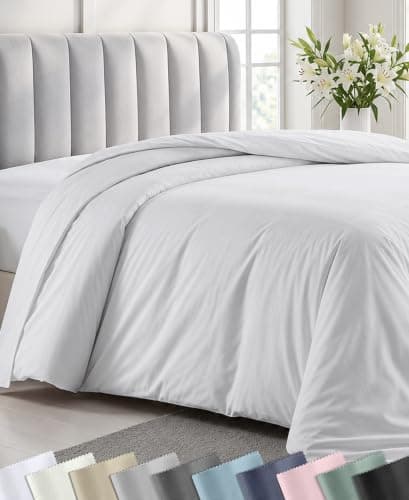 California Design Den 400TC Cotton Sateen The cover to buy if migration is your problem: corner ties and a button closure are both stated on the listing, in real 100% cotton rather than "cotton-like" polyester. Best for: A cover that actually has ties | A cover that actually has ties | $49.99 · View on Amazon Price as of October 18, 2026. #ad — we earn a commission. |
| 2 | 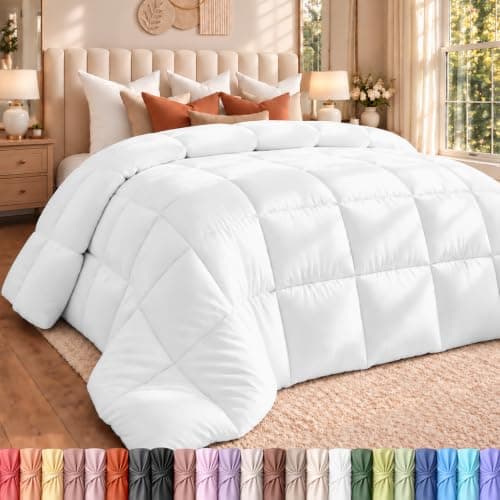 Utopia Bedding Quilted Box-Stitched Duvet Insert Corner tabs are stated, which is the half of the fix that lives on the insert. At this price it is the sensible thing to put inside a cover you already own. Best for: The insert half, cheaply, with tabs | The insert half, cheaply, with tabs | $29.98 · View on Amazon Price as of October 18, 2026. #ad — we earn a commission. |
| 3 | 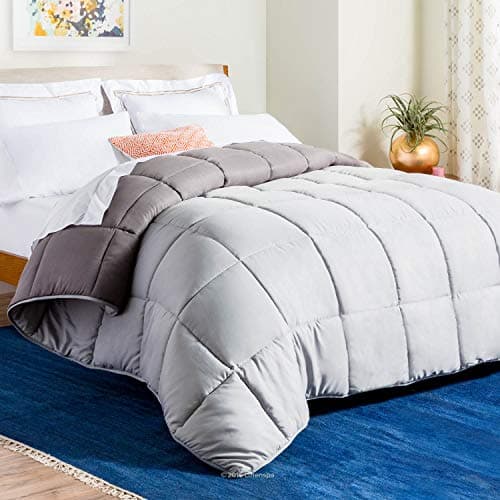 Linenspa Reversible Down Alternative Comforter Eight duvet loops rather than the usual four corner tabs, which is twice as many places to tie - and on a long cover, the midpoints are where bunching actually starts. Best for: Eight anchor points instead of four | Eight anchor points instead of four | $44.99 · View on Amazon Price as of October 18, 2026. #ad — we earn a commission. |
The picks, in full
1. Best for A cover that actually has ties
California Design Den 400TC Cotton Sateen
The cover to buy if migration is your problem: corner ties and a button closure are both stated on the listing, in real 100% cotton rather than "cotton-like" polyester.
Price as of October 18, 2026. #ad — we earn a commission.
Key specs
- 100% cotton, 400 thread count sateen (as listed)
- Button closure + corner ties (as listed)
- Queen/Full (as listed)
- Good Housekeeping award (as listed)
What's good
- Corner ties are stated on the listing, which is the single feature that fixes a migrating insert - and a surprising share of duvet covers at every price simply do not have them
- The material line reads 100% cotton, not "cotton-like". Cotton breathes, so overnight moisture passes through the shell instead of being held against the insert, and it wears in rather than wearing out
- A button closure holds the foot of the cover shut without the failure mode of a zipper, which is the other place an insert escapes from
What's not
- Buttons are slower to do up than a zipper, and on a king-width cover that is a genuine few minutes each wash
- A 400TC sateen drapes beautifully and sleeps slightly warmer than a percale cover would
- It costs more than the microfiber covers it sits next to in search results
Skip this one if
You want the cheapest possible cover and your insert already has tabs you can safety-pin. Ties are the feature you are paying for here.
2. Best for The insert half, cheaply, with tabs
Utopia Bedding Quilted Box-Stitched Duvet Insert
Corner tabs are stated, which is the half of the fix that lives on the insert. At this price it is the sensible thing to put inside a cover you already own.
Price as of October 18, 2026. #ad — we earn a commission.
Key specs
- Down alternative fill (as listed)
- Box stitched (as listed)
- Corner tabs (as listed)
- Machine washable (as listed)
- Queen, 88 x 88 in
What's good
- Corner tabs are stated on the listing, so there is something to tie a cover's ties to - an insert with no tabs is the usual reason people end up buying clips
- 88 x 88 inches is published, which lets you match it to a cover's stated dimensions rather than guessing - size mismatch is the cause of bunching that no tie can fix
- Machine washable at home, so the whole set stays low-maintenance
What's not
- 88 x 88 is a true queen footprint with no extra drape, so on a tall mattress it will look short at the sides
- Box stitching plus budget polyester is the combination most likely to go flat early
- No stated warmth weight, so the loft is unspecified
Skip this one if
You want to use it bare. The shell is plain and the stitching utilitarian - it is built to be covered, which is the point on this page.
3. Best for Eight anchor points instead of four
Linenspa Reversible Down Alternative Comforter
Eight duvet loops rather than the usual four corner tabs, which is twice as many places to tie - and on a long cover, the midpoints are where bunching actually starts.
Price as of October 18, 2026. #ad — we earn a commission.
Key specs
- Down alternative fill (as listed)
- Box stitch construction (as listed)
- 8 duvet loops (as listed)
- Reversible, two colors (as listed)
- All-season (as listed)
- Queen
What's good
- Eight loops is the most anchor points on any insert in our coverage - the extra four sit at the edge midpoints, which is where a cover's length lets the insert fold over on itself
- It works bare on the bed now and as a tied insert later, so it is useful whichever way you end up using it
- Reversible and washable, from a brand with a long and stable Amazon trading history
What's not
- Loops are only useful if the cover has ties to match - count the ties in your cover before counting this as a feature
- It is an all-season weight, so in a genuinely cold room it is a layer rather than the whole answer
- Box stitch again: a grid of fill-free lines you can feel in a cool room
Skip this one if
Your cover has no interior ties at all. Then the loops do nothing and clips are the cheaper fix.
The cheap stuff worth having
If your cover has no interior ties, or your insert has no loops, this is the retrofit named in the fixes above - it works from outside the cover on any combination.
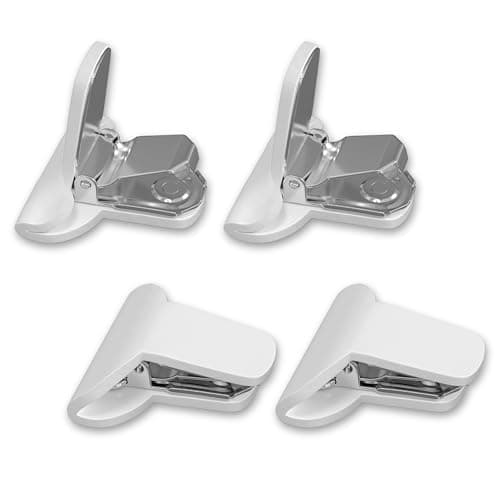
Fresh Ideas Comforter Clips for Duvet Covers (4-Pack)
Clips that grip the insert through the cover, so the duvet stops migrating into one corner overnight. The retrofit for an insert that came without corner loops.
Skip it if Your insert has loops and your cover has ties. Use those — a sewn-in tie holds better than anything clipped on from outside.
Common questions
How do you stop a comforter from moving inside a duvet cover?
Tie the corners. Nearly every duvet cover has four interior corner ties and nearly every insert has four corner tabs or loops, and the great majority of people who complain about migration have never used them - often because the ties are sewn into the seam allowance and are genuinely easy to miss. Turn the cover inside out and feel into each corner; if there are ribbons there, tie them to the insert's tabs before you put the cover on. If either half lacks them, clips that grip the insert through the cover do the same job from outside.
What if my duvet cover has no ties?
Three options, cheapest first. Comforter clips grip the insert through the cover fabric at each corner and are the standard retrofit - they work on any combination and cost very little. Large safety pins through the insert's tab and the cover corner work too, and are invisible from outside, though they will eventually leave small holes. Sewing four lengths of cotton tape into the cover's corners is the permanent fix and takes about ten minutes if you can sew at all. A sewn-in tie holds better than anything clipped on from outside, so if you are keeping the cover, that is the one to do.
Should the duvet insert be the same size as the cover?
Within an inch or two, yes - and this matters more than the ties. If the insert is much smaller than the cover, there is slack for it to slide into, and it will, because every movement in the bed pushes it one way and nothing pushes it back. If the insert is larger than the cover, it compresses at the edges and the whole thing reads flat and stiff. Both dimensions are usually published: match the stated size of the insert to the stated size of the cover rather than trusting that two things both labeled queen are the same.
Why does my comforter end up at the foot of the bed?
Because gravity and the way people get in and out of bed both push it that way, and the foot of the cover is the end with the opening. Tying the two bottom corners is the fix, and if your insert has midpoint loops, tying those too stops it folding over on itself halfway down. A cover that closes with buttons or a zipper rather than an open envelope flap also helps - an envelope closure lets the insert work its way toward the gap over a few nights.
Do duvet clips damage the comforter?
Not in normal use. A clip grips the shell fabric and the fill behind it, so the load is spread rather than concentrated on a single point the way a safety pin is. The one thing to watch is the shell on a down comforter: a tight clip on a thin, high-thread-count cotton shell can eventually abrade the fabric at that spot, and a leaking shell is a comforter problem rather than a cover problem. If your insert has tabs, tie them and skip the clips.
Is a zipper or a button closure better?
A zipper is faster and closes more completely; buttons last longer and fail gracefully. The real-world difference is the failure mode: a broken zipper usually ends a cover's life, while a missing button is a two-minute repair. Either beats an envelope flap, which has no closure at all and is the construction most likely to let an insert escape. Whichever you choose, the closure is at the foot of the bed, which is also where the insert wants to go.
Sources
Where the facts on this page come from. We cite other people's testing because we don't do our own — here's what that means.
Read next
- The Best Duvet InsertsSix duvet inserts worth buying, plus the two numbers sellers conflate, why baffle-box construction beats box stitching, and how to pick warmth for your room.
- The Best Duvet CoversSix duvet covers worth buying, plus the one word on the label that separates cotton from polyester, why corner ties matter more than thread count, and how to size a cover to your insert.
- How to Put On a Duvet CoverThe burrito method, step by step, plus the shake method for small beds - and the three features on a cover that decide whether this is a two-minute job or a ten-minute wrestle.
- Do You Need a Duvet Cover?A duvet cover is a pillowcase for your comforter: it exists so you can wash the top layer weekly instead of annually. Here is when that is worth the extra step, and when a bare comforter wins.
- Comforter Sizes: What Size Fits Your BedTypical comforter and duvet-insert dimensions by bed size, why comforters run small on thick modern mattresses so many people size up, and how to measure for the drape you want.
- How to Choose a Duvet CoverChoosing a duvet cover comes down to sizing it to your insert, picking a closure and corner ties that stop the fill from shifting, and choosing a fabric and weave — percale, sateen, linen or microfiber — that gets the feel and temperature you want.
- How Often Should You Replace a Comforter?Four one-minute tests for whether a comforter is done - loft, fill distribution, smell and warmth - plus the single habit that doubles the life of the next one.