The Best Pillows for Back Sleepers
A back sleeper needs the least loft of the three positions, but not none. The head should sit level — enough pillow to fill the small hollow under the neck, not so much it shoves your chin toward your chest. That points at a medium, and usually at an adjustable.
We earn a commission if you buy through our links. It doesn't affect our picks — and we never take free products. How this site is funded.
Quick picks
| # | Product | Best for | Price |
|---|---|---|---|
| 1 | 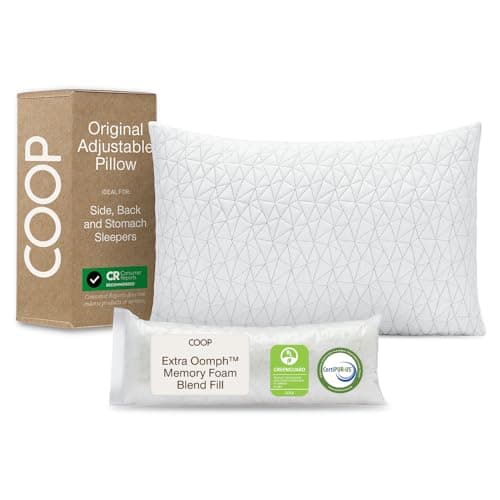 Coop Home Goods Original Adjustable The safest pick for a back sleeper because you can tune it. Start it near full and take fill out by the handful until your head sits level — you dial to medium rather than guess at it. Best for: Most people (dial the loft) | Most people (dial the loft) | $89.00 · View on Amazon Price as of September 10, 2026. #ad — we earn a commission. |
| 2 | 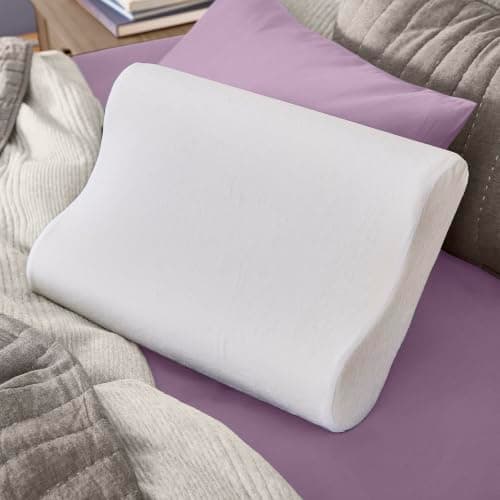 Sleep Innovations Memory Foam Contour A solid contour with a raised neck ridge and a lower head scoop. If its shape matches your neck, you get medium alignment with zero setup — and no way to change it if it doesn't. Best for: A fixed contour that cradles the head | A fixed contour that cradles the head | $44.99 · View on Amazon Price as of September 10, 2026. #ad — we earn a commission. |
| 3 | 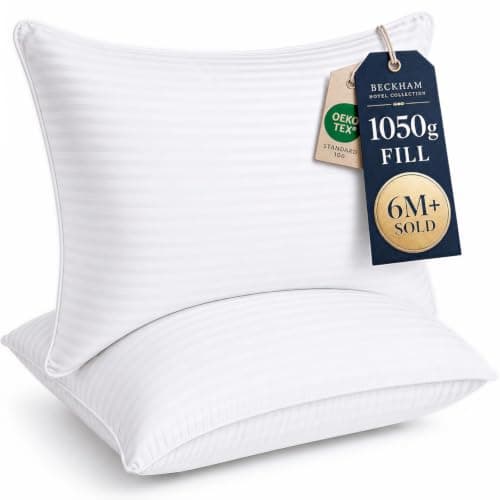 Beckham Hotel Collection Down Alternative (Set of 2) Two soft down-alternative pillows for less than one foam pick. Soft fiber is bad at holding a set loft — but a back sleeper needs the least height of any position, so it's the position that forgives it most. Best for: Best budget | Best budget | $59.99 · View on Amazon Price as of September 10, 2026. #ad — we earn a commission. |
| 4 | 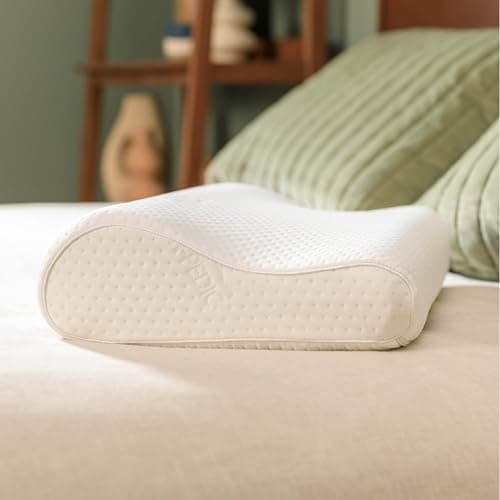 Tempur-Pedic TEMPUR-Ergo Neck Pillow The premium version of the contour idea — a medium-profile ergonomic shape in Tempur's denser foam. Same fixed-shape gamble, better material and a longer hold. Best for: Ergonomic contour upgrade | Ergonomic contour upgrade | $109.00 · View on Amazon Price as of September 10, 2026. #ad — we earn a commission. |
| 5 | 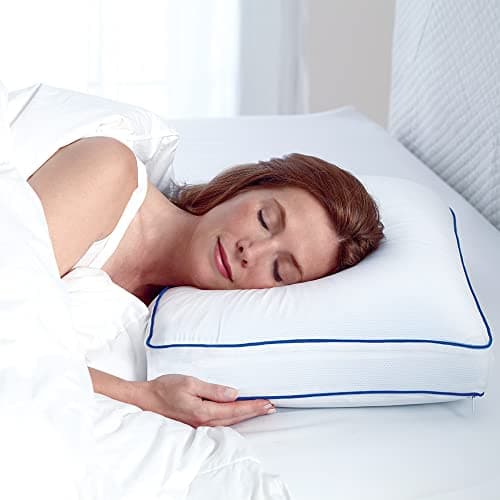 Sleep Innovations Cooling Gel Ventilated A ventilated gel foam pillow at a low price for the back sleeper who wakes up warm. Medium support with airflow holes — and the cooling is a surface effect, not a fix for foam's nature. Best for: Hot back sleepers (cheap) | Hot back sleepers (cheap) | $41.99 · View on Amazon Price as of September 10, 2026. #ad — we earn a commission. |
| 6 | 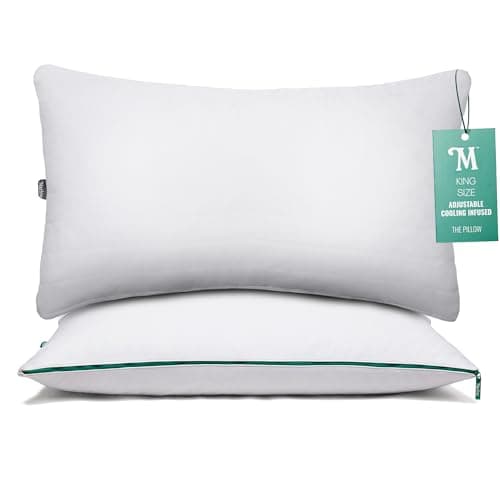 Marlow Adjustable Memory Foam Pillow Adjusts loft and firmness by zipping the gussets rather than pulling out fill. Clever and clean, with a narrower range than the Coop and no bin bag of leftover foam. Best for: Adjustable feel via a zipper | Adjustable feel via a zipper | $85.00 · View on Amazon Price as of September 10, 2026. #ad — we earn a commission. |
The back sleeper's gap is the smallest — and that's the whole spec
Most pillow advice is a fog of preference and marketing. Back sleeping cuts through it with a clean rule, the same way side sleeping does — it's just quieter about it, because the gap it has to fill is smaller.
Lie flat on your back on a hard floor with no pillow. Your head rests almost on the surface: the back of your skull is on the ground and there is only one gap to fill — the small hollow behind your neck, where the natural curve of your spine lifts away from the floor. Reach back and you can slide a couple of fingers into it. That is the entire space a back sleeper's pillow has to fill.
Now compare positions. A side sleeper suspends the head above a gap roughly as tall as the shoulder is thick — the biggest gap in bedding, which is why they need the tallest, firmest pillow in the shop, and why our side-sleeper picks are all about holding real height. A stomach sleeper has no gap at all; their face is already at mattress level, so the honest answer there is a very flat pillow or none. The back sleeper sits between the two: a real gap, but a small one.
So the spec falls straight out of the geometry. A back sleeper needs a medium loft — enough to fill that neck hollow and keep the head level with the spine, but nowhere near the height a side sleeper needs. Not tall. Not flat. Medium. Everything else on this page is about hitting that target and not overshooting it in either direction.
Too tall shoves your head forward; too flat lets it fall back
Medium is a target that sits between two specific failures, and it helps to see both clearly.
Too tall.A pillow built for a side sleeper — tall and firm, holding real height under a head — is exactly wrong under a back. It props the head up off the mattress, and because your shoulders and upper back are already flat on the bed, that height has nowhere to go but forward. Your chin drops toward your chest, your neck bends, and you spend the night with your head craned as if you were reading a phone. That is the tall-pillow failure, and it is why you can't just borrow the side sleeper's pillow.
Too flat. Go the other way and a very thin pillow — or a soft one that flattens under the weight of your head — lets the head fall back below the level of the spine. The chin tips up toward the ceiling, the throat opens, and the neck extends backward. It feels like nothing at first, which is the trap: a pillow can be too flat and still comfortable enough to fall asleep on. In practice back sleepers overshoot toward too tall more often than too flat, for a dull reason — most pillows are sold to the average of all sleepers, and that average leans toward the side sleeper, who buys the most pillow. Grab a bestseller off the shelf and the odds are it is taller than your back actually wants.
And bottoming out.A pillow can be the right height empty and still fail if it's so soft your head sinks straight through it to the mattress. Height that collapses is the same as no height — the lesson the side-sleeper page hammers, and it applies here in miniature. You want a fill that holds the medium loft against the weight of your head, not one that gives it up by midnight.
The target between all three is simple to state: head level, chin neither dropped nor lifted, the neck resting in the gentle curve it holds when you are standing up straight. That is a medium loft that holds its height. The rest of this is just how to land on it.
Why an adjustable is the honest default — and when a fixed contour wins
Here is the argument that decides the ranking. The back sleeper's target is a medium — but medium for whom? Your exact number is set by things only your body knows: how far your head and upper back sink into your mattress, how thick the back of your neck is, whether your shoulders round forward. Two people the same height can need visibly different pillows. So a single recommended loft is an average, and an average is the one thing guaranteed not to be yours.
Which is why an adjustable — a pillow you can take fill out of — is the surest tool for the job. You start it near full, do the mirror test below, remove a handful, sleep on it, check again, and stop when your head sits level. You are not guessing at medium; you are dialing to it. That is why an adjustable leads this page and our best-pillows shortlist alike — the same reasoning runs through both. Removing fill is easy and adding it is not, so a pillow that arrives generously filled and lets you take it down is the safe default for a target you can only find by trial.
Adjustable comes in two flavors, and both are on this list. The classic kind lets you unzip the pillow and pull out fill by the handful, which gives you a continuous dial from full to nearly empty — the widest range, at the cost of a bin bag of leftover foam and the occasional re-fluff. The newer kind, like the zippered Marlow, changes loft and firmness from the outside without opening anything: cleaner, reversible in seconds, but a narrower band that tops out lower. For a back sleeper chasing a medium in the middle of the scale either works — the fill kind if you want the biggest swing, the zip kind if you never want to see loose foam on the floor.
A fixed contour is the other honest answer, and it wins in a specific case. A contour pillow does the geometry for you: a raised ridge fills the neck hollow and a lower scoop drops the head. If that shape happens to match your neck and shoulders, you get medium alignment with no setup and a foam that holds it for years. The catch is the word if. A contour is a fixed bet on your proportions, and if the ridge lands wrong there is nothing to adjust — you return it. Buy one when you already know contours suit you, or buy the cheap one first to find out.
Then the budget case. A soft fiber pillow — the sort that stacks up on every bestseller list — is wrong for a side sleeper because it collapses under the shoulder gap. But a back sleeper needs so little height that it is the one position where cheap, low, squashable fiber can land near the target. It still wanders through the night and goes flat within a year or two, so you are trading consistency for price — a fair trade if you know that is the trade. If your problem is less about position and more about a neck that aches whatever you do, our neck-pain pageworks through loft and support geometry for people who aren't even sure which position they sleep in.
Your mattress moves the target, and what we won't claim
A pillow only fills the gap your mattress leaves it, so the bed underneath quietly sets your number too. On a firm mattress your shoulders and upper back stay up on the surface; the hollow behind your neck stays at its full small height, so you need a touch more pillow. On a soft mattress your upper body sinks in and the surface rises around it, shrinking that gap — so the same pillow that was right on a firm bed is suddenly a shade too tall and starts nudging your chin down. Change the bed and the correct pillow changes, and people blame the pillow. If you are not sure where your mattress sits, our firmness guide explains what soft, medium and firm actually do under a body, and our best mattresses for back sleepers covers the other half of the same alignment problem — the gap under your lower back rather than the one behind your neck.
The mirror test, adapted for a back sleeper. You do not need a tape measure. Lie flat on your back on your own bed, on the pillow you have now, and have someone look at you from the side — or prop a phone against the headboard and film ten seconds. You are checking one line:
- Chin pushed toward your chest, head propped up — too tall. Take fill out, or you are on a side sleeper's pillow by mistake.
- Chin tipped up toward the ceiling, head fallen back — too flat, or the fill has collapsed under your head. Add height, or move to a firmer fill that holds it.
- Chin level, neck continuing the line of your spine — that is the target, and now you know the loft that does it for you.
Do it at bedtime and again in the morning. A pillow that passes at 11pm and fails at 7am has not changed height — you have proof the fill collapses, which is a different fix (a firmer fill) from a pillow that is simply the wrong height.
One more thing decides whether you hit the target and keep it: what the pillow is made of. Solid and shredded memory foam hold a set medium against the weight of your head, so once you find the height it stays — the price is warmth and, on a solid contour, no way to adjust. Loose fiber and down-alternative give the height up as the night goes on, which a back sleeper survives only because the height being lost was small to begin with. If you tend to wake and notice your head has sunk, that is the fill giving way, not the height being wrong — reach for foam rather than a taller fiber pillow.
A word on what this page is and isn't. There is no test lab here. We haven't slept on all six, we don't own a thermal camera or a pressure mat, and we haven't scored anything — anyone handing you a number for a pillow they bought on Amazon last week is inventing it. What we can do is reason from the shape of the thing: a tall firm pillow props a back sleeper's head forward, a soft one lets it fall back, an adjustable lets you find the middle. That is geometry and construction, not a measurement, and we will tell you which pillow is wrong for which sleeper rather than pretend we ranked them on a bench. If heat is part of your problem, the same honesty runs through our cooling pillow page — a block of foam under the hottest part of you warms up no matter what the label says.
One last thing, and it matters. This is a page about spinal alignment — keeping your head level so your neck rests in its natural curve — not a page about diagnosing pain. If you wake with neck or shoulder pain that persists, that is a question for a doctor or a physio, not a shopping page, and no pillow on any list is a treatment. Get the alignment right because it is the cheap, sensible thing you can control; see a professional about anything that doesn't settle. Here is exactly how we pick, and what we refuse to claim.
The picks, in full
1. Best for Most people (dial the loft)
Coop Home Goods Original Adjustable
The safest pick for a back sleeper because you can tune it. Start it near full and take fill out by the handful until your head sits level — you dial to medium rather than guess at it.
Price as of September 10, 2026. #ad — we earn a commission.
Key specs
- Adjustable cross-cut memory foam fill
- Add/remove fill to set loft
- Medium firm (as listed)
- CertiPUR-US / GreenGuard Gold (as listed)
- Queen
What's good
- A back sleeper's target is a medium loft that only your own neck can set, and this is the one pillow here you can take down to it a handful at a time — removing fill is easy, sourcing more is not, so arriving over-filled is the right default
- Cross-cut fill lets you push a little more under the neck end and leave the head end lower, which is the exact shape a back sleeper wants
- CertiPUR-US and GreenGuard Gold are both listed, and Coop runs a real returns operation rather than a bare Amazon listing
What's not
- It arrives over-filled for a back, so it does nothing right until you open it and remove fill — it's a kit, not a finished pillow
- Shredded fill packs down over months, so the medium loft you set drifts lower unless you fluff it back up
- One pillow, at a price above the budget set below
Skip this one if
You're a dedicated side sleeper who never rolls onto your back — you want it tall and full, and our side-sleeper picks are built to stay high. Skip it too if you want something that works straight out of the bag with no fiddling; the fixed contour below does.
2. Best for A fixed contour that cradles the head
Sleep Innovations Memory Foam Contour
A solid contour with a raised neck ridge and a lower head scoop. If its shape matches your neck, you get medium alignment with zero setup — and no way to change it if it doesn't.
Price as of September 10, 2026. #ad — we earn a commission.
Key specs
- Solid contour memory foam
- Fixed ergonomic shape
- Medium support (as listed)
- Queen (as listed)
What's good
- The contour does the back sleeper's geometry for you: the ridge fills the hollow behind the neck and the scoop lets the head settle level, with no fill to measure
- Solid foam holds its shape against the weight of a head, so the loft you feel on night one is the loft you get for the life of the pillow
- Nothing to assemble, adjust or fluff — you take it out of the box and it's finished
What's not
- A fixed shape is a fixed bet on your proportions; if the ridge lands wrong for your neck there's nothing to adjust and you're returning it
- Solid memory foam traps heat more than shredded fill, so it runs warm
- There's a correct end, so you have to sleep it the right way round every night
Skip this one if
Your neck length or shoulder width is unusual, or you switch positions through the night. A contour only helps if its shape happens to fit you — if you're unsure, the adjustable Coop lets you build the shape instead of betting on one.
3. Best for Best budget
Beckham Hotel Collection Down Alternative (Set of 2)
Two soft down-alternative pillows for less than one foam pick. Soft fiber is bad at holding a set loft — but a back sleeper needs the least height of any position, so it's the position that forgives it most.
Price as of September 10, 2026. #ad — we earn a commission.
Key specs
- Down-alternative fill
- Set of 2
- Soft support (as listed)
- Standard/Queen (as listed)
What's good
- A back sleeper needs the least loft of anyone, so this is the one position where a soft, low fiber pillow can actually land near the target — and this is the cheapest route to two of them
- Down-alternative fiber is easy to squash and shape, so you can flatten it toward the medium a back sleeper wants rather than fighting a tall pillow down
- A set of two, so both sides of the bed are handled at once, or you keep a spare
What's not
- Soft fiber compresses under a head and springs back unevenly, so the height wanders through the night — the same trait that makes it forgiving makes it inconsistent
- Fiber pillows go flat and clumpy within a year or two; this is the shortest-lived pick here
- No adjustment and no contour — you get whatever loft the fill happens to give, which for a larger or broad-shouldered frame may sit too low
Skip this one if
You want a loft that holds for years, or you're really a side sleeper who rolls onto your back — soft fiber collapses under a shoulder gap. For consistent medium support, the Coop or the contour hold their height where this drifts.
4. Best for Ergonomic contour upgrade
Tempur-Pedic TEMPUR-Ergo Neck Pillow
The premium version of the contour idea — a medium-profile ergonomic shape in Tempur's denser foam. Same fixed-shape gamble, better material and a longer hold.
Price as of September 10, 2026. #ad — we earn a commission.
Key specs
- TEMPUR contour memory foam
- Medium profile (as listed)
- Ergonomic neck support
- Fixed shape
What's good
- The medium profile is aimed squarely at a back sleeper: enough ridge to fill the neck, not so tall it shoves the head forward
- Tempur foam is denser and holds its shape longer than the budget contours, so the alignment you buy is the alignment you keep
- An ergonomic neck ridge is a genuine geometric idea for a back sleeper — it does the loft work a flat pillow can't
What's not
- The most expensive pillow on the page by a distance, and a chunk of that is the brand name
- A fixed contour is still a fixed bet on your neck; the premium price doesn't make the shape adjustable if it doesn't fit you
- Dense Tempur foam sleeps warm, and the profile is one height only — no tuning
Skip this one if
You aren't sure a contour fits your neck, or you're on a budget. Paying a premium for a fixed shape only makes sense once you know contours work for you — try the cheaper Sleep Innovations contour first, or buy the adjustable Coop and build your own.
5. Best for Hot back sleepers (cheap)
Sleep Innovations Cooling Gel Ventilated
A ventilated gel foam pillow at a low price for the back sleeper who wakes up warm. Medium support with airflow holes — and the cooling is a surface effect, not a fix for foam's nature.
Price as of September 10, 2026. #ad — we earn a commission.
Key specs
- Gel memory foam core
- Ventilated for airflow (as listed)
- Medium support (as listed)
- Standard
What's good
- Ventilation holes and a gel layer move a bit more air than a solid block, which is the cheap way to take the edge off a warm pillow under a back sleeper's head
- Medium support as listed lands near the back sleeper's target loft without any adjustment
- A budget price for a foam pillow with a cooling feature, cheaper than the contour upgrades above
What's not
- Gel and ventilation slow the heat build-up, they don't stop it — the foam still warms to your body over the night, which is the honest ceiling of any foam pillow
- "Cooling" is doing marketing work here; the holes help airflow, but this is a surface effect, not a hybrid-grade solution
- A fixed foam profile — no fill to add or remove if the height is slightly off for you
Skip this one if
Heat is your main complaint and you run hot all night, not just at bedtime. A ventilated foam pillow only slows the warm-up — our cooling pillow page covers the structures that move real air.
6. Best for Adjustable feel via a zipper
Marlow Adjustable Memory Foam Pillow
Adjusts loft and firmness by zipping the gussets rather than pulling out fill. Clever and clean, with a narrower range than the Coop and no bin bag of leftover foam.
Price as of September 10, 2026. #ad — we earn a commission.
Key specs
- Adjustable memory foam
- Zippered gussets to adjust feel (as listed)
- Removable cover
What's good
- The side zips change loft and firmness from the outside in seconds, so a back sleeper can nudge toward medium without emptying handfuls of foam onto the floor
- Adjustment is completely reversible, so you can experiment every night at no cost until the head sits level
- Marlow is Brooklinen's pillow line, so there's a real company and returns process behind it, and the cover comes off to wash
What's not
- The zip range is narrower than removing shredded fill by hand, so both extremes are milder than a Coop's
- It's a premium price for the mechanism, more than the plain foam picks here
- The listing doesn't state a firmness rating, so the medium you're after is something you tune to rather than something promised
Skip this one if
You need a big swing in height — a very low or a very tall setting. The zip system works within a moderate band; for the full range, the Coop's handful-by-handful fill gives you more room in both directions.
Common questions
What loft pillow is best for back sleepers?
A medium loft, and the reason is geometry rather than preference. Lying on your back, your head rests almost on the mattress and the only real gap to fill is the small hollow behind your neck. That takes some pillow, but far less than a side sleeper needs, where an entire shoulder's worth of height has to be filled. Aim for enough loft to keep your head level with your spine and no more. Because your exact number depends on your neck, your shoulders and how far you sink into your mattress, an adjustable pillow you can tune down to that medium is usually the safest choice.
Are memory foam or down pillows better for back sleeping?
Neither wins outright; they fail in opposite directions. A solid or shredded memory foam pillow holds its loft against the weight of your head, so the medium height you set at bedtime is still there at 3am — the risk is buying one too tall and craning your head forward. A down or down-alternative pillow is soft and easy to flatten toward the low loft a back sleeper wants, but it compresses under your head and springs back unevenly, so the height wanders through the night and goes flat within a year or two. If you want a loft that stays put, choose foam; if you want cheap and squashable and don't mind fluffing it, down-alternative is fine.
Should a back sleeper use a contour pillow?
Only if its shape fits you. A contour pillow builds the back sleeper's geometry in: a raised ridge fills the hollow behind your neck and a lower scoop lets your head settle level, with no fill to measure. When the shape matches your neck and shoulders it's a clean, no-setup solution. The catch is that it's a fixed bet — if the ridge lands wrong for your proportions there's nothing to adjust, so you're returning it. If you already know contours suit you, it's a great option; if you're unsure, an adjustable pillow lets you build the shape yourself instead of gambling on a fixed one.
How high should a back sleeper's pillow be?
High enough to keep your head level with your spine and no higher — which is a smaller number than most people expect. We won't print an inch count, because the right figure depends on the thickness of your neck, the width of your shoulders and how far your upper body sinks into your mattress, and any single number would be an average that fits almost nobody. Use the mirror test instead: lie on your back and have someone check from the side that your chin is level, neither dropped toward your chest (too tall) nor tipped up toward the ceiling (too flat). That line, not a measurement, is the target.
Can one pillow work for back and side sleeping?
Yes, if it adjusts — and that's the main reason we lead with adjustable pillows. Back and side sleeping need different lofts: side sleeping opens a shoulder-wide gap that wants a tall, firm pillow, while back sleeping wants a medium one. A fixed pillow can only be right for one of them, so a combination sleeper on a tall side-sleeper pillow spends their back-sleeping hours with their head shoved forward. An adjustable pillow lets you set a middle height that's a fair compromise for both, or re-tune it as your habits change. If you're mostly a side sleeper who occasionally rolls back, start from our side-sleeper picks; if it's the reverse, start here.
Sources
Where the facts on this page come from. We cite other people's testing because we don't do our own — here's what that means.
Read next
- The Best Wedge PillowsFive wedge pillows sorted by incline - from a gentle reading angle to a steep reflux slope and adjustable recovery sets - with honest, non-medical notes on who each suits.
- The Best Pillows for Stomach SleepersSix low-profile pillows for stomach sleepers, led by dedicated ultra-thin pillows and an adjustable you can empty out flat — with honest cons and a skip-this-one on every pick.
- The Best Pillows, Picked by How You SleepSix pillows picked by sleeping position and fill type — side, back, stomach, adjustable vs fixed — with honest cons and a skip note on every one.
- The Best Pillows for Neck PainSix pillows ranked by loft and support geometry — plus a straight answer about what a pillow can and cannot do for your neck.
- The Best Pillows for Side SleepersSix pillows tall and firm enough to fill a side sleeper's shoulder gap without collapsing into it by midnight.
- The Best Cooling PillowsSix cooling pillows that actually move air, an honest read on gel infusions, and a note on who each one is wrong for.
- Mattress Firmness: The 1-10 Scale, HonestlyWhat the 1-10 firmness scale actually means, why one brand's 6 is another's 7, and how your bodyweight changes the answer.