The Best Wedge Pillows
A wedge pillow does one simple thing a stack of soft pillows cannot: it holds a steady incline all night so gravity stays on your side. Five of them sorted by the spec that decides everything - the angle - with honest notes on reflux, recovery and who should skip a wedge entirely.
We earn a commission if you buy through our links. It doesn't affect our picks — and we never take free products. How this site is funded.
Quick picks
| # | Product | Best for | Price |
|---|---|---|---|
| 1 | 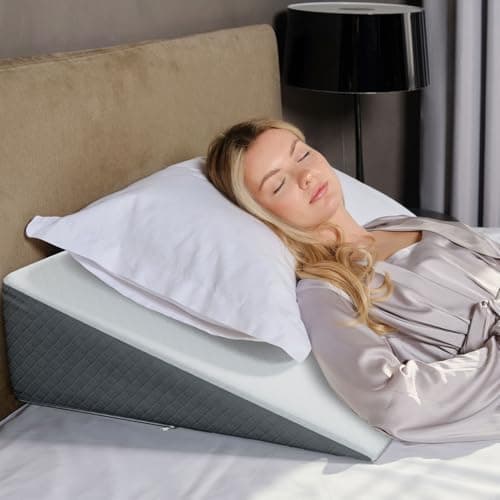 Kolbs Bed Wedge Pillow The sensible all-rounder: a mid-incline foam wedge with a washable cover that covers the common jobs - mild reflux, propped reading, a touch of elevation - without overcommitting to a steep slope. Best for: Most people | Most people | |
| 2 | 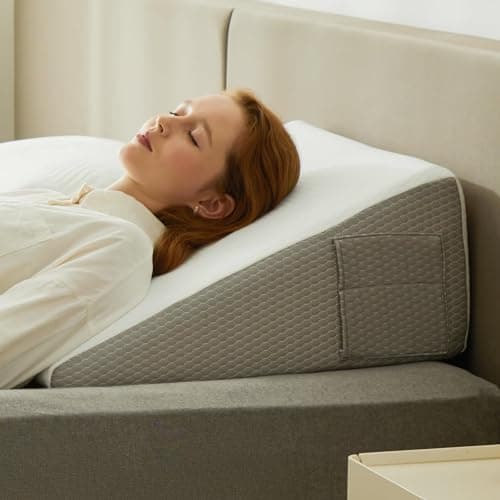 Bedluxe 10-Inch Wedge Pillow The tall one. A steeper ten-inch slope for people who need real elevation - the wedge to reach for when a gentle prop has not been enough for reflux or congestion. Best for: A steeper reflux incline | A steeper reflux incline | $39.99 · View on Amazon Price as of September 12, 2026. #ad — we earn a commission. |
| 3 | 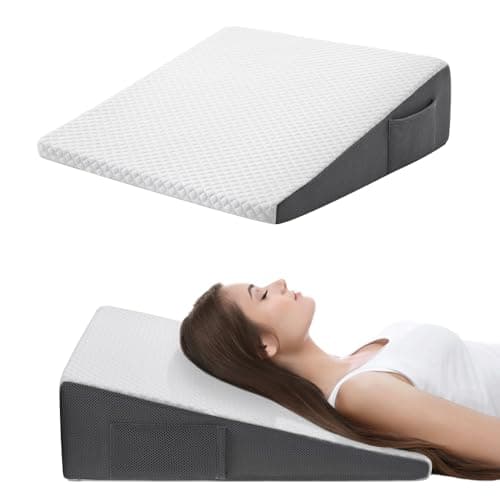 Cozymaker 7.5-Inch Wedge Pillow The budget entry. A gentle 7.5-inch slope for back support, light elevation and reading - the least aggressive angle here, at the lowest price. Best for: The gentlest, cheapest incline | The gentlest, cheapest incline | $29.99 · View on Amazon Price as of September 12, 2026. #ad — we earn a commission. |
| 4 | 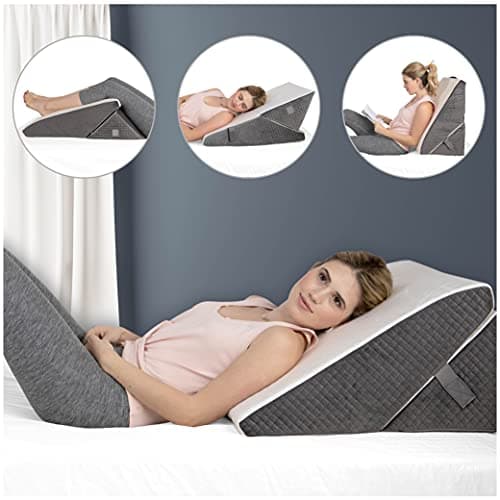 Kolbs Adjustable Memory Foam Wedge Set The problem-solver from the same maker as our all-rounder: a stacking memory-foam wedge set you can build to different heights, so you are not locked into one angle you had to guess at. Best for: Dialing in the angle | Dialing in the angle | |
| 5 | 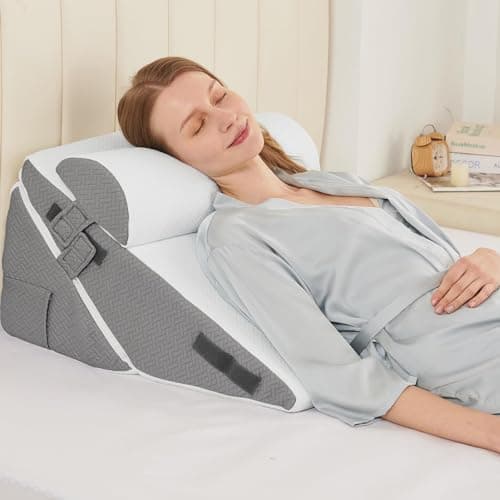 Sasttie Adjustable Wedge Set The positioning set. Multiple pieces that build into different shapes - torso incline, leg elevation, side support - aimed at post-surgery recovery and anyone who needs more than one position. Best for: Recovery and leg elevation | Recovery and leg elevation | $39.99 · View on Amazon Price as of September 12, 2026. #ad — we earn a commission. |
Why a wedge, and not just more pillows
Everyone's first attempt at sleeping propped up is a pile of regular pillows, and everyone discovers the same thing: within an hour the pile has compressed, slid, and dumped you flat again. That is the entire reason wedge pillows exist. A wedge is a single solid piece of foam cut to a fixed angle, so it holds that incline all night without collapsing or shifting - it keeps gravity on your side for hours instead of minutes. If the thing you are trying to fix is solved by staying at an angle, that steadiness is the whole value, and no arrangement of soft pillows replicates it.
That also frames the honest limit up front: a wedge only helps with problems that an incline actually addresses. It is a positioning tool, not a comfort upgrade for everyone. So before the picks, it is worth being clear about what an incline does and does not do - and about the one big group of sleepers a wedge is simply wrong for.
The jobs a wedge actually does
Wedges get bought for a handful of distinct reasons, and which one is yours decides the angle and shape you need:
- Reflux and congestion. Elevating your head and torso uses gravity to help keep stomach acid down and sinuses draining. This is the most common reason people buy a wedge, and it needs a genuinely steep incline to work - a shallow prop does little here.
- Reading and watching in bed. A gentler incline turns the bed into a comfortable backrest, often with a normal pillow on top. This wants a moderate angle, not a steep one.
- Leg elevation. Flipped under the legs, a wedge raises the feet to ease swelling and help circulation - an overlooked use that the multi-piece recovery sets do best.
- Recovery and post-surgery positioning.After some procedures a specific incline or side support is recommended; a reconfigurable set handles that, following your surgeon's guidance.
Notice they do not all want the same wedge. That is why this page is sorted by incline rather than by price, and why the single most useful question to answer before buying is which of these jobs you are actually solving.
The angle is the whole decision
Everything else - foam type, cover, brand - is secondary to the incline, because the incline is what determines whether the wedge does its job. The rough map: a gentle wedge (around seven to eight inches) is the reading and light-support height, comfortable to lie on and easy to combine with a pillow; a steep wedge (around ten to twelve inches) is the reflux and congestion height, lifting your torso enough for gravity to matter overnight. Get this backwards and you will be disappointed in both directions: a shallow wedge does nothing for reflux, and a steep wedge is an uncomfortable ramp to read on that you slide off by morning.
This is exactly why an adjustable or stacking set is such a safe purchase when you are unsure - loft and angle are hard to judge from a listing, and being able to build the height you need removes the biggest risk of buying the wrong one. If you already know your angle, a single fixed wedge at that height is cheaper and stays put better. It is the same logic that makes adjustable options attractive in ordinary adjustable pillows - you stop guessing.
Foam, cover, and size
A few secondary specs still matter. Foam wedges are firm by nature, which is what gives them their shape-holding stability but can feel hard if you are coming from soft pillows - a memory foam top layer takes the edge off and is worth it if firmness has put you off wedges before. A removable, washable cover is close to essential, since your head and torso rest against it nightly and, in a recovery setting, hygiene matters even more. And check the width against your bed and body: a wedge that is too narrow leaves your shoulders hanging off the sides, which undoes the support.
Who should skip a wedge - and it's a big group
The honest disqualifier: side sleepers. A wedge is a back-sleeping tool. It inclines your torso while you lie face-up, and if you try to sleep on your side on it you either slide off or twist your spine into exactly the kind of misalignment that causes pain. If you are a committed side sleeper looking for nighttime comfort, a wedge is likely the wrong buy - a body pillow or a proper back-sleeper pillow for your actual position will serve you far better. A wedge can still be useful to you for sitting up and reading, just not for a full night on your side.
The second honest note is about health claims. Elevating the upper body is a widely recommended comfort measure for reflux and congestion, and wedges are a good way to hold that incline - but a wedge is not a treatment. Persistent reflux, suspected sleep apnea, or a recovery plan after surgery are all conversations with a doctor, who can also tell you how much elevation is right for you. Buy a wedge to be more comfortable at an angle; do not buy it to self-treat a medical problem. If your night-time issue is really about how you sleep overall, our sleep positions guide is a better starting point than any single pillow.
None of these were tested here - there is no lab behind this site. The picks come from reading the listings, sorting by the incline that actually decides the job, and being honest about who a wedge is wrong for. That method is written out on how we review.
The picks, in full
1. Best for Most people
Kolbs Bed Wedge Pillow
The sensible all-rounder: a mid-incline foam wedge with a washable cover that covers the common jobs - mild reflux, propped reading, a touch of elevation - without overcommitting to a steep slope.
Key specs
- Mid incline foam wedge (as listed)
- Removable, washable cover (as listed)
- FSA-eligible (as listed)
- Full-width bed size
What's good
- A moderate incline is the most versatile height - steep enough to help with mild reflux or congestion, gentle enough to be comfortable for reading or just sleeping propped, so it is the safe first wedge if you are not sure how steep you need
- Removable, washable cover, which matters on something your head and torso rest against nightly
- Being FSA-eligible per the listing is a genuine plus if you are buying it for a health reason and have a flexible-spending account
What's not
- A single fixed angle is a compromise - it is not steep enough for serious reflux nor flat enough for pure reading, it is the middle
- Foam wedges are firm and take some getting used to if you are coming from soft pillows
- One height only; if you need to fine-tune the angle, an adjustable set is the better tool
Skip this one if
You need a steep, aggressive incline for significant reflux. This mid wedge will not lift you far enough - buy the 10-inch Bedluxe below, and talk to your doctor about the right angle.
2. Best for A steeper reflux incline
Bedluxe 10-Inch Wedge Pillow
The tall one. A steeper ten-inch slope for people who need real elevation - the wedge to reach for when a gentle prop has not been enough for reflux or congestion.
Price as of September 12, 2026. #ad — we earn a commission.
Key specs
- 10-inch incline (as listed)
- For acid reflux / headboard support (as listed)
- Removable, washable cover (as listed)
- Foam construction
What's good
- The ten-inch height delivers a genuine incline, which is what actually matters for using gravity against nighttime reflux - a shallow wedge often does not lift you enough to help
- Doubles as solid back support against a headboard for sitting up in bed
- Washable cover, and a common, well-reviewed height for the reflux use case
What's not
- A steep wedge is a lot of angle to sleep on all night; some people find it too aggressive and slide down it toward morning
- Firmer and larger, so it takes up real space on the bed and is less good for anything but back-elevated positions
- As with any reflux aid, it is comfort positioning, not a treatment - a doctor should guide a real reflux problem
Skip this one if
You only want to read or watch TV in bed, or have mild needs. Ten inches is more incline than that calls for and can feel steep to sleep on - the mid Kolbs or the budget Cozymaker is the friendlier angle.
3. Best for The gentlest, cheapest incline
Cozymaker 7.5-Inch Wedge Pillow
The budget entry. A gentle 7.5-inch slope for back support, light elevation and reading - the least aggressive angle here, at the lowest price.
Price as of September 12, 2026. #ad — we earn a commission.
Key specs
- 7.5-inch gentle incline (as listed)
- For back support / pain relief (as listed)
- Removable cover (as listed)
- Foam construction
What's good
- A gentle incline is the most livable for people who just want a little elevation or lumbar support without sleeping on a steep ramp
- It is the cheapest way onto a proper foam wedge here, so it is the low-risk way to find out whether a wedge helps you at all
- The lower height is easier to combine with a normal pillow on top for reading or watching TV
What's not
- Too gentle for serious reflux - if you need gravity to do real work overnight, this angle will not lift you enough
- Budget foam and finishing; expect the value-tier build to match the price
- One fixed, shallow angle with no room to increase it
Skip this one if
Your reason for buying is meaningful acid reflux. A 7.5-inch slope is a comfort prop, not a reflux incline - step up to the 10-inch Bedluxe and check the angle with your doctor.
4. Best for Dialing in the angle
Kolbs Adjustable Memory Foam Wedge Set
The problem-solver from the same maker as our all-rounder: a stacking memory-foam wedge set you can build to different heights, so you are not locked into one angle you had to guess at.
Key specs
- Adjustable, stackable height (as listed)
- Memory foam top layer (as listed)
- Removable, washable cover (as listed)
- Multiple-piece set
What's good
- Adjustable height removes the single biggest gamble in buying a wedge sight-unseen - you can find the incline that works instead of returning a fixed one that was wrong
- A memory foam top layer softens the firm-foam feel that puts some people off wedges, so it is more comfortable to lie on directly
- One purchase that can serve a gentle reading angle and a steeper reflux angle as your needs change
What's not
- Adjustable sets are pricier than a single fixed wedge, and this is the most expensive pick here
- Stacking pieces can shift or separate during the night if you move a lot
- More parts means more to store and more to keep the covers clean on
Skip this one if
You already know exactly the angle you want and will never change it. A single fixed wedge at that height is cheaper and stays put better - the adjustability is only worth paying for if you are unsure or your needs vary.
5. Best for Recovery and leg elevation
Sasttie Adjustable Wedge Set
The positioning set. Multiple pieces that build into different shapes - torso incline, leg elevation, side support - aimed at post-surgery recovery and anyone who needs more than one position.
Price as of September 12, 2026. #ad — we earn a commission.
Key specs
- Multi-piece adjustable set (as listed)
- For after-surgery positioning (as listed)
- Removable, washable covers (as listed)
- Foam construction
What's good
- It is built for more than one job: the pieces reconfigure for an upper-body incline, for elevating the legs to reduce swelling, or for side support during recovery - a single wedge cannot do all of that
- Leg elevation is a genuinely useful and often-overlooked wedge use for circulation and post-op comfort, and this set does it properly
- Washable covers across the pieces, which matters most in a recovery setting
What's not
- A multi-piece set is the most to store, assemble and keep track of, and the pieces can shift
- Overkill if all you want is a simple bedtime incline - you are paying for versatility you may not use
- Recovery positioning after surgery should follow your surgeon's instructions; the set is a tool, not medical advice
Skip this one if
You want one simple wedge for sleeping propped and nothing more. A fixed Kolbs or Cozymaker is simpler, cheaper and less fussy - buy this set only if you genuinely need multiple positions.
Common questions
What is a wedge pillow actually for?
It holds a steady incline so that gravity keeps working while you sleep or rest - something a stack of soft pillows cannot do, because they compress and slide out of place within an hour. The common uses are all versions of that one idea: elevating the head and torso for acid reflux or nasal congestion, propping the upper body for reading or watching TV in bed, raising the legs to ease swelling or aid circulation, and supporting a specific position during recovery from surgery. If your problem is solved by staying at an angle, a wedge is the tool; if it is not, a wedge will not help.
What incline or angle should a wedge pillow be?
It depends entirely on the job, which is why the angle is the spec to shop by. A gentle wedge (around 7 to 8 inches) is comfortable for reading, light back support and mild elevation. A steeper wedge (around 10 to 12 inches) is what actually helps with acid reflux or congestion, because it lifts your torso enough for gravity to matter overnight. Too shallow and a reflux wedge does nothing; too steep and a reading wedge is uncomfortable and you slide off it. If you are unsure or your needs vary, an adjustable set lets you find the angle rather than guess.
Do wedge pillows help with acid reflux and GERD?
Elevating your upper body is a widely recommended comfort measure for nighttime reflux, because keeping your torso raised uses gravity to help keep stomach acid where it belongs while you lie down. A wedge is a common, low-cost way to achieve that incline steadily through the night. That said, this is a comfort and positioning aid, not a treatment or a cure - persistent reflux or GERD should be managed with a doctor, who can also advise how much elevation is right for you. Buy a wedge to be more comfortable, not to self-treat a medical condition.
Can side sleepers use a wedge pillow?
Not really, and this is the honest limitation. A wedge is fundamentally a back-sleeping tool - it inclines your torso while you lie face-up. Try to sleep on your side on a steep wedge and you tend to slide off it or twist your spine awkwardly, and it does not support a side position the way a body pillow does. If you are a committed side sleeper, a wedge is likely the wrong purchase for nighttime sleeping; a body pillow or a pillow built for side sleeping will serve you far better, though a wedge can still be handy for propped sitting.
Are wedge pillows comfortable to sleep on all night?
It takes adjustment, and the honest answer is that some people love it and some never settle. Foam wedges are firm and hold you at an angle you are not used to, so the first few nights can feel strange, and steeper wedges are harder to stay put on until morning. A memory foam top layer softens the surface, and a gentler angle is easier to sleep on than a steep one. If you mainly want the incline for reading or resting rather than a full night, that is often where wedges shine most - and it is a lower bar to clear.
Sources
Where the facts on this page come from. We cite other people's testing because we don't do our own — here's what that means.
Read next
- The Best Pillows for Back SleepersSix pillows that hit the medium loft a back sleeper needs — enough to fill the neck's hollow without tipping the head forward — with honest cons on every pick.
- The Best Body PillowsSix body pillows sorted by the thing that actually matters — shape — for side sleepers and pregnancy, with an honest note on who each is wrong for.
- The Best Pillows, Picked by How You SleepSix pillows picked by sleeping position and fill type — side, back, stomach, adjustable vs fixed — with honest cons and a skip note on every one.
- The Best Pillows for Neck PainSix pillows ranked by loft and support geometry — plus a straight answer about what a pillow can and cannot do for your neck.
- How Your Sleep Position Changes the Bed You NeedEach sleep position presses a different shape into the bed. Side wants softer plus a tall pillow, back medium-firm plus medium loft, stomach firm plus flat or none.
- The Best Adjustable PillowsFive adjustable pillows you tune yourself by adding or removing shredded fill — the fix for the pillow that never fits, for in-between sleepers, and for couples who need different heights — with honest cons and a skip note on every one.