The Best Pillows, Picked by How You Sleep
A pillow is the cheapest sleep fix in the house and the one most people get wrong. The right one is decided by your sleeping position and by whether you want to dial the loft yourself — not by whatever is printed on the bag. Six worth buying, and who each is wrong for.
We earn a commission if you buy through our links. It doesn't affect our picks — and we never take free products. How this site is funded.
Quick picks
| # | Product | Best for | Price |
|---|---|---|---|
| 1 | 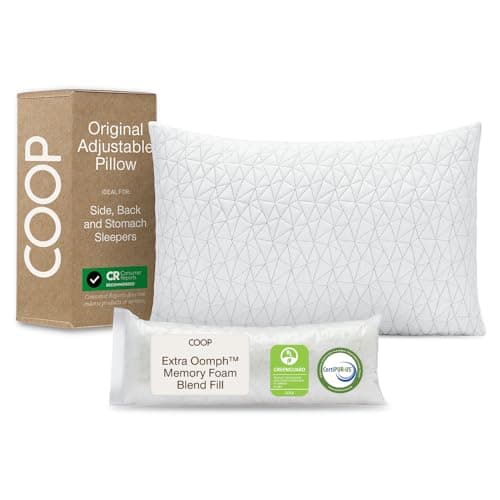 Coop Home Goods Original Adjustable The one I'd tell most people to buy first. It unzips, so you set the height to your own shoulders instead of hoping the factory guessed right. Best for: Most people (adjustable) | Most people (adjustable) | $89.00 · View on Amazon Price as of September 10, 2026. #ad — we earn a commission. |
| 2 | 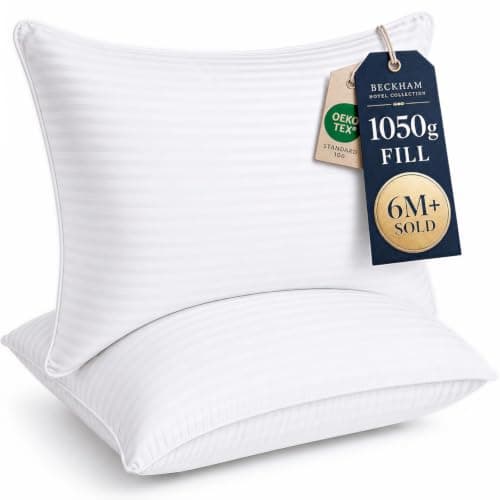 Beckham Hotel Collection Down Alternative (Set of 2) Two soft down-alternative pillows for about what one foam pillow costs. The right pick for a back or stomach sleeper who doesn't want to fuss. Best for: Best budget | Best budget | $59.99 · View on Amazon Price as of September 10, 2026. #ad — we earn a commission. |
| 3 | 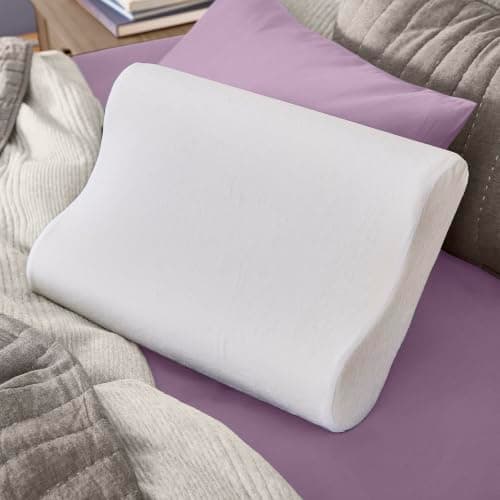 Sleep Innovations Memory Foam Contour A fixed contour shape that cradles the neck and drops under the head. If a back sleeper's neck aches in the morning, this is the shape to try. Best for: Neck pain / back sleepers | Neck pain / back sleepers | $44.99 · View on Amazon Price as of September 10, 2026. #ad — we earn a commission. |
| 4 | 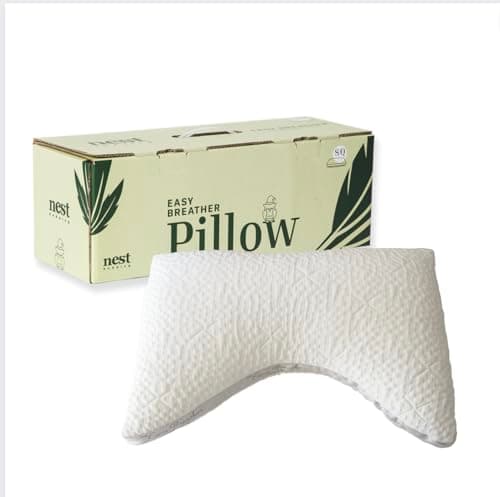 Nest Bedding Easy Breather Side Sleeper Adjustable shredded fill aimed at the tall, firm loft a side sleeper needs. Pack it out to fill the shoulder gap, then stop when your neck sits level. Best for: Side sleepers | Side sleepers | $119.00 · View on Amazon Price as of September 10, 2026. #ad — we earn a commission. |
| 5 | 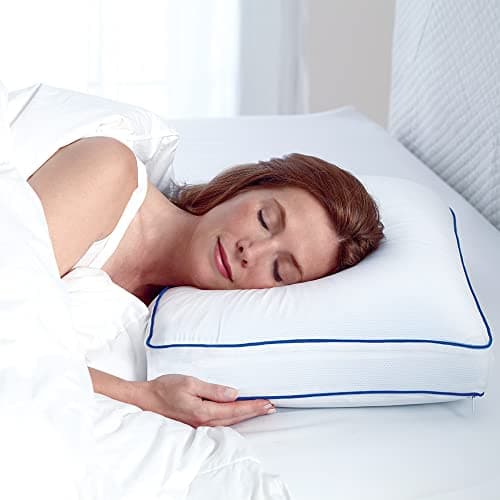 Sleep Innovations Cooling Gel Ventilated A solid foam pillow with holes punched through it. If you want foam anyway and sleep warm, the ventilation is the part doing the real work — not the gel. Best for: Hot sleepers (cheap) | Hot sleepers (cheap) | $41.99 · View on Amazon Price as of September 10, 2026. #ad — we earn a commission. |
| 6 | 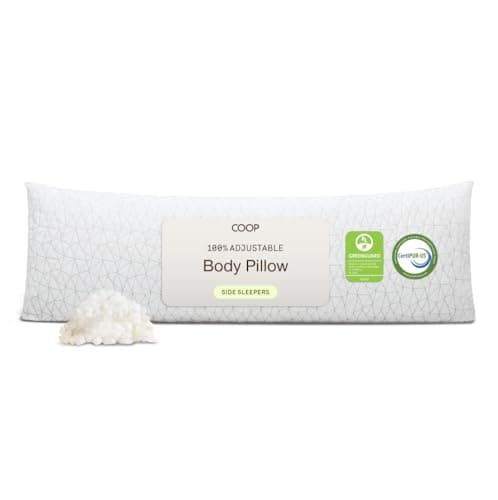 Coop Home Goods Adjustable Body Pillow A long adjustable bolster to hug and drape a leg over. Genuinely useful for side sleepers, pregnancy, and anyone whose hips ache from an unsupported top leg. Best for: Body pillow / pregnancy | Body pillow / pregnancy | $99.00 · View on Amazon Price as of September 10, 2026. #ad — we earn a commission. |
A pillow has one job, and it isn't comfort
Almost everyone shops for a pillow the way they'd shop for a cushion: they squeeze it, decide whether it feels nice in the hand, and buy the one that seems plush. That is the wrong test, and it is why so many people own a drawer of pillows they don't like. A pillow is not there to feel nice against your palm in a shop. It is there to do one structural job — fill the gap between your head and the mattress so your neck stays level with the rest of your spine while you sleep.
Get that gap right and a cheap pillow feels great. Get it wrong and the most expensive pillow in the world gives you a stiff neck, because your head is either propped too high or dropped too low for seven hours a night. Everything that actually matters about a pillow follows from the size of that gap, and the size of that gap is set almost entirely by one thing: the position you sleep in.
So before you read a single spec, answer one question honestly — how do you spend most of the night? Not how you fall asleep, not how you'd like to sleep. Where does your body actually settle. That answer, more than fill type, more than brand, more than any cooling claim, decides which pillow on this page is right for you.
Pick by position first, everything else second
There are three sleeping positions, and each one creates a different gap to fill. This is the whole framework, and it's worth getting right because it quietly rules two-thirds of these picks in or out before you ever think about materials.
- Side sleepers need tall and firm.Lie on your side and the gap between your ear and the mattress is the width of your shoulder — the biggest gap of any position. You need a pillow with enough height and enough firmness to fill it without collapsing, or your head drops and your neck bends toward the bed all night. This is why the Nest Easy Breather and the adjustable Coop lead for side sleepers, and why a soft fiber pillow is exactly wrong here: collapsing is the one thing it reliably does. If you're a side sleeper first, the dedicated side-sleeper picks rank the same problem by height and support, which is the harder constraint to satisfy.
- Back sleepers need medium, ideally contoured. On your back the gap is smaller — just the curve of your neck behind your head. Too tall a pillow shoves your chin toward your chest; too flat and your neck loses its support. A medium loft is right, and a contour shape like the Sleep Innovations pick, which cradles the neck and lets the head settle a touch lower, is built precisely for this. If you wake with a sore neck, that geometry is usually the fix — more on that on our pillow for neck pain page.
- Stomach sleepers need thin and soft, or nothing. Face down, there is almost no gap at all — your head is already close to the mattress. Any real loft cranks your neck backward and sideways for hours, which is why stomach sleeping is the position most likely to wreck a neck. The right pillow here is the flattest, softest one you can find, and a soft down-alternative like the Beckham set is about as good as it gets. Some stomach sleepers are honestly better with no head pillow and a thin one under the hips.
If you switch positions through the night — and a lot of people do — pick for the position you spend the most time in, and lean toward an adjustable pillow so you can compromise the loft rather than being locked to one shape. A fixed contour is wonderful for a committed back sleeper and a nuisance for someone who rolls onto their side at 2am.
The second question: adjustable fill or a fixed shape?
Once you know your position, there's one more real decision, and it's the one that separates the pillows people love from the ones they tolerate. Do you want to set the loft yourself, or do you want the pillow to arrive as a finished shape?
The honest problem with buying a pillow is that you can't know your ideal loft in advance. It depends on the width of your shoulders, the firmness of your mattress, how far your head sinks in, and how you lie — variables no product page can account for. A fixed pillow gives you one guess at all of that. If the guess is right, brilliant. If it's a centimeter too tall, you have a pillow that gives you a stiff neck and no way to fix it.
An adjustablepillow — shredded memory foam that unzips so you can add or remove fill — sidesteps the guessing entirely. You start too full, pull out handfuls until your neck sits level in a mirror, and stop. That's the whole appeal of the Coop Original leading this list: it isn't that shredded foam is a magic material, it's that you get to correct the one variable that actually matters after the pillow is in your bed rather than before. The catch is equally honest — it only works if you open the zip. Plenty of people buy an adjustable pillow, never touch it, and get a random loft. If you know you'll never fiddle, don't pay for the feature; buy a fixed pillow matched to your position instead.
A fixed shape— a solid contour, or a plain fiber pillow — is the right call when your position points clearly at one loft and you want to buy it and forget it. A committed back sleeper with neck ache doesn't need to tune anything; they need the contour geometry the Sleep Innovations pillow already has molded in. A stomach sleeper needs the Beckham set's softness, full stop. Fixed isn't worse than adjustable — it's the better answer when you already know the shape you need.
Fill types, and how long each one lasts
Fill is the third decision, not the first, but it's where all the marketing lives, so it's worth cutting through. There are really three materials on this page, and each is good at a different thing.
- Shredded memory foam.Chopped-up foam in a bag. It vents far better than a solid block because there are air gaps running all through it, it holds height under weight, and — the big one — it's adjustable and re-fluffable. This is the material that suits the most people, which is why two of the six picks use it. Its downsides are a faint foam smell for the first few days and the need to occasionally re-fluff.
- Solid contour foam.A single molded block. Its virtue is that it holds one precise shape all night, so the support you feel at lights-out is the support you get at dawn — ideal for a contour pillow whose whole point is geometry. Its costs are that it can't be adjusted and it sleeps the warmest of anything here, because a solid block wraps your head and traps heat. Punching ventilation holes through it, as the Sleep Innovations cooling pick does, helps but doesn't erase that.
- Down alternative. Soft synthetic fiber, mostly air by volume. It breathes beautifully, washes easily, costs the least, and feels lovely on night one. What it will not do is hold a tall, firm shape — it collapses under your head — which makes it right for back and stomach sleepers and wrong for side sleepers.
And here is the part the packaging never prints: pillows wear out, and the rate depends on the fill. A down-alternative or fiber pillow is genuinely a one-to-two-year purchase — it compresses and mats, and no amount of fluffing brings the loft back once it's gone. Foam, solid or shredded, lasts longer because it recovers its shape rather than matting flat, but it's not immortal either. The cheap test works on all of them: fold the pillow in half, and if it just lies there folded instead of springing open, it's done. Most people are sleeping on a pillow that failed that test a year ago, which is a big part of why they think they need a new mattress. If cooling specifically is your reason for shopping, our cooling-pillow pageranks these same materials by airflow and explains where "cooling gel" quietly stops working. And if the ache is in your hips rather than your neck, a body pillow to brace against does more than any head pillow can.
What I can't tell you
Here's the honesty this whole page is built on. I have not slept on all six of these pillows, I don't run a lab, and I don't own a force gauge or a thermal camera. So I can't hand you a firmness number, a measured loft in centimeters, or a surface-temperature reading — and anyone who does hand you those for a stack of pillows they bought on Amazon last week is inventing them. Where a spec above says "as listed," that means it's the seller's claim and I'm repeating it, not confirming it.
What I can do is reason from construction, and construction is more honest than most measurements anyway. Shredded fill has air gaps, so it vents and can be tuned — that's structure, not a claim. A solid block holds one shape and traps more heat — also structure. A soft fiber collapses under weight — you can feel that in your hand and I don't need a rig to tell you. Every recommendation here is that kind of reasoning plus a clear statement of who each pillow is wrong for, which is the part most roundups leave out because a "skip this if" costs them a sale.
On that last point, since it's fair to ask: I earn an Amazon commission if you buy through the links here, and that's how the site keeps the lights off. The rate is effectively the same across every pillow on this page, so there's nothing here I make more money by pushing — which is exactly why the pick I steer most people toward, the adjustable Coop, is a mid-priced pillow rather than the dearest one, and why every card tells you who should walk past it. If a page only ever tells you what to buy and never what to skip, the incentives have quietly taken over the writing.
A pillow is the cheapest sleep fix you can buy and the one most people get wrong, so the stakes of getting it wrong are low and the upside of getting it right is high. Work out your position, decide whether you want to tune the loft yourself, match the fill to the job, and replace it when it fails the fold test. Do that and you've solved the most overlooked part of the bed for less than the cost of a night out. If you're still deciding how firm the rest of the bed should be, our mattress firmness guide covers how the pillow and the mattress have to agree, and how we reviewlays out exactly what we will and won't claim.
The picks, in full
1. Best for Most people (adjustable)
Coop Home Goods Original Adjustable
The one I'd tell most people to buy first. It unzips, so you set the height to your own shoulders instead of hoping the factory guessed right.
Price as of September 10, 2026. #ad — we earn a commission.
Key specs
- Adjustable cross-cut memory foam fill
- Add/remove fill to set loft
- Medium firm (as listed)
- CertiPUR-US / GreenGuard Gold (as listed)
- Queen
What's good
- It's adjustable, which quietly solves the hardest part of pillow shopping — you don't have to know your ideal loft in advance, you take fill out until your neck sits level and stop
- Shredded fill leaves air gaps all through the pillow, so it holds less heat against your head than a solid foam block and can be re-fluffed when it packs down
- One pillow that can be dialed tall and firm for a side night or thinned out for a back night, which is as close to a do-everything pick as this list gets
What's not
- Adjustable only helps if you actually adjust it — the out-of-the-box loft is a starting point, and people who never open the zip aren't getting what they paid for
- Shredded memory foam has a faint foam smell for the first few days that needs airing out before it fades
- Pricier than a bag of plain fiber fill that will feel fine on night one, so the value is in the tuning, not the first impression
Skip this one if
You want a pillow you never think about again. If opening a zip and pulling out handfuls of fill sounds like a chore, the adjustability is wasted on you — buy the Beckham set below and be done.
2. Best for Best budget
Beckham Hotel Collection Down Alternative (Set of 2)
Two soft down-alternative pillows for about what one foam pillow costs. The right pick for a back or stomach sleeper who doesn't want to fuss.
Price as of September 10, 2026. #ad — we earn a commission.
Key specs
- Down-alternative fill
- Set of 2
- Soft support (as listed)
- Standard/Queen (as listed)
What's good
- Loose fiber fill is mostly air, so it breathes better than a solid foam pillow and doesn't wrap heat around your head — a real advantage the price tag hides
- A set of two is the cheapest honest way to fix both sides of a bed at once, or to keep a spare for guests
- Soft and low-loft out of the bag, which is exactly what a stomach sleeper needs and roughly what a back sleeper wants
What's not
- Fiber compresses under your head and won't hold a tall shape — this is a low-loft pillow the moment weight lands on it
- You can't adjust it; what's in the bag is what you get, so if it's the wrong height it stays the wrong height
- Down alternative flattens faster than foam and re-fluffing only buys you so long — treat it as a consumable, not a multi-year pillow
Skip this one if
You sleep on your side. A soft fiber pillow collapses into the gap between your ear and the mattress, which is the one thing a side sleeper's pillow must not do. Take the Nest or the adjustable Coop instead.
3. Best for Neck pain / back sleepers
Sleep Innovations Memory Foam Contour
A fixed contour shape that cradles the neck and drops under the head. If a back sleeper's neck aches in the morning, this is the shape to try.
Price as of September 10, 2026. #ad — we earn a commission.
Key specs
- Solid contour memory foam
- Fixed ergonomic shape
- Medium support (as listed)
- Queen (as listed)
What's good
- The molded ridge is built to sit under the neck and support its natural curve while the head settles into the dip — the geometry a lot of back sleepers are missing on a flat pillow
- Solid foam holds that exact shape all night, so the support you feel at lights-out is the support you get at 4am, which a loose fill can't promise
- A cheap, low-commitment way to test whether a contour pillow settles your morning neck ache before you spend more on a fancier ergonomic one
What's not
- A fixed shape fits the neck it was molded for — if your proportions are off from the mold, there's no adjusting it, and it can feel like sleeping on someone else's pillow
- Solid memory foam is the warmest-sleeping construction on this page; it wraps and insulates, so a hot sleeper will notice
- Two different ridge heights mean there's a right way up and a wrong way up, and it takes a few nights to learn which lobe suits you
Skip this one if
You sleep on your stomach, or you toss between positions all night. A contour pillow only works when your head stays in the dip — roll off it and you're fighting the shape, so a flat adjustable pillow suits a mover better.
4. Best for Side sleepers
Nest Bedding Easy Breather Side Sleeper
Adjustable shredded fill aimed at the tall, firm loft a side sleeper needs. Pack it out to fill the shoulder gap, then stop when your neck sits level.
Price as of September 10, 2026. #ad — we earn a commission.
Key specs
- Adjustable shredded memory foam
- Taller side-sleeper loft (as listed)
- Removable washable cover (as listed)
What's good
- Shredded fill vents like a loose pillow but packs firm enough to hold real height under a shoulder's worth of weight — the combination side sleeping actually demands
- It's adjustable, so you fill it to your own shoulder width instead of guessing; a broad-shouldered side sleeper and a narrow one can both make it fit
- The cover comes off and washes, which matters more than people admit on the pillow that catches the most of your face and hair
What's not
- It ships full and lofty, so most side sleepers still need to remove some fill to get level — out of the bag it can sit too tall
- Like any shredded pillow it needs an occasional re-fluff to stop the fill settling into clumps
- Overkill for a back or stomach sleeper, who needs less height than this is built to deliver
Skip this one if
You sleep on your back or your stomach. This is tuned tall and firm for the shoulder gap side sleeping creates — a back or stomach sleeper wants far less loft, and the Sleep Innovations contour or the Beckham set fits better.
5. Best for Hot sleepers (cheap)
Sleep Innovations Cooling Gel Ventilated
A solid foam pillow with holes punched through it. If you want foam anyway and sleep warm, the ventilation is the part doing the real work — not the gel.
Price as of September 10, 2026. #ad — we earn a commission.
Key specs
- Gel memory foam core
- Ventilated for airflow (as listed)
- Medium support (as listed)
- Standard
What's good
- The physical perforations give air an actual route through the foam — a structural change to the worst-venting material here, not a coating that wears off
- Solid foam holds its loft and shape all night, which the shredded and fiber pillows can't do without a re-fluff
- One of the cheaper ways into a foam pillow that at least acknowledges the heat problem instead of pretending it away
What's not
- It's still a solid block of memory foam — ventilation reduces the heat it traps, it does not remove it, and a genuinely hot sleeper will still feel it
- The "cooling gel" in the name is doing less than the holes are; gel feels cold on first contact, then warms to your body and stops
- Standard size is smaller than the queen pillows here, so check it against your existing cases before you order
Skip this one if
You wake up genuinely damp-hot. Ventilated or not, this is the material that insulates most — start with shredded fill or fiber, like the Coop or the Beckham set, and read our dedicated cooling page before you commit.
6. Best for Body pillow / pregnancy
Coop Home Goods Adjustable Body Pillow
A long adjustable bolster to hug and drape a leg over. Genuinely useful for side sleepers, pregnancy, and anyone whose hips ache from an unsupported top leg.
Price as of September 10, 2026. #ad — we earn a commission.
Key specs
- 20" x 54" body pillow
- Adjustable memory foam fill
- Washable cover (as listed)
What's good
- Draping your top arm and leg over a body pillow keeps your spine from twisting toward the mattress — a real fix for the hip and lower-back ache side sleeping can cause
- Same adjustable shredded fill as the Coop head pillow, so you set the firmness to how hard you want to brace against it
- The most flexible pregnancy support of the bunch precisely because it's a plain bolster — you arrange it, rather than being locked into a fixed U- or C-shape
What's not
- It's a supplement to your head pillow, not a replacement, so it's an added cost rather than a swap
- A full-length adjustable pillow takes up real estate — a bed partner has opinions about a 54-inch bolster down the middle
- Shredded fill packs down over time and needs the occasional top-up or re-fluff to keep its shape
Skip this one if
You sleep on your back or you're tight on bed space. A body pillow earns its keep for side sleepers and pregnancy — a back sleeper gets more from a small pillow under the knees than a bolster to hug.
Common questions
How do I pick a pillow for my sleeping position?
Start with the gap between your head and the mattress, because filling it is the pillow's entire job. Side sleepers have the biggest gap — the width of a shoulder — so they need the tallest, firmest pillow to keep the neck level with the spine. Back sleepers have a smaller gap and want a medium pillow, ideally one that cradles the neck and lets the head settle a little lower, which is what a contour shape does. Stomach sleepers have almost no gap at all; a tall pillow cranks the neck backward all night, so they need the thinnest, softest pillow they can find, or none. Work out which of those three you are first. Everything else — fill type, cooling, brand — comes after, and none of it matters if the loft is wrong.
Are adjustable pillows worth it?
For most people, yes, and for one reason: they remove the guesswork. The hardest thing about buying a pillow is that you can't know your ideal loft until you've slept on it, and a fixed pillow gives you one shot at getting it right. An adjustable pillow lets you add or remove fill until your neck sits level, so a too-tall pillow becomes a correct one instead of a return. The catch is that the benefit only exists if you actually open it and tune it — the fill doesn't sort itself out. If you're the sort of person who'll fiddle until it's right, adjustable is the safest money on this page. If you'll never touch the zip, buy a fixed pillow matched to your position and save yourself the premium.
How often should I replace a pillow?
It depends on the fill, and this is where most people wait far too long. A down-alternative or fiber pillow is roughly a one-to-two-year item — it compresses, mats, and stops holding loft, and no amount of fluffing brings it back once it's done. Solid and shredded memory foam last longer, often several years, because foam recovers its shape rather than matting flat. A quick test for any of them: fold the pillow in half, and if it just lies there instead of springing back open, it's finished. Beyond support, pillows absorb a surprising amount of sweat, oil, and skin over time, which is its own reason not to nurse a flat one for a decade.
Memory foam vs down-alternative — which is better?
Neither is better in general; they're good at opposite things. Memory foam — solid or shredded — holds its loft and support all night, which is what you want when the pillow has real work to do, like filling a side sleeper's shoulder gap or supporting a sore neck. Its downsides are that solid foam sleeps warm and can't be adjusted. Down alternative is soft, breathable, cheap, and washable, which makes it ideal for back and stomach sleepers who need less support and more give — but it compresses under your head, won't hold a tall shape, and wears out faster. Pick foam when you need height and support, and down alternative when you need softness and airflow on a budget. Shredded memory foam, which is adjustable and vents better than a solid block, is the middle ground that suits the most people.
Do cooling pillows actually work?
Some do, and the ones that work do it through structure, not a printed word. Cooling gel and cool-touch covers feel genuinely cold when you first lie down, because they pull heat from your skin — but they warm to your body temperature within minutes and then they're just pillow. What keeps working all night is airflow: shredded fill and loose fiber have air gaps running through them, so heat has somewhere to go, while a solid foam block wraps your head and traps it. If you sleep hot, the honest advice is to buy a loose or ventilated fill rather than chasing the word "cooling" onto a solid block. Our dedicated cooling-pillow page ranks these picks by airflow and is worth reading before you decide.
Sources
Where the facts on this page come from. We cite other people's testing because we don't do our own — here's what that means.
Read next
- What Are Pillow Shams?A pillow sham is a decorative pillow cover with a finished border and a rear closure, made for display; a pillowcase is the plain cover you sleep on. How shams differ, what sizes to buy, and how they layer on a made bed.
- The Best Cheap PillowsFive budget pillows genuinely worth buying - soft two-packs, a gusseted value set, a cheap foam contour and a cheap cooling pick - each with honest cons and a skip note. The honest budget truth: cheap pillows die faster, so treat them as a consumable you replace on a schedule.
- When to Replace Your PillowThe honest signs a pillow is finished — lost loft, permanent lumps, waking stiff, yellowing and odor — plus rough lifespans by fill type and the fold and flat-hand tests that tell you for sure.
- How Your Sleep Position Changes the Bed You NeedEach sleep position presses a different shape into the bed. Side wants softer plus a tall pillow, back medium-firm plus medium loft, stomach firm plus flat or none.
- The Best Firm PillowsFive pillows firm enough to hold their loft under a head all night instead of collapsing flat — solid foam, adjustable packed firm, and heavily-filled down — with honest cons and a skip note on every one.
- Pillow Sizes: Every Standard Dimension, in InchesEvery US bed-pillow size in inches — Standard, Super Standard, Queen, King, body and Euro — plus how many belong on each bed and which case each one needs.
- The Best Pillows for Combination SleepersSix pillows for sleepers who change position all night — adjustable, moldable picks you can set to a medium loft that survives side, back, and stomach — with honest cons and a skip note on every one.
- The Best Adjustable PillowsFive adjustable pillows you tune yourself by adding or removing shredded fill — the fix for the pillow that never fits, for in-between sleepers, and for couples who need different heights — with honest cons and a skip note on every one.
- How to Choose a PillowSleeping position sets pillow loft — side high and firm, back medium, stomach low or none — then fill, firmness, your mattress and cooling fine-tune it.
- The Best Memory Foam Pillows, Adjustable vs ContourSix memory foam pillows split by the only distinction that matters — adjustable shredded fill you can dial versus a fixed contour you must match to your position — with honest cons and a skip note on every one.
- The Best Down Alternative PillowsSix down alternative pillows — the soft, washable, hotel-style fiber pick — ranked by plushness, gusset support and cooling, with honest cons and a skip note on every one.
- The Best Silk PillowcasesSix silk pillowcases chosen on momme rather than marketing grade, with honest cons on every pick and a clear-eyed take on what silk really does for hair and skin.
- How to Wash Pillows (by Fill Type)A wash-and-dry method for every pillow fill type — down, down-alternative, memory foam, latex and buckwheat — plus the protector trick that cuts the job in half and the fold test for when it's time to replace one.
- The Best Pillows for Stomach SleepersSix low-profile pillows for stomach sleepers, led by dedicated ultra-thin pillows and an adjustable you can empty out flat — with honest cons and a skip-this-one on every pick.
- The Best Travel PillowsSix travel pillows sorted by mechanism, not brand — because a plain U-pillow only stops sideways lean, and the thing that wakes you upright is your head dropping forward.
- The Best Pillows for Back SleepersSix pillows that hit the medium loft a back sleeper needs — enough to fill the neck's hollow without tipping the head forward — with honest cons on every pick.
- The Best Cooling PillowsSix cooling pillows that actually move air, an honest read on gel infusions, and a note on who each one is wrong for.
- The Best Pillows for Neck PainSix pillows ranked by loft and support geometry — plus a straight answer about what a pillow can and cannot do for your neck.
- The Best Pillows for Side SleepersSix pillows tall and firm enough to fill a side sleeper's shoulder gap without collapsing into it by midnight.
- The Best Body PillowsSix body pillows sorted by the thing that actually matters — shape — for side sleepers and pregnancy, with an honest note on who each is wrong for.
- Mattress Firmness: The 1-10 Scale, HonestlyWhat the 1-10 firmness scale actually means, why one brand's 6 is another's 7, and how your bodyweight changes the answer.