The Best Pillows for Combination Sleepers
A combination sleeper doesn't have one position — they cycle through side, back, and sometimes stomach in a single night. That rules out any pillow built for a single fixed loft: a tall side-sleeper wall wrecks a back roll, a flat stomach pillow leaves a side gap. What works is a pillow you can set to a medium loft and that reshapes as you turn. Six worth buying, and who each is wrong for.
We earn a commission if you buy through our links. It doesn't affect our picks — and we never take free products. How this site is funded.
Quick picks
| # | Product | Best for | Price |
|---|---|---|---|
| 1 | 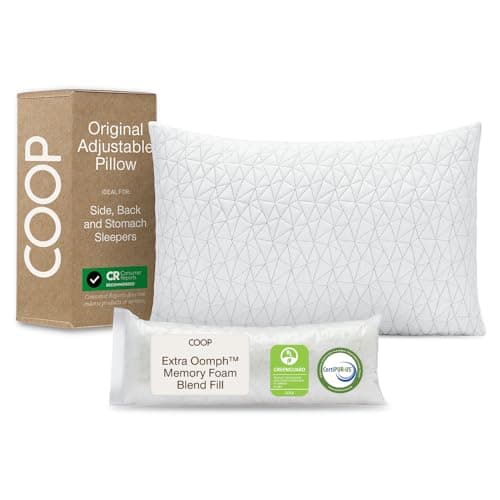 Coop Home Goods Original Adjustable The pillow I'd hand almost any combination sleeper first. It unzips, so you set it to a medium loft that survives a roll from side to back, and the shredded fill reshapes as you move instead of fighting you. Best for: Best overall for combination sleepers | Best overall for combination sleepers | $89.00 · View on Amazon Price as of September 12, 2026. #ad — we earn a commission. |
| 2 | 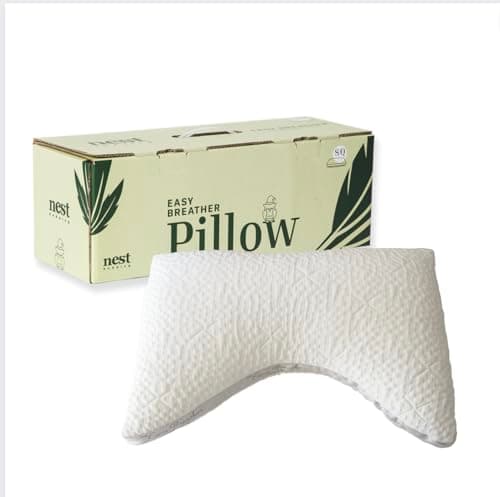 Nest Bedding Easy Breather Side Sleeper Adjustable shredded fill that ships tall and generous. If your night is mostly side with the odd roll onto your back, this gives you the most fill to dial down to a medium that survives the roll. Best for: Best for side-leaning combination sleepers | Best for side-leaning combination sleepers | $119.00 · View on Amazon Price as of September 12, 2026. #ad — we earn a commission. |
| 3 | 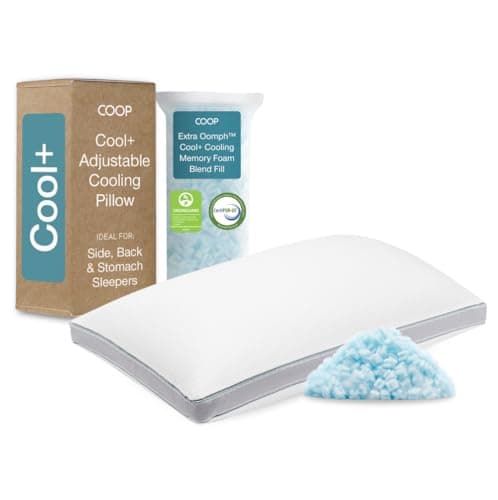 Coop Home Goods Cool+ Adjustable The same adjustable, moldable shredded fill as the Original with a cooling gel and cool-touch cover added. For a mover who also wakes up warm, the venting fill does the all-night work and the cover takes the edge off each time you flip to a fresh spot. Best for: Best for combination sleepers who run hot | Best for combination sleepers who run hot | $149.00 · View on Amazon Price as of September 12, 2026. #ad — we earn a commission. |
| 4 | 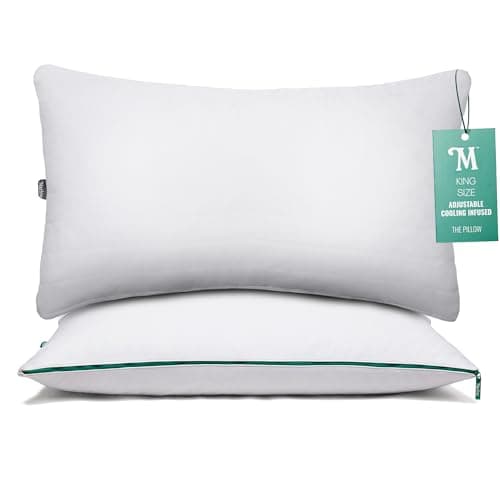 Marlow Adjustable Memory Foam Pillow Adjusts by zipping the side gussets in or out rather than pulling handfuls of fill onto the bed. A tidy, reversible way to settle on the medium feel a combination sleeper needs — just a coarser dial, and it doesn't reshape moment-to-moment the way loose fill does. Best for: Best adjustable without the mess | Best adjustable without the mess | $85.00 · View on Amazon Price as of September 12, 2026. #ad — we earn a commission. |
| 5 | 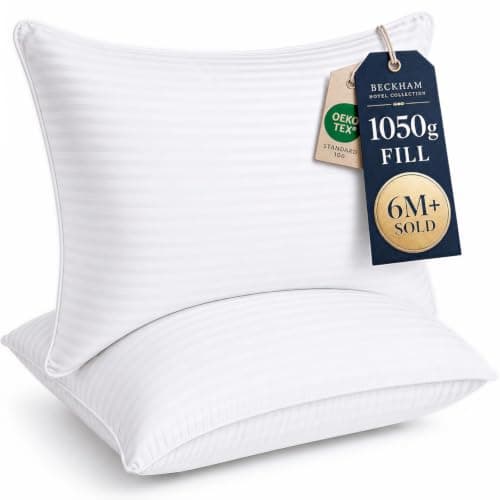 Beckham Hotel Collection Down Alternative (Set of 2) Two soft down-alternative pillows for about what one foam pillow costs. Loose fiber moves and molds with you and sits low out of the bag — the right budget pick for a combination sleeper whose night is mostly back and stomach with the occasional side. Best for: Best budget / back-and-stomach-leaning movers | Best budget / back-and-stomach-leaning movers | $59.99 · View on Amazon Price as of September 12, 2026. #ad — we earn a commission. |
| 6 | 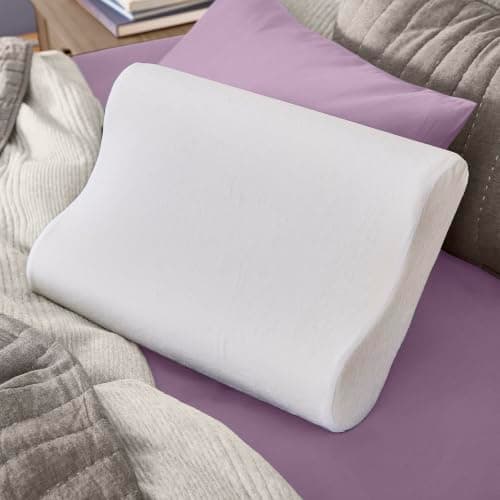 Sleep Innovations Memory Foam Contour A solid molded contour that cradles the neck and drops under the head. Included with a warning: it's the opposite of what most combination sleepers need, but if your 'combination' is really back-with-occasional-side, the shape can settle a back sleeper's neck. Best for: Only for mostly-back combination sleepers | Only for mostly-back combination sleepers | $44.99 · View on Amazon Price as of September 12, 2026. #ad — we earn a commission. |
You're not one sleeper — you're two or three
Most pillow advice starts by asking what kind of sleeper you are, as if the answer were a single word. For a lot of people it isn't. You fall asleep on your side, roll onto your back somewhere in the small hours, and maybe finish face-down before the alarm — and you remember none of it. That's a combination sleeper, and it's far more common than the tidy side/back/stomach categories suggest. The tell is simple: if you can't say for certain which position you're in when you wake, or you know you start one way and end another, this page is for you.
Here's why that changes the shopping. Each sleeping position asks the pillow for a different amount of height, and the amounts aren't close. Lie on your side and your shoulder holds your head up over a gap as wide as that shoulder is thick — the biggest gap of any position, wanting the tallest pillow. Lie on your back and the gap shrinks to the hollow of your neck, wanting a medium loft. Lie on your stomach and there's almost no gap at all; any real height cranks your neck backward for hours. A single-position sleeper picks the pillow that fills their one gap and is done. A combination sleeper has to satisfy two or three gaps with one pillow, which is a genuinely harder problem — and the reason a pillow that's perfect for a pure side sleeper is often actively wrong for you.
Why no fixed loft can win
Play it out and the trap is obvious. Buy the tall, firm pillow the side-sleeper pages rightly recommend, and it's superb for the hours you're on your side — then you roll onto your back and that same wall of loft shoves your chin toward your chest and your head forward all night. Buy the flat, soft pillow a stomach sleeper needs and the reverse happens: it's fine face-down, then you turn onto your side and your head drops into the shoulder gap with nothing to fill it. Whichever single position you optimize for, you've made the pillow wrong for the others — and a combination sleeper visits the others every night.
So the goal isn't to find the tallest pillow or the flattest one. It's to find a pillow that doesn't wreckany of your positions — a livable medium that keeps your neck roughly level with your spine whether you're on your side or your back, even if it's not the theoretical ideal for either. That single idea reorders the whole list. The pillows that win here aren't the ones with the most impressive single-position feel; they're the ones you can tune to a compromise and that move with you when you turn. Everything below is ranked on those two traits.
How to buy one: two traits, in order
Once you accept that a compromise beats a specialist, two properties on the listing tell you almost everything. Get these right and the brand, the infusion and the cooling adjective barely matter.
- Adjustability — so you can set a medium loft.This is the first thing to look for, because a pillow you can add fill to or take fill from is a pillow you can dial to the middle height a mover needs. Shredded memory foam that unzips is the purest version: start it full, pull out handfuls until you can lie on your side without your head sagging and roll onto your back without your chin tucking, and stop. A gusseted pillow that zips in and out, like the Marlow, is the tidier, coarser version of the same idea. Either way, you're correcting the one variable that matters — height — after the pillow is in your bed, instead of trusting a factory to have guessed your shoulders. Our adjustable-pillow page goes deeper on the mechanisms.
- Moldability and quick response — so it reshapes as you turn. Adjustability sets the pillow's resting height; moldability is what happens in the two seconds you're actually rolling over. Loose fill — shredded foam or soft fiber — gives under your ear as you turn onto your back and packs back up under your neck as you settle onto your side, so the pillow follows you through the movement. A solid molded block does the opposite: it holds one factory shape and makes you fight it every time you leave the position it was cut for. For a sleeper who moves, that responsiveness is the difference between a pillow that travels with you and one you wrestle. It's also why almost every pick here is loose fill and the one fixed contour sits last with a warning.
Two smaller things round it out. A combination sleeper turns over more than a still sleeper, so a pillow that vents— loose fill with air gaps, rather than a solid heat-trapping block — means you're not pressing into a warm patch of foam every time you move; that's why a cooling-lean pick like the Coop Cool+ earns a place. And a medium starting loft matters: a pillow that ships closer to the middle, like the Coop Original, needs less dialing-down than one built tall for side sleeping, like the Nest, though both get you there. Put those together and the picks sort themselves — the neutral adjustables lead, the side-built adjustable is for movers who lean side, the fiber set is for movers who lean back-and-stomach, and the fixed contour is the cautionary exception.
Finding your medium
You don't need a tape measure. You need a bed and five minutes at each end of the day. Start with an adjustable pillow fuller than feels right, because it's far easier to remove fill than to wish you had more. Then run two checks.
Lie on your side the way you actually fall asleep and look straight ahead in a mirror, or have someone look at you head-on. You want your nose pointing straight forward and your neck continuing the line of your spine — not your head sagging toward the mattress (too little loft) and not propped up toward the ceiling (too much). Now, without touching the pillow, roll onto your back. Your chin should sit level, neither pushed toward your chest nor tipped back. The medium you're hunting for is the single fill level where bothof those are true at once — side and back both livable. That's the compromise, and when you hit it you stop removing fill.
Do the check again in the morning. A pillow that passed at bedtime and sags by dawn is one whose fill is packing down, and the fix is a quick re-fluff rather than more fill. This is a week of half-attention, not a project, and it's the entire advantage of buying adjustable: you're allowed to be wrong on night one and correct it, where a fixed pillow gives you a single guess and no second try. If you want the framework for how position, loft and firmness fit together before you start, our how-to-choose-a-pillow guide lays out the whole decision.
The pick to be careful with
One category deserves a plain warning on this page specifically: the solid molded contour. A contour pillow is a genuinely good object — for a committed back sleeper whose neck aches, the molded ridge under the neck and the dip under the head are exactly the geometry a flat pillow misses. But that's the point. It works by assuming your head stays in one place. The instant a mover rolls off the dip and onto their side, the ridge that was supporting a back sleeper's neck becomes an obstacle jammed under their ear, and the fixed shape they can't reshape is now fighting them for the rest of the night.
So the Sleep Innovations contour sits last here, and it's in the list only for the specific reader whose "combination" is really back-sleeping with an occasional roll — for them the shape can settle a neck, and it's a cheap way to test that. If you genuinely cycle side to back to stomach, it's the one pick on this page that will actively work against you, and the honest move is an adjustable shredded pillow instead. The same caution applies more gently to the pure side-sleeper builds: they're on this list because they adjust, so a mover can dial them down — but bought and left at their tall factory loft, they push your head forward the moment you roll flat. Adjust them, or they become the very problem this page is about. If your nights are drifting more toward your back than you thought, our back-sleeper picks are the other half of this argument.
What I can't measure
The honesty this site runs on: I haven't slept on all six of these, I don't run a lab, and I own no force gauge to read a firmness, no ruler that means anything against a pillow you can reshape by hand, and no way to clock how fast a fill springs back. So I can't hand you a measured loft or a verified firmness, and where a spec above says "as listed," that's the seller's claim repeated, not confirmed. Anyone handing you precise per-pillow numbers for a stack bought online is inventing them — and for a combination sleeper the numbers would be doubly hollow, because the whole point is a pillow that changes shape as you move, which no single measurement captures.
What I can do is reason from construction, and for a mover the construction tells you most of what matters. Loose shredded fill can be tuned to a medium and reshapes as you turn — that's structure, not a claim. A gusseted pillow adjusts its resting feel but doesn't reshape moment-to-moment — also structure. Soft fiber moves with you but collapses under a shoulder — you can feel that in your hand. A solid contour holds one shape and fights a sleeper who leaves it — that's the material working as designed, not a defect. None of that came off a machine; it's how the fills behave, and it's more honest than a figure I'd have to make up. Every card above pairs that reasoning with a plain statement of who the pillow is wrong for, and none of this treats a medical problem — persistent neck or back pain is a conversation for a doctor, not a checkout page.
And since it's fair to ask: I earn an Amazon commission if you buy through the links here, and that's what funds the site. The rate is effectively the same across every pillow on this page, so there's nothing I make more by steering you toward — which is why the pick I point most combination sleepers at first, the mid-priced adjustable Coop, is far from the dearest thing listed, and why the most position-specific pillow here carries a plain instruction to skip it if you actually move at night. If you want to compare the fills behind these picks, our memory foam pillow guide splits adjustable shredded fill from fixed contour in detail; and if you're still not sure which sleeper you are, the main best-pillow list sorts every type by position, which is the decision underneath this one.
The picks, in full
1. Best for Best overall for combination sleepers
Coop Home Goods Original Adjustable
The pillow I'd hand almost any combination sleeper first. It unzips, so you set it to a medium loft that survives a roll from side to back, and the shredded fill reshapes as you move instead of fighting you.
Price as of September 12, 2026. #ad — we earn a commission.
Key specs
- Adjustable cross-cut memory foam fill
- Add/remove fill to set loft
- Medium firm (as listed)
- CertiPUR-US / GreenGuard Gold (as listed)
- Queen
What's good
- Adjustable, which is the whole game for a sleeper with no single position — you take fill out until the loft is a medium that works lying on your side AND on your back, rather than gambling on a fixed height that only suits one of them
- Shredded fill is loose, so it gives under your ear when you turn and packs back up under your neck — it reshapes as you change position, which a solid molded pillow physically cannot do
- Vents better than a solid foam block because the chopped fill leaves air gaps all through it, so a mover who runs a little warm isn't pressing into a fresh patch of trapped heat every time they roll
What's not
- Adjustable only helps if you open it — leave the zip shut and you're back to a fixed loft, which is exactly the problem you were trying to escape
- Shredded fill settles and clumps over the months, so it wants an occasional re-fluff to hold the medium loft you set
- Like any memory foam it carries a faint smell for the first few days until it airs out
Skip this one if
You genuinely spend the whole night on one position. If you never leave your side, buy a pillow built tall and firm for that gap and stop compromising toward the middle — the compromise a combination sleeper needs is wasted on you.
2. Best for Best for side-leaning combination sleepers
Nest Bedding Easy Breather Side Sleeper
Adjustable shredded fill that ships tall and generous. If your night is mostly side with the odd roll onto your back, this gives you the most fill to dial down to a medium that survives the roll.
Price as of September 12, 2026. #ad — we earn a commission.
Key specs
- Adjustable shredded memory foam
- Taller side-sleeper loft (as listed)
- Removable washable cover (as listed)
What's good
- It arrives packed full, which is the right starting point for a mover who leans side — you have plenty of fill to remove down to a loft that fills the shoulder gap without becoming a wall when you roll flat
- Shredded fill moves with you, giving under your head as you turn onto your back and building back up when you settle onto your side, so one pillow serves both positions
- The cover comes off and washes, which matters on the pillow that catches the most of a restless sleeper's face and hair
What's not
- It ships taller than a combination sleeper wants, so you have to commit to removing fill — out of the bag it's tuned for a pure side sleeper and will crank your neck up when you roll onto your back
- Shredded fill needs an occasional re-fluff or it settles into clumps and drifts off the medium loft you set
- Sold as a single pillow at the top of this page's price, where the budget picks come two to a box
Skip this one if
Your night is more back and stomach than side. This is built with a side sleeper's height in mind, and even dialed down it starts from a taller place than a back-and-stomach mover needs — the Beckham set or a thinner adjustable suits you better.
3. Best for Best for combination sleepers who run hot
Coop Home Goods Cool+ Adjustable
The same adjustable, moldable shredded fill as the Original with a cooling gel and cool-touch cover added. For a mover who also wakes up warm, the venting fill does the all-night work and the cover takes the edge off each time you flip to a fresh spot.
Price as of September 12, 2026. #ad — we earn a commission.
Key specs
- Adjustable memory foam with cooling gel
- Add/remove fill
- Cooling cover (as listed)
- CertiPUR-US / GreenGuard Gold (as listed)
- Queen
What's good
- You keep everything that makes shredded fill right for a combination sleeper — adjustable to a medium loft, and loose enough to reshape as you turn — while adding a cover built to feel cool on contact
- A mover flips to a new patch of pillow all night anyway, so a cool-touch cover suits them better than a still sleeper: there's a fresh cool surface waiting every time you roll
- Carries the same CertiPUR-US and GreenGuard Gold certifications listed on the Original, which is more said about emissions and off-gassing than most foam pillows bother to publish
What's not
- The gel and cover feel genuinely cold when you first lie down, then warm to your body within minutes — it's the air in the shredded fill that keeps working, not the gel, so you're paying extra for a first-contact effect
- Costs more than the plain Original for a cooling layer a mover partly recreates on their own by turning to a fresh spot
- It's still memory foam fill, so a sleeper who wakes up properly damp-hot may need to look past foam altogether
Skip this one if
You don't sleep hot. The cooling gel and cover are the entire reason to pay over the plain Original — if heat isn't your problem, buy the Original, set it to a medium loft, and keep the difference.
4. Best for Best adjustable without the mess
Marlow Adjustable Memory Foam Pillow
Adjusts by zipping the side gussets in or out rather than pulling handfuls of fill onto the bed. A tidy, reversible way to settle on the medium feel a combination sleeper needs — just a coarser dial, and it doesn't reshape moment-to-moment the way loose fill does.
Price as of September 12, 2026. #ad — we earn a commission.
Key specs
- Adjustable memory foam
- Zippered gussets to adjust feel (as listed)
- Removable cover
What's good
- The side zips change the loft and firmness from the outside in seconds, so experimenting toward the medium a mover wants costs you nothing and makes no mess
- Adjustment is completely reversible — try a lower setting for a back-heavy week, zip it back up when you're sleeping more on your side, with no bag of leftover fill in a cupboard
- Marlow is Brooklinen's pillow line, so there's a real company and a real returns process behind it if the feel turns out wrong
What's not
- The zips set the overall feel but the foam inside doesn't reshape as you turn the way loose shredded fill does — for a sleeper who reshapes their pillow every time they move, that's a real difference
- The gusset range is coarser than adding or removing fill by the handful — you get a couple of settings, not a fine medium dial
- You're paying a premium for the mechanism, and the listing publishes less on firmness and certification than Coop's does
Skip this one if
You reshape your pillow constantly through the night. The zips tune the pillow's resting feel, but a punch-and-mold sleeper wants loose fill that gives and rebuilds as they turn — buy the shredded Coop instead.
5. Best for Best budget / back-and-stomach-leaning movers
Beckham Hotel Collection Down Alternative (Set of 2)
Two soft down-alternative pillows for about what one foam pillow costs. Loose fiber moves and molds with you and sits low out of the bag — the right budget pick for a combination sleeper whose night is mostly back and stomach with the occasional side.
Price as of September 12, 2026. #ad — we earn a commission.
Key specs
- Down-alternative fill
- Set of 2
- Soft support (as listed)
- Standard/Queen (as listed)
What's good
- Loose fiber is mostly air, so it squashes flat under a back or stomach position and punches back into shape when you move — it goes where you put it, which suits a mover who reshapes the pillow all night
- Soft and low-loft out of the bag, which is what a back or stomach position wants, and a set of two means you can keep one lower for stomach nights and one fuller for back nights
- The cheapest honest pick here by a distance, and fiber breathes better than a solid foam block, so a warm mover isn't fighting insulation on top of everything else
What's not
- Fiber compresses under your head and won't hold a tall shape, so the moment you roll fully onto your side it collapses into the shoulder gap — the one thing a side position needs it not to do
- You can't adjust it: what's in the bag is the loft you get, so you can't dial it to a precise medium the way the shredded picks let you
- Down alternative flattens faster than foam and re-fluffing only buys you so long — treat it as a consumable, not a multi-year pillow
Skip this one if
You spend real time on your side. A soft fiber pillow collapses into the ear-to-shoulder gap the moment your full weight lands on it, and no amount of punching holds it up — a side-leaning mover wants the adjustable shredded Coop or Nest instead.
6. Best for Only for mostly-back combination sleepers
Sleep Innovations Memory Foam Contour
A solid molded contour that cradles the neck and drops under the head. Included with a warning: it's the opposite of what most combination sleepers need, but if your 'combination' is really back-with-occasional-side, the shape can settle a back sleeper's neck.
Price as of September 12, 2026. #ad — we earn a commission.
Key specs
- Solid contour memory foam
- Fixed ergonomic shape
- Medium support (as listed)
- Queen (as listed)
What's good
- For the stretch of the night you spend on your back, the molded ridge supports the neck's natural curve while the head settles into the dip — geometry a flat pillow misses
- Solid foam holds that exact shape all night, so if you do keep drifting back to your back, the support is identical every time you return to it
- A cheap way to test whether a contour settles a back sleeper's morning neck ache before you spend more on a premium ergonomic one
What's not
- A fixed shape is the worst possible match for a true mover — it only works while your head sits in the dip, and the moment you roll off it you're fighting the ridge rather than resting on it
- It can't be adjusted and it doesn't reshape as you turn, so the two traits that make a pillow work for a combination sleeper are both missing here
- Solid molded foam is the warmest-sleeping construction on this page, and a mover flipping to a fresh spot finds the same insulating block waiting
Skip this one if
You genuinely change position through the night, which is the whole reason you're on this page. A contour only serves a head that stays in one place — if you roll from side to back to stomach, this is the one pick here that will actively fight you. Buy an adjustable shredded pillow instead.
Common questions
What is a combination sleeper?
A combination sleeper is someone who changes sleeping position through the night rather than staying in one. Most people think of themselves as a side sleeper or a back sleeper, but a large share actually start on their side, roll onto their back, and sometimes end up on their stomach before morning — often without remembering any of it. The tell is simple: if you can't honestly say which position you're in when you wake up, or you know you start one way and finish another, you're a combination sleeper. That matters for a pillow because each position needs a different amount of height. Side sleeping opens a shoulder-wide gap that wants a tall pillow; back sleeping needs a medium loft; stomach sleeping wants almost nothing. A combination sleeper needs one pillow that doesn't wreck any of those positions, which is a different and harder problem than picking for a single position.
Why does an adjustable or moldable pillow help a combination sleeper?
Because there is no single fixed loft that's right for a sleeper who moves. A pillow built tall for side sleeping cranks your neck up the moment you roll onto your back; a flat pillow built for stomach sleeping leaves your head sagging when you turn onto your side. The two traits that solve this are adjustability and moldability. Adjustability — shredded fill you add or remove, or gussets you zip — lets you set the pillow to a medium loft that's a livable compromise across your positions rather than perfect for one and wrong for the rest. Moldability is the moment-to-moment version of the same idea: loose fill gives under your ear when you turn and packs back up under your neck, so the pillow reshapes as you move instead of holding one shape you have to fight. A solid molded pillow does the opposite — it springs back to its factory shape whether you're on your side or your back — which is why it's the worst match for a mover and the adjustable shredded pillows lead this list.
What loft should a combination sleeper's pillow be?
A medium loft, set as a compromise rather than aimed at any one position. The logic is that your loft needs pull in opposite directions — high for the side portion of your night, low for the back and stomach portion — so the honest target is a middle height that keeps your neck roughly level with your spine in whichever position you're in, even if it's not perfect for any single one. In practice that means starting an adjustable pillow fuller than you think and removing fill until you can lie on your side without your head dropping AND roll onto your back without your chin being pushed toward your chest. When both of those are true at once, you've found your medium. There's no universal inch count, because the height depends on the width of your shoulders and how far your mattress lets them sink — which is exactly why an adjustable pillow you tune to your own body beats a fixed one a factory guessed at.
Is one pillow enough, or should I use two?
One correctly-set pillow is better than juggling two. Some combination sleepers keep a tall pillow and a flat one and swap between them as they move, but in practice you don't wake up enough to swap deliberately, so you end up on whichever one your hand finds — often the wrong one for the position you've rolled into. A single pillow set to a medium loft travels with you through every position without any swapping, which is the entire point of picking for adjustability. The one place a second pillow genuinely earns its keep is elsewhere on the body: a thin pillow under the knees when you're on your back, or hugged between the knees when you roll onto your side, keeps the spine and hips aligned as you move. That's a supplement to your head pillow, not a substitute — get the head pillow to a good medium first, then add a support pillow if your hips or lower back need it.
Do you get paid for these recommendations?
We earn an Amazon commission if you buy through our links, and that funds the site. We don't take free products, we don't sell placement, and no brand sees this page before it publishes. The rate is effectively the same across every pillow here, so there's nothing on this page we make more money by recommending — which is why the pick we steer most combination sleepers toward, the mid-priced adjustable Coop, isn't the dearest thing listed, and why the most position-specific pillow here comes with a plain warning to skip it if you actually move at night.
Sources
Where the facts on this page come from. We cite other people's testing because we don't do our own — here's what that means.
Read next
- The Best Pillows, Picked by How You SleepSix pillows picked by sleeping position and fill type — side, back, stomach, adjustable vs fixed — with honest cons and a skip note on every one.
- The Best Pillows for Side SleepersSix pillows tall and firm enough to fill a side sleeper's shoulder gap without collapsing into it by midnight.
- The Best Pillows for Back SleepersSix pillows that hit the medium loft a back sleeper needs — enough to fill the neck's hollow without tipping the head forward — with honest cons on every pick.
- The Best Adjustable PillowsFive adjustable pillows you tune yourself by adding or removing shredded fill — the fix for the pillow that never fits, for in-between sleepers, and for couples who need different heights — with honest cons and a skip note on every one.
- How to Choose a PillowSleeping position sets pillow loft — side high and firm, back medium, stomach low or none — then fill, firmness, your mattress and cooling fine-tune it.
- The Best Memory Foam Pillows, Adjustable vs ContourSix memory foam pillows split by the only distinction that matters — adjustable shredded fill you can dial versus a fixed contour you must match to your position — with honest cons and a skip note on every one.