Do You Need a Duvet Cover?
If your comforter is sold as an insert, or you want to wash the top layer weekly, yes - a cover is the cheapest way to keep a good duvet clean, and the California Design Den cotton cover is the one to buy. If your comforter already has a finished shell and you are happy washing it twice a year, no, and you can skip the whole system.
We earn a commission if you buy through our links. It doesn't affect our picks — and we never take free products. How this site is funded.
A duvet cover is a pillowcase for your comforter
That is the entire concept, and it is the only way to think about the question usefully. Nobody asks whether they need a pillowcase - the pillow is expensive and awkward to wash, so you put a washable layer around it and launder that instead. A duvet cover does the same job for the biggest, most awkward-to-wash thing on the bed.
Which means this is a laundry decision, not a decorating one. The question is not whether a cover looks nice. It is how often you want the layer touching you to go through the machine.
You need one if...
- Your comforter is sold as a duvet insert. A plain shell with corner tabs and no decorative finish is built to be covered. Used bare it looks like a hospital bed.
- It is filled with down. Washing strips the oils from down clusters and they lose loft permanently, so the cover is what protects the expensive part. See down comforters.
- You want to wash the top layer weekly. A cover goes in a normal load. A queen comforter does not, which is why in practice it gets washed twice a year.
- You want the bed to change. One insert and two covers gives you two beds, seasonally or by mood, for the price of some fabric.
- Pets or children are on the bed. This is the strongest version of the weekly-washing argument.
You can skip it if...
- Your comforter has a finished shell and matching shams. It was designed to be seen. A cover over it is pure preference.
- You sleep with a flat sheet and a blanket.The flat sheet is already doing the cover's job from the other side.
- You know you will not keep up the extra step. Putting a cover back on is a two-minute job with the right technique and a ten-minute fight without it. An honest no here beats a cover that lives in a cupboard.
- The fill is cheap polyester you would replace anyway. Protecting a thirty dollar insert with a fifty dollar cover is the wrong way round. See down alternative comforters.
The cost math, which usually surprises people
The assumption is that buying two things costs more than buying one. For bedding it often does not, because an insert does not have to look like anything - you are not paying for a decorative shell, a print, or matching shams. A plain washable insert plus a cover frequently lands under the price of a comparable finished comforter set, and the live prices on the picks below will show you whether that is true today.
Where the cost does arrive is the second cover, and you should buy it. One cover means the bed is unusable while it is in the wash, which is exactly how a weekly habit dies. Two cheap covers beat one expensive one.
What to insist on if the answer is yes
Two features, in this order. Corner ties inside the cover - without them the insert migrates to the foot of the bed and bunches, which is the single most common complaint about duvets and is entirely a hardware problem. And a closure you can work: a zipper is fastest and most secure but it is the part that breaks; buttons are slower but feelable through the fabric and fixable with a needle.
Then match the stated inch dimensions of cover and insert rather than trusting two things both labeled queen to agree - makers use 88 x 88 and 90 x 90 for the same size name. And learn the roll-up technique before you decide the system is annoying: how to put on a duvet cover turns it into a two-minute job you can do alone.
| Pick | What it is | For which answer | Stated hardware |
|---|---|---|---|
| California Design Den 400TC | Cotton sateen cover | Yes | Buttons + corner ties |
| Bedsure linen-look | Prewashed cover, fiber not stated | Yes, cheaply | None stated |
| Utopia Bedding insert | Down alternative insert, 88 x 88 in | Yes - the other half | Corner tabs |
| Bedsure comforter set | Finished comforter + 2 shams | No | None - used bare |
Those are picks for both branches of this decision, with live prices - a cotton cover and a cheap one, the insert to put inside them, and a finished comforter for anyone who has decided the answer is no. If the terminology is still the confusing part, duvet vs comforter untangles the words, and how to choose a duvet cover goes deeper on fabric.
Quick picks
| # | Product | Best for | Price |
|---|---|---|---|
| 1 | 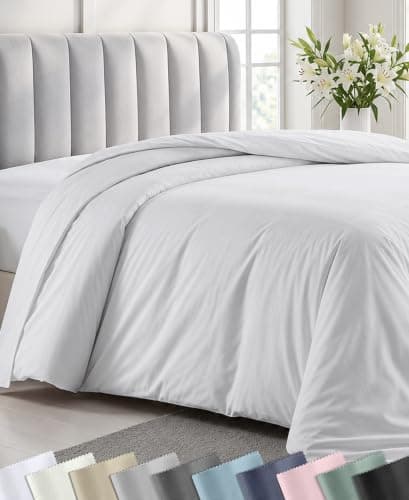 California Design Den 400TC Cotton Sateen Real 100% cotton with corner ties and a button closure. The cover to buy if you are committing to the insert-and-cover system. Best for: If the answer is yes | If the answer is yes | $49.99 · View on Amazon Price as of October 18, 2026. #ad — we earn a commission. |
| 2 | 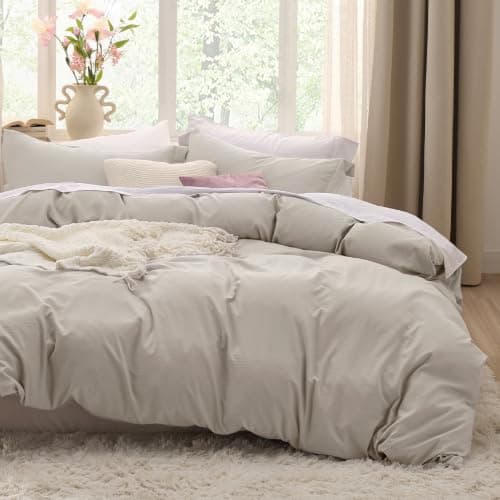 Bedsure Prewashed Linen-Look Cover A prewashed, linen-textured cover for the price of a takeout meal. The low-risk way to find out whether you will actually use a cover. Best for: Testing the system cheaply | Testing the system cheaply | |
| 3 | 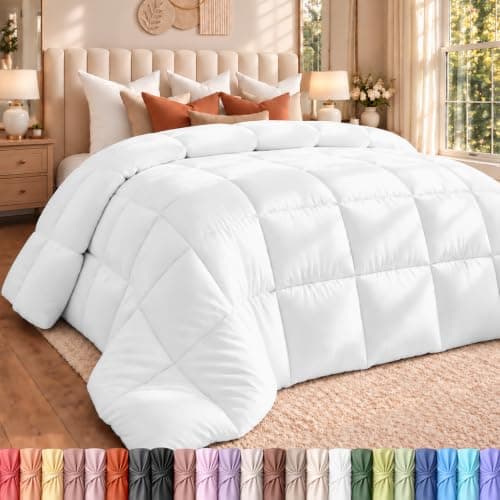 Utopia Bedding Quilted Box-Stitched Duvet Insert A plain, washable down alternative insert with corner tabs, priced to be covered. The other half of the system. Best for: The insert to put inside it | The insert to put inside it | $29.98 · View on Amazon Price as of October 18, 2026. #ad — we earn a commission. |
| 4 | 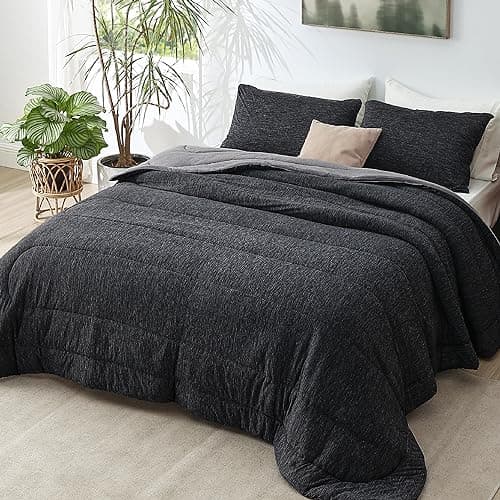 Bedsure Queen Comforter Set with Shams A finished comforter with matching shams, meant to be used bare. The pick if you would rather own one thing and wash it twice a year. Best for: If the answer is no | If the answer is no |
The picks, in full
1. Best for If the answer is yes
California Design Den 400TC Cotton Sateen
Real 100% cotton with corner ties and a button closure. The cover to buy if you are committing to the insert-and-cover system.
Price as of October 18, 2026. #ad — we earn a commission.
Key specs
- 100% cotton, 400 thread count sateen (as listed)
- Button closure + corner ties (as listed)
- Queen/Full (as listed)
- Good Housekeeping award (as listed)
What's good
- 100% cotton is the right fiber for the layer you actually touch and wash every week - it breathes, and it survives frequent laundering better than brushed polyester
- Corner ties are the feature that makes the system work rather than annoy you: tie the insert in and it stops migrating to the foot of the bed
- A sateen weave gives it a soft sheen, so the bed looks finished without a separate coverlet
What's not
- Buttons are slower to close than a zipper, and one will work loose over the years
- Cotton sateen wrinkles, and a duvet cover goes straight from the dryer onto the bed
- It costs more than twice the budget covers
Skip this one if
You are not sure you will keep up with the extra step of covering an insert. Buy the cheap linen-look cover first and find out - it is a quarter of the price.
2. Best for Testing the system cheaply
Bedsure Prewashed Linen-Look Cover
A prewashed, linen-textured cover for the price of a takeout meal. The low-risk way to find out whether you will actually use a cover.
Key specs
- Cotton-like soft, linen texture (as listed)
- Prewashed (as listed)
- Queen (as listed)
What's good
- It is cheap enough that owning two is realistic, and owning two is what makes washing the cover weekly actually happen
- Prewashed, so it has already shrunk - the cover you measure is the cover you keep
- The linen texture hides wrinkles better than a smooth sateen, which matters on a layer that goes dryer-to-bed
What's not
- "Cotton-like" and "linen texture" are feel descriptions, not fiber content - the listing does not state what it is made of, and that is the answer
- No corner ties are stated, so the insert can still slide inside it
- A textured budget fabric will look tired sooner than the cotton cover
Skip this one if
You know you want this for years. Buy the cotton cover once instead of this twice - and insist on corner ties.
3. Best for The insert to put inside it
Utopia Bedding Quilted Box-Stitched Duvet Insert
A plain, washable down alternative insert with corner tabs, priced to be covered. The other half of the system.
Price as of October 18, 2026. #ad — we earn a commission.
Key specs
- Down alternative fill (as listed)
- Box stitched (as listed)
- Corner tabs (as listed)
- Machine washable (as listed)
- Queen, 88 x 88 in
What's good
- Corner tabs tie into a cover's ties, which is the connection that stops the two layers separating
- An insert is the right thing to buy cheap: the cover is doing all the decorative work, so the insert only has to be the right warmth
- Machine washable, so the twice-a-year wash of the insert itself is a home job
What's not
- 88 x 88 inches is a true queen footprint with no extra drape, so there is little overhang at the sides
- Box stitching leaves thin, cooler lines along every seam
- No stated warmth weight on the listing
Skip this one if
You want one thing on the bed, not two. An insert without a cover is a plain white rectangle - buy the finished comforter set instead.
4. Best for If the answer is no
Bedsure Queen Comforter Set with Shams
A finished comforter with matching shams, meant to be used bare. The pick if you would rather own one thing and wash it twice a year.
Key specs
- 3 pieces: 1 comforter, 2 pillow shams (as listed)
- All-season weight (as listed)
- Queen
What's good
- It is designed to be seen, so there is no second layer to buy, tie in, or wrestle onto the bed
- The matching shams mean the bed reads as finished with one purchase
- An all-season weight is the right call for a comforter you cannot swap seasonally the way you can swap a cover
What's not
- Washing it means washing the whole comforter, which is a big load and a slow dry - so in practice it gets washed far less often than a cover would
- The listing does not state the fill fiber, so you are buying on weight description alone
- You cannot change the look without replacing the whole thing
Skip this one if
Anyone eats, sweats or sheds on your bed. The thing a cover really buys you is a top layer you can wash weekly - and that is a hygiene argument, not a decorating one.
Common questions
Do you need a duvet cover for a comforter?
It depends on whether the comforter has a finished shell or is sold as an insert. A duvet insert is a plain bag of fill with corner tabs - it is designed to be covered, and used bare it looks like what it is. A comforter sold as a set with shams and a decorative shell is designed to be seen, and a cover on it is optional. The useful way to decide is to ignore how it looks and ask how often you want to wash the top layer of your bed: a cover goes in a normal weekly load, a whole comforter does not.
Do you need a duvet cover for a down comforter?
Yes, and here it is close to non-negotiable. Down is the one fill you genuinely should not be laundering often - repeated washing strips the natural oils from the clusters and they lose loft permanently, and a wet down comforter takes hours of careful tumbling to dry without clumping or mildewing. A cover absorbs the body oils, sweat and dust that would otherwise reach the down, and it washes weekly in a normal load. On a good down comforter the cover is not a decorative choice, it is what protects the expensive part.
Is a duvet cover the same as a flat sheet?
No, though they solve the same problem from opposite directions. A flat sheet sits between you and the comforter, so the comforter stays clean and the sheet gets washed. A duvet cover wraps the comforter entirely, so there is nothing between you and the duvet but the cover - which gets washed. Both exist so the thick layer does not have to go in the machine every week, and most people who use a duvet cover drop the flat sheet entirely, which is standard practice across most of Europe and makes the bed much faster to make.
How much does the whole system cost versus a comforter?
An insert plus a cover is usually cheaper than a comparable finished comforter, not more expensive - and the live prices on this page will show you that directly. The reason is that an insert does not have to look like anything, so you are not paying for a decorative shell. The genuine extra cost arrives if you want two covers, which you should: a second cover is what lets you strip the bed and remake it the same evening. Budget for one insert and two cheap covers rather than one insert and one expensive cover.
How often should you wash a duvet cover?
About as often as your sheets, which for most people means weekly - the cover is in direct contact with you all night, so it collects the same sweat, skin and oils a sheet does. The insert underneath then only needs washing a couple of times a year, which is the whole economic argument for the system. If you sleep without a flat sheet, treat the cover exactly as you would a top sheet and wash it on the same schedule.
What size cover do I need for my insert?
Match the stated dimensions, not the size name. A queen insert can be 88 x 88 inches or 90 x 90 depending on the maker, and covers vary the same way, so compare the inch figures on both listings rather than trusting that two things both called queen will fit. An inch or two of slack is fine and actually makes the cover easier to put on; a cover smaller than the insert compresses the fill at the edges and flattens the loft you paid for.
Sources
Where the facts on this page come from. We cite other people's testing because we don't do our own — here's what that means.
Read next
- Duvet vs ComforterA comforter is a single finished bedspread you use as-is; a duvet is an insert that goes inside a washable cover. How they differ on laundering, styling, warmth, and cost — and a clear verdict for which to buy.
- The Best Duvet CoversSix duvet covers worth buying, plus the one word on the label that separates cotton from polyester, why corner ties matter more than thread count, and how to size a cover to your insert.
- The Best Duvet InsertsSix duvet inserts worth buying, plus the two numbers sellers conflate, why baffle-box construction beats box stitching, and how to pick warmth for your room.
- How to Put On a Duvet CoverThe burrito method, step by step, plus the shake method for small beds - and the three features on a cover that decide whether this is a two-minute job or a ten-minute wrestle.
- How to Choose a Duvet CoverChoosing a duvet cover comes down to sizing it to your insert, picking a closure and corner ties that stop the fill from shifting, and choosing a fabric and weave — percale, sateen, linen or microfiber — that gets the feel and temperature you want.
- How to Wash a Duvet CoverA wash-and-dry method for duvet covers by fabric — cotton and percale, sateen, linen, bamboo viscose and microfiber — plus why you close the buttons and turn it inside out, how often to actually wash it, and the California-roll trick for re-stuffing the insert.
- The Best Down Alternative ComfortersFive down alternative comforters chosen on the three specs that actually matter for polyester fill - shell, stitch pattern and stated warmth weight - plus why fill power means nothing here.