How to Put On a Duvet Cover
Turn the cover inside out, roll the insert and cover together from the head of the bed like a burrito, then unroll. It takes about two minutes, works alone, and you never have to climb inside the cover to find a corner.
We earn a commission if you buy through our links. It doesn't affect our picks — and we never take free products. How this site is funded.
The burrito method, step by step
This is the roll-and-unroll technique, and it is the one to learn. It works alone, it works on a queen or a king, and it never asks you to support the weight of a duvet at arm's length. Do it on the bed, not on the floor - the mattress holds the weight and the alignment for you.
- Turn the cover inside out and lay it flat on the bed, with the opening at the foot of the bed.
- Lay the insert on top of the cover, lining up its two top corners with the two closed corners of the cover. Getting these two corners right is the whole trick - everything after this is mechanical.
- Tie the corners in now, if your cover has ties and your insert has loops. It is far easier at this stage than reaching inside later.
- Roll both layers together, tightly, starting at the head of the bed and working toward the foot. You want one firm sausage, not a loose bundle.
- Feed the roll into the opening.Take the cover's opening and pull it around the end of the roll, turning the cover right side out over the bundle - essentially stuffing the roll into itself while inverting the cover over it.
- Unroll back toward the head of the bed. The insert comes out already inside the cover and already square at the corners.
- Close the zipper or buttons, give it one shake, and you are done.
If it comes out twisted, the cause is almost always step two - the top corners were off by a few inches before you started rolling, and rolling multiplied the error down the length of the bed.
The shake method, and when it is actually faster
The method most people were taught goes: turn the cover inside out, reach inside through the opening, grab the two far corners of the cover, pinch the matching corners of the insert through the fabric, then lift and shake so the cover falls down over the duvet.
On a twin or a full, this is genuinely quicker - you can reach the far corners without climbing in. On a queen or larger it is where the wrestling starts, because you are holding the entire weight of the duvet out in front of you while trying to keep two corners matched. Reach is the deciding factor, not skill. Small bed: shake. Big bed: roll.
Why the insert ends up at the foot of the bed
The most common duvet complaint is not about putting the cover on at all - it is that a week later all the filling is bunched at the bottom. That is a hardware problem, and it has a hardware fix: the loops on the corners of your duvet insert exist to be tied to ties sewn inside the cover. Knot them once and the insert cannot migrate.
So when you are buying a cover, the feature that matters every single night is whether it has corner ties inside. The closure type only matters on laundry day. If your current cover has no ties, you can sew in four lengths of ribbon in ten minutes, or use duvet clips at the corners. And prefer an insert with eight loops over one with four - the extra pairs hold the long edges, not just the corners.
What makes a cover easy to live with
- Corner ties inside - the one non-negotiable. Everything else is preference.
- A closure you can work blind: a zipper is fastest and most secure but it is the part that fails; buttons are slower but you can feel them through the fabric and repair them with a needle.
- A fiber that does not cling. A brushed polyester cover over a polyester insert builds static and the two layers grab each other while you roll. Cotton slides against the insert instead of sticking to it.
- Prewashed, if stated - a cover that has already shrunk stays the size you measured for.
| Cover | Closure | Corner ties | Fiber (as listed) |
|---|---|---|---|
| California Design Den 400TC | Buttons | Yes - stated | 100% cotton sateen |
| Bedsure 3-piece | Zipper | Not stated | "Cotton-like" polyester microfiber |
| Utopia Bedding set | Zipper | Not stated | Brushed microfiber (polyester) |
Below are those three covers with live prices - one cotton with corner ties, two zip-closure budget options. The full roster is on best duvet covers, and if you are not sure you want the cover-and-insert system at all, do you need a duvet cover is the page for that decision. For the washing side, how to wash a duvet cover covers why covers come out of the dryer in a ball. And if the problem is not getting it on but keeping it in place, how to keep a comforter in a duvet cover goes through the four fixes.
Quick picks
| # | Product | Best for | Price |
|---|---|---|---|
| 1 | 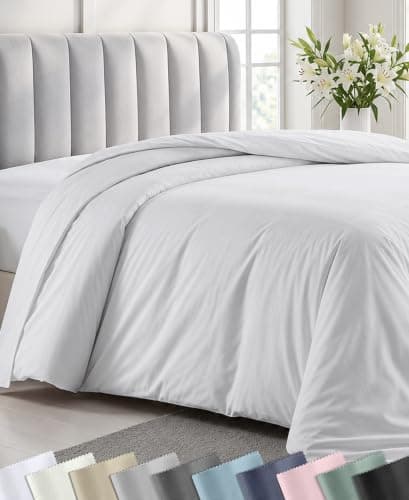 California Design Den 400TC Cotton Sateen Real 100% cotton with both a button closure and corner ties. The ties are what stop the insert migrating, which is the complaint behind most duvet frustration. Best for: Corner ties, which solve the real problem | Corner ties, which solve the real problem | $49.99 · View on Amazon Price as of October 17, 2026. #ad — we earn a commission. |
| 2 |  Bedsure White Duvet Cover (3-Piece) A zipper closure and a prewashed finish at the lowest price here. Zip it and the job is done in one motion. Best for: The fastest closure, cheapest | The fastest closure, cheapest | |
| 3 |  Utopia Bedding Duvet Cover Set Brushed microfiber with a zipper and pillowcases included. The budget set to buy if you want the whole bed to match. Best for: A soft surface and a zip, with pillowcases | A soft surface and a zip, with pillowcases | $20.99 · View on Amazon Price as of October 17, 2026. #ad — we earn a commission. |
The picks, in full
1. Best for Corner ties, which solve the real problem
California Design Den 400TC Cotton Sateen
Real 100% cotton with both a button closure and corner ties. The ties are what stop the insert migrating, which is the complaint behind most duvet frustration.
Price as of October 17, 2026. #ad — we earn a commission.
Key specs
- 100% cotton, 400 thread count sateen (as listed)
- Button closure + corner ties (as listed)
- Queen/Full (as listed)
- Good Housekeeping award (as listed)
What's good
- Corner ties are the single feature that makes the burrito method stick: tie the insert's loops in once and it cannot slide to the foot of the bed afterward
- A button closure is the easiest kind to work blind at the end of the roll - you can feel a button through the fabric, where a zipper pull has to be found
- 100% cotton rather than polyester, which means it breathes and does not cling to the insert with static while you are rolling it
What's not
- Buttons take longer to close than a zipper, and one will eventually come loose
- Cotton sateen wrinkles, so it looks its worst straight out of the roll
- It is the most expensive of the three covers here
Skip this one if
You want the fastest possible closure. A zipper is quicker to shut than eight buttons - the Bedsure or Utopia covers are the zip option.
2. Best for The fastest closure, cheapest
Bedsure White Duvet Cover (3-Piece)
A zipper closure and a prewashed finish at the lowest price here. Zip it and the job is done in one motion.
Key specs
- Cotton-like polyester (microfiber) (as listed)
- 3-piece: cover + 2 shams (as listed)
- Zipper closure, 90 x 90 in (as listed)
- Prewashed (as listed)
What's good
- A single zipper closes the whole opening in one pull, which is the fastest finish to the roll-and-unroll method
- Prewashed means it has already shrunk, so the cover you measured is the cover you keep
- The cheapest way to own a second cover, which is what makes washing the cover weekly realistic
What's not
- Polyester microfiber generates static against a polyester insert, and static is what makes the two layers cling while you are trying to roll them
- No corner ties are stated, so the insert can still migrate inside it
- It does not breathe the way the cotton cover does
Skip this one if
Your insert keeps sliding to the bottom. A cover with no ties cannot hold it - buy the California Design Den cover, or add sew-on ties to this one.
3. Best for A soft surface and a zip, with pillowcases
Utopia Bedding Duvet Cover Set
Brushed microfiber with a zipper and pillowcases included. The budget set to buy if you want the whole bed to match.
Price as of October 17, 2026. #ad — we earn a commission.
Key specs
- Brushed microfiber (polyester) (as listed)
- 3-piece with pillowcases (as listed)
- Zipper closure (as listed)
- Queen (as listed)
What's good
- Brushed microfiber is soft straight out of the packet, with no break-in washes needed
- Zipper closure, so the last step of the method is one motion rather than a row of buttons
- Comes with pillowcases, so one purchase finishes the bed
What's not
- Brushed polyester is the grippiest surface here against a polyester insert - the most static, the most cling while rolling
- No corner ties stated
- It traps heat more than a cotton cover, which matters if you sleep warm
Skip this one if
You sleep hot. A brushed polyester cover over a polyester insert is the warmest combination you can build - go with the cotton cover instead.
Common questions
What is the burrito method for a duvet cover?
It is the roll-and-unroll technique, and it is the fastest way to do the job alone. You turn the cover inside out, lay it on the bed with the opening at the foot, lay the insert on top of it and match the two top corners, then roll both layers together tightly from the head of the bed down to the foot - so you end up with one long sausage. Then you feed the rolled bundle into the cover's opening, turning the cover right side out over it, and unroll back toward the head of the bed. The insert comes out of the roll already inside the cover and already lined up at the corners, which is the part that normally goes wrong.
How do you put on a duvet cover by yourself?
Use the burrito method, and do it with the duvet on the bed rather than on the floor. Standing up and shaking a queen insert into a cover requires reach and arm strength you only have if you are tall; rolling it on the mattress uses the bed itself to hold the weight and the alignment, so the size of the duvet stops mattering. The only part that genuinely benefits from a second person is a king or California king, where the roll gets heavy - and even then the fix is to roll it in two halves rather than to ask for help.
What is the shake method, and when is it better?
The shake method - sometimes called the inside-out method - is the one most people were taught: turn the cover inside out, reach in through the opening, grab the two far corners of the cover, grab the matching corners of the insert through the fabric, then lift and shake so the cover falls down over the duvet. It is genuinely faster on a twin or a full, where you can reach the far corners without climbing in. On a queen or larger it is where the fighting starts, because you are supporting the entire weight of the duvet at arm's length while trying to keep two corners matched.
How do you stop the insert sliding to the bottom of the cover?
Tie it in. Most inserts have loops or tabs at the corners and better covers have matching ties sewn inside - knot each loop to the corresponding tie once, and the insert cannot migrate. If your cover has no ties, the fixes are, in order: sew in four ribbon ties yourself, use duvet clips or safety pins at the corners, or buy a cover that has them. An insert with eight loops rather than four is also measurably better, because the extra pairs hold the long edges rather than only the corners.
Zipper, buttons or ties - which closure is best?
A zipper is fastest to close and the most secure, but it is the one that breaks, and a stuck zipper on a washed cover is genuinely annoying. Buttons are slower and one will come loose eventually, but you can feel and work them blind at the end of the roll and they are repairable with a needle. Ties at the opening are the least secure and the slowest. None of this matters nearly as much as whether the cover has corner ties INSIDE it, which is the feature that affects every night rather than only laundry day.
Which way round does the opening go?
At the foot of the bed, every time. The opening is the weakest part of the cover, and putting it at the foot means it is held shut by the mattress and your own weight rather than being next to your face. It also means you can reach in to adjust a corner without untucking the head of the bed. If your cover has a decorative edge or a flange, that goes at the head, which is the other reason the opening ends up at the foot.
Sources
Where the facts on this page come from. We cite other people's testing because we don't do our own — here's what that means.
Read next
- The Best Duvet CoversSix duvet covers worth buying, plus the one word on the label that separates cotton from polyester, why corner ties matter more than thread count, and how to size a cover to your insert.
- The Best Duvet InsertsSix duvet inserts worth buying, plus the two numbers sellers conflate, why baffle-box construction beats box stitching, and how to pick warmth for your room.
- Do You Need a Duvet Cover?A duvet cover is a pillowcase for your comforter: it exists so you can wash the top layer weekly instead of annually. Here is when that is worth the extra step, and when a bare comforter wins.
- Duvet vs ComforterA comforter is a single finished bedspread you use as-is; a duvet is an insert that goes inside a washable cover. How they differ on laundering, styling, warmth, and cost — and a clear verdict for which to buy.
- How to Wash a Duvet CoverA wash-and-dry method for duvet covers by fabric — cotton and percale, sateen, linen, bamboo viscose and microfiber — plus why you close the buttons and turn it inside out, how often to actually wash it, and the California-roll trick for re-stuffing the insert.
- How to Choose a Duvet CoverChoosing a duvet cover comes down to sizing it to your insert, picking a closure and corner ties that stop the fill from shifting, and choosing a fabric and weave — percale, sateen, linen or microfiber — that gets the feel and temperature you want.
- How to Make Your BedThe correct bedding layer order from protector to pillows, the hotel-bed method for a crisp finish, how to keep a fitted sheet from slipping and a duvet from bunching, plus a fast daily reset versus a full remake.