What Is GSM in Bed Sheets?
GSM is grams per square meter: the weight of a fabric, which is a plain measure of how much material is actually there. On brushed and loose-woven fabrics - flannel, linen, jersey, fleece - it predicts warmth and durability far better than thread count does, which is why the sellers who publish it are usually the ones with nothing to hide.
We earn a commission if you buy through our links. It doesn't affect our picks — and we never take free products. How this site is funded.
A number you cannot fake
GSM stands for grams per square meter. It is the mass of one square meter of a fabric — in other words, a direct measurement of how much material is actually in the sheet you are buying. More grams means more fiber per unit area, which generally means warmer, more opaque, more durable, and heavier in the wash.
What makes it the most trustworthy figure in bedding is not that it tells you more than other numbers. It is that it cannot be inflated. Thread count can be tripled by twisting three thin yarns together and counting them as three. A scale is immune to that trick. Whatever the marketing says, 180 grams is 180 grams.
Where GSM matters, and where it is absent
You will see GSM on the fabrics where thread count is either meaningless or impossible to state honestly, and you will almost never see it on the fabrics that have been sold on thread count for decades.
- Flannel. Flannel is a finish, not a weave: the warmth comes from a brushed nap of raised fiber ends trapping still air. Weave density is almost irrelevant to that, so thread count tells you nothing — while GSM tells you how much fabric is holding the nap. This is the category where GSM matters most, and happily the one where sellers publish it most often.
- Linen. Linen is spun from thick, irregular flax yarn, which makes a high thread count physically impossible. GSM is the only honest weight figure available, and on linen it speaks to durability more than warmth.
- Jersey, fleece, waffle and towels. All knits or textured weaves where density, not thread count, decides the behavior.
- Percale and sateen. Here thread count still carries real information about the weave, and GSM is almost never printed. Read thread count with suspicion in this category and lean on fiber and weave instead — percale vs sateen is the decision that actually matters.
What the numbers feel like
One caveat first, because it is the honest part: there is no governing standard for GSM in bedding.No body certifies what counts as heavyweight, so one brand's "heavy" flannel is another's midweight. The bands below describe how sellers in practice label fabric, not a graded scale. The number itself is a real measurement; the adjective attached to it is not.
| Fabric | GSM range | Usually labeled | What it means in a real bed |
|---|---|---|---|
| Flannel | ~150 and below | Light | A mild room, or a heated bedroom |
| Flannel | 170-180 | Heavyweight / winter | The standard winter weight most people want |
| Flannel | 190-200+ | Extra heavy / Portuguese | A genuinely cold room; too much elsewhere |
| Linen | ~150 | Light | Airiest, most delicate-feeling |
| Linen | 165-200 | Mid to heavy | Softens for years instead of going papery |
The useful habit is to compare figures across listings rather than trust the word beside them. A 150 GSM set described as heavyweight and a 180 GSM set described as midweight are not a judgment call — the second one has more fabric in it.
GSM is warmth on flannel and lifespan on linen
The same number answers different questions depending on the fiber, and this is the part that confuses people.
On flannel, GSM is a warmth dial. A brushed cotton sheet insulates by holding still air in its nap, and more fabric means more nap and more trapped air. Buying 200 GSM for a heated bedroom is the most common flannel mistake there is — the sheets are not defective, they are simply too warm, and they end up in a closet. Flannel vs fleece goes further into how brushed fabrics actually warm a bed.
On linen, GSM is a durability dial.Linen's reputation for coolness comes from flax's structure and its open weave, not from being thin, and a heavier linen is warmer rather than cooler. What weight buys on linen is longevity: there is more yarn to abrade away, which is why a substantial linen softens for a decade while a thin one goes papery. Softening linen is a separate process from buying heavy linen, and both help.
The spec-literacy set, in one place
GSM is one of four numbers on bedding that mean something. It is worth knowing which question each one answers, because sellers rely on readers mixing them up:
- GSM — how much fabric there is. Flannel, linen, jersey, towels.
- Thread count — threads per square inch in a woven sheet. Useful up to about 400, routinely inflated above it.
- Fill power — how much volume an ounce of down occupies. A quality measure for down, not a warmth measure.
- Tog — thermal resistance of a duvet. The one bedding number that actually measures warmth.
Between them those four cover almost every spec worth reading on a bedding listing. Everything else — "1800 series," "hotel quality," "cooling technology" — is an adjective wearing a number's clothes. How to choose bed sheets puts the whole checklist in buying order.
GSM matters most on a textured weave, where it separates a fabric that drapes from one that stands up like upholstery and predicts how easily it snags. Waffle weave is the clearest example.
How to use GSM when you shop
- On flannel or linen, look for it first. A listing with a fiber content and a GSM has told you how the fabric will behave.
- Treat its absence as a mild warning. Not a disqualification — plenty of good flannel omits it — but the sellers who publish measurements tend to be the ones who are comfortable being measured.
- Match the number to the room, not to the season. A heated bedroom in January wants a lighter flannel than an unheated bedroom in October.
- Do not compare GSM across fibers. 170 GSM of flannel and 170 GSM of linen are the same weight of fabric and nothing like the same sheet.
The three picks below are the three sets in our coverage that publish a GSM figure on the listing — two flannels at 180 and 200, and a linen at 170. That scarcity is the point of this page. Our flannel picks and our linen picks have the full lists.
Quick picks
| # | Product | Best for | Price |
|---|---|---|---|
| 1 | 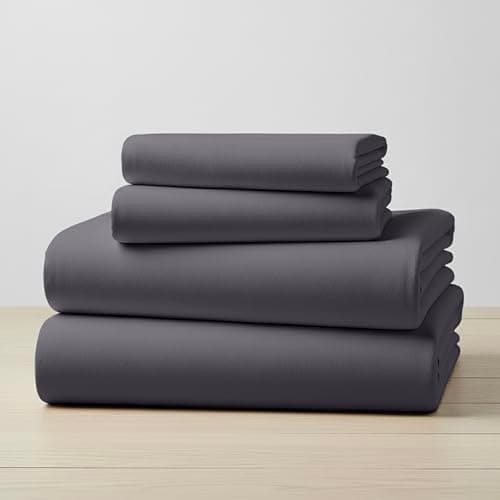 Mellanni 100% Cotton Flannel Sheet Set (180 GSM) A stated 180 GSM in stated 100% cotton - the two numbers that decide a flannel sheet, both on the listing. This is what shopping by GSM looks like when it works. Best for: The standard winter weight, published | The standard winter weight, published | $58.97 · View on Amazon Price as of October 18, 2026. #ad — we earn a commission. |
| 2 |  Pointehaven 200 GSM 100% Cotton Flannel Sheet Set The heaviest published figure in our coverage at 200 GSM, pre-shrunk and double-brushed. If you want to understand what the number means, this is the end of the scale you can feel. Best for: Seeing what a heavy GSM actually feels like | Seeing what a heavy GSM actually feels like | $63.74 · View on Amazon Price as of October 18, 2026. #ad — we earn a commission. |
| 3 | 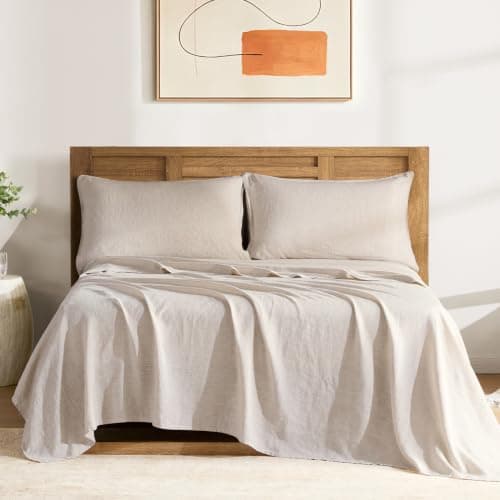 DAPU 100% Pure French Linen Sheet Set (170 GSM) The same number doing a different job. On linen, 170 GSM is a mid-to-substantial weight - heavy enough to last and soften for years rather than going thin and papery. Best for: GSM on linen, where it signals durability rather than warmth | GSM on linen, where it signals durability rather than warmth |
The picks, in full
1. Best for The standard winter weight, published
Mellanni 100% Cotton Flannel Sheet Set (180 GSM)
A stated 180 GSM in stated 100% cotton - the two numbers that decide a flannel sheet, both on the listing. This is what shopping by GSM looks like when it works.
Price as of October 18, 2026. #ad — we earn a commission.
Key specs
- 100% cotton flannel (as listed)
- 180 GSM heavyweight (as listed)
- Deep pockets with all-around elastic (as listed)
- 4-piece queen set
What's good
- Both relevant specs are published: the fiber, so you know it breathes, and the GSM, so you know roughly how warm it is before it arrives
- 180 GSM is the weight most people mean by winter flannel - substantial without being the kind of heavy that makes a heated bedroom unusable
- All-around elastic keeps a heavy fitted sheet under tension evenly, and even tension is what stops abrasion concentrating in the corners
What's not
- Like all untreated cotton flannel it sheds surface fuzz in the first few washes before the nap settles
- 180 GSM is genuinely warm - this comes off the bed in spring, it does not stay year-round
- It wrinkles, as brushed natural fibers do
Skip this one if
Your bedroom is heated and you run warm. 180 GSM will be too much sheet - look for a flannel in the 150s, or buy percale and add a blanket.
2. Best for Seeing what a heavy GSM actually feels like
Pointehaven 200 GSM 100% Cotton Flannel Sheet Set
The heaviest published figure in our coverage at 200 GSM, pre-shrunk and double-brushed. If you want to understand what the number means, this is the end of the scale you can feel.
Price as of October 18, 2026. #ad — we earn a commission.
Key specs
- 100% cotton flannel (as listed)
- 200 GSM (as listed)
- Pre-shrunk, double-brushed (as listed)
- Deep pockets, elastic all around (as listed)
What's good
- 200 GSM stated puts this at the heavy end of flannel, and the difference between this and a 150 GSM set is immediately obvious in the hand - GSM is one of the few bedding numbers you can verify by touch
- Pre-shrunk means the inevitable first hot-wash mistake is survivable, which on a heavy cotton set is worth real money
- Double-brushing on both faces is what turns a heavy cotton into a flannel rather than just a thick sheet
What's not
- This is a cold-room weight. In a heated bedroom it is too much, and an unused sheet set is a waste regardless of its specs
- A heavier fabric is a heavier wash load and takes noticeably longer to dry properly
- More nap means more initial shedding than a lighter flannel
Skip this one if
Your room is heated or you share the bed with someone who runs hot. Buy down a weight rather than buying this and regretting it in November.
3. Best for GSM on linen, where it signals durability rather than warmth
DAPU 100% Pure French Linen Sheet Set (170 GSM)
The same number doing a different job. On linen, 170 GSM is a mid-to-substantial weight - heavy enough to last and soften for years rather than going thin and papery.
Key specs
- 100% French linen from Normandy (as listed)
- 170 GSM (as listed)
- Stone/pre-washed for softness (as listed)
- 4-piece queen set
What's good
- On a loose-woven fabric like linen, GSM is the honest substitute for thread count - a published 170 tells you there is real yarn in the fabric rather than a thin, open weave sold on the word linen
- Stone-washed means the break-in has been started for you, which on linen is the difference between soft on night one and soft in six months
- Linen at a substantial weight genuinely improves with washing for years, which is why weight matters more here than in any other fiber
What's not
- A heavier linen is warmer than a light one, so 170 GSM is not the coolest-sleeping linen available despite linen's reputation
- It is one of the pricier sets in our linen coverage, and weight is part of what you are paying for
- Linen looks rumpled permanently; no weight changes that
Skip this one if
You want the airiest possible summer sheet. A lighter linen moves more air - weight buys longevity here, not coolness.
Common questions
What does GSM mean on bed sheets?
Grams per square meter: the mass of one square meter of the fabric. It is a direct measure of how much material is in a sheet - more grams means more fiber per unit area, which generally means warmer, more opaque, more durable and heavier to wash. Unlike thread count, it cannot be inflated by counting plied yarns twice, because a scale does not care how the threads were twisted. That is the entire reason it is a more trustworthy number.
Is GSM better than thread count?
On brushed and loosely woven fabrics, yes, and by a wide margin. Flannel's warmth comes from a raised nap rather than from weave density, so thread count tells you almost nothing about it; GSM tells you how much fabric is holding that nap. Linen is woven from thick, irregular yarn where a high thread count is physically impossible, so GSM is the only sensible weight measure. On smooth cotton percale and sateen, thread count still carries some information about the weave - but it is also the number most commonly inflated, so read both where both are given.
What is a good GSM for flannel sheets?
As a practical map of how sellers label flannel: around 150 GSM and below is a light flannel for a mild room, 170 to 180 is the standard winter weight most people want, and 190 to 200 and above is a genuinely heavy cold-room sheet. Be aware these are conventions rather than a certified scale - there is no governing body for flannel GSM, so one brand's heavyweight is another's midweight. The number is still useful because it is a physical measurement; just compare figures rather than adjectives.
What GSM should linen sheets be?
Most linen bedding sits somewhere between roughly 150 and 200 GSM, and on linen the number signals durability more than warmth. A light linen is airier and feels more delicate; a heavier one has more yarn in it, which is what lets linen soften over years of washing instead of going thin and papery. If you are buying linen as a long-term purchase, weight is worth paying for. If you are buying it specifically to sleep cooler in summer, a lighter weight moves more air.
Why do so few sheet listings publish GSM?
Because it is a measurement rather than a marketing number, and it cannot be gamed. A seller can print a four-figure thread count on a mediocre fabric by counting plied yarns; nobody can print 200 GSM on a sheet that weighs 140. So a published GSM is a small act of accountability, and a listing that gives you a fiber content and a GSM has told you nearly everything that matters about how the fabric will behave. Treat its absence on a flannel or linen listing as a mild warning sign rather than an oversight.
Does GSM apply to towels and blankets too?
Yes, and the same logic holds: it is the weight of the fabric per square meter, so it predicts density, absorbency in a towel and warmth in a blanket. You will see it most often on flannel, linen, jersey, fleece, waffle weaves and towels - all fabrics where thread count is either meaningless or impossible to state honestly. You will see it almost never on percale and sateen, where thread count has colonized the label.
Sources
Where the facts on this page come from. We cite other people's testing because we don't do our own — here's what that means.
Read next
- Thread Count: What It Really MeansThread count is real up to roughly 400-600. Above that, it is mostly a counting trick — and fiber and weave matter more than the number ever did.
- TOG Ratings: What the Warmth Number Really MeansA TOG rating measures a duvet's warmth — higher means warmer — and nothing about its quality or fill amount. Here's how to pick a TOG by season and by whether you sleep hot or cold, plus why US comforters often skip the number entirely.
- What Is Fill Power?Fill power measures the loft and quality of down — how many cubic inches one ounce fluffs up to fill — so higher fill power means fluffier, warmer-for-its-weight down. It is not the same as warmth: that depends on fill power and fill weight together. Here's how to read the number and the typical quality bands.
- The Best Flannel Sheets for WinterSix genuinely warm cotton flannel sets, chosen on fiber and GSM rather than marketing — with an honest note on who should skip each and the fleece-flannel trap to dodge.
- The Best Linen SheetsSix linen sheet sets — pure French flax and softer cotton-linen blends — chosen on fiber honesty and value, with the price-and-wrinkle trade stated plainly on each.
- Flannel vs Fleece SheetsBrushed cotton against brushed polyester. Why fleece feels warmer for ten seconds and flannel sleeps warmer for eight hours, and the two-layer build that beats choosing one.
- How to Choose Bed SheetsFiber is the biggest decision — cotton, linen, bamboo, microfiber or Tencel — then weave (percale vs sateen), then fit and care. Thread count matters least.