The Best Mattress Toppers for Heavy People
A heavier body presses foam down further than a lighter one, so a thin or low-density topper packs flat and bottoms out onto the hard bed underneath — you feel the mattress, not the topper. What works under real weight is more depth (favor four inches) and higher density that still has support left after it compresses. Here are six worth buying, re-ranked depth- and density-first, plus the one thing no topper can fix.
We earn a commission if you buy through our links. It doesn't affect our picks — and we never take free products. How this site is funded.
Quick picks
| # | Product | Best for | Price |
|---|---|---|---|
| 1 | 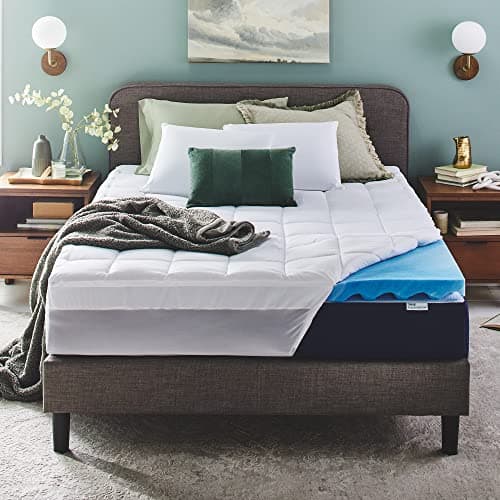 Sleep Innovations Dual Layer 4" Topper, Queen Four inches is the most foam here, and depth is a heavier body's first defense against bottoming out — the extra inch is the room your weight needs before it presses through to the hard bed underneath. The pick to start with if you're carrying real weight. Best for: Best overall for heavy people | Best overall for heavy people | $139.99 · View on Amazon Price as of September 12, 2026. #ad — we earn a commission. |
| 2 | 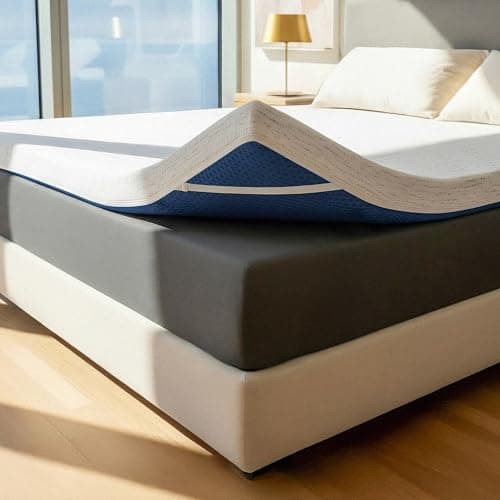 ViscoSoft 3" Select High Density Topper, Queen The one I'd buy if you want it to survive your weight for more than a season. Density is the whole game for a heavier sleeper: dense foam has more material to compress before it packs flat, so it keeps cushioning where a cheaper foam has already surrendered. Best for: Best density — the one that lasts under load | Best density — the one that lasts under load | $179.95 · View on Amazon Price as of September 12, 2026. #ad — we earn a commission. |
| 3 | 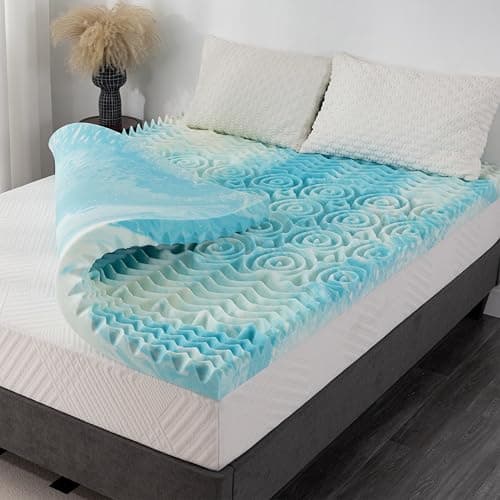 MLILY 3" Gel Memory Foam Egg Crate Topper, 5 Zones, Queen Zoned foam is cut firmer under the hips and softer under the shoulders, which is the profile a heavier side sleeper needs most — the heavy pelvis is exactly the part most likely to sink past level, and the firmer hip zone is an honest attempt to hold it. Best for: Heavier side sleepers who need the hips held | Heavier side sleepers who need the hips held | |
| 4 | 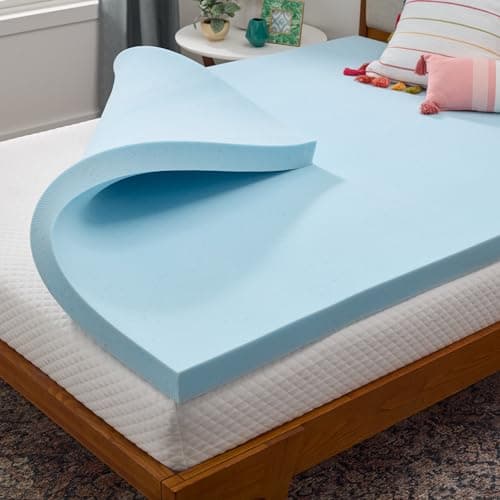 Linenspa 3" Gel Infused Memory Foam Topper, Queen The plainest, cheapest way to soften a bed that's genuinely too firm, and a sound pick at the lighter end of heavy. Three inches of plush foam is the right dose if you're not carrying so much weight that you'd press straight through it. Best for: Softening a too-firm bed (lighter end of heavy) | Softening a too-firm bed (lighter end of heavy) | $89.99 · View on Amazon Price as of September 12, 2026. #ad — we earn a commission. |
| 5 | 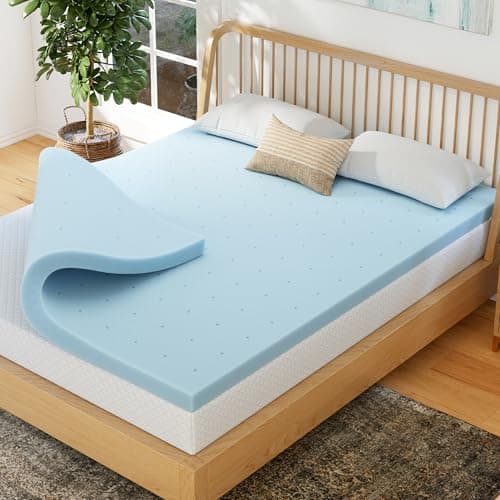 EGOHOME 3" Gel Memory Foam Topper, Queen The cheapest way to answer the only question that matters before you spend properly: does adding foam actually fix your bed, or is your bed the wrong bed for your weight? Buy it to learn that, not to keep it. Best for: Testing the idea cheaply first | Testing the idea cheaply first | |
| 6 | 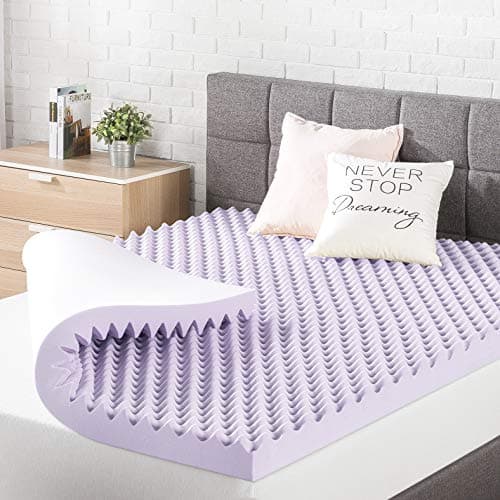 Best Price Mattress 3" Egg Crate Topper, Queen Here for one reason only: heat. The convoluted surface leaves real air channels, which is the only honest cooling feature on the page. But channels mean less foam, and less foam is the last thing a heavier body wants under it — buy this for the heat, knowing the trade. Best for: Hot sleepers, weight permitting | Hot sleepers, weight permitting | $71.49 · View on Amazon Price as of September 12, 2026. #ad — we earn a commission. |
Why a heavier body needs a different topper
Start with the physics, because it decides everything else on this page. A mattress topper is a layer of foam, and foam works by compressing under your weight and pushing back. A lighter person barely dents a three-inch topper — they float near the top of it, cushioned by foam that has plenty of give left. A heavier person presses that same foam much further down. Put enough weight on a thin or soft layer and you compress straight through it until there is no give left, and at that point you are lying on the hard mattress underneath with a flattened pad in between. This is what people mean when they buy a topper, feel nothing, and decide toppers are a con. The topper wasn't a con. It just ran out of foam before it ran out of you.
The word for that failure is bottoming out, and it is the single thing this whole page is built around avoiding. Everything a heavier sleeper should look for in a topper is really a way of buying more margin before bottoming out: more depth, so there is further to travel before you hit the bed, and more density, so there is more material packed into each inch to resist the squeeze. A topper that would transform a lighter person's bed can do nothing at all for a heavier one, not because it's a worse product but because it was never built for the load. Match the topper to the weight it has to carry and the same money buys a completely different result.
That is the brief this page runs on, and it's a different brief from its neighbours. The general mattress topper guide ranks these same six by feel for every buyer; the side-sleeper cut ranks them plush-first; the back-pain cut ranks them support-first. Here they're re-ranked depth- and density-first, because for a heavier body those two properties are what separate a topper that works from one that vanishes under you.
Read this first: what a topper can and can't do under weight
Before you buy anything, be honest about which problem you actually have, because a topper only solves one of them and heavier weight narrows the list further. A topper changes how a bed feels. It cannot change how a bed holds you up. There are three situations, and they end very differently.
Your bed is sound but too firm.This is the one a topper genuinely fixes. The support core holds your hips up fine, but the surface is too hard for your shoulder and hip to settle into. A thick, dense topper softens that surface, and for a heavier sleeper the emphasis is on thick and dense — enough foam that your weight doesn't press straight through to the hardness you were trying to escape. Buy the topper, keep the mattress.
Your bed sags.This is the one no topper can save, and it's the case a heavier body is most likely to be in, because weight is what wears a support core out in the first place. A sag is a hollow the surface no longer springs back from — a structural failure underneath. Lay a topper over it and the topper drapes into the hollow and follows its shape; your weight presses it straight down into the same trench. You sink into the same dip, only softer, and wake just as sore. Support comes from below, and a layer on top cannot rebuild it.
Your bed is already too soft under your weight.This is the trap people don't see coming. If a mattress is under-built for a heavier body, it lets the hips sink past the line of the spine — and a topper cannot fix that either, because adding a soft layer on top only lets you sink further, and even a firm topper can't add the deep structural support a too-soft core is missing. A firm topper can nudge a surface that's slightlytoo soft, but it can't rescue a bed that gives way under your weight from the core up.
There's a two-minute test that tells the fixable case from the two that aren't. Strip the bed and lay something rigid and straight across it — a broom handle, a spirit level, a length of timber — then look at the gap under it along the middle third, where you sleep. See daylight? That's a dip, and a dip is structural failure a topper won't reach; that bed needs replacing, and a mattress built for heavier bodies is where to look, because those are engineered with the support core and edge to carry the load. Flat surface that's simply too hard? That's exactly what the picks below are for. Our guide on making a mattress firmer or softer walks through both directions in more detail.
Criterion one: thickness — favor four inches
Depth is the first line of defense against bottoming out, and it matters more for a heavier body than for anyone else, because you compress every layer further than a lighter sleeper does. The question is simple: is there enough foam that your weight runs out of you before it runs out of topper?
Two inches almost never is. There isn't enough material to get between a heavier body and a hard mattress; you compress through it to the surface underneath, which is the surface you were trying to escape. Three inches is the working minimum, and it's enough for the lighter end of heavy on a bed that's only mildly too firm. Four inches is where a heavier sleeper gets real margin, and it's why the dual-layer Sleep Innovations leads this page: the extra inch is the room your weight needs before it reaches the bed, and the two-layer build carries the load in the base while softening the surface up top.
But depth is not a free win, and the honest catch is the reason this page isn't simply "buy the thickest one." Every inch of soft foam is another inch of distance between your body and the support core that keeps your spine in line — and the heavier you are, the more a thick, soft layer lets your hips settle below the rest of you. So depth cuts both ways: it protects you from bottoming out and it exposes you to sinking. A heavier side sleeper, who wants the shoulder and hip to sink, benefits most from four inches. A heavier back sleeper, who needs the hips held level, is often better served by three inches of dense foam than four inches of soft foam. Match the depth to how you sleep, not just to your weight.
Criterion two: density is the spec that actually decides it
Thickness is what gets advertised. Density is what determines whether the thing survives your weight, and for a heavier body it is the most important spec on the page — more important than the extra inch. Density is how much actual foam is packed into a given volume. Dense foam has more material in the same space, so there is more of it to compress before you bottom out, and it springs back to shape instead of taking a permanent dent. Cheap foam is cheap because it's aerated — less material, same size — and less material is exactly what a heavier body flattens into a body-shaped trench, recreating the sag you may have been trying to escape.
Two toppers can feel identical in the first minute and behave completely differently in month six under real weight, and the difference is density. The frustration is that almost no listing prints a number. What you get is a signal: brands that care about density say so in the title, because they know it's the expensive part and the reason to pay more. That's why the ViscoSoft leads with "high density" while the budget picks lead with thickness and cooling. It's a claim rather than a measurement, and it's the best you're going to get — but for a heavier body it's the claim worth paying for.
The corollary is worth being blunt about, because it's where a heavier sleeper wastes money. The cheapest topper here is the least dense one, and the least dense one is the first to pack flat under load. As a cheap test purchase — does adding foam fix my bed at all? — the budget EGOHOME is excellent, and I've ranked it as exactly that. As a long-term buy for a heavier body, low density is precisely the wrong property, and paying twice is more expensive than paying once for the dense one. The one certification worth reading, CertiPUR-US, appears on most picks here; it tells you what the foam is made of and what it emits, not how dense or durable it is. It's a floor, not a ceiling.
Criterion three: material — dense memory foam or latex
Every pick on this page is polyurethane memory foam, because that's what the value end of the market sells and it's genuinely good at softening a too-firm bed. Memory foam contours: it molds to your shape and fills the gaps. Its honest weaknesses matter more under weight — it insulates and sleeps warm, and the cheaper it is, the faster a heavier body packs it down. That's why, within memory foam, density is the spec that separates the pick that lasts from the one that dents.
Latex is the other material worth knowing about, and for a heavier body it's the more durable choice in principle. It's denser and springier by nature — it pushes back rather than swallowing you, resists permanent compression, and a firm latex topper adds a genuinely supportive surface rather than a plush one, which is often closer to what a heavier sleeper actually needs. The catch is real and it's why latex isn't among the value picks here: it costs several times what these foam toppers do and is heavy enough to need two people to handle. If your budget can stretch and you want the layer to survive your weight for years, a firm latex topper is the material to look for. If you're buying foam, buy the densest foam you can, and buy enough of it.
A word on edges — and what a topper can't do there
Heavier sleepers care about edge support more than most, because the perimeter of the bed is where you sit to put your shoes on and where you push off to stand up, and a collapsing edge makes both harder and can make you feel like you'll roll off. It's worth setting the expectation honestly: a topper does almost nothing for edge support, and can slightly work against it. A topper is a loose layer laid over the whole surface, so at the edge it has nothing firm to sit against — a soft foam layer at the perimeter compresses under you and can feel less secure, not more. Edge support is a property of the mattress's core and its perimeter build, not of anything you lay on top. If a soft or collapsing edge is a real problem for you, that's another sign the fix is the bed itself, and the mattresses built for heavier bodies are where reinforced edges actually live.
What I can't measure
The honesty this site runs on: I haven't slept on all six of these, I don't run a test lab, and I own no rig to measure how far a given body sinks into a topper or a durometer to verify a foam's density. So I can't hand you a measured firmness number, a lab-verified density in lbs/ft3, or a sink depth for your exact weight, and where a spec above says "as listed," that means it's the seller's claim repeated, not confirmed. Anyone selling you precise numbers for how a stack of toppers bought online performs under a heavier body is inventing them.
What I can do is reason from construction, and for a heavier body the construction tells you most of what matters. More depth gives your weight further to travel before it bottoms out; more density gives it more material to compress before it packs flat; a dense three inches often supports a heavier back sleeper better than a soft four; convoluted foam has less material than a solid slab and so bottoms out fastest; and no topper, at any thickness or density, rebuilds a support core that has already collapsed under the weight it was never built for. None of that is a reading off a machine — it's how the materials behave under load, and it's more honest than a number I'd have to fabricate.
And the line that matters most: a topper is a comfort adjustment, not a treatment and not a substitute for a bed that fits you. It can bring a too-firm surface back toward the give a heavier body needs, and for a lot of people that's genuinely enough. But it changes a mattress, not a body, and it can't carry a load the bed underneath was never built to carry. If your bed sags under you, or your pain doesn't track with the state of the mattress at all, that's a sign to replace the bed or to ask a doctor — not to add another layer on top.
The commission, said plainly
We earn an Amazon commission if you buy through the links here, and that funds the site. It's worth being blunt about the conflict, because this page spends a good deal of its length telling some of you to buy nothing at all — to skip the topper and replace a bed that sags under you or was never built for your weight. We make considerably more when someone buys a mattress than a topper, so that advice runs toward the more profitable outcome, which is uncomfortable but true. Where it runs the other way — the heavier reader whose bed is merely too firm, who should keep a sound mattress and spend a little on the right thick, dense foam — we'll tell you that too, because a site that can't say "buy the cheap thing" isn't worth reading on the expensive ones. No brand sees any of this before it publishes.
The picks, in full
1. Best for Best overall for heavy people
Sleep Innovations Dual Layer 4" Topper, Queen
Four inches is the most foam here, and depth is a heavier body's first defense against bottoming out — the extra inch is the room your weight needs before it presses through to the hard bed underneath. The pick to start with if you're carrying real weight.
Price as of September 12, 2026. #ad — we earn a commission.
Key specs
- 4" total, dual layer
- 3" cooling gel memory foam base
- 1" fluffy pillow-top cover
- Ultra soft support (as listed)
What's good
- Four inches in two layers is the deepest build on the page, and depth is exactly what a heavier body runs out of first — a lighter sleeper barely dents a 3" topper, but more weight compresses foam further, so the extra inch is the margin that keeps you off the hard surface beneath
- The dual construction does two jobs a single slab can't: the memory foam base carries the load and contours while the pillow-top layer adds initial softness, so the surface doesn't feel like a thin skin stretched tight over a hard bed
- For a genuinely plank-hard mattress, the milder 3" toppers can under-shoot for a heavier person and leave you compressing straight through — this one has the depth to actually put foam between you and the surface
What's not
- Soft is a double-edged property under weight: four inches of plush foam lets a heavier back sleeper's hips settle deeper than the rest of them, and hips dropping below the line of the spine is the classic way to wake up sore — depth helps against bottoming out and hurts against sinking
- It's the heaviest layer here to handle, which matters more than usual when the mattress under it is already a two-person job, and getting a fitted sheet over a bed plus four inches is a real wrestle
- Two layers of foam is two layers of insulation — the warmest pick on the page, and a heavier body already sleeps warmer against foam, not cooler
Skip this one if
You're a heavier back sleeper whose real need is support, not cushioning. Four inches of soft foam lets the hips sink past level under load — you want the denser, firmer ViscoSoft, or a firmer bed, not more plush depth. Read the soft-versus-firm note on this page before you decide.
2. Best for Best density — the one that lasts under load
ViscoSoft 3" Select High Density Topper, Queen
The one I'd buy if you want it to survive your weight for more than a season. Density is the whole game for a heavier sleeper: dense foam has more material to compress before it packs flat, so it keeps cushioning where a cheaper foam has already surrendered.
Price as of September 12, 2026. #ad — we earn a commission.
Key specs
- 3" high-density memory foam
- Ventilated
- Premium removable rayon cover
- Queen
What's good
- High density is the single most important spec for a heavier body, and it's the one this listing leads with: dense foam packs more material into the same three inches, so there's more of it to compress before you reach the bottom — a light foam that feels identical in the shop is the first to develop a permanent body-shaped trench under load
- The cover comes off and washes, which decides whether you still like a topper in year two rather than replacing it — and a heavier body works a foam surface harder, so the year-two question arrives sooner
- Ventilated construction means the foam is perforated rather than a solid slab, which is the only thing that lets air move through it at all — worth having when a heavier sleeper is already fighting a foam layer's heat
What's not
- It's the most expensive topper here by a distance, and for a heavier sleeper there's a real question of whether the money is better spent on a mattress built for the weight than on a dense patch laid over one that isn't
- "High density" is the seller's phrase — they lead with it, which is the signal you want, but the listing gives you the claim rather than a number in lbs/ft3 to check against
- It's still three inches, so for a much heavier body a genuinely plank-hard bed can still be felt through it — if bottoming out is the problem, the four-inch Sleep Innovations has more depth to give
Skip this one if
You just want to find out whether a topper fixes your bed before you spend properly. Buy the cheap EGOHOME, learn the answer for a fraction of the money, and come back for the ViscoSoft once you know you're keeping it.
3. Best for Heavier side sleepers who need the hips held
MLILY 3" Gel Memory Foam Egg Crate Topper, 5 Zones, Queen
Zoned foam is cut firmer under the hips and softer under the shoulders, which is the profile a heavier side sleeper needs most — the heavy pelvis is exactly the part most likely to sink past level, and the firmer hip zone is an honest attempt to hold it.
Key specs
- 3" gel memory foam, 60 x 80 in queen (as listed)
- 5 zones (as listed)
- Cooling gel infusion (as listed)
- Egg-crate convoluted surface (as listed)
- CertiPUR-US certified foam (as listed)
What's good
- Zoning means the foam is physically cut to different firmnesses along its length, so the region under your hips resists more than the region under your shoulder — that's the shape that matters most under weight, because a heavier pelvis is the part that drops out of line first
- For a heavier side sleeper it's a genuine two-birds pick: the softer shoulder zone lets a broad shoulder settle in while the firmer hip zone fights the very sink that a plain plush slab would let run away — one uniform layer can't do both at once
- An egg-crate surface on top of the zoning is a second, separate mechanism: the convoluted peaks and valleys leave air channels through the foam, which matters more under a heavier sleeper who compresses it further
What's not
- Zoning is a modest effect, not a different category of product — a real difference from a flat slab, but don't expect a heavier body to feel five distinct zones snap into place beneath it
- The zones are cut for an assumed body length and layout, so if you sleep diagonally or sit notably tall or short, the firmer hip zone isn't under your hips — which is where its whole argument for a heavier sleeper lives
- It's still only three inches of foam, so a much heavier sleeper can compress through even the firmer zones to the bed beneath — zoning changes where the foam is firm, not how much foam there is
Skip this one if
You sleep on your back or your front, or you're heavy enough that 3" bottoms out. The zones are cut for a side sleeper's shoulder-and-hip shape; a back or stomach sleeper wants even support down the whole spine, and a much heavier body wants the depth of the four-inch Sleep Innovations or the density of the ViscoSoft.
4. Best for Softening a too-firm bed (lighter end of heavy)
Linenspa 3" Gel Infused Memory Foam Topper, Queen
The plainest, cheapest way to soften a bed that's genuinely too firm, and a sound pick at the lighter end of heavy. Three inches of plush foam is the right dose if you're not carrying so much weight that you'd press straight through it.
Price as of September 12, 2026. #ad — we earn a commission.
Key specs
- 3" gel-infused memory foam
- Plush feel (as listed)
- CertiPUR-US certified foam
- Queen
What's good
- Three inches of plush foam genuinely fixes the most common complaint — a bed that supports you fine but is simply too hard on the shoulder and hip — and at the lighter end of heavy that's enough depth to settle into without hitting bottom
- Linenspa has sold this line for years, so the listing is stable and the thing arrives looking like the photo, which matters when you're buying a specific soft feel to solve a specific problem
- CertiPUR-US certified, one of the few checkable facts on any foam listing — it covers what the foam is made of and what it emits, and it costs the brand real money to carry
What's not
- Plush is the only feel it comes in, and plush is precisely the feel a heavier body compresses fastest — the more weight you put on it, the more likely you are to pack it flat and feel the mattress through it
- There's no density claim on the listing at all, so at the heavier end you're gambling on how much material is actually in those three inches — and material is exactly what stops a topper bottoming out under load
- No removable cover, so cleaning means spot-cleaning bare foam, and a topper that's awkward to keep clean is one you replace sooner than its foam is actually spent
Skip this one if
You're at the heavier end, or your bed is genuinely plank-hard. Three inches of undifferentiated plush foam is the pick most likely to bottom out under real weight — step up to the four-inch Sleep Innovations for depth, or the high-density ViscoSoft so there's more material to compress before you reach the bed.
5. Best for Testing the idea cheaply first
EGOHOME 3" Gel Memory Foam Topper, Queen
The cheapest way to answer the only question that matters before you spend properly: does adding foam actually fix your bed, or is your bed the wrong bed for your weight? Buy it to learn that, not to keep it.
Key specs
- 3" gel-infused memory foam
- Pressure relieving (as listed)
- CertiPUR-US certified foam
- Queen
What's good
- It's the least you can spend to find out whether a topper fixes what's wrong with your bed, or whether the mattress itself is simply under-built for your weight — a cheap, reversible experiment before an expensive commitment
- CertiPUR-US certified, genuinely reassuring at this price — the same certification the expensive picks carry, covering what the foam is and what it emits
- Three inches at this outlay is more foam-per-dollar than anything else here, which makes it an honest test purchase even though it's the wrong long-term buy for a heavier body
What's not
- Cheap foam is cheap because it's less dense, and low density is the exact property that fails a heavier body — it's the first here to compress flat, develop a permanent dent, and start letting you feel the bed through it
- EGOHOME is an Amazon-native brand with no showroom and no long trading record to lean on, so there's no track history on how its foam holds up under sustained weight
- No removable cover, and the cooling language does the same light work it does on every foam listing — expect it to sleep like foam, which is to say warm, and warmer still under a heavier body
Skip this one if
You already know you want a topper and you're keeping it for years, or you're at the heavier end of the scale. Cheap, low-density foam is the fastest to bottom out and dent under load — pay up for the high-density ViscoSoft or the deeper Sleep Innovations instead of buying this twice.
6. Best for Hot sleepers, weight permitting
Best Price Mattress 3" Egg Crate Topper, Queen
Here for one reason only: heat. The convoluted surface leaves real air channels, which is the only honest cooling feature on the page. But channels mean less foam, and less foam is the last thing a heavier body wants under it — buy this for the heat, knowing the trade.
Price as of September 12, 2026. #ad — we earn a commission.
Key specs
- 3" egg crate (convoluted) foam
- Lavender infusion
- CertiPUR-US certified foam
- Queen
What's good
- Egg crate is channels, not texture — the peaks and valleys leave physical air gaps between you and the slab, and air moving through a gap is the only cooling that doesn't saturate after an hour, which matters because a heavier body already sleeps warmer against foam
- Less foam touches you overall, so less material holds heat against you — the same reason a slatted bench sleeps cooler than a solid one
- The cheapest way to add a cooling-shaped foam layer to your bed without dropping to a no-name brand
What's not
- This is the honest problem for a heavier body: convoluted foam has less material in it than a solid slab of the same nominal height, so it compresses further and bottoms out faster under weight — the 3" figure overstates how much cushioning is really there for you
- Egg crate flattens under a fitted sheet over time, and it goes fastest under a heavier load — flattened egg crate is a thin slab with a bumpy surface and none of the depth you bought it for
- The lavender infusion is a scent claim, not a sleep feature; it fades, and if you dislike it you can't remove it
Skip this one if
Heat isn't your main problem, or you're at the heavier end. The channels cost you the very cushioning depth a heavier body needs most — if you just want a too-firm bed to feel softer under weight, the solid 3" Linenspa gives you more foam, and the 4" Sleep Innovations gives you more still.
Common questions
What thickness and density of topper does a heavier person need?
Favor more of both than a lighter sleeper would. On thickness, three inches is the floor and four is often the better call: a heavier body compresses foam further, so a thin topper packs flat and you press through to the mattress underneath, which is the failure people mean when they say a topper 'did nothing.' Depth is your margin before that happens. On density, it matters even more than thickness, because density is how much actual material is in the foam — dense foam has more of it to compress before it bottoms out, and it springs back instead of taking a permanent dent under repeated load. The frustration is that almost no listing prints a density number, so you read the signal instead: brands that care about density say so in the title, which is why the ViscoSoft leads with 'high density' while the budget picks lead with thickness and cooling. If you're carrying real weight, buy for depth and density together, not for the lowest price or the softest feel.
Will a mattress topper fix a sagging bed under a heavier body?
No, and this is the single most important thing to know before you spend anything — it's doubly true under more weight. A topper is soft material laid on top of your mattress; it has no structure of its own and isn't attached to anything, so it takes the shape of whatever is underneath it. Lay one over a dip and it drapes into the dip, and you sink into the same trench, just on a softer surface. A heavier body makes this worse, not better, because your weight is what created the sag in the first place and it will press the topper straight down into the same hollow. Sag is a failure of the support core, and support has to come from underneath. If you can lay a straightedge across your bed and see daylight under the middle where you sleep, that mattress needs replacing, not a topper — a bed built for heavier weight is the real fix.
Should a heavier sleeper get a soft or a firm topper?
It depends on your position and on what your bed is doing wrong, and the two answers pull in opposite directions. If your bed is genuinely too firm and you sleep on your side, you want a plush, deep topper so your shoulder and hip can sink in — but deep and dense, not thin and soft, or your weight compresses it flat. If you sleep on your back or your stomach, or your hips already sink too far, softness is the wrong direction: a plush topper under a heavier back sleeper lets the pelvis settle below the line of the spine, which is the classic way to wake up sore. There you want a denser, firmer layer that resists the sink, or a firmer bed. Two things stay constant whatever your position: buy for enough depth and density that you don't bottom out, and don't buy softness to fix a support problem — softness changes how a bed feels, not how it holds you up.
Is memory foam or latex better for a heavier person?
Both can work, and the honest answer is that latex is the more durable material under sustained weight while memory foam is the cheaper and more widely available one. Latex is denser and springier by nature: it pushes back rather than swallowing you, it resists permanent compression, and a firm latex topper adds a genuinely supportive surface rather than a plush one — which is often what a heavier body actually needs. The catch is real: latex costs several times what these foam toppers do and is heavy enough to need two people to handle. Memory foam is what the value end of the market sells, and it's good at softening a too-firm bed, but under heavier load the cheaper, less dense foams pack down fastest — which is why, if you're buying foam, density is the spec to chase. Every pick on this page is memory foam because that's where the value is; if your budget can stretch and durability under weight is the priority, a firm latex topper is the material to look for.
Do you earn a commission on these recommendations?
Yes — we earn an Amazon commission if you buy through our links, and that funds the site. It's worth being blunt about the conflict, because we make considerably more when someone replaces a mattress than when they buy a topper. That cuts both ways on this page: we tell the reader whose bed is merely too firm to keep a sound mattress and spend a little on the right thick, dense foam, and we tell the reader with a sagging bed — or a mattress simply under-built for their weight — to replace it, which is the more profitable call for us but also the honest one, because no topper reaches a collapsed core. We take no free products, sell no placement, and no brand sees this page before it publishes.
Sources
Where the facts on this page come from. We cite other people's testing because we don't do our own — here's what that means.
Read next
- The Best Mattress ToppersSix mattress toppers worth buying, and the simple test that tells you whether a topper will fix your bed or waste your money.
- The Best Mattress Toppers for Back PainSix mattress toppers that can ease back pain by matching the surface to your problem — softening a too-firm bed or firming a slightly-too-soft one — plus the honest limit that no topper fixes a sagging mattress, with cons and a skip note on every pick.
- The Best Mattresses for Heavy PeopleSix coil-based mattresses built to hold a heavier body up, with published specs and an honest note on who each one is wrong for.
- How to Choose a Mattress TopperChoose a topper by spec: name the problem first, then match material, thickness, and density to it — with the honest caveat that a topper changes feel, not support.
- How to Make a Mattress Firmer or SofterHow to soften or firm up a mattress that feels off — toppers, bases, temperature, and the honest limits of each fix before you're better off using the sleep trial.
- Do You Need a Mattress Topper?The honest decision guide: the four times a mattress topper is exactly the right fix, the two times it's a waste of money, and a 60-second test to tell them apart.