DreamCloud vs Casper
Two well-known online mattresses, both hybrids with foam over a coil core, that shoppers weigh against each other constantly. The differences that actually decide it aren't subtle: DreamCloud states a full 365-night trial and a plush-leaning "luxe" feel, while Casper runs a 100-night trial and zones its support — firmer under the hips, softer under the shoulders. This is where you find out which of those matters to you.
We earn a commission if you buy through our links. It doesn't affect our picks — and we never take free products. How this site is funded.
Quick picks
| # | Product | Best for | Price |
|---|---|---|---|
| 1 | 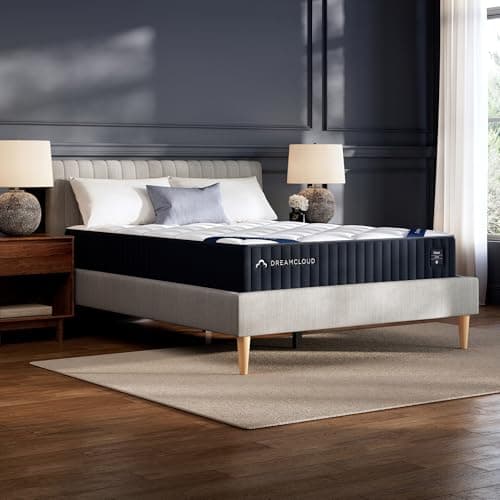 DreamCloud 12" Hybrid A taller, plush-leaning luxe hybrid backed by a stated 365-night trial — a full year to decide at home instead of three months. If you want a softer medium-firm feel and the longest window to change your mind, this is the honest pick. Best for: More bed, a full-year trial | More bed, a full-year trial | $699.00 · View on Amazon Price as of September 10, 2026. #ad — we earn a commission. |
| 2 | 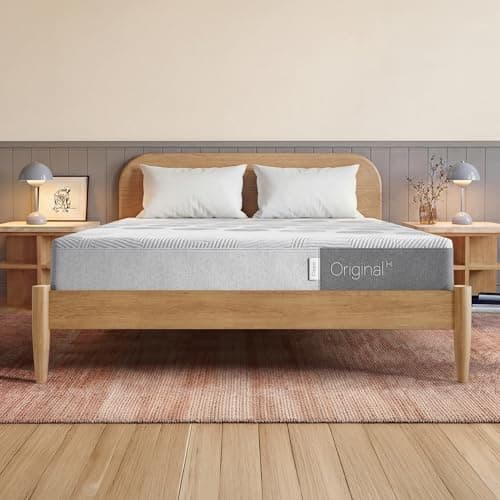 Casper Original Hybrid The same hybrid idea, but the support foam is zoned — firmer under the hips and waist, softer under the shoulders — and the listing calls out motion isolation. Buy it when you want the bed to hold your midsection up and stay still when a partner moves. Best for: Zoned support & motion isolation | Zoned support & motion isolation | $1,196.00 · View on Amazon $1,495.0020% off Price as of September 10, 2026. #ad — we earn a commission. |
Why these two, and why it's a fair fight
DreamCloud and Casper are two of the established names in the bed-in-a-box world, and if you start shopping for a mattress online you will end up weighing them against each other within a few minutes. They advertise in the same places, they turn up in the same searches, and they sit in the same mental slot — the reasonable, well-known online mattress that isn't a bargain-bin foam slab and isn't a five-figure luxury build. So people cross-shop them constantly and then can't find a straight answer, because most comparisons either pick a winner on a "feel" they claim to have tested or treat the two brands as interchangeable.
We're doing neither. We haven't slept on these side by side and we're not going to pretend we scored them — everything below comes from what each brand's own Amazon listing states about how the bed is built and what it promises. And on those terms this is a genuinely fair fight in one important sense: both beds here are hybrids, a comfort layer of foam sitting on a core of coils. That strips away the foam-versus-coil argument entirely and leaves the differences that actually matter here: how long you get to decide, how each bed chooses to support you, and what you pay.
The first real difference: a year to decide versus a hundred nights
Start with the one that's easiest to state and hardest to overvalue, because most people undervalue it. DreamCloud's listing states a 365-night trial. Casper's states a 100-night trial. That's a full year against a bit over three months.
A mattress is the one big purchase you genuinely cannot judge in advance. You can't tell from a showroom lie-down, and you certainly can't tell from a first night at home — foam and coils take time to break in, your body takes time to adapt, and the morning back or shoulder complaints that decide whether a bed is right for you often don't show up for a couple of weeks. A trial exists precisely so you can find that out at home. So the length of the trial isn't a marketing throw-in; it's the amount of real evidence you get to gather before the window closes. A hundred nights is generous by industry standards and plenty of time for most people. A full year is simply more margin — more room to be sure, and more room to send it back if you're not. If you tend to second-guess big purchases, that gap is worth real money to you. Trial terms can change, so confirm the current window on each listing before you buy.
The second real difference: plush luxe feel versus zoned support
Here is the distinction that should decide the actual sleep experience. DreamCloud describes a plush-leaning medium-firm "luxe" build — memory foam over the coils, taller at 12 inches, cushioned and made to be sunk into. Casper zones its support: firmer under the hips and waist, softer under the shoulders.
DreamCloud's memory-foam comfort layer is built to cradle. It gives under pressure and cushions the points that dig in — shoulders and hips — so the appeal is the soft, enveloping, settle-in feel that plush-bed fans specifically want. What you give up is targeting: a plush medium-firm surface treats your midsection much the same as the rest of you, so if your pelvis is heavy and needs holding up, a soft surface is working against you rather than for you.
Casper takes the other route. The support under the coils, and the transition foam, is built firmer in the middle third of the bed and softer up at the shoulders. The reasoning is real: your hips and waist are the heaviest part of your body, so a firmer band there is meant to stop the pelvis from sinking and dragging your lower back out of a neutral line — while the softer shoulder zone lets a side sleeper's shoulder press in without being propped up. It's a legitimate engineering idea, and Casper's listing also states motion isolation, which is a point in its favor for couples. The honest caveat is that some sleepers can feel the seams of it — a bed that changes firmness underneath you reads as "engineered" rather than natural, and the benefit assumes your body lands roughly where the zones expect it to. If you shift around all night, you spend part of it off the zones.
What that means for your body and position
Firmness and support aren't fixed properties of a mattress; they're a relationship between the bed and the body on it. The same medium hybrid reads differently to a 130 lb sleeper and a 230 lb one, and your sleeping position shifts it again. Our firmness guide takes that apart in full, but the practical version for these two beds is short.
If you sleep on your back and especially if you carry weight in your hips, the thing that most often goes wrong is that your pelvis sinks and your lower back arches — and that's the exact problem Casper's firmer hip zone is built to solve, in a way a plush surface isn't. If you sleep on your side, it's more of a toss-up: Casper's softer shoulder zone is aimed at you, while DreamCloud's plush luxe surface offers more all-over pressure-relieving cushion at both the shoulder and the hip. And if you simply want a soft, cushioned bed to sink into with no regions to think about, DreamCloud's plush medium-firm feel is the point. Neither of these is a medical device, and neither of us can tell you your spine is aligned from a listing — but the design intent each brand states is a real signal about who each bed is for.
Price, trial and availability
DreamCloud generally sits at a lower price point than Casper for a comparable-height hybrid, though both discount and the gap moves around, so the live prices in the picks above will tell you the current spread better than a sentence written today. Put the two levers together and the pattern is clear: DreamCloud tends to give you more bed — taller, plusher — a longer stated trial, and a lower price, while Casper asks for more money in exchange for the zoned support and the stated motion isolation. Neither of those is automatically the "right" trade; it depends on whether targeted support or cushioned value is what you actually want. Availability on both can also vary by size and by season; a bed that's in stock and shipping today is worth more than one that's theoretically a little better but backordered.
What the listings don't tell you
Being honest cuts both ways, so here's what these Amazon listings don't commit to in a way we'd stake a recommendation on. The DreamCloud listing here doesn't state a foam certification or a motion-isolation claim, where Casper's states both CertiPUR-US and motion isolation — so if a certified-foam mark or partner-motion behavior matters to you, confirm it on DreamCloud's current listing rather than assuming it. Neither listing publishes a coil count, a coil gauge, or the density of the comfort foam — the three numbers that actually predict how a hybrid holds up over years and how it handles a heavier body. Neither states edge support, which matters if you sit on the side of the bed to dress or sleep close to the perimeter. Wrapped coils as a category tend to isolate movement better than a connected innerspring, which helps couples on both beds — but that's a general property of the construction, not a claim about these two specifically beyond what Casper states.
We're flagging that rather than papering over it, because the whole point of this site is to not pretend we know things we don't. If any of those unstated details is a deal-breaker for you, the move is to check the current listing's full spec sheet and Q&A before you buy, or to lean on the trial — a trial exists precisely so you can find out at home what a listing won't tell you in advance, and DreamCloud's is a full year. Sleep on it a couple of weeks before you judge it; foam and coils both take time to break in, and first-night impressions of any mattress are usually wrong.
What the listings actually say, side by side
Taken from the brands' own Amazon listings. Where a listing doesn't state something, that's what the row says — we don't fill blanks on your behalf, and we haven't tested anything to fill them with.
| Attribute | DreamCloud 12" Hybrid | Casper Original Hybrid |
|---|---|---|
| Construction | Memory foam over an innerspring coil core (12") | Zoned support foam over coils |
| Feel / support style | Plush medium-firm "luxe" feel | Zoned: firmer hips, softer shoulders |
| Firmness (as listed) | Medium firm | Medium |
| Trial length | 365-night trial | 100-night trial |
| Motion isolation | Not stated | Stated |
| Foam certification | Not stated | CertiPUR-US (stated) |
| Price bracket | Lower of the two (qualitative) | Higher of the two (qualitative) |
The verdict, by who you actually are
Buy the DreamCloud if you want a plush feel and a full year to decide
If you want a taller, softer, sink-in bed and the longest possible window to make sure it's right, DreamCloud's 12-inch plush medium-firm luxe build and stated 365-night trial are exactly that. It also tends to be the more affordable of the two, so you generally get more bed and more trial for less. This is the pick for the sleeper who likes to be cradled, wants value, and would rather have a year than three months to be certain — just confirm the foam certification on the current listing if that matters to you, since it isn't stated the way Casper's is.
Buy the Casper if you're a back sleeper or carry weight in your hips
Here's the specific reason to spend up. If you sleep on your back, or your hips are the heaviest part of you and you wake with a sore lower back, Casper's firmer hip-and-waist zone is engineered for that problem in a way a plush surface isn't. The softer shoulder zone is a bonus if you also spend part of the night on your side, and the stated motion isolation helps if you share the bed. Just go in knowing that zoning is a designed feel some people love and some find artificial, that it's a medium rather than a plush build, and that the stated trial is 100 nights rather than a full year.
Look wider if neither quite fits
If you're cross-shopping these two against the other big bed-in-a-box names, the DreamCloud vs Nectar and Nectar vs Casper comparisons pick up where this one leaves off, and the Tuft & Needle vs Casper matchup covers a firmer, more neutral rival to Casper. For the full field, our best hybrid mattresses and best-on-Amazonroundups lay out the wider set. If you want to know why every product on this site carries a "skip this one if," that's here.
The picks, in full
1. Best for More bed, a full-year trial
DreamCloud 12" Hybrid
A taller, plush-leaning luxe hybrid backed by a stated 365-night trial — a full year to decide at home instead of three months. If you want a softer medium-firm feel and the longest window to change your mind, this is the honest pick.
Price as of September 10, 2026. #ad — we earn a commission.
Key specs
- 12" hybrid
- Memory foam over an innerspring coil core
- 365-night trial (as listed)
- Medium firm feel
- Queen
What's good
- The listing states a 365-night trial outright — a full year to judge a bed you can only really judge at home, which is roughly three and a half times the window Casper gives you and the single biggest thing in DreamCloud's favor here
- A 12-inch build with memory foam over a coil core gives the plush, cushioned "luxe" surface people who like to sink into a bed are usually after, rather than a firm, springy responsive feel
- It generally sits at a lower price point than Casper for a comparable-height hybrid, so you tend to get more bed and a longer trial for less — confirm the live price, but that is the usual pattern
What's not
- A plush medium-firm surface with a memory-foam comfort layer gives less of the targeted, hold-your-hips-up support that a zoned bed like Casper is engineered for, so heavier back sleepers may want firmer
- The listing here doesn't state a foam certification the way Casper's does, so if a CertiPUR-US mark is a must-have for you, confirm it on the current listing rather than assuming it
- Motion isolation isn't stated on this listing — wrapped coils as a category tend to isolate movement, but that's a property of the construction, not a promise this listing makes, so verify it if you share the bed
Skip this one if
You're a back sleeper who carries weight in the hips and wants the surface to be firmer right under the pelvis and softer at the shoulders. That targeted, position-specific support is exactly what Casper's zoning is built for, so buy that instead.
2. Best for Zoned support & motion isolation
Casper Original Hybrid
The same hybrid idea, but the support foam is zoned — firmer under the hips and waist, softer under the shoulders — and the listing calls out motion isolation. Buy it when you want the bed to hold your midsection up and stay still when a partner moves.
$1,495.0020% off
Price as of September 10, 2026. #ad — we earn a commission.
Key specs
- Hybrid: zoned support foam over coils
- Medium feel (as listed)
- Firmer under the hips, softer under the shoulders (as listed)
- 100-night trial (as listed)
- Motion isolation, CertiPUR-US (as listed)
What's good
- The zoned support is the whole reason to buy it — a firmer band under the hips and waist is designed to keep the heaviest part of your body from sinking, which is what back sleepers and heavier hips tend to want most
- Motion isolation and CertiPUR-US are both stated on the listing, so a couple sharing the bed and anyone who wants a certified-foam reassurance get those committed to in writing, not left as a question
- Softer foam under the shoulders is meant to let a side sleeper's shoulder settle in while the midsection stays supported, so a medium-feel bed tries to serve two positions at once
What's not
- The listing states a 100-night trial — generous by most standards, but a bit over three months next to DreamCloud's stated full year, and a bed is the one purchase you can only really judge over time
- Zoning is engineered, and some sleepers feel exactly that — a bed with distinct firmer and softer regions can read as "built" rather than one natural surface, and the benefit assumes your hips land on the firmer band
- Casper is typically positioned toward the pricier end of the two, and this is a medium-feel hybrid rather than a plush luxe build, so if you want to sink into a taller, softer bed it isn't aimed at you
- This is the previous generation. Casper's own lineup no longer includes the Original Hybrid — the Dream now sits in its place — so what this listing sells you is the outgoing model, and sizes will thin out as stock clears
Skip this one if
You want a plush, cushioned feel and the longest possible window to decide at home. DreamCloud's softer luxe build and stated 365-night trial give you both, so if a full year to change your mind and a more sink-in surface are what you're after, buy that instead.
Common questions
Is DreamCloud or Casper better?
Neither is better across the board — both are hybrids with foam over a coil core, and the right answer depends on what you want out of the bed. The three differences that actually decide it are trial length, feel and price. DreamCloud states a full 365-night trial, runs a plush-leaning medium-firm luxe feel, and generally sits at a lower price for a comparable-height hybrid. Casper states a 100-night trial, zones its support so it's firmer under the hips and softer under the shoulders, and calls out motion isolation and CertiPUR-US, though it tends to cost more. So if you want a softer, sink-in bed and the longest window to decide at home, DreamCloud. If you're a back sleeper or carry weight in your hips and want the middle held up with the support targeted by position, Casper's zoning is built for that. It's a fit question, not a quality one.
What is Casper's zoned support?
Zoned support means the support foam under the coils, or the transition foam, is not one uniform firmness — it's firmer in some areas and softer in others by design. On the Casper Original Hybrid the listing describes a firmer zone under the hips and waist and softer foam under the shoulders. The idea is that your midsection is the heaviest part of your body, so a firmer band there keeps your hips from sinking and dropping your spine out of alignment, while softer foam at the shoulders lets a side sleeper's shoulder settle in. It's a genuine engineering choice with a real rationale, but it's not magic: the benefit assumes you lie roughly where the zones expect, and some sleepers simply prefer one even surface. DreamCloud's listing describes a plush medium-firm luxe feel rather than a zoned one, which is the core of this comparison.
Which has the longer trial, DreamCloud or Casper?
DreamCloud, by a wide margin. Its listing states a 365-night trial — a full year — while Casper's states a 100-night trial, which is a bit over three months. That gap matters more for a mattress than for almost anything else you buy, because a bed is the one purchase you genuinely cannot judge in a store or on a first night. Foam and coils take time to break in, your body takes time to adapt, and morning back or shoulder complaints often only show up after a couple of weeks of real sleep. A longer trial means more room to find that out before the window closes and to return the bed if it doesn't work. A hundred nights is still generous by mattress-industry standards; a full year is simply more margin. Trial terms can change, so confirm the current window on each listing before you buy.
Are DreamCloud and Casper good for back or side sleepers?
It depends which one and which sleeper, and that's where they diverge. For a back sleeper — especially one who carries weight in the hips — Casper's zoned support is the more targeted choice, because the firmer band under the hips and waist is designed to stop the pelvis sinking and pulling the lower back out of neutral, a common source of morning back pain. DreamCloud's plush medium-firm luxe feel is more even and more cushioned, which some back sleepers like and some find too soft under the hips. For a side sleeper it's more of a toss-up: Casper's softer shoulder zone is aimed at you, while DreamCloud's plush surface offers more pressure-relieving cushion at the shoulder and hip. Neither is a medical device, and firmness is a relationship between the bed and your body weight rather than a fixed property — our firmness guide explains how to read that for your own frame before you commit.
Do you make money from these links?
Yes. We earn an Amazon commission if you buy through them, and that funds the site. We don't accept free products, we don't sell placement, and no brand sees a page before it publishes. There's no version of this comparison where steering you to one bed over the other pays us in a way that would change the advice — the pick genuinely comes down to whether you want DreamCloud's plush feel and full-year trial or Casper's zoned support and motion isolation. Availability and price on both can move around, so the live listing is the source of truth for what's actually in stock and what it costs today.
Sources
Where the facts on this page come from. We cite other people's testing because we don't do our own — here's what that means.
Read next
- DreamCloud vs SealyTwo coil-core hybrids from opposite worlds: the boxed DreamCloud with a stated 365-night trial and an online returns operation, against the legacy Sealy Posturepedic you can test in a store. Same category, different way to buy and be protected.
- Tuft & Needle vs DreamCloudTwo coil-core hybrids at different price tiers: Tuft & Needle keeps it lean, neutral and supportive; DreamCloud goes plusher with a 365-night trial and forever warranty. Which you buy depends on whether you value simplicity or plushness.
- DreamCloud vs NectarSame parent company, same trial, same warranty. The decision comes down to hybrid vs all-foam — here's which side you belong on.
- Nectar vs CasperCasper's listing sells motion isolation. Nectar's sells a 365-night trial and a forever warranty. Here's which promise is worth more.
- Tuft & Needle vs CasperTwo bed-in-a-box hybrids head to head: Tuft & Needle keeps a neutral, responsive single feel, Casper zones the support firmer under the hips and softer under the shoulders. Which you buy depends on how your body loads the bed.
- The Best Hybrid MattressesSix hybrid mattresses judged on what makes a coil core worth it over all-foam — airflow, edge support, responsiveness — with honest cons and a skip-this-one note on every pick.
- The Best Mattresses on AmazonSix Amazon mattresses worth your money, with live prices and an honest note on who each one is wrong for.