The Best Mattresses for Adjustable Beds
An adjustable base bends at the head and the knees, and the mattress on top has to bend with it or it cracks and gaps. These six all-foam and flexible thin-coil beds fold with the frame night after night — ranked for the base, with an honest note on who should skip each.
We earn a commission if you buy through our links. It doesn't affect our picks — and we never take free products. How this site is funded.
Quick picks
| # | Product | Best for | Price |
|---|---|---|---|
| 1 | 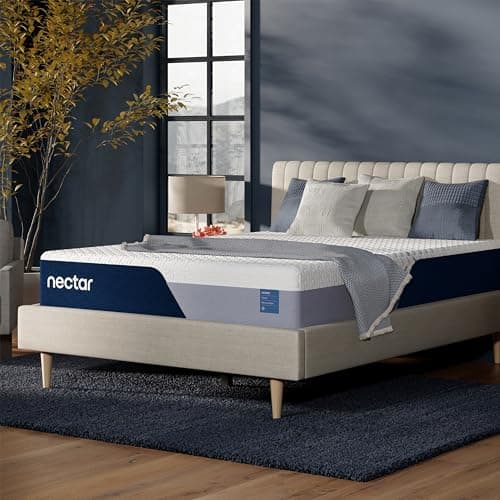 Nectar Classic 12" Queen All-foam, a moderate 12-inch height, and a year to change your mind. On a bed you'll be folding every night, foam that bends freely and a real trial are the two things that matter most. Best for: Best overall for an adjustable base | Best overall for an adjustable base | $699.00 · View on Amazon Price as of September 12, 2026. #ad — we earn a commission. |
| 2 | Zinus Green Tea 12" Memory Foam The cheapest known-quantity foam bed that still folds freely on a base. You're buying foam and only foam, which is exactly what an adjustable frame wants at the bottom of the market. Best for: Best on a budget | Best on a budget | Check price on Amazon → #ad — we earn a commission. |
| 3 | 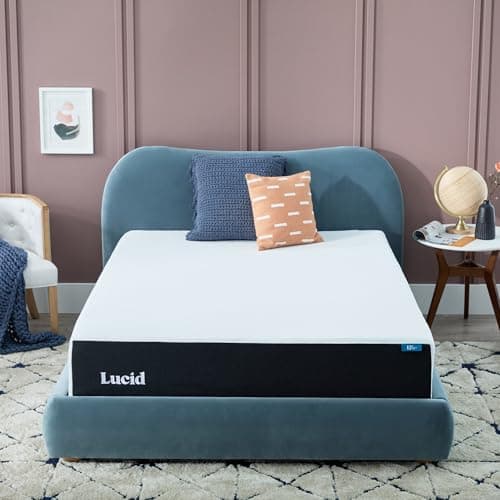 Lucid 12" Medium Firm Gel Memory Foam All-foam that bends cleanly and absorbs a partner's movement — the pick when one of you raises a side of the bed and the other would rather not feel it. Best for: Best for couples | Best for couples | $449.99 · View on Amazon Price as of September 12, 2026. #ad — we earn a commission. |
| 4 | Lucid 12" Plush Gel Memory Foam The softest and freest-bending pick here. Plush foam folds with the base with the least resistance of anything on this page, and lets a lighter shoulder sink. Best for: Best for lighter side sleepers | Best for lighter side sleepers | $449.99 · View on Amazon Price as of September 12, 2026. #ad — we earn a commission. |
| 5 | 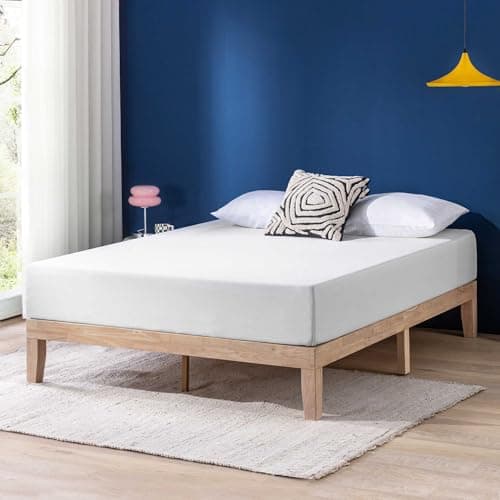 Best Price Mattress 10" Memory Foam The thinnest bed here, so it folds with the least strain on the hinge — the lowest-profile foam for a base, at the lowest sensible price. Best for: Lowest profile, easiest flex | Lowest profile, easiest flex | $172.36 · View on Amazon Price as of September 12, 2026. #ad — we earn a commission. |
| 6 | 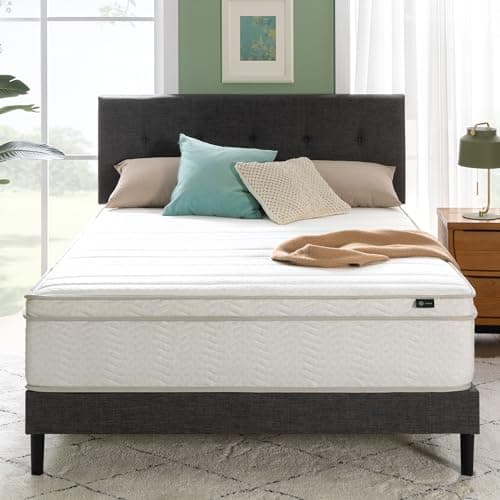 Zinus 12" Foam and Spring Hybrid The one hybrid here I'd actually put on a base — thin, flexible coils that bend where a stiff traditional innerspring would eventually crack. The honest caveat: hybrids are the risk group, and this is the exception, not the rule. Best for: Best flexible hybrid (with a caveat) | Best flexible hybrid (with a caveat) | $268.27 · View on Amazon Price as of September 12, 2026. #ad — we earn a commission. |
What an adjustable base actually does to a mattress
An adjustable base is a powered platform that bends. Press the remote and the section under your torso lifts, the section under your knees rises, and the mattress on top has to fold along with them — at the hip hinge and again behind the knees. That is the whole proposition, and it is also the whole problem. A mattress was, for a century, a thing designed to stay flat and rigid. Ask a bed built to stay flat to fold itself thousands of times and some of them break.
So the question that governs this entire page isn't "which mattress is most comfortable" — it's "which mattress bends with the base night after night without cracking, gapping, or sliding off the end." That is a question about construction, and construction is something you can read off a listing honestly without ever lying on the bed. The short version, which the rest of this page unpacks: solid foam bends freely and is the safe default; a hybrid with thin, flexible coils usually bends fine; and a thick, stiff, traditional innerspring is the one to keep away from a moving frame. Height matters too — a very tall bed strains the fold. Every pick here is an all-foam bed or a flexible thin-coil hybrid at a moderate height, chosen for exactly that reason. If you still need the base itself, our guide to adjustable bed bases covers how to choose one and match it to your frame.
The four things that decide whether a mattress survives a base
Get these four right and the marketing around them barely matters. They're listed roughly in order of importance:
- All-foam, or a flexible thin-coil hybrid.This is the whole game. Solid foam — memory foam or poly foam — has no rigid internal structure, so it folds with the base freely and forever; it's the construction adjustable-base makers assume you're using. A modern hybrid with a thin layer of individually pocketed coils bends nearly as well, because each little coil moves on its own. What fails is the old-style innerspring: a thick, one-piece, interconnected coil unit built to hold a flat plane. Fold it repeatedly and the steel fatigues and can crack. Between two beds you like, the one with no coils — or with thin, pocketed ones — is the safer bet on a base every time. We take the foam-versus-coil choice apart in memory foam vs hybrid.
- Moderate height — about 10 to 12 inches.The taller the bed, the more material there is to fold, and the harder it fights the hinge. A 14-inch-plus mattress resists the bend, can gap open at the head and knee joints, and puts extra stress on both itself and the base. Too thin is a different problem — below about 8 inches there isn't enough material for a comfort layer and a support core to do separate jobs — so the sweet spot is a genuine full-depth bed that is still moderate: 10 to 12 inches. Every flagship here sits in that band.
- No rigid perimeter or edge system. Some mattresses ring the coil unit with a stiff foam-encased border or a steel edge to stop you rolling off. That reinforced perimeter is precisely the part that refuses to bend, so on a base it fights the fold and wears at the corners. The all-foam beds here have no such structure, and the one hybrid uses a flexible build rather than a rigid cage.
- Pair the mattress to the base — and the base to your bed. The base does the bending, but you still have to set the system up right. You do not use a box spring — the base replaces it — and you want a retainer bar or bracket at the foot so the mattress can't creep off the end when the head is raised. Confirm the base fits your frame or stands on its own legs, and if a listing or a warranty says a specific mattress is or isn't rated for an adjustable frame, believe it. Our adjustable base guide walks through frame, headboard and retainer-bar fit.
Why all-foam is the safe default — and where a hybrid still earns its place
If you want to stop thinking about this the moment the bed arrives, buy all-foam. There is no internal structure to fatigue, nothing to crack, and no manufacturer caveat about articulating frames — foam is what the whole category was designed around. Four of the six picks here are solid foam for exactly that reason, and the Nectar at the top is the one I'd point most people at: a moderate 12-inch height, a genuine year-long trial, and a warranty long enough to matter on a bed you'll be flexing every night. If you want to understand why foam behaves the way it does — the slow sink, the heat, the clean fold — the memory foam explainer lays out the material properly.
The catch with all-foam is the one it always has: it insulates. Foam holds your body heat against you, and raising the head of the bed can trap a little more of it. That is where a hybrid earns a place on this page. A coil core is mostly open space, so air moves through it, and a raised head sleeps cooler on coils than on any foam bed. The trick is choosing a hybrid whose coils are thin and flexible enough to survive the fold — which is precisely the Zinus foam-and-spring hybrid here. It's the exception that proves the rule: a coil bed I'd actually put on a base, because its thin flexible spring layer bends where a thick traditional innerspring would eventually crack.
Read that as a genuine caveat, not a technicality. Hybrids as a category are the risk group on an adjustable frame, and even a flexible one is a compromise a base never asks of foam. If cooling isn't a dealbreaker for you, all-foam is the lower-risk answer and the cheaper one. If you run warm and want coils, buy the flexible hybrid with your eyes open, and confirm the listing or the base maker clears it for an articulating frame first.
The beds to keep off an adjustable base
Thick traditional innersprings.The classic mattress — a tall coil unit with the springs joined into one interconnected grid (a Bonnell or continuous-wire system) — is built to hold a flat plane and nothing else. An adjustable base asks it to fold at two points thousands of times, and the steel simply isn't made for that cycle. It can crack, it can develop noise, and doing it usually voids the mattress warranty. If your current bed is a traditional innerspring, don't assume it will survive a new base — that is the single most common way people ruin a mattress on an adjustable frame.
Very tall beds and stiff pillow-tops.Even a foam or flexible-hybrid bed becomes a problem when it's too tall. A 14-inch-plus mattress, or one with a thick, firm pillow-top layer, has so much material at the hinge that it resists the bend and can gap open at the fold, leaving a ridge under your hips or knees. Height is comfort up to a point and a liability past it — on a base, moderate wins.
The box spring.This one isn't a mattress, but it's the most common mistake: people set an adjustable base up and try to keep the box spring in the middle. A box spring is a rigid, flat foundation — it cannot bend, so it defeats the entire base. The mattress goes directly on the articulating platform. No box spring, ever.
Matching the picks to your body
Once you've narrowed to beds that bend, the usual mattress questions take over. Want the safest all-round choice with a year to change your mind? The Nectar. Spending as little as sensible? The Zinus Green Tea, the cheapest known quantity that still folds freely. Share the bed with someone restless? The medium-firm Lucid absorbs a partner's movement, and when one of you raises a side, foam passes less of that across. A lighter side sleeper who finds most beds too hard? The plush Lucid, the softest and freest-bending pick here. Want the thinnest, lowest-profile bed so the hinge has the least to fight? The 10-inch Best Price. And if you run hot and want coils, the Zinus foam-and-spring hybrid — with the caveat above. Adjustable bases are especially popular with older sleepers who want to read, elevate their legs, or ease breathing at night, so if that's the buyer, our mattresses for seniors page pairs naturally with this one.
What I can't measure
The honesty this site runs on: I haven't slept on these beds, I don't run a test lab, and I own no rig to fold a mattress ten thousand times and film what happens. So I can't hand you a fatigue-cycle count or a measured gap depth at the hinge, and where a spec above says "as listed," that is the seller's claim repeated, not something I confirmed. Anyone showing you a durability score for a specific mattress on a specific base, derived from a bed they bought online last week, is inventing it.
What I can do is reason from construction, and for this question construction tells you almost everything. Solid foam has nothing rigid inside to break, so it bends with a base freely — that is a property of the material, not a reading off a machine. A thin, pocketed coil layer flexes because each coil moves independently; a thick, welded innerspring cracks because it can't. A moderate-height bed folds where a very tall one gaps. None of that requires a lab; it requires knowing how the materials behave, and it's more honest than a number I'd have to fabricate. Every card above pairs that reasoning with a plain statement of who the bed is wrong for, and none of them claims the bed does anything for a medical condition — an adjustable base can make reading or resting more comfortable, but persistent pain is a conversation for a doctor, not a checkout page.
And since it's fair to ask: I earn an Amazon commission if you buy through the links here, and that's what funds the site. The rate is effectively the same across every mattress on this page, so there's nothing I make more by steering you toward — which is why the bed I point most people at first is one of the least expensive, and why every card tells you who should skip it. The base itself is a separate purchase, and I'd rather you get that pairing right than sell you a bed that won't survive it: the adjustable bed base guide covers choosing the frame, and the memory foam vs hybrid guide covers the one real trade-off — cooling versus zero-risk bending — that this whole page turns on.
The picks, in full
1. Best for Best overall for an adjustable base
Nectar Classic 12" Queen
All-foam, a moderate 12-inch height, and a year to change your mind. On a bed you'll be folding every night, foam that bends freely and a real trial are the two things that matter most.
Price as of September 12, 2026. #ad — we earn a commission.
Key specs
- 12" all-foam
- Medium firm (as listed)
- Contouring memory foam comfort layer
- 365-night trial
- Forever warranty
What's good
- All-foam, with no rigid coil layer to resist the fold — foam is the construction adjustable-base makers design around, so it hinges cleanly at the head and knees and keeps doing it for years
- Twelve inches is deep enough to sleep on nightly but not so tall that the bed fights the base at the fold — moderate height is exactly what an articulating frame wants
- A 365-night trial and a forever warranty, both as listed, count for more on a base you'll flex thousands of times — you get a year to confirm the pairing holds up
What's not
- All-foam insulates, so it runs warmer than a hybrid, and raising the head traps a little more heat against you
- "Medium firm" is Nectar's word, not a measurement — the fold behavior is about construction, but the feel is still a guess until you're on it
- You pay a premium over the budget foam beds below, and most of that is the trial and the warranty, not a better bend
Skip this one if
You sleep hot and won't compromise on it. This is a solid block of insulating foam, and an elevated head holds heat a little closer — take the flexible Zinus foam-and-spring hybrid below for a coil core that moves air, or read our memory foam vs hybrid guide first.
2. Best for Best on a budget
Zinus Green Tea 12" Memory Foam
The cheapest known-quantity foam bed that still folds freely on a base. You're buying foam and only foam, which is exactly what an adjustable frame wants at the bottom of the market.
#ad — we earn a commission.
Key specs
- 12" all-foam
- Medium firm (as listed)
- Green tea infused foam
- CertiPUR-US and Oeko-Tex certified (as listed)
- Queen
What's good
- All-foam, so it flexes with the base with no coil layer to fight the fold — the right construction for an articulating frame, at the cheapest price on this page
- Twelve inches is a genuine full-depth build, not a thin slab, yet still a moderate height that folds without straining the hinge
- States both CertiPUR-US and Oeko-Tex as listed, covering the foam chemistry and the textiles separately — most beds this cheap state one or neither
What's not
- All-foam insulates and there's no coil core to move air, so an elevated head can sleep warm
- No trial period stated on the listing, which stings more on a base you'll flex nightly — you're relying on Amazon's standard return window
- "Medium firm" is Zinus's own word with no scale behind it — treat it as a hint about intent, not a measurement
Skip this one if
You weigh much over 230 lb, or this is your main bed for the next decade. A budget foam bed fatigues fastest, and a base works it harder than a flat frame does — spend up to the Nectar above, or see our best-on-amazon roundup for a longer-lasting build.
3. Best for Best for couples
Lucid 12" Medium Firm Gel Memory Foam
All-foam that bends cleanly and absorbs a partner's movement — the pick when one of you raises a side of the bed and the other would rather not feel it.
Price as of September 12, 2026. #ad — we earn a commission.
Key specs
- 12" all-foam
- Medium firm (as listed)
- Gel memory foam
- Bamboo charcoal infused
- Fiberglass-free (as listed)
- CertiPUR-US certified
What's good
- Solid foam folds with the base and absorbs motion instead of passing it across, so a raised head on one side disturbs the other sleeper less than a coil bed would
- Medium firm as listed suits back sleepers on a base, and Lucid sells the same build in plush and firm if this feel turns out wrong for your body
- Fiberglass-free and CertiPUR-US certified, both stated on the listing — worth having and not a given at this price
What's not
- No coil core, so it runs warmer than a hybrid, and foam achieves support by being stiff rather than springing back
- Foam softens over years of use, and a base flexes the bed harder than a flat frame, so watch for early impressions
- "Medium firm" is Lucid's label, not a measurement
Skip this one if
You each want your own head and legs to move independently. That's a split-king base with two separate mattresses, not one queen — our adjustable base guide covers split setups.
4. Best for Best for lighter side sleepers
Lucid 12" Plush Gel Memory Foam
The softest and freest-bending pick here. Plush foam folds with the base with the least resistance of anything on this page, and lets a lighter shoulder sink.
Price as of September 12, 2026. #ad — we earn a commission.
Key specs
- 12" all-foam
- Plush (as listed)
- Gel memory foam
- Bamboo charcoal infused
- Fiberglass-free (as listed)
- CertiPUR-US certified
What's good
- Soft foam is the freest-bending construction on the page — a plush comfort layer folds with the base with the least resistance, and it lets a lighter side sleeper's shoulder and hip descend
- Lucid sells this same bed in plush, medium and firm, so you can match the feel to your body rather than accept one setting
- Fiberglass-free and CertiPUR-US certified, both stated on the listing, neither of which is standard at this price
What's not
- Plush gives way sooner under heavier loads, so a heavier body's hips drop past alignment — and a base amplifies where a bed already yields
- The bamboo charcoal infusion is an odor claim, not a performance one — it does nothing for your sleep
- No trial length or warranty term stated on the listing
Skip this one if
You weigh much over 130 lb, or you sleep on your back. Plush lets a heavier body or a flatter posture sink too far and bows the spine — take the medium-firm Lucid or the Nectar above.
5. Best for Lowest profile, easiest flex
Best Price Mattress 10" Memory Foam
The thinnest bed here, so it folds with the least strain on the hinge — the lowest-profile foam for a base, at the lowest sensible price.
Price as of September 12, 2026. #ad — we earn a commission.
Key specs
- 10" all-foam
- Medium firm (as listed)
- Cooling gel infused (as listed)
- Certified safe foams and fabric (as listed)
- Queen
What's good
- At 10 inches it's the thinnest bed here, which is the easiest profile for a base to fold — less material at the hinge means less resistance and less stress on the bed and the motors
- All-foam and medium firm as listed: a sensible feel with no coil layer to fight the fold
- States certified-safe foams and fabric as listed, more disclosure than most beds this cheap bother to print
What's not
- Ten inches of all-foam is a thin comfort layer over a thin core, so there's less material to split between cushioning and support than on the 12-inch beds above
- All-foam insulates, and the cooling gel slows the surface warming up without stopping it saturating partway through the night
- No stated trial length, and a thin budget foam bed fatigues fastest — a base works it harder still
Skip this one if
You weigh much over 200 lb, or you want your main bed to last a decade. A thin all-foam bed lets a heavier body bottom out and fatigues fastest — step up to a 12-inch build like the Nectar or Zinus above.
6. Best for Best flexible hybrid (with a caveat)
Zinus 12" Foam and Spring Hybrid
The one hybrid here I'd actually put on a base — thin, flexible coils that bend where a stiff traditional innerspring would eventually crack. The honest caveat: hybrids are the risk group, and this is the exception, not the rule.
Price as of September 12, 2026. #ad — we earn a commission.
Key specs
- 12" hybrid
- Medium firmness (as listed)
- Foam over springs
- Fiberglass-free (as listed)
- Certified safe foams and fabric (as listed)
What's good
- Its thin, flexible coil layer bends with the base far better than a thick, one-piece innerspring, so you get a little coil ventilation without the cracking risk a stiff spring core carries
- A coil core is mostly open space, so it moves air — a raised head sleeps cooler on this than on any all-foam bed here
- Zinus is a stable, long-running listing with fiberglass-free and certified-safe foams and fabric, both as listed
What's not
- It's still a hybrid, and hybrids are the construction most likely to fail on a base — thin flexible coils flex, but any coil is a compromise a base never asks of foam
- Manufacturers vary on whether a budget hybrid is rated for an articulating frame, so confirm the listing or the base maker allows it before you commit
- A budget coil count fatigues sooner, and a base flexes it harder than a flat frame does
Skip this one if
You want the safest possible choice and don't need the cooling. All-foam bends with zero risk of a coil cracking — take the Nectar or the Zinus Green Tea and don't think about it again.
Common questions
Can any mattress go on an adjustable base?
No. An adjustable base bends at the head and the knees, and the mattress has to bend with it, so the construction decides compatibility. All-foam mattresses bend freely — they're the safest choice and work on essentially every base. Flexible hybrids with thin, individually pocketed coils usually bend well too. What doesn't belong on a base is a traditional innerspring with a thick, stiff, interconnected coil unit, or a bed with a rigid steel or foam-encased perimeter: forcing it to fold repeatedly can crack the coils or the frame, and it may void the mattress warranty. Height matters as well — a very tall bed (14 inches and up) strains the hinge and can gap at the fold. If you're buying both together, a 10-to-12-inch foam or flexible-hybrid bed is the low-risk pairing.
Will a hybrid mattress crack on an adjustable base?
It depends entirely on the coils. A modern hybrid with a thin layer of individually pocketed coils is built to flex, and generally survives a base fine — the Zinus foam-and-spring on this page is that kind of build. The beds that crack are old-style innersprings with a thick, one-piece coil unit (a Bonnell or continuous-wire system) or beds with a stiff foam-encased perimeter: those are engineered to stay flat, and bending them thousands of times fatigues the steel. If you're unsure what's inside a hybrid, check the listing for wording like "adjustable base compatible," or ask the manufacturer before you buy. When in doubt, all-foam removes the question entirely.
How thick should a mattress be for an adjustable bed?
Aim for roughly 10 to 12 inches. That's deep enough to sleep on comfortably every night and thin enough to bend cleanly at the base's hinges. As a bed gets taller — 14 inches and up — there's more material to fold, so the mattress resists the bend, can gap open at the head and knee joints, and puts more stress on both itself and the base. Thinner isn't automatically better either: below about 8 inches there isn't enough material for a comfort layer and a support core to do separate jobs. The 10-inch Best Price and the 12-inch foam beds on this page sit in the sweet spot. Also confirm your base has a retainer bar or bracket at the foot so the mattress can't slide off when the head is raised.
Do I need a special frame or box spring for an adjustable base?
You don't use a box spring at all — that's the point. An adjustable base replaces both the box spring and, usually, the bed frame: the mattress sits directly on the articulating platform. A rigid box spring can't bend, so it defeats the base entirely. Most adjustable bases either fit inside your existing bed frame or come with legs to stand on their own, and most include a retainer bar at the foot to keep the mattress in place when it flexes. Our adjustable bed base guide covers how to match a base to your frame, headboard and mattress.
Do you earn a commission on these mattresses?
Yes. We earn an Amazon commission if you buy through the links here, and that's what funds the site. We take no free products, we sell no placement, and no brand sees this page before it publishes. The commission rate is effectively the same across every mattress here, so there's nothing we make more by steering you toward — which is why the bed we point most people at is one of the cheaper ones, and why every pick carries a plain note on who should skip it. The adjustable base itself is a separate purchase we cover on its own page.
Sources
Where the facts on this page come from. We cite other people's testing because we don't do our own — here's what that means.
Read next
- What Is a Split King?A split king is two Twin XL mattresses forming a King footprint in two independent halves. Why couples choose it for adjustable beds and split firmness, the sheet challenge, and who should skip it.
- What Is an Adjustable Bed?What an adjustable bed base actually is, how the head and foot articulation works, the features worth knowing, which mattresses survive the fold, and the honest downsides — cost, weight, and motor noise.
- The Best Adjustable Bed Bases (For Mattresses That Can Bend)Six adjustable bed bases chosen on the one rule that matters - your mattress has to bend on it - plus motor noise, weight capacity and which features are worth paying for. Honest cons on every pick.
- The Best Memory Foam MattressesWhat memory foam actually is, what it can and can't do, and the six I'd buy — with an honest note on who should skip each one.
- The Best Mattresses on AmazonSix Amazon mattresses worth your money, with live prices and an honest note on who each one is wrong for.
- The Best Mattresses for SeniorsSix mattresses judged on the two things that actually matter with age — a firm edge and a sensible height to rise from, and a medium-firm feel you can reposition on — with honest cons and a skip-this-one on every pick.
- The Best Hybrid MattressesSix hybrid mattresses judged on what makes a coil core worth it over all-foam — airflow, edge support, responsiveness — with honest cons and a skip-this-one note on every pick.
- Memory Foam vs Hybrid MattressesFoam or coils? The six differences that matter, and the one axis that settles it for most buyers.