The Best Mattresses for Couples
Sharing a bed is one contradiction you can't fully solve: the foam that hides a partner's every move is the foam with collapsing edges, and the coils that hold a firm edge are the coils that carry that move to your side. Six mattresses, and honest help deciding which problem to fix.
We earn a commission if you buy through our links. It doesn't affect our picks — and we never take free products. How this site is funded.
Quick picks
| # | Product | Best for | Price |
|---|---|---|---|
| 1 | 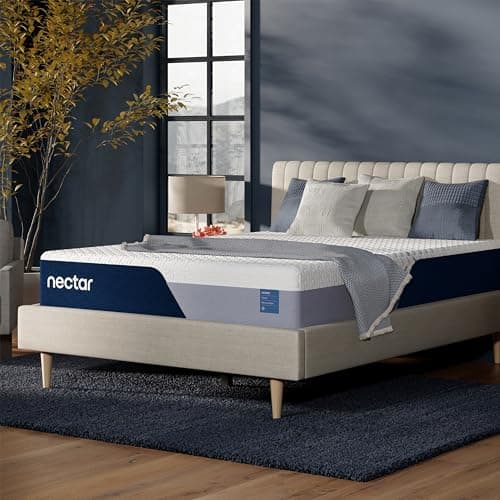 Nectar 12" Memory Foam All-foam, so a partner's movement dies in the foam instead of traveling to your side. The pick when a restless bedmate is the thing waking you. Best for: Best motion isolation | Best motion isolation | $699.00 · View on Amazon Price as of September 10, 2026. #ad — we earn a commission. |
| 2 | 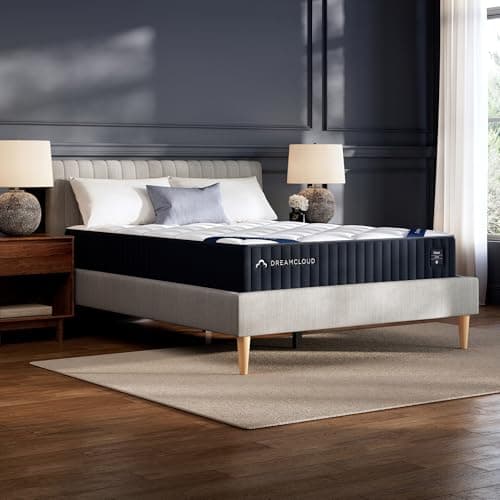 DreamCloud 12" Hybrid A coil core with a firm perimeter, so you can use the whole mattress and get out of bed without rolling to the center. The pick when the bed feels too small for two. Best for: Edge support & getting in and out | Edge support & getting in and out | $699.00 · View on Amazon Price as of September 10, 2026. #ad — we earn a commission. |
| 3 | 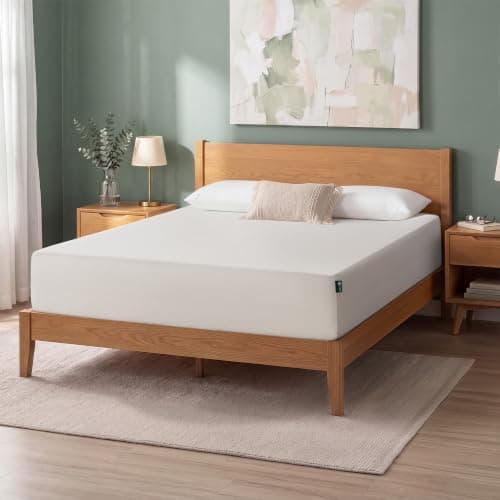 Zinus 12" Green Tea Memory Foam The cheap way to get foam's motion isolation. If a restless partner is the problem and money is tight, this does the one job that matters. Best for: Budget motion isolation | Budget motion isolation | |
| 4 | Nectar Ultra 15" Hybrid Fifteen inches of contouring on a coil core that moves air. The pick when two warm bodies are the problem and you still want depth. Best for: Couples who sleep hot | Couples who sleep hot | Check price on Amazon → #ad — we earn a commission. |
| 5 | 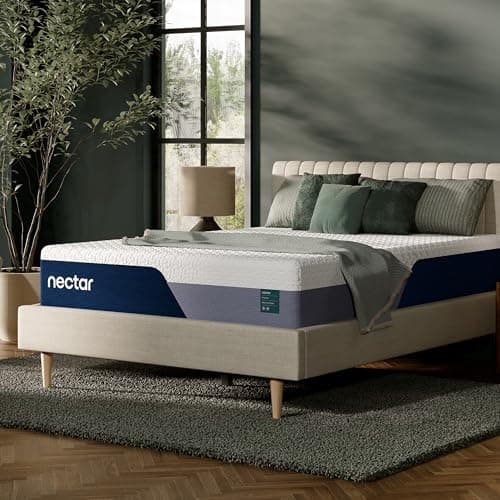 Nectar Premier 13" Memory Foam Deep all-foam contouring with strong motion isolation. The pick when both of you sleep on your side and a restless partner is the enemy. Best for: Two side sleepers | Two side sleepers | |
| 6 | 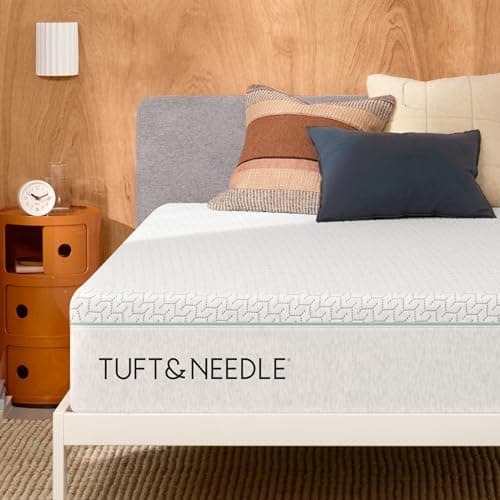 Tuft & Needle Original Hybrid A balanced medium hybrid built to be inoffensive to two different bodies. The pick when you and your partner want opposite things. Best for: Mismatched sleepers | Mismatched sleepers | $1,545.00 · View on Amazon Price as of September 10, 2026. #ad — we earn a commission. |
The couples problem is one contradiction you can't fully solve
A mattress for one person is a solved problem: match the firmness to your weight and sleeping position and you're done. Add a second person and the math stops being addition. Now the bed has to isolate one partner's movement so it doesn't wake the other, hold an edge firm enough that two people can use the whole surface, shed the heat of two bodies instead of one, and land on a firmness that suits two people who may weigh different amounts and sleep in different positions. Shopping for two is hard not because any one of those is difficult, but because the first two pull in opposite directions, and no single mattress wins both.
Here is the tension in one sentence, and it is the whole page: the construction that isolates motion is the construction that gives you weak edges, and the construction that gives you a firm edge is the construction that transmits motion. Solid foam absorbs a partner turning over — the movement dies in the foam before it reaches your side. But solid foam has no rigid perimeter, so its edges collapse under weight and two people slowly roll toward the dip in the middle. A coil core does the reverse: the springs hold a firm edge you can sleep on and sit on, but coils are connected, springy things, so a movement travels across them to your side of the bed. You can have the quiet bed or the wide bed. Buying well means deciding, honestly, which of those two problems is actually costing you sleep — and everything below is organized around that choice. The physics of foam versus coils is laid out in our memory foam vs hybrid guide.
Motion isolation vs edge support: name the one that's waking you
Start with the honest diagnostic, because it decides which half of this list you should even read.
Motion isolationis the bed's ability to keep a movement on one side from reaching the other. If your partner gets up at 2am, works odd shifts, or is a restless turner and you are a light sleeper, this is probably the problem stealing your rest — and the answer is solid foam. An all-foam mattress like the Nectar 12" or the budget Zinus Green Tea absorbs motion better than any coil bed can, because absorbing energy is what soft foam does. If two of you sleep on your sides and wake each other turning over, the deep Nectar Premier 13" foam gives your shoulders somewhere to sink and keeps the movement contained at the same time.
Edge supportis whether you can use the whole mattress. A bed with a soft perimeter is functionally smaller than the label says: the outer few inches slope and sag under weight, so two people either crowd toward the center or perch on an edge that feels like it's tipping them off. It also decides how it feels to get in and out — sitting on the side to dress, or climbing out without waking your partner, needs an edge that holds. Coils are what hold it. A hybrid like the DreamCloud 12" stiffens the perimeter so a queen actually sleeps like a queen for two. If the bed feels too small, weak edge support — not the size on the tag — is usually why.
Two questions sort almost every couple:
- Does your partner's movement wake you?Then motion is your problem. Buy solid foam and accept that the edges will be softer — a compromise you'll notice far less than the one keeping you awake now.
- Does the bed feel too small, or do you fight over the middle?Then edges are your problem. Buy a hybrid for its firm perimeter and accept that you'll feel each other move a little more.
So the first question isn't "which mattress is best." It's "which of these two is worse for us right now?" Anyone who tells you one bed maxes out both isolation and edge support is selling you the marketing, not the construction — the two properties come from opposite materials.
Two bodies, more heat — and a firmness you both can live with
Two more things change when a second person shares the bed, and both push you gently toward coils.
The first is heat. Two bodies put out roughly twice the warmth of one into the same space, and the mattress either lets that heat escape or traps it against you. This is the same argument as our cooling page, only more urgent, because there is twice as much heat to deal with. Solid foam is an insulator: it fills the air gaps around each body and holds warmth in, which is why a couple who runs warm cooks on an all-foam bed faster than a solo sleeper would. A coil core is mostly open space, so air moves through the middle of the bed and carries the heat away all night. If either of you sleeps hot, that alone can settle the decision: a hybrid like the Nectar Ultra Hybrid ventilates in a way no foam bed can, no matter what cooling adjective is printed on the foam.
The second is firmness compromise, and it's the one couples underestimate. Firmness that feels perfect to a 130-pound side sleeper can feel like a board to their partner and like a hammock to a heavier back sleeper, because the right firmness depends on your weight and your position — the whole argument of our firmness guide. When two people land in different places on that scale, you have three honest options:
- Meet in the middle. A true medium like the Tuft & Needle Original Hybrid uses wrapped coils that respond to each body's weight separately — a truce that fully satisfies neither of you but offends neither.
- Prioritize one sleeper.Set the bed for whoever's sleep is more fragile or whose back is in worse shape, and let the other adapt. Bodies adjust to a mattress more than people expect.
- Split it. If the gap is genuinely wide, stop forcing one feel on two bodies and look at a split or adjustable setup where each side is set independently.
What none of these can do is make a single-feel mattress firm for one of you and plush for the other in the same spot. A one-piece bed shared by two people is always a negotiation, and the honest brands admit it instead of promising a mattress that reads two minds at once.
What we can't measure
We haven't slept on any of these, and there are two of us doing it even less than there's one. There is no test lab behind this site, no rig that drops a weight on one side of a bed to score how much reaches the other, and no thermal camera reading two-body heat. So we can't hand you a motion-transfer number or an edge-support rating, and anyone who publishes one for a mattress they ordered off Amazon last week is inventing it. What we can do is reason from construction, because the construction is the honest tell: solid foam absorbs motion and insulates; coils hold an edge, ventilate, and pass movement along. Those are properties of the materials, not opinions, and they let us say which bed is wrong for which couple even though we never lay on it. That method — and why we refuse to fake a score — is spelled out on how we review.
The trials do the measuring we can't. A mattress for two can only really be judged after a full year of real nights in your own room, which is why the length of the trial is on every spec list above and why the year-long windows on the Nectar and DreamCloud picks matter more here than on a bed you sleep in alone. If you want to weigh the couples question against everything else a mattress has to do — pressure relief, price, longevity — our broader mattress shortlist covers foam and hybrid side by side, and the side-sleeper page goes deeper if that's how you both sleep. Buy the bed that fixes the problem actually waking you, keep the trial paperwork, and let a real season be the test.
The picks, in full
1. Best for Best motion isolation
Nectar 12" Memory Foam
All-foam, so a partner's movement dies in the foam instead of traveling to your side. The pick when a restless bedmate is the thing waking you.
Price as of September 10, 2026. #ad — we earn a commission.
Key specs
- 12" all-foam
- Medium firm (as listed)
- 1-year trial (as listed)
- Queen
What's good
- Solid memory foam is the best motion isolator on this page — it absorbs a partner turning over rather than passing the movement along, so a light sleeper stops feeling every shift
- A medium-firm all-foam build contours both bodies without a coil layer between you to carry motion from one side to the other
- A stated 1-year trial from an established brand is long enough to sleep through the seasons before you commit, which is the only honest way to test a shared bed
What's not
- No coil core means weaker edges: the perimeter gives under weight, so two people can't spread to the sides of the bed without feeling the slope toward the middle
- All-foam insulates and holds heat, and two bodies make more of it, so a warm-sleeping couple will feel this run hotter than any hybrid here
- Twelve inches of foam softens as it warms, which can leave a heavier partner sitting lower in the bed than a lighter one by the end of the night
Skip this one if
Either of you sleeps hot or you fight over the edge of the bed. Foam insulates and its perimeter collapses under weight — if heat or usable surface is the real complaint, a hybrid below fixes both, at the cost of some motion isolation.
2. Best for Edge support & getting in and out
DreamCloud 12" Hybrid
A coil core with a firm perimeter, so you can use the whole mattress and get out of bed without rolling to the center. The pick when the bed feels too small for two.
Price as of September 10, 2026. #ad — we earn a commission.
Key specs
- 12" hybrid
- Memory foam over an innerspring coil core
- 365-night trial (as listed)
- Medium firm
- Queen
What's good
- The innerspring core stiffens the perimeter, so both of you can sleep near the edges and sit on the side to dress without the mattress caving — a hybrid uses its full width the way foam can't
- Coils leave open channels for air, so two warm bodies shed heat through the middle of the bed all night instead of being wrapped in insulating foam
- A 365-night trial is the longest on this page, which is exactly what a couple's bed needs: it can only really be judged after a full year of real nights
What's not
- Coils transmit motion better than solid foam — a partner turning over travels farther across a hybrid, so a very light sleeper feels more than on an all-foam bed
- The medium-firm feel is itself a compromise, and a dedicated side sleeper may want more give at the shoulder than this offers
- It's a mid-to-upper-price bed; you're paying for the coil core and the year-long trial
Skip this one if
A restless partner is the thing waking you. Coils carry movement across the bed — if motion, not edge support or heat, is your real problem, an all-foam Nectar isolates it better and you should read our side-sleeper and memory-foam pages first.
3. Best for Budget motion isolation
Zinus 12" Green Tea Memory Foam
The cheap way to get foam's motion isolation. If a restless partner is the problem and money is tight, this does the one job that matters.
Key specs
- 12" all-foam
- Medium firm (as listed)
- Green tea & charcoal infused foam
- CertiPUR-US (as listed)
- Bed in a box
What's good
- All-foam construction absorbs a partner's movement the same way the pricier Nectar does — the isolating property is the foam itself, and Zinus sells it for a fraction of the price
- One of the longest-running budget mattresses on Amazon, so the listing and the warranty have a real track record behind them rather than a new brand's promises
- CertiPUR-US is stated on the listing, which is the foam certification worth checking at the budget end of the market
What's not
- Like every all-foam bed it insulates, and two bodies make it worse — the green-tea and charcoal infusions are odor claims, not a fix for heat you can measure
- No coil core means soft edges, so a couple can't reliably use the full width without rolling inward
- A thinner budget comfort layer contours less than a premium foam bed, so pressure relief for a side sleeper is more modest
Skip this one if
You sleep hot or you need firm edges. This is a warm-running, soft-perimeter foam bed — buy it for motion isolation on a budget, not for temperature or edge support, both of which a budget hybrid gives you for a little more.
4. Best for Couples who sleep hot
Nectar Ultra 15" Hybrid
Fifteen inches of contouring on a coil core that moves air. The pick when two warm bodies are the problem and you still want depth.
#ad — we earn a commission.
Key specs
- 15" hybrid
- Memory foam over individually-wrapped coils
- Medium firm (as listed)
- 1-year trial (as listed)
- Forever warranty (Nectar's published term)
What's good
- A coil core ventilates the way no all-foam bed can, so two people generating heat all night have somewhere for it to go — the honest answer to a hot shared bed
- At 15 inches it's the deepest bed here, so a shoulder and hip sink in while the coils underneath keep the perimeter usable — cooling and pressure relief in one build
- A 1-year trial on the listing and the forever warranty Nectar publishes for the Ultra are the strongest terms on the page - both are the maker's own commitments, not our characterization
What's not
- Coils transmit motion more than solid foam, so a very restless partner is felt more here than on an all-foam Nectar
- The most expensive pick on this page; the depth and the terms are what you're paying for
- It's a lot of bed to move, and the plush comfort layer leans softer than a firm-edge shopper wants
Skip this one if
Motion isolation is your priority or you're on a budget. This is a deep, premium hybrid — if a restless partner wakes you, foam isolates better; if price is the constraint, the DreamCloud or a budget foam bed gets you most of the way for less.
5. Best for Two side sleepers
Nectar Premier 13" Memory Foam
Deep all-foam contouring with strong motion isolation. The pick when both of you sleep on your side and a restless partner is the enemy.
Key specs
- 13" all-foam
- Medium firm (as listed)
- Deep contouring comfort layer
- 1-year trial (as listed)
- Queen
What's good
- Thirteen inches of foam gives two side sleepers' shoulders and hips somewhere to sink, which is exactly what side-sleeping geometry asks a mattress to do
- All-foam construction isolates motion better than any hybrid here, so two people turning over through the night don't wake each other
- A stated 1-year trial gives a couple time to confirm the deep, contouring feel works for both bodies before committing
What's not
- All-foam insulates, and 13 inches of it around two bodies runs warm — this is the wrong bed for a couple who sleeps hot
- Soft, deep foam has a weak perimeter, so edge support and getting in and out suffer next to a coil bed
- The deep cradle that helps side sleepers can feel like too much sink for a back or stomach sleeper sharing the bed
Skip this one if
Either of you sleeps on your back or stomach, or runs hot. Deep foam surrounds you — great for two side sleepers, wrong for a warm couple or a firmer-support sleeper, both of whom should look at a hybrid instead.
6. Best for Mismatched sleepers
Tuft & Needle Original Hybrid
A balanced medium hybrid built to be inoffensive to two different bodies. The pick when you and your partner want opposite things.
Price as of September 10, 2026. #ad — we earn a commission.
Key specs
- Hybrid
- Adaptive foam over individually-wrapped coils
- 100-night trial (as listed)
- Fiberglass-free, CertiPUR-US (as listed)
- Queen
What's good
- The adaptive foam over wrapped coils lands at a true medium — the firmness most likely to be acceptable to two people who disagree, even if it fully thrills neither
- Individually wrapped coils respond point by point, so a heavier and a lighter partner each get support where their weight actually lands instead of one firmness for both
- Fiberglass-free and CertiPUR-US are both stated on the listing, the two reassurances worth checking, and a 100-night trial gives a mismatched couple a real window to test the truce
What's not
- A 100-night trial is the shortest here, so a couple has less time to be sure than the year-long Nectar and DreamCloud windows allow
- A compromise medium satisfies neither partner completely — a dedicated firm or plush sleeper may still want their own feel
- Wrapped coils transmit more motion than solid foam, so this isn't the pick if a restless partner is the core issue
Skip this one if
One of you has a strong, specific firmness need. A middle-of-the-road medium is a truce, not a solution — if a partner truly needs firm support or deep plush, a split or adjustable setup serves you better than a single compromise feel.
Common questions
What's the best mattress for a couple with different firmness needs?
There are three honest options and no perfect one. First, meet in the middle: a true medium like the Tuft & Needle Original Hybrid uses individually wrapped coils that respond to each body's weight separately, so it's a truce that offends neither of you even though it fully satisfies neither. Second, prioritize the partner whose sleep is more fragile or whose back is in worse shape, and let the other adapt — bodies adjust to a bed more than people expect. Third, if the gap is genuinely wide, stop trying to force one feel on two bodies and look at a split or adjustable base where each side is set independently. What no single-feel mattress can do is be firm for one of you and plush for the other in the same spot; anyone selling that is selling marketing, not construction.
Do memory foam or hybrid mattresses isolate motion better?
Memory foam, clearly. Isolating motion means absorbing the energy of a partner's movement before it reaches your side, and absorbing energy is exactly what soft solid foam does — the movement dies in the foam. A hybrid has a coil core, and coils are connected, springy things, so a movement on one side travels through them toward the other. That's the trade-off at the heart of shopping for two: the same coils that give a hybrid its firm, usable edge are what let you feel your partner turn over. If a restless bedmate is the specific thing waking you, buy an all-foam bed and accept softer edges. If you rarely notice each other move, a hybrid's edge support and airflow are usually worth the small amount of extra motion.
What is edge support and why does it matter for couples?
Edge support is whether the outer few inches of the mattress hold firm or slope and sag under your weight. It matters more for two people than for one because a bed with soft edges is functionally smaller than the label says: if the perimeter caves, you both drift toward the middle and a queen sleeps like a full. It also decides how it feels to sit on the side of the bed to dress and to climb in and out without rolling to the center or waking your partner. Coils are what hold an edge, which is why hybrids like the DreamCloud have a firmer perimeter than any all-foam bed. If your shared bed already feels too small, weak edge support — not the size on the tag — is usually the reason.
What's the best mattress if one partner sleeps hot?
A hybrid, because the fix for heat is airflow and airflow comes from a coil core. Two bodies put out roughly twice the warmth of one into the same bed, and solid foam is an insulator — it fills the air gaps around you and holds that heat in, which is why a warm couple cooks on an all-foam mattress. A coil core is mostly open space, so air moves through the middle of the bed and carries the heat away all night. A hybrid like the Nectar Ultra Hybrid ventilates in a way no foam bed can, regardless of what cooling gel or cover is printed on the foam. If only one of you runs hot, that partner's comfort is usually the tie-breaker, since it's easier to add a blanket for the cool sleeper than to cool a bed that traps heat.
Do split or adjustable options help couples?
They can, and they're the honest answer when two people's needs are genuinely far apart rather than just slightly different. A split setup — two mattresses or two independently set halves under one cover — lets each partner choose their own firmness and their own adjustable-base position, which solves the different-firmness problem that no single-feel bed can. The trade-offs are cost, a possible seam or gap down the center of the bed, and more parts to move and maintain. For most couples whose preferences are close, a well-chosen medium hybrid is simpler and cheaper. Reach for split or adjustable when one of you needs firm support and the other needs deep plush, or when a medical need means one side has to move independently.
Sources
Where the facts on this page come from. We cite other people's testing because we don't do our own — here's what that means.
Read next
- What Is Edge Support?Edge support is how well a mattress holds firm at the perimeter instead of collapsing when you sit or lie near the edge. What builds it, the honest trade-offs, and who actually needs it.
- What Is Motion Isolation?Motion isolation is a mattress's ability to absorb movement locally instead of transmitting it across the bed. How the physics works, who needs it, and the honest trade-offs.
- How to Stop a Partner From Disturbing Your SleepThe environment-and-gear fixes for a partner who wakes you: a mattress that absorbs their motion instead of passing it to your side, earplugs and white noise for snoring, separate blankets for the temperature fight, and an eye mask for a schedule mismatch. Plus when snoring is a reason to see a doctor, not rearrange the bed.
- Full vs QueenQueen is 6 inches wider and 5 inches longer than Full — and it's the most popular mattress size in the country for a reason. Here's when Full still makes sense.
- Queen vs KingA King is 16 inches wider than a Queen at the same length — worth two Twin XLs' worth of space. Here's who needs it, and who's better off with Queen.
- King vs California KingThe name suggests Cal King is the bigger bed. The math says otherwise: a King is wider, a Cal King is longer, and a King has slightly more total space.
- The Best Mattresses for Side SleepersSix mattresses with comfort layers deep enough to let a shoulder and hip sink — the actual problem side sleepers are trying to solve.
- Memory Foam vs Hybrid MattressesFoam or coils? The six differences that matter, and the one axis that settles it for most buyers.
- The Best Cooling Mattresses for Hot SleepersSix mattresses that actually sleep cooler, led by hybrids because a coil core is the only cooling feature that doesn't saturate by midnight — with honest cons on every pick.
- The Best Mattresses on AmazonSix Amazon mattresses worth your money, with live prices and an honest note on who each one is wrong for.
- Mattress Firmness: The 1-10 Scale, HonestlyWhat the 1-10 firmness scale actually means, why one brand's 6 is another's 7, and how your bodyweight changes the answer.