The Best Bamboo Sheets, Chosen Honestly
Here is the thing almost no bamboo listing will tell you: your "bamboo" sheets are a regenerated rayon, not woven plant. The silky, cool feel is real and genuinely good for hot sleepers — but it is viscose, and that changes what you should look for. Six sets worth buying, and who each is wrong for.
We earn a commission if you buy through our links. It doesn't affect our picks — and we never take free products. How this site is funded.
Quick picks
| # | Product | Best for | Price |
|---|---|---|---|
| 1 | 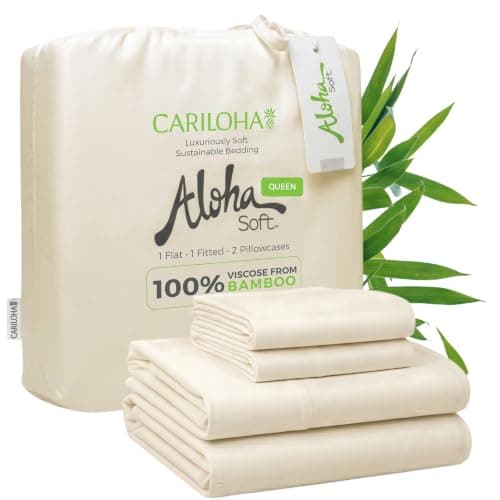 Cariloha Aloha Soft 100% Organic Bamboo Viscose The one set here that both names the fiber honestly and backs it with a real fabric certificate. If you want the silky-bamboo feel without the label games, start here. Best for: Best overall / premium | Best overall / premium | $119.00 · View on Amazon Price as of September 10, 2026. #ad — we earn a commission. |
| 2 | 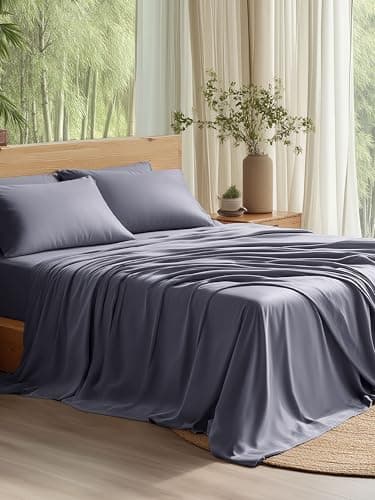 Bedsure PureWoven 100% Rayon from Bamboo Correctly labeled, silky, from an established seller, at a price that undercuts the premium sets by a wide margin. The sensible default if you just want to try the fiber. Best for: Best value | Best value | |
| 3 | 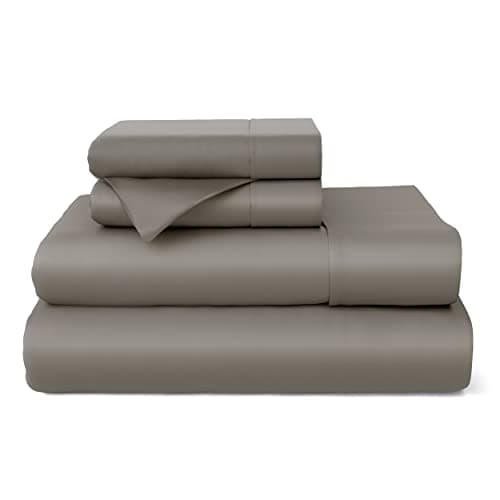 Cosy House Collection 100% Rayon from Bamboo The pick for people who hate ironing. Bamboo viscose drapes rather than creases, and this one leans into that — a smooth bed that looks tidy between washes. Best for: Silky, wrinkle-resistant | Silky, wrinkle-resistant | $88.95 · View on Amazon Price as of September 10, 2026. #ad — we earn a commission. |
| 4 | 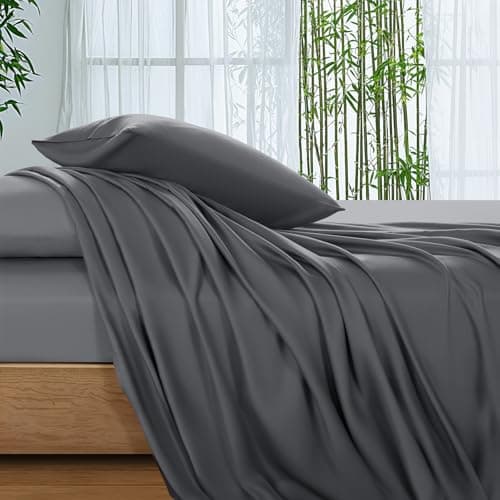 SONORO KATE 100% Viscose from Bamboo A cheap, honest way into the fiber. Soft and breathable, labeled correctly, and priced so a return costs you almost nothing if the feel is not for you. Best for: Budget-friendly | Budget-friendly | $59.99 · View on Amazon Price as of September 10, 2026. #ad — we earn a commission. |
| 5 | 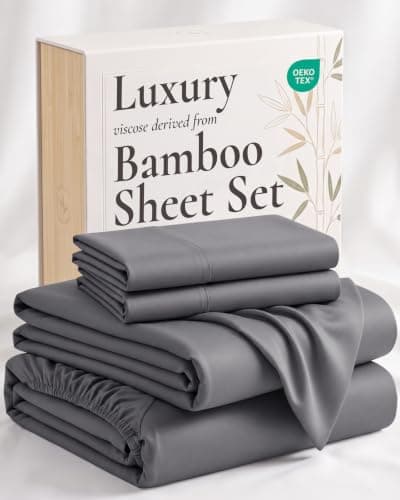 Hotel Sheets Direct 100% Viscose from Bamboo Built around the slippery, cool, hotel-sheet hand-feel. If the sensation of sliding into a smooth luxury bed is what you are after, this is aimed squarely at you. Best for: Hotel-silky feel | Hotel-silky feel | Check price on Amazon → #ad — we earn a commission. |
| 6 | 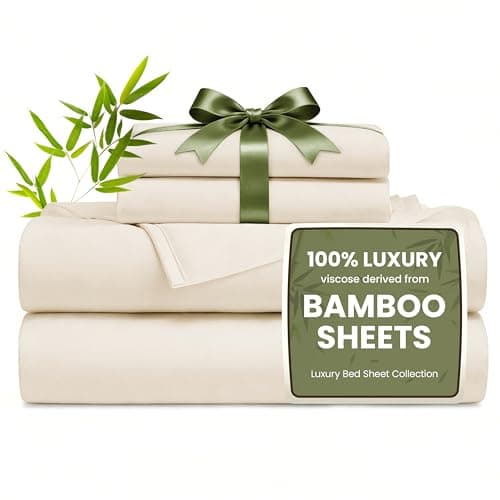 Love's cabin 100% Rayon from Bamboo The cheapest honest bamboo set here, with a stated deep pocket. If you want the cool, smooth feel for the least money possible, this is the floor. Best for: Rock-bottom budget for hot sleepers | Rock-bottom budget for hot sleepers | $44.99 · View on Amazon Price as of September 10, 2026. #ad — we earn a commission. |
Your "bamboo" sheets are almost certainly rayon
Let's start with the fact the whole category is built on not saying out loud. Bamboo is a hard, woody grass. You cannot card it and spin it into a soft sheet the way you can with cotton or flax — the plant is far too stiff for that. So the way a mill turns bamboo into a bedsheet is to dissolve it. The plant goes into a chemical bath, comes out as a thick pulp, and that pulp is pushed through spinnerets and regenerated into a fine, smooth fiber. That fiber has a name, and the name is rayon — or its very close relative, viscose. It is not bamboo. Nothing of the original plant's structure survives the process.
This is not a pedantic technicality, and it is not one the regulators let slide. The FTC has repeatedly taken action against retailers who labeled these sheets simply as "bamboo," because that word implies you are getting the plant's natural properties when what you are actually getting is a manufactured rayon. The wording the FTC wants to see is "rayon derived from bamboo" or "viscose from bamboo." It is worth learning to read for that phrase, because it is the single fastest way to sort the honest listings from the ones hoping you won't ask. A seller who prints "100% viscose derived from bamboo" is following the rule. A seller who just shouts "100% bamboo" is either careless about labeling law or counting on you not to know the difference — and every pick above was chosen partly on which side of that line it sits.
Here is the part the honesty is in service of, though: none of this makes the sheets bad. Viscose from bamboo is a genuinely nice fabric — smooth, cool to the touch, and far more breathable than any polyester. We say the same thing on our cooling sheets page, where this exact fiber earns a spot on its merits. The point of getting the label right is not to talk you out of buying bamboo sheets. It is so that you buy them for what they really are — a good, affordable, silky rayon — instead of for a story about a plant that ended at the factory door.
Why they still sleep silky and cool
If the plant doesn't survive, why do these sheets feel so good? The answer is in the shape of the fiber. Regenerated cellulose comes out of the spinneret as a very fine, round, smooth filament — smoother and more uniform than cotton, which is a flatter, twisted, more irregular fiber under a microscope. That smoothness is what your skin reads as silky and slippery, and it is why bamboo viscose feels cool the instant you touch it. On top of that, cellulose absorbs moisture rather than repelling it, so light sweat moves off your skin and into the cloth instead of pooling on the surface the way it does on plastic microfiber. For someone who runs warm at bedtime, that combination is a real and pleasant upgrade.
Two things decide whether you get that experience or a watered-down version of it. The first is whether the set is actually 100% bamboo viscose. A sheet labeled "100% rayon derived from bamboo" or "100% viscose from bamboo" behaves the way this section describes. A "bamboo blend" is a different animal — it is usually bamboo viscose cut with cotton or, more often, polyester or microfiber to lower the cost, and the polyester in particular kills the breathability you were paying for. Read the fiber content line, not the product name. The name will say bamboo; only the fiber content tells you what is really in the weave.
The second is the weave. Almost all bamboo sheets are woven in a sateen construction — several threads floating over one — because that is what maximizes the sheen and the slippery hand. Sateen is lovely, but it trades a little airflow for that surface feel, laying a slightly denser layer of fiber against you. That is the trade at the heart of these sheets: they are cool and smooth to the touch, but not the most airflow-heavy construction there is. If you want to understand exactly what the weave is doing, our percale vs sateen guide breaks it down, and if your real problem is moving air all night rather than a silky surface, a linen sheet breathes more than any bamboo viscose can.
You'll also see the word lyocell attached to some bamboo sheets, and it is worth knowing what it means because it is the one upgrade in this category that is real rather than cosmetic. Bamboo viscose and bamboo lyocell start from the same plant and land in your hand feeling much the same — smooth, cool, drapey. The difference is the process: lyocell is made in a closed loop that recaptures the solvent instead of releasing it, so it is the cleaner cousin of ordinary viscose, and the fiber itself tends to move liquid moisture a touch faster. None of the picks above is bamboo lyocell, but if two sets are otherwise equal and one says lyocell, that is a reason to lean toward it — not for the feel, which is similar, but for how it was made.
One number to stop worrying about: thread count. On a bamboo sheet it is close to meaningless. Thread count was invented to compare cotton percales, where it loosely tracks how tightly a plain weave is packed; stretch it onto a regenerated fiber in a sateen weave and it stops measuring anything you can feel. Sellers know this, which is why bamboo listings quote enormous thread counts — the feel is coming from the smooth fiber and the sateen float, not from the number, and a "1800 thread count bamboo" sheet is a marketing figure dressed up as a spec. Judge these sets on the fiber content line and the weave, and let the thread count wash over you.
And here is what we cannot tell you, because it matters that we say so. We have not slept on these sets. There is no test lab behind this site, no thermal camera, no wicking-rate rig — so we cannot hand you a surface-temperature number or a moisture-transport score, and anyone who does for a sheet they bought on Amazon last week is inventing it. What we can do is reason from the fiber: regenerated cellulose is smooth, absorbent, and breathes far better than polyester, and that is chemistry, not a measurement we took. Everything above is a claim about how the material behaves, not a claim that we scored it. When a listing gives you a precise cooling figure, ask where the lab is. Usually there isn't one.
The eco story is more complicated than the leaf on the box
Bamboo sheets are sold hard on being green, and the picture is genuinely mixed rather than simply good or bad. The bamboo crop itself is a real environmental positive: it grows extraordinarily fast, regenerates from its own root system, and needs little water and few pesticides compared with cotton. If the story ended at the field, the leaf on the packaging would be earned. But the sheet is not the crop — it is what the factory does to the crop, and that is where the green claim gets complicated.
Conventional viscose processing is chemical-intensive. Turning wood-like pulp into a soft fiber uses caustic chemicals, and a plant that does not capture and recycle them can be a genuine polluter. So "made from bamboo, therefore eco-friendly" is a claim about the raw material that quietly skips the manufacturing, which is the part that actually carries the environmental cost. A sustainably grown grass processed in a dirty factory is not a clean product, and the word "bamboo" on the front of the bag tells you nothing about which kind you are holding.
The honest way to shop the eco angle is to ignore the adjectives and look for two real signals. The first is an OEKO-TEX Standard 100 certificate, which means the finished fabric was independently tested for harmful residues — a real certificate you can check at oeko-tex.com, and the one point of genuine reassurance among the picks above, where only the Cariloha set states it. The second is closed-loop lyocell processing (the same family as Tencel), which recaptures and reuses the solvent instead of dumping it; some bamboo is made this way and it is the cleaner version of the fiber, though most budget bamboo on Amazon is conventional viscose. The certification is the reassurance. The word on the box is not.
Fit, certificates, and how not to wreck them
Once you have picked a set, three practical things decide whether you're happy with it, and none of them is the marketing. The first is pocket depth. Most bamboo sets are cut deep — 14 to 16 inches and up — but "most" is not "yours," and a fitted sheet cut for 14 inches on a 16-inch mattress with a topper will pop off the corner every single night. Measure your mattress from seam to seam with the topper on, add an inch, and buy a set whose listing states a pocket depth at or above that number. The Cariloha and the Love's cabin state theirs; where a listing stays silent on pocket depth, treat that silence as an answer and read the size chart twice before ordering.
The second is the certificate, which is worth repeating because it is the one piece of third-party truth in an aisle full of adjectives. Only the Cariloha pick here states OEKO-TEX Standard 100 — a tested-fabric badge you can verify — and that is a real edge over the sets that ask you to trust the seller alone. It does not make the fiber different, but it means someone other than the marketing department looked at the finished cloth.
The third is care, and viscose is unforgiving here in a way cotton is not. The fiber is weak when wet and delicate by nature, so this is a gentle-cycle, cool-water, mild-detergent sheet, full stop. Never bleach it — bleach breaks the cellulose down and there is no coming back. Skip fabric softener too, because it coats the fiber, dulls the silky feel, and cuts the moisture-wicking you bought the sheets for. Line dry, or tumble on low and pull them out promptly so wrinkles don't set. A hot wash and a hot dryer are the single fastest way to turn a smooth bamboo set into a thin, pilled one inside a season, and no price tag protects you from that. Buy the fiber knowing it is delicate and it will reward you; treat it like cotton and it won't.
One last honest note on where these sheets stop being the answer. Bamboo viscose is a genuinely good, affordable, silky sheet for a hot sleeper — as long as you buy it understanding it is rayon. But if you've switched to a breathable sheet and you're still waking up hot, the heat is coming from underneath, and that is a cooling mattress conversation rather than a sheet one. And if you want to see how bamboo stacks up against cotton, linen, and lyocell side by side before you commit, our best sheets on Amazon roundup lays the whole field out fiber by fiber.
The picks, in full
1. Best for Best overall / premium
Cariloha Aloha Soft 100% Organic Bamboo Viscose
The one set here that both names the fiber honestly and backs it with a real fabric certificate. If you want the silky-bamboo feel without the label games, start here.
Price as of September 10, 2026. #ad — we earn a commission.
Key specs
- 100% organic bamboo viscose
- 4-piece Queen set
- 16" deep pockets (as listed)
- OEKO-TEX Standard 100 (as listed)
- Cooling, hypoallergenic (as listed)
What's good
- The listing says viscose, not just "bamboo" — that is the wording the FTC actually wants to see, and a seller who gets the label right is telling you something about the seller
- OEKO-TEX Standard 100 means the finished fabric was tested for harmful substances — a real, checkable certificate at oeko-tex.com, and the only fabric certification stated among these six picks
- A stated 16-inch pocket depth, which is the spec most sheet listings hide and the one that causes most returns when a fitted sheet pops off a thick mattress at 3am
What's not
- It is the priciest set on this page, and a good chunk of that is the brand and the certificate rather than a fundamentally different fiber
- "Organic" describes how the bamboo was farmed, not the chemical process that turns it into viscose — the finished thread is a regenerated rayon like the cheaper sets here, just cleaner-sourced and tested
- Viscose is weak when wet and delicate in the wash — this is a gentle-cycle, low-dryer sheet no matter how much you paid for it
Skip this one if
You are shopping on price, or your real problem is airflow rather than a silky surface. This is the premium option; if you sleep desperately hot and want a sheet that moves air all night, a percale cotton or a linen set breathes more than any bamboo viscose does.
2. Best for Best value
Bedsure PureWoven 100% Rayon from Bamboo
Correctly labeled, silky, from an established seller, at a price that undercuts the premium sets by a wide margin. The sensible default if you just want to try the fiber.
Key specs
- 100% rayon derived from bamboo
- 4-piece Queen set
- Silky, breathable (as listed)
What's good
- "Rayon derived from bamboo" is the exact wording the FTC prefers — this listing describes the fiber honestly instead of implying you are buying the plant
- Bedsure is one of the most established sellers in Amazon bedding, with stable listings and a real returns operation, which matters more than it should when a sheet ASIN can vanish overnight
- You get the smooth, cool-to-the-touch hand of bamboo viscose for a fraction of what the premium sets cost — most of the feel, far less of the price
What's not
- No fabric certification is stated in the listing, unlike the Cariloha pick above — you are trusting the seller rather than an OEKO-TEX certificate
- The listing does not state a pocket depth, so if you have a thick mattress or a topper, measure first and read the size chart before buying
- Value-priced viscose is thin viscose — expect a two-to-three-year sheet, not a decade-long one
Skip this one if
You have a deep mattress and need a guaranteed pocket depth, or you want a third-party certificate on the fabric. For the stated 16-inch pocket and the OEKO-TEX badge, spend up to the Cariloha above.
3. Best for Silky, wrinkle-resistant
Cosy House Collection 100% Rayon from Bamboo
The pick for people who hate ironing. Bamboo viscose drapes rather than creases, and this one leans into that — a smooth bed that looks tidy between washes.
Price as of September 10, 2026. #ad — we earn a commission.
Key specs
- 100% rayon derived from bamboo
- Queen sheet set
- Silky, wrinkle-resistant (as listed)
What's good
- Regenerated cellulose drapes instead of crumpling, so it genuinely looks better between washes than a crisp cotton percale that wrinkles the moment you get out of bed
- Honestly labeled as rayon derived from bamboo — the seller is describing the fiber rather than hiding behind the word bamboo
- The silky, slippery hand is the whole point of buying bamboo viscose, and this set delivers it at a mid-budget price
What's not
- "Wrinkle-resistant" on a cellulose sheet sometimes means a resin finish was applied — worth reading the listing for, if a chemically finished fabric bothers you
- No fabric certification and no stated pocket depth in the listing, so you are trusting the seller on both
- Like all viscose, it is weak when wet and wants a gentle, cool wash — the silky drape does not survive a hot cycle and a hot dryer
Skip this one if
You want a certificate on the fabric or a stated deep pocket. This one sells the feel and the low-maintenance look; for tested fabric and a published 16-inch pocket, the Cariloha is the safer buy.
4. Best for Budget-friendly
SONORO KATE 100% Viscose from Bamboo
A cheap, honest way into the fiber. Soft and breathable, labeled correctly, and priced so a return costs you almost nothing if the feel is not for you.
Price as of September 10, 2026. #ad — we earn a commission.
Key specs
- 100% viscose derived from bamboo
- 4-piece Queen set
- Soft, breathable (as listed)
What's good
- Labeled "viscose derived from bamboo" — the honest wording, on a budget set where sellers most often cut the corner and just print "bamboo"
- A genuinely low price for a full 4-piece set, which makes it a low-risk way to find out whether you like the silky bamboo hand at all
- Soft and smooth against the skin, with the cool first-touch feel that people are actually shopping for when they search for bamboo sheets
What's not
- No fabric certification is stated, so there is no third-party check on the finished cloth
- Budget viscose is thin viscose — it is the fiber most likely to pill or thin at the elastic after a year of regular washing
- No stated pocket depth in the listing, so confirm the fit against your mattress before ordering
Skip this one if
You wash your sheets weekly on a hot cycle. Cheap viscose is the fiber least likely to survive that regime — if longevity matters more than the silky feel, buy a cotton percale from our sheets roundup instead.
5. Best for Hotel-silky feel
Hotel Sheets Direct 100% Viscose from Bamboo
Built around the slippery, cool, hotel-sheet hand-feel. If the sensation of sliding into a smooth luxury bed is what you are after, this is aimed squarely at you.
#ad — we earn a commission.
Key specs
- 100% viscose derived from bamboo
- 4-piece Queen set with 2 pillowcases
- Cooling, moisture-wicking (as listed)
What's good
- Correctly labeled viscose from bamboo, sold on the one thing the fiber does best: a smooth, cool, slippery surface that feels like a good hotel
- A complete 4-piece set with two pillowcases, so there is nothing to buy separately to make the bed
- Viscose absorbs and moves moisture rather than repelling it the way polyester does, which is what the moisture-wicking claim is really pointing at — helpful if you run warm or sweat lightly
What's not
- The "hotel" in the name is a feel, not a certification — there is no stated third-party test on the fabric
- That silky hand almost always comes from a sateen weave, which trades a little airflow for the sheen — it is smooth and cool to touch, not the most breathable construction there is
- The same care rules apply as every viscose here: gentle wash, no bleach, low dryer, or the slippery feel dulls fast
Skip this one if
Your priority is airflow rather than surface feel. Viscose sateen feels cool the instant you touch it; a percale cotton keeps moving air all night. Different jobs — take a percale set if you are genuinely overheating rather than chasing a luxury hand-feel.
6. Best for Rock-bottom budget for hot sleepers
Love's cabin 100% Rayon from Bamboo
The cheapest honest bamboo set here, with a stated deep pocket. If you want the cool, smooth feel for the least money possible, this is the floor.
Price as of September 10, 2026. #ad — we earn a commission.
Key specs
- 100% rayon derived from bamboo
- 4-piece Queen set
- Deep pocket up to 16" (as listed)
- Cooling for hot sleepers (as listed)
What's good
- About the lowest price you will pay for a correctly labeled rayon-from-bamboo set, which makes it a genuinely low-risk try for a hot sleeper
- A stated pocket depth of up to 16 inches — most budget listings leave this out entirely, and it is the number that decides whether the fitted sheet stays on
- The cool, smooth first-touch feel of bamboo viscose, which is a real and pleasant thing for someone who runs warm at bedtime
What's not
- No fabric certification is stated, unlike the Cariloha pick
- At this price the rayon is thin, so treat it as a one-or-two-year sheet rather than a long-term one
- "Cooling for hot sleepers" describes what the fiber tends to do, not a tested performance number — the cool feel is a property of viscose, not a measurement anyone took
Skip this one if
You want a sheet that lasts, or you wash hot every week. Rock-bottom rayon is the least durable option on the page — spend up to the Bedsure for stability, or move to a cotton percale if you want years out of a set.
Common questions
Are bamboo sheets actually made of bamboo?
Not in any meaningful sense. Bamboo is a hard, woody grass — you cannot spin a soft sheet from it the way you spin cotton. To make a bamboo sheet, a mill dissolves the plant in a chemical bath and regenerates the pulp into a fiber, and that fiber is rayon (or its close relative viscose), not bamboo. None of the plant's original structure survives. That is why honest listings say "rayon derived from bamboo" or "viscose from bamboo," and why the FTC has taken action against sellers who label the finished sheet simply as "bamboo." It does not make the sheets bad — viscose is smooth and breathes reasonably well — it just means the fabric is a regulated rayon, and the marketing does a magic trick to hide it.
Do bamboo sheets sleep cooler than cotton?
They feel cooler to first touch, which is not the same thing as breathing better all night. Bamboo viscose is a smooth, round fiber, so it feels cool and slippery the instant your skin meets it, and it moves moisture rather than repelling it. But most bamboo sheets are woven in a sateen construction that trades some airflow for that silky sheen. A percale-weave cotton or a linen sheet actually moves more air over a whole night. So if you want a cool, smooth surface, bamboo wins; if your problem is airflow, a percale or linen sheet is the better tool.
Are bamboo sheets good for hot sleepers or night sweats?
For most hot sleepers, yes — the cool first-touch feel and the fact that viscose absorbs and moves moisture rather than trapping it make it a real upgrade over a polyester or microfiber set. For heavy night sweats specifically, a lyocell (Tencel-style) sheet tends to move liquid moisture even faster, and a breathable percale cotton keeps more air flowing. Bamboo viscose is a good, affordable middle ground: cooler and smoother than cotton to the touch, kinder to the wallet than lyocell, and far better in a warm bed than anything made of plastic.
How do you wash bamboo sheets?
Gently, because viscose is weak when wet and delicate by nature. Use a cold or warm gentle cycle with a mild detergent, skip the bleach entirely (it breaks down the cellulose fiber), and skip fabric softener too (it coats the fiber, dulls the silky feel, and reduces the moisture-wicking you bought the sheets for). Line dry or tumble on low and pull them out promptly so wrinkles do not set. Hot washes and hot dryers are the fastest way to turn a silky bamboo set into a pilled, thin one — the fiber simply is not built for that.
Are bamboo sheets eco-friendly?
It is more complicated than the leaf on the box. The bamboo crop itself is genuinely fast-growing and needs little water or pesticide — but the sheet is not the crop, it is what the factory does to it. Conventional viscose processing uses harsh chemicals, and it is only as clean as the plant that captures and recycles them. So a "bamboo equals eco" claim about the finished sheet is worth very little on its own. Look for real signals instead: an OEKO-TEX Standard 100 certificate (the finished fabric was tested for harmful substances) and closed-loop lyocell processing, which recaptures the solvent. The certification is the reassurance; the word bamboo is not.
Sources
Where the facts on this page come from. We cite other people's testing because we don't do our own — here's what that means.
Read next
- Linen vs Bamboo SheetsLinen's airflow, longevity and lived-in look versus bamboo-rayon's silky, drapey, cool-to-the-touch feel — plus the labeling truth almost no bamboo listing says out loud.
- The Best Budget SheetsSix genuinely cheap sheet sets worth owning, split by fiber - microfiber, cotton and bamboo/rayon - with the honest trade-off of each stated plainly and a note on who should spend a little more.
- Cotton vs Bamboo SheetsCotton's durability and get-softer-with-age value versus bamboo-rayon's silky, cool, drapey feel — plus the labeling truth almost no bamboo listing says out loud.
- The Best Silk PillowcasesSix silk pillowcases chosen on momme rather than marketing grade, with honest cons on every pick and a clear-eyed take on what silk really does for hair and skin.
- The Best Cooling Sheets for Hot SleepersSix sheet sets that actually breathe, chosen on fiber and weave rather than marketing — plus who should skip each one.
- The Best Linen SheetsSix linen sheet sets — pure French flax and softer cotton-linen blends — chosen on fiber honesty and value, with the price-and-wrinkle trade stated plainly on each.
- The Best Sheets on AmazonSix Amazon sheet sets worth buying, plus how to read a listing: why thread count lies, what Egyptian cotton isn't, and the sizing spec that causes most returns.
- Percale vs Sateen SheetsTwo weaves, one decision: crisp and breathable, or silky and warm. Plus why thread count is mostly a marketing number.
- The Best Cooling Mattresses for Hot SleepersSix mattresses that actually sleep cooler, led by hybrids because a coil core is the only cooling feature that doesn't saturate by midnight — with honest cons on every pick.